

U0101 on 2006-2018 Mercedes-Benz Sprinter: Lost Communication with TCM Causes and Fixes
On a 2006-2018 Sprinter, U0101 is almost always caused by transmission fluid leaking from the 13-pin connector and wicking up the wiring to destroy the Transmission Control Module (TCM) under the driver's seat. The fix involves replacing the connector, thoroughly cleaning the wiring harness, and cleaning or replacing the TCM. A failed conductor plate inside the transmission is the second most likely cause.
- U0101 on a Sprinter is a critical code that makes the vehicle unsafe to drive.
- Before buying any parts, inspect the 13-pin connector on the transmission for leaks and check the TCM under the driver's seat for fluid contamination. This will diagnose the majority of cases.
- The most common fix involves replacing the 13-pin connector, the conductor plate, and the transmission filter/fluid. If the TCM is oily, it must also be replaced or repaired.
- Unlike many other Mercedes, the TCM and conductor plate for the Sprinter's 722.6 transmission do not require VIN coding, making the repair more accessible for advanced DIYers or independent shops.
What's Unique About the 2006-2018 Mercedes-Benz Sprinter
The 2006-2018 (NCV3) Sprinter primarily uses the robust 722.6 (NAG1) 5-speed automatic transmission. Unlike many other Mercedes models of the era that have the TCM integrated inside the transmission, the Sprinter has a separate, externally mounted TCM located under the driver's seat. This design creates a unique and extremely common failure path: a cheap, leaking 13-pin electrical connector on the transmission allows fluid to travel up the entire length of the wiring harness via capillary action, contaminating and destroying the expensive, remotely-located TCM. This specific issue is the number one cause of U0101 on this platform.
Generation note: This guide primarily covers the second generation (NCV3 or 906) Sprinter from 2006-2018, which includes Dodge and Freightliner versions. The first generation (T1N), which ended in 2006, also used the 722.6 transmission and can suffer from the same issues, particularly the leaking 13-pin connector and conductor plate failure, though its TCM is also located under the driver's seat.
Symptoms You May Notice
- Vehicle is stuck in one gear, usually 2nd or 3rd ('limp mode').
- Check Engine Light and/or transmission warning light is on.
- Harsh or erratic shifting, or a complete failure to shift.
- Engine cranks but will not start (because the ECM cannot get a signal from the TCM to confirm the transmission is in Park or Neutral).
- The gear selector display (P, R, N, D) on the instrument cluster may be blank or show an error.
- A scan tool cannot establish communication with the TCM.
- Replacing the entire transmission. U0101 is an electrical communication code, not a sign of internal mechanical failure. The 722.6 transmission is mechanically very robust.
- Replacing only the TCM without fixing the fluid leak. If the 13-pin connector is not replaced, the new TCM will quickly be destroyed by wicking fluid.
- Assuming the conductor plate needs programming. Unlike the newer 722.9 transmission, the conductor plate for the 722.6 in the Sprinter is not VIN-coded and does not require special programming (SCN coding), making it more DIY-friendly.
Most Likely Causes
- Leaking 13-Pin Electrical Connector & ATF Contamination of TCM 🔴 High Probability The O-rings on the 13-pin connector (pilot bushing) on the 722.6 transmission are a notorious failure point. Due to capillary action, leaking ATF 'wicks' up the wiring harness and travels several feet to the TCM under the driver's seat, shorting it out.
How to confirm: Visually inspect the 13-pin connector on the passenger side of the transmission for signs of red ATF leakage. Unbolt the driver's seat (typically E12 Torx bolts), remove the floor plate, and unplug the large connectors from the TCM. Look for oily ATF residue inside the connectors and on the TCM pins. The presence of any fluid confirms the diagnosis.
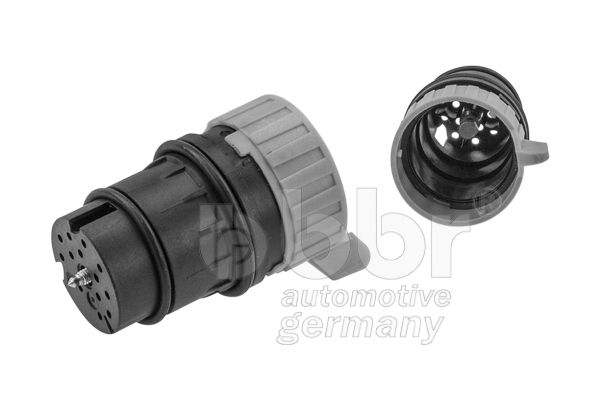
Typical fix: Replace the 13-pin connector sleeve (Part No. 2035400253). The wiring harness must be thoroughly cleaned by spraying generous amounts of electrical contact cleaner down the harness conduit to flush out the ATF. If the TCM is contaminated, it can sometimes be saved by opening the case and cleaning the circuit board meticulously with electronics cleaner. If cleaning fails, the TCM must be replaced.
Est. part cost: $15-$30 for the connector, $200-$600 for a replacement or repaired TCM. - Failed Transmission Conductor Plate 🔴 High Probability The conductor plate, located inside the transmission on top of the valve body, contains plastic-molded speed sensors that become brittle and fail from constant heat cycles and vibration. This is a well-documented failure on the 722.6 transmission across many platforms.
How to confirm: This is typically diagnosed after confirming the wiring and TCM are clean and dry. A professional scanner that can read Mercedes-specific transmission codes may show faults for input/output speed sensors (e.g., P0715, P0720), which points directly to the conductor plate.
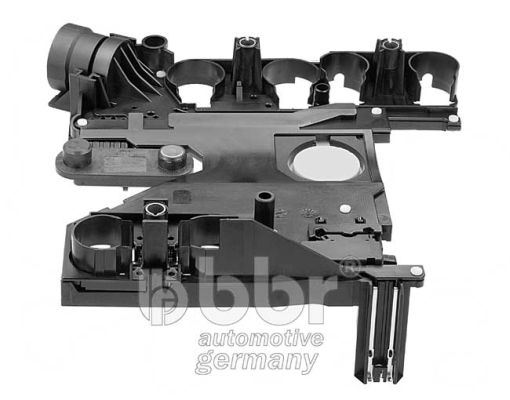
Typical fix: Replace the conductor plate. This requires draining the transmission fluid, removing the pan, and dropping the valve body. The 13-pin connector, filter, and pan gasket are always replaced at the same time. Kits are widely available.
Est. part cost: $130-$250 for an aftermarket conductor plate kit; $250-$450 for an OEM kit. - Low Battery Voltage or Faulty Ground ⚪ Low Probability All modern vehicle computer networks are sensitive to voltage. A weak battery, failing alternator, or poor ground connection (a common Sprinter issue) can cause modules to intermittently drop off the network during startup or driving, triggering communication codes.
How to confirm: Test the battery voltage with the engine off (should be >12.4V). Test the charging system with the engine running (should be 13.5V-14.5V). Perform a voltage drop test on the main power and ground connections to the chassis and engine.
Typical fix: Charge or replace the battery, clean and tighten ground connections, or replace the alternator.
Est. part cost: $150-$400 for a new AGM battery.
Rare But Worth Checking
- Damaged CAN Bus Wiring: While less common than module failure, the CAN bus wires (typically a twisted pair) can be damaged from chafing against the chassis, corrosion (especially at splices under the floor), or improper repairs, causing a communication breakdown. This requires advanced electrical diagnostics, including checking for 60 Ohms of resistance across the CAN High and CAN Low lines.
- Faulty Shifter Module (ESM): In some cases, a failure within the Electronic Shifter Module can disrupt CAN bus communication and lead to a U0101 code, often accompanied by other codes related to the shifter itself. This can also cause a no-start condition.
Diagnosis Steps
- Check and record any and all fault codes with a quality scanner. Note if other U-codes are present, which could indicate a wider network issue.
- Perform a full visual inspection. Start with the battery terminals and main chassis grounds, ensuring they are clean and tight.
- Inspect the 13-pin electrical connector on the right side of the transmission case. Look for any signs of ATF leakage. This is the most critical check.
- If the connector is wet, follow the wiring harness to the TCM under the driver's seat. Remove the seat and the floor plate to access the TCM.
- Disconnect the electrical plugs from the TCM and inspect for any oily ATF residue. If fluid is present, the TCM and the leaking 13-pin connector are the primary faults.
- If no fluid is found, check all fuses related to the transmission control system (TCM/TCU).
- If fuses, wiring, and the TCM appear clean and dry, the next most likely cause is a failed conductor plate inside the transmission. Check for speed sensor-specific codes (P0715, P0720).
- Confirm power (12V+) and ground at the TCM connector using a multimeter to rule out a basic wiring issue.
- Check CAN bus integrity. With the battery disconnected, measure resistance between the CAN High and CAN Low pins at the DLC or TCM connector. It should be approximately 60 Ohms.
Parts You'll Likely Need
- Transmission Electrical Connector (13-Pin Pilot Bushing)
(OEM #A2035400253)— This is the source of the fluid leak that wicks up the harness and destroys the TCM. It should be replaced whenever the transmission is serviced or if any leak is detected.
Trusted brands: Genuine Mercedes-Benz, Febi, Meyle, Topran
OEM price range: $20-$30
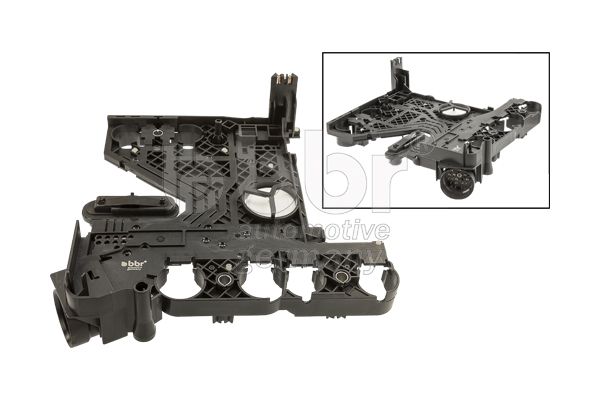
Aftermarket price range: $10-$20 - Transmission Conductor Plate Kit
(OEM #A1402701161)— The internal speed sensors on the plate are a primary failure point, causing limp mode and communication faults.
Trusted brands: Genuine Mercedes-Benz, Meyle, Vaico, Dorman
OEM price range: $250-$450
Aftermarket price range: $130-$250
Related Codes That Often Appear With This One
- P0700 — P0700 is a generic code set by the ECM to indicate that the TCM has stored a fault. U0101 is one of the specific faults the TCM can report, or the reason the TCM is offline.
- P0715 — This code indicates a fault with the Turbine/Input Speed Sensor circuit, which is physically located on the conductor plate. It often appears when the conductor plate is the root cause.
- P0720 — This code points to a fault with the Output Speed Sensor circuit, which is also part of the conductor plate. Seeing P0715 and P0720 together strongly suggests conductor plate failure.
Technical Service Bulletins (TSBs) & Recalls
- While no specific TSB directly for U0101 on the Sprinter was prominently found, TSB LI27.60-P-046984 exists for other Mercedes models, addressing conductor plate issues on the 722.6 transmission which is a primary cause of this code.
Platform-Specific Known Issues
- The primary vehicle-specific issue is the design choice of placing the TCM under the driver's seat, making it vulnerable to damage from fluid wicking up the harness from the notoriously leaky 13-pin connector on the 722.6 transmission.
Mechanic-Grade Diagnostic Values
- CAN Bus Termination Resistance — expected: ~60 Ω. Failure: A reading of ~120 Ω indicates one of the two terminating resistors (or the wiring to it) has failed. A reading of 0 Ω or near-zero indicates a short between CAN High and CAN Low wires.
- TCM Power Supply Voltage — expected: 12.0V - 12.6V with ignition on, engine off.. Failure: Voltage below 12.0V can cause intermittent communication dropouts and trigger U0101.
- TCM Ground Resistance — expected: < 0.5 Ω. Failure: Resistance higher than 0.5 Ω between the TCM ground pin and a clean chassis point indicates a poor ground connection, which is a common cause of module communication issues.
- Ground Point Tightening Torque — expected: 6 Nm (4.4 lbs-ft). Failure: Loose ground connections are a common source of electrical gremlins. All M6 ground points should be torqued to spec.
Hidden / Shadow Codes Worth Checking
- P2204: Stored in the Engine Control Module (ECM), this code indicates 'External quantity control by EGS [TCM]'. It has several sub-codes (001, 002, 004, 008, 016, 032, 064) that specify the nature of the communication fault with the TCM, such as an implausible torque request or not all CAN messages being received. Seeing this code confirms the ECM is aware of a problem originating from the TCM communication. (see via A Mercedes-Benz specific scanner like Xentry/DAS is required to read these detailed sub-codes from the ECM.)
Scan Tool Commands That Help
- Xentry/DAS: Read fault memory of EGS [TCM] — This is the primary first step when a U0101 or related P2204 code is present in the ECM. It attempts to directly communicate with the TCM. If communication fails, it confirms the TCM is offline, pointing towards a power, ground, or CAN line issue, or a dead TCM. If it communicates, it will reveal specific codes stored within the TCM (like speed sensor faults) that point to the conductor plate.
- Xentry/DAS, Vediamo: Virginize / SCN Coding — This is NOT required for the 722.6 transmission's TCM or conductor plate in a Sprinter. However, if working on a newer Sprinter with a 722.9 (7-speed) transmission, replacing the conductor plate (which contains the TCM) requires the new unit to be 'virginized' and then SCN coded to the vehicle's VIN. This is an important distinction for technicians working on multiple Sprinter generations.
Wiring & Ground Locations
- Driver's Seat Base Ground Points — Under the driver's seat, on the metal seat pedestal. There are typically two M6 threaded studs with multiple brown wires attached.. The TCM is located under the driver's seat. These are the primary ground points for the TCM and other nearby electronics. A loose or corroded connection here is a direct cause of power-related communication faults for the TCM.
- EK1 Terminal Block (X145/1) — Under the driver's seat, a three-terminal connector block for tapping into vehicle power.. This provides a known-good, fused source for testing power. Terminal 2 is direct battery power (Circuit 30), and Terminal 3 is ignition-on power (Circuit 15). These can be used as reference points when testing for power at the TCM connector.
- CAN Bus Wiring Harness — The main harness runs from the transmission's 13-pin connector, along the frame, and up through the floor into the driver's seat base to the TCM.. This entire harness path is the route for wicking transmission fluid. When diagnosing, it's important to inspect the full length for fluid contamination, not just at the TCM connector.
Real Owner Repair Stories
- r/Sprinters Reddit user (2013 Sprinter (NCV3)) — No crank, no start.
❌ Tried (didn't work) Checking the TCM connector under the seat (it was clean).
✅ What actually fixed it The user was advised to check the 13-pin connector on the transmission itself, which is the notorious source of fluid leaks that travel up to the TCM. Cleaning the fluid from this connector was the next diagnostic step, with replacement being the ultimate fix if it resolved the issue temporarily.
OEM Part Supersession History
A2035400053, A2035400153→A2035400253— Improved sealing design to prevent transmission fluid leaks.
Heads up: While older versions will physically fit, they are prone to the original leaking problem. It is critical to use the latest part number (A2035400253) or a quality aftermarket equivalent to ensure a lasting repair.
Model Year Variations Within This Range
- 2014-2016: During these years, a 4-cylinder diesel engine was available, which was paired with a 7-speed (722.9 / 7G-Tronic) transmission, not the 5-speed 722.6. On these models, the U0101 code has different causes. The TCM is integrated into the conductor plate inside the transmission, and replacement requires VIN programming (SCN coding), making it a much more complex and expensive repair. The V6 models continued to use the 5-speed 722.6.
Diagnostic Flowchart
Other Known Issues on This Vehicle
Issues unrelated to this code that are worth knowing about as an owner of this generation:
- Injector Seal Failure ('Black Death') 🔴 High — Common on OM642 and OM646/OM647 engines, especially over 100,000 miles. Early signs include a faint exhaust smell in the cab.
- OM642 V6 Swirl Motor Failure 🟠 Medium — Very common, often occurring between 80,000-150,000 miles. Caused by an oil leak from the turbo inlet seal dripping onto the motor.
- DPF and Emissions System Problems 🔴 High — Frequent issue, especially for vans used for short trips, extended idling, or city driving, which prevents the DPF from completing regeneration cycles.
- Rust and Corrosion 🟠 Medium — Common on NCV3 Sprinters, especially in regions that use road salt. Problem areas include rocker panels, wheel arches, and door seams.
Used vs. New Parts: Buying Guide for This Vehicle
When a used part is the smart pick: A used TCM can be a cost-effective option for the 722.6-equipped Sprinter because it is a separate module and does not require VIN programming or SCN coding. If your original TCM is destroyed by fluid, a clean, tested unit from a salvage yard is often plug-and-play.
Donor-vehicle mileage cap: roughly under 150000 miles for the part to have meaningful remaining life.
What to inspect on the donor part:
- For a used TCM: Pins must be perfectly clean, straight, and free of any oil residue or corrosion. Ask the seller to guarantee it came from a vehicle that did not have the fluid-wicking issue.
- For a used Conductor Plate: Visually inspect the speed sensor fins for any cracks or brittleness. Avoid parts that look dark and heat-stressed. However, given the low cost of new aftermarket plates, a used one is generally not recommended.
- Verify the donor vehicle's year and engine (V6) to ensure it had the 722.6 transmission, not the 722.9.
OEM-only on this vehicle (don't cheap out):
- Transmission Electrical Connector (13-Pin Pilot Bushing): While not strictly 'OEM-only', using a high-quality OE-supplier brand like Febi or genuine Mercedes is critical. Cheap, unbranded connectors often use inferior O-rings that will leak again, causing a repeat failure of the entire system.
Aftermarket brands forum-validated for this vehicle:
- Conductor Plate: Meyle and Vaico are generally considered reliable aftermarket brands. Some Dorman parts have been reported to be re-boxed OEM parts with the Mercedes logo ground off.
- 13-Pin Connector: Febi, Meyle, Genuine Mercedes-Benz.
Brands owners have reported issues with on this vehicle:
- Unbranded 'Genuine' Conductor Plates: Be wary of sellers on eBay or Amazon claiming to sell 'Genuine' conductor plates at a deep discount without official Mercedes-Benz packaging. These are often reworked/used parts that are cleaned and resold as new, and may have residual oil or signs of prior use.
Real Owner Stories
Aggregated from forums and TSBs cited above. Mileages and costs reflect what owners reported in those sources.
Mercedes-Benz GL-Class (X164) with 722.6 transmission
Symptoms: Vehicle experienced a no-start condition with code U0101 after towing on a hot day.
What fixed it: The owner was advised to use a Mercedes-specific scanner (DAS) to look beyond the generic U0101 code for more detailed transmission faults.
Source hint: MBWorld.org Forums - 'U0101 code. Won't start.'
2006-2018 Mercedes-Benz Sprinter
Symptoms: Transmission fluid wicking up the harness from the 13-pin connector into the TCM.
What fixed it: Replacing the 13-pin connector, cleaning the wiring harness conduit with electrical contact cleaner, and cleaning or replacing the TCM.
Source hint: Sprinter-Source.com Forum - (General Knowledge)
Mercedes-Benz with 722.6 Transmission
Symptoms: Discussion regarding preventative maintenance of the 13-pin connector to avoid fluid wicking.
What fixed it: Installation of the updated 13-pin connector sleeve with thicker O-rings.
Source hint: PeachParts Mercedes-Benz Forum - '722.6 Transmission: Always replace 13-pin connector when doing tranny service?'
Related OBD-II Codes
Frequently Asked Questions
Can a leaking 13-pin connector on my 722.6 transmission really cause a U0101 communication error?
Does TSB LI27.60-P-046984 apply to the Sprinter's transmission issues?
Why won't my Sprinter start when the U0101 code is present?
Is there a specific part number for the updated 13-pin connector sleeve?
Where is the Transmission Control Module (TCM) located on my Sprinter?
Can I save my TCM if it has been contaminated with transmission fluid?
We Have This Part in Stock

The information in this article is provided for general reference and educational purposes only. Vehicle specifications, procedures, and part compatibility can vary by production date, trim level, and region. Always consult your vehicle's factory service manual and verify part numbers before purchasing or performing repairs. Safety-critical components such as airbags, seat belts, and braking systems should be installed by a qualified professional.
- Mercedes-Benz Sprinter:
- 🛍️ Shop This Part
- What's Unique About the 2006-2018 Mercedes-Benz Sprinter
- Symptoms You May Notice
- Most Likely Causes
- Rare But Worth Checking
- Diagnosis Steps
- Parts You'll Likely Need
- Related Codes That Often Appear With This One
- Technical Service Bulletins (TSBs) & Recalls
- Platform-Specific Known Issues
- Mechanic-Grade Diagnostic Values
- Hidden / Shadow Codes Worth Checking
- Scan Tool Commands That Help
- Wiring & Ground Locations
- Real Owner Repair Stories
- OEM Part Supersession History
- Model Year Variations Within This Range
- Diagnostic Flowchart
- Other Known Issues on This Vehicle
- Used vs. New Parts: Buying Guide for This Vehicle
- Real Owner Stories
- Mercedes-Benz GL-Class (X164) with 722.6 transmission
- 2006-2018 Mercedes-Benz Sprinter
- Mercedes-Benz with 722.6 Transmission
- Related OBD-II Codes
- Frequently Asked Questions
- 🎟️ Get 5% Off