

U0101 on 2021 Dodge Challenger: Lost Communication With TCM Causes and Fixes
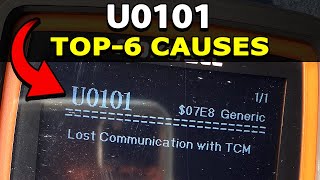
This code means your 2021 Challenger's main computer has lost communication with the Transmission Control Module (TCM). A common cause is a software issue fixed by a dealer PCM update, as noted in TSB #18-011-22, which applies to V6 models built on or before October 14, 2021. Other causes include wiring problems, a faulty TCM, or low battery voltage.
- For a 2021 Challenger, the first step for code U0101 should be checking if TSB #1801122 (PCM software update) has been performed.
- Do not drive the vehicle, as the transmission can behave unpredictably and pose a safety hazard.
- Before suspecting an expensive module failure, thoroughly check the battery, fuses, grounds, and wiring harness for simple, inexpensive fixes.
- This is a complex electronic issue; professional diagnosis is highly recommended to avoid replacing the wrong parts.
What's Unique About the 2021-2021 Dodge CHALLENGER
For the 2021 Dodge Challenger, a key factor for code U0101 is a known software issue. Dodge released Technical Service Bulletin (TSB) #18-011-22 that specifically lists U0101 as a code that can be triggered due to a glitch. This TSB applies to models with the 3.6L V6 engine built on or before October 14, 2021, and the fix is to reprogram the Powertrain Control Module (PCM) with updated software. This makes a software update a primary and well-documented suspect, potentially saving owners from unnecessary hardware replacements.
Diagnostic Flowchart
Tap your situation to follow the diagnostic path that matches what you're seeing on this vehicle.
Symptoms You May Notice
- Check Engine Light (Malfunction Indicator Lamp) is on.
- Transmission warning light illuminated.
- Vehicle enters "limp mode," limiting speed and stuck in one gear.
- Erratic, harsh, or delayed shifting.
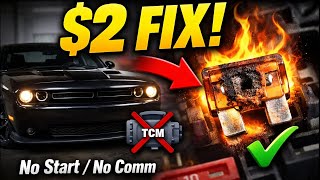
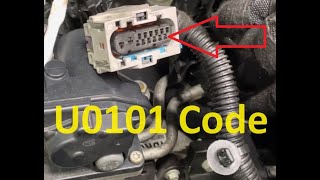
- Inability to shift out of Park or Neutral. 🎬 Watch: Troubleshooting a Challenger that won't crank or communicate with the TCM.
- PRNDL gear indicator on the instrument cluster may be blank or incorrect.
- Scan tool fails to communicate with the TCM.
- Replacing the entire transmission when the issue is purely electronic.
- Replacing the TCM when the actual fault is a simple wiring issue, a blown fuse, a poor ground, or a software glitch that requires a PCM flash.
Most Likely Causes
- PCM Software Glitch 🔴 High Probability A specific TSB (#18-011-22) was issued by Dodge for 2021 V6 models built before mid-October 2021, indicating that a software update for the PCM is the designated fix for U0101 and a host of other communication codes.
How to confirm: A Dodge dealership or a qualified shop with access to OEM software (like wiTECH) can check the current PCM software calibration ID against the latest version available in the TSB.
Typical fix: Reprogramming or 'flashing' the Powertrain Control Module (PCM) with the latest software.
Est. part cost: $0-$200 - Wiring or Connector Issues 🟡 Medium Probability Wiring harnesses, especially those near the transmission, are exposed to heat, vibration, and potential fluid leaks. Chafing against the chassis or engine components can break the sensitive CAN bus wires, and fluid intrusion into connectors can cause corrosion and short circuits.
How to confirm: Visually inspect the wiring harness leading to the Transmission Control Module for any signs of physical damage. Disconnect the connectors at both the TCM and PCM to check for bent pins, corrosion, or moisture/oil contamination. A technician can perform a pin-to-pin continuity and resistance check on the CAN bus wires.
Typical fix: Repairing the damaged section of the wire, cleaning or replacing the faulty connector, and securing the harness away from sources of damage.
Est. part cost: $10-$150 - Faulty Transmission Control Module (TCM) ⚪ Low Probability While less common than software or wiring faults, the TCM itself can fail internally due to electrical surges, heat, or component degradation, causing it to stop communicating on the network. In some cases, aftermarket tuning devices have been linked to TCM failure.
How to confirm: This is typically a process of elimination. If all power, ground, and communication wires to the TCM test good, and a PCM software update doesn't resolve the issue, the TCM becomes the primary suspect. A high-level scan tool will be unable to establish communication with the module.
Typical fix: Replacing the Transmission Control Module. On many modern Challengers, the TCM is integrated into the transmission's valve body, requiring its replacement as a unit, followed by programming to the vehicle.
Est. part cost: $600-$1200 - Low Battery Voltage or Poor Grounds ⚪ Low Probability All modern electronic modules, including the TCM, are sensitive to voltage. A failing battery, poor alternator output, or a corroded/loose main ground connection can cause unpredictable communication errors across the entire vehicle network.
How to confirm: Test the battery voltage with a multimeter; it should be above 12.4 volts with the engine off. Check the charging system to ensure it's providing stable voltage (typically 13.5-14.5 volts) when running. Inspect main ground straps from the engine to the chassis for tightness and corrosion.
Typical fix: Replacing the battery, cleaning or tightening ground connections, or replacing a faulty alternator.
Est. part cost: $20-$350
Rare But Worth Checking
- Faulty Totally Integrated Power Module (TIPM): In some Dodge vehicles, the TIPM (the main fuse box and control unit) can develop internal faults that disrupt power or communication signals to the TCM. Wiggling the TIPM or its connectors may intermittently cause or resolve the issue, pointing to an internal failure.
- Aftermarket Tuning Devices (Tazer/Programmer): Improper use or disconnection of aftermarket electronic devices that interface with the OBD-II port, such as a Tazer, has been reported by owners to cause the TCM to lose communication and become unresponsive, sometimes permanently.
Diagnosis Steps
- Check for TSBs: First, confirm with a dealer if TSB #18-011-22 applies to your vehicle's VIN and build date, and if the PCM software update has been performed.
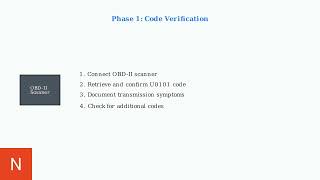
- Scan for Other Codes: Use an OBD-II scanner to check for other 'U' (network) codes. Multiple communication codes strongly point to a systemic network issue (like the TSB) rather than a single failed module.
- Inspect Battery and Grounds: Ensure the battery has a full charge (12.4V+ engine off) and the charging system is stable (13.5V-14.5V engine on). Check that battery terminals and main chassis grounds are clean, tight, and free of corrosion.
- Check Fuses: Locate and inspect the fuses that provide power to the Transmission Control Module and Powertrain Control Module in the vehicle's fuse box (TIPM).
- Visual Inspection of Wiring: Carefully inspect the wiring harness going to the transmission and the TCM. Look for any signs of chafing, melting, or corrosion, paying close attention to where the harness may rub against the engine, exhaust, or chassis.
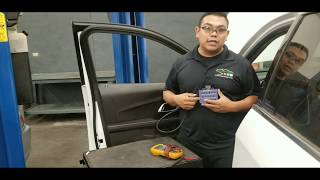
- Test CAN Bus and TCM Power: If wiring appears intact, a technician will use a multimeter to check for proper power and ground at the TCM connector. They will also test for correct resistance on the CAN bus (around 60 ohms with battery disconnected) and voltage on the CAN High and CAN Low wires (typically around 2.5V each, with one slightly above and one slightly below). 🎬 See how to test a CAN bus network using a multimeter.
- Isolate the Module: If all wiring, power, grounds, and software are good, the final step is to suspect the TCM itself. This is often confirmed by a process of elimination after all other possibilities have been ruled out.
Parts You'll Likely Need
- Transmission Control Module (TCM) — If all wiring and software possibilities are exhausted, the module itself may have failed internally. For the ZF 8-speed transmission, this is often integrated with the valve body and not sold separately. Part numbers are highly specific to VIN and transmission type; dealer confirmation is required.
Trusted brands: Mopar
OEM price range: $800-$1200
Aftermarket price range: $500-$900
Related Codes That Often Appear With This One
- U0102 — Lost Communication With Transfer Case Control Module. This often appears alongside U0101 as part of a broader network communication failure addressed by TSB #18-011-22.
- U0103 — Lost Communication With Electric Gear Shift Module. Also listed in TSB #18-011-22, indicating a related software or network problem.
- U0140 — Lost Communication With Body Control Module. Its appearance with U0101 points towards a more widespread CAN bus network problem rather than an isolated TCM fault, often related to the software issue in TSB #18-011-22.
- U0402 — Implausible Data Received From TCM. This code suggests that some communication is happening, but the data is corrupt or nonsensical, which can be a precursor or companion to a total loss of communication (U0101). It is also listed in TSB #18-011-22.
Technical Service Bulletins (TSBs) & Recalls
- 18-011-22 (Replaces NHTSA #1801122): Flash: Powertrain Control Module (PCM) Updates. Addresses MIL illumination with DTC U0101 - Lost Communication With TCM, among many others, for 2021 models with the 3.6L V6 engine built on or before October 14, 2021.
Platform-Specific Known Issues
- A Powertrain Control Module (PCM) software update is a known fix for U0101 on 2021 3.6L V6 models built on or before October 14, 2021, as detailed in TSB #18-011-22. This bulletin also covers a wide range of other communication DTCs that may appear at the same time.
Mechanic-Grade Diagnostic Values
- CAN Bus Network Resistance — expected: ~60 Ohms. Failure: A reading of ~120 Ohms indicates an open circuit or a module with a terminating resistor is offline. A reading of ~40 Ohms or less suggests a short or an extra terminating resistor on the network.
- CAN Bus Voltage (Key On, Engine Off) — expected: CAN High: 2.5V to 3.5V. CAN Low: 1.5V to 2.5V.. Failure: Voltages outside these ranges, or a CAN High voltage that is not greater than CAN Low, indicates a network fault. A short to ground will pull voltage low, while a short to power will pull it high.
- TCM Power Supply Pin Voltage (Key On) — expected: Greater than 10.0 Volts (should be close to battery voltage).. Failure: Low or no voltage indicates an open or short in the power supply circuit, a blown fuse, or a faulty TIPM.
- TCM Ground Pin Resistance to Chassis Ground — expected: Less than 5.0 Ohms, ideally less than 0.5 Ohms.. Failure: High resistance indicates a corroded, loose, or broken ground connection, which can cause intermittent module operation.
Scan Tool Commands That Help
- wiTECH (OEM Dodge/Chrysler Scanner): View Network Topology — This is a primary step to get a visual map of all CAN bus modules. It will clearly show which modules are communicating (green) and which are offline (red), immediately confirming if the U0101 is an isolated TCM issue or a wider network problem.
- wiTECH or high-level bidirectional scanner: Network Test / Communication Test — This function actively polls all expected modules on the network and reports which ones fail to respond. It's a direct way to confirm the 'Lost Communication' status of the TCM.
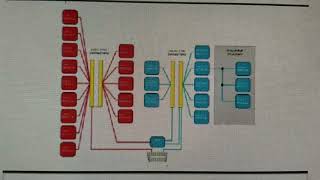
- wiTECH or high-level bidirectional scanner: Isolate Module / Star Connector Diagnosis — This isn't a direct command, but a procedure enabled by the vehicle's architecture. A technician uses the scanner to monitor the network while physically disconnecting modules one-by-one at the 'Star Connector'. When the faulty module is disconnected, the rest of the network comes back online, pinpointing the source of the failure.
Wiring & Ground Locations
- Front Fuse Box (TIPM) — Under the hood, on the passenger side of the engine compartment.. This unit, also called the Totally Integrated Power Module (TIPM), contains critical fuses and relays for the TCM. Specifically, check fuse F29 and fuse F37 for the TCM power supply. An internal failure of the TIPM itself can also cut power to the TCM even if the fuses are good.
- Rear Fuse Box — In the trunk, next to the battery.. Contains additional fuses related to vehicle power distribution. For the TCM circuit, check fuse F26, though its presence may depend on the specific transmission option.
- CAN Bus Star Connector — Often located behind trim panels, such as under the dash or behind a kick panel. It looks like a small block with multiple connectors plugged into it.. This is the central hub for the CAN C (powertrain) network. A fault in any single module or its wiring can bring down the entire network. Technicians use this point to systematically disconnect modules to find which one is causing the communication failure.
- TCM Connector — On the transmission housing itself. For the ZF 8-speed, the TCM is integrated into the mechatronic/valve body unit inside the transmission, with a large round connector on the exterior.. This is the direct interface for testing power, ground, and CAN signals at the module. Pin 13 (Yellow/Red) is a common main battery feed, and Pin 14 (Black) is a ground. Checking for voltage, ground, and CAN signals here is the definitive test of the wiring harness.
Real Owner Repair Stories
- YouTube Channel 'NoNonsenseKnowHow' (Chrysler 300 (similar platform with ZF 8-speed transmission)) — No crank, no start condition with U0101 - Lost Communication with TCM.
❌ Tried (didn't work) Checking fuses, which were found to be good.
✅ What actually fixed it The technician found that while the TCM fuse in the fuse box had power, the power was not reaching the TCM connector. There was an internal open circuit within the power distribution center (fuse box). The final fix was to solder a jumper wire from the power source side of the fuse directly to the wire leading to the TCM, bypassing the internal fault in the fuse box.
OEM Part Supersession History
68434935AA, 68434935AB→68434935AC— Part revision by manufacturer for bug fixes or component updates.
Heads up: This is for the Powertrain Control Module (PCM), not the TCM. A PCM update is a primary fix for U0101 on V6 models per TSB #18-011-22.68434939AA, 68434939AB→68434939AC— Part revision by manufacturer for bug fixes or component updates.
Heads up: This is another variant of the Powertrain Control Module (PCM). The correct PCM part number is VIN-specific.
Model Year Variations Within This Range
- 2021 (build date on or before October 14, 2021): Models with the 3.6L V6 engine built within this timeframe are specifically called out in TSB #18-011-22. The designated fix for U0101 (and other U-codes) is a PCM software update, which may not be necessary for vehicles built after this date which likely have the updated software from the factory.
Helpful Videos
Used OEM Parts in Stock


New Aftermarket Parts Available

The information in this article is provided for general reference and educational purposes only. Vehicle specifications, procedures, and part compatibility can vary by production date, trim level, and region. Always consult your vehicle's factory service manual and verify part numbers before purchasing or performing repairs. Safety-critical components such as airbags, seat belts, and braking systems should be installed by a qualified professional.
- Dodge CHALLENGER:
- 🎬 Helpful Videos
- 🛍️ Shop This Part
- What's Unique About the 2021-2021 Dodge CHALLENGER
- Diagnostic Flowchart
- Symptoms You May Notice
- Most Likely Causes
- Rare But Worth Checking
- Diagnosis Steps
- Parts You'll Likely Need
- Related Codes That Often Appear With This One
- Technical Service Bulletins (TSBs) & Recalls
- Platform-Specific Known Issues
- Mechanic-Grade Diagnostic Values
- Scan Tool Commands That Help
- Wiring & Ground Locations
- Real Owner Repair Stories
- OEM Part Supersession History
- Model Year Variations Within This Range
- 🎟️ Get 5% Off