

U0100 on 2014-2021 Jeep Cherokee: Lost Communication with ECM/PCM Fixes
U0100 on a 2014-2021 Jeep Cherokee means the main engine computer (PCM) is offline. This often causes a no-start or stalling. The most common causes are a weak or failing main or auxiliary battery, poor ground connections, or wiring issues. Before replacing the expensive PCM, check both batteries and all related wiring and grounds first.
- U0100 is a critical code indicating the engine's main computer is offline, often causing a no-start or stalling.
- Before suspecting an expensive PCM failure, thoroughly test the battery and check all main power and ground connections.
- Jeep has issued service bulletins indicating that a software update can sometimes fix false U0100 codes, preventing unnecessary parts replacement. [⭐ MANUFACTURER TSB — highest authority]
- This is not a DIY-friendly repair for most people due to the need for advanced diagnostic tools to analyze the vehicle's communication network.
What's Unique About the 2014-2021 Jeep CHEROKEE

For the Jeep Cherokee (KL generation), a U0100 code doesn't always mean the PCM has failed. Chrysler has issued Technical Service Bulletins (TSBs), like #0806816, indicating that software updates can reduce the potential for misdiagnosis of this code. [⭐ MANUFACTURER TSB — highest authority] This suggests that other modules might incorrectly report a lost communication with the PCM, when in fact a software re-flash of one or more modules is the correct fix. Furthermore, many Cherokees are equipped with a dual-battery system for the Engine Stop-Start (ESS) feature. A failure in the smaller, auxiliary battery is a known cause of widespread, difficult-to-diagnose electrical issues, including communication codes like U0100. TSB 08-039-16 REV. A also points to a specific wiring harness chafing issue on some models that can cause this code along with a no-start condition.
Diagnostic Flowchart

Tap your situation to follow the diagnostic path that matches what you're seeing on this vehicle.
Generation note: The 2014-2021 model years cover the Jeep Cherokee (KL) generation. A significant facelift occurred in 2019, which included updated electronics and infotainment. However, the core network architecture and the meaning of code U0100 remain consistent across this entire year range. The dual-battery system for ESS is a key consideration throughout these years.
Symptoms You May Notice

- Engine will not start or has a no-crank condition.
- Engine stalls intermittently while driving.
- Check Engine Light is on.
- Multiple other warning lights (ABS, Traction Control, Airbag, etc.) may illuminate simultaneously.
- Transmission may not shift correctly or may be stuck in one gear (limp mode).
- Rough or erratic idle.
- Windshield wipers may activate on their own.
- Radio may ask for an anti-theft code because it cannot verify the VIN with the PCM.
- Replacing the PCM without first checking both batteries, grounds, and wiring.
- Replacing only the main battery without testing or considering the auxiliary battery on ESS-equipped models.
- Replacing other modules (like the TCM or BCM) that are also setting communication codes, when the root cause is the PCM being offline.
Most Likely Causes

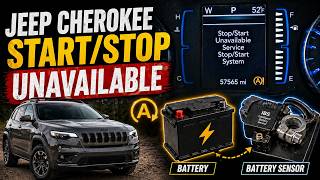
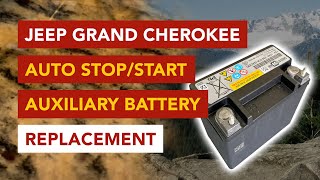
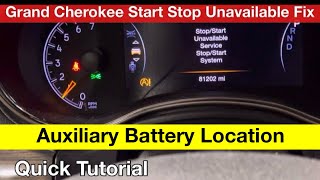
- Weak or Failing Battery (Main or Auxiliary) 🔴 High Probability Modern vehicles like the Cherokee are packed with electronics that are highly sensitive to voltage. A battery that is failing or has low voltage can cause communication disruptions between modules before it's weak enough to prevent cranking. On models with Engine Stop-Start (ESS), the small auxiliary battery is a frequent failure point and can cause numerous electrical gremlins, including U-codes, when it degrades.
How to confirm: Test the main battery voltage with a multimeter; a healthy battery should read at least 12.6 volts engine-off. Have both the main and auxiliary batteries load-tested. The auxiliary battery is located under the main battery and fuse block and can be difficult to access.
Typical fix: Recharge or replace the failing battery. Many owners choose to bypass or eliminate the auxiliary battery system.
Est. part cost: $150-$450 (for one or both batteries) - Poor Ground Connections 🟡 Medium Probability Corrosion or loose connections at the main PCM, engine, or chassis grounds can interrupt the stable voltage required for module communication. Key ground points are known to cause issues, such as the main engine ground behind the oil dipstick, the battery ground on the fender, and grounds for the PCM itself.
How to confirm: Visually inspect the main ground straps from the battery to the chassis and from the engine block to the chassis. Check the ground wires at the PCM connector. Use a multimeter to perform a voltage drop test on the ground circuit; it should be less than 100-200mV under load.
Typical fix: Disassemble, clean all contact surfaces of corrosion with a wire brush, and securely tighten the connections. Adding a supplementary ground wire is a common upgrade.
Est. part cost: $1-$20 - Damaged Wiring or Connectors 🟡 Medium Probability TSB 08-039-16 REV. A specifically identifies a potential for the transmission wiring harness to chafe against components, leading to shorts that can cause a U0100 code. [⭐ MANUFACTURER TSB — highest authority] The CAN bus wires are a twisted pair, and any damage from vibration, chafing, or rodent activity can halt communication.
How to confirm: Visually inspect the wiring harness leading to the PCM for any signs of chafing, melting, or breaks. Pay close attention to the area around the transmission as noted in the TSB. A more advanced check involves testing the CAN bus wires for proper resistance (typically 60 ohms across the two wires with the battery disconnected) and voltage (around 2.3V on CAN L and 2.7V on CAN H with the key on).
Typical fix: Repair the damaged section of the wire or replace the affected connector. For the issue in TSB 08-039-16, the fix involves inspecting, repairing/replacing the harness, and applying a protective mastic patch.
Est. part cost: $20-$500 (depending on harness replacement) - Outdated Module Software ⚪ Low Probability As per TSB #0806816, software glitches can cause modules to misinterpret data, leading to false U0100 codes. [⭐ MANUFACTURER TSB — highest authority] This TSB was specifically issued to reduce misdiagnosis and incorrect module replacement by flashing the PCM, TCM, and/or BCM.
How to confirm: A Jeep dealership or a qualified shop with a wiTECH scan tool can check if any software updates are available for the PCM, BCM, or other related modules by checking the vehicle's VIN against available updates.
Typical fix: Reprogram (flash) the affected module(s) with the latest software.
Est. part cost: $0 (if under warranty) - $250
Rare But Worth Checking
- Failed Powertrain Control Module (PCM): While this is the component the code points to, internal failure of the PCM is less common than the wiring and power supply issues that feed it. It should only be considered after all other possibilities have been thoroughly ruled out. A user on a forum noted that if the PCM is bad, it may be covered under the 8 year/80,000 mile federal emissions warranty.
- Aftermarket Device Interference: Improperly installed aftermarket accessories like remote starters, alarms, or tuners that are spliced into the CAN bus or power feeds can disrupt network communication and cause a U0100 code.
Diagnosis Steps
- Check Battery Health (Main and Aux): Verify main battery voltage is above 12.4V. On models with ESS, be aware that a failing auxiliary battery is a primary suspect. Have both batteries professionally load-tested.
- Scan for All Codes: Use a high-quality scanner to read codes from all modules, not just the engine. Note any other 'U' codes, as they provide clues to the extent of the network failure.
- Inspect Grounds: Visually inspect and physically check the main battery, chassis, and engine ground connections for tightness and corrosion. Pay special attention to grounds on the inner fender and engine block.
- Inspect PCM Wiring & TSBs: Carefully inspect the wiring harness and connectors at the Powertrain Control Module for any visible damage, corrosion, or loose pins. Specifically check for chafing on the transmission harness as described in TSB 08-039-16 REV. A. [⭐ MANUFACTURER TSB — highest authority]
- Check for Software Updates: Contact a Jeep dealer or use a professional database to see if TSBs like #0806816 or other software updates apply to your vehicle's VIN. [⭐ MANUFACTURER TSB — highest authority]
- Test CAN Bus Network: This is an advanced step. With the battery disconnected, measure the resistance between pins 6 and 14 at the OBD-II port. It should be 60 ohms. If it's 120 ohms, there's a break in the circuit or a missing terminating resistor.
- Test PCM Power/Ground: At the PCM connector, verify that all power and ground pins have the correct voltage/continuity according to the vehicle's wiring diagram. A user on a forum provided specific pinouts for a similar Jeep model: check for battery voltage on power pins and near-zero resistance to ground on ground pins.
- Isolate the Fault: If the CAN bus resistance is incorrect, unplug modules one by one to see if the resistance returns to normal, which would indicate a faulty module or terminating resistor.
- Consider PCM Failure: If all wiring, power, grounds, and the network test correctly, the PCM itself may have failed.
Parts You'll Likely Need
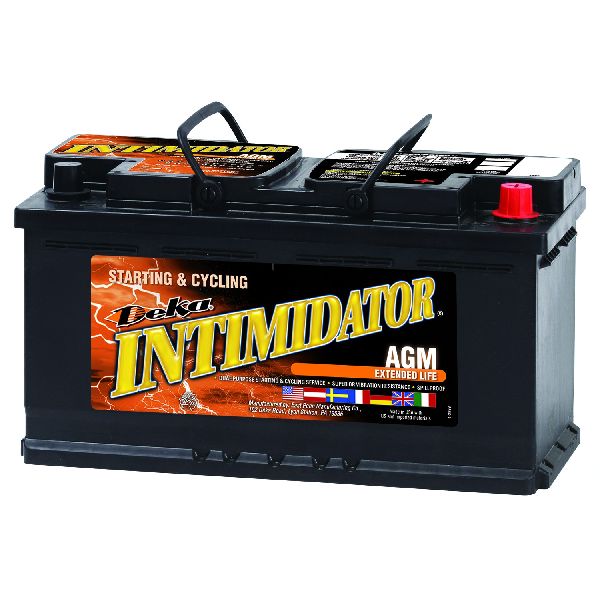
- Battery (Main or Auxiliary) — Low system voltage from a weak or failing battery (especially the auxiliary one) is a primary cause of module communication errors on the KL Cherokee.
Trusted brands: Mopar, Interstate, DieHard
OEM price range: $200-$350
Aftermarket price range: $150-$250 - Powertrain Control Module (PCM)
(OEM #68294212AA (Example for 2014 3.2L), 05150843AB (Example for 2014 2.4L) - Part numbers are VIN specific.)— If all wiring and power/ground circuits are confirmed to be good, the PCM itself may have an internal fault preventing it from communicating. This is a last resort replacement and requires programming.
Trusted brands: Mopar (OEM), Flagship One (Remanufactured), Cardone (Remanufactured)
OEM price range: $800-$1200
Aftermarket price range: $300-$600 (Remanufactured) - Transmission Wiring Harness — As per TSB 08-039-16 REV. A, this harness can chafe and short out, causing a no-start and communication codes.
Trusted brands: Mopar
OEM price range: $300-$500
Related Codes That Often Appear With This One
- U0101 — Lost Communication with TCM (Transmission Control Module). The TCM and PCM work together constantly, so if the PCM goes offline, the TCM will immediately report it. [⭐ MANUFACTURER TSB — highest authority]
- U0140 — Lost Communication with BCM (Body Control Module). The BCM controls many body and security functions and will log this code when it can't hear from the PCM. [⭐ MANUFACTURER TSB — highest authority]
- U0131 — Lost Communication with Power Steering Control Module. This module relies on data from the PCM and will set a code if communication is lost, as noted in TSB 08-039-16 REV.A. [⭐ MANUFACTURER TSB — highest authority]
Technical Service Bulletins (TSBs) & Recalls
- 0806816: Notes that a software update can prevent misdiagnosis of U0100, U0140, and U0101 codes.
- 08-039-16 REV.A: Lists U0100 as a possible DTC found during investigation of other electrical issues.
Platform-Specific Known Issues
- Software Misdiagnosis: TSB #0806816 specifically notes that a software update should be performed to 'reduce the potential for misdiagnosis' and 'incorrect module replacement' when U0100 is present, indicating this is a known issue on these vehicles. [⭐ MANUFACTURER TSB — highest authority]
- Multiple Communication Codes: TSB #08-039-16 REV.A shows that U0100 often appears with other codes like U0131 (Power Steering) and P0512 (Starter Request Circuit), pointing to a widespread network communication failure rather than a single component issue. [⭐ MANUFACTURER TSB — highest authority]
Mechanic-Grade Diagnostic Values
- CAN C Bus Resistance — expected: Approximately 60 Ω (Ohms). Failure: A reading of 120 Ω indicates an open circuit or a failed terminating resistor in one of the modules (often the BCM or PCM). A reading significantly less than 60 Ω (e.g., 0-45 Ω) suggests a short between the CAN High and CAN Low wires.
- CAN C Bus Voltage (Key On, Engine Off) — expected: CAN High (Pin 6): ~2.7 Volts. CAN Low (Pin 14): ~2.3 Volts.. Failure: Voltages that are stuck high (e.g., 5V or 12V), stuck low (0V), or equal to each other indicate a short to power, short to ground, or a short between the two CAN wires.
Hidden / Shadow Codes Worth Checking
- U0100-00: The '-00' is a Failure Type Byte (FTB) indicating 'No Sub Type Information'. This is a generic failure designation and doesn't provide additional diagnostic detail beyond the main code, but confirms the code was set by a module following the standard SAE J2190 protocol. (see via This is the standard format seen on OEM-level scan tools like wiTECH and is mentioned in official TSBs. [⭐ MANUFACTURER TSB — highest authority])
Scan Tool Commands That Help
- wiTECH 2.0: PCM Replaced / Replace ECU — This function is mandatory after installing a new or used PCM. It writes the vehicle's VIN into the module, configures it for the specific options on the vehicle (a process called PROXI alignment), and initializes the security handshake with the immobilizer module. Without this step, the vehicle will not start.
- wiTECH 2.0 or high-end aftermarket: ABS Initialization — If the ABS module is suspected of causing the network issue and is replaced, this routine must be run to configure the new module to the vehicle.
Wiring & Ground Locations
- STAR Connector (C9 / C10) — There are multiple CAN bus junction blocks, called STAR connectors. One is located in the instrument panel, and another is in the center console area. These connectors act as a central hub for the CAN bus wires.. A loose connection or corrosion within one of these central connectors can sever communication for multiple modules at once, including the PCM, leading to a U0100 code.
- Engine Block Ground — A critical ground strap is often found on a stud on the engine block, sometimes near the oil dipstick tube mount.. This is a primary ground point for the engine's electrical system. If loose or corroded, it can cause unstable voltage for the PCM and other sensors, directly causing communication codes like U0100.
- G107 / G108 (Fender Grounds) — Located on the inner fender aprons in the engine bay, typically behind the airbox on the driver's side or near the fuse box (PDC) on the passenger side.. These are major chassis ground points for numerous modules, including the PCM and ABS module. A poor connection here can cause intermittent communication faults across the entire network.
Real Owner Repair Stories
- YouTube Channel 'Best Car Fixes' (2016 Jeep Cherokee) — Intermittent no-start, no-crank condition with multiple trouble codes.
❌ Tried (didn't work) The owner had attempted to fix a blown fuse by wrapping it with wire.
✅ What actually fixed it The under-hood fuse box (Power Distribution Center) itself was internally damaged and burnt at a fuse terminal due to the previous improper repair creating high resistance. Replacing the entire fuse box assembly resolved the no-start and communication issues. - YouTube Channel 'Pine Hollow Auto Diagnostics' (2016 Jeep Cherokee) — No-crank, no-start. Multiple communication codes including U0168 (Lost Communication with Vehicle Security Control Module) and others.
❌ Tried (didn't work) Initial scans showed a flood of communication codes with no clear starting point.
✅ What actually fixed it The issue was diagnosed as a 'logic lock' within the PCM. The fix required no parts. The technician performed a hard reset by disconnecting the battery, then disconnected and reconnected the main PCM electrical connectors. This forced the module to reboot fully, restoring communication and allowing the vehicle to start.
"I Checked Everything" — The Actual Cause
- While a smoke test is not used for network codes, a similar pattern exists: A 2012 Jeep Patriot (with a similar CAN architecture) had a U0100 and other communication faults. All wiring harness checks for opens, shorts, and continuity came back clean. The dealer diagnosed a bad ABS module. A failing module on the network was shorting communication internally, but all external wiring tested good. Replacing the ABS module and performing an initialization routine fixed the problem.
When the Usual Fixes Don't Work
- While weak batteries and bad grounds are the most frequent culprits for U0100, there are numerous confirmed cases on forums and in technician videos where these common fixes did not work. In several instances, the root cause was a failure in a seemingly unrelated module on the CAN bus, such as the radio or the ABS module. These modules can fail internally and short the entire communication network, making it appear as if the PCM is offline. In one documented case, a simple 'logic lock' in the PCM was the cause, and a hard reset (disconnecting the battery and the PCM itself) resolved the no-start condition without any parts being replaced. This highlights the importance of testing the entire network rather than focusing solely on the PCM.
Model Year Variations Within This Range
- 2019-2021: The 2019 facelift introduced a new 2.0L Turbo engine and updated Uconnect systems. The PCM for the 2.0L Turbo is specific to that engine and not interchangeable with the 2.4L or 3.2L PCMs. While the U0100 code's meaning is the same, diagnosing a 2019+ model with a different radio may require different steps if the radio is suspected as the cause.
- 2014-2021 (All): The use of the 9-speed ZF transmission was a source of many software updates in the early years (2014-2016). Some TSBs addressing harsh shifting also included updates that improved overall network stability, potentially affecting the likelihood of false U0100 codes.
Helpful Videos

![How To Test CAN BUS With A Multimeter [CAN Bus Resistance Check] Mechanic Mindset](https://img.youtube.com/vi/JPE42HSJxAk/mqdefault.jpg)
Used OEM Parts in Stock


New Aftermarket Parts Available



The information in this article is provided for general reference and educational purposes only. Vehicle specifications, procedures, and part compatibility can vary by production date, trim level, and region. Always consult your vehicle's factory service manual and verify part numbers before purchasing or performing repairs. Safety-critical components such as airbags, seat belts, and braking systems should be installed by a qualified professional.
- Jeep CHEROKEE:
- 🎬 Helpful Videos
- 🛍️ Shop This Part
- What's Unique About the 2014-2021 Jeep CHEROKEE
- Diagnostic Flowchart
- Symptoms You May Notice
- Most Likely Causes
- Rare But Worth Checking
- Diagnosis Steps
- Parts You'll Likely Need
- Related Codes That Often Appear With This One
- Technical Service Bulletins (TSBs) & Recalls
- Platform-Specific Known Issues
- Mechanic-Grade Diagnostic Values
- Hidden / Shadow Codes Worth Checking
- Scan Tool Commands That Help
- Wiring & Ground Locations
- Real Owner Repair Stories
- "I Checked Everything" — The Actual Cause
- When the Usual Fixes Don't Work
- Model Year Variations Within This Range
- 🎟️ Get 5% Off