

U0100 on 2012-2016 Honda CR-V: Lost Communication with ECM/PCM Causes and Fixes
On a 2012-2016 Honda CR-V, code U0100 means the Engine Control Module (ECM/PCM) has lost communication. The most common cause is a weak or failing battery, which is an easy DIY fix. If the battery is good, the problem is likely a poor ground connection, a wiring issue, or a failed PCM, which requires professional diagnosis.
- Code U0100 means the main engine computer (PCM) is offline.
- Before any complex diagnostics, test the battery and check its connections. A weak battery is the most common cause.
- Check all fuses related to the engine controls and PCM.
- Do not drive the vehicle, as it could stall at any time, creating a safety hazard.
- If the battery and fuses are good, the issue is likely complex wiring or a module failure that requires professional diagnosis.
What's Unique About the 2012-2016 Honda CR-V

For the fourth-generation Honda CR-V (2012-2016), the U0100 code is not tied to a specific, common component failure pattern or Technical Service Bulletin (TSB). Instead, like many modern vehicles, its complex network is sensitive to voltage. Owners and technicians frequently report that the first and most common trigger for this communication code is simply a weak or dying battery, which can cause unpredictable electronic issues before it fails to crank the engine. Additionally, corroded or loose ground straps, particularly the main ground from the battery to the transmission and chassis, are a known point of failure that can cause this code.
Symptoms You May Notice
- Check Engine Light is on
- Vehicle will not start or has a hard/delayed start
- Engine stalls intermittently while driving
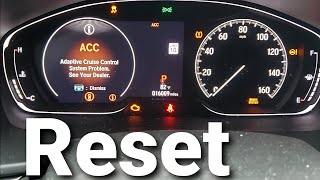
- Multiple warning lights on the dashboard (e.g., VSA, ABS, Power Steering, EPB)
- Transmission may not shift correctly or may feel harsh
- Reduced engine power or 'limp mode'
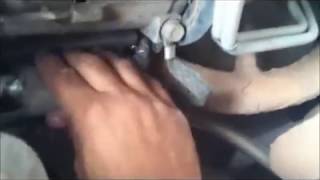
- Scan tool cannot communicate with the ECM/PCM 🎬 Watch: A deep dive into U0100 symptoms and causes.
- Rapid clicking noise from the dash or fuse box when trying to start.
- Door chime activates at unexpected times.
- Replacing the PCM first. The PCM is expensive and often blamed incorrectly. The root cause is much more likely to be a simple power supply issue like a weak battery or bad ground connection.
Most Likely Causes

- Weak or Faulty Battery 🔴 High Probability Modern vehicles are highly sensitive to voltage fluctuations. A battery that is failing can provide enough power to turn on lights but not enough stable voltage for all control modules to communicate properly. This is the most common and easiest-to-fix cause for a U0100 code. On this CR-V generation, a known cause for a weak battery is a stuck A/C compressor clutch relay, which can create a parasitic drain.
How to confirm: Test the battery voltage with a multimeter. A healthy, fully charged battery should read at least 12.6 volts with the engine off. If it's below 12.4 volts, it's low and may be failing. Also, check for voltage drop during cranking; if it drops below 10 volts, the battery is likely weak. Many auto parts stores will test your battery for free.
Typical fix: Recharge or replace the battery. The correct battery group size for the 2012-2016 CR-V is typically 51R. Clean any corrosion from the battery terminals and ensure the connections are tight.
Est. part cost: $150-$300 - Poor Power or Ground Connections 🟡 Medium Probability Engine vibration and exposure to the elements can cause critical ground straps and power connections for the PCM to become loose or corroded. On the CR-V, there is a key ground wire that runs from the battery's negative terminal and splits, with one path going to the transmission/engine (G101) and a smaller wire going to the fender/chassis. Corrosion at these points is a common cause of intermittent electrical issues.
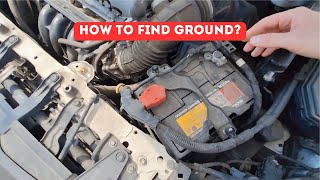
How to confirm: Visually inspect the main battery terminals, the chassis ground straps (especially the one on the transmission housing, which may require removing the airbox to access 🎬 Watch: How to locate and inspect your car's ground cables.), and the wiring harness connectors at the PCM for looseness, corrosion, or damage. Use a multimeter to perform a voltage drop test on the ground side by measuring between the battery negative post and the PCM case or engine block; a reading above 0.2 volts indicates a poor ground.
Typical fix: Clean the corroded terminals or ground points with a wire brush and sandpaper, then secure the connections. Apply dielectric grease to prevent future corrosion. Replace any damaged ground straps or connector terminals.
Est. part cost: $10-$50 - CAN Bus Wiring Fault ⚪ Low Probability Wiring can be damaged by rodents chewing on soy-based wire insulation (a known issue in some modern cars), previous improper repairs, or chafing against vehicle components, leading to a short or open circuit in the CAN network.
How to confirm: This requires advanced diagnostics. A technician will inspect the CAN bus wiring harness for physical damage. They will use a multimeter to check for 60 ohms of resistance across the CAN High (Pin 6) and CAN Low (Pin 14) pins at the OBD-II port (with the battery disconnected). Deviations from this reading (e.g., 120 ohms or 0 ohms) indicate a wiring or module issue.
Typical fix: Repair the damaged section of the wiring harness. This can be a time-consuming process to locate the exact point of failure.
Est. part cost: $5-$100 - Failed Powertrain Control Module (PCM) ⚪ Low Probability While not a high-frequency failure, the PCM can fail internally due to voltage spikes, water intrusion, or age. This is typically the last thing to suspect after all other possibilities are eliminated.
How to confirm: If the battery, power/ground connections, and CAN bus wiring are all confirmed to be good, the PCM itself is the likely culprit. A professional will perform a final verification, often by using a known-good test unit, before recommending replacement.
Typical fix: Replace the PCM. The new unit must be programmed specifically to the vehicle's VIN and may require key reprogramming.
Est. part cost: $800-$1200
Rare But Worth Checking
- Blown Fuse: A blown fuse for the ECM/PCM can cause a complete loss of communication. A Reddit user with a 2021 CR-V experienced a U0100 code after replacing a blown ECM fuse, indicating the code can be set as a result of the power interruption. Always check the fuse boxes (both under-hood and interior) before proceeding to more complex diagnostics.
- Aftermarket Electronics: Improperly installed aftermarket alarms, remote starters, or audio equipment can interfere with the CAN bus network and cause communication errors. These devices can introduce noise or draw power in a way that disrupts module communication.
- Failing Alternator: A failing alternator can produce incorrect voltage (either too high or too low) or excessive AC ripple voltage, which can disrupt module communication and set a U0100 code before the battery charging light comes on.
- Faulty Starter Motor: A failing starter motor can draw excessive current during cranking, causing a severe voltage drop that resets control modules and triggers the U0100 code. One owner on a forum reported that replacing a starter that was drawing too many amps resolved their intermittent U0100 issue.
- Multipurpose Camera Software: In some Honda models, an internal software issue with the multipurpose camera unit can trigger a U0100-F1 code alongside an "Auto High Beam Problem" message, as noted in Bulletin #A18-006.
Diagnosis Steps
- Check Battery Health: Start by testing the battery. Ensure it has a full charge (12.6V+) and that the terminals are clean and tight. Perform a load test to confirm its health under load.
- Scan for All Codes: Use a capable OBD-II scanner to read codes from all vehicle modules (ABS, VSA, Transmission, etc.), not just the engine. The pattern of codes can help isolate the problem. In some instances, as seen in NHTSA ODI #11589674, a vehicle may log a wide array of communication codes including U0100, U0101, U0122, U0129, U0131, and U0151 simultaneously.
- Inspect Fuses: Check all fuses related to the ECM/PCM and other control units in both the under-hood and interior fuse panels. A user on Reddit reported a blown ECM fuse caused this issue.
- Visual Inspection of Wiring: Inspect the main engine wiring harness for any obvious signs of damage, such as from rodents or chafing. Pay close attention to the PCM connectors and main ground straps, especially the one on the transmission housing.
- Verify Power and Ground at the PCM: Using a wiring diagram, confirm that the PCM is receiving proper battery voltage and has a solid ground connection at its connector pins. Perform a voltage drop test on the ground circuit.
- Check CAN Bus Network: This is an advanced step. Disconnect the battery and measure the resistance between Pin 6 (CAN-H) and Pin 14 (CAN-L) on the OBD-II port. A reading of 60 ohms indicates the network wiring and terminating resistors are likely intact. A reading of 120 ohms suggests an open circuit or a module is offline.
- Isolate the Faulty Module: If wiring and power are good, a technician may disconnect modules one by one to see if communication is restored, which could indicate one module is bringing down the entire network. If all other modules communicate once the PCM is disconnected, the PCM itself is likely faulty.
Parts You'll Likely Need
- Battery (Group Size 51R) — A weak or failing battery is the most frequent cause of network communication codes on this platform.
- Powertrain Control Module (PCM)
(OEM #37820-R5A-xxx (2012-14), 37820-5LA-xxx (2015-16))— Though a low-probability cause, a failed PCM is the ultimate fix if all power, ground, and wiring diagnostics pass. Part numbers differ between the 2012-14 and 2015-16 model years due to a powertrain update. - Ground Strap (Transmission to Chassis) — The main ground connection on the transmission is a known corrosion point that can cause intermittent and widespread electrical faults, including U0100.
- Fuel Injectors — While not a direct fix for communication, NHTSA ODI #11670114 notes a case where P0172 and U0100 codes were present, and the manufacturer suggested fuel injector replacement as part of the service plan.
Related Codes That Often Appear With This One
- U0101 — Lost Communication with TCM (Transmission Control Module). The TCM and PCM are on the same network; a network-wide issue will often set codes for multiple modules.
- U0122 — Lost Communication with VSA (Vehicle Stability Assist) Control Module. Like the TCM, the VSA module is on the CAN bus and will report a communication loss if the PCM goes offline.
- U0029, U0047, U3000-49 — These are CAN gateway or bus communication error codes. Seeing these alongside U0100 strongly suggests a network-wide problem rather than a single faulty module.
- U0038 — This code has been reported alongside U0100 and P0172 in some Honda electrical system diagnostics (NHTSA ODI #11670114).
Technical Service Bulletins (TSBs) & Recalls
- While no TSB directly addresses U0100 on the 2012-2016 CR-V, other Honda TSBs for similar models (e.g., Odyssey TSB 17-043, Accord TSB 16-066) show a pattern of addressing drivability issues with software updates. This suggests that a software reflash could be a potential, though un-bulletined, fix if a dealer's diagnostic tools point to a software glitch.
- Bulletin #A18-006: This bulletin describes a condition where an internal software issue with the multipurpose camera unit can cause a U0100-F1 (lost communication with the PCM) to be stored, often accompanied by an "Auto High Beam Problem" message.
Platform-Specific Known Issues
- Corroded Transmission Ground Strap: The main engine-to-chassis ground strap is located on the transmission housing. Due to its location, it is susceptible to corrosion from road salt and moisture. This poor ground can cause a variety of electrical issues, including the U0100 code. Accessing it may require removing the air filter box. A thread on BobIsTheOilGuy.com shows a picture of this exact corroded ground point on a CR-V.
- Parasitic Draw from VSA Modulator: While more documented on the 5th generation, some earlier Hondas have shown issues where certain modules, like the Vehicle Stability Assist (VSA) modulator, do not shut down correctly, causing a parasitic battery drain. This slow drain weakens the battery over time, eventually leading to low voltage conditions that can trigger a U0100 code upon startup.
Mechanic-Grade Diagnostic Values

- CAN Bus Network Resistance — expected: ~60 Ω. Failure: A reading of ~120 Ω indicates one of the two terminating resistors (or the module containing it) is offline. A reading near 0 Ω indicates a short between CAN-H and CAN-L wires.
- CAN Bus Voltage (Key On, Engine Off) — expected: CAN-H: ~2.5V to 3.0V; CAN-L: ~2.0V to 2.5V. Failure: Voltages significantly outside these ranges, or a voltage that is stuck high or low, indicates a short to power or ground on that line or a faulty module pulling the voltage down.
- PCM Ground Circuit Voltage Drop — expected: < 0.2 V. Failure: A reading higher than 0.2V indicates excessive resistance in the ground circuit, which can starve the PCM for a stable ground reference.
- Resistance from CAN lines to Ground — expected: Mega-ohms (MΩ) or Open Line (OL). Failure: Low resistance indicates a short to ground on one of the CAN lines, which will disrupt communication.
Scan Tool Commands That Help
- Honda Diagnostic System (HDS): Body Electrical > Unit Information > Connected Unit — This function polls the B-CAN and F-CAN networks and displays a list of all expected control units, showing 'DETECT' for those that are communicating and 'Not Available' for those that are not. It's a primary step to confirm which modules are offline.
- Honda Diagnostic System (HDS): CAN Gateway > Function Test > F-CAN Bus Connected Unit Check — This is a more specific test for the Fast-speed CAN (F-CAN) network where the PCM resides. It verifies if the gateway can see the PCM. If it fails this check, it points towards a problem with the PCM itself or its direct wiring to the gateway.
Wiring & Ground Locations

- G101 — Left rear of the engine.. This is a primary ground point for the Powertrain Control Module (PCM). Corrosion or looseness here can directly cause a U0100 code by interrupting the PCM's ground path.
- G301 — Under the left side of the engine compartment, near the headlight assembly.. This ground serves multiple components in the engine bay. While not a direct PCM ground, high resistance here can introduce electrical noise or unstable voltages to related systems.
- Transmission Housing Ground — A ground strap attached to a bolt on the transmission case, often requiring removal of the air filter box for access.. This is a frequently cited point of corrosion. It serves as a major ground path for the powertrain. A poor connection here can cause a wide range of intermittent electrical issues, including communication codes.
- PCM Connectors (A, B, C) — At the PCM, located in the engine bay. The connectors are often embossed with geometric shapes for identification (e.g., Connector A has a square).. These are the direct power, ground, and communication line entry points for the PCM. Verifying pin integrity, checking for backed-out pins, or testing for voltage/ground at these connectors is a critical diagnostic step.
Real Owner Repair Stories
- YouTube Commenter (2013 Honda CR-V 2.4L i-VTEC (RM4)) — Multiple warning lights (ABS, VSA, EPS, engine) turning on simultaneously, A/C compressor inhibited, and the battery would discharge completely after 1-2 days.
❌ Tried (didn't work) Not specified, but the problem was intermittent, making diagnosis difficult.
✅ What actually fixed it The root cause was a faulty Keyless Access control unit. This module was causing a disturbance on the communication bus, leading to the U0100 and other symptoms. Replacing the Keyless Access unit resolved all issues. - BobIsTheOilGuy Forum User (Honda CR-V (year not specified, but 4th gen platform)) — General electrical issues, not starting.
❌ Tried (didn't work) Initial diagnosis was unclear.
✅ What actually fixed it The ground connection on the transmission was found to be rusty and 'crusty green'. The user cleaned the contact points with sandpaper and re-secured the connection, which resolved the electrical problems. This highlights the importance of checking this specific ground point. - Reddit user r/MechanicAdvice (2021 Honda CR-V (newer gen, but relevant principle)) — Multiple warnings on dash (cruise control, LKAS). No Check Engine Light, but a 'CONFIRMED' status U0100 code was present on a scan tool.
❌ Tried (didn't work) Clearing the code by disconnecting the battery.
✅ What actually fixed it The issue started immediately after replacing a blown ECM fuse. This story illustrates that a sudden power loss and restoration to the ECM can be enough to log a U0100 communication code, even if there is no underlying network fault. - NHTSA ODI #11442354 — An owner reported a "Lost Communication with ECM/PCM 'A'" error and requested a manufacturer fix for the persistent communication issue.
- NHTSA ODI #11496856 — A report describes a vehicle with numerous permanent codes including U0100, U0029-00, U1204, U12A5, and U0111, affecting the powertrain and electric steering systems.
"I Checked Everything" — The Actual Cause
- While a smoke test is not applicable for this electronic fault, a common parallel is when all wiring and modules seem to check out. In these cases, the root cause is often an external factor creating electrical noise or a severe voltage drop. A failing starter motor drawing excessive current during crank is a prime example; it can cause network modules to reset and log a U0100 code, but all systems will test as normal once the engine is running.
OEM Part Supersession History
Varies by year and trim→Varies— Model year refresh in 2015 introduced a new engine and transmission.
Heads up: A PCM from a 2012-2014 model (K24Z7 engine, 5-speed auto) is NOT compatible with a 2015-2016 model (K24W9 engine, CVT), and vice-versa. The part numbers are distinct (e.g., 37820-R5A-xxx for early models vs. 37820-5LA-xxx for later models). Always verify the part number against the VIN.
Model Year Variations Within This Range
- 2012-2014: These models use the K24Z7 port-injected 2.4L engine paired with a conventional 5-speed automatic transmission. The PCM and diagnostic approach are specific to this powertrain combination.
- 2015-2016: These models received a significant refresh, introducing the 'Earth Dreams' K24W9 direct-injection engine and a Continuously Variable Transmission (CVT). This requires a different PCM with different software and connectors. Some 2015 models were subject to a service bulletin for excessive vibration at idle, which could involve replacing the PCM, transmission mounts, or software updates.
Diagnostic Flowchart
Real Owner Stories
Aggregated from forums and TSBs cited above. Mileages and costs reflect what owners reported in those sources.
2021 Honda CR-V
Symptoms: U0100 code was set, accompanied by a loss of communication with the engine computer.
What fixed it: Diagnosed and replaced a blown ECM fuse.
Source hint: Reddit r/MechanicAdvice (comments/s5g3j3/2021_honda_crv_u0100_code/)
Honda CR-V
Symptoms: Electrical issues and communication faults linked to heavily corroded ground points.
What fixed it: Cleaned and restored the corroded main engine-to-chassis ground strap located on the transmission housing.
Source hint: bobistheoilguy.com/forums/threads/honda-crv-battery-grounds-points.353383/
Honda CR-V
Symptoms: U0100 code with multiple warning lights and communication failure.
What fixed it: Replaced a weak battery and cleaned poor ground connections before escalating to PCM replacement.
Source hint: crvownersclub.com
Related OBD-II Codes
Frequently Asked Questions
Is there a specific TSB for the U0100 code on my 2012-2016 CR-V?
What battery size does the 2012-2016 Honda CR-V take, and can a bad one cause this code?
Where are the main ground straps located on this CR-V engine?
I have a parasitic battery drain causing the U0100 code. What are common culprits on this generation CR-V?
Why are my VSA, ABS, and Power Steering lights all on at the same time?
Could rodents have caused the U0100 code in my CR-V?
Documented NHTSA Reports
- An owner reported that after turning on the car, the system rebooted and cleared errors, but the dealership found a log of codes including U0100-00, U0101-00, U0122-00, and U0131-00 (NHTSA ODI #11589674).
- A report describes a situation where an OBD-II scanner revealed codes P0172, U0038, and U0100; the manufacturer suggested that replacing fuel injectors would resolve the issue (NHTSA ODI #11670114).
- NHTSA ODI #11496856 describes a vehicle with permanent codes for the CAN Gateway (U0029-00), traction motor (U1204, U12A5, U0100), and electric power steering (U0416-68).
Related OBD-II Codes
Helpful Videos

Used OEM Parts in Stock


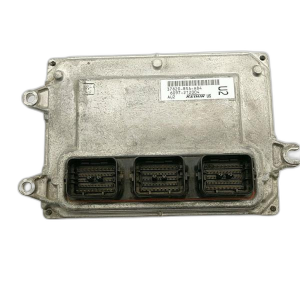


New Aftermarket Parts Available
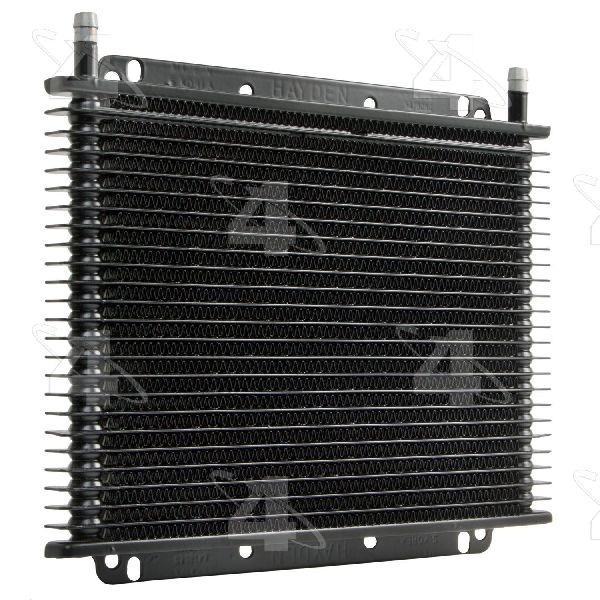

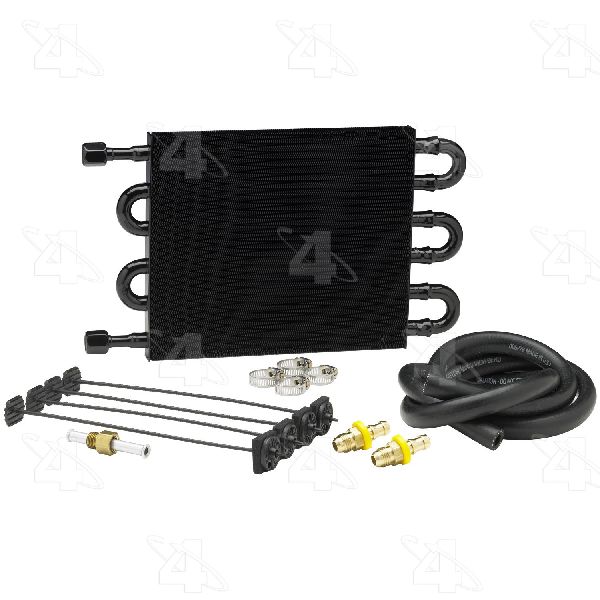

The information in this article is provided for general reference and educational purposes only. Vehicle specifications, procedures, and part compatibility can vary by production date, trim level, and region. Always consult your vehicle's factory service manual and verify part numbers before purchasing or performing repairs. Safety-critical components such as airbags, seat belts, and braking systems should be installed by a qualified professional.
- Honda CR-V:
- 🎬 Helpful Videos
- 🛍️ Shop This Part
- What's Unique About the 2012-2016 Honda CR-V
- Symptoms You May Notice
- Most Likely Causes
- Rare But Worth Checking
- Diagnosis Steps
- Parts You'll Likely Need
- Related Codes That Often Appear With This One
- Technical Service Bulletins (TSBs) & Recalls
- Platform-Specific Known Issues
- Mechanic-Grade Diagnostic Values
- Scan Tool Commands That Help
- Wiring & Ground Locations
- Real Owner Repair Stories
- "I Checked Everything" — The Actual Cause
- OEM Part Supersession History
- Model Year Variations Within This Range
- Diagnostic Flowchart
- Real Owner Stories
- 2021 Honda CR-V
- Honda CR-V
- Honda CR-V
- Related OBD-II Codes
- Frequently Asked Questions
- Documented NHTSA Reports
- Related OBD-II Codes
- 🎟️ Get 5% Off