

U0100 on 2006-2010 Dodge Charger: Lost Communication With ECM/PCM Causes and Fixes
On a 2006-2010 Dodge Charger, code U0100 is most often caused by a faulty Totally Integrated Power Module (TIPM) or a wiring issue. This typically results in a no-start or stalling condition. Before replacing the expensive PCM, thoroughly inspect the battery, grounds, and all wiring to the TIPM and PCM, as these are more common and less expensive failure points.
- U0100 on a 2006-2010 Charger is a critical code that will likely cause stalling or a no-start condition.
- Do not immediately replace the PCM. The problem is very often a faulty TIPM (fuse box), a bad battery, or a wiring issue.
- Always start diagnosis by checking the simplest things: battery voltage, ground connections, and fuses.
- Carefully inspect the wiring harness around the engine, especially the twisted pair of CAN bus wires, for any signs of melting or chafing. Ensure it is not touching any hot pipes.
- Due to the complexity of network diagnostics, professional help is recommended if the basic checks do not reveal the problem.
What's Unique About the 2006-2010 Dodge Charger

The first-generation Dodge Charger (LX platform) is known for issues with its Totally Integrated Power Module (TIPM), which is the advanced fuse box and body computer. The TIPM acts as a central gateway for the CAN bus network. Its internal failure is a very common cause for the U0100 code on this vehicle, often cutting power or communication to the PCM. Owners also report issues with wiring harnesses chafing or resting against hot engine components, causing electrical interference that triggers this code. Furthermore, some forum users note that weak solder joints on the PCM's main connector (C2) can fail over time due to engine vibration and the vertical mounting of the module, causing intermittent communication loss.
Symptoms You May Notice

- Engine will not start (no crank or cranks but won't fire)
- Engine stalls intermittently while driving, often without warning.
- Check Engine Light is on
- Multiple warning lights on the dashboard may illuminate simultaneously (ABS, ESP, BAS, etc.)
- Transmission may be stuck in 'limp mode' (a single gear), often with a P0700 code present. 🎬 See how to fix these stalling and P0700 communication issues
- Rough or unstable idle
- Noticeable drop in fuel economy.
- Instrument cluster gauges may flicker or drop to zero while driving.
- Replacing the PCM when the actual fault is a bad TIPM, a corroded connector, or a damaged wire.
- Replacing the fuel pump for a no-start condition without first diagnosing the U0100 code that is disabling the pump relay via the TIPM or PCM.
Most Likely Causes

- Faulty Totally Integrated Power Module (TIPM) 🔴 High Probability The TIPM on this Chrysler/Dodge platform is a well-documented failure point. Internal relays and circuit board failures are common, leading to a loss of power or communication to other modules, including the PCM.
How to confirm: After verifying PCM power/ground and CAN wiring, a diagnostic scan showing multiple communication loss codes pointing to the TIPM as a common node is a strong indicator. A mechanic can perform specific tests to confirm the TIPM is not providing power to the PCM circuit.
Typical fix: Replacement of the TIPM. It is often recommended to use a new or professionally remanufactured unit which often comes pre-programmed to the vehicle's VIN.
Est. part cost: $300-$800 - Wiring Harness or Connector Issues 🔴 High Probability Harnesses can chafe against the chassis or engine components. A specific issue noted by owners is the CAN bus wiring pair resting against a hot coolant pipe or A/C line, causing electrical interference. Connectors for the PCM and TIPM are also susceptible to corrosion or pin damage from moisture and vibration.
How to confirm: Visually inspect all wiring harnesses connected to the PCM and TIPM. Check for chafed insulation, melted sections, or corrosion on connector pins. Wiggle the connectors at the PCM while the engine is idling to see if the fault can be reproduced, which may indicate a bad internal solder joint on the PCM board itself. Check CAN bus resistance with a multimeter (should be ~60 Ohms with the battery disconnected).
Typical fix: Repairing the damaged section of the wire or replacing the connector pigtail. Cleaning corroded connectors with electrical contact cleaner can also resolve the issue. Secure the harness away from heat sources or sharp edges.
Est. part cost: $20-$150 - Low Battery Voltage or Poor Ground Connection 🟡 Medium Probability
How to confirm: Test the battery with a multimeter; it should read at least 12.4V-12.6V when the car is off. Load test the battery to ensure it's healthy. Inspect the main engine and chassis ground straps for corrosion or looseness. A weak key fob battery has also been anecdotally linked to stalling issues.
Typical fix: Recharge or replace the battery. Clean or replace corroded battery terminals and ground straps.
Est. part cost: $10-$250 - Failed Powertrain Control Module (PCM) ⚪ Low Probability The vertical mounting on the firewall can lead to stress on the connector pins over time, causing internal solder joints to fail.
How to confirm: This is typically diagnosed by exclusion. If the battery, all power/ground wires to the PCM, and the CAN bus wiring have been tested and confirmed to be good, the PCM itself is the likely failure point. A repair shop can also attempt to re-flash the PCM software before condemning it.
Typical fix: Replace the PCM. It must be programmed to the vehicle's VIN and options. It is highly recommended to buy a pre-programmed unit from a reputable source like Flashmasters to ensure plug-and-play installation. 🎬 Watch this first before you replace your Dodge Charger PCM
Est. part cost: $250-$800
Rare But Worth Checking
- Faulty Ignition Coil Pack:
Diagnosis Steps

- Check Battery Health: Ensure the battery has a full charge (at least 12.4V) and clean, tight terminals. A weak battery is a common cause of communication codes.
- Scan for All Codes: Use an OBD-II scanner to check for any other 'U' codes. If many modules have lost communication, it points to a network-wide issue like a bad TIPM or main bus wiring fault.
- Inspect Fuses: Check all fuses related to the PCM, TCM, and TIPM in the front and rear power distribution centers.
- Visual Wiring Inspection: Thoroughly inspect the wiring harnesses to the PCM and TIPM. Look for any signs of chafing, melting, or corrosion. Pay close attention to where the harness may contact hot engine or exhaust parts, or A/C lines.
- Check PCM Connectors: Disconnect the PCM connectors (with the battery disconnected) and inspect for bent, pushed-out, or corroded pins. Re-seat them firmly. While the car is running, carefully wiggle the connectors to see if it triggers the stall, which points to a bad connection or internal PCM fault.
- Check Power and Ground at the PCM: Use a multimeter and a wiring diagram to verify that the PCM is receiving proper battery voltage and has a solid ground connection on all specified pins.
- Test the CAN Bus: With the battery disconnected, measure the resistance between Pin 6 (CAN High) and Pin 14 (CAN Low) at the OBD-II port. It should be approximately 60 ohms. A reading of 120 ohms suggests a break in the circuit or a faulty terminating resistor (often in the PCM or ABS module). A reading near 0 ohms indicates a short between the two wires.
- Suspect the TIPM/PCM: If all wiring, power, and grounds are confirmed good, the fault is likely an internal failure of the TIPM or the PCM. The TIPM is the more common failure point on this platform and should be considered before the PCM.
Parts You'll Likely Need
- Totally Integrated Power Module (TIPM)
(OEM #04692270AJ (Example for 2008 models, part number is year/model specific))— This is a very common failure point on 2006-2010 Dodge Chargers that causes a wide range of electrical issues, including the U0100 code.
Trusted brands: Mopar, Dorman, MAKS TIPM Rebuilders
OEM price range: $500-$900
Aftermarket price range: $300-$600 - Powertrain Control Module (PCM) — If all wiring and the TIPM are confirmed to be good, the PCM itself may have failed. It is the second most likely module to cause this specific code.
Trusted brands: Mopar, Cardone, Flashmasters
OEM price range: $500-$800
Aftermarket price range: $250-$500
Related Codes That Often Appear With This One
- P0700 — P0700 is a generic code from the ECM indicating it has received a fault request from the Transmission Control Module (TCM). When the PCM loses communication, the TCM often logs a fault (like U0101) and requests the check engine light, triggering P0700. This is very common on models with the NAG1 transmission.
- U0101 — This code means 'Lost Communication with TCM'. If the fault is in the shared CAN bus wiring or a power issue from the TIPM, both the PCM and TCM can lose communication simultaneously.
- U0141 — This code means 'Lost Communication with Front Control Module/TIPM'. On these vehicles, the TIPM serves as the body controller/front controller. This code often appears with U0100 when the TIPM itself is the root cause of the network failure.
Platform-Specific Known Issues
- The TIPM (fuse box assembly) is a known weak point that can cause a no-start condition and set a U0100 code by failing to power the PCM or by having an internal co
Mechanic-Grade Diagnostic Values
- CAN Bus Resistance — expected: ~60 Ohms between Pin 6 (CAN-H) and Pin 14 (CAN-L) at the DLC with battery disconnected.. Failure: 120 Ohms indicates an open in the circuit or a missing terminating resistor. ~0 Ohms indicates a short between the CAN-H and CAN-L wires.
- CAN Bus Voltage (Key On, Engine Off) — expected: CAN High (White/Light Blue wire) should be ~2.6V. CAN Low (White/Dark Blue wire) should be ~2.4V.. Failure: Voltages that are stuck high (e.g., 5V or 12V) or low (0V) indicate a short to power or ground. Voltages that are identical on both lines can indicate the wires are shorted together.
- PCM Power Supply Voltage — expected: 12.0–14.5 V at the specified power input pins on the PCM connectors with the key on.. Failure: Voltage sag below 10V during cranking or no voltage indicates a problem with the battery, alternator, or the power feed circuit from the TIPM.
- Diagnostic CAN C (-) Circuit Resistance — expected: Below 5.0 ohms between the TIPM C6 harness connector and the DLC.. Failure: Resistance above 5.0 ohms indicates an open in the (D51) Diagnostic CAN C (-) circuit.
Scan Tool Commands That Help
- StarSCAN / WiTech: Network View & Diag CAN-C Test — This function allows the technician to see a topology of the CAN bus network and view which modules are active. The 'Diag CAN-C' button runs a specific test to detect open circuits, shorts to ground, and shorts to battery on the diagnostic bus, which is a common failure point.
- StarSCAN / WiTech: Clear Stored DTCs — After a repair, this command must be used to clear the U0100 code from all modules. Unlike generic scanners, the dealer tool ensures the fault is cleared from the module that set it (e.g., ABS, TCM) and not just the PCM.
Wiring & Ground Locations
- CAN C Bus Wires — Twisted pair of wires, typically White/Light Blue for CAN-H (D65) and White/Dark Blue for CAN-L (D64) on this platform.. These are the primary communication lines between the PCM, TIPM, ABS, and other critical modules. Damage or shorts on these specific wires will directly cause a U0100 code.
- G300 — Ground point located below the driver's side (left) 'B' pillar.. This is a major chassis ground point. While not a direct PCM ground, poor connections here can introduce electrical noise and voltage drops that affect various modules, potentially leading to communication faults.
- Engine to Firewall Ground — A braided ground strap running from the rear of the passenger side cylinder head to a stud on the firewall.. This is a primary ground path for the engine block and the components mounted to it, including the PCM. A loose or corroded connection here is a known cause of intermittent electrical issues and communication codes.
- TIPM Connector C6 — One of the large multi-pin connectors on the Totally Integrated Power Module (fuse box) in the engine bay.. This connector contains the Diagnostic CAN C bus circuits. A diagnostic procedure for an open CAN circuit specifically involves testing resistance from this connector to the OBD-II port.
- PCM Connector C4 (Green) — The green 38-way connector on the Powertrain Control Module, mounted on the firewall.. This connector handles many transmission-related signals. Faults here can cause related TCM communication codes (U0101) that often appear alongside U0100.
- Star Connector (CAN Bus Junction) — Located behind the driver's side kick panel, near the parking brake. There is often a brown connector for the interior bus and a green one for the powertrain bus.. This is a central hub where many CAN bus wires connect. It's a common point of failure due to corrosion from water intrusion (leaky windshield/sunroof) or loose pins. Wiggling these connectors can often temporarily restore communication, confirming it as the fault area.
Real Owner Repair Stories
- ChargerForums.com user (2006 Dodge Charger R/T) — Car would die while driving, all lights on dash would flash, would not restart for 10-15 minutes. Threw U0100 code.
❌ Tried (didn't work) Replaced battery, Checked all fuses and grounds, Dealer diagnosed as faulty PCM and replaced it, but the problem returned.
✅ What actually fixed it The Wireless Control Module (WCM), also known as the Sentry Key Remote Entry Module (SKREEM), was faulty. It was intermittently failing and taking down the CAN bus. Replacing the WCM and programming the new keys resolved the issue permanently. - LXForums.com user (2006 Dodge Charger Daytona) — No-crank, no-start condition. Multiple communication codes including U0100.
❌ Tried (didn't work) Initial diagnosis pointed to a bad PCM.
✅ What actually fixed it The problem was corrosion inside the green CAN bus star connector located behind the driver's side kick panel. The user disassembled the connector, cleaned the corroded pins with a pick and electrical cleaner, and reassembled. This restored communication and the car started.
OEM Part Supersession History
04692031AA (and similar variants)→Multiple revisions exist (e.g., ending in AB, AC, etc.). It is critical to match the part number exactly or use a VIN-lookup service.— Revisions to address internal component failures and software logic.
Heads up: A TIPM from a 2007 Charger (e.g., 04692031) is not directly compatible with a 2010 model (e.g., 68059370) due to significant changes in vehicle options and network configuration.
Model Year Variations Within This Range
- 2008-2010: Starting in 2008, CAN bus became federally mandated, leading to more modules and complexity on the network compared to 2006-2007 models. The diagnostic approach is similar, but there are more potential modules (like the Wireless Control Module) that can cause a network-wide failure.
- 2006-2007 vs 2008-2010: TIPM part numbers are specific to year ranges. For example, part number 04692031 is common for 2007 models, while 68059370 is for 2010 models. They are not interchangeable.
Diagnostic Flowchart
Other Known Issues on This Vehicle
Issues unrelated to this code that are worth knowing about as an owner of this generation:
- Front Suspension Clunk/Rattle 🟠 Medium — Very common. Often caused by worn tension struts (forward lower control arms), sway bar end links, or sway bar bushings. Noise is most apparent over bumps.
- NAG1 (W5A580) Transmission Shudder/Limp Mode 🟠 Medium — Common on V8 models. Can manifest as a shudder during light acceleration or shifting into limp mode. Often caused by a failing conductor plate (speed sensors), a leaking electrical connector O-ring wicking fluid to the TCM, or fluid contamination. (Ref: Related TSBs exist for fluid contamination and shudder issues.)
- Premature Engine Failure (2006 models) 🔴 High — Most reported for the 2006 model year, particularly with the 5.7L Hemi. Issues included dropped valve seats and other internal failures that could occur without warning.
- Alternator Failure 🔴 High — A widespread issue leading to a major recall. The alternator can fail suddenly, causing the vehicle to stall and creating a fire risk. (Ref: Recall #14V-634 (NHTSA ID))
- Electronic Shifter Module Failure ('Pink Thingy') 🟡 Low — A very common issue where a small plastic piece in the shifter assembly breaks, preventing the car from being shifted out of Park. Affects models up to 2007.
Used vs. New Parts: Buying Guide for This Vehicle
When a used part is the smart pick: A used TIPM from a reputable salvage yard can be a cost-effective option, but ONLY if the part number is an exact match and the donor vehicle had no electrical issues. For wiring connectors or pigtails, used is a perfectly acceptable and economical choice.
Donor-vehicle mileage cap: roughly under 80000 miles for the part to have meaningful remaining life.
What to inspect on the donor part:
- For a TIPM, inspect the exterior for any signs of heat damage, melting, or water intrusion.
- Check all connector pins on the used module for any green/white corrosion or bent pins.
- Ask for the VIN of the donor car to cross-reference its options and confirm compatibility.
- Ensure the salvage yard offers a warranty or return policy in case the unit is faulty.
OEM-only on this vehicle (don't cheap out):
- Powertrain Control Module (PCM)
- Wireless Control Module (WCM/SKREEM)
Aftermarket brands forum-validated for this vehicle:
- Dorman (for TIPM)
- MAKS Enterprises (for remanufactured TIPMs)
- GoECM (for remanufactured TIPMs)
Brands owners have reported issues with on this vehicle:
- Unbranded, no-name PCMs from online marketplaces should be avoided, as they often have programming or internal quality issues.
Documented NHTSA Reports
NHTSA ODI #11655418
Symptoms: An owner reported the vehicle failed to restart on several occasions and was towed. Diagnostic codes U0100 and P0700 were retrieved at the dealer.
Outcome: The dealer attempted to flash the computer, but the failure persisted.
NHTSA ODI #11645715
Symptoms: The vehicle jerks as if it wants to stall while driving on the highway. The primary code reported is U0100, sometimes appearing with P0700 and other fault codes.
NHTSA ODI #11255646
Symptoms: The check engine light illuminates after a momentary power outage lasting a fraction of a second. If driving above 15 MPH, the engine doesn't stop but produces a "big jolt."
Outcome: The stored code was U0100 (Lost Communication with PCM).
NHTSA ODI #11011481
Symptoms: Intermittent stalling requiring multiple efforts to restart the engine. The check engine light randomly turns on and off with codes P0700 and U0100 present.
NHTSA ODI #10995072
Symptoms: The speedometer quit working, the car jumps hard into reverse and drive, and the transmission will not shift out of first gear.
Outcome: Codes U0100, U1120, U0121, and U0103 were present. Replacing the computer resulted in no change of condition.
Real Owner Stories
Aggregated from forums and TSBs cited above. Mileages and costs reflect what owners reported in those sources.
2006 Dodge Charger R/T
Symptoms: The vehicle experienced stalling problems and threw codes U0100 and P0700.
What fixed it: Replacing the PCM with a pre-programmed unit from Flashmasters.
Source hint: YouTube - DreCo R/T: 'U0100/P0700 Stalling Problem Fixed (06-10 Dodge Charger)'
2006 Dodge Charger
Symptoms: The car would stall specifically after hitting bumps in the road.
What fixed it: The issue was identified as weak internal solder joints in the PCM, which can be tested by wiggling the PCM connectors while the engine is running.
Source hint: DodgeForum.com: '06 Charger U0100 and P0700 ~Need help!!'
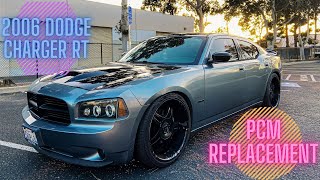
2006 Dodge Charger RT
Symptoms: The car would turn off randomly and shut down while driving.
What fixed it: Replacement of the PCM.
Source hint: YouTube - Charger Driven: '2006 Dodge Charger RT PCM replacement! Car turns off randomly, solution!!'
2006-2010 Dodge Charger (NAG1 Transmission)
Symptoms: Transmission entered 'limp mode' (stuck in a single gear).
What fixed it: Replacing the conductor plate on the NAG1 transmission.
Source hint: YouTube - Mongrels Garage: 'Dodge, Chrysler, Jeep, Mercedes Transmission Limp Mode Fix!'
Related OBD-II Codes
Frequently Asked Questions
Why is my 2006-2010 Dodge Charger stuck in a single gear with a U0100 code?
Can a weak battery cause my Charger to stall and throw a U0100 code?
I've heard the TIPM is a problem on 2006-2010 Chargers. How does it cause U0100?
Where should I check for wiring damage on my Charger to fix this code?
Is there a way to test if my PCM has a bad internal connection without replacing it?
Should I replace the PCM or the TIPM first for a U0100 code?
Helpful Videos
We Have This Part in Stock



The information in this article is provided for general reference and educational purposes only. Vehicle specifications, procedures, and part compatibility can vary by production date, trim level, and region. Always consult your vehicle's factory service manual and verify part numbers before purchasing or performing repairs. Safety-critical components such as airbags, seat belts, and braking systems should be installed by a qualified professional.
- Dodge Charger:
- 🎬 Helpful Videos
- 🛍️ Shop This Part
- What's Unique About the 2006-2010 Dodge Charger
- Symptoms You May Notice
- Most Likely Causes
- Rare But Worth Checking
- Diagnosis Steps
- Parts You'll Likely Need
- Related Codes That Often Appear With This One
- Platform-Specific Known Issues
- Mechanic-Grade Diagnostic Values
- Scan Tool Commands That Help
- Wiring & Ground Locations
- Real Owner Repair Stories
- OEM Part Supersession History
- Model Year Variations Within This Range
- Diagnostic Flowchart
- Other Known Issues on This Vehicle
- Used vs. New Parts: Buying Guide for This Vehicle
- Documented NHTSA Reports
- NHTSA ODI #11655418
- NHTSA ODI #11645715
- NHTSA ODI #11255646
- NHTSA ODI #11011481
- NHTSA ODI #10995072
- Real Owner Stories
- 2006 Dodge Charger R/T
- 2006 Dodge Charger
- 2006 Dodge Charger RT
- 2006-2010 Dodge Charger (NAG1 Transmission)
- Related OBD-II Codes
- Frequently Asked Questions
- 🎟️ Get 5% Off