

OBD-II Code B1342: Internal Control Module Fault
What B1342 means, why it triggers, and how to fix it
- Code B1342 indicates a specific control module—usually the ABS or Body Control Module—has failed its internal self-test and disabled itself.
- Test your battery before replacing expensive computers, as a resting voltage below 12.4V frequently triggers false B1342 module failure codes.
- Ford vehicles from 2006-2012 experience this code almost exclusively due to a failed Anti-lock Brake System (ABS) module requiring replacement.
- Replacing a dead module costs between $450 and $1,500 because the new unit must be professionally programmed to match your vehicle's VIN.
What Does B1342 Mean?

Code B1342 means one of your vehicle's control modules failed its internal self-test. The affected computer—most commonly the Anti-lock Brake System (ABS) module, Body Control Module (BCM), or Engine Control Unit (ECU)—has detected a hardware or software malfunction and disabled itself to prevent erratic vehicle behavior.
Technical definition: The official SAE/OBD-II definition for B1342 is "ECU Is Defective" or "Internal Control Module Fault." This indicates the module detected an internal hardware, software, memory, or configuration malfunction during its startup self-check.
Can I Drive With B1342?
Yes, But With Caution. You can technically drive the vehicle, but only to a repair shop. When B1342 is active, critical safety systems like ABS, traction control, and airbags are disabled. Your wheels will lock up during hard braking, significantly increasing stopping distances and the risk of a skid on wet or slippery surfaces. Ignoring this code poses a serious safety hazard.
Common Causes

- Low or Unstable Battery Voltage (Very Common) — A weak battery, failing alternator, or poor battery connection provides inconsistent power. This voltage drop causes the module to fail its startup self-test, triggering a false B1342 code.
- Internal Module Hardware Failure (Very Common) — The computer module itself has failed due to age, heat, or internal short circuits. This is the most frequent true cause for the code requiring part replacement.
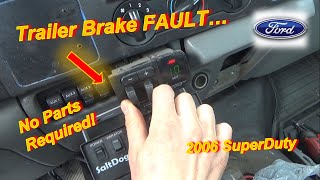
- Cracked Internal Solder Joints (Common) — Heat and vibration cause microscopic cracks in the circuit board's solder joints. This is a notorious, repairable issue on Ford ABS modules and Trailer Brake Controllers. 🎬 See this DIY repair for Ford Trailer Brake Controller faults.
- Power Supply and Ground Wiring Faults (Common) — Corroded ground straps, loose connectors, or faulty power relays interrupt the clean voltage required for the module to operate, mimicking an internal module failure.
- Water Intrusion and Corrosion (Common) — Moisture leaking into the vehicle corrodes the module or its connectors. This frequently destroys Body Control Modules located under carpets or ABS modules exposed in the engine bay.
- Corrupted Software or Memory (Less Common) — Voltage spikes from jump-starting or interrupted flash updates corrupt the module's EEPROM memory, causing it to flag itself as defective.
- CAN Bus Network Fault (Less Common) — A short in the communication wiring prevents the module from synchronizing with the vehicle's network, triggering a protective internal fault.
Symptoms

- Warning Lights on Dash (also visible on scanner) — The Check Engine, ABS, Airbag, or Traction Control lights illuminate permanently on the instrument panel.
- ABS or Traction Control Inoperative (also visible on scanner) — If the ABS module fails, the anti-lock braking and traction control systems are completely disabled.
- ABS Pump Runs Constantly (also visible on scanner) — A buzzing or humming noise from the ABS pump assembly continues even when the ignition is off 🎬 Watch: How to diagnose and fix a continuously running ABS pump., indicating an internal short or stuck relay.
- Malfunctioning Electronic Features (also visible on scanner) — If the Body Control Module (BCM) fails, power windows, door locks, interior lights, wipers, or climate controls stop working.
- Engine Performance Issues (also visible on scanner) — If the main Engine Control Unit (ECU) fails, you will experience stalling, a loss of power, a no-start condition, or 'limp mode'.
- Erratic or Non-Functioning Speedometer (also visible on scanner) — Because the ABS module interprets wheel speed data, a faulty module causes the speedometer to drop to zero or behave erratically.
Diagnostic Flowchart
Tap your situation to follow the diagnostic path that matches what you're seeing on this code.
Common Fixes & Costs
- Replace the Faulty Control Module — Parts: $300-$1,200, Labor: $150-$400, ~1.5 hr book time (Professional)
- Send Original Module for Repair — Parts: $100-$250, Labor: $100-$250, ~1.5 hr book time (Intermediate)
- Replace Battery and Clean Terminals — Parts: $150-$250, Labor: $0-$50, ~0.5 hr book time (DIY)
- Repair Damaged Wiring or Ground Connection — Parts: $5-$20, Labor: $100-$300, ~2.0 hr book time (Intermediate)
- Reflow Solder Joints on Circuit Board — Parts: $5-$25, Labor: $0-$200, ~2.5 hr book time (Advanced)
Used vs. New Parts: Buying Guide
When a used part is worth it: A used module is a budget-friendly option for older vehicles where a new OEM part exceeds 20% of the car's total value.
Donor-vehicle mileage cap: roughly under 100000 miles for the part to have meaningful remaining life.
Donor quality checklist:
- Match the part number EXACTLY, including suffix letters; superseded numbers fail to program.
- Purchase from a seller offering at least a 30-day warranty.
- Inspect the connector pins for green corrosion or water damage.
- Verify the donor vehicle was not scrapped for electrical flood damage.
Decision logic:
- If The goal is to avoid programming headaches → Send your original module to a mail-in repair service; it returns plug-and-play.
- If The vehicle is over 10 years old and budget is tight → Buy a used part, but factor in the $150-$300 cost of professional reprogramming.
- If The part is for a newer vehicle or you want maximum reliability → Buy a new OEM or remanufactured part and have it professionally programmed.
Warranty tradeoff: Used parts carry 30-90 day warranties. Remanufactured parts offer 1-year to lifetime warranties. New OEM parts carry 12-month/12,000-mile warranties.
Worst-case if a used part fails: $400-$800. If a used module is dead on arrival, you lose the part cost plus non-refundable labor and programming fees.
What Happens If You Wait — Timeline
- 0-1 month: Code is set. ABS, Traction Control, and Brake warning lights illuminate. Safety systems are disabled, increasing accident risk in poor weather. (MPG impact: 0%% · Added cost: $0)
- 1-3 months: If the internal fault causes the ABS pump to run constantly, it drains the battery overnight. Repeated deep discharges permanently destroy the battery. (MPG impact: 0%% · Added cost: $150-$250 (Cost of a ruined battery).)
- 3-6 months: Continued operation with a constantly running ABS pump causes the pump motor to overheat and burn out, requiring a full pump assembly replacement instead of just the electronic module. (MPG impact: 0-5%% · Added cost: $500-$1,200 (Cost of a new hydraulic pump assembly).)
- 6+ months: The vehicle automatically fails state safety inspections due to illuminated warning lights. The repair becomes legally unavoidable to keep the car on the road. (MPG impact: 0-5%% · Added cost: $800-$1,800 (Unavoidable cost of replacing and programming the module).)
Cost of Not Fixing It
- Immediate: Disabled Anti-lock Brakes (ABS) and Traction Control significantly increase the risk of skidding and lengthen stopping distances in emergencies. (Added cost: Negligible in parts, but an extreme safety risk.)
- 1-3 Months: If the fault causes the ABS pump to run continuously, it drains and ruins the battery. It also causes brake drag, warping rotors. (Added cost: $150-$600 (New battery and potential brake rotor replacement).)
- 3+ Months: Guaranteed failure of state safety inspections. Continued driving leads to unpredictable behavior of related braking or interior electronic systems. (Added cost: $800-$1,800 (Eventual cost of the mandatory repair to pass inspection).)
Diagnosis Steps
- Perform a Full Vehicle Code Scan
Use a high-quality OBD-II scanner to read codes from all modules (ABS, BCM, ECU). Note exactly which module is storing the B1342 code and look for any communication (U-prefix) codes to isolate the failed computer.
Tools: Advanced OBD-II Scanner (Beginner) - Check the Battery and Charging System
Low voltage causes false module faults. Use a multimeter to check battery voltage with the engine off; it must read between 12.4 and 12.6 volts. Start the engine and verify the alternator is charging between 13.7 and 14.7 volts.
Tools: Multimeter (Beginner) - Clear Codes and Test Drive
If you charged a weak battery, clear all codes with your scanner. Drive the vehicle. If B1342 returns immediately, it is a hard fault requiring further physical diagnosis.
Tools: Advanced OBD-II Scanner (Beginner) - Inspect Module Connectors and Ground Wires
Locate the module that set the code. Disconnect the battery, unplug the module's main connector, and inspect for green corrosion, bent pins, or moisture. Clean the main ground wire attached to the vehicle chassis.
Tools: Socket set, flashlight, contact cleaner (Intermediate) - Check for Power at the Module
Using a wiring diagram, identify the power and ground pins on the module's connector. With the key on, use a multimeter to verify the module receives full battery voltage (12.4V+). Lower readings indicate wiring damage.
Tools: Multimeter, vehicle-specific wiring diagram (Advanced) - [PRO TIP] Load Test Power and Ground Circuits
A multimeter check is often misleading. Connect a standard halogen headlight bulb across the power and ground pins on the connector. The bulb must light up brightly, drawing 4-5 amps. If it is dim, high resistance in the wiring is starving the module of current.
Tools: Headlight bulb with wires, wiring diagram (Advanced) - Confirm with Module Communication Test
Use a professional scan tool to directly 'ping' the suspect module. If the tool reports a 'no communication' error while power and ground are verified good, the module is dead and requires replacement.
Tools: Professional-grade scan tool (Advanced) - [PRO TIP] Inspect for Cracked Solder Joints
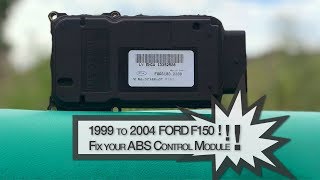
On Ford Trailer Brake Controllers and ABS units, B1342 is frequently caused by cracked solder joints. Open the module's plastic housing and use a magnifying glass to inspect the pins where the main connector solders to the board for fine, circular cracks.
Tools: Torx screwdrivers, prying tools, magnifying glass (Advanced)
When This Code Triggers (Freeze-Frame Conditions)
- Ignition Status: Key On, Engine Off (KOEO) (During the module's initial power-on self-test before the engine starts.)
- Battery Voltage: < 11.8V (During engine cranking with a weak battery, causing the module to fail its startup voltage check.)
- Module Temperature: < 32°F or > 180°F (During a cold soak or after prolonged operation, causing intermittent failure due to thermal stress on internal solder joints.)
- System Voltage: > 15.0V (While driving, indicating a bad alternator causing voltage spikes that damage the module.)
Related Codes
- U0100 — "Lost Communication With ECM/PCM." If B1342 and U0100 appear together, the Engine Control Module (ECM) has an internal fault and stopped communicating with the network.
- U0121 — "Lost Communication With ABS Control Module." When paired with B1342, the ABS module is the definitive failure point. Diagnose the ABS module's power and ground first.
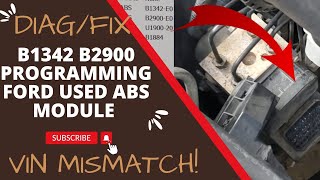
- B2900 — "VIN Mismatch." Appears on Ford vehicles alongside B1342 when a used module is installed without programming. Reprogramming clears B2900; if B1342 remains, the used module is broken.
- U3000:49 — "Control Module: Internal Electronic Failure." A modern version of B1342 used by Ford. It points to an unrecoverable internal hardware failure reinforcing the need for replacement.
How to Talk to a Mechanic About This Code
Say this: "I have a B1342 code pointing to an internal module fault. I need a diagnostic to confirm the failure. Please load-test the module's power and ground circuits and check for communication codes before recommending a replacement."
This signals you understand the code requires thorough diagnosis, not just a part swap. It directs the technician to perform load testing, which differentiates a true module failure from a simple wiring problem.
Avoid saying:
- My ABS light is on, can you fix it?
- Just replace the computer.
- I'm not sure what's wrong, just do whatever it takes.
Questions to ask before authorizing the repair:
- Did you load-test the power and ground wires to the module, or just use a multimeter?
- Does your estimate include the cost of programming the new part to my vehicle's VIN?
- What is the warranty on the replacement module and your labor?
- Are there any other communication codes (U-codes) present along with the B1342?
Where to Take It: Dealer vs Independent vs Chain
- Dealer:
A safe but expensive option. They have guaranteed access to the correct programming software, which is the biggest hurdle for this repair.
Best for: Vehicles under warranty., Complex programming on newer cars (2015+)., When you want a guaranteed fix with OEM parts and are not price-sensitive.
Downsides: Highest labor rates and part costs, often double an independent shop., Dealers refuse to install customer-supplied or used parts., Dealers lack experience programming used modules. (Typical cost: +75% vs. baseline) - Independent Shop:
Best fit, but requires vetting. Ask if they have experience programming modules for your specific vehicle. A good independent shop is the most cost-effective choice.
Best for: Out-of-warranty vehicles where cost is a factor., Shops specializing in vehicle electronics or your specific car brand., Getting a second opinion on a high dealer quote.
Downsides: Diagnostic capability varies widely., You must confirm they own the specific software to program a new module for your vehicle. (Typical cost: +0% vs. baseline) - Chain Shop:
AVOID. This repair is beyond the scope of chain shops. They lack the equipment to properly diagnose the fault or program the replacement module.
Best for: Simple, routine maintenance like oil changes, tires, and brake pads.
Downsides: Technicians lack the advanced diagnostic and programming tools required for this code., High pressure to upsell and misdiagnose complex electrical faults. (Typical cost: -10% vs. baseline)
When to Walk Away From the Repair
If the total estimated repair cost exceeds 40-50% of the car's current private-party value, seriously consider selling or trading it in rather than repairing it.
- Car worth $8000, fix is $1500: Fix it. The repair cost is under 20% of the vehicle's value.
- Car worth $4000, fix is $1500: Borderline. At nearly 40% of the car's value, this is a major investment. Send the original module for mail-in repair ($200) as a cheaper alternative.
- Car worth $2500, fix is $1500: Walk away. The repair cost is 60% of the car's value. It is not financially sensible to proceed.
What Scan Tool You Need for This Code

Minimum: A scanner that reads manufacturer-specific codes (B-codes, C-codes, U-codes) from all vehicle modules. A basic $20 engine-only code reader will not see code B1342.
Generic OBD-II readers only access powertrain (P-codes) from the engine computer. They cannot communicate with the ABS or Body Control modules where B1342 originates.
Budget: BlueDriver Pro Scan Tool (~$100) — Reads and clears codes from all modules (ABS, Airbag, Transmission) to confirm which module set the B1342 code.
Mid-range: FORScan with OBDLink EX Adapter (for Ford/Lincoln/Mazda) (~$150) — The best DIY option for Ford owners. FORScan provides dealer-level diagnostics and programs new or used ABS modules to the vehicle's VIN.
Professional: Autel MaxiCOM MK808 / Launch X431 CRP919XBT (~$450-600) — Professional-grade bidirectional scan tools offering full module diagnostics, live data graphing, and advanced module programming for a wide range of manufacturers.
Rent vs buy: Rent a scanner from a parts store to identify the faulty module. However, you cannot rent programming tools. If replacing the module yourself, you must buy a capable tool like FORScan or a professional scanner.
How to Clear the Code After You Fix It
- Reconnect the battery if disconnected.
- Use a compatible OBD-II scan tool to clear codes from ALL modules.
- Perform a complete OBD-II drive cycle to allow readiness monitors to run.
Drive cycle (~30 minutes): From a cold start, idle for 2-3 minutes. Drive for 15-20 minutes in mixed stop-and-go city traffic. Drive for 10 minutes at a steady 55 mph. Allow the vehicle to cool down.
Readiness monitors affected: Catalyst Monitor, Evaporative System (EVAP) Monitor, Oxygen (O2) Sensor Monitor
Before emissions retest: drive at least 100 miles to fully set monitors.
Watch out for:
- If B1342 is due to a hard internal failure, it reappears immediately after clearing.
- Disconnecting the battery does not reliably clear codes or reset readiness monitors on modern vehicles.
- EVAP and Catalyst monitors are difficult to set and require multiple drive cycles.
Will This Fail Emissions / State Inspection?
Yes — this code typically fails an OBD-II emissions inspection.
- California: Automatic failure. An illuminated Check Engine, ABS, or Brake warning light causes the vehicle to fail the visual portion of the smog check.
- New York: Automatic failure. The NYS safety inspection checks ABS functionality, and an illuminated ABS light is an immediate rejection.
- Texas: An illuminated ABS light alone does not cause a failure. However, if the red 'BRAKE' warning light is also on, the vehicle fails the safety inspection.
Most Commonly Affected Vehicles
- Ford F-150 (2006-2012) — Extremely common ABS module failure. It also appears in the Trailer Brake Controller (TBC) module due to cracked internal solder joints.
- Ford Escape / Mercury Mariner (2008-2012) — First-generation models are notorious for internal ABS electronic failures requiring replacement and VIN programming.
- Ford Explorer / Crown Victoria (2006-2011) — This code almost exclusively points to a failed ABS control module on these platforms.
- Hyundai Creta, i20 (2015-2020) — Triggered by moisture damage in the ECU housing or power surges. Mail-in repair services are highly effective for these models.
- Honda City, Amaze (2014-2019) — Sets a B1342 code in the ECU due to battery voltage surges, often requiring module replacement.
- Lincoln Town Car (2008-2011) — Associated with a faulty ABS module, causing the red brake and ABS lights to illuminate permanently.
- General Motors Various Trucks and SUVs (2007-2014) — Indicates a failed Body Control Module (BCM), disabling interior electronics like lights, windows, and locks.
- BMW Various with ZF 8HP Transmissions (2011-2018) — A manufacturer-specific version (421342) appears in the transmission control module, indicating a serious internal mechanical or hydraulic fault.
Manufacturer-Specific Notes
- Ford: B1342 is extremely common and almost always points to a failed ABS module or Trailer Brake Controller. Replacement requires specialized FORScan or dealer programming.
- Nissan / Infiniti: In rare cases, this code refers to a fault in a front door satellite sensor related to the side airbag system rather than a main control module.
- Mazda: On specific Mazda models, B1342 translates to "Fuel System Too Rich (Bank 1)," completely unrelated to a module failure. Always verify definitions with a manufacturer-specific scanner.
- General Motors: Frequently points to the Body Control Module (BCM) on 2007-2014 trucks, causing erratic interior electrical issues rather than ABS failures.
Real Owner Stories
2009 Ford Escape with 42K miles
ABS, brake, and traction control lights came on simultaneously. The vehicle had very low mileage and stored code B1342.
Outcome: The owner replaced the ABS module with a new OEM unit and had it programmed by a dealer to resolve the issue permanently.
Lesson: Internal module failures happen regardless of mileage. If basic voltage checks pass, the module itself is the culprit and requires replacement and programming.
2004 Ford F-150 after a jump start
The ABS light came on immediately after jump-starting the truck, storing a hard B1342 code.
Outcome: The voltage spike permanently fried the processor, making it unrepairable. The owner had to purchase a replacement module.
Lesson: Voltage spikes from jump-starting permanently damage control modules. While mail-in repair services are cost-effective, they cannot fix severely burnt processors.
2010 Lincoln Town Car with intermittent lights
The red 'BRAKE' and ABS lights came on intermittently, eventually becoming constant with a B1342 code.
Outcome: Diagnosis confirmed an internal failure of the ABS control module. Replacing the module cleared the warning lights.
Lesson: B1342 is a 'hard code' indicating internal failure. Always check external power and ground first, but expect to replace the module.
2018 Ford F-150 with a parasitic battery drain
The truck's battery died every few days. The owner traced a 4-amp parasitic draw to the ABS module, which clicked constantly while the truck was off.
Outcome: A short circuit within the electronic parking brake (EPB) switch was sending a constant 'wake up' signal to the ABS module. Replacing the EPB switch solved the drain and the code.
Lesson: A module setting an internal fault code is sometimes the victim, not the culprit. Faults in connected components cause modules to behave erratically and mimic internal failures.
How to Prevent This Code From Triggering
- Maintain a Healthy Battery and Connections (Every 6 months) — Low voltage or voltage spikes are the primary external cause of module failure. Clean battery terminals and ensure a tight connection to prevent voltage drops during startup.
- Protect Modules from Moisture (Annually) — Water intrusion kills electronic modules. Ensure windshield seals, sunroof drains, and A/C evaporator drains are clear to prevent water from leaking onto modules under the dash.
- Change Brake Fluid per Manufacturer Schedule (Every 2-3 years) — Brake fluid absorbs moisture over time. This moisture corrodes the delicate internal valves and electronic sensors of the ABS module from the inside out.
- Apply Dielectric Grease to Connectors (Whenever a module is disconnected) — A thin layer of silicone dielectric grease on connector pins creates a barrier that seals out moisture and prevents the pin corrosion that triggers false B1342 codes.
Frequently Asked Questions
Can a bad battery cause a B1342 code?
Yes. A weak battery providing below 12.4V at rest causes the control module to fail its startup self-test. Always test the battery and charging system before replacing an expensive module.
What is the most common misdiagnosis for B1342?
The most common misdiagnosis is replacing the control module without load-testing the power and ground wires. High electrical resistance in damaged wiring mimics an internal module failure perfectly.
Can I use a used module from a junkyard to fix a B1342 code?
Yes, but you must reprogram the used module to match your vehicle's VIN. Installing a used module without programming triggers a B2900 code and leaves the system disabled. You also risk buying a module that is already broken.
Is B1342 expensive to fix?
It ranges from a $150 battery replacement to a $1,500 dealership module replacement. Sending your original module to a mail-in repair service costs $150-$300 and avoids expensive reprogramming fees.
What does ECU internal fault mean?
It means the module's internal diagnostic software detected a fatal hardware or memory error. The computer recognizes it is broken and shuts itself down to prevent erratic vehicle behavior.
Can I replace a control module myself?
You can unbolt and plug in the new module yourself. However, you must use an advanced bidirectional scan tool to program the new unit to your vehicle. If you lack this tool, you must tow the car to a shop for programming.
Will clearing the code fix the problem?
No. If the code stems from a hard internal failure, it returns immediately after clearing. Clearing the code only erases the dashboard light temporarily.
Key Takeaways
- Code B1342 indicates a specific control module—usually the ABS or Body Control Module—has failed its internal self-test and disabled itself.
- Test your battery before replacing expensive computers, as a resting voltage below 12.4V frequently triggers false B1342 module failure codes.
- Ford vehicles from 2006-2012 experience this code almost exclusively due to a failed Anti-lock Brake System (ABS) module requiring replacement.
- Replacing a dead module costs between $450 and $1,500 because the new unit must be professionally programmed to match your vehicle's VIN.
Helpful Videos


The information in this article is provided for general reference and educational purposes only. Vehicle specifications, procedures, and part compatibility can vary by production date, trim level, and region. Always consult your vehicle's factory service manual and verify part numbers before purchasing or performing repairs. Safety-critical components such as airbags, seat belts, and braking systems should be installed by a qualified professional.
- 🎬 Helpful Videos
- What Does B1342 Mean?
- Can I Drive With B1342?
- Common Causes
- Symptoms
- Diagnostic Flowchart
- Common Fixes & Costs
- Used vs. New Parts: Buying Guide
- What Happens If You Wait — Timeline
- Cost of Not Fixing It
- Diagnosis Steps
- When This Code Triggers (Freeze-Frame Conditions)
- Related Codes
- How to Talk to a Mechanic About This Code
- Where to Take It: Dealer vs Independent vs Chain
- When to Walk Away From the Repair
- What Scan Tool You Need for This Code
- How to Clear the Code After You Fix It
- Will This Fail Emissions / State Inspection?
- Most Commonly Affected Vehicles
- Manufacturer-Specific Notes
- Real Owner Stories
- 2009 Ford Escape with 42K miles
- 2004 Ford F-150 after a jump start
- 2010 Lincoln Town Car with intermittent lights
- 2018 Ford F-150 with a parasitic battery drain
- How to Prevent This Code From Triggering
- Frequently Asked Questions
- Can a bad battery cause a B1342 code?
- What is the most common misdiagnosis for B1342?
- Can I use a used module from a junkyard to fix a B1342 code?
- Is B1342 expensive to fix?
- What does ECU internal fault mean?
- Can I replace a control module myself?
- Will clearing the code fix the problem?
- Key Takeaways
- 🎟️ Get 5% Off