

U0100 on 2008-2012 Chevrolet Malibu: Lost Communication With ECM/PCM Causes and Fixes
The U0100 code on a 2008-2012 Malibu means the Engine Control Module (ECM) has lost communication with other vehicle computers. This is often caused by wiring issues, poor grounds, or a faulty Transmission Control Module (TCM) disrupting the network. It is a serious fault that can cause a no-start or stalling condition, and may be accompanied by a U0101 code pointing to the TCM.
- U0100 is a critical network code indicating the Engine Control Module is offline, which can cause a no-start or stalling.
- Do not immediately assume the ECM is bad. The most common causes on this Malibu are wiring problems, bad grounds, or a faulty Transmission Control Module (TCM) bringing the network down.
- Check for other codes, especially U0101 (Lost Communication with TCM), as this provides a strong clue to the root cause.
- Diagnosis is complex and best left to a professional with network diagnostic tools to avoid replacing expensive parts unnecessarily.
- Driving the vehicle is unsafe due to the risk of the engine shutting down without warning.
What's Unique About the 2008-2012 Chevrolet Malibu

For this generation of Malibu (and other GM vehicles of the era on the Epsilon platform), the U0100 code is frequently a symptom of another problem rather than a primary ECM failure. A failing Transmission Control Module (TCM), which is located inside the transmission, is a known issue that can disrupt the entire communication network, causing other modules to report a U0100. Technicians often find that troubleshooting communication codes like U0101 (Lost Communication with TCM) can lead to the root cause of a U0100 code. GM Technical Service Bulletin 08-07-30-021H specifically addresses GMLAN communication loss and points to issues like backed-out or corroded terminals in the 16-way transmission electrical connector as a primary cause. Another known issue on this platform is fretting corrosion on the Body Control Module (BCM) connector terminals, which can cause a host of communication issues.
Symptoms You May Notice
- Engine will not start or has a no-crank condition. 🎬 Watch: Troubleshooting common reasons why your Malibu won't start.
- Check Engine Light is on.
- Multiple other warning lights may illuminate (e.g., ABS, Traction Control, Service Hybrid System).
- Engine may stall intermittently while driving.
- Transmission may be stuck in one gear ('limp mode') or shift harshly.
- Reduced engine power and poor fuel economy.
- Gauges on the instrument cluster may behave erratically or drop to zero.
- Power steering may be lost.
- Scan tool cannot communicate with the ECM, but may communicate with other modules.
- Replacing the ECM without first diagnosing the entire CAN bus network. The U0100 code is often a symptom of a problem elsewhere on the network, such as a faulty TCM or a wiring issue at the transmission connector.
- Replacing the battery without checking the alternator's charging output or performing a voltage drop test on the main power and ground cables.
Most Likely Causes

- Wiring Harness Issues (Open/Short/Corrosion) 🔴 High Probability Wiring harnesses routed near the engine and transmission are subject to heat, vibration, and potential fluid contamination. A common failure point is the 16-pin transmission harness connector, where pins can corrode, get contaminated with fluid, or back out, causing a loss of communication with the TCM and bringing down the whole network. Fretting corrosion, a microscopic wear of terminal plating, is also a known issue on GM connectors for this era, particularly at the BCM, leading to intermittent high resistance and communication loss.
How to confirm: Visually inspect all accessible wiring harnesses connected to the ECM and TCM for damage. Disconnect the main transmission connector and check for bent, corroded, or fluid-contaminated pins. A video shows how to de-pin and replace a single burnt terminal in this connector without replacing the whole pigtail. Use a multimeter to check for continuity and shorts on the CAN bus wires (typically a twisted pair of Tan and Tan/Black wires on this platform).
Typical fix: Repair the damaged section of the wire or replace the affected connector pigtail. Clean any corroded terminals with electrical contact cleaner. For fretting corrosion, GM service bulletins recommend applying a specific dielectric lubricant (GM P/N 12377900) to the connector terminals to prevent future oxidation.
Est. part cost: $20-$100 - Faulty Transmission Control Module (TCM/TEHCM) 🟡 Medium Probability On these models with the 6T40/6T45 transmission, the TCM (also called a TEHCM) is located inside the transmission oil pan, exposed to constant heat and potential fluid contamination. Internal electronic failure is a well-documented problem that can disrupt the entire CAN bus, causing a U0100 code to be set by other modules.
How to confirm: A professional technician would use a scan tool to see if they can communicate directly with the TCM. If the TCM is the only module that is offline, and its power and grounds are good, the module itself is likely faulty. This often sets a U0101 code in the ECM and other modules. A bypass test can be performed by jumping the CAN wires at the TCM connector to see if communication is restored to other modules.
Typical fix: Replace the TCM/TEHCM. 🎬 See this walkthrough on how to replace the TCM. This part is located inside the transmission and requires draining the fluid and removing the pan. The new module must be programmed to the vehicle's VIN using software like GM's SPS2 (Service Programming System).
Est. part cost: $300-$600 - Poor Power or Ground Connections 🟡 Medium Probability Engine and chassis grounds can corrode or become loose over time, creating high resistance that disrupts module operation. Key ground locations for the ECM/TCM on this platform include G101/G106 (front of engine/frame) and G102 (left side of engine). A broken ground strap or a wire broken inside the terminal crimp 🎬 Watch: How to test for bad connections and grounds. are common culprits.
How to confirm: Check that the battery terminals are clean and tight. Locate and inspect the main engine and ECM ground points for tightness and corrosion. Use a multimeter to perform a voltage drop test on the ECM's power and ground circuits to ensure there is less than 0.1V of drop under load.
Typical fix: Clean the grounding points to bare metal and tighten the connections securely. Replace any corroded or broken ground straps or terminal ends.
Est. part cost: $5-$30 - Low Battery Voltage or Faulty Alternator ⚪ Low Probability
How to confirm: Test the battery voltage with the car off; it should be at least 12.4V-12.6V. With the engine running, check the alternator output, which should be between 13.7V and 14.7V. A weak battery or failing alternator can cause unpredictable electronic issues and communication codes.
Typical fix: Recharge or replace the battery. Replace the alternator if it is not charging correctly.
Est. part cost: $150-$400
Rare But Worth Checking
- Failed Engine Control Module (ECM): While the code directly points to the ECM, the module itself is one of the less common failure points. All other possibilities, especially wiring, grounds, and other modules on the network (like the TCM), should be ruled out before condemning the ECM.
- Faulty Terminating Resistor: The CAN bus has two 120-ohm terminating resistors. On this platform, one is typically inside the ECM and the other is inside the TCM. If the TCM fails, its resistor goes offline, changing the network resistance from 60 ohms to 120 ohms and causing communication failures. This is another reason a faulty TCM can trigger a U0100.
- Accessory Wake Up Circuit Issues: Manufacturer service bulletin #PIT6198 notes that for some GM vehicles, a U0100 code at startup can be caused by a fault in the accessory wake up circuit to the ECM, which should be tested for power.
Diagnosis Steps

- Check Battery Health: Ensure the battery is fully charged (12.4V+ engine off) and the terminals are clean and tight. A weak battery is a very common cause of communication codes.
- Scan for All Codes: Use a professional scan tool to check for codes in ALL modules (ECM, TCM, BCM, ABS, etc.). Note which modules are not communicating. If only the TCM is offline, that is your primary suspect.
- Inspect Fuses: Check all fuses related to the ECM, PCM, and TCM in the underhood and interior fuse boxes. A blown fuse can cut power to a module, taking it offline.
- Visual Wiring Inspection: Thoroughly inspect the wiring harnesses going to the ECM and the transmission main connector. Look for any signs of chafing, melting, or corrosion. Pay extremely close attention to the transmission connector for burnt or backed-out pins.
- Check Network Resistance: With the battery disconnected, measure the resistance between Pin 6 (CAN High) and Pin 14 (CAN Low) at the OBD-II port. A healthy network should read approximately 60 ohms. A reading of 120 ohms suggests one of the terminating resistors (likely in the TCM) is offline. An open or shorted reading points to a wiring fault.
- Verify Power and Ground to ECM/TCM: Using a wiring diagram, confirm that the suspect module (ECM or TCM) has proper battery voltage and a solid ground connection at its connector. Check grounds G101, G102, and G106 for integrity.
- Isolate Modules: If the network resistance is incorrect or modules are offline, a technician may disconnect modules one by one (starting with the TCM) to see if the network communication is restored, which would isolate the faulty component or section of wiring.
Parts You'll Likely Need
- Transmission Control Module (TEHCM)
(OEM #24256524)— This is a common failure point on 6-speed automatic GM vehicles of this era. Its internal failure disrupts the communication network, causing a U0100 code. This part is a combined valve body and control module.
Trusted brands: ACDelco (OEM), Dorman
OEM price range: $400-$600
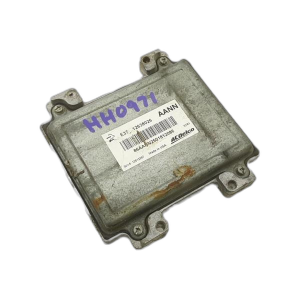
Aftermarket price range: $250-$450 - Engine Control Module (ECM) — This is the part to replace only after all wiring, grounds, and other modules have been confirmed to be working correctly. It is the 'brain' of the engine and requires programming.
Trusted brands: ACDelco (OEM)
OEM price range: $500-$800
Aftermarket price range: $300-$500 - Transmission Harness Connector Pigtail — If pins in the 16-way transmission connector are found to be burnt or corroded beyond cleaning, the connector itself will need to be replaced by splicing in a new pigtail.
Trusted brands: ACDelco, Dorman
OEM price range: $40-$80
Aftermarket price range: $20-$50
Related Codes That Often Appear With This One
- U0101 — This code means 'Lost Communication with TCM'. If both U0100 and U0101 are present, it strongly suggests the problem originates with the TCM or its wiring, which is then causing the ECM to appear offline to other modules.
- U0073 — This code means 'Control Module Communication Bus 'A' Off'. It's a general network code indicating a total communication shutdown, often seen with more specific codes like U0100 when the fault is severe, such as a shorted CAN wire or a major module failure.
- P0700 — This code is a general transmission fault request from the TCM to the ECM to turn on the Check Engine Light. It often appears with U0101 and U0100 when the TCM is failing or has lost communication.
Technical Service Bulletins (TSBs) & Recalls
- 08-07-30-021H: Addresses loss of high-speed GMLAN communication, intermittent no-crank, and other electrical issues caused by wiring problems, specifically calling out the transmission connector.
- PIT4853C: While for hybrid models, it provides relevant diagnostic direction for communication codes, pointing to specific ground points and connectors to inspect.
- Bulletin #20-NA-206: While originally for the Trax, this GM bulletin notes that a U0100 code can be set alongside a "Service Power Steering" message, requiring replacement of the BCM or PSCM if the code will not clear.
- Bulletin #PIT6198: Provides a diagnostic tip for a Check Engine Light at startup with DTC U0100, advising technicians to test the accessory wake up circuit to the ECM for power.
Platform-Specific Known Issues
- A GM Technical Service Bulletin (TSB 08-07-30-021H) for similar platforms points to potential issues with terminals in the transmission harness connector, open/shorted GMLAN circuits, and poor connections at various modules as common causes for communication DTCs like U0100. The bulletin specifically mentions terminals backing out of the 16-way transmission connector.
- A related TSB, PIT4853C, for hybrid models also lists checking grounds G300 and G102, and inspecting connectors X150 and X109 for poor terminal fit as diagnostic steps for U-codes.
Mechanic-Grade Diagnostic Values
- GMLAN Bus Voltage (Oscilloscope) — expected: CAN High (Tan wire) should be a square wave between 2.5V and 3.5V. CAN Low (Tan/Black wire) should be a mirror image between 2.5V and 1.5V. Both signals should be clean and free of noise.. Failure: A signal that is stuck high, stuck low, shorted to ground (0V), or shows excessive noise indicates a wiring fault or a faulty module pulling the bus down.
- Module Power Supply Voltage — expected: 12.0 - 12.6V at the module's power supply pin with the key on.. Failure: Voltage significantly below 12V indicates a problem with the power supply circuit, fuse, or battery.
- Module Ground Resistance — expected: Below 0.5 Ω between the module's ground pin and a known good chassis ground.. Failure: Resistance higher than 0.5 Ω indicates a poor ground connection, which can cause intermittent module operation.
Scan Tool Commands That Help
- GDS2 / Tech2 / GM SPS2: Module Programming (e.g., for ECM or TCM/TEHCM) — Required after replacing the ECM or TCM. The new module must be programmed with the vehicle's VIN and specific calibration files to function. This process pairs the module to the car's other systems, including the anti-theft system.
- GDS2 / Tech2: Crankshaft Position Variation Learn — After replacing or reprogramming the ECM, a P0315 code may be set. This procedure is required to allow the ECM to learn the minor variations in the crankshaft reluctor wheel to ensure accurate misfire detection.
- GDS2 / Tech2: Vehicle Theft Deterrent (VTD) Relearn — After replacing the ECM, the anti-theft system must be relearned. Failure to do so will result in a no-crank or no-start condition. The process syncs the new ECM with the BCM and ignition key.
Wiring & Ground Locations

- G101 — For 2008 models, near the windshield wiper fluid reservoir. For 2012 models, on the left front corner of the engine compartment.. This is a primary engine compartment ground. On some models, it provides a ground path for the ECM and TCM.
- G102 — For 2008 models, on the core support behind the right headlamp. For 2012 models, on the right front corner of the engine compartment.. A key chassis ground in the engine bay. Poor connection here can cause intermittent power issues to various modules.
- G105 (2.4L) — At cylinder #4, above the CMP intake sensor.. A critical engine block ground point for the 4-cylinder engine.
- G106 (2.4L) — At the #4 exhaust port, above the CMP exhaust sensor. For 2012 models, it's at the left rear of the engine.. Another critical engine block ground. A loose or corroded G106 can directly impact ECM and TCM operation.
- TCM/TEHCM Connector (X214) — The main 16-pin electrical connector at the transmission housing where the internal harness connects to the main vehicle harness.. This is the single point of failure for all communication and power to the TCM. The GMLAN high and low wires (typically Tan and Tan/Black) pass through this connector. It is highly susceptible to corrosion and backed-out pins as noted in GM TSB 08-07-30-021H.
- BCM Connector C2 — The Body Control Module (BCM) is located under the center console. C2 is one of its main connectors.. This specific connector is known for fretting corrosion, which can disrupt communication on the GMLAN, potentially causing other modules to log U-codes. A recall was issued to address this by applying dielectric lubricant.
Real Owner Repair Stories
- YouTube video by 'Global Commerce CA' (2008 Chevrolet Malibu) — No communication with the PCM (ECM).
❌ Tried (didn't work) Initial diagnosis was difficult due to the complete lack of communication.
✅ What actually fixed it The technician temporarily plugged in a known-good spare ECM and communication was restored, confirming the original ECM had failed. The final fix was to install a used (donor) ECM and reprogram it to the vehicle using GM's SPS2 software, which also required a theft deterrent relearn. - YouTube video by 'Hands On Auto Training' (2012 Chevrolet Malibu) — P0601 (ECM Internal Memory Checksum Error) and transmission shifting problems.
❌ Tried (didn't work) The shop had already decided to replace both the ECM and TCM based on the codes.
✅ What actually fixed it The technician installed a used ECM and a remanufactured TCM. Both modules required programming using GM's SPS2 software. After programming, a P0315 code appeared, which was resolved by performing a crankshaft position variation learn procedure. - NHTSA ODI #10733263 — An owner reported that their vehicle displayed codes P069E, P0700, U0073, and U0100. Despite replacing the battery twice and having the vehicle towed to the dealership multiple times, the communication issues persisted.
- NHTSA ODI #10676316 — A driver experienced a U0100 (Engine Control Module) code along with P0324 (Knock Control System) and P2135 (Throttle Position Sensor) during a diagnostic check at an auto parts store.
- NHTSA ODI #11129698 — An owner reported a rough start accompanied by Stabilitrak and Traction Control warnings and a flashing Check Engine Light; the dealer pulled codes P0300, U0121, and U0100, eventually replacing the coil pack.
OEM Part Supersession History
Varies by year/model, e.g., 24256524→Multiple revisions exist. It is critical to use a VIN lookup to get the correct, most current part number.— Revisions often address internal electronic failure modes or improve heat resistance.
Heads up: Using the wrong TEHCM part number, even if it physically fits, will result in programming failure or incorrect transmission operation. Always verify the part number against the vehicle's VIN.
Model Year Variations Within This Range
- 2008-2012: Ground point locations can vary slightly between early (2008) and later (2012) models within the same generation. For example, G101 and G102 are in different positions.
- 2008-2012: The specific TEHCM part number is dependent on the exact year and transmission (6T30/6T40/6T45). While the failure is common across the platform, the replacement part is not universal.
Diagnostic Flowchart
Used vs. New Parts: Buying Guide for This Vehicle
When a used part is the smart pick: A used ECM from a junkyard can be a cost-effective solution, provided you have access to GM's SPS2 programming software to reprogram it for your vehicle's VIN and security system. Used wiring harnesses or connector pigtails are also excellent choices to repair localized damage without splicing multiple wires.
Donor-vehicle mileage cap: roughly under 120000 miles for the part to have meaningful remaining life.
What to inspect on the donor part:
- For modules (ECM/TCM): Check for any signs of water intrusion or physical damage to the case or connectors.
- For connectors/pigtails: Ensure pins are straight, free of corrosion (no green or white powder), and the plastic housing is not brittle or melted.
- For harnesses: Inspect for any previous repairs (splices, tape), chafing, or heat damage to the loom.
OEM-only on this vehicle (don't cheap out):
- Transmission Control Module (TEHCM): Due to extremely high failure rates and the criticality of programming, it is strongly recommended to use a new OEM (ACDelco) part or a high-quality remanufactured unit from a reputable supplier like Dorman, rather than a used one from a junkyard.
Aftermarket brands forum-validated for this vehicle:
- Dorman OE FIX (for TEHCM): This brand is a widely available aftermarket option, and some versions claim to use upgraded materials (PEEK plastic) to improve heat resistance. However, be aware that some users have reported premature failures.
- ACDelco (for TEHCM/ECM): As the OEM supplier, this is the most reliable choice.
Brands owners have reported issues with on this vehicle:
- Unbranded, no-name TEHCMs from online marketplaces should be avoided. They often have high failure rates, may be un-programmable, or could be used units sold as new.
Real Owner Stories
Aggregated from forums and TSBs cited above. Mileages and costs reflect what owners reported in those sources.
Chevrolet HHR (related GM platform)
Symptoms: U0100 code appeared with hard shifting and a loss of power steering.
What fixed it: The issue was temporarily resolved by a battery disconnect, highlighting the intermittent nature of the electrical fault.
Source hint: ChevyHHR.net forum post titled 'U0100 code, have pass info'
Related OBD-II Codes
Frequently Asked Questions
My mechanic says the TCM is the problem on my 2009 Malibu. Is that a common failure?
I have a U0100 code. Where are the most important ground wires to check on my Chevrolet Malibu?
What does GM Technical Service Bulletin 08-07-30-021H say about communication codes like U0100?
My transmission connector looks corroded. What's the recommended fix for this on my Malibu?
If I replace the Transmission Control Module (TCM) myself, can I just plug the new one in?
My scan tool shows 120 ohms of resistance on the CAN bus. What does that mean for my Malibu?
Along with the Check Engine Light for U0100, my ABS and Traction Control lights are on. Is this related?
Helpful Videos
Used OEM Parts in Stock



New Aftermarket Parts Available



The information in this article is provided for general reference and educational purposes only. Vehicle specifications, procedures, and part compatibility can vary by production date, trim level, and region. Always consult your vehicle's factory service manual and verify part numbers before purchasing or performing repairs. Safety-critical components such as airbags, seat belts, and braking systems should be installed by a qualified professional.
- Chevrolet Malibu:
- 🎬 Helpful Videos
- 🛍️ Shop This Part
- What's Unique About the 2008-2012 Chevrolet Malibu
- Symptoms You May Notice
- Most Likely Causes
- Rare But Worth Checking
- Diagnosis Steps
- Parts You'll Likely Need
- Related Codes That Often Appear With This One
- Technical Service Bulletins (TSBs) & Recalls
- Platform-Specific Known Issues
- Mechanic-Grade Diagnostic Values
- Scan Tool Commands That Help
- Wiring & Ground Locations
- Real Owner Repair Stories
- OEM Part Supersession History
- Model Year Variations Within This Range
- Diagnostic Flowchart
- Used vs. New Parts: Buying Guide for This Vehicle
- Real Owner Stories
- Chevrolet HHR (related GM platform)
- Related OBD-II Codes
- Frequently Asked Questions
- 🎟️ Get 5% Off