

U0001 on 2004-2015 Nissan Titan: CAN Bus Failure Causes and Fixes
Code U0001 on a 2004-2015 Titan means a critical communication failure between the truck's computers. Before suspecting expensive modules, check for corroded ground wires, a weak battery, or a failing IPDM (smart fuse box), as these are the most common culprits. Fixing grounds is often a low-cost repair that resolves a host of electrical issues.
- U0001 is a serious network failure. Do not continue to drive the vehicle.
- Always start with the basics: test the battery and thoroughly clean all major engine and chassis ground connections before buying any parts.
- The IPDM (smart fuse box in the engine bay) is a very common point of failure on these trucks and a likely cause of this code.
- The ABS module is another known weak point that can cause this code; disconnecting it is a valid diagnostic test to see if network communication returns.
- Do not replace expensive computers like the ECM or BCM unless you have definitively ruled out all wiring, ground, and power supply issues.
What's Unique About the 2004-2015 Nissan Titan
On the first-generation (A60) Nissan Titan, communication codes like U0001 are frequently caused by basic electrical issues rather than the failure of a major computer. The platform is known for having ground points in the engine bay that are susceptible to corrosion, which can disrupt the entire CAN network. Additionally, the Intelligent Power Distribution Module (IPDM E/R), which is a combined fuse and relay box, is a well-documented failure point that can cause this code along with no-start conditions, often due to a failing internal ECM relay.
Symptoms You May Notice
- Check Engine Light is on
- Multiple other warning lights are on simultaneously (VDC, SLIP, ABS, 4WD)
- Engine may crank but will not start
- Engine stalls intermittently while driving, sometimes after hitting a bump
- Transmission may not shift correctly or may go into a limp mode
- Gauges on the instrument cluster behave erratically or stop working
- Cooling fans run constantly at high speed, even with a cold engine
- Scan tool cannot communicate with most modules, or only communicates with one or two
- Replacing the Engine Control Module (ECM) or another control module without first verifying that all power and ground connections are clean and tight, the battery is healthy, and the IPDM is functioning correctly.
Most Likely Causes
- Poor or Corroded Ground Connections 🔴 High Probability The main ground points in the engine bay and on the chassis are exposed to the elements and are known to develop corrosion over time, creating high resistance that disrupts sensitive network communications. The battery design can also vent acidic gases, accelerating corrosion on nearby terminals.
How to confirm: Visually inspect and physically check the main battery negative cable connection to the chassis, as well as the ground straps from the engine to the frame. Key ground points are E15 (right side of engine bay), E24 (left front of engine bay near battery), and F16 (left front of engine). Perform a voltage drop test from the negative battery post to the chassis and engine block with the engine running; a reading above 0.1V indicates a poor ground.
Typical fix: Disconnect, thoroughly clean all contact surfaces of the ground wires and mating surfaces on the chassis/engine with a wire brush until shiny, then re-secure them tightly. Applying dielectric grease can help prevent future corrosion. Some owners replace the entire negative battery cable assembly 🎬 See how a faulty ground cable causes communication codes to resolve the issue.
Est. part cost: $0-$50 - Failing Intelligent Power Distribution Module (IPDM) 🔴 High Probability The original white-colored IPDMs on this platform contain internal relays (especially the ECM relay) that are known to fail, causing a loss of power to critical modules and triggering CAN communication faults. Nissan issued a service bulletin for a similar issue on 2004-2006 models.
How to confirm: A classic symptom is turning the key to 'ON' and the Check Engine Light does NOT illuminate, while the engine cooling fans run on high speed. You can also perform the IPDM's self-test by turning the ignition on and pressing the driver's door jamb switch 10 times in 20 seconds; it should cycle various components like lights and wipers.
Typical fix: Replacement of the IPDM module. This is typically a plug-and-play part located in the engine bay near the battery. The updated OEM part is black 🎬 Watch: How to fix a no-start by replacing the IPDM, replacing the failure-prone white original. Some early models had a serviceable ECM relay (Part No. 284B7-CW29E) but replacing the entire IPDM is the standard repair.
Est. part cost: $150-$500 - Weak Battery or Faulty Charging System 🟡 Medium Probability Like any modern vehicle, control modules require a stable voltage to operate. If the battery is weak or the alternator isn't charging properly, modules can randomly drop off the network as voltage fluctuates, especially during startup when voltage can dip below 10V.
How to confirm: Test the battery with a multimeter. It should read approximately 12.6 volts with the engine off. With the engine running, the voltage should be between 13.7 and 14.7 volts. A simple voltage test is not enough; the battery should be properly load-tested at an auto parts store to ensure it can hold a charge under load.
Typical fix: Recharge or replace the vehicle's 12V battery. If the charging voltage is low, the alternator will need to be replaced.
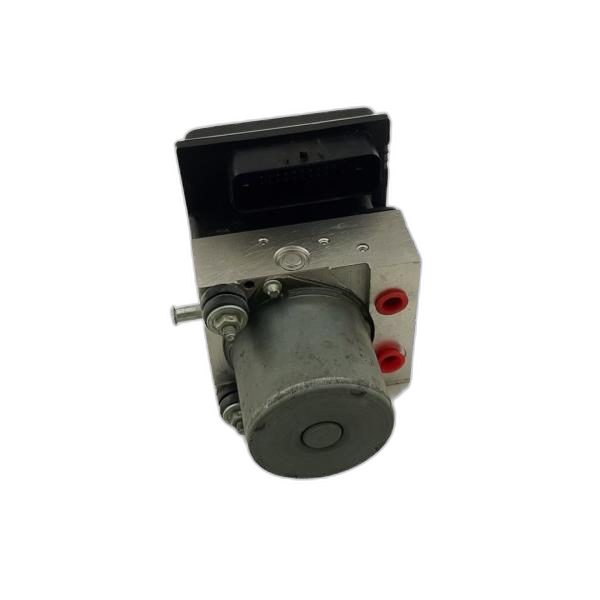
Est. part cost: $150-$400 - Failed ABS Actuator and Control Unit 🟡 Medium Probability The ABS module is a primary node on the high-speed CAN bus. Sources indicate that an internal electronic failure within this unit is a common cause of U0001 on 2004-2015 Nissan Titans. When it fails, it can broadcast corrupt data or short the network, bringing down all communication.
How to confirm: With a professional scan tool, check if you can communicate with the ABS module. If it's the only module (or one of few) that is offline, it's a strong suspect. A definitive test is to disconnect the main electrical connector from the ABS module and re-check if communication with other modules is restored.
Typical fix: Replacement of the entire ABS pump and module assembly. This repair often requires a specialized scan tool to bleed the brake system afterward. Used units are a common repair strategy.
Est. part cost: $400-$1200 - Damaged CAN Bus Wiring Harness ⚪ Low Probability Wiring can become chafed from rubbing against the frame or engine components, or corroded in connectors exposed to moisture, causing an open or short circuit in the CAN wiring.
How to confirm: Visually inspect harnesses in the engine bay and under the truck. With the battery disconnected, measure the resistance between Pin 6 (CAN High) and Pin 14 (CAN Low) at the OBD-II port. A healthy network should read approximately 60 ohms. 🎬 Watch: How to test CAN bus resistance with a multimeter A reading of 120 ohms suggests an open circuit or a missing terminating resistor, while a reading near 0 ohms indicates a short between the two wires.
Typical fix: Carefully repair the damaged section of wiring, ensuring the twisted-pair configuration is maintained. Replace any corroded connectors or terminals.
Est. part cost: $10-$100
Rare But Worth Checking
- Faulty Aftermarket Electronics: Remote starters, alarms, or stereo systems that are improperly tapped into the vehicle's CAN bus wiring can introduce electrical noise or shorts, bringing down the entire network. Disconnecting these devices is a wise early diagnostic step.
- Failed ECM or BCM: While possible for the Engine Control Module (ECM) or Body Control Module (BCM) to fail, it is far less common than power, ground, or IPDM issues. These should only be considered after all other possibilities have been thoroughly exhausted.
Diagnosis Steps
- Check Battery and Charging System: Ensure the battery has at least 12.6V with the engine off. Start the engine and verify the alternator is charging between 13.7V and 14.7V. Have the battery professionally load-tested, as a simple voltage check is insufficient.
- Inspect Grounds: Disconnect, clean, and re-secure the main battery ground cable, engine-to-chassis ground straps, and smaller ground points in the engine bay (look for clusters of black wires bolted to the body, specifically E15 and E24).
- Check for IPDM Failure: Turn the ignition to the ON position (engine off). If the Check Engine Light does not come on and/or the radiator fans run at full speed, the IPDM is the most likely cause. Perform the IPDM self-test for further verification.
- Scan All Modules: Use a professional-grade scan tool to attempt communication with all modules on the network. Note which modules are online and which are offline. This can help isolate the fault.
- Isolate Potential Faulty Modules: If a specific module like the ABS unit is suspected, disconnect its main electrical connector. Clear codes and see if communication is restored to the rest of the network. If it is, the disconnected module is the likely culprit.
Parts You'll Likely Need
- Intelligent Power Distribution Module (IPDM) — A common failure point on this platform. An internal relay fails, causing a loss of power to other modules and disrupting CAN communication.
Trusted brands: Nissan (OEM)
OEM price range: $250-$400
Aftermarket price range: $150-$250 - ABS Pump and Control Module Assembly — Internal failure of the ABS control module can bring down the entire CAN network. It's a known issue on this specific vehicle.
Trusted brands: Bosch, Hitachi, Nissan (OEM)
OEM price range: $800-$1200
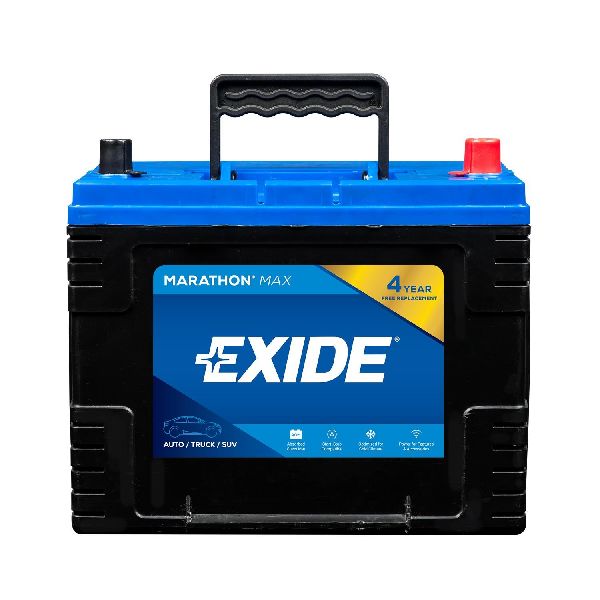
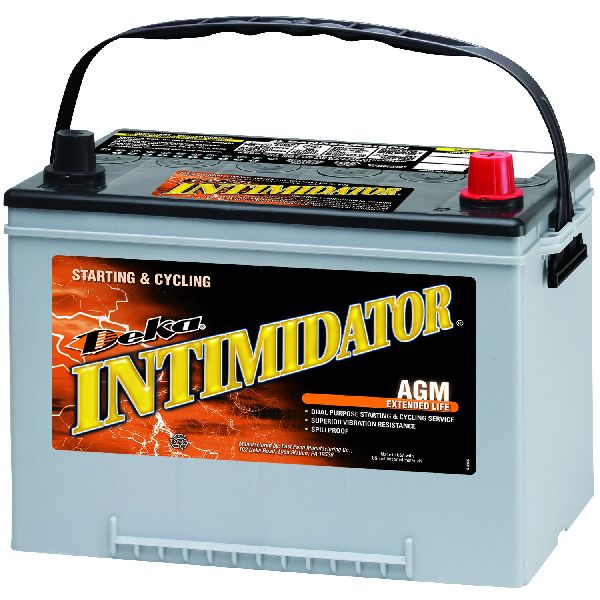
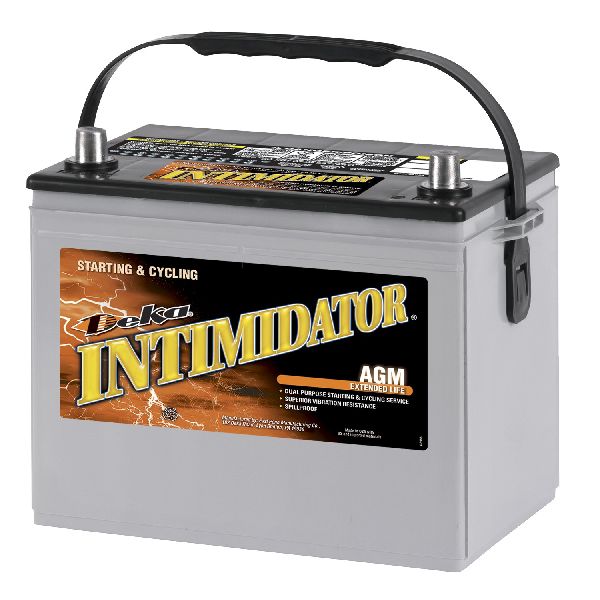
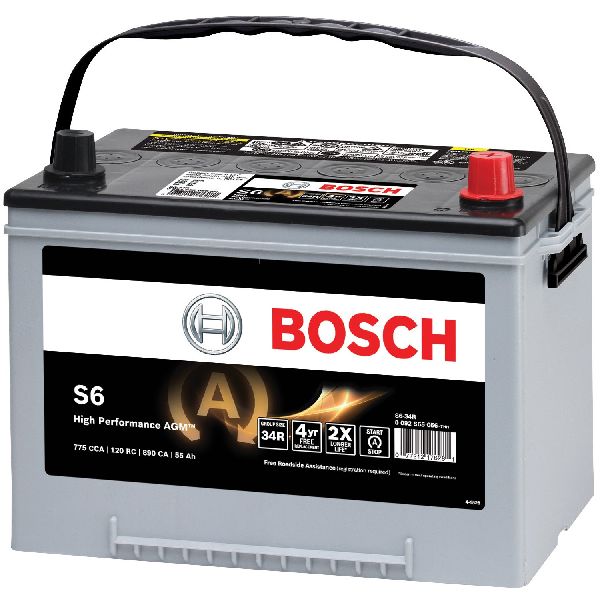
Aftermarket price range: $400-$700 - Vehicle Battery — A weak or failing battery provides unstable voltage, which is a primary cause of intermittent communication codes.
Trusted brands: Interstate, DieHard, Duralast
OEM price range: $200-$300
Aftermarket price range: $150-$250
Related Codes That Often Appear With This One
- U1000 — This is a nearly identical Nissan-specific code for CAN Communication Circuit Malfunction. They mean the same thing and are caused by the same issues.
- U0101 — This code means 'Lost Communication with TCM'. It will often appear with U0001 because the overall network failure prevents the gateway module from hearing from the Transmission Control Module.
- U0121 — This code means 'Lost Communication with ABS Control Module'. It is frequently stored alongside U0001, either as a symptom of the general network failure or as a clue that the ABS module itself might be the root cause.
Technical Service Bulletins (TSBs) & Recalls
- NTB13-027a: A general CAN diagnostic flowchart for 2005-2013 Nissan vehicles, providing steps for troubleshooting communication issues.
- A service bulletin was issued for 2004-2006 Titans (and other models) with white IPDMs for engine performance issues caused by an oxidized ECM relay, a known cause of U0001. A replacement relay (Part No. 284B7-CW29E) was released.
Mechanic-Grade Diagnostic Values
- CAN Bus Network Resistance — expected: ~60 Ω. Failure: A reading of ~120 Ω indicates an open circuit or a missing terminating resistor. A reading near 0 Ω indicates a short between the CAN High and Low lines.
- CAN High Voltage (Static) — expected: ~2.6V - 2.7V. Failure: Significant deviation, or being stuck at 0V, 5V, or 12V, indicates a short to ground or power.
- CAN Low Voltage (Static) — expected: ~2.3V - 2.4V. Failure: Significant deviation, or being stuck at 0V, 5V, or 12V, indicates a short to ground or power.
- CAN Bus Voltage (Oscilloscope) — expected: CAN-H should mirror CAN-L. During data transmission, CAN-H rises from a 2.5V bias to ~3.75V, while CAN-L drops from 2.5V to ~1.25V.. Failure: A flat line indicates an open or short. A noisy or non-symmetrical waveform indicates interference or a module issue.
- Ground Voltage Drop — expected: < 0.2V (200mV). Failure: A reading higher than 0.2V indicates excessive resistance in the ground circuit, which can cause network errors.
Hidden / Shadow Codes Worth Checking
- N/A (Visual Network Map): Nissan's dealer-level CONSULT scan tool provides a 'CAN Diag Support Monitor' function. This isn't a hidden code but a visual map of the CAN network. It displays each module and color-codes them: Green for 'communicating', Red for 'current errors' (not communicating), and Orange for 'past errors'. This is the primary tool for quickly identifying which module has dropped off the network. (see via Nissan CONSULT-II or CONSULT-III plus scan tool.)
Scan Tool Commands That Help
- Manual Procedure (No Scan Tool): IPDM E/R Auto Active Test (Self-Test) — Use this as a first step if an IPDM failure is suspected. It confirms if the IPDM's internal logic and relays can power various components, without needing a scan tool. A successful test makes the IPDM itself less likely to be the root cause, pointing instead to wiring or other modules. The procedure is: 1. Turn ignition ON (engine off). 2. Within 20 seconds, press the driver's door jamb switch 10 times. 3. Turn ignition OFF, then ON again. The horn should chirp, and the test will begin, cycling wipers, lights, A/C clutch, and fans.
- Nissan CONSULT: CAN Diag Support Monitor — This is the definitive professional diagnostic step. It should be used after checking basics like battery and grounds. It instantly shows which modules are offline, guiding the technician on where to begin circuit testing (e.g., if the ABS module is red, start diagnosis there).
Wiring & Ground Locations
- OBD-II Port Pins 6 & 14 — At the Data Link Connector (DLC), usually under the driver's side dashboard.. This is the central point for testing the entire CAN bus. Pin 6 is CAN High and Pin 14 is CAN Low. Measuring resistance and voltage here gives a quick health check of the whole network.
- E15 — Right side of the engine compartment, cluster of ground wires bolted to the inner fender/body.. This is a major ground distribution point for multiple engine bay components. Corrosion here can cause widespread, intermittent electrical issues, including CAN faults.
- E24 — Left front of the engine compartment, near the battery, where the negative cable and other wires bolt to the chassis.. This is a critical ground for the ECM and IPDM. Due to its proximity to the battery, it is highly susceptible to corrosion from battery off-gassing and is a top suspect for U0001.
- Terminating Resistors — These are not separate parts, but are built into control modules at each end of the CAN bus. Typically, one is in the ECM and the other is in the IPDM or BCM.. The network requires two 120-ohm resistors to function, creating the 60-ohm total resistance. If a module containing a resistor fails or is disconnected, the network resistance jumps to 120 ohms, causing communication to fail.
Real Owner Repair Stories
- YouTube user '808 Low-N-Slow' (2010 Suzuki Equator (Nissan Frontier platform-mate)) — Intermittent crank-no-start. Sometimes the engine would die while driving. Had to be towed twice.
❌ Tried (didn't work) Replaced the fuel pump., Replaced the ECM relay within the IPDM.
✅ What actually fixed it Replacing the entire IPDM (Intelligent Power Distribution Module) assembly. The user noted that after replacement, if a no-start condition persists, the vehicle's anti-theft system may need to be reset. - Common narrative from TitanTalk.com and ClubTitan.org forums (2004-2010 Nissan Titan) — Multiple warning lights on the dash ('Christmas tree'), intermittent stalling, especially after hitting a bump, and crank-no-start.
❌ Tried (didn't work) Replacing the battery., Replacing the alternator., Clearing codes, which would return immediately or soon after.
✅ What actually fixed it A thorough cleaning of the main ground connections in the engine bay. Specifically, disconnecting the negative battery cable from the chassis, the chassis-to-engine-block ground strap, and the smaller ground wire clusters (like E24) bolted to the inner fenders. Cleaning all contact points to bare metal with a wire brush and re-securing them tightly resolved the network communication errors.
"I Checked Everything" — The Actual Cause
- The diagnostic equivalent for this code is when the CAN bus resistance checks out at 60 ohms and voltages appear normal with the key on, but the vehicle still intermittently stalls or sets the U0001 code. The actual cause is often a failing internal relay within the IPDM that is sensitive to temperature or vibration. It functions correctly during a static test but fails under real-world driving conditions. The only resolution is to replace the IPDM assembly.
OEM Part Supersession History
Various white-cased IPDMs (e.g., 284B6-7S000)→Various black-cased IPDMs (e.g., 284B6-ZE03C)— The original white-cased IPDMs were prone to internal relay failures, particularly the non-serviceable ECM relay. The updated black-cased units are more robust.
Heads up: There were several mid-production changes to the IPDM. It is critical to provide the vehicle's VIN when ordering a replacement to ensure the correct part is received, as different modules may not be cross-compatible.
Model Year Variations Within This Range
- 2004-2015: While the IPDM is a common failure point across the generation, the replacement procedure may vary. Anecdotal evidence from dealer technicians suggests that on early models (e.g., 2004), the IPDM is a simple 'plug and play' replacement. On later models within the generation, a replacement IPDM may require programming or an ECM reset/relearn procedure to function correctly.
Diagnostic Flowchart
Other Known Issues on This Vehicle
Issues unrelated to this code that are worth knowing about as an owner of this generation:
- Cracked Exhaust Manifolds 🔴 High — Extremely common, often occurring around 80,000-120,000 miles. The manifolds are integrated with catalytic converters, making replacement expensive.
- Leaking Rear Axle Seals 🔴 High — Very common on 2004-2010 models, typically appearing around 100,000 miles. Caused by a clogged differential vent, which builds pressure and forces gear oil past the seals. If not addressed, can lead to differential failure. (Ref: Multiple TSBs exist, and Nissan released an updated axle design for 2004-2007 models.)
- Radiator/Transmission Cooler Failure (SMOD) 🔴 High — Common on pre-2010 models. The internal transmission cooler within the radiator can fail, allowing coolant and transmission fluid to mix (the 'Strawberry Milkshake of Death'), destroying the transmission.
- Rear Differential Failure 🟠 Medium — More common on early models (2004-2008), especially when used for heavy towing or off-roading. Often a consequence of unaddressed leaking axle seals.
Used vs. New Parts: Buying Guide for This Vehicle
When a used part is the smart pick: A used ABS module assembly from a junkyard is a common and often successful repair strategy. A used IPDM is a viable option ONLY if it is the updated black-cased version from a low-mileage, collision-totaled vehicle. Buying a used white-cased IPDM is not recommended as it carries the same inherent failure risk as the original part.
Donor-vehicle mileage cap: roughly under 100000 miles for the part to have meaningful remaining life.
What to inspect on the donor part:
- For an IPDM, confirm it is the black-cased version, not the original white one.
- Inspect all electrical connector pins on the donor part for any signs of green or white corrosion, bent pins, or water marks.
- Check the plastic housing for brittleness, cracks, or signs of heat damage.
- If possible, get the VIN of the donor vehicle to verify it didn't have flood or electrical fire damage.
OEM-only on this vehicle (don't cheap out):
- IPDM (Intelligent Power Distribution Module): While not strictly 'OEM-only', using a new Genuine Nissan part is the highest-probability fix. The risk of getting another faulty unit with a used or cheap aftermarket part is high for this specific component.
Aftermarket brands forum-validated for this vehicle:
- For the IPDM, no specific aftermarket brand has a strong reputation for this vehicle; OEM is the most recommended path.
Brands owners have reported issues with on this vehicle:
- Unnamed, low-cost IPDM units from online marketplaces are a significant gamble. Many forum users report these failing quickly or being dead on arrival.
Real Owner Stories
Aggregated from forums and TSBs cited above. Mileages and costs reflect what owners reported in those sources.
2004 Nissan Titan
Symptoms: The owner described frequent electrical issues.
What fixed it: The suggested fix was to check and clean the negative battery cable's connection to the frame and engine block, and also inspect the fuse box connector for corrosion.
Source hint: Reddit r/NissanTitan thread titled 'Ground issue?'
Nissan Titan
Symptoms: The vehicle had no-start and intermittent stalling issues.
What fixed it: Replacement of the Intelligent Power Distribution Module (IPDM) resolved the problem.
Source hint: YouTube video titled 'No Start No Crank Fix IPDM - Nissan Frontier, Armada, Titan, Xterra, Pathfinder'
Related OBD-II Codes
Frequently Asked Questions
My 2005 Titan has a white IPDM. Is there a known issue with this part causing a U0001 code?
Where are the most important ground locations to check for a U0001 code on my Nissan Titan?
My Titan won't start, the check engine light is OFF, but the cooling fans are running on high. Is this related to U0001?
How can I test the CAN bus wiring on my 2004-2015 Titan myself?
My mechanic suspects the ABS module is causing the U0001 code. How can we confirm this on my Titan?
What's the proper way to test for a bad ground connection on my Nissan Titan?
Helpful Videos

Used OEM Parts in Stock


New Aftermarket Parts Available


The information in this article is provided for general reference and educational purposes only. Vehicle specifications, procedures, and part compatibility can vary by production date, trim level, and region. Always consult your vehicle's factory service manual and verify part numbers before purchasing or performing repairs. Safety-critical components such as airbags, seat belts, and braking systems should be installed by a qualified professional.
- Nissan Titan:
- 🎬 Helpful Videos
- 🛍️ Shop This Part
- What's Unique About the 2004-2015 Nissan Titan
- Symptoms You May Notice
- Most Likely Causes
- Rare But Worth Checking
- Diagnosis Steps
- Parts You'll Likely Need
- Related Codes That Often Appear With This One
- Technical Service Bulletins (TSBs) & Recalls
- Mechanic-Grade Diagnostic Values
- Hidden / Shadow Codes Worth Checking
- Scan Tool Commands That Help
- Wiring & Ground Locations
- Real Owner Repair Stories
- "I Checked Everything" — The Actual Cause
- OEM Part Supersession History
- Model Year Variations Within This Range
- Diagnostic Flowchart
- Other Known Issues on This Vehicle
- Used vs. New Parts: Buying Guide for This Vehicle
- Real Owner Stories
- 2004 Nissan Titan
- Nissan Titan
- Related OBD-II Codes
- Frequently Asked Questions
- 🎟️ Get 5% Off