

OBD-II Code C1142: ABS System Fault
What C1142 means, why it triggers, and how to fix it
- Driving with code C1142 increases wet braking distances by up to 37% due to disabled ABS and stability control systems.
- Always match the C1142 diagnosis to the vehicle brand: Nissan/Infiniti models usually require a $50 brake light switch adjustment, while Ford/BMW models typically need a $300 wheel hub or tone ring replacement.
- Verify wheel speed sensor failures by driving at 5-10 mph while monitoring live scanner data to pinpoint the exact wheel reading 0 mph.
- Check the brake fluid level and inspect the tone rings for cracked teeth before authorizing a $1,000+ ABS control module replacement.
What Does C1142 Mean?

The C1142 code signifies the vehicle's main computer detected a critical fault within the Anti-lock Braking System (ABS). The specific meaning varies by manufacturer. For Nissan and Infiniti, it indicates a 'Brake Pressure Sensor Circuit' fault. For Ford, it means 'Wheel Speed Sensor Right Front Tone Ring Tooth Missing'. For Mercedes-Benz, it points to a 'Lateral Acceleration Sensor Fault'. Regardless of the definition, this fault disables the ABS, Traction Control (TCS), and Vehicle Dynamic Control (VDC/ESP) systems as a safety measure.
Technical definition: The SAE/ISO definition for C1142 is manufacturer-dependent, indicating a chassis control system fault that prevents ABS operation. Common definitions include 'ABS Pressure Sensor Circuit Fault' (Nissan/Infiniti), 'Wheel Speed Sensor RF Tone Ring Tooth Missing Fault' (Ford), or 'Lateral Acceleration Sensor Circuit' (Mercedes-Benz). The code sets when the ABS control module receives an irrational, out-of-range, or absent signal from a key sensor, compromising its ability to prevent wheel lock-up.
Can I Drive With C1142?
Yes, But With Caution. Yes, but your Anti-lock Braking System (ABS) and traction/stability control are disabled. Your regular brakes still work, but exercise extreme caution. Without ABS, your wheels lock during a hard stop, causing a skid and complete loss of steering control. Braking distances increase by up to 37% on wet surfaces, significantly raising collision risk. Diagnose and repair the issue promptly.
Common Causes

- Faulty Wheel Speed Sensor (Very Common) — Located at the wheel hub, these sensors endure harsh conditions. Moisture, road debris, and heat cause internal failure, sending erratic or zero signals to the ABS module.
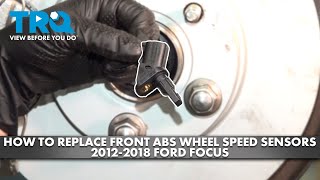
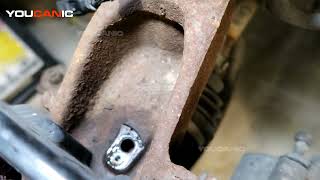
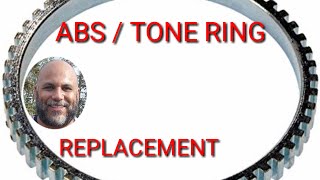
- Damaged or Corroded ABS Tone Ring (Very Common) — The tone ring is a notched wheel read by the speed sensor. In high-humidity or 'Rust Belt' regions, rust forms underneath the ring, causing it to expand, crack, or wobble. Missing or damaged teeth immediately trigger the code. 🎬 See how to replace a Ford front wheel speed sensor.
- Faulty ABS Brake Pressure Sensor (Common) — On Nissan and Infiniti vehicles, this code frequently points to a failed brake pressure sensor. These sensors are often integrated into the ABS actuator/module, requiring complex replacement. 🎬 Watch: Step-by-step Nissan brake pressure sensor replacement guide.
- Worn Wheel Bearing/Hub (Common) — A worn wheel bearing introduces excessive play in the hub. This alters the critical air gap between the speed sensor and tone ring, generating an erratic signal.
- Wiring Harness or Connector Issues (Common) — Road debris, improper repairs, or corrosion damage ABS sensor wiring. A chafed wire shorts to ground, while connector corrosion creates high resistance, disrupting the sensor signal.
- Misadjusted Brake Light Switch (Less Common) — On specific Nissan models, an improperly adjusted brake light switch sends a signal conflicting with the brake pressure sensor, forcing the computer to log C1142.
- Low or Contaminated Brake Fluid (Less Common) — For pressure-sensor-related faults (Nissan/Infiniti), low fluid levels cause implausible sensor readings. Old, moisture-contaminated fluid alters hydraulic pressure characteristics, triggering the fault.
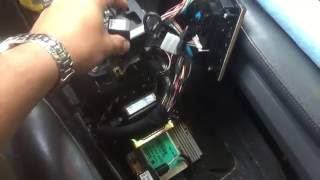
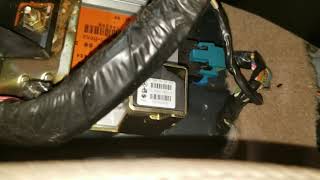
- Faulty Lateral Acceleration Sensor (Rare) — For Mercedes-Benz, C1142 targets the lateral acceleration sensor, a key Electronic Stability Program (ESP) component. Failure causes unexpected ABS activation. 🎬 Watch: How to fix the Mercedes lateral acceleration sensor.
- Failing ABS Control Module (Rare) — The ABS computer fails due to internal solder joint cracks or electronic component failure. This is a diagnosis of last resort after verifying all sensors and wiring.
Symptoms

- ABS Light On — The primary symptom. The ABS warning light on the instrument cluster illuminates and remains on.
- Traction/Stability Control Lights On — Because they share sensors, an ABS fault disables traction and stability control, illuminating the VDC, ESP, or SLIP warning lights.
- Brakes Lock Up Under Hard Braking — With ABS disabled, wheels lock and skid during panic stops or on slippery surfaces, increasing stopping distance and causing steering loss.
- Unnecessary ABS Activation or Grinding Noise — An erratic signal tricks the ABS module into thinking a wheel is locking. The ABS activates at low speeds, felt as a grinding or pulsating brake pedal.
- Harsh Shifting or Jerking — On Nissan/Infiniti models, a pressure sensor fault disrupts the CAN bus network. This causes erratic transmission behavior, leading to harsh shifts or slipping in lower gears.
Diagnostic Flowchart
Tap your situation to follow the diagnostic path that matches what you're seeing on this code.
Common Fixes & Costs
- Replace Wheel Speed Sensor — Parts: $20-$150, Labor: $95-$160, ~1.0 hr book time (DIY)
- Replace Wheel Hub Assembly — Parts: $150-$400, Labor: $150-$250, ~1.8 hr book time (Intermediate)
- Adjust or Replace Brake Light Switch — Parts: $20-$70, Labor: $50-$100, ~0.5 hr book time (DIY)
- Replace ABS Reluctor/Tone Ring — Parts: $15-$50, Labor: $200-$350, ~3.0 hr book time (Advanced)
- Repair Damaged Wiring or Connector — Parts: $5-$30, Labor: $100-$300, ~1.5 hr book time (Intermediate)
- Replace/Rebuild ABS Control Module — Parts: $200-$2000, Labor: $150-$300, ~2.0 hr book time (Professional)
DIY vs Professional
- Replace Wheel Speed Sensor — Beginner:
- Replace Wheel Hub Assembly — Beginner:
- Adjust or Replace Brake Light Switch — Beginner:
- Replace ABS Reluctor/Tone Ring — Beginner:
- Repair Damaged Wiring or Connector — Beginner:
- Replace ABS Control Module — Beginner:
Used vs. New Parts: Buying Guide
When a used part is worth it: For expensive ABS control modules, a professionally rebuilt unit is a cost-effective alternative to a $1,000+ new OEM part.
Donor-vehicle mileage cap: roughly under 100000 miles for the part to have meaningful remaining life.
Donor quality checklist:
- Match ABS module part numbers exactly.
- Avoid electronic parts from flood-damaged vehicles.
- Never buy used wheel hubs or speed sensors; new aftermarket is better.
Decision logic:
- If The failed part is a wheel speed sensor or brake light switch → Buy new. The cost is low and ensures reliability.
- If The failed part is a wheel hub assembly → Buy a quality new aftermarket or OEM part.
- If The failed part is the ABS control module and a new OEM part is over $800 → Consider a professionally rebuilt module with a warranty.
Warranty tradeoff: Used parts offer 30-90 days. Rebuilt modules offer 1-year to lifetime. New aftermarket offers 1-3 years.
Worst-case if a used part fails: $300-$600 for repeat labor and brake bleeding if a used ABS module fails.
What Happens If You Wait — Timeline
- Immediate: Code C1142 sets. ABS, Traction Control, and Stability Control disable. (MPG impact: 0%% · Added cost: $0. The primary cost is the immediate reduction in vehicle safety.)
- 0-3 months (if cause is a bad wheel bearing): A humming or grinding noise begins and worsens with speed. Bearing wear accelerates. (MPG impact: 1-3%% · Added cost: $50-$150 in uneven tire wear and potential brake rotor damage.)
- 3-6 months (if cause is a bad wheel bearing): Wheel bearing play becomes severe. The vehicle wanders. The wobbling hub damages the CV joint. (MPG impact: 3-5%% · Added cost: $500-$1200 for a new CV axle and steering knuckle.)
- 6+ months (if cause is a bad wheel bearing): Catastrophic wheel bearing failure. The wheel seizes or separates from the vehicle, causing total loss of control. (MPG impact: N/A% · Added cost: $2000-$5000+ for accident damage and mechanical repairs.)
Cost of Not Fixing It
- Immediate: Loss of ABS and Stability/Traction Control. Increased risk of losing control during a panic stop. (Added cost: Potential for an accident.)
- Short Term (0-3 months): Guaranteed failure of state safety inspection. Erratic transmission shifting on some Nissan models. (Added cost: $50-$200 for a failed inspection and re-test fee.)
- Long Term (6+ months): Catastrophic failure of a bad wheel bearing, causing wheel separation and complete loss of control. (Added cost: $1000-$5000+ for suspension repairs and accident damage.)
Diagnosis Steps

- Perform Full System Code Scan
Use an ABS-capable OBD-II scanner. Confirm C1142 and document other codes (e.g., U1000, C1116) for critical diagnostic clues.
Tools: ABS-capable OBD-II Scanner (Beginner) - Check Brake Fluid and Brake Light Switch
Ensure the brake fluid reservoir is at the 'MAX' line. On Nissan/Infiniti models, check the brake light switch adjustment at the top of the brake pedal arm.
Tools: Flashlight (Beginner) - Analyze Live Sensor Data
View the live data stream for all four wheel speed sensors. Drive slowly (5-10 mph) in a straight line. A sensor reading 0, fluctuating erratically, or lagging is the culprit.
Tools: ABS-capable OBD-II Scanner (Intermediate) - Visual Inspection of Wheels, Hubs, and Sensors
Safely lift the vehicle and remove suspect wheels. Inspect the sensor for damage. Spin the hub to check the tone ring for cracks, missing teeth, or rust swelling. Check for wheel bearing play.
Tools: Jack, jack stands, flashlight, lug wrench (Intermediate) - Inspect Wiring Harness Integrity
Disconnect the sensor and ABS module. Check for continuity on both wires between the connectors. Test each wire for shorts to ground and power.
Tools: Multimeter, vehicle-specific wiring diagram (Advanced) - Test Passive Sensor with a Multimeter
Disconnect the sensor. A good passive sensor measures 800-1,500 Ohms resistance. Switch to AC Volts and spin the wheel; it must generate at least 0.5V AC.
Tools: Multimeter, service manual (Advanced) - Test Active Sensor with a Multimeter
Active sensors require power. Back-probe the connected sensor with the ignition ON. Verify the module supplies a bias voltage (typically 1.5V-12V).
Tools: Multimeter, back-probe pins (Advanced) - Analyze Sensor Waveform with an Oscilloscope
Connect an oscilloscope to the sensor wires. Spin the wheel. Look for a clean AC sine wave (passive) or digital square wave (active). Gaps or noise indicate a bad sensor or tone ring.
Tools: Oscilloscope, back-probe pins (Professional) - Test Pressure and Lateral Acceleration Sensors
Monitor live data. The brake pressure sensor should read near 0 PSI with the pedal released and increase steadily when pressed. The lateral acceleration sensor should read 0 m/s² when stationary.
Tools: ABS-capable OBD-II Scanner (Advanced)
When This Code Triggers (Freeze-Frame Conditions)
- Vehicle Speed: 5-70 mph (Sets during initial self-test (5-10 mph) or steady driving when the ABS module detects an irrational sensor signal.)
- Brake Pedal Status: On or Off (Sets when the pressure reading is illogical or conflicts with the brake switch.)
- System Voltage: 11.5-14.5V (Occurs under normal operating voltage.)
- Engine RPM: Any (Engine speed is not a direct factor.)
Related Codes
- U1000 — CAN communication code. On Nissan/Infiniti, a faulty ABS pressure sensor (C1142) disrupts network communication. Fixing C1142 resolves U1000.
- C1116 — Stop Lamp Switch circuit failure. On Nissans, a misadjusted switch triggers both C1116 and C1142 simultaneously. The switch is the root cause.
- C1155 — Wheel Speed Sensor Left Front Input Circuit Failure on Fords. Often accompanies a C1142 'Tone Ring Tooth Missing' code due to a damaged tone ring.
- C1141 — Power Steering Pressure Sensor fault on Nissan/Infiniti. Appearing with C1142 indicates a broader sensor network or ground issue.
Climate & Environmental Factors
- Cold Weather / Snow & Ice: Extreme cold makes sensor wiring brittle. Ice and snow pack into wheel wells, blocking the sensor's view of the tone ring or freezing inside cracked connectors, causing false readings.
- High Humidity / Road Salt (Rust Belt): Road salt accelerates corrosion under exposed tone rings (common on Ford/BMW). Rust expands, forcing the ring outward until it cracks or strikes the wheel speed sensor.
How to Talk to a Mechanic About This Code
Say this: "I have an ABS light on with code C1142 on my [Make/Model]. I authorize one hour of diagnostic time to confirm the specific sensor or tone ring failure before approving parts."
Guides the technician toward the most likely cause and prevents open-ended diagnostic charges.
Avoid saying:
- My ABS light is on, fix it.
- Do whatever it takes.
- My friend said it's the ABS module.
Questions to ask before authorizing the repair:
- Can you show me the live data confirming the sensor is bad?
- Did you check the brake fluid and brake switch first?
- Is the tone ring physically cracked, or is the wheel bearing loose?
- Is the recommended repair a new part, a used part, or a rebuild?
Where to Take It: Dealer vs Independent vs Chain
- Dealer:
Recommended if the fix requires replacing and programming a new ABS control module or if the vehicle is under warranty.
Best for: Vehicles under warranty or with a relevant recall., Complex repairs requiring module programming., Manufacturer-specific quirks.
Downsides: Significantly higher labor rates and parts costs., Defaults to replacing entire expensive assemblies. (Typical cost: +50% vs. baseline) - Independent Shop:
Best fit for most C1142 repairs. Experienced independent technicians handle sensors, hubs, and wiring efficiently.
Best for: Out-of-warranty vehicles where cost is a major factor., Common failures like wheel hubs, sensors, and tone rings., Brand-specialized shops.
Downsides: Diagnostic skill varies widely., May lack brand-specific tools to program a new ABS module. (Typical cost: +0% vs. baseline) - Chain Shop:
Acceptable for a straightforward wheel speed sensor replacement. Avoid for initial diagnosis of an ABS light.
Best for: Simple, clear-cut repairs like replacing an accessible wheel speed sensor.
Downsides: Technician skill varies dramatically., High pressure to upsell unrelated brake services., Poor electrical diagnostic capabilities. (Typical cost: -10% vs. baseline)
When to Walk Away From the Repair
If the total repair cost exceeds 50% of the vehicle's value, consider selling it as-is.
- Car worth $5000, fix is $2500: Walk away. A $2,500 repair on a $5,000 car is not a sound investment.
- Car worth $15000, fix is $450: Fix it. A $450 repair restores a critical safety feature.
- Car worth $3000, fix is $1800: Walk away. The repair cost is over half the car's value.
What Scan Tool You Need for This Code
Minimum: An OBD-II scanner capable of reading ABS codes and viewing live wheel speed sensor data.
A $20 engine code reader cannot access the ABS module to read or clear C1142.
Budget: BlueDriver Pro (~$99.95) — Connects via Bluetooth. Reads/clears ABS codes and graphs live data from all four wheel speed sensors.
Mid-range: Foxwell NT630 Plus (~$150) — Provides live data, bidirectional controls, and the 'ABS Bleed' function required after replacing an ABS module.
Professional: Autel MaxiCOM MK808 (~$450) — Performs ABS bleeding, sensor calibrations, and module programming.
Rent vs buy: AutoZone scans ABS codes for free and offers a loaner tool program with full refunds upon return.
How to Clear the Code After You Fix It
- Use an ABS-capable OBD-II scan tool to clear the fault code.
- Run a 'Pressure Sensor Calibration' with a scan tool if required by the manufacturer.
- Perform the specific drive cycle to allow the ABS module to confirm the repair.
Drive cycle (~15 minutes): Drive in a straight line above 15 mph to allow the ABS module to verify wheel speed sensor signals. The ABS light extinguishes if the repair is successful.
Readiness monitors affected: None directly. ABS is a chassis system. However, clearing all codes may reset emissions monitors.
Before emissions retest: drive at least 100 miles to fully set monitors.
Watch out for:
- Clearing the code without fixing the issue causes immediate return.
- Using a basic engine code reader cannot access or clear ABS codes.
- Skipping required sensor calibration prevents code clearing.
Will This Fail Emissions / State Inspection?
No — by itself this code doesn't fail OBD inspection (but it can keep readiness monitors from setting, which causes a separate fail).
- California: An illuminated ABS light is not an automatic failure for the smog check. It fails a separate 'brake and lamp' inspection if required.
- New York: The NYS safety inspection requires all dashboard warning lights to be off. An illuminated ABS light is an automatic failure.
- Texas: An illuminated ABS warning light is NOT a cause for rejection during the safety inspection. However, the main red 'BRAKE' warning light IS a cause for failure.
Most Commonly Affected Vehicles
- Nissan Titan (2004-2015) — Extremely prone to C1142 caused by failure of one or both brake fluid pressure sensors screwed into the ABS actuator assembly.
- Infiniti G35 (2003-2008) — Frequently experiences C1142 from a faulty brake pressure sensor or the entire ABS module. A failed module also causes a U1000 communication code.
- Nissan 350Z (2003-2009) — Commonly logs C1142 for the 'Pressure Sensor Circuit', causing harsh shifting or jerking when accelerating from a stop.
- Nissan Frontier (2019-2023) — A known issue involves a misadjusted brake pedal position switch causing the C1142 code. TSB NTB22-084 addresses this.
- Nissan Murano (2019-2022) — Covered under Nissan service bulletin NTB22-020 for C1142 being caused by brake switch misadjustment.
- Ford Focus / Fiesta / C-Max (2011-2019) — C1142 often means 'Tone Ring Tooth Missing'. Commonly caused by a worn wheel bearing or rust swelling under the ring. Repair involves replacing the wheel hub assembly.
- Mercedes-Benz ML-Class (W163) (1998-2005) — C1142 specifically points to a faulty Lateral Acceleration Sensor located inside the center console.
- BMW 3-Series (E90/E91/E92/E93) (2004-2013) — Rear ABS reluctor rings corrode and expand, destroying the wheel speed sensor. Fix requires removing the driveshaft to replace the ring.
Manufacturer-Specific Notes
- Nissan / Infiniti: C1142 almost always points to the 'Pressure Sensor Circuit'. Always check brake fluid and brake light switch adjustment first. Multiple TSBs address brake switch failures.
- Ford: C1142 is defined as 'Tone Ring Tooth Missing', pointing directly to a cracked ring or a bad wheel bearing causing hub wobble.
- Volkswagen / Audi: C1142 refers to a tone ring, wheel speed sensor, or vacuum pressure sensor on the brake booster. Read the specific code definition with a capable scanner.
- Mercedes-Benz: On older ML-Class models, C1142 specifically targets the 'Lateral Acceleration Sensor Circuit' inside the center console.
Real Owner Stories
2005 Nissan Armada with C1142
Owner experienced sudden grinding and brake warning. Shop quoted $850 for brakes.
Outcome: Replaced the ABS brake pressure sensor instead, fixing the issue.
Lesson: On older Nissan SUVs, a sudden grinding and brake warning with C1142 is an electronic failure. Don't approve expensive brake jobs without diagnosing the ABS code first.
2012 Ford Focus, 84k miles with C1142
Scan showed C1142 'Tone Ring Tooth Missing'.
Outcome: Replacing the bearing assembly fixed the false missing tooth signal.
Lesson: On Ford models, a 'Tone Ring Tooth Missing' code doesn't always mean the ring is broken. Check for wheel bearing play before assuming the tone ring is bad.
2003 Infiniti G35, 196k miles with C1142
ABS/VDC lights on with C1142 'Pressure Sensor System'.
Outcome: This dislodged a sticky internal valve, clearing the fault permanently.
Lesson: For Nissan/Infiniti pressure sensor faults, try simple actions like pumping the brakes or checking fluid levels before replacing the expensive ABS module.
1999 Mercedes-Benz ML320 with C1142
Multiple ABS/ESP lights. Replacing a wheel speed sensor didn't clear C1142.
Outcome: Replaced the Lateral Acceleration Sensor inside the center console, resolving the code.
Lesson: C1142 is highly manufacturer-specific. On a Mercedes W163, it points directly to the Lateral Acceleration Sensor, not a wheel speed or pressure sensor.
How to Prevent This Code From Triggering
- Perform a brake fluid flush every 2-3 years or 30,000 miles. (Every 2-3 years) — Brake fluid absorbs moisture over time. This moisture corrodes internal ABS module components, including pressure sensors and solenoid valves.
- Clean ABS tone rings during brake service. (Whenever brakes are replaced) — Use a wire brush to remove rust and debris from exposed tone rings. This prevents buildup that blocks the sensor's reading.
- Apply a rust inhibitor to exposed tone rings in salty environments. (During installation or brake service) — Coating the hub surface under the ring with a corrosion-resistant paint (like POR-15) slows the rust buildup that cracks the rings.
- Periodically clean wheel speed sensors and connectors. (As needed or during tire rotation) — Cleaning the magnetic sensor tip removes metallic debris that disrupts the signal. Applying dielectric grease to the connector prevents moisture intrusion.
Frequently Asked Questions
Can I just clear the C1142 code?
You can clear the code, but it returns immediately during the ABS self-check. The underlying physical or electrical fault must be repaired.
Is it safe to drive with the C1142 code?
It is not recommended. Your anti-lock brakes and stability control are disabled, significantly increasing the risk of skidding during an emergency stop.
I replaced the wheel speed sensor but the C1142 code came back. What now?
If a new sensor fails to fix it, the problem lies elsewhere. Inspect the tone ring for cracks, check the wheel bearing for play, and test the wiring harness for shorts.
Why are my ABS, VDC, and SLIP lights all on?
VDC and traction control rely on the same wheel speed sensors as the ABS. When C1142 triggers, the computer disables all three systems as a precaution.
What is the most common misdiagnosis for C1142?
On Nissans, the most frequent mistake is replacing the expensive ABS actuator without checking the brake fluid or brake light switch adjustment first.
Can low brake fluid cause a C1142 code?
Yes. On vehicles where C1142 relates to a pressure sensor, low fluid causes incorrect readings. Always check the fluid level first as the simplest fix.
Can a bad wheel bearing cause a C1142 code?
Absolutely. A worn wheel bearing creates excessive play, altering the gap between the sensor and tone ring. This erratic signal triggers the C1142 code.
Key Takeaways
- Driving with code C1142 increases wet braking distances by up to 37% due to disabled ABS and stability control systems.
- Always match the C1142 diagnosis to the vehicle brand: Nissan/Infiniti models usually require a $50 brake light switch adjustment, while Ford/BMW models typically need a $300 wheel hub or tone ring replacement.
- Verify wheel speed sensor failures by driving at 5-10 mph while monitoring live scanner data to pinpoint the exact wheel reading 0 mph.
- Check the brake fluid level and inspect the tone rings for cracked teeth before authorizing a $1,000+ ABS control module replacement.
Helpful Videos



The information in this article is provided for general reference and educational purposes only. Vehicle specifications, procedures, and part compatibility can vary by production date, trim level, and region. Always consult your vehicle's factory service manual and verify part numbers before purchasing or performing repairs. Safety-critical components such as airbags, seat belts, and braking systems should be installed by a qualified professional.
- 🎬 Helpful Videos
- What Does C1142 Mean?
- Can I Drive With C1142?
- Common Causes
- Symptoms
- Diagnostic Flowchart
- Common Fixes & Costs
- DIY vs Professional
- Used vs. New Parts: Buying Guide
- What Happens If You Wait — Timeline
- Cost of Not Fixing It
- Diagnosis Steps
- When This Code Triggers (Freeze-Frame Conditions)
- Related Codes
- Climate & Environmental Factors
- How to Talk to a Mechanic About This Code
- Where to Take It: Dealer vs Independent vs Chain
- When to Walk Away From the Repair
- What Scan Tool You Need for This Code
- How to Clear the Code After You Fix It
- Will This Fail Emissions / State Inspection?
- Most Commonly Affected Vehicles
- Manufacturer-Specific Notes
- Real Owner Stories
- 2005 Nissan Armada with C1142
- 2012 Ford Focus, 84k miles with C1142
- 2003 Infiniti G35, 196k miles with C1142
- 1999 Mercedes-Benz ML320 with C1142
- How to Prevent This Code From Triggering
- Frequently Asked Questions
- Can I just clear the C1142 code?
- Is it safe to drive with the C1142 code?
- I replaced the wheel speed sensor but the C1142 code came back. What now?
- Why are my ABS, VDC, and SLIP lights all on?
- What is the most common misdiagnosis for C1142?
- Can low brake fluid cause a C1142 code?
- Can a bad wheel bearing cause a C1142 code?
- Key Takeaways
- 🎟️ Get 5% Off