

P3190 on 2016-2022 Toyota Prius: Poor Engine Power Causes and Fixes
For a 2016-2022 Prius, code P3190 almost always means the gas engine failed to start or run properly. The most common causes are simply running out of fuel or a dirty Mass Air Flow (MAF) sensor. Before any expensive repairs, add 3 gallons of gas and clean the MAF sensor. Do not repeatedly try to start the car, as this will drain the high-voltage battery and can lead to a misdiagnosis of a failed hybrid battery.
- P3190 means the gas engine isn't working correctly; it is NOT a hybrid battery failure.
- DO NOT repeatedly try to start the car. You will drain the expensive high-voltage battery and could damage it.
- The first and easiest step is to add 2-3 gallons of fuel, even if the gauge says you have some.
- The second step is to inspect the air intake for loose hoses and clean the Mass Air Flow (MAF) sensor with dedicated cleaner.
- Only after these simple checks should you consider more complex issues like fuel pumps or other sensors.
What's Unique About the 2016-2022 Toyota Prius

The Prius's hybrid system is what makes this code critical. Unlike a conventional car, the Prius uses one of its electric motor-generators (MG1) to crank the gasoline engine, using power from the high-voltage (HV) hybrid battery. Repeated start attempts will drain the HV battery, which can lead to additional, misleading trouble codes (like P0A0F or even HV battery codes like P0A80) and a very expensive, incorrect misdiagnosis of a failed hybrid battery. The core issue is almost always with the gasoline engine's fuel, air, or spark supply, not the hybrid components themselves. Draining the HV battery can prevent the car from entering the 'Ready' state, complicating diagnosis until the battery is recharged with a specialized charger.
Symptoms You May Notice
- Check Engine light is on
- "Check Hybrid System" message on the dash
- Vehicle will not start or starts and immediately stalls
- Vehicle enters EV mode but the gasoline engine fails to kick in
- Lack of power or hesitation during acceleration
- Vehicle may run on battery power only until it is depleted
- Engine idles very low or roughly before stalling
- High-Voltage (HV) Hybrid Battery Failure. This is the most common and expensive misdiagnosis. The P3190 code is an engine problem, not a battery problem. However, the engine problem WILL drain the HV battery with repeated start attempts, which then leads to battery-related codes (like P0A80) and the incorrect conclusion that the battery was the original fault.
Most Likely Causes


- Out of Fuel 🔴 High Probability The fuel tank bladder system in some Prius models can be inaccurate, especially when low. The gauge may show fuel is present when the tank is actually empty, fooling the driver. This is a very common first thing to check.
How to confirm: Add at least 2-3 gallons of gasoline to the vehicle, clear the codes, and attempt to start again. This is the easiest and cheapest first step.
Typical fix: Refill the fuel tank.
Est. part cost: $0 - Dirty or Faulty Mass Air Flow (MAF) Sensor 🔴 High Probability Oil from aftermarket air filters or fine dust and debris can contaminate the delicate sensor wires, causing incorrect air-fuel ratio calculations. In one documented case on a Corolla Hybrid with the same engine, a dead bee was found blocking the sensor opening, causing a P3190.
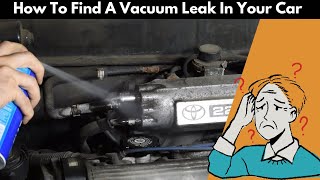
How to confirm: Disconnect the MAF sensor electrical connector. If the engine starts and idles (though poorly), the MAF is likely the culprit. For a definitive test, inspect the sensor wires for debris and test its voltage output against specifications. A visual inspection is often enough to see contamination.
Typical fix: Clean the sensor with a dedicated MAF sensor cleaner spray. Do not touch the sensor wires. If cleaning doesn't work, replace the sensor.
Est. part cost: $5-$15 for cleaner, $40-$150 for a new sensor. - Air Induction System Leak 🟡 Medium Probability The air filter housing or intake boot is often disturbed during routine maintenance (like changing an air filter). If not re-sealed properly, unmetered air enters the engine, leading to a lean condition and this code. A vacuum hose separating from the throttle body is also a known issue on the 2ZR-FXE engine family. Manufacturer service bulletins T-SB-0041-15 and T-SB-0205-11 Rev specifically note that P3190 can be caused by the Purge VSV/PCV line separating from the throttle body housing.
How to confirm: Visually inspect the entire air intake system from the air filter box to the throttle body. Ensure all clamps are tight and the intake boot is securely seated on the throttle body. Specifically check the Purge VSV and PCV vacuum lines where they connect to the throttle body and intake manifold.
Typical fix: Re-seat the intake boot and tighten all clamps. Reconnect any separated vacuum hoses.
Est. part cost: $0 - Low Fuel Pressure ⚪ Low Probability While the fuel pump is generally reliable, a failing pump or clogged fuel filter can reduce fuel pressure, starving the engine of fuel under load. This can be an intermittent failure before the pump fails completely.
How to confirm: Connect a fuel pressure gauge to the fuel line to measure the pressure. Compare the reading to the manufacturer's specification (typically 44-50 psi for this platform). This may require a special adapter. A good reading doesn't rule out an intermittent electrical issue with the pump, but a bad reading confirms a problem.
Typical fix: Replace the fuel pump assembly, which typically includes a new filter.
Est. part cost: $150-$400
Rare But Worth Checking
- Dirty Throttle Body: Carbon buildup around the throttle plate can restrict airflow at idle, preventing the engine from starting smoothly. Cleaning it is simple and can solve mysterious stalling issues.
- Faulty Engine Coolant Temperature (ECT) Sensor: If the ECT sensor incorrectly tells the ECM the engine is warm when it's cold, the ECM won't provide the correct fuel mixture for a cold start, causing it to stall.
- Clogged Fuel Injectors: If one or more injectors are clogged, the engine will misfire and lack power, which can be enough to trigger P3190. This may be accompanied by misfire codes for specific cylinders.
- Engine Mechanical Issue: In very rare cases, a severe internal engine problem like low compression due to worn piston rings or a valve issue can prevent the engine from making enough power to start and run, triggering P3190. This is a last-resort diagnosis after all fuel and air systems have been checked.
Diagnosis Steps
- Verify the vehicle has fuel. Add 2-3 gallons even if the gauge shows some fuel.
- Check for other DTCs using a capable scanner like Toyota Techstream. Address any other codes first, as they may be the root cause. Manufacturer Bulletin #ZTI_Dealer Packa notes that P3190 may set alongside P3101 with specific information codes.
- Inspect the entire air intake system. Ensure the air filter is clean and the intake tube is securely clamped to the throttle body with no cracks or leaks. Pay special attention to vacuum lines near the throttle body.
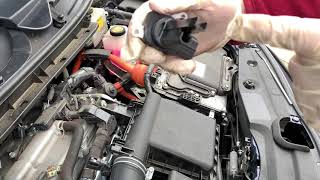
- Locate the Mass Air Flow (MAF) sensor. Unplug it, and try to start the vehicle. If it starts, the MAF sensor is faulty.
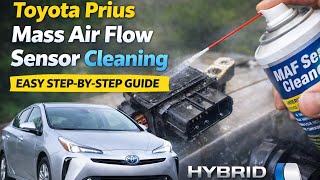
- If it doesn't start, remove the MAF sensor and inspect it. If dirty, clean it with dedicated MAF sensor cleaner. Do not touch the sensor wires. Let it dry completely before reinstalling. 🎬 See this step-by-step guide on cleaning your MAF sensor safely.
- Inspect the throttle body for heavy carbon buildup. Clean if necessary.
- If the above steps do not resolve the issue, the problem is likely more complex. Using a scan tool, check live data for sensors like the Engine Coolant Temperature (ECT) and Crankshaft Position Sensor to ensure they are reading correctly.
- The next logical step is to test fuel pressure to rule out a weak fuel pump.
Parts You'll Likely Need
- Mass Air Flow (MAF) Sensor Cleaner — Often, the MAF sensor is just dirty, not broken. Cleaning is the first and cheapest repair attempt.
Trusted brands: CRC, WD-40 Specialist
Aftermarket price range: $10-$15 - Mass Air Flow (MAF) Sensor
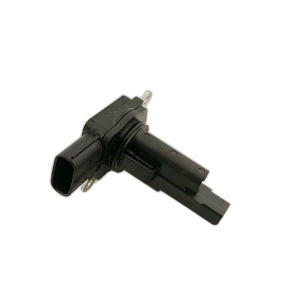
(OEM #22204-37010)— If cleaning doesn't fix the issue, the sensor itself has likely failed. It is the most common part replaced for this code after confirming the fuel level.
Trusted brands: Denso (OEM), Hitachi
OEM price range: $100-$180
Aftermarket price range: $40-$90 - Fuel Pump and Filter Assembly
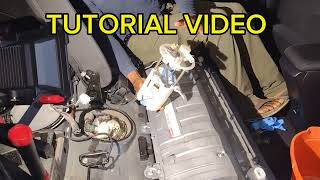
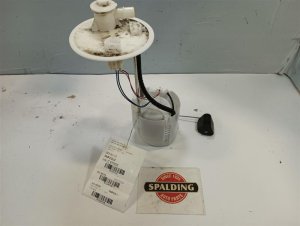
(OEM #77020-47130)— If fuel pressure is low, a weak pump is the most likely cause. 🎬 Watch: How to replace the fuel pump assembly on this Prius. It's less common than a MAF issue but a primary cause of fuel starvation.
Trusted brands: Denso
Related Codes That Often Appear With This One
- P0A0F — This code means "Engine Failed to Start." The P3190 is the reason *why* the engine failed to start. P0A0F is the effect; P3190 is the cause. They almost always appear together. 🎬 Watch: A detailed explanation of how these three codes interact.
- P3191 — A more specific version of P3190, this code means "Engine Does Not Start." It indicates a complete failure to start rather than just low power.
- P3193 — This code means "Fuel Run Out." It is set when the conditions for P3190 or P3191 are met and the fuel level sensor indicates the tank is empty.
- P0171 — This code for "System Too Lean" often appears with P3190 if the root cause is an unmetered air leak, such as a cracked intake boot or a disconnected vacuum hose.
Technical Service Bulletins (TSBs) & Recalls
- L-SB-0019-15 (for Lexus CT200h): While for a Lexus, this TSB is highly relevant as it concerns the same 2ZR-FXE engine. It addresses P3190, P3191, and P0A0F caused by a Purge VSV vacuum line separating from the throttle body. The fix involves replacing the valve and reprogramming the ECM.
- T-SB-0041-15: This bulletin identifies that P3190 (Poor Engine Power) and P3191 (Engine Does NOT Start) can be caused by the Purge VSV/PCV line separation from the throttle body housing.
- T-SB-0205-11 Rev: Notes that model year Prius vehicles may exhibit a MIL "ON" condition with DTCs P3190, P3191, and P0A0F due to purge VSV/PCV line separation.
- Bulletin #ZTI_Dealer Packa: Reports that certain Prius vehicles may exhibit a check engine light with diagnostic codes P3190 and P3101.
Mechanic-Grade Diagnostic Values
- Fuel Pressure (Low-Side) — expected: 304 to 343 kPa (44 to 50 psi) at idle. Failure: Pressure below this range indicates a failing fuel pump or clogged filter.
- Fuel Pump Motor Resistance — expected: 0.3 to 3.0 Ω. Failure: A reading outside this range indicates a definite electrical failure. However, a reading within spec does not rule out a mechanical pump failure.
- Engine Coolant Temperature (ECT) Sensor Resistance — expected: 2.0 to 3.0 kΩ at 20°C (68°F); 0.2 to 0.4 kΩ at 80°C (176°F). Failure: Readings significantly outside these ranges can cause incorrect fuel mixture calculations for cold starts.
- Crankshaft Position Sensor Resistance — expected: 985 to 1,600 Ω (Cold); 1,265 to 1,890 Ω (Hot). Failure: An incorrect reading will prevent the ECM from knowing engine position, leading to a no-start.
- Camshaft Position Sensor Resistance — expected: 1,630 to 2,740 Ω (Cold); 2,065 to 3,225 Ω (Hot). Failure: An incorrect reading will prevent proper valve and ignition timing.
- Scan Tool Live Data: Engine Torque Ratio — expected: Estimated torque should closely follow target torque.. Failure: P3190 is set when the ratio of estimated torque to target torque is less than 20% for 6 seconds or more.
Hidden / Shadow Codes Worth Checking
- C1259 / C1310: These are not hidden codes but are important secondary codes stored in the ABS/VSC/TRC module. They mean 'HV System Regenerative Malfunction' and 'HV System Malfunction' respectively. They do not indicate a brake problem, but rather that the brake ECU has been notified by the Hybrid ECU of a fault (like P3190) that impacts regenerative braking. (see via A capable scanner like Toyota Techstream that can read codes from modules beyond the main Engine ECU.)
Scan Tool Commands That Help
- Toyota Techstream: Active Test: 'Control the Fuel Pump / Speed' — This command is used to manually turn on the fuel pump without trying to start the engine. It allows a technician to confirm the pump is functional and to build pressure in the system for a fuel pressure test. It is located under: DIAGNOSIS / ENHANCED OBD II / ACTIVE TEST / FUEL PUMP / SPD.
Wiring & Ground Locations
- MAF Sensor Wiring Harness — The wiring harness connecting to the MAF sensor, located on the air filter box.. This harness is susceptible to rodent damage due to soy-based wire insulation. A chewed wire can cause a loss of signal, leading to P3190 and other related codes. A visual inspection of the loom beyond the connector is warranted if the sensor itself tests good.
- ECM Connectors — The main Engine Control Module (ECM) in the engine bay.. All sensor inputs (MAF, Crank, Cam, ECT) and actuator outputs (Injectors, Throttle) route through the ECM. While rare, a corroded pin or loose connector at the ECM can cause this fault. An ECM pinout chart is required for advanced probing of sensor signals at the computer.
Real Owner Repair Stories
- PriusChat Forum User '2010moneypit?' (2010 Toyota Prius (Gen 3, similar principle)) — P3190 and P0A0F codes, no start condition, only 2 bars on fuel gauge.
✅ What actually fixed it The owner cleaned the throttle plate, added 4 gallons of gasoline, and banged on the fuel tank. The car started and ran fine afterward. The suspected root cause was an empty fuel tank due to an inaccurate fuel gauge. - PriusChat Forum User 'sweeneyp' (2010 Toyota Prius (Gen 3, similar principle)) — Car stalled, then would start but idle very low and stall again. P3190 code present. Eventually would not start.
❌ Tried (didn't work) Replacing the 12V battery, which only provided a temporary fix for one day.
✅ What actually fixed it A Toyota dealer diagnosed a bad fuel pump. The owner had the car towed home, purchased a used fuel pump assembly from a 2014 Prius on eBay for under $100, and replaced it themselves. This resolved the issue completely. - PriusChat Forum User 'viciousthinker' (2012 Toyota Prius with 212k miles (Gen 3, similar principle)) — P3190 and P0A0F, engine cranks but will not start, 'Check Hybrid System' warning.
❌ Tried (didn't work) Replacing the 12V battery.
✅ What actually fixed it The owner used Toyota Techstream software to run the 'Active Test' for the fuel pump. After activating the pump a few times to pressurize the system, the car was able to start and run normally after clearing the DTCs. This points to an intermittent fuel pump issue that was temporarily overcome by the diagnostic command. - NHTSA ODI #11171795 — An owner reported that the engine started shaking, the steering and brakes locked up, and the engine ceased as the car shut off. The vehicle threw code P3190 for poor engine power, though the vehicle seemed normal a day later.
- NHTSA ODI #11525645 — A driver reported that after their vehicle was towed for a P3190 code (Engine Failure), a dealer diagnosed that the hybrid battery was severely depleted as a result of the engine issue.
When the Usual Fixes Don't Work
- In one owner's documented repair, a failing fuel pump was the confirmed cause of P3190. However, when the old pump was removed and its motor resistance was tested, it measured 1.5 ohms, which is within the acceptable factory specification of 0.3-3.0 ohms. This proves that a fuel pump can fail mechanically (e.g., unable to build pressure) even while its electrical components test as 'good', making a fuel pressure test more definitive than a simple resistance check.
OEM Part Supersession History
22204-37010→22204-28010— Part revision or consolidation by the manufacturer.
Heads up: While 22204-28010 is listed as a replacement, 22204-37010 is the most commonly referenced OEM part number for this specific vehicle. Always verify fitment with VIN.
Model Year Variations Within This Range
- 2016-2022: The 2ZR-FXE engine in this generation was significantly re-engineered from the prior Gen 3 Prius. It achieves a higher 40% thermal efficiency due to a large-volume EGR system and redesigned intake ports. While this doesn't change the P3190 diagnosis path, it's a key difference from older models that had more prevalent EGR clogging issues.
Diagnostic Flowchart

Other Known Issues on This Vehicle
Issues unrelated to this code that are worth knowing about as an owner of this generation:
- EGR System Shudder/Vibration 🟠 Medium — Common around 80,000-120,000 miles. Presents as a shudder or vibration during light acceleration (15-25 mph). (Ref: No TSB for Gen 4, but it's a widely documented issue. The cause is carbon buildup in the EGR valve, cooler, and intake manifold ports. The only fix is physical cleaning.)
- Brake Booster / Actuator Assembly Failure 🔴 High — Can occur at higher mileage (100k+ miles). Failure is sudden and results in a hard brake pedal with significantly reduced braking power. (Ref: Recall 19V544000 (K0L/K1L) for some 2019-2020 models for a failing brake booster pump. Symptoms include multiple brake-related warning lights and codes like C1252, C1253, and C1256.)
- Spontaneously Cracking Windshields 🟡 Low — Primarily affected 2016-2018 models. Cracks could appear without impact, leading to lawsuits and reimbursement programs. (Ref: No recall, but was a known issue leading to legal action. Replacement is expensive due to the need for recalibrating safety cameras.)
- Premature CV Axle Wear 🟡 Low — Considered a common problem for the 4th generation, with failures sometimes occurring earlier than typical wear and tear would suggest. Symptoms include clicking or popping noises when turning. (Ref: null)
Used vs. New Parts: Buying Guide for This Vehicle
When a used part is the smart pick: For a high-cost component like the fuel pump assembly, a used part from a low-mileage donor vehicle can be a smart, cost-effective repair. One owner successfully used a pump from a 4-year-newer model to fix their car for under $100, versus a $600 OEM part quote.
Donor-vehicle mileage cap: roughly under 80000 miles for the part to have meaningful remaining life.
What to inspect on the donor part:
- Verify the mileage of the donor vehicle; lower is always better.
- Purchase from a reputable auto recycler that offers at least a 30-day warranty.
- Visually inspect the part for any physical damage, rust, or cut wiring upon arrival.
OEM-only on this vehicle (don't cheap out):
- Mass Air Flow (MAF) Sensor: This is a precision electronic sensor. Cheap, unbranded aftermarket MAF sensors are notoriously unreliable and can cause new, hard-to-diagnose problems. Stick with the OEM supplier (Denso) or a genuine Toyota part.
Aftermarket brands forum-validated for this vehicle:
- Denso (for MAF sensor, fuel pump, ignition coils)
- CRC (for MAF sensor cleaner)
Brands owners have reported issues with on this vehicle:
- Unbranded 'white-box' electronic sensors from online marketplaces like eBay or Amazon.
Real Owner Stories
Aggregated from forums and TSBs cited above. Mileages and costs reflect what owners reported in those sources.
2019 Toyota Corolla Hybrid 1.8L 2ZR-FXE
Symptoms: The engine would start, run for 10 seconds, then stall.
What fixed it: The owner cleaned the Mass Air Flow (MAF) sensor after discovering a dead bee was blocking the sensor's air passage.
Source hint: MHH Auto Forum thread titled 'SOLVED: Corolla Hybrid P3190 problem'
Toyota Prius 1.8L 2ZR-FXE
Symptoms: Vehicle set a P3190 code and would not start, leading to a misdiagnosis of a bad 12V battery.
What fixed it: A dealer correctly diagnosed a failed fuel pump. The owner replaced the fuel pump with a used part, which resolved the issue.
Source hint: PriusChat.com thread titled 'P3190 code, failed fuel pump, resolved.'
Lexus CT200h 1.8L 2ZR-FXE
Symptoms: Vehicle sets codes P3190, P3191, and P0A0F, resulting in a no-start or stall condition.
What fixed it: The documented cause is a Purge VSV vacuum line separating from the throttle body. The official fix involves replacing the valve and reprogramming the ECM.
Source hint: Lexus TSB L-SB-0019-15
Related OBD-II Codes
Frequently Asked Questions
My Prius won't start and shows P3190. What is the absolute first and easiest thing I should check?
I found a Lexus TSB (L-SB-0019-15) for code P3190. Does this apply to my 2016-2022 Prius?
I just changed my engine air filter and now my Prius is stalling and showing code P3190. What happened?
My mechanic wants to test the MAF sensor. Is there a quick way to see if it's the problem?
My 2021 Corolla Hybrid has this code. Is the diagnostic information for the Prius relevant to my car?
The code appeared after I used an aftermarket oiled air filter. Could that be the cause?
Helpful Videos
Used OEM Parts in Stock


New Aftermarket Parts Available


The information in this article is provided for general reference and educational purposes only. Vehicle specifications, procedures, and part compatibility can vary by production date, trim level, and region. Always consult your vehicle's factory service manual and verify part numbers before purchasing or performing repairs. Safety-critical components such as airbags, seat belts, and braking systems should be installed by a qualified professional.
- Toyota Prius:
- 🎬 Helpful Videos
- 🛍️ Shop This Part
- What's Unique About the 2016-2022 Toyota Prius
- Symptoms You May Notice
- Most Likely Causes
- Rare But Worth Checking
- Diagnosis Steps
- Parts You'll Likely Need
- Related Codes That Often Appear With This One
- Technical Service Bulletins (TSBs) & Recalls
- Mechanic-Grade Diagnostic Values
- Hidden / Shadow Codes Worth Checking
- Scan Tool Commands That Help
- Wiring & Ground Locations
- Real Owner Repair Stories
- When the Usual Fixes Don't Work
- OEM Part Supersession History
- Model Year Variations Within This Range
- Diagnostic Flowchart
- Other Known Issues on This Vehicle
- Used vs. New Parts: Buying Guide for This Vehicle
- Real Owner Stories
- 2019 Toyota Corolla Hybrid 1.8L 2ZR-FXE
- Toyota Prius 1.8L 2ZR-FXE
- Lexus CT200h 1.8L 2ZR-FXE
- Related OBD-II Codes
- Frequently Asked Questions
- 🎟️ Get 5% Off