

OBD-II Code P3191: Engine Does Not Start
The definitive guide to what P3191 means, why it triggers, and how to fix it in Toyota and Lexus hybrids.
- Code P3191 indicates the gasoline engine failed to start due to a fuel, air, spark, or compression issue, not a failed high-voltage hybrid battery.
- Add at least 2 gallons of fresh gas immediately, as faulty fuel gauges on older hybrids (especially Gen 2 Prius) frequently hide an empty tank.
- Inspect the throttle body for a disconnected Purge VSV vacuum hose, which is the leading cause of P3191 on 2010-2015 Toyota and Lexus models.
- Stop attempting to start the vehicle after 3 failed tries to prevent draining the hybrid battery, which requires a $200+ specialized grid charge to recover.
What Does P3191 Mean?

P3191 means your car's Engine Control Module (ECM) tried to start the gasoline engine, but it failed to run on its own. In a hybrid, the electric motor-generator spins the engine to start it. If the ECM doesn't detect the engine firing and producing power within 100 crankshaft revolutions, it stores this code and aborts the attempt. It signals a fundamental problem with fuel, air, spark, or compression, not a hybrid battery failure.
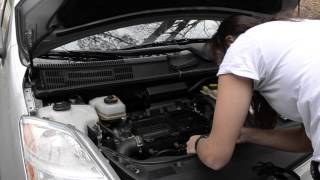
🎬 Watch: A diagnostic overview of the P3191 engine code.Technical definition: The Engine Control Module (ECM) receives a start request from the Hybrid Vehicle (HV) ECU. The ECM cranks the engine and monitors engine speed and requested vs. actual engine torque. If the ECM does not detect the engine producing sufficient torque on its own after 6 seconds or 100 crankshaft revolutions, it stores code P3191 and reports the failure to the HV ECU.
Can I Drive With P3191?
No — Do Not Drive. The gasoline engine is failing to start. While you can move a short distance on remaining hybrid battery power, the battery depletes quickly without the engine to recharge it. Each start attempt drains about 1% of the battery; repeated attempts cause a deep discharge, permanently damaging the high-voltage battery and stranding you.
Common Causes


- Out of Fuel (Very Common) — The most common and simplest cause. In Gen 2 Toyota Prius models (2004-2009), a stiffening fuel tank bladder causes the gauge to read incorrectly, tricking drivers into thinking there is fuel when the tank is empty.
- Disconnected or Cracked Vacuum Hose (Very Common) — A small rubber hose, often for the Purge VSV (Vacuum Switching Valve), pops off the throttle body or intake manifold. This creates a massive unmetered air leak, throwing off the air-fuel mixture so severely the engine cannot ignite. This is extremely common on 2010-2015 Toyota/Lexus models and is often paired with code P0171.
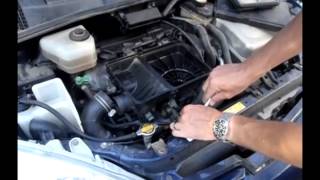
- Dirty Mass Air Flow (MAF) Sensor (Common) — The MAF sensor measures air entering the engine. Contamination from dust, oil, or debris (like a leaf dropped during an air filter change) 🎬 See how to properly clean your Mass Air Flow sensor. provides incorrect data, causing a no-start condition.
- Dirty Throttle Body (Common) — Carbon buildup inside the throttle body restricts the small amount of air needed to start the engine. This is especially problematic after the 12V battery is disconnected and the ECU loses its learned idle values.
- Weak or Failing Fuel Pump (Less Common) — The fuel pump must deliver 44-50 psi of pressure. A weak or failed pump starves the engine of fuel.
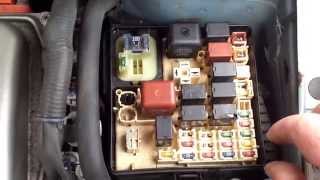
- Faulty Fuel Pump Relay (Less Common) — This electronic switch powers the fuel pump. If it fails, the pump will not turn on. It is a $20 part that mimics an $800 fuel pump failure. 🎬 Watch: Troubleshooting a fuel pump issue on an early Prius.
- Clogged or Sticking Fuel Injectors (Less Common) — Old or poor-quality gasoline forms gummy deposits that clog injectors or stick them closed, preventing fuel from reaching the cylinders.
- Weak 12-Volt Auxiliary Battery (Less Common) — The small 12-volt battery powers the car's computers. A weak battery causes electronic glitches and communication errors, triggering a P3191 before dying completely.
- Failed Crankshaft (CKP) or Camshaft (CMP) Position Sensor (Uncommon) — These sensors track engine rotational speed and position. If one fails, the ECM cannot properly time spark and fuel injection, aborting the start.
- Stuck/Clogged EGR Valve (Uncommon) — Carbon buildup sticks the Exhaust Gas Recirculation (EGR) valve open, creating a vacuum leak that prevents starting.
- Incorrect Engine Oil Viscosity (Rare) — Using oil thicker than specified (e.g., 10W-40 instead of 0W-20) causes excessive drag in cold weather, slowing cranking speed enough to trigger a P3191.
Symptoms
- Engine will not start — The car enters 'Ready' mode, but the gasoline engine never turns on, or it sputters for a few seconds and dies. The engine sounds like it is running, but it is only being spun smoothly by the electric motor-generator.
- Car drives briefly on battery power, then stalls — The car drives for a block or two using only the hybrid battery's charge before severely reducing power ('limp mode') and shutting down completely as the battery depletes.
- Violent engine shaking on startup, then stall — In cold weather, the engine starts, shakes violently for a few seconds, and shuts down abruptly due to a severe lean condition or moisture in the intake.
- Check Engine Light and Master Warning Light are on (also visible on scanner) — The dashboard illuminates with the Check Engine light and a red triangle master warning light, often displaying a 'Check Hybrid System' message.
Diagnostic Flowchart
Tap your situation to follow the diagnostic path that matches what you're seeing on this code.
Common Fixes & Costs
- Adding Fuel — Parts: $10-$20, Labor: $0, ~0.1 hr book time (DIY)
- Reconnect Vacuum Hose / Clean MAF or Throttle Body — Parts: $10-$25, Labor: $100-$250, ~0.8 hr book time (DIY)
- Replace Mass Air Flow (MAF) Sensor
— Parts: $80-$250, Labor: $50-$125, ~0.5 hr book time
(Intermediate)
Toyota Prius (Gen 2): OEM 22204-22010 (Alt: {"brand": "Denso", "part_number": "197-6020", "price_comparison": "20-30% less than OEM"})
Toyota Prius (Gen 3) / Lexus CT200h: OEM 22204-37010 (Alt: {"brand": "Denso", "part_number": "2220437010", "price_comparison": "20-30% less than OEM"}) - Replace Fuel Pump Relay
— Parts: $15-$50, Labor: $0-$75, ~0.5 hr book time
(DIY)
Toyota/Lexus Universal: OEM 90084-98032 (Alt: {"brand": "Denso", "part_number": "567-0004", "price_comparison": "Slightly less expensive than OEM"}) - Replace Fuel Pump Assembly
— Parts: $350-$600, Labor: $200-$400, ~2.2 hr book time
(Professional)
Toyota Prius (Gen 2, 2004-2009): OEM 77020-47041 (Alt: {"brand": "Denso", "part_number": "951-0006", "price_comparison": "30-50% less than OEM"})
Toyota Prius (Gen 3, 2010-2015): OEM 77020-47080 (Alt: {"brand": "Aisin", "part_number": "FUPT-012", "price_comparison": "Significantly less than OEM"})
DIY vs Professional
- Adding Fuel / Reconnecting Vacuum Hose — Beginner:
Tools: Gas can, flashlight. - Cleaning MAF Sensor / Throttle Body — Beginner:
Tools: Screwdriver/socket set, MAF sensor cleaner, throttle body cleaner, rags. - Replacing Fuel Pump Relay — Beginner:
Tools: None (if swapping with an identical relay) or a relay puller tool. - Replacing MAF Sensor — Beginner:
Tools: Screwdriver or small socket set. - Replacing Fuel Pump Assembly — Beginner:
Tools: Extensive socket set, fuel line disconnect tools, lock ring removal tool, fire extinguisher.
Used vs. New Parts: Buying Guide
When a used part is worth it: Buying used is generally not recommended for critical components like a fuel pump due to high labor costs for replacement. Consider it only if the vehicle's overall value is very low and you can source a part from a low-mileage, accident-damaged vehicle.
Donor-vehicle mileage cap: roughly under 60000 miles for the part to have meaningful remaining life.
Donor quality checklist:
- Verify the donor vehicle's mileage and reason for being scrapped (accident is better than engine failure).
- Match the part number exactly; Toyota/Lexus frequently update pump designs.
- Visually inspect the part for corrosion or damage before purchase.
Decision logic:
- If The part is a fuel pump or other critical electronic component. → Strongly favor a new OEM (Denso, Aisin) or top-tier aftermarket part for reliability and warranty.
- If Vehicle is over 10 years old and has over 150K miles. → A warrantied, refurbished fuel pump assembly is a cost-effective compromise between new and used.
- If The failed part is a simple relay. → Used is acceptable if pulled from a functional vehicle, but new parts are so inexpensive that buying new is preferable.
Warranty tradeoff: Used parts from a salvage yard typically offer a 30-90 day warranty on the part only, not labor. New aftermarket parts often have a 1-year to limited lifetime warranty. New OEM parts offer a 1-year/12,000-mile warranty.
Worst-case if a used part fails: $400-$600 if a used fuel pump fails shortly after installation, as you will pay for labor a second time plus the cost of another pump.
What Happens If You Wait — Timeline
- 0 Minutes (The Initial Event): The engine fails to start. The car enters 'Ready' mode but the gas engine does not fire up. The Check Engine Light illuminates, storing code P3191. The vehicle is not drivable. (MPG impact: 100%% · Added cost: $75-$250 (for a tow truck).)
- 5-15 Minutes (Repeated Start Attempts): The owner tries to start the car 3-10 times. Each attempt drains the high-voltage (HV) battery by about 1%. The car moves short distances on battery power alone, further depleting it. (MPG impact: 100%% · Added cost: $0 (but risk of stranding increases).)
- 15-30 Minutes (Deep Battery Discharge): The HV battery becomes deeply discharged. The car's computer prevents further start attempts to protect the battery. Even after the engine problem is fixed, the car will not start because the HV battery is too low to spin the engine. (MPG impact: 100%% · Added cost: $200-$1,000 (for a tow plus specialized dealer/shop service to 'grid charge' the deeply discharged HV battery).)
- Days / Repeated Incidents (Permanent Battery Damage): Allowing the HV battery to remain deeply discharged, or repeatedly causing deep discharges, leads to irreversible chemical damage and cell failure. (MPG impact: 100%% · Added cost: $2,000-$6,000+ (for a complete replacement of the high-voltage hybrid battery assembly).)
Cost of Not Fixing It
- Immediate: Vehicle is not drivable and will leave you stranded. Requires a tow to a repair facility. (Added cost: $75-$250 (for towing))
- Minutes to Hours (Repeated Start Attempts): Deep discharge of the high-voltage hybrid battery. This stresses the battery cells and makes it impossible to start the car even after the initial problem is fixed, requiring a special charger. (Added cost: $200-$500 (for professional battery reconditioning/charging))
- Days to Weeks (If ignored): Catastrophic failure of the high-voltage hybrid battery due to repeated deep discharge cycles. This permanently damages the battery, requiring a full replacement. (Added cost: $2,000-$8,000 (for a replacement hybrid battery and labor))
Diagnosis Steps

- Check the Fuel Gauge and Add Fuel
This is the #1 cause. Even if the gauge shows fuel, add at least two gallons of fresh gasoline. On older models, fuel gauges are notoriously inaccurate.
Tools: Gas can (Beginner) - Inspect the Air Intake and Vacuum Hoses
Inspect the main air intake tube and small rubber hoses connected to the throttle body and intake manifold. Look for any that have popped off or cracked. The Purge VSV hose is a known culprit on Gen 3 Prius and Lexus CT200h models.
Tools: Flashlight (Beginner) - Scan for Additional Codes
Use an OBD-II scanner to check for other codes. P0A0F ('Engine Failed to Start') is a common partner. P0171 ('System Too Lean') strongly points to a vacuum leak. P3193 ('Fuel Run Out') confirms an empty tank.
Tools: OBD-II Scanner (Beginner) - Inspect and Clean the Mass Air Flow (MAF) Sensor
Unplug the MAF sensor, remove two screws, and gently lift it out. Look for debris on the sensor wires. Spray it thoroughly with dedicated MAF sensor cleaner (do NOT touch the wires) and let it dry completely before reinstalling.
Tools: Screwdriver, MAF Sensor Cleaner (Intermediate) - Inspect and Clean the Throttle Body
Remove the air intake tube to access the throttle body. Spray carbon buildup around the metal throttle plate with throttle body cleaner and wipe it clean with a rag. Manually open the plate to clean the sealing edges.
Tools: Screwdriver/socket set, Throttle Body Cleaner, Rags (Intermediate) - Check Fuel Pressure
Connect a fuel pressure gauge to the fuel rail's test port. The pressure should be 44 to 50 psi when attempting to start the car. Low or no pressure indicates a failing fuel pump, relay, or circuit.
Tools: Fuel Pressure Gauge (Advanced) - Pro Tip: Test the Fuel Pump Relay
Test the fuel pump relay before replacing the pump. Locate the relay in the under-hood fuse box and swap it with an identical relay (like the horn relay) for a quick test. If the car starts, the relay is bad.
Tools: Multimeter, Jumper Wires, 12V Power Source (Advanced) - Pro Tip: Analyze Live Data with a Scan Tool
Monitor live data during a start attempt. If 'Actual Engine Torque' remains near zero while the engine spins, it confirms the engine is not producing power. High positive Fuel Trims (> +25%) before the stall indicate a massive vacuum leak.
Tools: Advanced OBD-II Scan Tool (e.g., Techstream) (Advanced) - Pro Tip: Test Component Resistance
Use a multimeter to check the resistance of key sensors against specifications. For example, a Gen 2 Prius Crankshaft Position Sensor should read 1630-2740 Ω when cold. Out-of-spec readings indicate a failed component.
Tools: Multimeter, Service Manual with Specs (Advanced)
When This Code Triggers (Freeze-Frame Conditions)
- Engine Speed: 1000-1300 RPM (During start attempt (cranked by electric motor).)
- Vehicle Speed: 0 mph (Vehicle is stationary during the failed start event.)
- Engine Coolant Temp: Varies (e.g., 40-200°F) (Indicates if the engine was cold or at operating temperature when the failure occurred.)
- Actual Engine Torque vs. Target Torque: Actual torque near 0% while Target torque is >20% (This mismatch is the core logic for setting the code; the ECU requests power but detects none is being produced.)
Related Codes
- P0A0F — P0A0F ('Engine Failed to Start') is set by the Hybrid Vehicle ECU, while P3191 is set by the Engine Control Module (ECM). They almost always appear together.
- P3190 — P3190 ('Poor Engine Power') is set when the engine is running but its power output is significantly less than requested. It acts as a warning sign before the problem worsens to a complete no-start condition.
- P0171 — P0171 ('System Too Lean') often appears with P3191 on 2010-2015 Toyota/Lexus models because a disconnected vacuum hose causes a massive, unmetered air leak, making the mixture too lean to ignite.
- P3193 — P3193 ('Fuel Run Out') is set when the engine fails to start and the fuel level sensor reports an empty tank. P3191 is set if the fuel gauge shows fuel, even if the tank is actually empty.
- P030x (e.g., P0300, P0301) — These are cylinder misfire codes. Underlying issues like fouled spark plugs or bad ignition coils cause intermittent misfires before degrading into a total no-start condition.
Climate & Environmental Factors
- Cold Weather: Cold temperatures worsen underlying issues that trigger P3191. Thicker oil increases cranking resistance, a weak 12V battery performs worse, and condensation freezes in the intake or throttle body, causing a blockage or a violent shake on startup.
- High Humidity: High humidity contributes to moisture collecting in the air intake system, especially if the car is started, moved a short distance, and shut off. This moisture causes a rough, shaky start attempt that fails and logs P3191.
- High Altitude: At high altitudes, the air is less dense. A dirty MAF sensor or a minor vacuum leak that is not problematic at sea level is exaggerated at altitude, leading to an air-fuel mixture that is too lean to ignite.
How to Talk to a Mechanic About This Code
Say this: "I have a P3191 'Engine Does Not Start' code on my Toyota hybrid. Before authorizing extensive diagnostic time, please perform a few simple checks: confirm it has fuel, inspect for disconnected vacuum hoses on the intake, and check the MAF sensor for debris."
This signals you've done your research and directs the mechanic to the most common, low-cost fixes first. It prevents them from immediately jumping to an expensive diagnosis (like a fuel pump) before ruling out the simple things that cause P3191 80% of the time.
Avoid saying:
- 'My car won't start, can you fix it?' (too vague, invites a costly exploratory mission)
- 'I think it's the hybrid battery.' (incorrectly suggests the most expensive component)
- 'Just do whatever it takes to get it running.' (gives a blank check for unnecessary repairs)
Questions to ask before authorizing the repair:
- Can you confirm what the fuel pressure is?
- If you suspect a vacuum leak, what are the long-term fuel trim values?
- If you're recommending a part replacement, can you show me the failed part or a photo of the diagnostic reading that confirms it's bad?
- What is the warranty on the proposed parts and labor?
Where to Take It: Dealer vs Independent vs Chain
- Dealer:
Best for: Vehicles under warranty, Repairs covered by a specific Technical Service Bulletin (TSB), like an ECU reflash for cold-start issues or the Purge VSV replacement.
Downsides: Highest labor rate, often 1.5-2x an independent shop., Defaults to expensive part replacement over simpler fixes (e.g., replacing a throttle body instead of cleaning it). (Typical cost: +50% vs. baseline) - Independent Shop:
Best fit for most owners. An experienced independent mechanic, especially a hybrid specialist, diagnoses the common causes of P3191 efficiently and affordably.
Best for: Out-of-warranty vehicles where cost is a major factor., Diagnosing and fixing the common causes of P3191 (fuel, air, spark issues).
Downsides: Quality varies greatly. Look for shops specializing in Toyota/Lexus or hybrids with ASE certifications. (Typical cost: +0% vs. baseline) - Chain Shop:
AVOID for P3191 diagnosis. The risk of misdiagnosis and unnecessary part replacement is high. Use only for a simple 12V battery check if you suspect it's the cause.
Best for: Testing and replacing the 12V auxiliary battery.
Downsides: Technician skill and experience with hybrids are highly variable., Lacks the advanced diagnostic tools (like Toyota Techstream) and specific knowledge for hybrid no-start situations., High pressure to upsell leads to misdiagnosis (e.g., blaming the hybrid battery). (Typical cost: -10% vs. baseline)
When to Walk Away From the Repair
If the estimated repair cost exceeds 50% of the car's Kelley Blue Book (KBB) private-party value, it's time to pause and seriously consider selling the car as-is.
- Car worth $5000, fix is $800: Fix it. This is a reasonable cost for a fuel pump or MAF sensor and is well below the threshold.
- Car worth $4000, fix is $2500: Walk away. The repair cost is over 60% of the car's value. This indicates a major engine issue or a misdiagnosed problem that leads to needing a replacement hybrid battery.
- Car worth $2500, fix is $1200: Borderline. At nearly 50% of the car's value, get a second opinion. If the fix is a guaranteed solution (like a fuel pump) and the rest of the car is in good shape, it is worth it. If not, sell it.
What Scan Tool You Need for This Code
Minimum: A scanner that reads and clears codes, and displays live sensor data, including engine RPM, MAF sensor readings (g/s), and short/long-term fuel trims.
A simple code reader only shows 'P3191'. It won't show the live data needed to determine *why* the engine won't start. Seeing fuel trims spike to +25% instantly points to a vacuum leak, while seeing 0 RPM on the crank sensor points to a bad sensor. Without live data, you are just guessing.
Budget: BlueDriver Pro (~$100) — Connects to your smartphone via Bluetooth and provides excellent live data graphing for fuel trims, MAF, and RPMs. It also provides freeze-frame data to see the conditions when the code was set.
Mid-range: Foxwell NT510 Elite / Innova 5610 (~$150) — These handheld units offer robust live data, including manufacturer-specific PIDs for Toyota. The Innova 5610 graphs fuel trims over time to diagnose complex issues.
Professional: Autel MaxiCOM MK808 / VDIAGTOOL VD80BT Lite (~$450-600) — Offers full bidirectional control (to command components like the fuel pump to turn on for testing), OEM-level diagnostics for all modules, and advanced data logging. Essential for diagnosing intermittent or complex electronic faults.
Rent vs buy: For a one-time diagnosis, auto parts stores loan basic code readers for free. However, these loaner tools typically do not support live data. For P3191, you need live data, making a budget pick like the BlueDriver a worthwhile investment.
How to Clear the Code After You Fix It
- Use an OBD-II scan tool to erase the P3191 and any related codes.
- Perform a complete drive cycle to allow the vehicle's readiness monitors to run.
- Re-scan the vehicle to confirm no codes have returned.
Drive cycle (~30 minutes): From a cold start, idle for 5-10 minutes. Drive for 15-20 minutes with a mix of steady highway speeds (55-65 mph) and city driving (25-40 mph). Allow the vehicle to idle for a few minutes before shutting down.
Readiness monitors affected: Catalyst Monitor, EVAP System Monitor, Oxygen (O2) Sensor Monitor
Before emissions retest: drive at least 100 miles to fully set monitors.
Watch out for:
- Disconnecting the 12V battery clears the code but resets all readiness monitors to 'Not Ready', guaranteeing an emissions test failure.
- The code returns immediately if the underlying mechanical or electrical fault has not been properly fixed.
Will This Fail Emissions / State Inspection?
Yes — this code typically fails an OBD-II emissions inspection.
- California: An active Check Engine Light from a P3191 code is an automatic failure. After repair, all readiness monitors must be 'Ready' (with the potential exception of EVAP) before the vehicle can pass a smog check.
- New York: A vehicle with an illuminated Check Engine Light automatically fails the emissions portion of the NYS inspection. After repairs, a full drive cycle must be completed to set the monitors before a re-test.
- Texas: In counties requiring emissions testing, an active P3191 code is an automatic fail. Texas allows for one 'Not Ready' monitor, but clearing the code resets all of them, requiring a drive cycle before re-inspection.
Most Commonly Affected Vehicles

- Toyota Prius (Gen 2) (2004-2009) — Very prone to this code from a dirty MAF sensor, dirty throttle body, or an inaccurate fuel gauge due to the fuel bladder design. Early models (2004-2005) had overly sensitive ECU software, addressed by TSB EG047-04.
- Toyota Prius (Gen 3) (2010-2015) — A disconnected Purge VSV vacuum hose at the throttle body is a top cause, often setting a P0171 code. TSB T-SB-0041-15 addresses this by replacing the Purge VSV and reprogramming the ECM.
- Lexus CT200h (2011-2017) — Shares the same powertrain as the Gen 3 Prius and is highly susceptible to the same vacuum hose disconnection issue, covered by TSB L-SB-0019-15.
- Toyota Camry Hybrid (2007-2017) — Susceptible to P3191 from common Toyota hybrid issues like a weak 12V battery, dirty throttle body, or failing fuel pump.
- Toyota Highlander Hybrid (2006-2010) — Commonly experiences P3191 due to issues like a dirty MAF sensor and throttle body.
- Lexus RX400h (2006-2008) — Owners report this code appearing due to fueling issues, MAF sensor problems, and blown fuses or failed relays in the fuel system circuit.
- Toyota Avalon Hybrid (2013-2018) — Shares hybrid powertrain architecture with the Camry Hybrid and experiences the same set of faults (vacuum leaks, fuel delivery, dirty sensors) leading to a P3191 code.
Manufacturer-Specific Notes
- Toyota/Lexus: This code is overwhelmingly found on Toyota and Lexus hybrid vehicles. If the engine doesn't start and produce power within a few seconds of being cranked by the electric motor, it immediately sets this code and shuts down the start attempt to protect hybrid components.
- Toyota: TSB EG047-04 was issued for 2004-2005 Prius models because the original ECU software was too quick to set a P3191. A dealer-installed software update allows for a longer engine crank time before flagging a fault.
- Toyota/Lexus: TSB T-SB-0041-15 (Toyota) and L-SB-0019-15 (Lexus) address a common P3191 cause on 2010-2015 models where a Purge VSV vacuum hose disconnects. The official fix involves replacing the Purge VSV with an updated part and reprogramming the ECM.
- Toyota: On many older Toyota models, the fuel pump relay and horn relay are identical and located near each other in the fuse box. Swapping the two relays is a common roadside diagnostic trick to confirm a faulty fuel pump relay at no cost.
Real Owner Stories
2010 Prius with 120K miles - The simple vacuum hose fix
Owner experienced a sudden no-start condition with codes P3191 and P0171 (System Too Lean). The car attempted to start but immediately failed.
What they tried:
- Initial thoughts were a major fuel system failure or sensor issue.
Outcome: A visual inspection revealed a small vacuum hose for the Purge VSV popped off the throttle body. Reconnecting the hose instantly solved the problem. The fix cost $0 and took less than 5 minutes.
Lesson: For 2010-2015 Toyota/Lexus hybrids, always perform a visual inspection of the vacuum hoses on the throttle body first, especially if P0171 is present.
2001 Prius with 135K miles - The 'just had service' problem
Shortly after an oil change at a service station, the owner got a P3191 code and the engine would not start.
What they tried:
- Suspected a major failure like the fuel pump.
- Was advised that technicians often check the air filter during routine service.
Outcome: The owner removed the Mass Air Flow (MAF) sensor and found a small piece of debris on the sensor wires that fell in during the air filter inspection. Cleaning the MAF sensor resolved the no-start condition immediately.
Lesson: If P3191 appears immediately after engine service, inspect components that were disturbed. A contaminated MAF sensor is far more likely than a coincidental major component failure.
2002 Prius with 230K miles - The intermittent misdiagnosis
Owner was repeatedly stranded by an intermittent P3191 code. The car failed to start, but after clearing the code, it ran fine for days before failing again.
What they tried:
- Replaced the 12V battery, spark plugs, and ignition coils as preventative maintenance, but the problem persisted.
Outcome: The intermittent nature pointed to a failing fuel pump. Wiggle-testing wiring harnesses and checking fuel pressure during a no-start event confirmed the root cause.
Lesson: Instead of replacing parts randomly for intermittent failures, focus on fuel pressure testing and wiring inspections during the actual no-start event.
How to Prevent This Code From Triggering
- Clean the MAF sensor and Throttle Body (Every 30,000-50,000 miles) — Carbon buildup in the throttle body and oil/dust film on the MAF sensor are leading causes of incorrect air/fuel mixture. Regular cleaning ensures the ECU receives accurate data to manage startup.
- Keep the fuel tank above 1/4 full (Daily habit) — The electric fuel pump is cooled and lubricated by surrounding gasoline. Consistently running the tank near empty causes the pump to run hot and ingest sediment, leading to premature failure.
- Clean the full EGR Circuit (Gen 3+ Prius & related) (Every 50,000-100,000 miles) — On 2010+ models, the EGR valve, cooler, and intake manifold passages clog with carbon. This causes rough running, misfires, and vacuum issues that lead to a P3191 no-start.
- Use high-quality, Top Tier gasoline (Every fill-up) — Top Tier gasoline contains detergents that prevent gummy deposits on fuel injectors and intake valves, ensuring a proper fuel spray pattern.
Frequently Asked Questions
Can I fix P3191 myself?
Yes, in many cases. The most common causes—an empty gas tank, a disconnected vacuum hose, or a dirty MAF sensor—are simple fixes you can do at home with basic tools for under $20.
Does P3191 mean my expensive hybrid battery has failed?
No, this code specifically points to a problem with the gasoline engine system. It does not indicate a failure of the high-voltage hybrid battery. However, repeatedly trying to start the car will drain the hybrid battery, causing secondary problems.
A mechanic says P3191 means I need a new hybrid battery. Is that right?
This is a common misdiagnosis. P3191 is never directly caused by a bad hybrid battery, but repeated failed engine starts will drain it completely. The root cause remains the gasoline engine, not the hybrid battery.
Why did my car die after I tried to start it a few times with code P3191?
Repeatedly trying to start the car drains the high-voltage hybrid battery by about 1% per attempt. Since the gasoline engine isn't starting to recharge it, the battery eventually depletes. This leaves the car completely inoperable and requires a tow.
I just had my air filter changed and now I have this code. Are they related?
Yes, it is highly likely. Technicians frequently knock off a vacuum hose or allow debris to fall into the air intake tube during filter changes. This debris lodges in the delicate MAF sensor, causing it to read incorrectly and trigger a P3191.
My fuel gauge says I have a quarter tank, can it still be out of gas?
Yes, especially on 2004-2009 Toyota Prius models. The fuel tank features a flexible bladder that stiffens with age, causing the fuel level sender to read inaccurately. Your gauge shows fuel when the tank is actually empty, making this a frequently overlooked cause.
The engine sounds like it's starting, but then it dies. What's happening?
In a Toyota hybrid, the electric motor spins the gasoline engine at roughly 1,000 RPM to start it. This smooth cranking sounds identical to a normal idle, making it easy to mistake for a running engine. If the system doesn't detect the engine producing its own power, it aborts the start and sets the code.
Could cold weather cause a P3191 code?
Yes, cold weather exacerbates underlying issues. A slightly dirty throttle body or incorrect, thicker oil viscosity increases drag and slows cranking speed. This causes the engine to fail the start sequence before it can ignite.
What is the 'violent shake' on startup that sometimes happens with P3191?
A violent shudder for a few seconds right before the engine stalls indicates a severe lean condition or moisture in the intake manifold. This frequently occurs on Gen 3 Prius models that are started, moved a short distance, and shut off, allowing condensation to pool.
Key Takeaways
- Code P3191 indicates the gasoline engine failed to start due to a fuel, air, spark, or compression issue, not a failed high-voltage hybrid battery.
- Add at least 2 gallons of fresh gas immediately, as faulty fuel gauges on older hybrids (especially Gen 2 Prius) frequently hide an empty tank.
- Inspect the throttle body for a disconnected Purge VSV vacuum hose, which is the leading cause of P3191 on 2010-2015 Toyota and Lexus models.
- Stop attempting to start the vehicle after 3 failed tries to prevent draining the hybrid battery, which requires a $200+ specialized grid charge to recover.
Helpful Videos



The information in this article is provided for general reference and educational purposes only. Vehicle specifications, procedures, and part compatibility can vary by production date, trim level, and region. Always consult your vehicle's factory service manual and verify part numbers before purchasing or performing repairs. Safety-critical components such as airbags, seat belts, and braking systems should be installed by a qualified professional.
- 🎬 Helpful Videos
- What Does P3191 Mean?
- Can I Drive With P3191?
- Common Causes
- Symptoms
- Diagnostic Flowchart
- Common Fixes & Costs
- DIY vs Professional
- Used vs. New Parts: Buying Guide
- What Happens If You Wait — Timeline
- Cost of Not Fixing It
- Diagnosis Steps
- When This Code Triggers (Freeze-Frame Conditions)
- Related Codes
- Climate & Environmental Factors
- How to Talk to a Mechanic About This Code
- Where to Take It: Dealer vs Independent vs Chain
- When to Walk Away From the Repair
- What Scan Tool You Need for This Code
- How to Clear the Code After You Fix It
- Will This Fail Emissions / State Inspection?
- Most Commonly Affected Vehicles
- Manufacturer-Specific Notes
- Real Owner Stories
- 2010 Prius with 120K miles - The simple vacuum hose fix
- 2001 Prius with 135K miles - The 'just had service' problem
- 2002 Prius with 230K miles - The intermittent misdiagnosis
- How to Prevent This Code From Triggering
- Frequently Asked Questions
- Can I fix P3191 myself?
- Does P3191 mean my expensive hybrid battery has failed?
- A mechanic says P3191 means I need a new hybrid battery. Is that right?
- Why did my car die after I tried to start it a few times with code P3191?
- I just had my air filter changed and now I have this code. Are they related?
- My fuel gauge says I have a quarter tank, can it still be out of gas?
- The engine sounds like it's starting, but then it dies. What's happening?
- Could cold weather cause a P3191 code?
- What is the 'violent shake' on startup that sometimes happens with P3191?
- Key Takeaways
- 🎟️ Get 5% Off