

P2800 on 2009-2018 Ram 1500: Transmission Range Sensor 'B' Circuit Causes and Fixes
This code almost always means the transmission solenoid pack has failed. On these Ram trucks, the range sensor is built into this part, which is inside the transmission. The fix requires dropping the transmission pan and valve body to replace the entire solenoid pack, along with new fluid and filters. Expect to pay $250-$450 for the parts.
- P2800 on a 2009-2018 Ram 1500 points directly to a fault with the Transmission Range Sensor circuit.
- The sensor is inside the transmission, integrated into the solenoid pack. The entire pack must be replaced to fix the issue.
- This is not a simple DIY job for beginners. It requires dropping the transmission pan and valve body, which is messy and requires specific torque procedures.
- Always replace both transmission filters and use ATF+4 fluid when performing this repair.
- Before ordering parts, inspect the main external wiring harness connector for corrosion or damage, as this can sometimes cause the same code.
What's Unique About the 2009-2018 Ram 1500
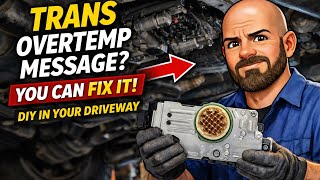
On the Ram 1500 with a 545RFE or 65RFE transmission, the Transmission Range Sensor is not a simple, externally-mounted switch like on many other vehicles. Instead, it is integrated directly into the transmission solenoid pack (or solenoid block). This assembly is located inside the transmission and mounted on top of the valve body. As a result, you cannot replace just the sensor; you must replace the entire solenoid pack, making the repair more complex and costly than a simple external sensor swap.
Generation note: This range covers the fourth-generation Ram 1500 (2009-2018). The 545RFE transmission was used until 2011-2012, after which it was updated to the 65RFE for 2012-2018 models. The 65RFE is an evolution of the 545RFE, featuring an improved torque converter but sharing many internal components and the same case. For the purpose of fixing a P2800 code, these transmissions are functionally identical, using the same solenoid pack design and repair procedure.
Symptoms You May Notice
- Check Engine Light is on
- Transmission is stuck in 'limp mode' (usually 2nd or 3rd gear)
- Harsh or erratic shifting
- Gear indicator on the dashboard is blank, flashing, or shows the wrong gear 🎬 Watch: Troubleshooting a broken shift indicator
- Engine will not crank or start when in Park, but may start in Neutral
- Reverse lights do not work
- Delayed engagement when shifting from Park into Drive or Reverse
- Inability to engage Reverse, even if Drive and Park work.
- Replacing only an external speed sensor. The range sensor is internal.
- Assuming the entire transmission needs to be rebuilt without first diagnosing the solenoid pack.
- Replacing the gear shifter assembly in the cabin.
Most Likely Causes
- Faulty Transmission Solenoid Pack 🔴 High Probability The Transmission Range Sensor (TRS) is integrated into the solenoid pack, which lives inside the transmission submerged in hot fluid. Over time, the electronics within the pack degrade and fail, causing the circuit fault. This is the most common failure point for P2800.
How to confirm: After confirming no wiring issues, the most definitive test is to replace the solenoid pack. A professional technician can use a high-end scan tool to monitor the range sensor data stream; if the data is erratic or invalid while the wiring is good, the pack is condemned. A forum user on RamForum.com confirmed this was the fix for a P0750 code, which involves the same part.
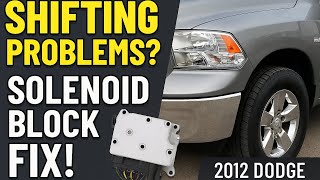
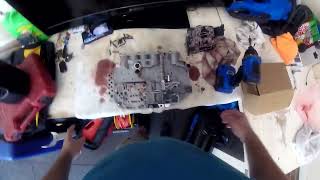
Typical fix: Replace the entire transmission solenoid pack. This service should also include two new transmission filters (pan filter and spin-on cooler filter) and a complete fluid change with ATF+4. A DIY walkthrough shows the process of dropping the valve body to access the pack on top. 🎬 Watch: Step-by-step solenoid block replacement guide
Est. part cost: $200-$400 - Damaged Wiring or Main Connector 🟡 Medium Probability The main transmission harness connector is located on the driver's side of the transmission, where it is exposed to road debris, moisture, and heat. This can lead to corrosion or damage to the pins and wires. Some owners report intermittent issues when hitting bumps, pointing to a loose connection.
How to confirm: Visually inspect the main round connector on the driver's side of the transmission for corrosion, bent pins, or a loose connection. Trace the harness for any signs of chafing, melting, or breaks. A user on a forum fixed communication errors by squeezing the connector together, indicating a common point of failure.
Typical fix: Clean the connector with electrical contact cleaner and apply dielectric grease. If the connector or wiring is damaged, it will need to be repaired or the harness section replaced. In some cases, a zip tie can be used to secure a loose connector as a temporary fix.
Est. part cost: $10-$300 - Low or Burnt Transmission Fluid ⚪ Low Probability These transmissions can be sensitive to fluid level and quality. Low fluid can cause overheating and pressure issues, stressing electronics and causing erratic behavior.
How to confirm: Check the transmission fluid level and condition with the engine running and transmission in neutral, after shifting through all gears. The fluid should be at the correct level and red, not brown or black with a burnt smell. The 545RFE/65RFE does not have a dipstick from the factory, requiring a special tool or careful measurement during service.
Typical fix: Perform a complete transmission fluid and filter service. If the fluid is very dark or burnt, it may indicate internal damage beyond just the solenoid pack.
Est. part cost: $100-$150
Rare But Worth Checking
- Faulty Powertrain Control Module (PCM) or Transmission Control Module (TCM): This is very uncommon. The PCM/TCM should only be considered a potential cause after the solenoid pack and all wiring have been thoroughly checked and confirmed to be in good working order. Intermittent communication loss codes like U0101 may point towards a PCM or wiring issue.
Diagnosis Steps
- Scan for Codes: Read all codes stored in the PCM and TCM. Note P2800 and any other related codes like P0700.
- Check Fluid: With the engine warm and running in Neutral, check the transmission fluid level and condition. This requires a special dipstick tool as one is not provided from the factory. Low or burnt fluid can cause numerous issues.
- Inspect External Wiring: Thoroughly inspect the main transmission wiring harness and the large, round connector on the driver's side of the transmission. Look for any signs of corrosion, damage, or loose connections. Wiggle the connector to see if it triggers any symptoms.
- Test with Scan Tool (Optional): If you have an advanced scan tool, monitor the live data for the Transmission Range Sensor. As you move the shifter through P-R-N-D, the reading should change logically. If it's stuck, erratic, or invalid, the problem is likely the sensor/solenoid pack.
- Drop Pan and Inspect: If external checks pass, the next step is to drain the fluid and drop the transmission pan. Look for excessive metal debris on the magnet, which would indicate a more serious mechanical failure.
- Replace Solenoid Pack: If there is no major debris, the most probable cause is the solenoid pack. Remove the valve body (typically held by 8mm bolts), replace the solenoid pack on top of it (held by T25 Torx screws), and also replace both the pan filter and the spin-on cooler filter.
- Reassemble and Refill: Reinstall the valve body and pan using correct torque specifications (e.g., valve body bolts to 105 in-lbs, solenoid pack to 50 in-lbs). Refill the transmission with the specified amount of ATF+4 fluid (typically 6-8 quarts for a pan drop).
- Clear Codes and Test Drive: Clear the trouble codes and perform a test drive. A transmission relearn procedure may be required, which can be done with a capable scan tool or by following a specific drive cycle.
Parts You'll Likely Need
- Transmission Solenoid Block Pack
(OEM #68002342AD (or later revisions like AE, AF, AG))— This is the primary failure point for a P2800 code, as it contains the integrated Transmission Range Sensor. Mopar has released several revisions of this part; using the latest version is recommended.
Trusted brands: Mopar, Rostra, Dorman (P/N 609-040), ATP
OEM price range: $350-$450
Aftermarket price range: $200-$350 - Transmission Filter Kit (Pan and Spin-on)
(OEM #5013470AC (Kit))— These must be replaced whenever the transmission pan is removed for service.
Trusted brands: Mopar, Wix, ATP
OEM price range: $40-$60
Aftermarket price range: $20-$40 - ATF+4 Automatic Transmission Fluid
(OEM #68218057AC (Quart), 68218058AC (Gallon))— This is the required fluid type for the 545RFE and 65RFE transmissions. A pan drop and fill requires approximately 6-8 quarts.
Trusted brands: Mopar, Valvoline, Castrol, Pennzoil
OEM price range: $12-$18 per quart
Aftermarket price range: $8-$12 per quart
Related Codes That Often Appear With This One
- P0700 — P0700 is a generic code that means the Transmission Control Module (TCM) has stored a fault. It almost always appears alongside a more specific transmission code like P2800.
- U0101 — This code indicates a loss of communication with the TCM. It can appear with P2800 if there is a wiring harness issue affecting the main transmission connector.
Platform-Specific Known Issues
- DIY Solenoid Pack Replacement on RamForum.com: A user with the P0750 code (related solenoid issue) created a detailed DIY thread with pictures, showing the process of replacing the solenoid pack on a 4th generation Ram. This is the same part and procedure required to fix P2800.
Mechanic-Grade Diagnostic Values
- Transmission Range Sensor (TRS) Circuit Voltages — expected: The TRS sends a unique combination of signals (T1, T2, T3, T41, T42) to the TCM to indicate gear position. These are not simple 0-5V sweeps but a logic state. For example, in Park, the TCM should see a specific pattern across these circuits.. Failure: With a scan tool, the data for the TRS will show as 'Invalid' or 'Fault'. When backprobing the connector pins, an open circuit (0V) or a short to ground (~0V) or voltage on a wire that should be open for a given gear indicates a fault in the solenoid pack or wiring.
- Sensor Ground Circuit Voltage Drop — expected: Less than 0.1V (100mV). Failure: A reading above 0.1V when testing between the sensor's ground pin and the negative battery terminal indicates a poor ground connection, which can cause erratic sensor readings.
Scan Tool Commands That Help
- wiTECH (Dealer Tool), Autel, Launch, AlfaOBD: Quick Learn / Transmission Adaptive Learn — This procedure is required after replacing the solenoid pack or valve body. It allows the Transmission Control Module (TCM) to learn the new clutch volume indexes (CVIs) and electronic characteristics of the replacement part, ensuring smooth shifts. Failure to perform this can result in harsh shifting or continued transmission issues even with new parts.
- wiTECH, AlfaOBD, or other advanced scan tools: Live Data Monitoring (Transmission Range Sensor State) — During initial diagnosis, monitoring the live data stream for the TRS while moving the shifter through all gears (P-R-N-D) is critical. The display should show a clear, corresponding change for each position. If the reading is 'Invalid', stuck, or does not match the shifter position, it strongly points to a failed internal sensor within the solenoid pack, assuming external wiring is good.
Wiring & Ground Locations
- Main Transmission Connector (23-pin round connector) — On the driver's side of the 545RFE/65RFE transmission case.. This is the single point of connection for all electronic signals, including the five TRS circuits. The P2800 code specifically relates to the 'B' circuit, which is one of these signals. Corrosion or a pushed-out pin in this connector is a common cause of the fault. The relevant pins for the TRS are: Pin 4 (T41 Sense), Pin 5 (T42 Sense), Pin 8 (T3 Sense), Pin 9 (T1 Sense), and Pin 13 (T2 Sense). Pin 22 is the sensor ground.
- Engine/Chassis Ground Straps — Key locations include a strap from the back of the passenger-side cylinder head to the firewall, and another on the driver's side frame rail, forward of the upper control arm.. A poor or broken ground between the engine/transmission and the chassis can cause a voltage potential difference, leading to floating grounds. This can introduce electrical noise and cause control modules like the PCM/TCM to receive erratic signals from sensors, potentially triggering a P2800 code even if the sensor and wiring are technically good.
Real Owner Repair Stories
- RamForum.com user (4th Gen Ram 1500) — P0750 code (another solenoid-related fault), transmission in limp mode.
❌ Tried (didn't work) Initial diagnosis was uncertain.
✅ What actually fixed it The user replaced the entire transmission solenoid pack, which is the same part that contains the TRS for a P2800 code. The user created a detailed DIY guide with photos, confirming this is a common fix for multiple solenoid/sensor-related codes on this transmission.
OEM Part Supersession History
68002342AD→68002342AE, 68002342AF, 68002342AG— Revisions to improve reliability and address common failure modes of the internal electronics.
Heads up: While all revisions should be compatible, it is best practice to install the latest available part number (e.g., AG) to benefit from the most recent engineering improvements. Some early solenoid packs had a white connector, while later ones are gray/black; they are generally interchangeable for this application, but verifying by vehicle is recommended.
Model Year Variations Within This Range
- 2009-2012 vs 2012-2018: The primary change was the update from the 545RFE to the 65RFE transmission around 2012. While the 65RFE has an improved torque converter and some software changes, the physical case, valve body, and the solenoid pack (which contains the TRS) remained the same. Therefore, the diagnostic and repair procedure for a P2800 code is identical for both transmissions within this year range.
Diagnostic Flowchart
Other Known Issues on This Vehicle
Issues unrelated to this code that are worth knowing about as an owner of this generation:
- 5.7L HEMI MDS Lifter/Camshaft Failure 🔴 High — Commonly occurs between 80,000 and 150,000 miles. Presents as a persistent ticking noise ('Hemi tick') and can lead to misfires and catastrophic engine failure if ignored.
- Broken Exhaust Manifold Bolts 🟠 Medium — Extremely common. The steel bolts and cast iron manifold expand/contract at different rates, causing bolts (especially the rear ones) to snap. Results in an exhaust leak ticking noise, particularly when cold, that may disappear as the engine warms. (Ref: Multiple TSBs exist, including 09-011-22 and 09-019-23, which detail replacement procedures with updated parts.)
- Totally Integrated Power Module (TIPM) Failure 🔴 High — Widespread issue on 2007-2015 models. The TIPM is the main fuse and relay box that controls nearly all vehicle electronics. Failure causes bizarre, random electrical problems like the horn blaring, windows opening on their own, fuel pump issues, or no-start conditions. (Ref: Several class-action lawsuits were filed, and some limited recalls were issued, but many failures are not covered.)
- Air Suspension Failure 🟠 Medium — On models equipped with four-corner air suspension, failures of the air springs (leaks), compressor, or height sensors are common, especially in cold weather. Can result in the truck being stuck at a low ride height.
- Rear Window / Third Brake Light Water Leaks 🟠 Medium — The seals for the rear sliding window and/or the third brake light assembly are known to fail, allowing water to leak into the cab. This can lead to water stains, mold, and corrosion of electrical components under the carpet or behind the rear seats.
Used vs. New Parts: Buying Guide for This Vehicle
When a used part is the smart pick: A used part is almost never a smart choice for this repair. The solenoid pack is a known high-failure electronic component that degrades with heat and time. A used part from a junkyard has an unknown history and is likely to have a very short remaining service life, leading you to perform this labor-intensive repair twice.
Donor-vehicle mileage cap: roughly under 20000 miles for the part to have meaningful remaining life.
What to inspect on the donor part:
- If forced to use a used part, verify it came from a very low-mileage vehicle that was wrecked for reasons unrelated to the powertrain.
- Inspect the electrical connector pins for any signs of corrosion or damage.
- Ask for the latest revision part number (e.g., ending in AF or AG).
OEM-only on this vehicle (don't cheap out):
- Transmission Solenoid Block Pack
Aftermarket brands forum-validated for this vehicle:
- Rostra is a well-regarded aftermarket manufacturer for these solenoid packs.
- Dorman (P/N 609-040) offers a replacement, often with a lifetime warranty, but community feedback is mixed compared to OEM or Rostra.
Brands owners have reported issues with on this vehicle:
- Avoid unbranded, no-name solenoid packs from online marketplaces. While cheap, they have an extremely high failure rate, often failing immediately or within a few months. The labor involved in the replacement is too high to risk using a low-quality part.
Real Owner Stories
Aggregated from forums and TSBs cited above. Mileages and costs reflect what owners reported in those sources.
4th Generation Ram 1500
Symptoms: The owner was dealing with a P0750 code (a related solenoid circuit fault). The truck required a solenoid pack replacement to restore proper shifting.
What fixed it: Replaced the entire transmission solenoid pack by dropping the valve body (held by 8mm bolts) and removing the pack (held by T25 Torx screws). The service included new pan and spin-on filters and ATF+4 fluid.
Source hint: RamForum.com thread titled 'Shift Solenoid Replacement DIY'
2009-2018 Ram 1500
Symptoms: Intermittent communication errors and transmission issues, specifically after hitting bumps.
What fixed it: Squeezed the main round transmission connector together on the driver's side to secure a loose connection; some users suggest using a zip tie as a temporary fix.
Source hint: RamForumz.com thread 'Transmission Shift Solenoid' and Reddit r/ram_trucks
Related OBD-II Codes
Frequently Asked Questions
My 2009-2018 Ram 1500 is stuck in limp mode and won't start in Park. Is this related to P2800?
Can I just replace the Transmission Range Sensor (TRS) on my Ram 1500 to fix P2800?
Are there any TSBs for the ticking noise I hear along with my transmission issues?
Does my 545RFE/65RFE transmission have a dipstick to check the fluid level?
Is the P2800 code common on other vehicles besides the Ram 1500?
Could a loose wire cause my gear indicator to flash or go blank?
Helpful Videos
We Have This Part in Stock



The information in this article is provided for general reference and educational purposes only. Vehicle specifications, procedures, and part compatibility can vary by production date, trim level, and region. Always consult your vehicle's factory service manual and verify part numbers before purchasing or performing repairs. Safety-critical components such as airbags, seat belts, and braking systems should be installed by a qualified professional.
- Ram 1500:
- 🎬 Helpful Videos
- 🛍️ Shop This Part
- What's Unique About the 2009-2018 Ram 1500
- Symptoms You May Notice
- Most Likely Causes
- Rare But Worth Checking
- Diagnosis Steps
- Parts You'll Likely Need
- Related Codes That Often Appear With This One
- Platform-Specific Known Issues
- Mechanic-Grade Diagnostic Values
- Scan Tool Commands That Help
- Wiring & Ground Locations
- Real Owner Repair Stories
- OEM Part Supersession History
- Model Year Variations Within This Range
- Diagnostic Flowchart
- Other Known Issues on This Vehicle
- Used vs. New Parts: Buying Guide for This Vehicle
- Real Owner Stories
- 4th Generation Ram 1500
- 2009-2018 Ram 1500
- Related OBD-II Codes
- Frequently Asked Questions
- 🎟️ Get 5% Off