

P2800 on 2013-2019 Lincoln MKZ: Transmission Range Sensor 'B' Circuit Causes and Fixes
On a 2013-2019 Lincoln MKZ, particularly the 2.0L hybrid models, code P2800 is most often caused by water entering and corroding specific electrical connectors as documented in Lincoln TSB #SSM 47790. A Reddit user confirmed this fix cost them $150 at a dealer. The primary diagnostic step is to inspect, clean, and seal connectors like C134 and C146 before considering sensor replacement. If the sensor has failed, the part costs around $40-$120.
- P2800 on a 2013-2019 Lincoln MKZ points to a problem with the Transmission Range Sensor 'B' circuit.
- The most likely cause is not the sensor itself, but water damage and corrosion in one of several specific electrical connectors, as detailed in TSB #SSM 47790.
- Diagnosis should always start with a thorough inspection of these connectors before considering part replacement.
- Symptoms are serious and can include a no-start condition or the transmission entering a fail-safe "limp mode".
- If the sensor has failed, it is a moderately priced part that is accessible for a DIYer with some experience.
What's Unique About the 2013-2019 Lincoln MKZ

For the 2013-2019 Lincoln MKZ and its platform-mate, the Ford Fusion, there is a well-documented issue of water intrusion causing this code, especially on vehicles with the 2.0L hybrid 🎬 Watch: A deep dive into Fusion hybrid transmission issues (HEV/PHEV) engine. Manufacturer TSB #SSM 47790 specifically calls out P2800 as a common result of water and corrosion in several key electrical connectors, particularly C146, C1651, C1812, C168C, C1717, and C134. A Ford Fusion owner on Reddit detailed their experience where a dealer identified water in connector C134 (located near the driver's side front lamp) and resolved the issue by cleaning the connector and applying dielectric grease. This makes a wiring and connector inspection the primary diagnostic step, rather than immediately suspecting the sensor itself.
Diagnostic Flowchart
Tap your situation to follow the diagnostic path that matches what you're seeing on this vehicle.
Symptoms You May Notice
- Check Engine Light is on.
- Vehicle will not start, or only starts in Park/Neutral.
- Incorrect gear position displayed on the dashboard.
- Transmission enters "limp mode," limiting speed and engine RPM.
- Hesitation or erratic shifting between gears.
- Flashing gear selector indicator.
- Backup lights may not function properly.
- Delayed transmission engagement.
- Decreased fuel economy.
- Replacing the Transmission Range Sensor without first inspecting the wiring and connectors for corrosion, which is the most common cause on this specific vehicle per TSB #SSM 47790.
Most Likely Causes

- Water Intrusion and Corrosion in Electrical Connectors 🔴 High Probability As identified in TSB #SSM 47790, the MKZ/Fusion platform is susceptible to water entry in specific connectors, leading to corrosion and signal loss, particularly on 2.0L hybrid models.
How to confirm: Visually inspect connectors C146, C1651, C1812, C168C, C1717, and C134 for any signs of water damage, green or white corrosion, or bent pins. A Ford Fusion owner reported their issue was traced to connector C134, located by the lamp behind the front bumper on the driver's side.
Typical fix: Disconnect the affected connector(s), clean the pins and terminals thoroughly with an electrical contact cleaner, apply dielectric grease to seal out moisture, and reconnect. If corrosion is severe, the connector pigtail may need to be replaced.
Est. part cost: $10-$50 - Failed Transmission Range Sensor (TRS) 🟡 Medium Probability The sensor is located on the transmission and can be exposed to moisture and road debris, leading to internal failure or corrosion at its own connector. Fluid intrusion from a leaking shift shaft seal is also a cause of failure.
How to confirm: If connectors are clean, test the sensor's resistance and voltage output at the connector while shifting through gears. Compare the readings to the manufacturer's specifications in the service manual. An out-of-spec reading or an "Invalid" signal on a professional scan tool indicates a failed sensor.
Typical fix: Replace the Transmission Range Sensor. This sensor is often called a neutral safety switch and is located on the outside of the transmission case.
Est. part cost: $40-$120 - Damaged Wiring Harness ⚪ Low Probability A dangling or improperly secured harness can rub against moving parts or melt against the exhaust, causing shorts or breaks in the wiring.
How to confirm: Perform a continuity test on the wires between the TRS connector and the PCM/TCM connector. A wiggle test (moving the harness while checking for signal changes) can help identify intermittent breaks.
Typical fix: Repair the specific broken or shorted wire(s) in the harness using solder and heat-shrink tubing. In severe cases, a section of the harness may need to be replaced.
Est. part cost: $5-$100
Rare But Worth Checking
- Faulty Powertrain Control Module (PCM) or Transmission Control Module (TCM): This is very rare and should only be considered after all other possibilities (sensor, wiring, connectors) have been definitively ruled out. A YouTube video on a 2014 Fusion with multiple random error codes did trace the root cause to a failed PCM.
- Misadjusted Shift Linkage: A loose or stretched shift cable can prevent the sensor from aligning correctly with the gear selector's actual position, triggering the code. This can often be fixed with a simple adjustment at no parts cost.
Diagnosis Steps

- Read the trouble codes with an OBD-II scanner and record any other codes present.
- Begin by inspecting the electrical connectors mentioned in TSB #SSM 47790 (C146, C1651, C1812, C168C, C1717, and C134) for any signs of water damage or corrosion. Pay close attention to connector C134, which has been identified in a real-world repair on a Ford Fusion.
- If corrosion is found, disconnect the battery, clean the connectors with electrical contact cleaner, allow to dry, apply dielectric grease, and reconnect. Clear the codes and test drive to see if the code returns.
- If the connectors are clean, locate the Transmission Range Sensor on the transmission case (on FWD models, it's often on top of the transaxle).
- Use a multimeter to test the voltage and resistance of the Transmission Range Sensor at its connector. Cycle through the gears (P, R, N, D) and ensure the signal changes smoothly and is within the specifications found in the vehicle's service manual.
- If the sensor tests bad, replace it.
- If the sensor tests good, perform a continuity check on the wiring harness between the sensor and the control module (PCM/TCM) to check for opens or shorts.
- If wiring and sensor are confirmed good, the issue may be with the control module, which requires advanced diagnostics.
Parts You'll Likely Need

- Transmission Range Sensor
(OEM #Motorcraft SW-7670 (example, verify by VIN))— This sensor provides the gear position signal. It can fail internally or as a result of fluid/water intrusion.
Trusted brands: Motorcraft, Dorman
OEM price range: $75-$90
Aftermarket price range: $40-$120 - Electrical Connector Pigtail — If the original connector (like C134 or C146) is too corroded to be cleaned, replacing the pigtail is necessary to ensure a solid connection.
Trusted brands: Motorcraft, Dorman
OEM price range: $30-$60
Aftermarket price range: $15-$40 - Dielectric Grease — Essential for preventing future moisture intrusion into the cleaned or replaced electrical connectors.
Trusted brands: Permatex, CRC
OEM price range: $5-$15
Aftermarket price range: $5-$15
Related Codes That Often Appear With This One
- P26C3 — Often appears with P2800 due to the same water intrusion issue affecting multiple circuits, as noted in TSB #SSM 47790.
- P26CA — Listed alongside P2800 in TSB #SSM 47790 as a common code resulting from water damage in connectors.
- P26D0 — Another code mentioned in TSB #SSM 47790 related to electrical concerns from water intrusion.
- P2802 — This code relates to the Transmission Range Sensor 'C' circuit and can be triggered by the same connector corrosion issue as P2800, per TSB #SSM 47790.
- U019F — A communication code also cited in TSB #SSM 47790, likely caused by the same water intrusion problem.
- U0284 — Another communication code listed in TSB #SSM 47790, pointing to a shared root cause of connector failure.
- P0705 — A general Transmission Range Sensor Circuit Malfunction code that can appear alongside the more specific 'B' circuit fault of P2800.
Technical Service Bulletins (TSBs) & Recalls
- SSM 47790: Notes that on 2013-2019 Fusion/MKZ, multiple electrical DTCs, including P2800, can be caused by water entry or corrosion in specific electrical connectors (C146, C1651, C1812, C168C, C1717, and C134).
Platform-Specific Known Issues
- A recall (13C09) was issued for some 2013-2014 MKZ Hybrid models for a faulty transmission range sensor that could allow the vehicle to be shifted out of Park without the brake applied. The fix was a PCM recalibration.
- On 2013-2015 hybrid models, CVT transmission failures due to bearing and seal issues have been reported, which could present with various transmission-related codes.
- A recall (23S33) was issued for 2019-2020 Fusion/MKZ Energi (PHEV) models for a faulty Battery Energy Control Module (BECM) that could cause a loss of power. While not directly P2800, it represents another significant electrical failure point on this platform.
Mechanic-Grade Diagnostic Values
- Continuity of TR sensor circuit wiring between transaxle harness and PCM. — expected: Less than 5 ohms. Failure: Resistance greater than 5 ohms indicates an open or high resistance in the wiring.
- Resistance to ground on TR sensor circuits (short test). — expected: Greater than 10,000 ohms. Failure: Resistance less than 10,000 ohms indicates a short to ground in the circuit.
- Voltage of digital TR sensor circuits (TR1, TR2, TR4) at PCM. — expected: 0.0 volts for '0' state, 9.0-14.0 volts for '1' state. Failure: Voltage that doesn't switch between these states or is stuck in between indicates a sensor or circuit fault.
- Voltage of digital TR sensor circuit TR3A at PCM. — expected: 0.0 volts for '0' state, 1.3-1.8 volts for '1' state. Failure: Incorrect voltage readings point to a sensor or circuit issue.
Scan Tool Commands That Help
- Ford IDS (Integrated Diagnostic System): Monitor PIDs: TR, TR1, TR2, TR3, TR4 — Use these Parameter IDs (PIDs) to watch the digital state of the individual circuits within the Transmission Range sensor while shifting gears. This helps determine if a specific circuit (like the 'B' circuit for P2800) is failing to report correctly or has an intermittent connection, which can be seen while wiggling the harness.
- Ford IDS (Integrated Diagnostic System): Monitor PID: TR_D — This PID shows the state of the digital TR switches (0 for closed, 1 for open). It is useful for diagnosing intermittent opens or shorts. For example, placing the shifter in Park (where all switches should be closed) and wiggling the harness can reveal an intermittent open if TR_D changes state.
- Ford IDS (Integrated Diagnostic System): Self-Test — This is the initial step to retrieve all Diagnostic Trouble Codes (DTCs) from the PCM. It's crucial to run this to see if P2800 is accompanied by other codes listed in TSB 47790, which would strongly point towards the common water intrusion issue.
Wiring & Ground Locations
- C146 — Located in front of the driver's side tire; access requires pulling back the wheel well liner.. This is one of the primary connectors identified in TSB #SSM 47790 as being highly susceptible to water intrusion and corrosion, which is a direct and common cause of code P2800 on this platform.
- C134 — Located in the engine compartment, near the driver's side headlamp and bumper area.. Also listed in TSB #SSM 47790 as a known failure point from water entry. Forum and real-world repair stories frequently cite cleaning this specific connector as the fix for P2800 and related electrical codes.
- G100 / G102 — Located on the left front of the engine compartment.. These are major chassis ground points in the engine bay. A loose or corroded ground connection here can cause a variety of intermittent electrical faults and communication codes, including those related to the transmission system.
- G108 — Located on the left rear of the engine compartment.. This is another critical ground point for components in the engine bay. Ensuring it is clean and tight is a fundamental step before diagnosing individual sensor circuits, as a poor ground can mimic sensor failure.
- Underhood Fuse Box (BJB) — Located near the driver's side in the engine bay. The positive jump-start point is located under a red plastic cover on this box.. This box contains fuses and relays for the PCM and TCM. While checking fuses is a basic step, accessing the bottom layer of this specific fuse box requires unlatching and pivoting the entire assembly.
OEM Part Supersession History
Motorcraft SW-7670→
Heads up: The part number SW-7670 is listed for various Ford trucks like the F-250/F-350 from 1997-2004 and some Navigators, but does not appear to be the correct part for the 2013-2019 MKZ. The pass 2 information citing this part number is likely an error based on a general search. The correct part number must be verified by VIN due to differences between hybrid (eCVT) and non-hybrid (6F35) transmissions.
Model Year Variations Within This Range
- 2017-2019: The 2017 model year introduced a major facelift with a new front grille, a new optional 3.0L twin-turbo V6 engine, and a revised interior. The MyLincoln Touch infotainment was replaced with the more user-friendly SYNC 3 system, and the slider controls for volume/fan were replaced with physical knobs and buttons. The gear selector also changed from a traditional lever to a push-button system. However, the underlying 2.0L base engine, hybrid powertrain (HF35), and 6-speed automatic (6F35) remained, and the water intrusion issue described in TSB #SSM 47790 still applies to these later model years.
Helpful Videos


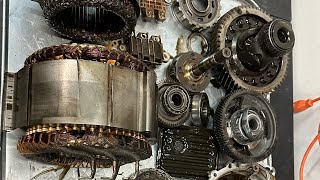
Used OEM Parts in Stock


New Aftermarket Parts Available




The information in this article is provided for general reference and educational purposes only. Vehicle specifications, procedures, and part compatibility can vary by production date, trim level, and region. Always consult your vehicle's factory service manual and verify part numbers before purchasing or performing repairs. Safety-critical components such as airbags, seat belts, and braking systems should be installed by a qualified professional.
- Lincoln MKZ:
- 🎬 Helpful Videos
- 🛍️ Shop This Part
- What's Unique About the 2013-2019 Lincoln MKZ
- Diagnostic Flowchart
- Symptoms You May Notice
- Most Likely Causes
- Rare But Worth Checking
- Diagnosis Steps
- Parts You'll Likely Need
- Related Codes That Often Appear With This One
- Technical Service Bulletins (TSBs) & Recalls
- Platform-Specific Known Issues
- Mechanic-Grade Diagnostic Values
- Scan Tool Commands That Help
- Wiring & Ground Locations
- OEM Part Supersession History
- Model Year Variations Within This Range
- 🎟️ Get 5% Off