

P2764 on 2012-2016 Subaru Impreza: Torque Converter Solenoid Causes and Fixes
P2764 on a 2012-2016 Impreza almost always means the Torque Converter Lock-Up Solenoid has failed. The internal resistance of the solenoid shorts out, dropping from a normal 10-13 ohms to under 8 ohms. The official Subaru fix is to replace the entire valve body (~$1,000+), but a much cheaper and common option is to replace only the faulty solenoid itself with an aftermarket part (~$60-$150).
- P2764 on a 2012-2016 Impreza is almost certainly a failed Torque Converter Lock-Up Solenoid.
- The most definitive diagnosis is to test the solenoid's resistance at the transmission connector; a reading below 10 ohms indicates failure.
- You have two main repair options: replace the entire valve body (expensive, dealer method) or replace only the failed solenoid with an aftermarket part (cheaper, common independent shop/DIY method).
- This is a difficult repair not recommended for beginners. It requires working inside the transmission and specific relearn procedures.
- Do not immediately assume you need a new transmission or torque converter; the problem is almost always a small, specific electronic component.
What's Unique About the 2012-2016 Subaru Impreza

The TR580 CVT transmission in this generation of Impreza and its platform-mates (Crosstrek, Forester) is well-known for this specific failure. The lock-up solenoid, located on the valve body, is a frequent point of failure. For years, Subaru's only authorized repair was to replace the entire, expensive valve body assembly. However, the aftermarket has responded with individual solenoids (from brands like Dorman and Rostra) that allow for a much more affordable repair, which has become the go-to fix for many independent shops and DIYers.
Symptoms You May Notice
- Check Engine Light is on
- AT OIL TEMP light is flashing
- Traction control light is on
- Hill Assist light is on
- Engine stalls or nearly stalls when coming to a complete stop
- Harsh or erratic shifting, or a lurching feeling during acceleration
- Vehicle enters "limp mode" with reduced power
- Increased fuel consumption
- Replacing the entire transmission. While this code is serious, it rarely requires a full transmission replacement. The fault is almost always isolated to the valve body solenoid or wiring.
- Replacing the torque converter. A P2764 code is an electrical fault. While a failing torque converter can cause similar symptoms (like stalling), it typically sets mechanical/performance codes (like P0741), not electrical circuit codes.
Most Likely Causes

- Failed Torque Converter Lock-Up Duty Solenoid 🔴 High Probability This specific solenoid on the TR580 valve body has a high failure rate. The internal coil windings short out over time, causing the electrical resistance to drop far below the manufacturer's specification, leading to the 'Circuit Low' fault.
How to confirm: Using a multimeter, measure the resistance of the lock-up solenoid. On the TR580, this can be done at the main transmission connector on top of the transmission (often a red and white wire) or at the TCM. A good solenoid should read between 10-13.5 ohms. A failed solenoid will typically read much lower, often between 2-8 ohms.
Typical fix: Replace the failed lock-up solenoid on the valve body. While Subaru dealers replace the entire valve body assembly, a more cost-effective repair is to install an aftermarket solenoid onto the existing valve body. After replacement, a transmission relearn procedure is recommended.
Est. part cost: $60-$150 for the individual solenoid, or $800-$1200 for a full valve body assembly. - Damaged Wiring Harness ⚪ Low Probability The wiring harness leading to the transmission can become chafed or damaged from heat, vibration, or improper service, causing a short to ground. This is less common than solenoid failure but should be checked.
How to confirm: If the solenoid resistance test is inconclusive or a new valve body does not fix the code, perform a visual inspection of the harness between the TCM and the transmission connector. Check for continuity and shorts on the specific wire for the lock-up solenoid.
Typical fix: Repair or replace the damaged section of the wiring harness.
Est. part cost: $10-$50 for wiring repair supplies.
Rare But Worth Checking
- Failed Transmission Control Module (TCM): This is very rare. The TCM should only be considered a potential cause after the solenoid and wiring have been thoroughly tested and confirmed to be in good working order. A failure of the solenoid driver within the TCM is a possibility.
Diagnosis Steps

- Scan the vehicle for all stored trouble codes. Confirm P2764 and P0700 are present.
- Using a multimeter, check the resistance of the lock-up solenoid. Access the main transmission connector on top of the transmission.
- Identify the pin for the lock-up solenoid (typically a red and white wire on the main harness side, or a green wire on the valve body side).
- Measure the resistance between this pin and a good chassis ground. The reading should be between 10 and 13.5 ohms.
- If the resistance is significantly lower (e.g., below 8 ohms), the solenoid has failed and is the cause of the code.
- If the resistance is within spec, the problem may be in the wiring harness. Inspect the harness for any signs of damage, chafing, or corrosion between the TCM and the transmission.
- If both the solenoid and wiring are good, the issue could be a rare failure of the TCM itself.
- After the repair, clear all codes and perform a transmission relearn/adaptation procedure using a capable scan tool.
Parts You'll Likely Need

- Torque Converter Lock-Up Solenoid — This is the component that fails electronically, causing the P2764 code. Subaru does not sell this part individually, so an aftermarket version is required for this specific repair.
Trusted brands: Dorman (Part #926-408), Rostra 🎬 See this affordable Dorman solenoid repair in action (Part #52-0534)
OEM price range: N/A
Aftermarket price range: $60-$150 - Transmission Valve Body Assembly
(OEM #31825AA052)— This is the official Subaru-approved repair. It includes all new solenoids, including the lock-up solenoid, and is a complete unit. It is much more expensive but replaces the entire control unit and is sometimes required if aftermarket solenoids fail prematurely.
Trusted brands: Subaru (Genuine)
OEM price range: $800-$1200
Aftermarket price range: $400-$700 (Remanufactured) - Subaru High Torque CVTF
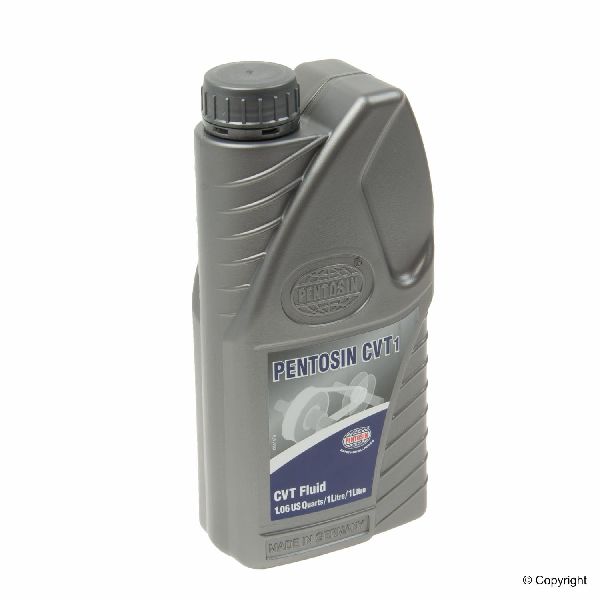
(OEM #SOA427V1660 (replaces SOA635043))— The correct CVT fluid is required when refilling the transmission after the repair. Using the wrong fluid can cause severe damage. Approximately 6-7 quarts are needed for a valve body service.
Trusted brands: Subaru (Genuine)
OEM price range: $20-$30 per quart
Aftermarket price range: N/A - Valve Body Cover Gasket
(OEM #31338AA020)— This gasket is a one-time use part and must be replaced when the valve body cover is removed.
Trusted brands: Subaru (Genuine)
OEM price range: $25-$40
Aftermarket price range: $15-$25
Related Codes That Often Appear With This One
- P0700 — P0700 is a generic code that simply means the Transmission Control Module (TCM) has stored a fault code. It acts as a master light, telling the main Engine Control Unit (ECU) to turn on the Check Engine Light, and will almost always be present alongside a specific transmission code like P2764.
Technical Service Bulletins (TSBs) & Recalls
- TSB 16-90-13R: This TSB addresses a design change in the torque converter to fix a stalling/low RPM issue when stopping. The symptoms are very similar to a P2764 fault, but the cause is a mechanical issue (thrust washer wear) inside the converter, not an electrical solenoid failure.
- TSB 16-102-16R: This bulletin provides an updated diagnostic flow chart for troubleshooting DTC P0841 (Secondary Oil Pressure Sensor Performance) on CVT models. While not directly for P2764, it is relevant to general CVT diagnostics and shows the complexity of the system.
Platform-Specific Known Issues
- A PZEV (Partial Zero-Emission Vehicle) warranty extension in some states may cover the valve body replacement for up to 15 years or 150,000 miles. This applies to vehicles originally sold or registered in California, Connecticut, Maine, Massachusetts, New York, and Vermont. Owners should check with a Subaru dealer to confirm eligibility.
Documented NHTSA Reports
- NHTSA ODI #11360849 describes an incident where a bunch of lights came on the dash while driving at 60 MPH; a scan tool pulled codes P2764 and P0700, indicating a bad solenoid on the CVT valve body.
- An owner reported in NHTSA ODI #11258726 that diagnosing a check engine light revealed code P2764, which indicates the transmission control valve body needs to be replaced due to a faulty solenoid.
- NHTSA ODI #11186713 notes that when P2764 sets, engine RPM may seem much higher, fuel mileage becomes terribly reduced, and safety braking/stability systems become disabled.
- In NHTSA ODI #11422506, a technician indicated P2764 could be a valve body problem, which is a "known issue with Subaru CVT engines," and found excessive metal built up on the pan magnet.
- NHTSA ODI #11241647 describes a vehicle with P0700 and P2764 codes where the owner noted the warranty did not cover the issue because the vehicle was over 100,000 miles.
Mechanic-Grade Diagnostic Values
- Lock-Up Duty Solenoid Resistance — expected: 10.0 - 13.5 Ω (typically ~12 Ω at 68°F). Failure: A reading significantly lower than 10 Ω (e.g., 2-8 Ω) indicates a shorted solenoid. Resistance may test normal when cold but change when heated.
- AWD Solenoid Resistance — expected: 2.0 - 4.5 Ω. Failure: Reading outside of specified range.
- Secondary Line Pressure Control Solenoid Resistance — expected: 5 - 7 Ω. Failure: Reading outside of specified range.
- Forward/Reverse Linear Solenoid Resistance — expected: 4 - 6 Ω. Failure: Reading outside of specified range.
- Primary Up & Primary Down Solenoid Resistance — expected: 10.0 - 13.5 Ω. Failure: Reading outside of specified range.
- Valve Body Cover Bolt Torque — expected: 6 ft-lbs (72 in-lbs). Failure: N/A
- Valve Body Retaining Bolt Torque — expected: 6.5 ft-lbs (80 in-lbs). Failure: N/A
Scan Tool Commands That Help
- Subaru Select Monitor (or equivalent professional scanner like Autel, XTool): Clear Automatic Learning Values — This function must be used after replacing the valve body or solenoid to erase the old adaptive memory from the TCM before performing the relearn procedure.
- Subaru Select Monitor (or equivalent professional scanner): AT Learning Mode — This is the mandatory relearn procedure after a valve body or solenoid replacement. It requires lifting all four wheels off the ground and following specific on-screen steps to allow the TCM to adapt to the new component. Failure to perform this can result in poor shifting and a flashing AT OIL TEMP light.
Wiring & Ground Locations

- Transmission Control Module (TCM) — Located behind the glove box assembly, mounted to the left of the lower heater box, often behind a bank of relays.. This is the computer that controls the lock-up solenoid and sets the P2764 code. While rarely the cause, its connector (B54) is a secondary location for resistance testing.
- B11 / T4 Connector — This is the main transmission harness connector, located on top of the transmission case, accessible after removing the engine air intake boot. It is a gray connector.. This is the primary and easiest external test point for checking the resistance of the lock-up solenoid without removing the valve body. The solenoids are grounded to the transmission case.
- Lock-Up Duty Solenoid Pin — Pin 2 at the T4/B11 gray connector. The wire on the body harness (B11) side is typically Red with a White stripe. The wire on the valve body side is often Green.. This is the specific pin to probe with a multimeter (to ground) to measure the resistance of the lock-up solenoid.
Real Owner Repair Stories
- Reddit user LameBicycle (2016 Subaru with TR580 CVT, failure at ~175,000 miles) — Not specified, but implied solenoid failure code.
✅ What actually fixed it Replaced the individual failed solenoid. Noted that CVT fluid had only been changed at 90k and 175k miles. - Reddit user joeldaemon (2014 Subaru Forester) — Not specified, implied P2764.
✅ What actually fixed it Replaced the entire valve body with a remanufactured unit from eBay for ~$245-300. The repair took 4-5 hours and did not require draining the transmission fluid as the valve body is on top. - YouTube channel 'How To Fix Subaru P2764 P2763 Codes' (Subaru Impreza with TR580) — Dashboard lights like a Christmas tree (Check Engine, AT OIL TEMP, ABS, Traction Control), code P2764.
✅ What actually fixed it Confirmed the lock-up solenoid resistance was ~2.5 ohms (spec is 10-13 ohms). Replaced only the failed solenoid with a Dorman aftermarket part. This resolved all codes and symptoms. Cost was under $100 for the solenoid and required gaskets.
OEM Part Supersession History
31825AA050, 31825AA051→31825AA052— Part revisions by the manufacturer. The function remains the same.
Heads up: These part numbers are generally considered interchangeable for the TR580 valve body assembly.N/A (Individual Solenoids)→N/A— The PWM-controlled solenoids (Lockup, Primary Up/Down, AWD) are physically interchangeable between Gen 1 and Gen 2 TR580/TR690 valve bodies.
Heads up: This allows for a known-good solenoid (e.g., an AWD solenoid) to be swapped into the lock-up solenoid's position for testing, or for a solenoid to be sourced from a used core valve body.
Diagnostic Flowchart
Other Known Issues on This Vehicle
Issues unrelated to this code that are worth knowing about as an owner of this generation:
- Excessive Oil Consumption 🔴 High — Very common on 2012-2015 models with the FB20 engine. Often starts before 100,000 miles. Caused by low-tension piston rings. (Ref: A class-action lawsuit led to warranty extensions and potential short block replacements for affected vehicles that failed an oil consumption test.)
- Rear Wheel Bearing Failure 🟠 Medium — Common failure item, often occurring between 60,000 and 120,000 miles. Symptoms include a loud humming or grinding noise from the rear of the vehicle that increases with speed.
- Oil Seepage from Timing Cover / Oil Pump Seal 🟡 Low — Minor oil leaks can develop from the front timing cover or oil pump seal area. Often noticed as weeping or small drips. (Ref: TSB 16-103-16R addresses fluid seepage from the CVT oil pump chain cover, which is a similar issue.)
- Carbon Buildup on Intake Valves 🟠 Medium — A known issue for the direct-injected FB20D engine variant (2017+), but can also affect earlier port-injected FB20s to a lesser degree. Can cause rough idle and hesitation, typically needing cleaning around 80,000-100,000 miles.
Used vs. New Parts: Buying Guide for This Vehicle
When a used part is the smart pick: A used part can be a cost-effective gamble. Sourcing a complete used valve body from a low-mileage donor vehicle (<100k miles) is one option. Alternatively, since several solenoids on the valve body are interchangeable, one can purchase a used valve body just to harvest a known-good solenoid to replace the single failed one.
Donor-vehicle mileage cap: roughly under 100000 miles for the part to have meaningful remaining life.
What to inspect on the donor part:
- Verify the donor vehicle's mileage; lower is always better as failures are common from 120k-180k miles.
- If possible, test the resistance of the solenoids on the donor valve body before purchasing. The lock-up solenoid should be 10-13.5 ohms.
- Inspect the part for any physical damage, corrosion, or signs of excessive heat.
OEM-only on this vehicle (don't cheap out):
- Transmission Valve Body Assembly: While remanufactured units exist, the highest probability of a long-term fix comes from a new, genuine Subaru valve body.
Aftermarket brands forum-validated for this vehicle:
- Dorman (Part #926-408): Some owners report success and long-term reliability.
- Rostra (Part #52-0534): Another common aftermarket alternative.
Brands owners have reported issues with on this vehicle:
- Generic/unbranded eBay/Amazon solenoids or valve bodies: While some have had success with remanufactured units, others report premature failure of non-genuine parts, leading to doing the job twice.
Real Owner Stories
Aggregated from forums and TSBs cited above. Mileages and costs reflect what owners reported in those sources.
2012 Impreza — 141000 miles
Symptoms: Check Engine, ABS, and traction control lights were on, and the AT OIL TEMP light was blinking. The vehicle stored codes P2764 and P0700.
What fixed it: The Subaru dealer replaced the valve body at no cost, as it was covered by the 15 year/150,000 mile PZEV warranty.
Source hint: Reddit r/subaruimpreza
2014 Forester
Symptoms: Check Engine Light on with code P2764 stored.
What fixed it: A DIY repair was performed by replacing only the failed lock-up solenoid with a $90 aftermarket part instead of the entire valve body assembly.
Cost: $60-$150
Source hint: Reddit r/SubaruForester - '14 Forester Code:P2764 repaired! Saved so much money.'
Subaru Legacy
Symptoms: The P2764 code returned even after the entire valve body was replaced.
What fixed it: The problem was not yet solved, but the recommended next diagnostic step was to perform a detailed inspection of the wiring harness between the TCM and the valve body for a potential short to ground.
Source hint: LegacyGT.com - P2764 help
Subaru (model not specified) — ~115000 miles
Symptoms: Vehicle experienced a valve body failure with over 100,000 miles on the odometer.
What fixed it: The valve body replacement was covered free of charge under the PZEV emissions warranty in an eligible state.
Source hint: Reddit r/subaru - PZEV warranty for Valve Body
Related OBD-II Codes
Frequently Asked Questions
Will the PZEV warranty cover the P2764 valve body repair on my 2014 Impreza?
My mechanic quoted over $1,000 to replace the whole valve body. Is there a cheaper fix for P2764?
How can I test the lock-up solenoid myself to confirm it's the problem?
My Impreza is stalling when I come to a stop. Is this definitely the P2764 solenoid issue?
I replaced the solenoid but the P2764 code came back. What should I check next?
Do other Subarus like the Forester or Crosstrek have this same P2764 problem?
Helpful Videos
We Have This Part in Stock

The information in this article is provided for general reference and educational purposes only. Vehicle specifications, procedures, and part compatibility can vary by production date, trim level, and region. Always consult your vehicle's factory service manual and verify part numbers before purchasing or performing repairs. Safety-critical components such as airbags, seat belts, and braking systems should be installed by a qualified professional.
- Subaru Impreza:
- 🎬 Helpful Videos
- 🛍️ Shop This Part
- What's Unique About the 2012-2016 Subaru Impreza
- Symptoms You May Notice
- Most Likely Causes
- Rare But Worth Checking
- Diagnosis Steps
- Parts You'll Likely Need
- Related Codes That Often Appear With This One
- Technical Service Bulletins (TSBs) & Recalls
- Platform-Specific Known Issues
- Documented NHTSA Reports
- Mechanic-Grade Diagnostic Values
- Scan Tool Commands That Help
- Wiring & Ground Locations
- Real Owner Repair Stories
- OEM Part Supersession History
- Diagnostic Flowchart
- Other Known Issues on This Vehicle
- Used vs. New Parts: Buying Guide for This Vehicle
- Real Owner Stories
- 2012 Impreza — 141000 miles
- 2014 Forester
- Subaru Legacy
- Subaru (model not specified) — ~115000 miles
- Related OBD-II Codes
- Frequently Asked Questions
- 🎟️ Get 5% Off