

P2703 on 2017-2023 Ford F-150: Transmission Friction Element 'D' Causes and Fixes
P2703 on a 2017-2023 Ford F-150 indicates a problem with the 'D' clutch inside the 10-speed (10R80) automatic transmission. It's often caused by a known internal failure of the CDF clutch drum. This is a serious issue that typically requires transmission removal and repair, with costs ranging from $2,500 for a valve body or drum replacement to over $9,000 for a full transmission replacement.
- P2703 on a 2017-2023 F-150 is a serious transmission code, almost always pointing to an internal mechanical failure in the 10R80 transmission.
- The most likely cause is a well-documented design flaw in the CDF clutch drum, which requires an updated part from Ford.
- This is not a DIY-friendly repair. It requires transmission removal and disassembly and should be handled by a professional transmission shop or a Ford dealer.
- Repair is expensive, often costing several thousand dollars for a rebuild and potentially close to $10,000 for a full replacement.
- Ignoring the symptoms will lead to more severe transmission damage and higher repair costs.
What's Unique About the 2017-2023 Ford F-150

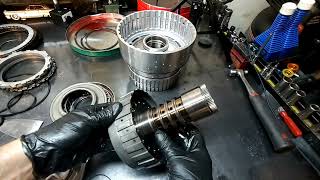
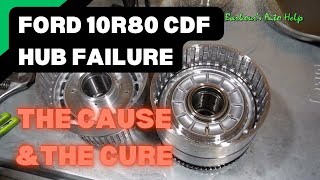
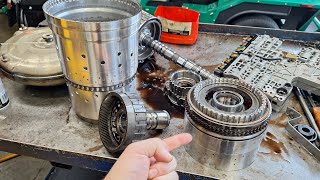
The 2017-2023 Ford F-150 predominantly uses the 10R80 10-speed automatic transmission, which was co-developed with GM. This transmission is known for a specific, widespread mechanical failure in the 'CDF' clutch drum assembly. A bushing inside this drum can slide out of position, exposing oil passages and causing a hydraulic leak that prevents clutches from applying correctly. This design flaw is so common that Ford has issued multiple Technical Service Bulletins (TSBs) and released several updated versions of the CDF drum to correct it. Therefore, P2703 on this truck is very frequently a symptom of this specific, well-documented hardware failure, 🎬 Watch: Understanding the cause and cure for CDF hub failure rather than a simple electronic or fluid issue.
Diagnostic Flowchart

Tap your situation to follow the diagnostic path that matches what you're seeing on this vehicle.
Generation note: This range covers the end of the 13th generation F-150 (2017-2020) and the start of the 14th generation (2021-2023). Both generations use the 10R80 10-speed automatic transmission and are susceptible to the same internal failures, particularly with the CDF clutch drum, that can cause a P2703 code. Ford has released updated parts, and vehicles built after August 15, 2022, may have the revised CDF drum from the factory.
Symptoms You May Notice

- Harsh, clunky, or delayed shifts, especially between 3rd, 4th, and 5th gears.
- Transmission slipping, where the engine RPMs flare up without an increase in vehicle speed.
- Sudden, violent downshifts, sometimes from 10th to 1st gear at highway speeds.
- Vehicle entering 'Limp Mode,' limiting available gears.
- Illuminated Check Engine Light or Wrench Light on the dashboard.
- A burnt smell from the transmission fluid.
- Hesitation or delay when shifting from Park into Drive or Reverse.
- Shuddering under light load, especially going up hills.
- Replacing only the 'D' shift solenoid. While a solenoid can fail, the P2703 code on a 10R80 is more often a symptom of the mechanical/hydraulic issue in the CDF drum or valve body. The solenoid is just the messenger.
- Assuming a simple fluid change will fix it. If the CDF drum has failed, new fluid will not correct the internal hydraulic leak. It is often a necessary step during the repair, but not the fix itself.
- Performing only a TCM reflash without addressing the underlying mechanical fault. If the CDF drum has failed, a software update will not provide a lasting solution.
Most Likely Causes

- CDF Clutch Drum Failure 🔴 High Probability The 10R80 transmission has a widely documented design issue where a sleeve/bushing within the CDF clutch drum assembly can move or 'walk' out of position, causing an internal hydraulic leak. This prevents the clutch pack from getting the pressure it needs to apply correctly. This is considered the most common point of failure for this transmission.
How to confirm: A technician can perform a specialized hydraulic circuit leakage test using a VCMM tool with a Pressure Vacuum Transducer Kit (Rotunda 164-R9833) to measure pressure loss in the CDF circuit, as outlined in Ford's TSBs (e.g., TSB 24-2254). Visual inspection after transmission disassembly will clearly show the displaced sleeve and a damaged or extruded Teflon sealing ring.
Typical fix: The transmission must be removed and partially disassembled to replace the faulty CDF drum with an updated part from Ford. The updated part features a machined lip that physically prevents the bushing from moving. Ford has released multiple revised parts to address this.
Est. part cost: $140-$400 for the updated CDF drum assembly (Part # JL3Z-7H351-B). - Main Control Valve Body Failure 🟡 Medium Probability Debris from normal wear or from the failing CDF drum can contaminate the transmission fluid and cause solenoids or valves within the main control (valve body) to stick or bind. This disrupts the flow of hydraulic fluid needed to apply the clutches. Several TSBs address valve body issues as a potential cause for shifting problems.
How to confirm: A technician can command specific solenoids on and off with a high-level scan tool to check for response. Inspecting the valve body after removal may show scoring, stuck valves, or debris. TSB 22-2428 provides a diagnostic path that may lead to a valve body overhaul.
Typical fix: In some cases, the valve body can be removed, cleaned, overhauled with new seals and clips, and reinstalled. More often, it requires replacement with a new or remanufactured unit. This is often done in conjunction with the CDF drum replacement. After replacement, the solenoid strategy must be programmed into the TCM using a scan tool.
Est. part cost: $800-$1500 for a complete valve body assembly. - Low or Degraded Transmission Fluid ⚪ Low Probability While less common as the root cause for this specific code on the 10R80, low fluid levels from a leak can cause pressure drops, and old, burnt fluid loses its hydraulic properties, both of which can slow clutch application time. Using the incorrect fluid (anything other than Motorcraft MERCON ULV) can also cause severe shifting issues.
How to confirm: Check the transmission fluid level and condition according to the manufacturer's procedure, which requires the fluid to be at a specific temperature (typically over 206°F) for an accurate reading. The fluid should be at the correct level and appear clean and red, not dark brown/black or smell burnt.
Typical fix: If the fluid is low, find and repair the source of the leak. If the fluid is degraded or incorrect, perform a complete fluid and filter change using only the specified Motorcraft ULV fluid.
Est. part cost: $150-$300 for fluid and filter.
Rare But Worth Checking
- Transmission Control Module (TCM) Software Glitch: Sometimes, the adaptive learning strategy in the TCM can become corrupted or unable to adapt to normal hardware wear, leading to incorrect shift commands. Ford has issued multiple TSBs (like TSB 18-2274) that involve reprogramming the PCM/TCM and performing an adaptive learning drive cycle as a first step before mechanical repairs.
- Worn Clutch Pack Friction Material: While the CDF drum is the more common failure point, the friction plates of the 'D' clutch can simply wear out over time, especially under heavy use. This is usually confirmed during a transmission rebuild when the clutch pack is inspected.
Diagnosis Steps
- Scan the TCM for all stored trouble codes. Note any other friction element, solenoid, or gear ratio codes that are present.
- Check the transmission fluid level and condition. Look for fluid that is dark, burnt, or contains metallic particles. Ensure the check is performed at the correct operating temperature (over 206°F).
- Check for applicable TSBs. Follow the diagnostic procedure outlined in the relevant Ford TSB (e.g., TSB 24-2254, TSB 22-2428). This may involve reprogramming the PCM/TCM and performing an adaptive drive cycle first.
- If symptoms persist, perform a hydraulic pressure test on the transmission circuits, specifically looking for leakage in the CDF clutch circuit as detailed in the TSBs. This requires specialized equipment like the Rotunda Pressure Vacuum Transducer Kit.
- If pressure tests confirm a leak, the next step is to remove the transmission for inspection and replacement of the CDF clutch drum.
- While the transmission is out, it is highly recommended to inspect the valve body for contamination or sticking valves and all other clutch packs for wear.
- After reassembly, fill with new Motorcraft ULV fluid, program the new solenoid body strategy into the TCM using a tool like Ford IDS, clear all codes, and perform the adaptive learning drive cycle as specified by Ford.
Parts You'll Likely Need
- CDF Clutch Cylinder Hub Assembly
(OEM #JL3Z-7H351-B)— This is the most common point of failure in the 10R80 transmission that leads to code P2703. The original design is flawed, and this updated part number is designed to prevent the internal sleeve from moving. This part supersedes previous versions HL3Z-7H351-A and JL3Z-7H351-A.
Trusted brands: Motorcraft
OEM price range: $140-$400
Aftermarket price range: $150-$300 - Main Control Valve Body Assembly — This is the second most likely cause, either due to debris from a failing CDF drum or inherent solenoid/valve failure. Replacement requires programming the new solenoid strategy into the TCM.
Related Codes That Often Appear With This One
- P0766 — Shift Solenoid 'D' Stuck Off. This code often appears with P2703 because the TCM may interpret the hydraulic failure (caused by the CDF drum) as an electrical or mechanical fault with the controlling solenoid.
- P2700, P2701, P2702, P2704, P2705 — These are all codes for other friction elements ('A', 'B', 'C', 'E', 'F'). The widespread hydraulic issues caused by a failing CDF drum or valve body can affect multiple clutch circuits simultaneously, leading to a cluster of these codes.
- P0729 - P0736 — These codes indicate incorrect gear ratios. When a clutch slips due to a hydraulic leak, the TCM detects a mismatch between engine speed and output shaft speed for the commanded gear, triggering these codes alongside the friction element code.
Technical Service Bulletins (TSBs) & Recalls
- TSB 24-2254: Addresses harsh/delayed shifts and a list of DTCs including P2703 on 2021-2022 F-150s and other models. Directly attributes the cause to 'axial movement of the CDF clutch cylinder (7H351) sleeve causing hydraulic circuit leaks' and provides a procedure to verify the leak and replace the drum.
- TSB 23-2123: Supersedes older TSBs. For vehicles with harsh shifts and DTCs including P2703, this TSB provides a diagnostic path. If no codes are present, it advises a PCM/TCM reprogram. If codes ARE present, it directs technicians to overhaul the main control valve body.
- TSB 25-2018: An earlier TSB for 2017-2020 F-150s that also points to the CDF clutch cylinder sleeve movement as the cause for harsh shifts and DTCs like P2703.
- TSB 21-2357: Another TSB covering 2017-2020 F-150s and other models for the same list of DTCs and symptoms, pointing to either adaptive calibration issues or valve body problems.
Platform-Specific Known Issues
- The Violent 10-to-1 Downshift: A particularly alarming symptom reported by multiple owners is a sudden and violent downshift from 10th gear to a very low gear (often 1st) while driving at highway speeds. This can cause a loss of vehicle control and is a significant safety concern. One owner on Reddit described the experience: 'Transmission shifted from 10th gear to I believe 1st. Was too busy trying to keep control of truck before so didn't realize what the hell was going on'.
- Repair Durability Concerns: Even after having the CDF drum replaced or the transmission rebuilt by a dealer, some owners report the return of the same symptoms within a year or 10,000-30,000 miles. This suggests that unless the latest revised parts are used and the repair is done meticulously, the problem can reoccur. One owner on f150forum.com stated, 'Fast forward to 1 year later and symptoms have unfortunately reappeared just as they began a year ago.'
- Dealer vs. Independent Shop Repair Costs: Owners facing this issue out of warranty report a wide range of repair costs. Dealer quotes for a full transmission replacement can be as high as $9,800. Independent transmission shops that are familiar with the 10R80 issue often offer to rebuild the existing transmission using the updated Ford parts for a lower cost, typically in the $6,000 - $6,500 range, often with a multi-year warranty.
Mechanic-Grade Diagnostic Values
- Shift Solenoid (A-F) Resistance — expected: 5.0 - 5.4 Ohms at 68°F (20°C). Failure: A reading outside this range indicates a faulty solenoid coil.
- Line Pressure at Idle (In Gear) — expected: ~110-120 psi (with performance calibration). Failure: Significantly lower pressure can indicate a leak in a clutch circuit or a failing pump/valve body.
- Line Pressure at Wide-Open Throttle (WOT) — expected: ~230-260 psi (with performance calibration). Failure: Failure to reach target pressure under load points to major hydraulic leaks or pump issues.
Hidden / Shadow Codes Worth Checking
- Mode $06, Test ID $53 (pre-CAN) or $80-$84 (CAN): These test IDs monitor misfire counts per cylinder. While not directly related to a transmission code, they can be useful for ruling out engine performance issues that might be mistaken for transmission shudder or hesitation. (see via A scan tool capable of displaying Mode $06 data. The specific Test ID (TID) and Component ID (CID) will vary by model year and protocol (CAN vs. non-CAN).)
Scan Tool Commands That Help
- Ford IDS (Integrated Diagnostic System) or equivalent: Transmission Characterization / Solenoid Body Strategy Programming — This function is mandatory after replacing the valve body or the entire transmission. It requires entering the 13-digit strategy number from the new part's tag to ensure the TCM uses the correct calibration for the solenoids.
- Ford IDS (Integrated Diagnostic System) or equivalent: Adaptive Learning Drive Cycle — After reprogramming the PCM/TCM or replacing major transmission components, this procedure must be performed. It allows the computer to re-learn the clutch apply times and pressures, which is critical for smooth shifting.
- Ford IDS or high-level scan tool: Hydraulic Pressure Test / VCMM Leak Test — As specified in TSB 24-2254, this is a key diagnostic step to confirm a hydraulic leak in the CDF clutch circuit before removing the transmission. It requires a Vehicle Communication & Measurement Module (VCMM) and a pressure transducer kit.
Wiring & Ground Locations
- Main Transmission Connector (C168) — The main 36-pin electrical connector on the transmission case.. This is the primary interface between the TCM and all internal transmission electronics, including the shift solenoids. Pin 26 (Brown-White wire) is the ground control for Shift Solenoid D. A poor connection here can cause erratic solenoid operation.
- Body-to-Frame Ground Strap — Underneath the truck, typically on the passenger side, there is a braided ground strap from the body to the frame. Another may be present for the EPAS system.. These grounds are notoriously prone to corrosion on F-150s. A poor ground connection can introduce electrical noise and voltage drops, potentially affecting TCM operation and causing a variety of seemingly unrelated electronic issues, including transmission faults.
- TCM Ground (if external) — On some F-150 models, the TCM is mounted to the frame on the passenger side, under the door area, and has its own ground wire. On newer models, the TCM is integrated into the Powertrain Control Module (PCM).. If the vehicle has an external TCM, its dedicated ground connection is critical. Corrosion at this point can directly impact the module's ability to control the transmission.
Real Owner Repair Stories
- Reddit user in /r/f150 (2018 F-150 EcoBoost with 145,000 miles) — Crazy shift problems, including floating between gears and then slamming into another. Also reported it trying to shift into 1st gear at 80 mph.
❌ Tried (didn't work) Transmission relearn procedure, Valve body replacement
✅ What actually fixed it The user found TSB 22-2428 which pointed to the CDF drum. Replacing the CDF drum ultimately resolved the issue. The user noted the failure is a sleeve inside the drum that moves and damages a Teflon seal, causing the hydraulic leak. - Reddit user in /r/f150 (Unknown year, 2,000 miles out of warranty) — Harsh shifting that had been occurring for about a year without getting significantly worse.
❌ Tried (didn't work) Driving with the issue for a year.
✅ What actually fixed it The dealership diagnosed a failing CDF drum and quoted $4300 for the repair. A technician in the comments confirmed that the issue will get progressively worse as the internal sleeve moves and eventually destroys the clutch pack seals, leading to loss of gears. The fix is to replace the drum with the updated version that has a retaining lip or snap ring to prevent the sleeve from moving.
OEM Part Supersession History
HL3Z-7H351-A→JL3Z-7H351-A, then JL3Z-7H351-B— The original and first revision of the CDF clutch drum had a design flaw where an internal sleeve could 'walk' out of position. The final revision, JL3Z-7H351-B, incorporates a machined lip to physically retain the sleeve, preventing movement and subsequent hydraulic leaks.
Heads up: The older part numbers should not be used for replacement as they are prone to the same failure. Always use the latest revision, JL3Z-7H351-B.
Model Year Variations Within This Range
- 2017 - Mid-2022: Vehicles built on or before August 15, 2022, are likely equipped with the original, failure-prone CDF clutch drum.
- Late-2022 - 2023: Vehicles built after August 15, 2022, should have the updated CDF clutch drum (JL3Z-7H351-B or later) from the factory, reducing the likelihood of this specific failure. However, build date is not a guarantee due to supply chain variations; the transmission's own build tag is the most reliable indicator.
Helpful Videos

We Have This Part in Stock



The information in this article is provided for general reference and educational purposes only. Vehicle specifications, procedures, and part compatibility can vary by production date, trim level, and region. Always consult your vehicle's factory service manual and verify part numbers before purchasing or performing repairs. Safety-critical components such as airbags, seat belts, and braking systems should be installed by a qualified professional.
- Ford F-150:
- 🎬 Helpful Videos
- 🛍️ Shop This Part
- What's Unique About the 2017-2023 Ford F-150
- Diagnostic Flowchart
- Symptoms You May Notice
- Most Likely Causes
- Rare But Worth Checking
- Diagnosis Steps
- Parts You'll Likely Need
- Related Codes That Often Appear With This One
- Technical Service Bulletins (TSBs) & Recalls
- Platform-Specific Known Issues
- Mechanic-Grade Diagnostic Values
- Hidden / Shadow Codes Worth Checking
- Scan Tool Commands That Help
- Wiring & Ground Locations
- Real Owner Repair Stories
- OEM Part Supersession History
- Model Year Variations Within This Range
- 🎟️ Get 5% Off