

P2701 on 2017-2024 Ford F-150: Transmission Clutch Performance Explained
P2701 on a 2017-2024 F-150 with the 10R80 transmission typically points to a faulty main control valve body or a damaged internal clutch component, specifically the 'B' clutch. This is not a DIY fix; expect a professional repair costing between $2,500 and $6,000, depending on the specific failure and whether a full overhaul is needed.
- P2701 on a 2017-2024 F-150 indicates a serious internal transmission problem, not a simple sensor failure.
- The most common culprits are a faulty main control valve body or a specific mechanical clutch failure.
- This is not a DIY repair. The vehicle should be taken to a qualified transmission specialist or Ford dealer immediately.
- Do not continue to drive with these symptoms, as it can escalate a repairable issue into a catastrophic transmission failure.
- Ensure any servicing uses the correct Motorcraft MERCON ULV fluid, as the 10R80 is very sensitive to fluid type.
What's Unique About the 2017-2024 Ford F-150

The 2017-2024 Ford F-150 primarily uses the 10-speed 10R80 automatic transmission, which was co-developed with General Motors (GM's version is the 10L80). This transmission is known for experiencing harsh or delayed shifting issues. Ford has issued numerous Technical Service Bulletins (TSBs) that group P2701 with many other codes, often pointing to common failures like sticking valves in the main control valve body or issues with the CDF clutch drum. [TSB 26-2046, TSB 25-2018] While the code points to a specific clutch element, the root cause on this platform is frequently the hydraulic control system (valve body) that operates it, rather than just the clutch pack itself. Forum discussions frequently cite valve body overhauls or replacements as the ultimate fix for a wide range of shifting complaints.
Diagnostic Flowchart
Tap your situation to follow the diagnostic path that matches what you're seeing on this vehicle.
Generation note: This range covers the end of the 13th generation (2017-2020) and the 14th generation (2021-2024) F-150. Both generations heavily utilize the 10R80 10-speed automatic transmission, which was introduced in 2017. The issues related to code P2701, such as valve body and internal clutch problems, are common to both generations. [TSB 25-2302, TSB 24-2254]
Symptoms You May Notice
- Harsh, jerky, or delayed shifts, particularly the 3-5 shift in normal mode or 3-4 in sport mode.
- Inability to shift past second gear. [TSB 26-2112]
- Transmission getting stuck in one gear (limp mode).
- Delayed engagement when shifting from Park into Drive or Reverse, sometimes with a clunk.
- Illuminated Malfunction Indicator Lamp (MIL) or wrench light.
- Transmission slipping, where engine RPMs rise without an increase in speed.
- A dragging or releasing sensation when slowing to a stop.
- Replacing only the solenoids when the valve body itself is worn or sticking.
- Assuming the issue is purely electronic (TCM/PCM) without first diagnosing the hydraulic and mechanical systems.
- Replacing the entire transmission when only the valve body or a specific clutch component has failed.
- Performing a fluid flush or change with the expectation it will fix an internal mechanical or hydraulic fault like a worn valve or displaced CDF drum sleeve.
Most Likely Causes

- Sticking Valves in Main Control Valve Body 🔴 High Probability The 10R80 transmission's complex valve body is a known weak point, prone to internal wear and sticking solenoids that cause hydraulic pressure loss. Multiple TSBs (like 21-2315 and 21-2357) instruct dealers to overhaul the valve body to fix a wide range of shift-related DTCs, including P2701. TSB 20-2117 specifically identifies a sticking torque converter clutch (TCC) valve in the main control valve body on 2017-2018 models.
How to confirm: A technician will use a high-level scan tool to monitor solenoid commands and hydraulic pressures. The diagnostic path in Ford's TSBs often involves overhauling or replacing the valve body if specific shift quality issues and codes are present.
Typical fix: Overhaul or complete replacement of the main control valve body. The overhaul involves replacing specific valves and components within the body.
Est. part cost: $800-$1500 - Damaged One-Way Clutch (OWC) 🟡 Medium Probability A specific Ford TSB (26-2112) directly links P2701 and P0757 to a damaged OWC, causing the transmission to be unable to shift past second gear. The OWC is a mechanical clutch that is critical for proper gear sequencing. [TSB 26-2112]
How to confirm: This is confirmed through a combination of the specific symptoms (stuck in 2nd gear with both P2701 and P0757 present) and requires internal transmission inspection after ruling out other causes. [TSB 26-2112]
Typical fix: Internal transmission repair to replace the one-way clutch assembly. This requires complete transmission disassembly.
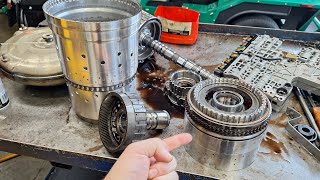
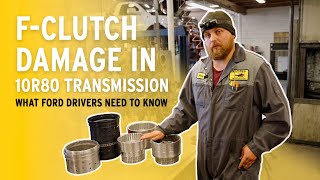
Est. part cost: $200-$500 - Failure of the CDF Clutch Cylinder/Drum 🟡 Medium Probability A common failure point in the 10R80 is a bushing/sleeve in the CDF clutch drum that can walk out of position, blocking fluid passages and causing a hydraulic leak. This leads to various shifting problems and can set multiple codes. Owners on forums have documented this failure, showing pictures of the displaced sleeve.
How to confirm: This failure requires transmission removal and disassembly for visual inspection. The primary evidence is the visible movement of the sleeve within the drum assembly.
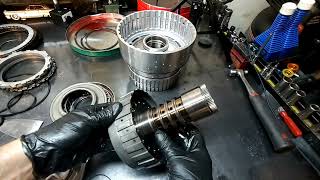
Typical fix: Requires transmission removal and disassembly to replace the CDF drum assembly. Ford has reportedly released updated versions of this part. 🎬 Watch: See exactly how the CDF drum fails internally.
Est. part cost: $400-$700 - Low or Contaminated Transmission Fluid ⚪ Low Probability While not specific to the F-150, low fluid level affects hydraulic pressure and can cause any automatic transmission to malfunction. The 10R80 is particularly sensitive and requires the specific Motorcraft MERCON ULV fluid; using the wrong fluid can cause damage.
How to confirm: Check the transmission fluid level and condition according to the owner's manual procedure. The 10R80 does not have a traditional dipstick, so this must be done from under the vehicle at a specific temperature (96°C to 101°C or 206°F to 215°F).
Typical fix: Perform a transmission fluid service, which includes draining the old fluid, replacing the filter, and refilling with the correct Motorcraft ULV fluid.
Est. part cost: $150-$250
Rare But Worth Checking
- Powertrain Control Module (PCM) or TCM Software Issue: Ford has issued many software updates (re-flashes) to address harsh shifting. Often, a dealer will perform a re-flash as the first step. However, for persistent codes like P2701, it's frequently a precursor to a mechanical or hydraulic repair, as software cannot fix worn hardware.
- Engine Misfire: In rare cases, a severe engine misfire can be misinterpreted by the transmission controls, leading to shift quality complaints and even setting transmission codes. This can lead to a misdiagnosis of the transmission itself.
Diagnosis Steps
- Verify the transmission fluid level and condition. Ensure the correct Ford Motorcraft ULV fluid is used.
- Use a professional scan tool to check for all DTCs in the TCM and PCM. Note any other accompanying codes, as they are critical for diagnosis (e.g., P0757).
- Review live data on the scan tool, monitoring the commanded versus actual apply times for friction element 'B' and other clutches.
- Check for any applicable TSBs from Ford related to the symptoms and codes present. TSBs like 21-2315, 21-2357, and 26-2112 provide very specific diagnostic paths.
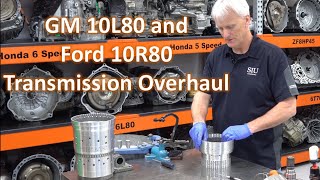
- If TSBs suggest a valve body issue, a technician will remove the transmission pan to inspect and likely overhaul or replace the main control valve body. 🎬 Watch: Professional walkthrough of a full 10R80 transmission overhaul.
- If symptoms point to a specific mechanical failure like the OWC (stuck in 2nd gear), the transmission will need to be removed and disassembled for inspection and repair.
- Inspect the CDF clutch drum for a migrated sleeve if the transmission is disassembled for other repairs, as this is a known point of failure.
Parts You'll Likely Need

- Transmission Main Control Valve Body
(OEM #JL3Z-7A100-B (superseded by other numbers, verify by VIN))— This is the most frequent cause of P2701 and related shifting issues on the 10R80 transmission due to sticking valves. Part numbers are frequently updated; JL3Z-7A100-B, JL3Z-7A100-C, and MB3Z-7A100-B are all listed for this transmission family.
Trusted brands: Motorcraft
OEM price range: $1000-$1500
Aftermarket price range: $800-$1200 - One-Way Clutch (OWC) — A known mechanical failure point specifically cited in TSB 26-2112 as a cause for P2701 when the vehicle cannot shift past second gear. [TSB 26-2112]
Trusted brands: Motorcraft
OEM price range: $200-$500
Aftermarket price range: $150-$400 - CDF Clutch Drum Assembly — The internal sleeve/bushing is prone to migrating, causing hydraulic leaks and severe shifting problems. Ford has released updated versions of this part.
Trusted brands: Motorcraft
OEM price range: $400-$700
Aftermarket price range: $300-$600
Related Codes That Often Appear With This One
- P0757 — Often appears with P2701 when a damaged one-way clutch is the cause, specifically leading to an inability to upshift past 2nd gear. [TSB 26-2112]
- P0729 - P0736 (Gear Ratio Errors) — These codes indicate incorrect gear ratios, which are a direct result of a clutch failing to apply correctly, the root issue behind P2701. Multiple TSBs list these codes together. [TSB 26-2046, TSB 25-2018]
- P2700, P2702, P2703, P2704, P2705 — These are performance codes for the other friction elements (A, C, D, E, F). Seeing multiple friction element codes together strongly suggests a systemic problem like the main valve body or low fluid pressure. [TSB 26-2046, TSB 25-2018]
- P07F7 — This code for 'Unable to Engage Gear 10' has been cited by owners who ultimately required a valve body replacement to fix their shifting issues.
Technical Service Bulletins (TSBs) & Recalls
- TSB 26-2112: Links P2701 and P0757 to a damaged one-way clutch (OWC).
- TSB 21-2315 / TSB 21-2357: Address harsh/delayed shifts across many 10R80 vehicles, often recommending a valve body overhaul.
- TSB 26-2046 / TSB 25-2018: Group P2701 with a large family of other shift performance and gear ratio error codes, pointing to a systemic issue. [TSB 26-2046, TSB 25-2018]
Platform-Specific Known Issues

- CDF Drum Sleeve Migration: A widely discussed failure specific to the 10R80 is the sleeve/bushing inside the C-D-F clutch drum assembly moving out of its bore. This movement partially blocks hydraulic oil passages and damages the sealing rings, causing pressure loss and a wide variety of shift problems. This is a design or manufacturing flaw that requires a full transmission teardown to fix by replacing the drum.
Mechanic-Grade Diagnostic Values
- Shift Solenoid (A-F) Resistance — expected: 5 to 30 ohms is a general rule for many transmission solenoids. A Toyota solenoid is typically 11-15 ohms, while a GM 4L60E is 20-25 ohms. Specific 10R80 values are not widely published, but a reading of infinite (open) or zero (shorted) resistance indicates a failed solenoid coil.. Failure: A reading of 0 ohms (short circuit) or infinite/OL (open circuit).
- Transmission Fluid Temperature for Level Check — expected: 96°C to 101°C (206°F to 215°F). Failure: Checking the fluid level outside this temperature range will result in an inaccurate reading, leading to under- or over-filling.
Scan Tool Commands That Help
- FORScan or Ford IDS: Clear Transmission Adaptive Tables — This service function is used after a transmission repair, fluid change, or to address shift quality complaints. It erases the learned values the TCM has stored for clutch apply times and pressures, forcing it to start a new learning process. This is often the first step a dealer takes to address harsh shifting.
- FORScan: Halt Transmission Adaptive Learning — Some users and mechanics report disabling the adaptive learning process entirely to achieve more consistent and predictable shifts, especially if the learning algorithm is creating undesirable behavior. This is an advanced/unsupported procedure and should be done with caution, as Ford's official stance is that adaptive learning compensates for wear over time.
Wiring & Ground Locations
- Main Transmission Case Connector — The main electrical connector on the 10R80 transmission case, where the internal harness connects to the vehicle harness.. This connector carries all signals for the solenoids and sensors. A loose connection, corrosion, or damaged pins/wires here can cause a wide range of transmission codes, including P2701. Pin A11 supplies power to shift solenoids A-F, while pins B1-B6 provide the ground control from the TCM for each respective solenoid.
- PCM Grounds — On the firewall of the engine bay. There may be one or two ground points depending on the model year and engine.. The PCM (which incorporates the TCM on many modern F-150s) relies on a solid ground connection to function correctly. A poor ground can cause erratic behavior, voltage fluctuations, and incorrect sensor readings, potentially leading to false transmission codes.
- Body/Chassis Ground — A key ground point is located on the frame rail, often on the passenger side. These are susceptible to corrosion.. A corroded main body-to-frame ground can cause a host of seemingly unrelated electrical issues and communication errors between modules, including the PCM/TCM.
Real Owner Repair Stories
- Reddit user on r/f150 (2020 F-150 with 10R80, 102,000 miles) — Started with a hard shift into 3rd when cold, which went away. Then developed a delayed shift into 4th. Eventually, RPMs would shoot up during acceleration, and the gear indicator on the dash would jump around randomly (e.g., 10th to 7th to 1st).
❌ Tried (didn't work) The user suspected a valve body issue initially.
✅ What actually fixed it The dealership diagnosed a bad CDF drum. The quoted repair cost was approximately $6,500. The user was seeking a second opinion, but the symptoms are a classic match for a significant CDF drum failure. - Reddit user on r/f150 (2018 F-150 SCREW Ecoboost, 145,000 miles) — Experienced 'crazy shift problems,' including floating between gears then slamming into another, and the transmission attempting to shift into 1st gear at 80 mph.
❌ Tried (didn't work) Performed a transmission relearn., Replaced the valve body.
✅ What actually fixed it The ultimate cause was a failed CDF drum due to the known issue of a sleeve/bushing migrating and causing a seal to fail. The user found TSB 22-2428 which helped confirm the diagnosis. The fix required transmission disassembly to replace the CDF drum with the third-generation updated part.
OEM Part Supersession History
JL3Z-7A100-B→JL3Z-7A100-D— Likely an internal revision to address issues with sticking valves or solenoid performance.
Heads up: JL3Z-7A100-B is listed for 2018 F-150s, while JL3Z-7A100-C is for column-shift 2018 F-150s, and JL1Z-7A100-A is for electronic-shift Navigators. It is critical to verify the correct part number by VIN, as different vehicle configurations use different valve bodies. Using the wrong part can lead to incorrect shift logic or failure.
Model Year Variations Within This Range
- 2017-2020: Early 10R80 models (2017-2018) were specifically called out in TSBs like 20-2117 for sticking TCC valves in the main control body. These earlier models may also have had more aggressive software calibrations that were later refined to improve shift feel.
- 2022-Present: Ford reportedly fixed the CDF drum issue with an updated part on transmissions built after August 16th, 2022. This means most 2023 and newer model year F-150s should have the improved CDF drum from the factory, making this specific failure less likely.
Helpful Videos
Used OEM Parts in Stock


New Aftermarket Parts Available


The information in this article is provided for general reference and educational purposes only. Vehicle specifications, procedures, and part compatibility can vary by production date, trim level, and region. Always consult your vehicle's factory service manual and verify part numbers before purchasing or performing repairs. Safety-critical components such as airbags, seat belts, and braking systems should be installed by a qualified professional.
- Ford F-150:
- 🎬 Helpful Videos
- 🛍️ Shop This Part
- What's Unique About the 2017-2024 Ford F-150
- Diagnostic Flowchart
- Symptoms You May Notice
- Most Likely Causes
- Rare But Worth Checking
- Diagnosis Steps
- Parts You'll Likely Need
- Related Codes That Often Appear With This One
- Technical Service Bulletins (TSBs) & Recalls
- Platform-Specific Known Issues
- Mechanic-Grade Diagnostic Values
- Scan Tool Commands That Help
- Wiring & Ground Locations
- Real Owner Repair Stories
- OEM Part Supersession History
- Model Year Variations Within This Range
- 🎟️ Get 5% Off