

P2507 on 2014-2025 Ram ProMaster: ECM/PCM Power Input Signal Low Causes and Fixes
On a 2014-2025 Ram ProMaster, code P2507 is almost always caused by a weak or failing battery, or corroded battery terminals. The battery is located under the driver's side floor, so start by testing it and cleaning the terminals before suspecting other issues. This code indicates the PCM's power supply dropped below a critical threshold (e.g., under 9 volts), causing stalling and erratic behavior.
- P2507 on a ProMaster means the engine computer's voltage is too low.
- The most likely cause is a weak or dying battery, followed by corroded battery terminals.
- Always start your diagnosis by load-testing the battery and cleaning the terminals before replacing any other parts.
- Do not drive the vehicle with this code, as it can stall without warning.
- The PCM is rarely the cause of the problem; do not replace it unless all other power supply issues have been ruled out.
What's Unique About the 2014-2025 Ram ProMaster
The Ram ProMaster is based on the Fiat Ducato and has some unique electrical characteristics. The main battery is located in a compartment under the driver's side floorboard, which can make it easy to overlook during routine checks. This location can also make the terminals more susceptible to corrosion if moisture finds its way in. ProMaster owners report that when battery voltage gets low, the vehicle's computers can 'go nuts', leading to a variety of electrical gremlins, including this P2507 code. The engine may still crank slowly, but there won't be enough voltage to properly run the computers, leading to a crank-no-start situation.
Symptoms You May Notice
- Check Engine Light is on
- Engine stalls intermittently or while driving
- Vehicle will not start, may hear a clicking sound
- Slow or hesitant engine cranking
- Flickering dashboard lights or gauges
- Loss of power while accelerating
- Multiple other warning lights may appear simultaneously (ABS, Traction Control)
- Slow or non-responsive power accessories (wipers, blower fan)
- Replacing the PCM first. The PCM is rarely the root cause. The problem is almost always in the power supply *to* the PCM, not the PCM itself.
Most Likely Causes
- Weak or Failing Battery 🔴 High Probability The battery is the primary source of power. ProMasters used for commercial duty often have high electrical loads from accessories and frequent start/stop cycles, which can shorten battery life. Modern vehicles are hard on batteries, and owners report replacement is often needed every 3-5 years. A battery that tests fine at rest may still drop voltage significantly under load, triggering the code.
How to confirm: Use a multimeter to test the battery voltage at rest (should be ~12.4-12.6V). Then, have a load test performed at an auto parts store. A healthy battery should also show ~13.5-14.5V when the engine is running, which also tests the alternator. A cranking voltage that drops below 9.0-10.0V is a strong indicator of a bad battery.
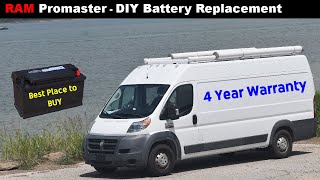
Typical fix: Replace the battery. An AGM (Absorbent Glass Mat) battery, group size H8 is a common size, is often recommended as an upgrade over the factory EFB (Enhanced Flooded Battery) for better durability.
Est. part cost: $180-$400 - Corroded or Loose Battery Terminals/Grounds 🟡 Medium Probability The battery's location under the floor can make terminals hard to see and clean, allowing corrosion to build up. A poor ground connection between the engine, chassis, and battery negative terminal is a common cause of voltage drop to the PCM. The main engine-to-chassis ground strap is a braided cable that connects the transmission to the frame rail 🎬 See this guide on locating and inspecting the ground strap and can be a source of issues.
How to confirm: Visually inspect the battery terminals, cable ends, and the main chassis ground strap for corrosion (white or greenish powder) or looseness. Clean any corrosion with a wire brush and baking soda solution. Perform a voltage drop test on the ground circuit; more than 0.2-0.5V drop indicates a problem. A temporary ground can be made with a jumper cable from the engine block to the chassis ground stud to see if the problem resolves.
Typical fix: Clean terminals and cable ends thoroughly. Tighten all connections. Replace corroded cable ends if necessary.
Est. part cost: $5-$50 - Failing Alternator ⚪ Low Probability The alternator recharges the battery while the engine is running. If it fails, the battery will drain, causing system voltage to drop and triggering the P2507 code. The idler pulleys on the serpentine belt are a known failure point on ProMasters, and when they seize, they can put extra strain on the alternator bearing, leading to premature failure.
How to confirm: With the engine running, test the voltage at the battery terminals. If the voltage is below 13.2V or not increasing from the resting voltage, the alternator is likely not charging properly. 🎬 Watch: Basic diagnosis for ProMaster charging and alternator issues A squealing noise from the engine bay that changes with RPM can also indicate a failing alternator or belt component.
Typical fix: Replace the alternator. It is often recommended to replace the idler pulleys and serpentine belt at the same time.
Est. part cost: $250-$600
Rare But Worth Checking
- Faulty PCM Power Relay: The relay that supplies power to the PCM can fail. Before condemning the expensive PCM, swapping this inexpensive relay with a similar one from the fuse box (e.g., horn relay) is a quick and easy diagnostic step. A relay with high internal resistance can cause a voltage drop even if it still 'clicks'.
- Damaged Wiring: A wire in the harness providing power to the PCM could be chafed, broken, or corroded, causing a voltage drop. This requires more in-depth diagnostics, including checking for voltage at the PCM connector itself and performing a voltage drop test on the power feed wire.
- Faulty Powertrain Control Module (PCM): This is the least likely cause. The PCM itself can fail internally, but all other possibilities like the battery, alternator, and wiring should be exhaustively ruled out first before replacing the expensive computer. A safety recall (U87 / 18V-524) was issued for some 2018 ProMaster models for a faulty voltage regulator chip inside the PCM that could cause stalling, which could present as a P2507.
- Faulty Totally Integrated Power Module (TIPM): The TIPM, which is the main fuse and relay box in the engine compartment, can fail internally. It controls power distribution to many components, including the PCM power relay. An internal fault in the TIPM could cause a voltage drop to the PCM circuit. This is an uncommon but possible cause of electrical issues.
Diagnosis Steps
- Check for other codes. Scan the vehicle for any other trouble codes that may provide more context, especially P0562 (System Voltage Low).
- Test the Battery. Use a multimeter to check the battery's resting voltage. It should be at least 12.4V. Get the battery professionally load-tested to confirm its health. Check the voltage while cranking; it should not drop below 9.5V.
- Inspect Battery Terminals and Grounds. Access the battery under the driver's floor. Thoroughly inspect and clean the battery terminals, cable ends, and the main chassis ground strap. Ensure all connections are tight.
- Test the Alternator. With the engine running, check the voltage at the battery terminals. It should be between 13.5V and 14.5V. If it's low, the alternator may be faulty. Listen for any squealing noises from the belt area.
- Check Fuses and Relays. Locate the fuse box (TIPM) in the engine compartment. Inspect the fuses and relay related to the PCM (often labeled 'ECM' or similar). You can swap the PCM relay with an identical one for a non-critical system (like the horn) to see if the problem resolves.
- Perform a Voltage Drop Test. If the above steps don't reveal the issue, a voltage drop test on the PCM power and ground circuits is essential. This can pinpoint high resistance in the wiring or a bad relay that isn't visually apparent. A drop of more than 0.5 volts between the battery and the PCM connector indicates a problem.
- Suspect the PCM. Only after confirming that the battery, alternator, and all wiring/connections to the PCM are good should you consider the PCM itself as the point of failure. Check for applicable recalls like U87 for 2018 models.
Parts You'll Likely Need
- AGM Battery (Group Size H6/H7/H8)
(OEM #BBH9A001AA (replaces bbah9850aa, bbah9950aa))— This is the most common cause of P2507. The original battery may be at the end of its service life, especially in a commercial van with high electrical demands. Upgrading to an AGM battery is recommended.
Trusted brands: Mopar, Interstate, DieHard, Duralast
OEM price range: $250-$450
Aftermarket price range: $180-$350 - Alternator (180 Amp or 220 Amp)
(OEM #68261783AA, 4727603AA, 56029732AB)— If the alternator fails, it cannot recharge the battery, leading to a system-wide voltage drop that triggers this code. ProMasters come with different amperage alternators (180A, 220A), so confirm which one your van requires.
Trusted brands: Mopar, Bosch, Denso, Carquest
OEM price range: $500-$800
Aftermarket price range: $250-$600 - Battery Terminal Connectors — Corrosion can destroy the terminals, creating high resistance. Replacing them is a cheap and effective fix for a bad connection.
Trusted brands: Standard Motor Products, Dorman
OEM price range: $20-$50
Aftermarket price range: $10-$30
Related Codes That Often Appear With This One
- P0562 — P0562 indicates 'System Voltage Low'. If the entire vehicle's electrical system has low voltage due to a bad battery or alternator, you will likely see both codes. P2507 is more specific to the PCM's power feed, but they often appear together.
- U0401 — 'Invalid Data Received From ECM/PCM'. When the PCM has low voltage, it can send corrupt data or stop communicating entirely with other modules on the CAN bus, leading to communication codes.
Technical Service Bulletins (TSBs) & Recalls
- TSB S1121000006RevA - Addresses a 'No Start No Crank' condition where the starter won't engage, which can be related to the underlying electrical issues that cause P2507.
- TSB 18-098-22 - Involves reprogramming the PCM with updated software to address potential MIL illumination for various codes. While not a direct fix for a voltage supply issue, ensuring the PCM is updated is a good practice once the primary electrical fault is repaired.
Platform-Specific Known Issues
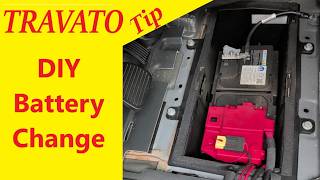
- Battery Access and Jump Start Points: The battery is located under the driver's side floor mat, secured by a panel with several turn-knobs. For jump-starting, dedicated positive and negative posts are provided in the engine bay to avoid having to access the battery directly. The positive post is under a red plastic cover, and the negative post is a designated metal stud on the chassis.
Mechanic-Grade Diagnostic Values
- PCM Power Input Voltage (Key On, Engine Off) — expected: Should be within ~0.2–0.5 V of battery voltage.. Failure: A drop greater than 0.5V indicates high resistance in the power feed circuit.
- System Voltage While Cranking — expected: Should remain above 9.0V - 10.0V.. Failure: Sustained voltage below 9.0V during cranking points to a weak battery or bad connection.
- Charging System Voltage (Engine Running at 1500 RPM) — expected: 13.5V - 14.5V.. Failure: Voltage below 13.2V indicates a charging system problem (likely alternator); voltage above 15.5V indicates an overcharging condition.
- PCM Ground Circuit Resistance — expected: Less than 1 ohm.. Failure: Greater than 1 ohm indicates a poor ground connection.
Scan Tool Commands That Help
- wiTECH: Proxy Configuration Alignment — This routine, found under the 'Vehicle Preparations' tab, should be performed after replacing a major module like the BCM or PCM to ensure all modules on the network recognize each other correctly.
- wiTECH: Reprogram PCM — Used to flash the PCM with the latest software. This may be required to fix software-related glitches or as part of a recall procedure, such as recall U87 for 2018 models. A stable battery voltage (13.2V-13.5V) must be maintained with a charger during this process.
Wiring & Ground Locations
- Main Engine Ground Strap — A braided strap that connects the transmission case to a bolt on the top of the driver's side transmission mount, near the frame rail. It can be accessed from below or by removing the driver's side headlight.. A poor connection at this primary ground point can cause a voltage potential difference between the engine/PCM and the chassis, leading to a variety of electrical issues, including low voltage detection at the PCM.
- PCM Fused B(+) Input — On a generic 96-pin PCM connector for Ram trucks, the Fused B(+) is often on Pin 96, a red wire. This requires a specific wiring diagram for the ProMaster to confirm.. This is the main power feed to the PCM. A voltage drop test should be performed between the battery positive post and this pin to check for resistance in the wiring, fuses, or relays.
- PCM Ground — On a generic 96-pin PCM connector, a sensor ground may be at Pin 42 (Brown/White wire). Multiple ground pins exist. A specific ProMaster wiring diagram is needed for exact pin locations.. A voltage drop test between the battery negative post and the PCM ground pins is critical. High resistance on the ground side is a common cause of electrical module problems.
- Totally Integrated Power Module (TIPM) / Underhood Fuse Box — In the engine compartment on the driver's side. It is a black box that houses fuses and relays.. This module contains the fuses and the power relay that supply voltage to the PCM. A fault inside this box can directly cause the P2507 code.
Real Owner Repair Stories
- Reddit user in r/promaster (Ram ProMaster, year not specified) — Gauges flicker wildly when the key is turned on, starter does not click or engage. The user had already replaced the battery three times.
❌ Tried (didn't work) Replacing the battery (3 times)
✅ What actually fixed it Another user with identical symptoms reported that replacing the 7-year-old battery with a new one from Costco fixed the issue completely, suggesting the previous replacement batteries may have been faulty or incorrect. - Van life Forum user (2014 Dodge Ram Promaster 2500 3.0L Diesel) — Vehicle broke down and would not restart, particularly after it had rained. Jiggling wires and resetting the battery sometimes temporarily fixed it.
❌ Tried (didn't work) Jiggling wires, Resetting the battery by disconnecting it
✅ What actually fixed it An alternator specialist diagnosed a bad alternator, which was believed to have been damaged by previous electrical issues with the Body Control Module (BCM). The ultimate fix was replacing the hard-to-find 220-amp alternator.
OEM Part Supersession History
bbah9850aa, bbah9950aa→BBH9A001AA— Standard part evolution and consolidation for Mopar batteries.
Model Year Variations Within This Range
- 2018: Some 2018 ProMaster models were subject to Safety Recall U87 (NHTSA 18V-524) for a faulty voltage regulator chip inside the Powertrain Control Module (PCM), which could cause stalling or a no-start condition. The remedy is PCM replacement.
Diagnostic Flowchart
Other Known Issues on This Vehicle
Issues unrelated to this code that are worth knowing about as an owner of this generation:
- 62TE Transmission Failure 🔴 High — Common, especially in heavily loaded commercial vans. The transmission is considered undersized for the vehicle's weight, leading to premature torque converter or clutch failure. (Ref: Recall 44A (NHTSA 23V-338) for 2019-2021 models addresses an issue where debris can prevent the park pawl from engaging, leading to rollaway risk.)
- Leaking Oil Filter Housing / Oil Cooler 🔴 High — Very common across all 3.6L Pentastar engines. The original plastic housing cracks from heat cycles, causing significant oil leaks onto the engine and transmission.
- Sliding Door Mechanism Failure 🟠 Medium — Widespread issue. The cables, handles, rollers, and locking mechanisms are all common failure points, causing the door to get stuck shut or not latch properly.
- Radiator Cooling Fan Fire Risk 🔴 High — Affects a large number of 2018-2026 models, particularly fleet vehicles. Premature bearing wear in the fan motor can cause an electrical short. (Ref: Recall 67C (NHTSA campaign not yet listed as of late 2025) for overheating radiator fan modules.)
- Cracked Coolant Reservoir 🟠 Medium — The plastic coolant overflow tank is prone to cracking over time, leading to coolant loss and potential overheating.
- Premature Idler Pulley and Alternator Failure 🟠 Medium — Idler pulleys for the serpentine belt are known to seize, which puts excessive strain on the alternator and can cause it to fail prematurely. Often presents as a squealing noise.
Used vs. New Parts: Buying Guide for This Vehicle
When a used part is the smart pick: For this code, used parts are generally not recommended for the primary failure items. However, obtaining specific connectors, pigtails, or sections of wiring harness from a salvage yard is a very smart choice if a wiring issue is identified. A used TIPM (fuse box) could be considered, but it must be an exact part number match.
Donor-vehicle mileage cap: roughly under 80000 miles for the part to have meaningful remaining life.
What to inspect on the donor part:
- For wiring/connectors: Ensure there is no visible corrosion, melting, or previous repair attempts (e.g., tape, butt connectors).
- For a TIPM: Check for any signs of water intrusion or corrosion on the exterior and within the connector ports. Avoid units from vehicles with obvious flood damage.
OEM-only on this vehicle (don't cheap out):
- Powertrain Control Module (PCM): While remanufactured units exist, an OEM module from the dealer is the safest bet to ensure correct software and compatibility, especially considering potential security programming.
Aftermarket brands forum-validated for this vehicle:
- Battery: Interstate, DieHard, Duralast (AGM models)
- Alternator: Denso (often the OEM supplier), Bosch (remanufactured)
Brands owners have reported issues with on this vehicle:
- Ultra-cheap, no-name alternators and batteries from online marketplaces often have high failure rates and may not meet the vehicle's electrical demands.
Real Owner Stories
Aggregated from forums and TSBs cited above. Mileages and costs reflect what owners reported in those sources.
2014-2025 Ram ProMaster
Symptoms: The van was experiencing stalling, no-start conditions, and random warning lights would appear on the dashboard.
What fixed it: Replacing the original battery with a new, high-quality AGM battery resolved all the seemingly unrelated electronic problems.
Source hint: promasterforum.com
2014-2025 Ram ProMaster
Symptoms: The computers seemed to 'go nuts' with widespread electrical issues, including strange gauge cluster behavior and a no-start condition.
What fixed it: The issues were resolved by replacing the weak battery.
Source hint: Reddit r/promaster
Related OBD-II Codes
Frequently Asked Questions
Where is the battery located on my Ram ProMaster?
How can I jump-start my ProMaster without accessing the battery under the floor?
I need to replace the battery. Is there a recommended upgrade for the ProMaster?
My van won't start or crank. Is there a Technical Service Bulletin (TSB) for this issue?
Besides the battery terminals, what is another common ground connection I should check for corrosion?
Are there any specific recalls for the 2018 ProMaster that might be related to the PCM?
Helpful Videos


We Have This Part in Stock



The information in this article is provided for general reference and educational purposes only. Vehicle specifications, procedures, and part compatibility can vary by production date, trim level, and region. Always consult your vehicle's factory service manual and verify part numbers before purchasing or performing repairs. Safety-critical components such as airbags, seat belts, and braking systems should be installed by a qualified professional.
- Ram ProMaster:
- 🎬 Helpful Videos
- 🛍️ Shop This Part
- What's Unique About the 2014-2025 Ram ProMaster
- Symptoms You May Notice
- Most Likely Causes
- Rare But Worth Checking
- Diagnosis Steps
- Parts You'll Likely Need
- Related Codes That Often Appear With This One
- Technical Service Bulletins (TSBs) & Recalls
- Platform-Specific Known Issues
- Mechanic-Grade Diagnostic Values
- Scan Tool Commands That Help
- Wiring & Ground Locations
- Real Owner Repair Stories
- OEM Part Supersession History
- Model Year Variations Within This Range
- Diagnostic Flowchart
- Other Known Issues on This Vehicle
- Used vs. New Parts: Buying Guide for This Vehicle
- Real Owner Stories
- 2014-2025 Ram ProMaster
- 2014-2025 Ram ProMaster
- Related OBD-II Codes
- Frequently Asked Questions
- 🎟️ Get 5% Off