

OBD-II Code C0077: Low Tire Pressure
What C0077 means, why it triggers, and how to fix it
- Check all tires with a digital gauge immediately; C0077 triggers when pressure drops 25% below the door jamb sticker's recommendation.
- A solid TPMS light means low pressure, but a light that flashes for 60 to 90 seconds on startup indicates a dead sensor battery (which typically lasts 5 to 10 years).
- Always check the full-size spare tire; models from Toyota, Lexus, and Hyundai monitor the spare, making it the most overlooked cause of a persistent C0077 code.
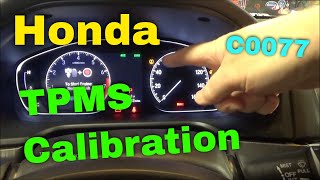
- Perform a manual TPMS calibration via the dashboard menu after adding air to vehicles like Honda, VW, and BMW, as the light will not turn off automatically.
- Expect to pay $100 to $250 per wheel at a tire shop to replace a faulty sensor, as the job requires a tire machine and a specialized TPMS programming tool.
What Does C0077 Mean?

Code C0077 means the Tire Pressure Monitoring System (TPMS) detected that one or more tires are significantly below the recommended air pressure.
Technical definition: The SAE/OBD-II definition is "Low Tire Pressure (Subfault)." This indicates a tire's pressure has fallen to or below the vehicle's programmed warning threshold, typically 25% below the recommended cold pressure.
Can I Drive With C0077?
Yes, But With Caution. Yes, but drive directly to a safe place or repair shop at low speeds. A severely underinflated tire causes poor handling, reduces fuel economy by 0.2% per 1 PSI drop, and risks a blowout from heat buildup. Prolonged driving on a flat tire destroys the wheel and suspension, adding over $1,500 to repair costs.
Common Causes

- Actual Low Tire Pressure (Very Common) — The most frequent cause. Punctures, leaky valve stems, corroded rims, or natural pressure loss trigger this. A 10°F drop in outside temperature decreases tire pressure by 1 PSI, often enough to trip the sensor.
- Low Pressure in Spare Tire (Common) — Many Toyota, Lexus, and Hyundai models monitor the full-size spare. If the spare loses pressure, it triggers C0077 even if the four main tires are perfectly inflated.
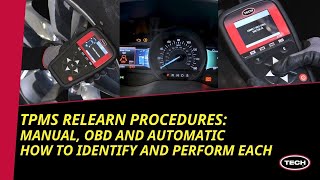
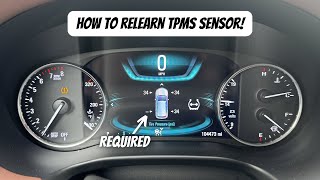
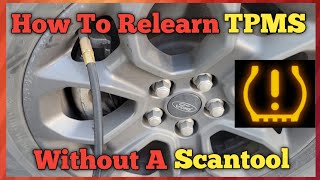
- TPMS Needs Relearn/Calibration (Common) — After a tire rotation, sensor replacement, or pressure adjustment, the system requires a 'relearn' to establish the new baseline. Skipping this step causes persistent errors. 🎬 Watch: A mechanic explains manual, OBD, and automatic relearn procedures.
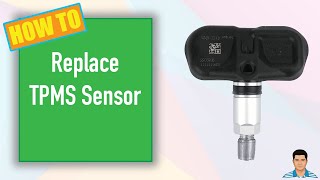
- Faulty TPMS Sensor (Common) — Each wheel sensor contains a non-replaceable battery lasting 5 to 10 years. A dead battery or physical damage from potholes causes the sensor to send false, intermittent, or zero signals.
- Aftermarket Wheels or Incorrect Sensors (Less Common) — Installing wheels without compatible TPMS sensors, or using the wrong frequency (e.g., 315 MHz vs 433 MHz), causes immediate system failure.
- TPMS Control Module Failure (Less Common) — The central receiver module fails due to internal corruption, wiring damage, or water intrusion (common on BMWs), causing a total loss of communication.
- Faulty Ambient Air Temperature Sensor (Rare) — Indirect TPMS systems (like Honda) use ambient temperature for pressure calculations. A failed sensor reporting -40°F tricks the system into assuming a pressure drop.
- Radio Frequency (RF) Interference (Rare) — Cheap aftermarket electronics (like USB chargers or dashcams) emit RF noise that blocks the 315 MHz or 433 MHz signals between the wheel sensors and the control module.
Symptoms

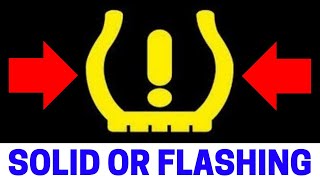
- Solid TPMS Warning Light — A solid, illuminated tire-shaped warning light with an exclamation point inside indicates active low pressure in one or more tires.
- Flashing TPMS Warning Light — A light that flashes for 60-90 seconds on startup and then stays solid signals a system malfunction 🎬 Watch: Understanding the difference between a solid and flashing TPMS light., such as a dead sensor battery or communication fault.
- Dashboard Message — Text messages like “Low Tire Pressure” or a graphic indicating the specific low tire appear on the vehicle information screen.
- Visibly Deflated Tire — One or more tires are visibly low on air or completely flat.
- Disabled Stability/Traction Control — A persistent TPMS fault disables Electronic Stability Control (ESC) or Traction Control Systems (TCS) on certain vehicles.
Diagnostic Flowchart

Tap your situation to follow the diagnostic path that matches what you're seeing on this code.
Common Fixes & Costs
- Inflate Tire(s) to Correct Pressure — Parts: $0, Labor: $0-$5, ~0.1 hr book time (DIY)
- TPMS System Relearn Procedure — Parts: $0, Labor: $0-$50, ~0.3 hr book time (DIY)
- Replace One TPMS Sensor — Parts: $40-$100, Labor: $60-$150, ~0.8 hr book time (Professional)
- Repairing Module Wiring or Connectors — Parts: $5-$20, Labor: $100-$200, ~1.5 hr book time (Professional)
- Replace TPMS Control Module — Parts: $250-$800, Labor: $100-$250, ~1 hr book time (Professional)
Used vs. New Parts: Buying Guide
When a used part is worth it: Buying a used TPMS sensor is never recommended. The primary failure mode is the non-serviceable internal battery, which has a finite lifespan of 5-10 years. A used sensor has an unknown remaining battery life and will likely fail shortly after you pay for installation labor.
Donor-vehicle mileage cap: roughly under 20000 miles for the part to have meaningful remaining life.
Donor quality checklist:
- If considering used, only take one from a very low-mileage late-model vehicle that was wrecked.
- Avoid sensors from older vehicles or those with unknown history.
- Match the part number exactly, as compatibility is critical.
Decision logic:
- If The cost of a new sensor is less than the labor cost to install it → always buy new. The risk of a used part failing and requiring you to pay for labor a second time is too high.
- If You are replacing tires on a vehicle over 7 years old → buy new sensors. The original sensors are near the end of their battery life, and replacing them with the tires saves on future labor costs.
- If Budget is the absolute primary concern → a high-quality aftermarket new sensor is a much better value than a used OEM sensor.
Warranty tradeoff: Used parts: Rarely have a warranty, sold 'as-is'. Aftermarket new: Typically 1-2 year warranty. OEM new: 1-year warranty is common.
Worst-case if a used part fails: $75-$150 if a used or cheap aftermarket sensor fails or is incompatible, requiring repeat labor to dismount the tire and replace it again.
What Happens If You Wait — Timeline
- 0-1 month: TPMS light is on. Tire is underinflated by 25%. Increased rolling resistance begins. Outer shoulders of the tire start to wear slightly faster. (MPG impact: 1-3%% · Added cost: $5-$25 in wasted fuel.)
- 1-4 months: Noticeable uneven tread wear on the underinflated tire. The tire's internal structure is weakened by excessive heat buildup from sidewall flex, increasing blowout risk. (MPG impact: 3-5%% · Added cost: $200-$400 for premature replacement of one tire due to uneven wear.)
- 4-8 months: Severe 'feathering' or 'scalloping' on the tire tread. Handling and braking performance are compromised, especially in wet conditions. The risk of a heat-induced blowout is now significant. (MPG impact: 5-8%% · Added cost: $400-$800 if two tires on the same axle require replacement to maintain matched tread depth.)
- Catastrophic Failure: Tire blowout occurs, leading to a potential loss of vehicle control. Driving on the flat tire, even for a short distance, destroys the wheel rim. (MPG impact: 100% (vehicle is disabled)% · Added cost: $500-$1500+ for a new tire, new wheel, towing, and potential suspension or body damage from the blowout.)
Cost of Not Fixing It
- 0-1 month: Reduced fuel economy by up to 3% and the beginning of uneven tread wear on the shoulders of the underinflated tire. (Added cost: $10-$30 (in wasted fuel))
- 1-6 months: Accelerated and uneven tire wear, potentially reducing the tire's lifespan by 25% or more. Increased risk of a blowout due to excessive heat buildup from sidewall flex. (Added cost: $200-$400 (for premature replacement of one tire))
- 6+ months / Catastrophic Failure: A tire blowout leading to loss of vehicle control and a potential accident. Driving on a completely flat tire destroys the wheel rim, requiring costly replacement. (Added cost: $500-$1500+ (for wheel replacement and towing, excluding accident damage))
Diagnosis Steps
- Check Pressure with a Quality Gauge
Use a reliable digital gauge to check all four tires and the spare when cold. Compare readings to the driver's door jamb sticker, not the tire sidewall maximum.
Tools: Digital tire pressure gauge (Beginner) - Inflate Tires and Perform System Relearn
Fill low tires to the correct pressure. For Honda, VW, and BMW, manually initiate a TPMS calibration through the infotainment menu. For others, drive above 15 mph for 10 minutes to auto-reset.
Tools: Air compressor (Beginner) - Scan for Specific TPMS Codes
If the light remains on, use a TPMS-capable OBD-II scanner. Generic readers only show C0077, but a TPMS tool reveals which specific sensor has a low battery or if a U0121 module communication code exists.
Tools: TPMS-capable OBD-II Scanner (Intermediate) - Test Sensor Signals with an Activation Tool
Use a TPMS activation tool to 'ping' each wheel sensor. This confirms signal transmission and reads internal battery level, temperature, and pressure. Replace non-responsive sensors.
Tools: TPMS activation/diagnostic tool (Intermediate) - Perform a 'Deflate Test' to Isolate a Lying Sensor
With the scan tool displaying live data, deflate one tire by 10 PSI. The tool must show a corresponding pressure drop. If it doesn't, that sensor is faulty.
Tools: TPMS scan tool, Air compressor, Tire pressure gauge (Intermediate) - Analyze TPMS Live Data PIDs
Access the live data stream for the TPMS module. Monitor 'Tire Pressure Sensor Battery Status', 'Sensor ID', and 'Tire Pressure'. A sensor with a 'Low' battery status requires replacement.
Tools: TPMS-capable OBD-II Scanner with Live Data (Advanced) - Perform a Voltage Drop Test on the TPMS Module Harness
For persistent communication issues, check for high resistance. Connect a multimeter to the battery and the module's power/ground pins. Readings above 0.1 volts indicate excessive resistance requiring wiring repair.
Tools: Digital multimeter, Vehicle service manual (for wiring diagram) (Advanced) - Check for RF Interference with an Oscilloscope
Connect an oscilloscope to the receiver's antenna input. Look for clean data packets at 315 or 433 MHz. Garbled signals indicate RF interference from another onboard electronic device.
Tools: Oscilloscope, Vehicle service manual (Advanced)
When This Code Triggers (Freeze-Frame Conditions)
- Vehicle Speed: 25-65 mph (The code sets after a period of steady driving, allowing the TPMS module to receive and validate signals from the wheel sensors.)
- Tire Pressure Reading (from sensor): <75% of Recommended PSI (A sensor reports a pressure value below the vehicle's programmed threshold.)
- Tire Temperature (from sensor): Varies (e.g., 40-120°F) (A sudden drop in ambient temperature causes pressure to fall and triggers the code, reflected in the sensor's temperature data.)
- Sensor Battery Status: OK / Low (Intermittent low-pressure readings occur as a sensor battery begins to fail, captured in freeze frame data.)
Related Codes
- C1501, C1502, C1503, C1504 — These codes point to an internal failure of a specific sensor (1, 2, 3, or 4). They appear with C0077 when a sensor's battery dies. C0077 indicates low pressure, while a C150x code indicates the sensor itself is broken.
- C0078 — This means 'Tire Diameter Mismatch' and triggers on vehicles with indirect TPMS (like Honda). If one tire is a different size or significantly underinflated, it rotates at a different speed, triggering C0078 alongside C0077.
- C151C — This code for 'Tire Pressure Monitoring (TPM) Sensor Missing' sets if the main control module cannot detect a signal from a sensor. C151C means the sensor is physically missing, completely dead, or the wrong type.
- U0121 — This means 'Lost Communication With Anti-Lock Braking System (ABS) Module'. If the ABS module (which often integrates TPMS) fails on the CAN bus network, it stops reporting tire pressure data, triggering C0077 and U0121.
Climate & Environmental Factors
- Cold Temperatures: The most significant environmental factor. Air is denser in the cold, causing tire pressure to drop by approximately 1 PSI for every 10°F (5.6°C) decrease in ambient temperature. A sudden cold snap is a very common reason for the TPMS light to illuminate.
- High Altitude: As altitude increases, atmospheric pressure decreases. Driving from a low to a high altitude causes the gauge pressure to read higher, by about 2-3 PSI at 5,000 feet. Conversely, driving from high altitude to sea level causes a drop in measured pressure, potentially triggering a warning.
- High Humidity/Water: Water ingress is a major problem. On BMWs, the TPMS receiver module (RDC) is often located in a wheel well and is susceptible to water damage from rain or car washes. Corrosion on the sensor's valve stem, exacerbated by road salt and moisture, causes air leaks and sensor damage.
How to Talk to a Mechanic About This Code
Say this: "I have a TPMS warning light on my dashboard. It is [select one: 'solid' or 'flashing on startup, then solid']. I've already checked the pressure in the four main tires and they are set to the door jamb sticker. I need a diagnostic to determine if it's a bad sensor, a problem with the spare, or a system fault."
This tells the shop you've done the basic checks and are not an easy mark for a simple 'inflate tires' charge. Specifying the light's behavior immediately points them toward either a pressure issue or a system fault, saving diagnostic time.
Avoid saying:
- 'My tire light is on, can you fix it?' (Too vague, invites a shop to charge for steps you've already taken.)
- 'Just replace all the sensors.' (Don't suggest a repair. Let them diagnose the problem first; it could be a free relearn procedure.)
Questions to ask before authorizing the repair:
- If you're recommending a sensor replacement, can you confirm it failed a battery or signal test with your TPMS tool?
- Does the quoted price for sensor replacement include dismounting the tire, mounting, balancing, and the system relearn procedure?
- Have you checked the pressure in the spare tire? (Crucial for Toyota, Lexus, Hyundai)
- If the light was solid and pressures were okay, did you try performing the vehicle's manual relearn/calibration procedure first? (Crucial for Honda, VW, BMW)
Where to Take It: Dealer vs Independent vs Chain
- Dealer:
Recommended only for complex cases or warranty work. Overkill for a standard sensor replacement.
Best for: Vehicles under warranty., Complex, manufacturer-specific issues (e.g., TPMS module failure, especially on German brands)., When other shops have failed to fix the problem.
Downsides: Highest labor rates and parts costs., Recommends expensive OEM-only solutions when high-quality aftermarket options exist. (Typical cost: +50% vs. baseline) - Independent Shop:
A good choice if they have modern TPMS diagnostic equipment. Ask if they can test sensor batteries and perform relearn procedures.
Best for: Out-of-warranty vehicles where you have a trusted mechanic., Diagnosing system faults that go beyond a simple sensor (e.g., wiring issues).
Downsides: Quality and TPMS-specific tool capabilities vary widely., May not have the latest TPMS tools for all makes/models. (Typical cost: +0% vs. baseline)
When to Walk Away From the Repair
If the total estimated repair cost for the TPMS system exceeds 25% of your car's private-party value, pause and get a second opinion. Since C0077 is a safety-related and inspection-critical issue, it's rarely a 'walk away' problem unless the cost is exceptionally high.
- Car worth $5000, fix is $250: Fix it. This is a standard repair cost for a single sensor and is crucial for safety and passing inspection.
- Car worth $3000, fix is $1200: Walk away. A quote this high (likely for a module, wiring, and all sensors) is 40% of the car's value. Get a second opinion from an independent or tire shop before proceeding.
What Scan Tool You Need for This Code

Minimum: A scanner with dedicated TPMS functions. It must be able to read sensor IDs, pressure, temperature, and battery status from the TPMS module.
A standard $20 OBD-II code reader only shows the C0077 code, giving you no information about which tire is the problem or if it's a sensor fault vs. actual low pressure. It is useless for diagnosing a flashing TPMS light.
Budget: BlueDriver Pro Scan Tool (~$99) — Reads and clears TPMS codes on popular makes and provides live data for sensor status. It guides you through manual reset procedures but cannot program or activate new sensors.
Mid-range: Autel MaxiTPMS TS508WF (~$250) — A dedicated TPMS tool. It activates and reads data from all sensors, reads/clears TPMS codes, performs OBD-II relearn procedures, and programs new Autel MX-Sensors.
Professional: Autel MaxiCOM MK900-TS (~$750) — An all-in-one diagnostic tablet combining full-system, bidirectional OBD-II scanning with professional-level TPMS functions. It diagnoses the TPMS module, checks wiring, activates sensors, and programs virtually any sensor on the market.
Rent vs buy: For a one-time fix, pay a tire shop the ~$50 diagnostic fee. Major auto parts stores do NOT rent out the specialized TPMS tools needed for diagnosis. Buy a tool only if you manage multiple cars or plan to do your own tire rotations and sensor replacements.
How to Clear the Code After You Fix It
- Correct the root cause (e.g., inflate tire, replace sensor).
- Use an OBD-II scan tool to clear the C0077 code from the relevant module (ABS, BCM, or TPMS).
- Perform the vehicle-specific TPMS relearn or calibration procedure.
- Complete the required drive cycle to allow the system to verify the repair.
Drive cycle (~20 minutes): After inflating tires and initiating calibration, drive the vehicle for 10-20 minutes at a steady speed between 30 and 60 mph. This allows the system to recognize the sensors and confirm stable pressures. The light turns off during this drive or upon the next engine restart.
Readiness monitors affected: This code does not directly affect emissions readiness monitors like the Catalyst or O2 sensor monitors.
Watch out for:
- Clearing the code with a scanner without fixing the low pressure causes the code to return immediately.
- Forgetting to perform the manual TPMS calibration step on vehicles that require it (e.g., Honda, VW) leaves the light on after adding air.
- Disconnecting the battery erases important module memory and is not the recommended procedure for clearing a TPMS light.
Will This Fail Emissions / State Inspection?
No — by itself this code doesn't fail OBD inspection (but it can keep readiness monitors from setting, which causes a separate fail).
- Nationwide (USA): TPMS is a federally mandated safety system. An illuminated TPMS warning light causes a vehicle to fail the safety inspection portion in most states that have one.
- California: An illuminated TPMS warning light is a cause for failure of the state's safety inspection.
- New York: A functioning TPMS is required. An illuminated warning light causes the vehicle to fail the annual safety inspection.
- Texas: The TPMS warning light is NOT currently an item that causes a failure on the Texas state safety inspection. The inspection checks tire condition but not the warning light itself.
Most Commonly Affected Vehicles
- Honda Accord, CR-V, Civic, Fit (2008-2022) — Many models from 2013-on use an 'indirect' TPMS that requires a specific calibration procedure via the infotainment screen after inflating tires. Failure to calibrate is a very common cause of C0077. TSBs 14-073 and 17-005 address software updates to prevent false warnings.
- Toyota/Lexus RAV4, Highlander, Camry, Corolla, Tacoma, RX (2007-Present) — These vehicles frequently have a TPMS sensor in the full-size spare tire. Owners often forget to check its pressure, making it a very common source of the warning light. Recall 23V-485 was issued for 2023 RAV4s where improperly installed valve stems caused leaks.
- Ford F-150, Explorer, Focus (2009-Present) — Ford vehicles flash the TPMS light to indicate a sensor fault (like a dead battery) rather than just low pressure. On older models like the 2009 F-150, intermittent faults are common as original sensor batteries reach end-of-life in cold weather.
- Jeep Grand Cherokee, Wrangler (2008-2016) — Frequently cited for C0077 related to sensor failures or issues with the Wireless Control Module (WCM) that receives the sensor signals. Aftermarket accessories sometimes cause RF interference.
- Chevrolet/GMC Silverado, Sierra, Tahoe (2007-Present) — These trucks lose communication with sensors, making it seem like the sensor failed. A simple relearn procedure with an inexpensive tool fixes the issue without replacing parts. Initiated through the driver information center.
- Hyundai/Kia Elantra, Sonata, Tucson, Santa Fe (2011-Present) — Often triggers the light due to temperature changes. The system requires a reset by driving at highway speeds for 10-20 minutes. Some models have a manual reset button or require an 'inflate/deflate' procedure to force recalibration.
- BMW X3, X5, 3-Series (2010-Present) — A 'Tire Pressure Malfunction' message points to a failed central TPMS module (RDC), commonly located in the rear passenger-side wheel well and susceptible to water damage. A reset must be performed via the iDrive system after pressure correction.
- Volkswagen Jetta, Passat, Golf, Tiguan (2010-Present) — VW models require a manual reset after adjusting tire pressures. This is done by pressing and holding a 'SET' button located inside the glove box or near the gear shifter until a chime is heard. Failure to press this button is a primary cause of a persistent light.
Manufacturer-Specific Notes
- Honda: Many models use an 'indirect' TPMS without wheel sensors. It uses wheel speed sensors to estimate tire pressure and MUST be manually calibrated via the infotainment screen after every tire inflation or rotation.
- Ford: A flashing TPMS light for about a minute upon startup that then stays solid is Ford's specific way of indicating a system fault (usually a dead sensor battery), not just low tire pressure.
- Toyota: The full-size spare tire often has a pressure sensor. If the light is on but your four main tires are fine, the spare is almost always the culprit.
- General Motors (Chevy/GMC): GM vehicles require a simple 'relearn' procedure after tire rotations. This is done by following a specific sequence in the vehicle's menu and letting air out of each tire in order, or by using a very inexpensive relearn tool.
- Volkswagen: Almost all modern VWs require a manual reset after tire service. There is a dedicated 'SET' button, usually located inside the glove compartment or on the center console, that must be pressed and held to store the new correct pressures.
- BMW: The TPMS reset procedure is initiated through the iDrive controller and requires the vehicle to be driven for several minutes above 20 mph to complete. A 'Malfunction' message often points to the RDC module (receiver), not the sensors.
Real Owner Stories
2016 Toyota RAV4 with 80,000 miles
TPMS light came on solid. Owner checked all four tires with a gauge and they were all at the correct 33 PSI. The light would not go off.
What they tried:
- Inflated and deflated tires, attempted to reset the light by driving.
- Took the car to a tire shop, which re-checked the main four tires and found no issues.
Outcome: The owner remembered reading that the spare tire has a sensor. They checked the spare, found it was at 15 PSI, inflated it to the correct pressure, and the TPMS light went off after a few minutes of driving.
Lesson: On many Toyota, Lexus, and Hyundai vehicles, the full-size spare tire is monitored. Always check its pressure before assuming a sensor is bad.
2015 Honda CR-V with 115,000 miles
TPMS light illuminated after a cold snap. The owner inflated all tires to the pressure on the door jamb sticker, but the light remained on.
What they tried:
- Drove the car for several days hoping the light would turn off automatically.
- Disconnected the car battery, which did not clear the light.
Outcome: After searching online forums, the owner learned about Honda's indirect TPMS and the mandatory calibration process. They used the vehicle's infotainment screen to navigate to 'Vehicle Settings' -> 'TPMS Calibration' and initiated the process. The light went out and stayed off.
Lesson: Many modern cars, especially from Honda and VW, require a manual TPMS relearn/calibration after inflating tires. The light will not turn off on its own. Check your owner's manual for the specific procedure.
2012 Jeep Grand Cherokee with 130,000 miles
TPMS light started flashing for 60-90 seconds on startup and then stayed solid. All tire pressures were correct.
What they tried:
- A tire shop used a scan tool and found the right-front sensor was not transmitting. They replaced the sensor for $120.
- The light returned two days later with the same flashing behavior. The shop then suspected a bad TPMS module.
Outcome: Before replacing the expensive module, the owner took it to a dealership for a second opinion. The technician found corrosion on the TPMS module's main connector pins. They cleaned the connector and applied dielectric grease. The total cost was $95 for one hour of diagnostic labor, and the problem was solved.
Lesson: A flashing TPMS light indicates a system fault, not low pressure. While a dead sensor is common, don't immediately assume the most expensive part (the module) is bad. Wiring and connector issues are a frequent and cheaper underlying cause.
How to Prevent This Code From Triggering
- Check tire pressure monthly (Once per month) — Tires naturally lose 1-2 PSI per month. Regular checks catch slow leaks and pressure drops from temperature changes before they trigger the light, reducing tire wear and maximizing fuel economy.
- Use quality, TPMS-safe valve stem caps (Always) — Caps with a rubber O-ring seal out water and road salt, which cause galvanic corrosion between the aluminum sensor stem and the brass valve core. This prevents leaks and seized stems.
- Proactively replace all TPMS sensors with new tires on older vehicles (Every 7-10 years) — Sensor batteries have a finite 5-10 year lifespan. Replacing them when you already have the tires off saves you from paying for the same labor (~$50/tire) again when they inevitably fail one by one.
- Check spare tire pressure (Twice per year) — On vehicles that monitor the spare (Toyota, Lexus, etc.), it is the most common cause of a 'mystery' TPMS light because it's often forgotten.
- Inspect TPMS module for water intrusion (During tire rotation) — On certain models (like BMWs), the receiver module is located in a wheel well or trunk cavity prone to water damage. A quick visual inspection for moisture or corrosion prevents costly module failure.
Frequently Asked Questions
Why is my tire pressure light on if my tires are fine?
This happens when the outside temperature drops suddenly, the spare tire is low, a sensor battery dies, or the system needs manual recalibration after adding air. Always check the spare tire first.
What is the difference between a solid and a flashing TPMS light?
A solid light means one or more tires are currently low on pressure. A light that flashes for 60 to 90 seconds on startup indicates a system fault, such as a dead sensor battery or a missing sensor.
Can I replace just one TPMS sensor?
Yes, but sensor batteries last 5 to 10 years, so if one fails from age, the others will follow shortly. Shops recommend replacing all four simultaneously on older vehicles to save on future labor costs.
Will the light go off by itself after I add air?
On many vehicles, the light turns off automatically after driving for a few minutes. However, Honda, VW, and BMW models require you to manually start a calibration procedure via the dashboard menu.
Can I replace a TPMS sensor myself?
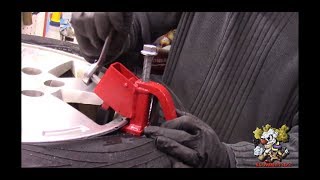
No, replacing a sensor requires a tire machine to dismount the tire from the wheel. You also need a specialized TPMS programming tool to sync the new sensor with the vehicle's computer.
My light came on after getting new tires, what's wrong?
The tire shop likely broke a sensor during installation, installed incompatible aftermarket sensors, or forgot to perform the TPMS relearn procedure. Return to the shop and request they fix it under their service warranty.
Will my car fail inspection with the TPMS light on?
Yes, in many jurisdictions. TPMS is a federally mandated safety system, and an illuminated warning light causes an automatic failure during state safety inspections in places like New York and California.
Key Takeaways
- Check all tires with a digital gauge immediately; C0077 triggers when pressure drops 25% below the door jamb sticker's recommendation.
- A solid TPMS light means low pressure, but a light that flashes for 60 to 90 seconds on startup indicates a dead sensor battery (which typically lasts 5 to 10 years).
- Always check the full-size spare tire; models from Toyota, Lexus, and Hyundai monitor the spare, making it the most overlooked cause of a persistent C0077 code.
- Perform a manual TPMS calibration via the dashboard menu after adding air to vehicles like Honda, VW, and BMW, as the light will not turn off automatically.
- Expect to pay $100 to $250 per wheel at a tire shop to replace a faulty sensor, as the job requires a tire machine and a specialized TPMS programming tool.
Helpful Videos

The information in this article is provided for general reference and educational purposes only. Vehicle specifications, procedures, and part compatibility can vary by production date, trim level, and region. Always consult your vehicle's factory service manual and verify part numbers before purchasing or performing repairs. Safety-critical components such as airbags, seat belts, and braking systems should be installed by a qualified professional.
- 🎬 Helpful Videos
- What Does C0077 Mean?
- Can I Drive With C0077?
- Common Causes
- Symptoms
- Diagnostic Flowchart
- Common Fixes & Costs
- Used vs. New Parts: Buying Guide
- What Happens If You Wait — Timeline
- Cost of Not Fixing It
- Diagnosis Steps
- When This Code Triggers (Freeze-Frame Conditions)
- Related Codes
- Climate & Environmental Factors
- How to Talk to a Mechanic About This Code
- Where to Take It: Dealer vs Independent vs Chain
- When to Walk Away From the Repair
- What Scan Tool You Need for This Code
- How to Clear the Code After You Fix It
- Will This Fail Emissions / State Inspection?
- Most Commonly Affected Vehicles
- Manufacturer-Specific Notes
- Real Owner Stories
- 2016 Toyota RAV4 with 80,000 miles
- 2015 Honda CR-V with 115,000 miles
- 2012 Jeep Grand Cherokee with 130,000 miles
- How to Prevent This Code From Triggering
- Frequently Asked Questions
- Why is my tire pressure light on if my tires are fine?
- What is the difference between a solid and a flashing TPMS light?
- Can I replace just one TPMS sensor?
- Will the light go off by itself after I add air?
- Can I replace a TPMS sensor myself?
- My light came on after getting new tires, what's wrong?
- Will my car fail inspection with the TPMS light on?
- Key Takeaways
- 🎟️ Get 5% Off