

P2459 on 2017 GMC Sierra: DPF Regeneration Frequency Causes and Fixes
On a 2017 GMC Sierra with the 6.6L Duramax engine, code P2459 means the Diesel Particulate Filter (DPF) is cleaning itself too often. The number one cause, specifically for the L5P Duramax, is a dirty or non-OEM air filter altering airflow and fuel calculations. Before any other steps, install a genuine ACDelco air filter (Part No. A3221C). If the issue persists, suspect a faulty DPF pressure sensor, outdated ECM software, or charge air cooler (CAC) leaks.
- P2459 means the DPF is cleaning itself too often, which points to an upstream problem creating excess soot.
- Before any other repair, inspect the engine air filter. On the 2017 Sierra, a non-OEM filter is a very common cause.
- Check your driving habits. Ensure the truck gets regular highway time to complete regeneration cycles naturally.
- Do not automatically replace the expensive DPF. The problem is more likely a cheap sensor, a simple leak, or a maintenance item like the air filter.
What's Unique About the 2017-2017 Gmc SIERRA
For the L5P Duramax engine in the 2017 Sierra, the engine management system is highly sensitive to airflow. A surprisingly common cause for P2459 is the use of an aftermarket (non-GM) engine air filter. The different airflow characteristics can alter Mass Airflow (MAF) sensor readings and fuel calculations, leading to slightly richer combustion, which creates more soot and triggers more frequent regenerations. GM has issued specific service bulletins, such as #24-NA-197, to address this exact scenario, noting that it can also set related NOx sensor codes.
Diagnostic Flowchart
Tap your situation to follow the diagnostic path that matches what you're seeing on this vehicle.
Symptoms You May Notice
- Check Engine Light is on
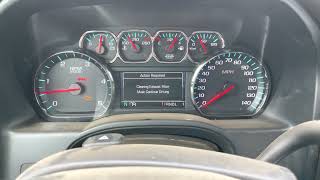
- Message on Driver Information Center (DIC) regarding the DPF system, such as 'Keep Driving' or 'Service Emissions System'
- Noticeably more frequent regeneration cycles (e.g., every 50-150 miles instead of every 300-500 miles)
- Reduced engine power or 'limp mode' if the DPF becomes severely restricted
- Decreased fuel economy due to extra fuel used during frequent regens
- Excessive black smoke from the exhaust (in severe cases)
- Strong diesel odor from the exhaust
- Engine oil level is overfull on the dipstick, indicating fuel dilution from incomplete regens
- Immediately replacing the Diesel Particulate Filter (DPF). The P2459 code indicates a problem with regeneration *frequency*, which is almost always caused by an upstream issue (like a sensor, leak, or air filter) creating too much soot. The DPF itself is usually the victim, not the cause. Replacing it is an expensive mistake if the root problem isn't fixed.
Most Likely Causes
- Dirty or Aftermarket (Non-OEM) Engine Air Filter 🔴 High Probability The L5P engine's ECU is extremely sensitive to airflow. Non-GM filters can alter MAF sensor readings, leading to a richer fuel mixture and excess soot. GM has issued TSB #24-NA-197 specifically for this issue, stating it's a primary cause for P2459 and P2463.
How to confirm: Visually inspect the air filter. If it is dirty, collapsed, wet, or not a genuine ACDelco/GM part, it is the primary suspect. Even if the filter looks clean, if it's aftermarket, it should be replaced.
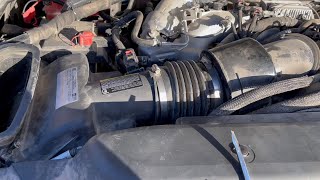
Typical fix: Replace the air filter with a genuine OEM ACDelco filter (GM Part No. A3221C for 2017-2019 models). After replacement, clear the codes. 🎬 Watch: Step-by-step guide to replacing your L5P air filter. For the official GM procedure, a technician must also perform a 'Small Quantity Data reset' using a scan tool.
Est. part cost: $40-$80 - Faulty DPF Differential Pressure Sensor or Hoses 🟡 Medium Probability The sensor and its rubber hoses are exposed to extreme heat and exhaust, which can cause them to fail, crack, get clogged with soot, or melt, leading to inaccurate pressure readings that trick the ECM into thinking the DPF is full.
How to confirm: With a scan tool, check the sensor's voltage with the Key On, Engine Off (KOEO); it should be low (around 0.2-0.5V). Visually inspect the hoses for cracks, blockages, melting, or loose connections. The hoses can be disconnected and checked for blockages.
Typical fix: Replace the DPF differential pressure sensor and/or its hoses. High-temperature silicone replacement hoses are available. A scan tool may be needed for a reset procedure after installation.
Est. part cost: $60-$150 - Driving Habits (Frequent Short Trips) 🟡 Medium Probability Short trips, excessive idling, or low-speed city driving prevent the exhaust system from reaching and maintaining the high temperatures (around 1200°F) needed for a complete, passive DPF regeneration. This forces the truck to attempt more frequent active regenerations.
How to confirm: Review recent driving patterns. If the truck is primarily used for city driving without regular highway runs of 20-30 minutes, this is a likely contributor.
Typical fix: Drive the vehicle at sustained highway speeds (55+ mph) for at least 30 minutes to allow a full, automatic regeneration cycle to complete.
Est. part cost: $0 - Exhaust System or Charge Air Cooler (CAC) Leaks ⚪ Low Probability GM TSB #PIP5468F explicitly states that loose connections on the charge air cooler (intercooler) ductwork can cause boost leaks, leading to P2459. This creates an incorrect air/fuel ratio, inefficient combustion, and increased soot. A leak anywhere in the exhaust before the DPF can also alter sensor readings.
How to confirm: Perform a visual inspection of all exhaust piping and CAC hoses/clamps from the turbo to the DPF. A smoke test is the most effective way to identify hard-to-see leaks. 🎬 See how to perform a boost leak test on your L5P. One owner noted tightening a loose CAC boot completely solved the issue.
Typical fix: Tighten loose clamps or replace failed gaskets or cracked hoses. Per TSB #PIP5468F, after repair, a forced DPF regeneration should be commanded with a scan tool.
Est. part cost: $10-$100
Rare But Worth Checking
- Outdated ECM Software: GM has released software updates to fix logic errors that can cause P2459. TSB 21-NA-214 addresses a cluster of engine and transmission codes, including P2459, that can be resolved with an ECM/TCM reprogram. A dealer can check for and apply these updates.
- Failing Fuel Injectors: A leaking, sticking, or poorly atomizing fuel injector can cause excessive soot production. This is a serious issue that might also be indicated by fuel dilution in the engine oil (overfull dipstick) and an audible fuel knock.
- Turbocharger Issues: An under-performing turbo (as might be indicated by code P0299) can lead to a rich condition and excess soot. This could be due to worn bearings, sticking vanes, or a leak on the turbo itself.
- Clogged or Faulty EGR System: A malfunctioning Exhaust Gas Recirculation (EGR) system that is stuck open or closed can alter combustion temperatures and significantly increase soot production, leading to a faster-than-normal buildup in the DPF.
Diagnosis Steps
- Check for other stored DTCs. Codes like P2463, P0101, or P0299 are often the root cause and should be diagnosed first.
- Inspect the engine air filter. If it is dirty, collapsed, or a non-OEM brand, replace it with a genuine ACDelco filter (A3221C). This is the most common fix.
- Check for GM Technical Service Bulletins (TSBs). Consult a dealer to see if TSBs like #24-NA-197, #21-NA-214, or #PIP5468F apply, as a software update or specific procedure may be required.
- Review driving habits. If the vehicle is used for short trips, perform a 30-minute highway drive to allow a full regeneration.
- Inspect the Charge Air Cooler (CAC) hoses and clamps for tightness and signs of leaks (oil residue, soot). A smoke test is recommended for a thorough check.
- Visually inspect the entire exhaust system from the turbocharger back, looking for soot trails that indicate leaks.
- Inspect the DPF differential pressure sensor hoses for cracks, melting, or blockages.
- With a scan tool, monitor the DPF differential pressure sensor reading with the engine off. It should be at or near zero. Monitor its readings during a drive to ensure they are plausible.
- Check the engine oil level and smell. If it is overfull and smells of diesel, suspect a fueling issue like a bad injector causing fuel dilution.
Parts You'll Likely Need
- Engine Air Filter
(OEM #A3221C)— A non-OEM or dirty air filter is the most common cause of P2459 on the L5P Duramax due to its effect on airflow calculations, as documented in GM TSB #24-NA-197.
Trusted brands: ACDelco
OEM price range: $40-$80
Aftermarket price range: $20-$50 - DPF Differential Pressure Sensor
(OEM #12678981)— This sensor tells the ECM how full the DPF is. If it fails and reads artificially high, it will trigger unnecessary regenerations. Another potential OEM part number is 12677718.
Trusted brands: ACDelco, Bosch
OEM price range: $80-$150
Aftermarket price range: $50-$100
Related Codes That Often Appear With This One
- P2463 — This code for 'DPF Restriction - Soot Accumulation' is a direct companion. The ECM detects high soot levels (P2463) and triggers frequent cleanings, which is then flagged as P2459. TSB #24-NA-197 links them directly to the use of non-OEM air filters.
- P2002 — This code for 'DPF Efficiency Below Threshold' can appear if the frequent regenerations are not successfully cleaning the filter, suggesting it may be clogged with non-burnable ash or is damaged.
- P0101 — A Mass Air Flow (MAF) sensor performance code. As noted in TSB #PIP5468F, MAF issues or air leaks can cause incorrect fueling and lead to excess soot, triggering P2459.
- P0299 — A Turbocharger Underboost code. Also listed in TSB #PIP5468F, insufficient boost pressure results in a rich air/fuel mixture, creating more soot and causing more frequent regenerations.
Technical Service Bulletins (TSBs) & Recalls
- PIP5468F: Lists P2459 with numerous other engine codes, indicating it's often a secondary fault.
- PIP5468D: An earlier version of the same bulletin, also listing P2459 among other DTCs.
- 24-NA-197: Addresses P2459/P2463 caused by non-GM air filters.
- 21-NA-214: Mentions a broader software update for the ECM/TCM that can correct a cluster of issues including P2459.
- 22-NA-013: Points to loose charge air cooler ductwork as a cause for P2459 and other codes.
Platform-Specific Known Issues
- TSB #24-NA-197: Explicitly states that P2459 and P2463 can be caused by an aftermarket air filter due to its effect on fuel metering. The recommended fix is to install an OEM filter and perform a 'Small Quantity Data reset'.
- TSB #PIP5468F: Lists P2459 as one of many codes that can be set due to loose connections in the Charge Air Cooler (CAC) ductwork, causing boost leaks.
- TSB #21-NA-214: Links P2459 to a cluster of other engine and transmission issues that can be resolved with an ECM/TCM software update.
Mechanic-Grade Diagnostic Values
- Injector Balance Rates (Hot Idle, In Park/Neutral) — expected: Within +/- 4.0 mm³/stroke. Failure: A consistent reading above +4.0 indicates a weak/clogged injector or compression loss. A reading below -4.0 indicates a leaking/over-fueling injector.
- Mass Air Flow (MAF) Sensor Reading (Hot Idle) — expected: Approximately 4-7 g/s for a 6.6L engine. Should rise smoothly and linearly with RPM.. Failure: Readings that are erratic, do not increase with RPM, or are significantly outside the expected range can indicate a faulty sensor or an air leak.
- DPF Differential Pressure Sensor Voltage (Key On, Engine Off) — expected: ~0.2V - 0.5V. Failure: A reading of 0V or a high voltage (e.g., 5V) indicates a sensor or wiring fault.
- Air Leak Equivalence Ratio (GDS2 Scan Tool Parameter) — expected: 0.80:1 to 1.20:1. Failure: A value outside this range with the EGR commanded closed strongly suggests an unmetered air leak in the intake or exhaust system.
Scan Tool Commands That Help
- GDS2 (GM Dealer Tool): Service Regeneration / Stationary DeSoot — To manually initiate a DPF cleaning cycle after a repair (like fixing an exhaust leak) or when soot load is critically high (P2463 is present) and a normal driving regen is disabled.
- GDS2 (GM Dealer Tool): DPF Pressure Sensor Reset — This function is mandatory after replacing the DPF differential pressure sensor to calibrate the new sensor to the ECM. Failure to perform this may cause the code to return immediately.
- GDS2 (GM Dealer Tool): Small Quantity Data Reset / Injector Quantity Adjustment Reset — This is required by GM TSBs after replacing the engine air filter. It resets the fuel trim adaptations that may have been skewed by the incorrect airflow of the old or aftermarket filter.
Wiring & Ground Locations
- Engine Control Module (ECM) — On a 2017 Sierra, the ECM is located in the engine bay behind the driver-side headlight, between the battery and the power steering fluid reservoir.. This is the central computer that receives all sensor data and controls the regeneration process. Its connectors are a key inspection point for corrosion or damage.
- ECM Connector X1 — The main engine harness connector (often black) that plugs into the ECM.. Contains the signal wires for critical sensors. For example, the Mass Air Flow (MAF) sensor signal is on Pin 10 of this connector. A poor connection here can mimic a failed sensor.
- Ground G218 — Located inside the cab, under the driver's side dash behind the kick panel.. This is a known problematic ground point on this truck platform. While not specific to the DPF system, a poor ground here can cause a wide range of difficult-to-diagnose electronic issues and sensor reading errors. The factory foam insulation can get trapped under the ground nut, causing a poor connection.
Real Owner Repair Stories
- Synthesized from multiple owner forums (Duramaxforum, Dieselplace) and YouTube mechanic videos (2017-2018 GMC Sierra/Chevy Silverado 2500HD with 6.6L L5P Duramax) — Check engine light with P2459 and often P2463. DIC displays 'Keep Driving' or 'Service Emissions System' far too frequently, sometimes every 100 miles. No noticeable loss of power initially, just annoying and frequent regen cycles.
❌ Tried (didn't work) Forcing multiple service regens with a scan tool., Replacing the DPF differential pressure sensor., Cleaning the MAF sensor.
✅ What actually fixed it The most common confirmed fix was discovering the truck had an aftermarket performance air filter or intake (like K&N, S&B, etc.). The problem was resolved by removing the aftermarket parts and reinstalling a stock ACDelco A3221C air filter in the factory airbox. After replacing the filter and clearing the codes, the regen frequency returned to the normal 300-500+ mile interval.
"I Checked Everything" — The Actual Cause
- The most common 'missed' diagnosis for P2459 on the L5P Duramax fits this pattern. A technician may perform a smoke test for boost/exhaust leaks and find none. They may test the DPF pressure sensor and find it responds correctly to pressure changes. However, the actual cause is a non-OEM air filter. The different airflow characteristics, while not a 'leak', are enough to alter the MAF sensor's readings and the ECM's subsequent fueling calculations, creating excess soot. This is why GM issued TSB 24-NA-197 specifically for this scenario.
Model Year Variations Within This Range
- 2017-2019: The ECM location on 2017-2019 models is behind the driver's side headlight. This differs from 2020+ models, which have a different ECM and may have it located in the driver-side inner fender well. Diagnostic procedures and physical part locations are specific to this earlier L5P generation.
Helpful Videos
Used OEM Parts in Stock

New Aftermarket Parts Available




The information in this article is provided for general reference and educational purposes only. Vehicle specifications, procedures, and part compatibility can vary by production date, trim level, and region. Always consult your vehicle's factory service manual and verify part numbers before purchasing or performing repairs. Safety-critical components such as airbags, seat belts, and braking systems should be installed by a qualified professional.
- Gmc SIERRA:
- 🎬 Helpful Videos
- 🛍️ Shop This Part
- What's Unique About the 2017-2017 Gmc SIERRA
- Diagnostic Flowchart
- Symptoms You May Notice
- Most Likely Causes
- Rare But Worth Checking
- Diagnosis Steps
- Parts You'll Likely Need
- Related Codes That Often Appear With This One
- Technical Service Bulletins (TSBs) & Recalls
- Platform-Specific Known Issues
- Mechanic-Grade Diagnostic Values
- Scan Tool Commands That Help
- Wiring & Ground Locations
- Real Owner Repair Stories
- "I Checked Everything" — The Actual Cause
- Model Year Variations Within This Range
- 🎟️ Get 5% Off