

P2421 on 2013-2020 Ford Fusion: EVAP Vent Valve Stuck Open Causes and Fixes
P2421 on a Ford Fusion means the EVAP vent valve, located at the rear of the car near the fuel tank, is stuck open. The most common fix is to replace the canister vent valve solenoid itself. This is a DIY-able job but requires safely lifting the vehicle for access.
- P2421 means the EVAP vent valve is stuck open, not the purge valve in the engine bay.
- The faulty part is located at the rear of the car, attached to the charcoal canister, and requires lifting the vehicle to access.
- The most common cause is a failed vent valve solenoid (Motorcraft CU5Z-9F945-A), which is a relatively inexpensive part.
- Before replacing the valve, confirm the diagnosis by checking for a 'click' with a scan tool, testing resistance (12-80 Ohms), and verifying power at the connector.
What's Unique About the 2013-2020 Ford Fusion
For the 2013-2020 Ford Fusion, the most important thing to understand about P2421 is distinguishing the correct part. The code points specifically to the EVAP vent valve (also called a canister vent solenoid), which is located at the rear of the vehicle with the charcoal canister. Many owners mistakenly replace the purge valve (located in the engine bay), which typically causes different codes (like P1450 or P0496) and symptoms like difficulty starting after refueling. P2421 is almost always related to the component at the back of the car.
Symptoms You May Notice
- Check Engine Light is on
- A faint smell of fuel, especially around the rear of the car
- Inability to pass a vehicle emissions test
- Dashboard messages like "EVAP System Leak Detected" may appear in some cases.
- Replacing the EVAP Purge Valve in the engine bay. This is the most common mistake. The purge valve is a different part with a different function and typically sets other codes like P1450.
- Replacing the gas cap. A loose or faulty gas cap on a capless system like the Fusion's would typically set a different code, such as P0455 (Gross Leak) or P0457.
Most Likely Causes
- Faulty EVAP Canister Vent Valve Solenoid 🔴 High Probability The valve is a mechanical solenoid exposed to the elements under the car. Over time, it can fail electrically (coil burns out) or mechanically (pintle gets stuck) due to age, moisture, and road debris.
How to confirm: Use a bidirectional scan tool to command the valve to close; if you don't hear a click, the valve is likely bad. You can also test the solenoid's resistance with a multimeter; a good valve should have a resistance between 12 and 80 Ohms. An out-of-spec reading indicates failure.
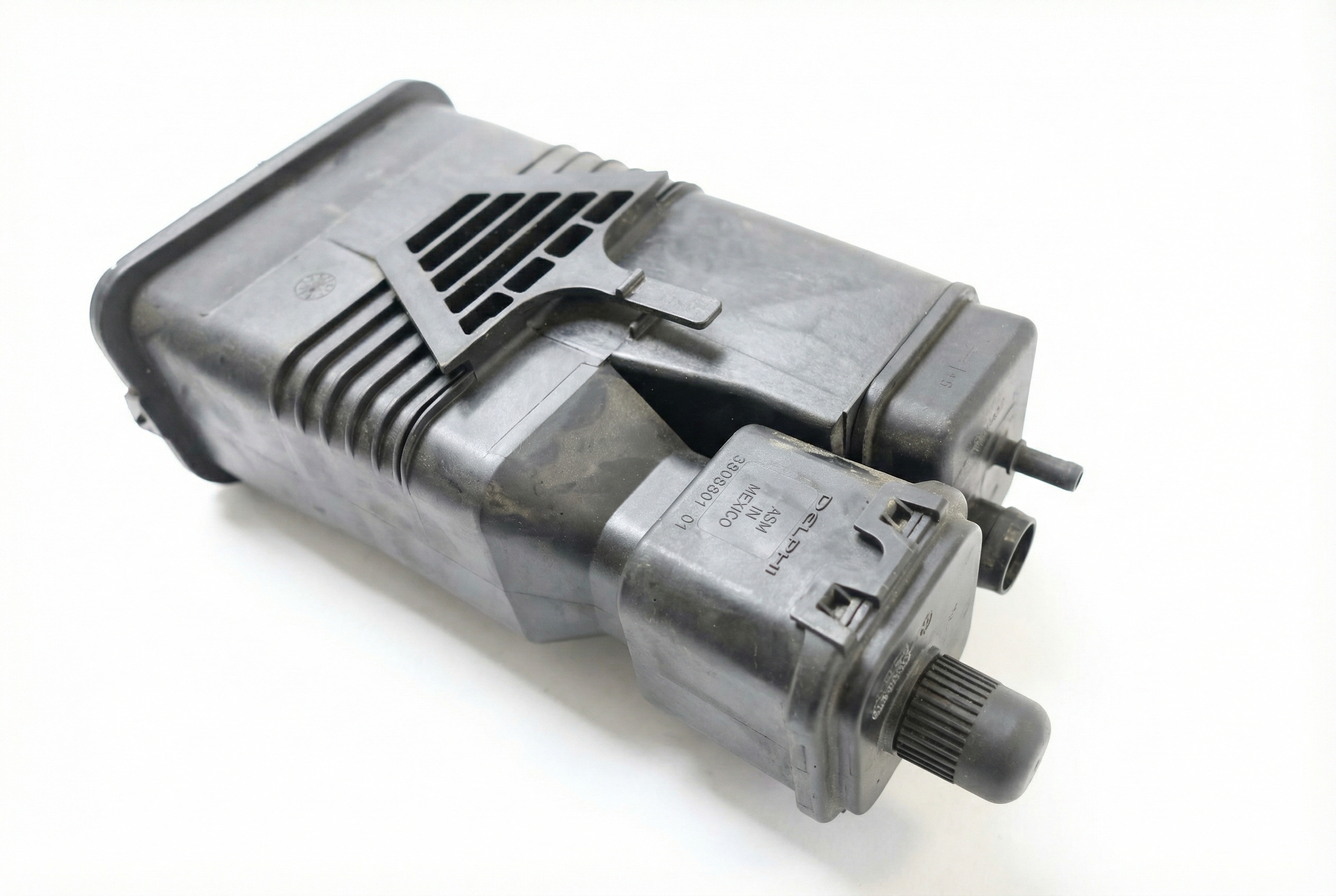
Typical fix: Replace the canister vent valve solenoid. This part is attached to the charcoal canister assembly at the rear of the vehicle.
Est. part cost: $40-$100 - Wiring or Connector Damage 🟡 Medium Probability The wiring harness for the vent valve is located underneath the car, making it vulnerable to corrosion, chafing, or damage from road debris, which can cause a short or open circuit.
How to confirm: Visually inspect the wiring harness and connector leading to the vent valve for any signs of breaks, corrosion, or loose pins. Check for battery voltage at the connector's power pin (typically Pin 2, Green wire) with the key on.
Typical fix: Repair the damaged section of the wire or clean/replace the electrical connector.
Est. part cost: $5-$30 - Debris in Vent Valve ⚪ Low Probability The vent valve is open to the atmosphere through a filter. It's possible for dirt, dust, or even insects to get past the filter and physically jam the valve open.
How to confirm: Remove the valve and visually inspect the opening for any foreign material that would prevent it from seating and closing properly. Tapping the valve may dislodge debris.
Typical fix: Clean the debris out of the valve. If the valve was damaged by the debris, it will need to be replaced.
Est. part cost: $0-$100
Rare But Worth Checking
- Cracked Charcoal Canister: While less common than the valve itself failing, a crack in the housing of the charcoal canister can create a permanent leak that the system interprets as a stuck-open vent valve.
- Powertrain Control Module (PCM) Fault: This is extremely rare. Before condemning the PCM, every other possibility, including the valve, wiring, and canister, must be thoroughly tested and ruled out.
Diagnosis Steps
- Confirm the code P2421 is present using an OBD-II scanner.
- Perform a thorough visual inspection of the rear underside of the vehicle. Locate the charcoal canister and the attached vent valve solenoid, which is typically behind a small protective cover.
- Inspect the vent valve, its hoses, and its electrical connector for any obvious signs of damage, cracking, or corrosion.
- If you have a bidirectional scanner, command the vent valve to close and open. Listen for an audible 'click' from the valve. No click suggests a failed solenoid or a wiring issue.
- If the valve does not click, disconnect the electrical connector. Turn the ignition to 'ON' (engine off). Use a multimeter to test for battery voltage on the power wire (Pin 2, Green). If voltage is absent, check the wiring and fuses. If voltage is present, check the control wire (Pin 1, Green/Blue) for continuity back to the PCM.
- With the connector unplugged, measure the resistance across the two pins on the vent valve solenoid itself. A reading between 12-80 Ohms is expected. A reading of infinity (OL) indicates an open coil, while a reading near zero indicates a shorted coil. In either case, the valve is bad.
- If the valve does click and resistance is normal, it may be mechanically stuck. A smoke test is the definitive next step. With the vent valve commanded closed, inject smoke into the EVAP system's service port. If smoke pours out of the vent valve's filter/outlet, it confirms it is mechanically stuck open and needs replacement.
Parts You'll Likely Need
- EVAP Canister Vent Valve Solenoid
(OEM #CU5Z-9F945-A (Motorcraft FVS-2))— This is the component that the code directly identifies as being stuck open. It is the most frequent point of failure for P2421.
Trusted brands: Motorcraft, Dorman, Bosch, Carquest Premium
OEM price range: $70-$120
Aftermarket price range: $40-$80
Related Codes That Often Appear With This One
- P0455 — EVAP System Gross Leak Detected. A vent valve that is stuck wide open is considered a very large leak by the system, so these two codes can appear together.
- P0446 — EVAP System Vent Control Circuit. While P2421 indicates the valve is stuck open, P0446 can indicate a general fault in the vent control circuit (electrical or mechanical), and they can sometimes appear together depending on the exact failure mode.
Technical Service Bulletins (TSBs) & Recalls
- While no TSB is issued specifically for P2421 on the Fusion, Ford has released TSBs for similar EVAP codes on other models, such as TSB 18-2387 for code P2450 (EVAP Blocking Valve) on F-150s, indicating a pattern of addressing specific EVAP component failures via service bulletins.
Platform-Specific Known Issues
- Owner Repair Experience: A user on the '2GFusions.net' forum with a 2014 Fusion reported getting P2421 at approximately 95,000 miles. They confirmed the failure by applying 12V directly to the old valve and hearing no click. The replacement with a Motorcraft part resolved the issue. The owner noted that removing the old hoses from the plastic nipples without breaking them was the most challenging part of the job and recommended using a pick tool to carefully loosen them.
Mechanic-Grade Diagnostic Values
- EVAP Canister Vent Valve Solenoid Coil Resistance — expected: 12 - 80 Ohms. Failure: A reading of OL (infinity) indicates an open coil; a reading near 0 Ohms indicates a shorted coil. Either requires replacement.
- Voltage at Vent Valve Connector (Pin 2, Green wire to Ground) — expected: ~12V (Battery Voltage) with Key On, Engine Off. Failure: Little to no voltage indicates a problem with the power supply wire or a blown fuse.
- Fuel Tank Pressure (FTP) Sensor Voltage (Live Data) — expected: Approx. 2.6V with Key On, Engine Off (system vented). Failure: A significant deviation from this static value could indicate a pre-existing pressure or vacuum issue before testing begins.
Hidden / Shadow Codes Worth Checking
- Mode $06, Monitor ID $21: On many Ford vehicles, this monitor ID relates to the EVAP system leak test. A failing value for the associated Test ID (TID) can indicate the test is failing before a full DTC is set. This can help confirm an intermittent issue. (see via An advanced OBD-II scanner capable of displaying Mode $06 (Non-Continuous Monitor Test Results). Note: Specific TIDs can vary by model year and software calibration.)
Scan Tool Commands That Help
- Ford IDS (or equivalent bidirectional scanner): EVAP Canister Vent Valve (or Vapor Management Valve) Active Command — This is a primary diagnostic step. Command the valve closed (energized) and listen for an audible click. If it clicks, the coil and wiring are likely good, pointing to a mechanical jam. If it doesn't click, it points to a bad coil or wiring issue. It's also used to seal the system for a smoke test.
Wiring & Ground Locations
- EVAP Canister Vent Valve Connector (C435) — At the vent valve solenoid, attached to the charcoal canister at the rear of the vehicle.. This is the primary point for electrical testing. Pin 2 (Green) is the 12V power feed from the battery junction box. Pin 1 (Green/Blue) is the control wire that the PCM grounds to close the valve. Corrosion or wire damage here is a common failure point.
- Rear Chassis Ground — While a specific ground point identifier (e.g., G401) for this circuit is not specified in general documentation, chassis grounds are typically located on the frame rail or rear floor pan in the vicinity of the component. A poor ground connection can cause erratic valve operation.. A faulty ground would prevent the PCM from completing the circuit to energize and close the vent valve, which could be misinterpreted as a faulty valve.
Real Owner Repair Stories
- Reddit user on r/fordfusion (2017 Ford Fusion Hybrid) — Check Engine Light, slow refueling (pump clicks off), and fuel door not opening. Code was P04B0 'Refueling valve circuit open'.
❌ Tried (didn't work) Replaced 12V battery., Cleared codes with a basic scanner.
✅ What actually fixed it Upon inspecting the connector for the related Fuel Vapor Vent Valve, the owner found both wires had broken off right where they entered the wiring harness. Repairing the broken wires resolved all symptoms and the code.
OEM Part Supersession History
CU5Z-9F945-A→HU5Z-9F945-A— Standard part revision by Ford. The new part is a direct replacement.
Diagnostic Flowchart
Other Known Issues on This Vehicle
Issues unrelated to this code that are worth knowing about as an owner of this generation:
- 1.5L/2.0L EcoBoost Coolant Intrusion 🔴 High — Common enough to warrant multiple TSBs and a class-action lawsuit. Can occur at various mileages. Symptoms include coolant loss with no visible leak, white exhaust smoke, and misfires. (Ref: TSB 19-2139, TSB 20-2100)
- Transmission Shifter Cable Bushing Failure 🟠 Medium — Widespread issue leading to multiple recalls. The bushing degrades, causing a disconnect between the gear shifter and the transmission. The vehicle may not be in the gear selected (e.g., not in Park when the shifter says it is), creating a rollaway risk. (Ref: Ford Recalls 18S20, 22S43)
- Steering Gear Motor Bolt Corrosion 🔴 High — Primarily affects vehicles in salt-belt states. Bolts holding the electric power steering motor corrode and can fracture, leading to a sudden loss of power steering assist. (Ref: Ford Recall 19S26)
- Cracked Flexplate (2.0L EcoBoost) 🟠 Medium — Presents as a rattling or ticking noise from the transmission bellhousing area, most noticeable at idle. The flexplate develops cracks around the crankshaft mounting bolts. (Ref: TSB 21-2347)
Used vs. New Parts: Buying Guide for This Vehicle
When a used part is the smart pick: For this specific repair, buying a used part is not recommended. The part is a relatively low-cost electronic solenoid that is exposed to harsh under-vehicle conditions. The failure is often due to internal wear or electrical burnout, making a used part a significant gamble.
What to inspect on the donor part:
- Not applicable as used parts are not advised.
OEM-only on this vehicle (don't cheap out):
- While not strictly OEM-only, using a Motorcraft-branded part is highly recommended for longevity and guaranteed compatibility. The price difference is often minimal compared to the labor of replacing it twice.
Aftermarket brands forum-validated for this vehicle:
- Dorman (e.g., 911-216)
- Wells (e.g., 2M1150)
- Standard Motor Products (e.g., CP806)
- Bosch
Brands owners have reported issues with on this vehicle:
- No-name, unbranded parts from online marketplaces should be avoided, as their quality control and material specifications are often unknown and can lead to premature failure.
Real Owner Stories
Aggregated from forums and TSBs cited above. Mileages and costs reflect what owners reported in those sources.
2014 Fusion — 95000 miles
Symptoms: The owner reported getting the P2421 trouble code.
What fixed it: The owner confirmed the old valve was bad by applying 12V and hearing no click. Replacing the canister vent valve with a new Motorcraft part resolved the issue. The most difficult part was reportedly removing old hoses without breaking the plastic nipples.
Source hint: '2GFusions.net' forum
Related OBD-II Codes
Frequently Asked Questions
Where is the EVAP canister vent valve located on my 2013-2020 Ford Fusion?
How can I test the vent valve on my Fusion without a professional scan tool?
Is it a good idea to buy a used vent valve to fix code P2421?
What's the difference between the purge valve and the vent valve on my Fusion?
Are there any official Ford TSBs for code P2421 on the Fusion?
I'm replacing the vent valve myself. What brand should I buy?
My Lincoln MKZ has code P2421. Is the diagnosis the same as for the Fusion?
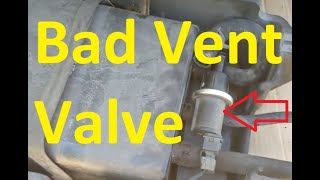
Helpful Videos
Used OEM Parts in Stock
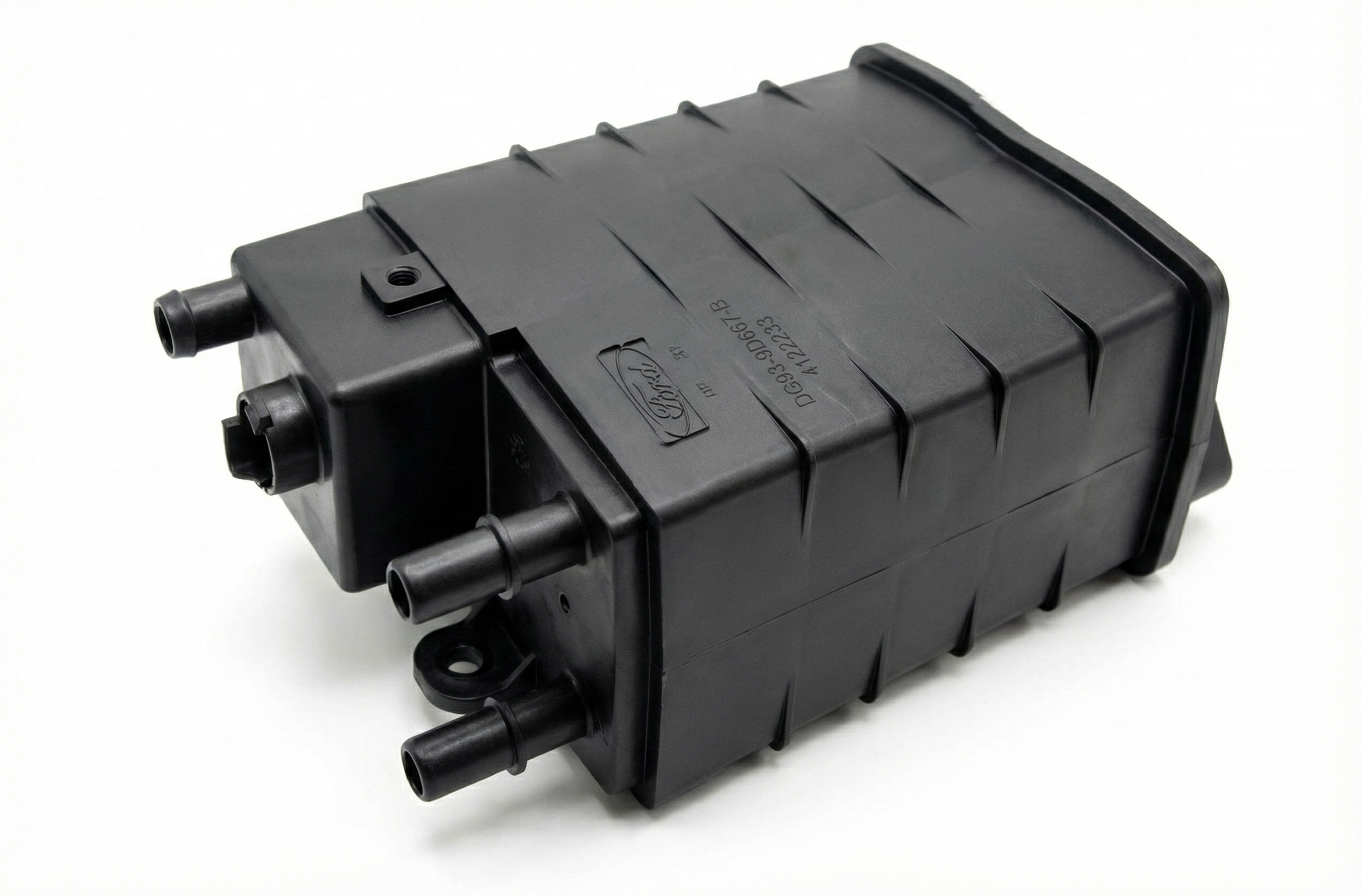
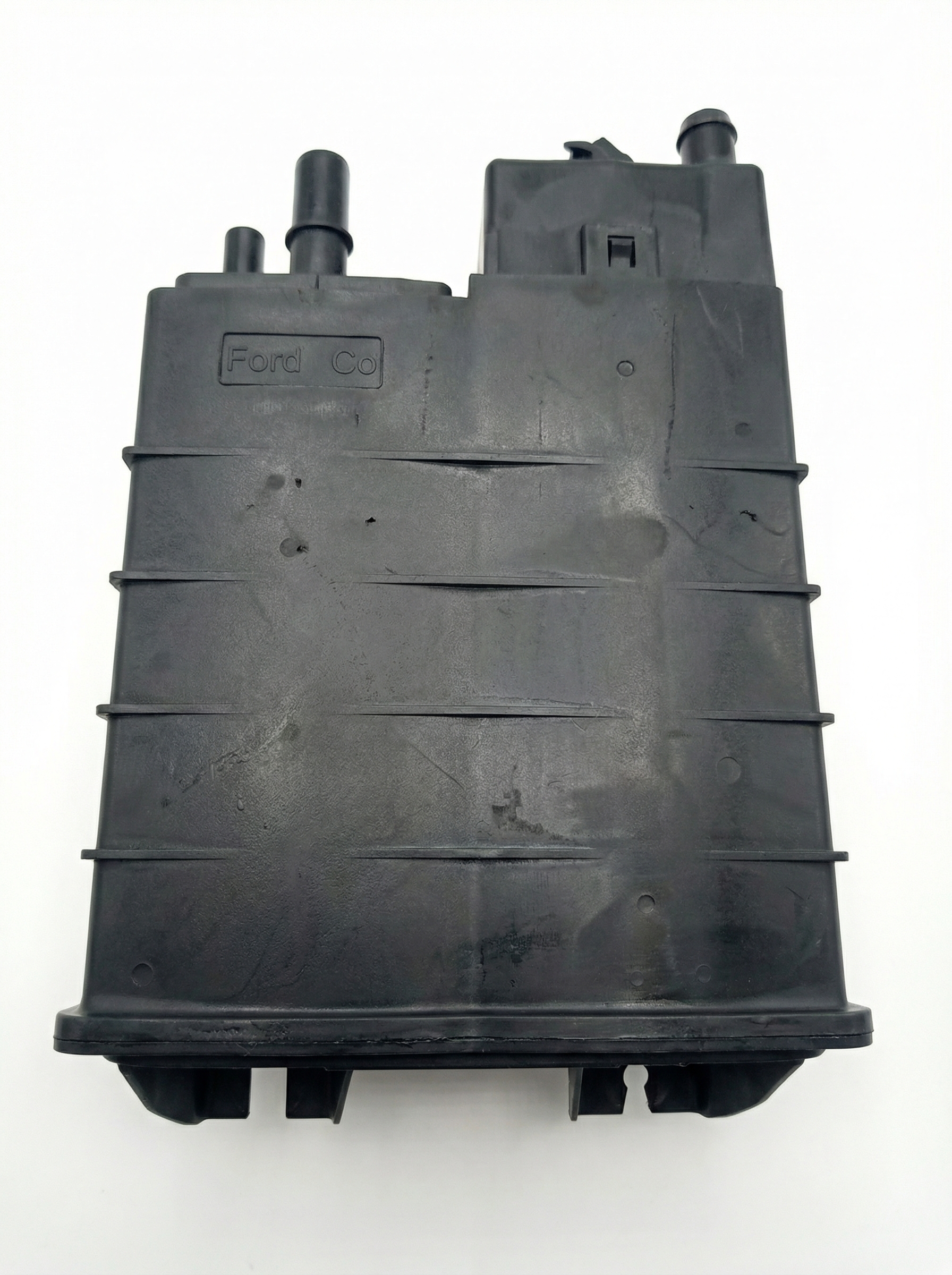

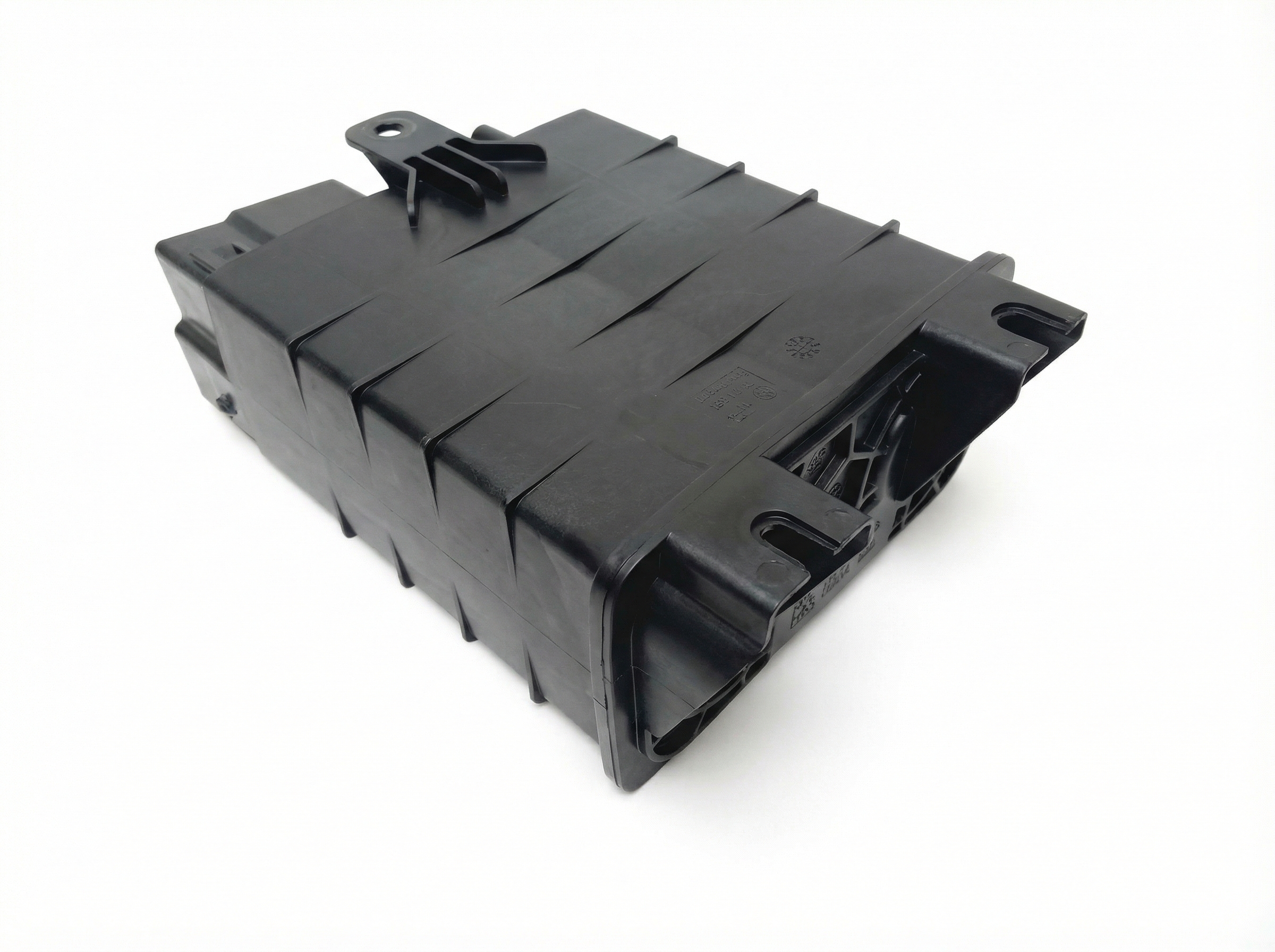
New Aftermarket Parts Available


The information in this article is provided for general reference and educational purposes only. Vehicle specifications, procedures, and part compatibility can vary by production date, trim level, and region. Always consult your vehicle's factory service manual and verify part numbers before purchasing or performing repairs. Safety-critical components such as airbags, seat belts, and braking systems should be installed by a qualified professional.
- Ford Fusion:
- 🎬 Helpful Videos
- 🛍️ Shop This Part
- What's Unique About the 2013-2020 Ford Fusion
- Symptoms You May Notice
- Most Likely Causes
- Rare But Worth Checking
- Diagnosis Steps
- Parts You'll Likely Need
- Related Codes That Often Appear With This One
- Technical Service Bulletins (TSBs) & Recalls
- Platform-Specific Known Issues
- Mechanic-Grade Diagnostic Values
- Hidden / Shadow Codes Worth Checking
- Scan Tool Commands That Help
- Wiring & Ground Locations
- Real Owner Repair Stories
- OEM Part Supersession History
- Diagnostic Flowchart
- Other Known Issues on This Vehicle
- Used vs. New Parts: Buying Guide for This Vehicle
- Real Owner Stories
- 2014 Fusion — 95000 miles
- Related OBD-II Codes
- Frequently Asked Questions
- 🎟️ Get 5% Off