

P2227 on 2012-2018 Ford Focus (2.0L GDI): Barometric Pressure Sensor Causes and Fixes
On a 2012-2018 Ford Focus with the 2.0L GDI engine, code P2227 is almost always caused by a faulty Manifold Absolute Pressure (MAP) sensor or its wiring, not a separate BARO sensor. The barometric pressure reading is inferred by the PCM from the MAP sensor at key-on, engine-off. A new Motorcraft MAP sensor (part # CX-2423) costs around $80-$120 and is the most common fix.
- For a 2012-2018 Ford Focus with the 2.0L GDI engine, P2227 almost always points to a problem with the Manifold Absolute Pressure (MAP) sensor, not a separate BARO sensor.
- Do not waste time looking for a standalone BARO sensor on non-turbo models; the function is integrated into the PCM and relies on the MAP sensor.
- Diagnosis should start by comparing the MAP and BARO PIDs on a scanner with the Key On, Engine Off.
- The correct Motorcraft OEM part number for the MAP sensor is CX-2423.
- Before replacing the PCM, always rule out the much more common failures: the MAP sensor itself and its wiring/connector.
- An extremely dirty air filter or an aftermarket air intake can sometimes trigger this code.
What's Unique About the 2012-2018 Ford Focus

For most non-turbo 2012-2018 Ford Focus models (like those with the common 2.0L GDI engine), there is no separate, serviceable Barometric Pressure (BARO) sensor. Instead, the PCM establishes a baseline barometric pressure reading from the Manifold Absolute Pressure (MAP) sensor when you turn the key on before starting the engine. The P2227 code is then set if this inferred BARO reading doesn't make sense compared to the MAP sensor's readings once the engine is running. This means the problem is rarely a 'bad BARO sensor' but rather an issue with the MAP sensor, its wiring, or the PCM itself. Performance models like the Focus ST (2.0L EcoBoost) and RS (2.3L EcoBoost) do have a separate BARO sensor, often located near the airbox or on the intercooler.
Symptoms You May Notice
- Check Engine Light is on
- Reduced engine power and sluggish acceleration, especially on hills
- Rough or erratic idle, sometimes surging to 2000 RPM then dropping low
- Engine may stall when coming to a stop
- Decreased fuel economy
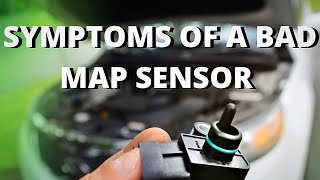
- Sputtering or hesitation when accelerating at low RPM 🎬 Watch: A clear explanation of bad MAP sensor symptoms
- Searching for and attempting to replace a non-existent standalone Barometric Pressure sensor on a standard 2.0L GDI Focus. The function is integrated into the PCM and uses the MAP sensor for its primary reading.
- Confusing the Manifold Absolute Pressure (MAP) sensor with the Mass Airflow (MAF) sensor. While both are involved in engine management, P2227 specifically relates to pressure readings, making the MAP sensor the focus of diagnosis.
Most Likely Causes

- Faulty Manifold Absolute Pressure (MAP) Sensor 🔴 High Probability The PCM relies entirely on the MAP sensor for its BARO reading at startup on 2.0L GDI models. If the MAP sensor is slow to respond, skewed, or faulty, it creates a conflict between the Key-On Engine-Off reading and the running values, triggering P2227.
How to confirm: With a capable OBD-II scanner, compare the 'BARO' PID to the 'MAP' PID with the Key On, Engine Off (KOEO). They should be nearly identical. Compare this reading to your local atmospheric pressure (a weather app works). If the readings are off or don't match, the MAP sensor is the primary suspect. Start the engine and monitor the MAP sensor reading. It should change instantly with throttle input. If it's slow or unresponsive, it's likely bad.
Typical fix: Replace the Manifold Absolute Pressure (MAP) sensor. It is mounted directly on the intake manifold. 🎬 See this quick walkthrough for replacing the MAP sensor
Est. part cost: $50-$120 - Wiring or Connector Issue to MAP Sensor 🟡 Medium Probability Engine vibration and heat can cause wires in the engine harness to fray or the connector pins to become loose or corroded over time, leading to an intermittent or lost signal. TSB 18-2062 addresses wiring harness issues on 2012-2014 models for various drivability codes, indicating a known vulnerability in this area.
How to confirm: Visually inspect the wiring harness and connector for the MAP sensor. Look for any signs of damage, corrosion, or loose pins. Use a multimeter to check for proper reference voltage (typically 5V), signal, and ground at the connector per the vehicle's service manual.
Typical fix: Repair the damaged section of wiring or clean/replace the connector pigtail.
Est. part cost: $10-$60 - Dirty or Clogged Air Filter ⚪ Low Probability A severely restricted air filter can affect the pressure readings within the intake manifold, potentially creating a discrepancy between the inferred BARO reading at KOEO and the running MAP reading. One owner on a forum reported that cleaning a very dirty filter and the MAF sensor resolved their P2227 and sputtering issues.
How to confirm: Visually inspect the engine air filter. If it is visibly dirty, black, or clogged with debris, it needs replacement.
Typical fix: Replace the engine air filter.
Est. part cost: $15-$30
Rare But Worth Checking
- Faulty Powertrain Control Module (PCM): This is rare. On this platform, the internal circuit in the PCM that processes the BARO/MAP signal can fail, or the integrated BARO sensor itself (if present in the PCM) can fail. This should only be considered after all other possibilities (sensor, wiring) have been exhaustively ruled out by a professional.
- Aftermarket Cold Air Intake (CAI): Some owners have reported that installing a custom or aftermarket cold air intake can trigger a P2227 code. This is likely due to altered airflow characteristics and pressure dynamics within the intake tract that the PCM interprets as a fault. Reverting to the stock airbox or using a high-flow drop-in filter is often the fix.
Diagnosis Steps

- Connect an OBD-II scanner and check for any other accompanying codes. Address codes like P0106 first.
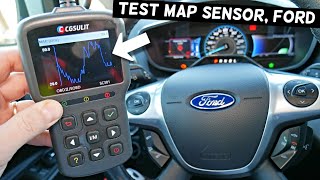
- With the scanner, view live data. Turn the key to the 'On' position but do not start the engine (KOEO). Record the 'BARO' and 'MAP' pressure readings.
- Compare these two readings. They should be within 0.5 PSI of each other. Then, compare them to the actual atmospheric pressure for your altitude (a weather app can provide this). If the readings are significantly different from the local pressure or each other, the MAP sensor is the most likely culprit.
- Start the engine. Monitor the MAP sensor reading at idle (it should be low, indicating high vacuum) and as you snap the throttle (it should rise quickly). A slow or non-responsive sensor is faulty.
- If the sensor readings seem plausible, perform a thorough visual inspection of the MAP sensor's wiring harness and connector. Look for chafing, melting, corrosion on pins, or loose connections.
- If the wiring is intact, test the circuit. Using a multimeter and wiring diagram, verify the MAP sensor is receiving the correct reference voltage (typically 5V) and has a solid ground connection. Check the signal wire for expected voltage changes. 🎬 Watch: How to test the MAP and BARO sensor signals
- If the sensor and wiring are confirmed to be good, the fault may lie within the PCM. This is an advanced diagnosis, and replacement/reprogramming by a professional is recommended.
Parts You'll Likely Need
- Manifold Absolute Pressure (MAP) Sensor
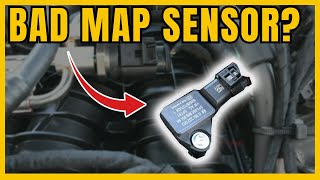
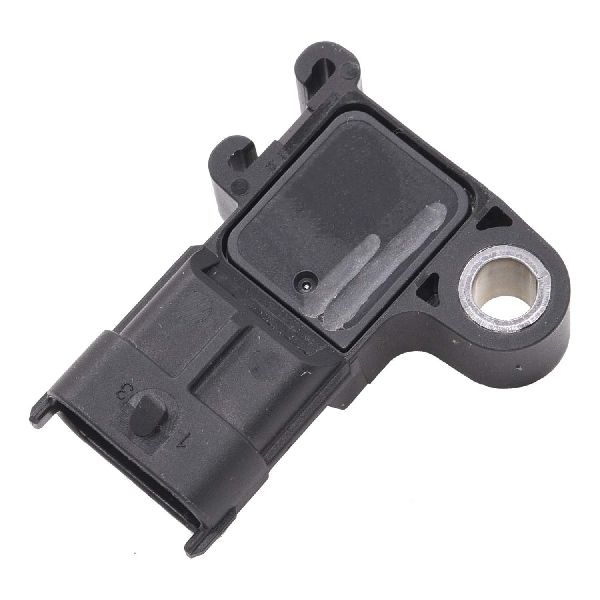
(OEM #CX-2423)— This sensor provides the reading that the PCM uses to infer barometric pressure on the 2.0L GDI engine. A faulty MAP sensor is the most common cause of code P2227 on this vehicle.
Trusted brands: Motorcraft, Bosch, NTK, Standard Motor Products
OEM price range: $80-$120
Aftermarket price range: $50-$100
Related Codes That Often Appear With This One
- P0106 — This code directly relates to 'MAP/Barometric Pressure Circuit Range/Performance,' indicating the core issue is likely with the MAP sensor's performance, which is causing the P2227 as a secondary flag.
- P0420 — While not directly related, a user on 2CarPros reported having both P2227 and P0420 (Catalyst System Efficiency Below Threshold). It's possible that a skewed MAP/BARO reading could lead to improper air/fuel mixtures, eventually affecting catalyst efficiency, or that a clogged catalyst could create backpressure issues affecting the MAP reading.
- P0456 and P0100 — According to NHTSA ODI #11219158, an owner reported that P2227 appeared simultaneously with P0100 and P0456 while investigating engine issues.
Technical Service Bulletins (TSBs) & Recalls

- TSB 18-2062: While not specifically for P2227, this TSB addresses wiring harness repairs for a host of drivability issues and codes on 2012-2014 Focus models with the 2.0L GDI engine, highlighting a known vulnerability in the engine wiring.
Mechanic-Grade Diagnostic Values
- MAP vs. BARO PID Comparison (KOEO) — expected: Readings should be within 0.5 PSI of each other and match local atmospheric pressure (approx. 14.7 PSI at sea level).. Failure: A significant difference between the MAP and BARO PIDs, or a value that doesn't match local atmospheric pressure, points to a faulty MAP sensor.
- MAP Sensor Signal Voltage (KOER - at Idle) — expected: Approximately 0.8V - 1.2V (high engine vacuum).. Failure: Voltage is stuck high (near 5V) or low (near 0V) and does not respond to throttle changes.
- MAP Sensor Signal Voltage (Wide-Open Throttle) — expected: Rises to approximately 4.5V - 4.8V (low engine vacuum).. Failure: Voltage fails to rise significantly when the throttle is opened quickly.
- MAP Sensor Reference Voltage — expected: 4.5V - 5.0V at the connector with KOEO.. Failure: Voltage is significantly lower than 4.5V or is absent, indicating a wiring or PCM issue.
- MAP Sensor Ground Circuit Resistance — expected: Less than 0.5 ohms between the ground pin on the connector and a known good chassis ground.. Failure: Resistance is greater than 1.0 ohm, indicating a poor ground connection which can cause erratic sensor readings.
Wiring & Ground Locations
- MAP Sensor Connector (C139) — Plugged directly into the Manifold Absolute Pressure (MAP) sensor, which is mounted on the front of the plastic intake manifold.. This 3-pin connector is the single interface for the MAP sensor's power, ground, and signal. Corrosion or loose pins here are a common cause of P2227. A wiring diagram shows a Black/Green wire for ground on one of the pins.
- Engine Grounds (G102, G104) — Bolted to the chassis on the left front side of the engine compartment, underneath the air filter box assembly.. These are primary ground points for the engine harness. Corrosion or looseness at these locations can create high resistance in the MAP sensor's ground circuit, leading to incorrect readings and triggering P2227. Cleaning the paint from under the terminal and ensuring a tight connection is a known fix for various electrical issues on this platform.
Real Owner Repair Stories
- 2CarPros.com Forum User & Expert (2016 Ford Focus 1.0L Turbo (Principle applies to 2.0L GDI)) — Stalling at idle, P2227 and P0420 (Catalyst Efficiency) codes present.
❌ Tried (didn't work) The user had already cleaned the MAF sensor, two MAP sensors, and the throttle body. An O2 sensor spacer was tried for the P0420 code but caused more codes.
✅ What actually fixed it The P2227 code stopped appearing after the user cleaned the various sensors. An expert technician suggested that the remaining P0420 code could indicate a clogged catalytic converter, which can cause excessive exhaust backpressure and affect the MAP sensor's readings, potentially being the root cause for the initial P2227. This highlights a link between exhaust restrictions and this pressure sensor code. - NHTSA ODI #11219158 — An owner reported using a code reader to test for error codes and discovered P2227 along with P0100 and P0456 while researching potential recall issues.
OEM Part Supersession History
Engineering Number on Part (e.g., KD07)→Catalog Part Number (e.g., CX-2423 or AG91-9F479-AB)— Ford often uses internal engineering/production numbers on the physical part that differ from the service part number used for ordering replacements.
Heads up: This is not a true supersession but a common point of confusion. Always order the part based on the vehicle's VIN and the catalog part number, not the number printed on the old sensor.
Diagnostic Flowchart
Other Known Issues on This Vehicle
Issues unrelated to this code that are worth knowing about as an owner of this generation:
- DPS6 'PowerShift' Dual-Clutch Automatic Transmission Failure 🔴 High — Extremely common across all model years (2012-2018). Problems include shuddering, jerking, delayed/rough shifting, and complete loss of power. Issues can start early in the vehicle's life. (Ref: Multiple TSBs issued and warranty extensions offered (up to 7 years/100,000 miles), but problems persist. Subject of class-action lawsuits.)
- Prematurely Worn Engine Mounts 🟠 Medium — Common, especially the passenger-side hydraulic mount. Can fail at low mileage (e.g., under 30,000 miles), causing excessive cabin vibration at idle, a rough feeling while driving, and clunking noises.
- Electronic Power Assisted Steering (EPAS) Failure 🔴 High — A significant number of owners, particularly of 2012-2014 models, report sudden and intermittent loss of power steering, often accompanied by a 'Power Steering Assist Failure' message. Can occur without warning while driving. (Ref: TSB SSM 46210 addresses steering noises, but complete rack failure often requires replacement. Some owners have traced the issue to corroded grounds.)
- Canister Purge Valve Failure 🟠 Medium — Widespread issue leading to a major recall (over 1 million vehicles). A faulty purge valve can cause erratic fuel gauge readings, stalling, and deformation of the fuel tank. (Ref: Yes, major recall issued for 2012-2018 models.)
Used vs. New Parts: Buying Guide for This Vehicle
When a used part is the smart pick: For this specific repair, buying a used MAP sensor is not recommended. It is a relatively low-cost electronic component where age, heat cycles, and internal contamination (oil vapor) are primary failure modes. The risk of getting a part that is already failing or will fail soon is high.
Donor-vehicle mileage cap: roughly under 30000 miles for the part to have meaningful remaining life.
What to inspect on the donor part:
- If buying used is unavoidable, source from a vehicle with the lowest possible mileage.
- Visually inspect the sensor's port for heavy oil or carbon buildup.
- Ensure the connector pins are clean, straight, and free of any corrosion.
- Avoid parts from vehicles that show signs of engine overheating or fire.
OEM-only on this vehicle (don't cheap out):
- While not strictly 'OEM-only', using a Motorcraft (OEM) MAP sensor is the highest probability fix. The PCM is calibrated for the specific response curve of the OEM sensor.
Aftermarket brands forum-validated for this vehicle:
- Bosch
- NTK / NGK
- Standard Motor Products (SMP)
Brands owners have reported issues with on this vehicle:
- Avoid no-name, unbranded parts from online marketplaces. Forum discussions frequently attribute repeat failures to cheap, off-brand electronic sensors that do not meet OEM specifications for accuracy and durability.
Real Owner Stories
Aggregated from forums and TSBs cited above. Mileages and costs reflect what owners reported in those sources.
2012 Ford Focus 2.0L GDI
Symptoms: Sputtering and a P2227 check engine light.
What fixed it: The owner found the engine air filter was very dirty. Cleaning the MAF sensor and replacing the dirty air filter resolved the issue.
Source hint: reddit.com/r/FordFocus - 'P2227 and spark plug codes?'
NHTSA Reported Incident
Symptoms: Multiple error codes including P0100, P2227, and P0456.
Details: An owner discovered these codes while using a reader to diagnose issues, which led them to research potential recalls on the NHTSA website. (NHTSA ODI #11219158)
Related OBD-II Codes
Frequently Asked Questions

I can't find the Barometric Pressure (BARO) sensor on my 2016 Focus to fix code P2227. Where is it located?
My scanner shows a BARO sensor fault, but the parts store sold me a MAP sensor. Is this correct for my 2.0L GDI Focus?
How can I test the MAP sensor on my 2012 Focus to see if it's causing the P2227 code?
Does TSB 18-2062 apply directly to code P2227 on my 2013 Ford Focus?
Could something as simple as a dirty air filter cause the P2227 code and sputtering on my Focus?
My wife's 2015 Ford Escape has the same 2.0L engine. Is it also prone to the P2227 code for the same reasons?
Helpful Videos

We Have This Part in Stock


The information in this article is provided for general reference and educational purposes only. Vehicle specifications, procedures, and part compatibility can vary by production date, trim level, and region. Always consult your vehicle's factory service manual and verify part numbers before purchasing or performing repairs. Safety-critical components such as airbags, seat belts, and braking systems should be installed by a qualified professional.
- Ford Focus:
- 🎬 Helpful Videos
- 🛍️ Shop This Part
- What's Unique About the 2012-2018 Ford Focus
- Symptoms You May Notice
- Most Likely Causes
- Rare But Worth Checking
- Diagnosis Steps
- Parts You'll Likely Need
- Related Codes That Often Appear With This One
- Technical Service Bulletins (TSBs) & Recalls
- Mechanic-Grade Diagnostic Values
- Wiring & Ground Locations
- Real Owner Repair Stories
- OEM Part Supersession History
- Diagnostic Flowchart
- Other Known Issues on This Vehicle
- Used vs. New Parts: Buying Guide for This Vehicle
- Real Owner Stories
- 2012 Ford Focus 2.0L GDI
- NHTSA Reported Incident
- Related OBD-II Codes
- Frequently Asked Questions
- 🎟️ Get 5% Off