

P2198 on 2006-2012 Porsche Cayman: O2 Sensor Stuck Rich Causes and Fixes
On a 2006-2012 Porsche Cayman, code P2198 indicates the pre-catalytic converter oxygen sensor on Bank 2 is stuck reading rich. Before replacing the sensor, thoroughly inspect the exhaust system for tiny leaks between the cylinder head and the sensor, as this is a common and tricky cause for this code on this platform. A smoke test is the most effective diagnostic step.
- P2198 means the pre-catalyst O2 sensor on Bank 2 (driver's side on LHD cars) is detecting a rich fuel mixture.
- Before replacing any parts, perform a smoke test to check for small exhaust leaks, a very common issue on this car that tricks the sensor.
- Do not immediately assume the O2 sensor is bad; it's often just accurately reporting a problem caused by something else. Swapping sensors between banks is a good way to confirm a faulty sensor.
- Continued driving can damage the expensive catalytic converter, so it's best to address the issue promptly.
What's Unique About the 2006-2012 Porsche Cayman

While the official definition points to a rich-running condition, owner experiences on the Porsche 987 platform (which includes this Cayman) show this code is often triggered by a very small, hard-to-find exhaust leak. A leak between the cylinder head and the sensor can draw in ambient air (the Venturi effect), which paradoxically makes the sensor read lean. The DME then overcompensates by adding more fuel, which causes the sensor to eventually read 'stuck rich'. This makes diagnosis trickier than on other vehicles where a P2198 code more directly points to a bad sensor or a fuel delivery problem.
Generation note: The 2006-2012 model years cover the entire first generation (987) of the Porsche Cayman. This includes the initial 2.7L and 3.4L M97 engines (2006-2008) and the updated 2.9L and 3.4L 9A1 DFI engines (2009-2012). The function of the oxygen sensors and the exhaust layout is similar across these engines, making the causes and diagnostics for P2198 consistent. However, the 987.2's Direct Fuel Injection (DFI) system runs at a much higher pressure, which can introduce different diagnostic considerations for fuel-related causes.
Symptoms You May Notice
- Check Engine Light is illuminated
- Reduced fuel economy
- Slightly rough or uneven idle, especially when the engine is warm
- Possible smell of gasoline from the exhaust
- Failed emissions test due to high hydrocarbons (HC) and carbon monoxide (CO)
- Sooty exhaust tip on Bank 2 side (driver's side on LHD cars)
- Immediately replacing the oxygen sensor. As noted in multiple owner forums, the sensor itself is often not the root cause. An exhaust leak is a very common culprit on this platform and should be ruled out first with a smoke test to avoid wasting money on a new sensor.
Most Likely Causes

- Exhaust Leak 🔴 High Probability The flat-6 exhaust system has numerous joints (manifold-to-head, manifold-to-catalyst) that can develop small leaks from heat cycles and vibration. The flange studs are known to corrode and fail. Even a tiny pinhole leak in the manifold or catalytic converter housing (before the sensor) can trigger this code.
How to confirm: Perform a smoke test on the exhaust system 🎬 Watch: How to find exhaust leaks in under 5 minutes with the engine cold. Focus on the manifold, gaskets, and all welds on Bank 2 (cylinders 4-5-6) before the pre-cat O2 sensor. A visual inspection for black soot trails around flanges is a clue. One owner on Rennlist identified a tiny leak using a mechanic's stethoscope near the pre-cat sensor, which he then sealed with high-temp JB Weld as a temporary fix.
Typical fix: Repairing the leak. This may involve replacing a gasket (e.g., at the manifold-to-head flange), tightening hardware, or welding a crack. In the case of a cracked manifold or rotted flange studs, the affected component will need replacement.
Est. part cost: $15-$600 - Faulty Pre-Catalytic Oxygen (O2) Sensor 🟡 Medium Probability Oxygen sensors are wear items with a finite lifespan, typically 60,000-100,000 miles. Contamination from oil (e.g., from a failing AOS) or coolant can also cause premature failure.
How to confirm: After confirming no exhaust leaks, use a capable OBD-II scanner to graph the voltage of Bank 2, Sensor 1. A healthy sensor's voltage should rapidly switch between approximately 0.1V and 0.9V. If the voltage is stuck high (e.g., >0.8V), it is likely biased. A definitive test is to swap the Bank 1 and Bank 2 pre-cat sensors. If the code moves to P2196 (Bank 1 Stuck Rich), the sensor is bad. If the code remains P2198, the problem lies elsewhere. The heater circuit resistance can also be checked; a new Bosch sensor should have a resistance of around 2.5-3.0 ohms, while older sensors might read higher.
Typical fix: Replace the Bank 2, Sensor 1 oxygen sensor. Use a 22mm oxygen sensor socket. It is critical to unplug the connector before unthreading the sensor to prevent twisting 🎬 See this guide on how to safely disconnect O2 sensors and damaging the new sensor's wires.
Est. part cost: $100-$250 - Leaking Fuel Injector ⚪ Low Probability While not exceptionally common, a fuel injector on one of the Bank 2 cylinders (4, 5, or 6) can become stuck partially open, dripping excess fuel and creating a localized rich condition.
How to confirm: This is more complex. A mechanic can perform a fuel pressure leak-down test. Another method is to remove the fuel rail with injectors attached, pressurize the system, and watch for drips from the injector nozzles on Bank 2. Live data showing fuel trims significantly different on Bank 2 compared to Bank 1 can also point to this.
Typical fix: Replace the faulty fuel injector and its seals. It is often recommended to replace injectors as a set or at least the full bank.
Est. part cost: $150-$400 per injector
Rare But Worth Checking
- High Fuel Pressure: A failing fuel pressure regulator can cause system-wide high pressure, leading to a rich condition. This would likely affect both banks and trigger P2196 along with P2198.
- Faulty Mass Airflow (MAF) Sensor: A dirty or failing MAF sensor can under-report the amount of air entering the engine, causing the DME to calculate an incorrect (rich) fuel mixture. This would typically affect both banks. Unplugging the MAF to see if idle quality changes is a common, if crude, diagnostic step.
- Damaged Wiring or Connectors: Check the wiring harness for the Bank 2 O2 sensor for any signs of melting, chafing, or corrosion at the connector pins. A new sensor's wire can be damaged during installation if twisted.
- Failing Air-Oil Separator (AOS): A failing AOS can cause oil to be pulled into the intake, which can foul the O2 sensor and affect its readings. This is usually accompanied by a large puff of smoke on startup.
Diagnosis Steps

- Verify the code with a quality OBD-II scanner. Note any other codes present, especially P2196.
- Perform a cold-engine smoke test on the exhaust system. This is the most critical step. Introduce smoke into a tailpipe and look for leaks at all flanges, welds, and gaskets on Bank 2 (driver's side in LHD cars), from the cylinder head to the pre-cat O2 sensor.
- While the smoke test runs, visually inspect for soot trails around exhaust joints, which indicate a leak.
- If no leaks are found, use a scanner to monitor live data. Graph the voltage for Bank 1 Sensor 1 and Bank 2 Sensor 1. Compare them. Bank 1 should be switching rapidly (~0.1V to 0.9V). If Bank 2 is stuck high (>0.8V), proceed to the next step.
- To definitively test the sensor, swap the pre-cat O2 sensors between Bank 1 and Bank 2. Clear the codes and drive the car. If the fault code changes to P2196 (Bank 1), the O2 sensor you moved is faulty. If P2198 returns, the sensor is good and the problem is elsewhere.
- If the sensor is confirmed to be the issue, replace the Bank 2, Sensor 1 oxygen sensor.
- If the problem persists after ruling out leaks and the sensor, investigate the fuel system. Check fuel trims for Bank 2. Consider a faulty fuel injector on cylinders 4, 5, or 6.
- As a final check, inspect the MAF sensor for contamination and check fuel pressure to ensure it's within spec.
Parts You'll Likely Need

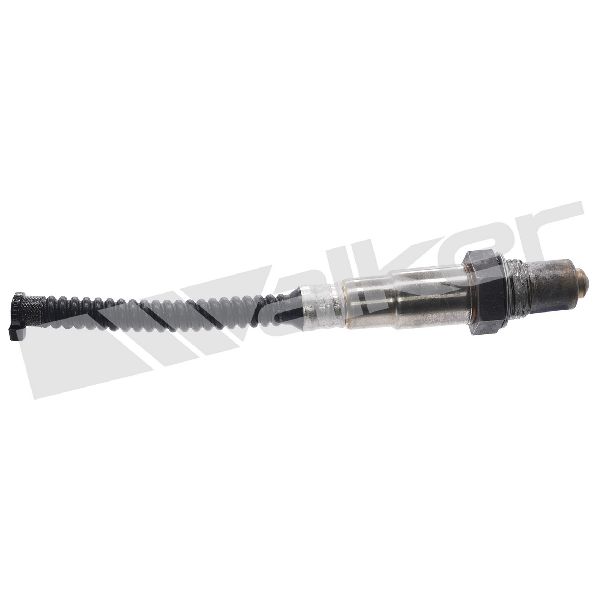
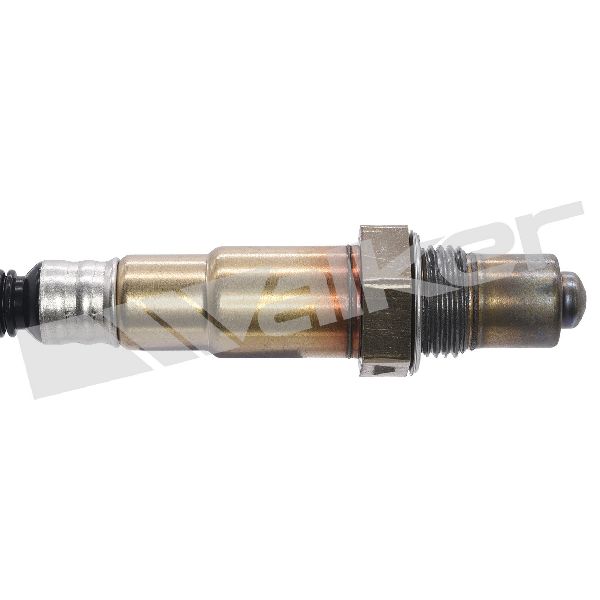
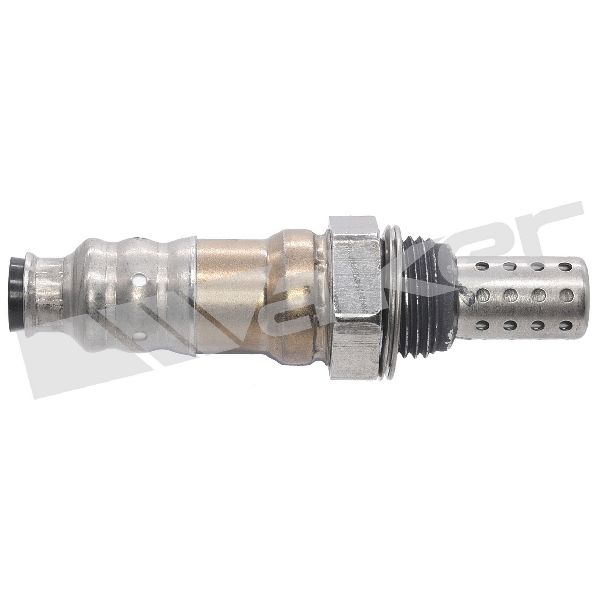
- Oxygen Sensor (Bank 2, Sensor 1)
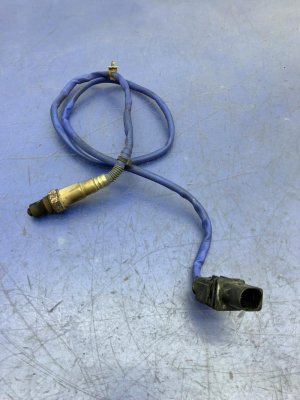
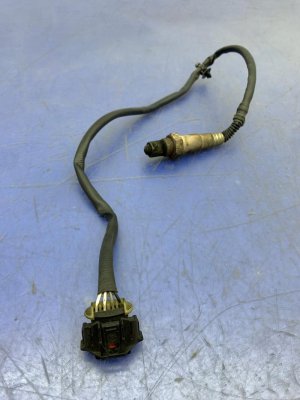
(OEM #98760612601 (for 987.1 M97 engines, check VIN) / 9A160612300 (for 987.2 9A1 engines, check VIN))— This is the sensor that reports the fault. 🎬 Watch: Step-by-step walkthrough for replacing a Cayman O2 sensor While not always the root cause, it is the most directly implicated part and may fail or become contaminated.
Trusted brands: Bosch (OEM supplier), NTK
OEM price range: $200-$280
Aftermarket price range: $100-$180 - Exhaust Manifold Gasket (Bank 2)
(OEM #99711110701 (for 987.1 M97) / 9A111110700 (for 987.2 9A1))— If an exhaust leak is found at the manifold-to-head connection, this gasket will need to be replaced. It's a common leak point.
Trusted brands: Victor Reinz, Elring
OEM price range: $20-$40
Aftermarket price range: $10-$25
Related Codes That Often Appear With This One
- P2196: O2 Sensor Signal Biased / Stuck Rich (Bank 1, Sensor 1) - If both banks are running rich, this points to a systemic issue like a MAF sensor or fuel pressure problem.
Platform-Specific Known Issues
- Owner Experience: Finding a Pinhole Leak: A user on the Rennlist forums with code P2198 on their 987 chased the issue after replacing O2 sensors with no success. Using a mechanic's stethoscope on the Bank 2 catalytic converter pipe, they were able to hear a 'tiny leak' that was not audible otherwise. Sealing this pinhole resolved the check engine light, confirming how sensitive these cars are to minute pre-sensor exhaust leaks.
- Aftermarket Headers: Owners who have installed aftermarket exhaust headers sometimes report receiving P2198 and/or P2196 codes. This can be due to small leaks at the new flange connections or changes in exhaust flow characteristics that the stock DME tune has trouble adapting to.
Mechanic-Grade Diagnostic Values
- O2 Sensor Heater Circuit Resistance — expected: A new Bosch sensor should measure approximately 2.5 - 3.1 ohms when cold. Some forum users report values between 8-10 ohms as acceptable for the heater circuit on similar Bosch sensors.. Failure: An open circuit (infinite resistance) or a dead short (0 ohms) indicates a failed heater element. Very high resistance on a cold sensor (e.g., >15 ohms) suggests it is failing.
- Long Term Fuel Trim at Idle (RKAT / TRA) — expected: Should be close to 0%. A range of -3.0% to +3.0% is considered healthy.. Failure: A large negative number (e.g., less than -6%) indicates the DME is significantly reducing fuel, confirming a rich condition that it is trying to correct. This supports the P2198 fault.
- Long Term Fuel Trim at Cruise (FRA) — expected: Should be close to a factor of 1.0.. Failure: A value significantly below 1.0 (e.g., 0.90) indicates the DME is pulling fuel in the upper RPM range.
- Continuity Test (Wiring Harness) — expected: Less than 5.0 ohms between the sensor connector pin and the corresponding DME pin.. Failure: Resistance greater than 5.0 ohms or an open circuit (OL) indicates a break or high resistance in the wiring harness that needs to be traced and repaired.
Scan Tool Commands That Help
- Porsche PIWIS Tester: Guided Fault Finding (GFF) — When a fault like P2198 is stored, the GFF function provides a step-by-step diagnostic plan, including required value checks, component tests, and wiring diagram references to systematically isolate the cause.
- Porsche PIWIS Tester: Oscilloscope / Digital Multimeter — To directly measure and graph the O2 sensor's voltage signal and heater circuit characteristics in real-time. This allows a technician to visually confirm if the sensor is 'stuck' or lazy, and to test the integrity of the wiring under load.
Wiring & Ground Locations
- DME Connector II (24-pin) — The DME (Digital Motor Electronics) control unit is located in the rear trunk, behind the carpeted liner on the driver's side (LHD).. This connector contains the primary signal and heater circuit pins for the oxygen sensors. Testing for continuity and voltage here can rule out the entire wiring harness from the sensor to the computer.
- DME Connector II, Pin 16 — On the 24-pin Connector II of the DME 7.8.. This is the specific pin for the 'Signal, oxygen sensor 2 ahead of catalytic converter'. A technician can back-probe this pin to check the signal voltage directly at the DME.
- DME Connector II, Pin 13 — On the 24-pin Connector II of the DME 7.8.. This is the pin for the 'Oxygen sensor heating 2 ahead of catalytic converter'. This is one of the two wires for the heater circuit for Bank 2, Sensor 1.
- Engine Ground Strap — There are several critical ground points. One major engine-to-chassis ground is located near the front of the passenger side cylinder head. Another key ground point is on the bell housing, near the oil filler cap area.. A poor engine ground can cause floating voltages and erratic sensor readings, including from the O2 sensors which rely on a stable ground reference. While less common than an exhaust leak, checking that main ground straps are clean and tight is a valid step if electrical issues are suspected.
Real Owner Repair Stories
- 6speedonline.com user 'Tper8181' (Porsche Boxster S (987)) — Persistent P2198 code.
❌ Tried (didn't work) Replaced Air-Oil Separator (AOS), Replaced all four O2 sensors, Replaced purge valve, Replaced oil cap, Replaced fuel cap, Replaced fuel pump, Replaced all coil packs
✅ What actually fixed it The owner took the car to an experienced exhaust fabricator who found and welded several pinholes in the Bank 2 catalytic converter housing. This finally resolved the code. - Rennlist.com user 'Cemlo' (Porsche Cayman (987)) — P2198 code that would only trigger at idle. At 2000 RPM, readings looked normal.
❌ Tried (didn't work) Replaced both O2 sensors on Bank 2
✅ What actually fixed it After replacing sensors did not work, the owner used a mechanic's stethoscope on the catalytic converter pipe. They heard a tiny leak just behind the pre-cat sensor that was not audible by ear. They sealed the hole with high-temperature exhaust JB Weld, which resolved the check engine light.
"I Checked Everything" — The Actual Cause
- In one confirmed case, a standard smoke test may not have revealed the tiny pinholes in the catalytic converter housing itself that were causing the issue. The owner had replaced nearly every related component (AOS, fuel pump, all O2 sensors, purge valve) before an experienced welder identified and repaired the pinholes in the cat, finally fixing the P2198 code.
Model Year Variations Within This Range
- 2006-2008 (987.1): These models use the M97 engine with traditional port fuel injection. Fuel-related causes for P2198 would point to components like port injectors and a lower-pressure fuel system (typically 40-60 psi).
- 2009-2012 (987.2): These models use the 9A1 engine with Direct Fuel Injection (DFI). This system operates at extremely high pressures (up to 3,000 psi) and uses different high-pressure injectors and a high-pressure fuel pump (HPFP). While less common, a DFI injector failure could be a cause. The O2 sensor part numbers are also different from the 987.1 models.
Diagnostic Flowchart
Other Known Issues on This Vehicle
Issues unrelated to this code that are worth knowing about as an owner of this generation:
- Cylinder Bore Scoring (M97 Engine) 🔴 High — Primarily affects 3.4L 'S' models (2006-2008). Less common on 2.7L base models. Onset can be from 30k-80k miles but is not guaranteed. Risk is higher in cold climates and with short-trip driving habits.
- Air-Oil Separator (AOS) Failure 🟠 Medium — A common failure item across all 987 models. Symptoms include a large puff of blue/white smoke on startup, a rough idle, and a vacuum-like squealing noise from the engine bay. Failure can lead to oil being ingested into the intake, potentially causing other issues.
- Intermediate Shaft (IMS) Bearing Failure 🟡 Low — This is a notorious issue for earlier M96 engines, but the M97 engine used in all 987.1 Caymans (2006-2008) has a much more robust, non-serviceable bearing with a very low failure rate (<1%). The 9A1 engines in 987.2 models (2009-2012) do not have an IMS bearing at all.
- Water Pump Failure 🟠 Medium — The water pump is a common wear item, with failures (leaks or bearing noise) often occurring every 30,000-50,000 miles. It is considered a preventative maintenance item by many owners.
- Cracked Ignition Coils 🟡 Low — The original ignition coils are prone to developing cracks from heat, leading to misfires. Porsche has released updated versions. It's common practice to replace all coils if one fails.
- Corroded Exhaust Flange Hardware 🟡 Low — The mild steel studs and nuts on the triangular exhaust flanges (connecting manifolds to the rest of the exhaust) are known to corrode and fail, causing exhaust leaks.
Used vs. New Parts: Buying Guide for This Vehicle
When a used part is the smart pick: For major exhaust components like the exhaust manifold or catalytic converter assembly, a used part from a reputable Porsche dismantler can be a cost-effective solution, especially if the failure is a crack or corrosion. These parts have no electronic components and their condition is easily verified visually.
Donor-vehicle mileage cap: roughly under 80000 miles for the part to have meaningful remaining life.
What to inspect on the donor part:
- For exhaust manifolds/cats, check for any visible cracks, especially around welds and flanges.
- Ensure all mounting studs are present and not excessively corroded or broken.
- Verify the part is from a non-accident vehicle to avoid unseen stress fractures.
- Check the interior of the catalytic converter (if visible) to ensure the honeycomb structure is intact and not melted or broken apart.
OEM-only on this vehicle (don't cheap out):
- Mass Airflow (MAF) Sensor: While aftermarket MAF sensors are available, many owners report issues with incorrect readings leading to persistent fuel trim problems. Using a genuine Bosch or OEM Porsche part is highly recommended to avoid further diagnostic headaches.
- Oxygen (O2) Sensor: Stick with the OEM supplier, Bosch, or NTK. Cheaper, no-name sensors are notorious for having incorrect heater resistances or slow response times, which can cause the same or new codes to appear.
Aftermarket brands forum-validated for this vehicle:
- Bosch (for O2 and MAF sensors - they are the original equipment supplier)
- NTK (for O2 sensors)
- Victor Reinz / Elring (for exhaust gaskets)
Brands owners have reported issues with on this vehicle:
- Unbranded or generic 'white-box' electronic sensors (O2, MAF) from online marketplaces are frequently cited in forums as being problematic and a waste of money.
Real Owner Stories
Aggregated from forums and TSBs cited above. Mileages and costs reflect what owners reported in those sources.
2006-2012 Porsche Cayman (987)
Symptoms: Check engine light with code P2198 persisted even after replacing the O2 sensors.
What fixed it: The owner used a mechanic's stethoscope on the Bank 2 catalytic converter pipe and found a tiny, inaudible leak. Sealing this pinhole leak resolved the code.
Source hint: Rennlist.com: A thread in the 987 Forum titled 'Fault code P2198'
2005-2012 Porsche Boxster S (987)
Symptoms: Persistent P2198 code after replacing numerous parts.
What fixed it: An experienced welder found and repaired pinholes in the Bank 2 catalytic converter housing, which resolved the issue.
Source hint: 6speedonline.com: In a thread titled 'P2198 Boxster s'
2005-2012 Porsche 911 (997)
Symptoms: Received both P2196 (Bank 1) and P2198 (Bank 2) codes after installing aftermarket exhaust headers. The problem continued after replacing the O2 sensors.
What fixed it: The issue was traced back to the aftermarket headers, indicating the cause was likely a small leak at a new flange connection or a tuning-related problem.
Source hint: Rennlist.com: A 997 owner with similar codes (P2196/P2198) after installing aftermarket headers
Related OBD-II Codes
Frequently Asked Questions
I have a P2198 code on my Cayman. Which side of the engine is Bank 2?
What is the most common cause of a P2198 code on these cars?
I installed aftermarket headers on my Cayman and now I have this code. Is that related?
How can I definitively test my Bank 2 oxygen sensor without just replacing it?
Can a failing Air-Oil Separator (AOS) cause a P2198 code?
My Cayman is a 2007 model. Should I be worried about the IMS bearing issue with this code?
Helpful Videos
Used OEM Parts in Stock

New Aftermarket Parts Available



The information in this article is provided for general reference and educational purposes only. Vehicle specifications, procedures, and part compatibility can vary by production date, trim level, and region. Always consult your vehicle's factory service manual and verify part numbers before purchasing or performing repairs. Safety-critical components such as airbags, seat belts, and braking systems should be installed by a qualified professional.
- Porsche Cayman:
- 🎬 Helpful Videos
- 🛍️ Shop This Part
- What's Unique About the 2006-2012 Porsche Cayman
- Symptoms You May Notice
- Most Likely Causes
- Rare But Worth Checking
- Diagnosis Steps
- Parts You'll Likely Need
- Related Codes That Often Appear With This One
- Platform-Specific Known Issues
- Mechanic-Grade Diagnostic Values
- Scan Tool Commands That Help
- Wiring & Ground Locations
- Real Owner Repair Stories
- "I Checked Everything" — The Actual Cause
- Model Year Variations Within This Range
- Diagnostic Flowchart
- Other Known Issues on This Vehicle
- Used vs. New Parts: Buying Guide for This Vehicle
- Real Owner Stories
- 2006-2012 Porsche Cayman (987)
- 2005-2012 Porsche Boxster S (987)
- 2005-2012 Porsche 911 (997)
- Related OBD-II Codes
- Frequently Asked Questions
- 🎟️ Get 5% Off