

P2196 on 2010-2011 Mercedes-Benz E 550: Causes and Fixes for a Stuck Rich O2 Sensor
This code most often indicates a failed upstream oxygen (O2) sensor on the passenger side (Bank 1) of the engine. Replacing the Bank 1, Sensor 1 O2 sensor is the most common fix. An aftermarket Bosch sensor costs around $60-$100, while an OEM part is typically $150-$200. It is a DIY-friendly repair for those with the right tools, but it's crucial to rule out a true rich condition from other causes like a leaking fuel injector before replacing the sensor.
- P2196 points to a rich fuel mixture signal from the passenger-side upstream O2 sensor.
- The most likely culprit is a failed O2 sensor, which is a common wear item.
- Before replacing the sensor, use a scanner's live data to confirm its voltage is stuck high (>0.8V).
- If a new sensor doesn't fix the issue, investigate actual rich conditions like a leaking fuel injector on Bank 1.
- Ignoring this code can lead to poor fuel mileage and expensive catalytic converter damage.
What's Unique About the 2010-2011 Mercedes-Benz E 550
On the M273 engine, while the O2 sensor itself is a primary suspect, this platform is also known for issues that can cause a true rich condition. These include leaking fuel injectors and, less commonly, a stuck-open EVAP purge valve. Therefore, while the O2 sensor is the most probable cause, it's important to rule out an actual rich-running condition before replacing parts to avoid misdiagnosis.
Symptoms You May Notice
- Check Engine Light is on
- Reduced fuel economy.
- Rough or uneven idle.
- Engine hesitation or loss of power.
- Black smoke from the exhaust.
- Smell of gasoline from the exhaust or around the vehicle.
- Replacing the O2 sensor without first confirming it's the problem. The code indicates a rich signal, which could be the sensor reporting a real problem (like a leaking injector) accurately.
- Assuming the O2 sensor is the only possible cause and not investigating other fuel system components.
Most Likely Causes
- Failed Upstream Oxygen Sensor (Bank 1, Sensor 1) 🔴 High Probability Oxygen sensors are wear-and-tear items that degrade over time due to constant exposure to high exhaust temperatures and contaminants like oil or coolant. Their performance diminishes with age, making failure a common issue on higher-mileage vehicles, leading them to send a false 'stuck rich' signal.
How to confirm: Use an OBD-II scanner to monitor live data for the Bank 1, Sensor 1 voltage. A healthy sensor's voltage should fluctuate rapidly between approximately 0.1V and 0.9V. If the voltage is stuck high (e.g., above 0.8V), the sensor is likely faulty. Swapping the Bank 1 and Bank 2 upstream sensors can also confirm the fault; if the code changes to P2198 (Bank 2 Stuck Rich), the sensor is bad. A new code, P2237, after replacement can indicate a wiring issue or a faulty new sensor.
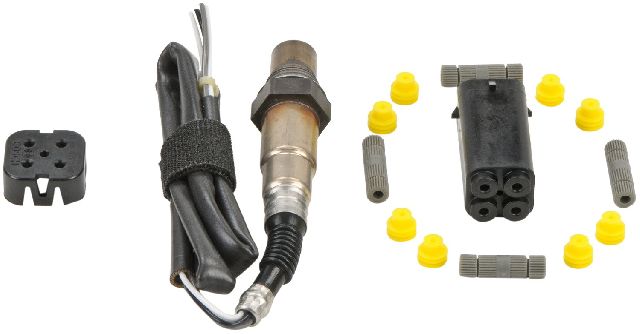
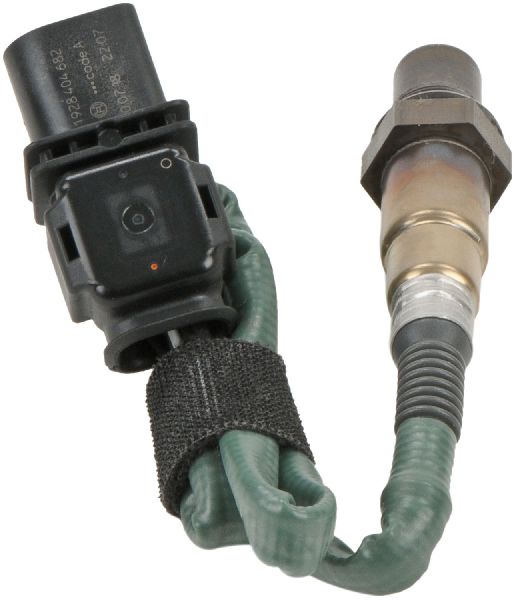
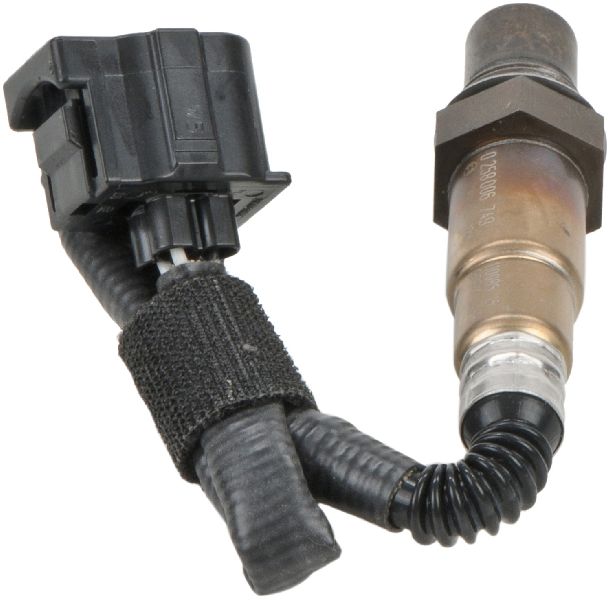
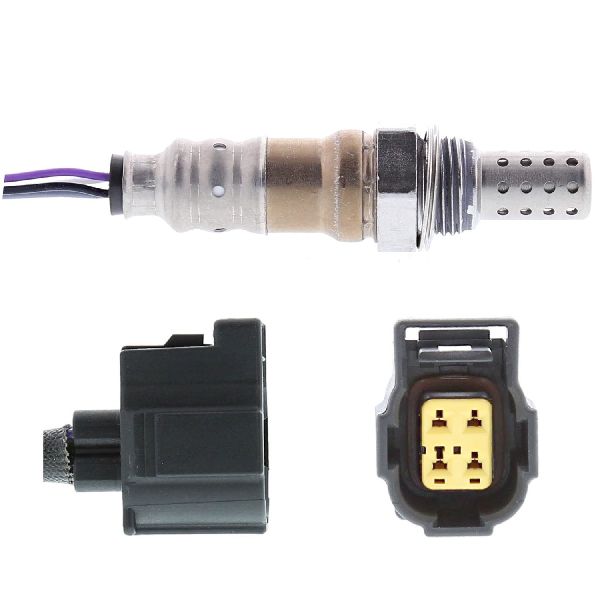
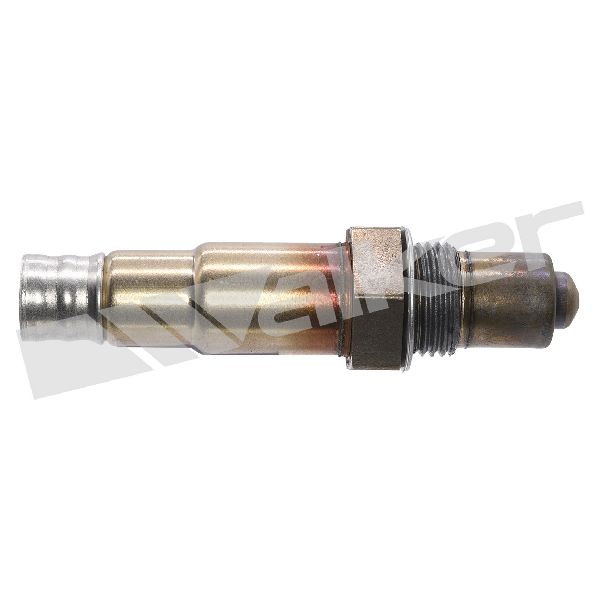
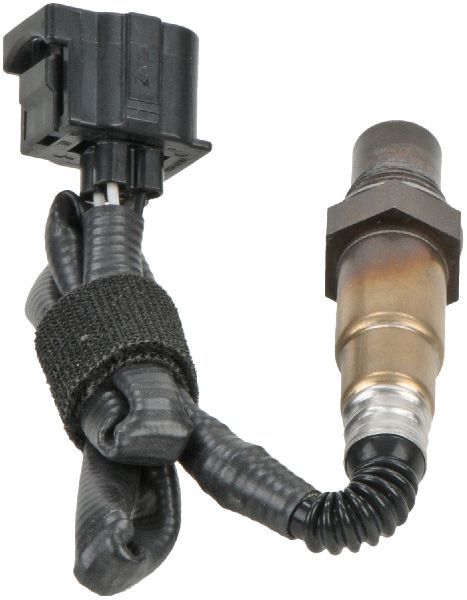
Typical fix: Replace the Bank 1, Sensor 1 (passenger side, pre-catalytic converter) oxygen sensor. The OEM part number is often cited as A0035427318 or A0045426918, with Bosch (e.g., 17099) being a common and reliable aftermarket equivalent.
Est. part cost: $60-$200 - Leaking Fuel Injector(s) on Bank 1 🟡 Medium Probability Fuel injectors can fail internally or their seals can degrade, causing excess fuel to drip into one or more cylinders. This creates a genuine rich condition that the O2 sensor correctly reports.
How to confirm: If replacing the O2 sensor doesn't fix the code, the next step is to check for an actual rich condition. A mechanic can perform a fuel injector balance test or remove the fuel rail to visually inspect for leaks. Checking the spark plugs on Bank 1 can also provide clues; a dark, sooty, or fuel-fouled plug indicates a rich mixture in that cylinder. A strong smell of gas in the engine oil is another key indicator.
Typical fix: Replace the faulty fuel injector(s) on Bank 1 and their seals. It is often recommended to replace all injectors on the affected bank at the same time.
Est. part cost: $100-$300 per injector - Faulty EVAP Purge Valve ⚪ Low Probability The canister purge valve (or regeneration valve) can sometimes get stuck open, allowing un-metered fuel vapor from the gas tank to enter the intake manifold at the wrong time, leading to a rich mixture that the O2 sensor detects.
How to confirm: Test the purge valve to see if it holds a vacuum when closed (when no voltage is applied). If it allows air to pass through, it is stuck open and needs replacement. The valve is located under the driver's side air intake duct.
Typical fix: Replace the canister purge valve. Ensure the new valve is installed with the arrow pointing in the correct direction of flow, towards the throttle body.
Est. part cost: $50-$120 - Damaged Wiring or Connectors ⚪ Low Probability Wiring for O2 sensors is routed near hot exhaust components and can become brittle, melted, or damaged over time, causing a short or open in the signal wire that can be misinterpreted by the ECU as a rich signal.
How to confirm: Visually inspect the wiring harness and connector for the Bank 1 Sensor 1 O2 sensor. Look for any signs of melting, chafing, corrosion, or loose pins. A multimeter can be used to check for continuity and voltage between the sensor connector and the ECM.
Typical fix: Repair the damaged section of the wiring harness or replace the connector. In a forum case, a P2237 code appeared after an O2 sensor replacement, pointing to a broken wire or loose connection.
Est. part cost: $10-$50 for repair materials
Rare But Worth Checking
- High Fuel Pressure: A failing fuel pressure regulator can cause system-wide high fuel pressure, forcing all banks to run rich. This would likely trigger codes for both banks (P2196 and P2198).
- Faulty Mass Airflow (MAF) Sensor: A dirty or failing MAF sensor can miscalculate the amount of air entering the engine, causing the ECM to command an incorrect amount of fuel. This usually affects both banks and may be accompanied by lean codes if there is an unmetered air leak.
- Engine Control Module (ECM) Fault: This is extremely rare, but an internal failure of the ECM can cause it to misinterpret the O2 sensor signal or have a corrupted driver. This should only be considered after all other possibilities have been exhaustively ruled out.
Diagnosis Steps
- Connect an OBD-II scanner and confirm P2196 is the active code. Note any other codes present, such as P0172 or misfire codes.
- View live data for the Bank 1 Sensor 1 and Bank 2 Sensor 1 oxygen sensors. Bank 1 is the passenger side.
- Observe the voltage for Bank 1 Sensor 1. If it is stuck high (consistently >0.8V) while Bank 2 Sensor 1 is fluctuating normally (0.1V-0.9V), the sensor or its wiring is the primary suspect.
- If the sensor signal appears stuck, perform a visual inspection of the sensor's wiring and connector for any obvious damage, melting, or corrosion.
- To definitively test the sensor, swap the upstream O2 sensors between Bank 1 and Bank 2 (if they are the same part number and accessible). Clear the codes and drive the vehicle. If the code returns as P2198 (Bank 2 Stuck Rich), the sensor you moved is faulty.
- If the P2196 code returns after the swap, the issue is not the sensor but an actual rich condition on Bank 1.
- Inspect the spark plugs on Bank 1 (cylinders 1-4) for signs of running rich (dark, sooty, fuel-fouled deposits). This can help isolate the issue to specific cylinders.
- Check for leaking fuel injectors on Bank 1. This can be done via a professional balance test or by checking for fuel smell in the oil.
- Test the EVAP purge valve to ensure it is not stuck open, allowing fuel vapors into the intake at idle.
- Check fuel pressure to ensure it is within the manufacturer's specification, ruling out a faulty fuel pressure regulator.
Parts You'll Likely Need
- Upstream Oxygen Sensor (Bank 1, Sensor 1)
(OEM #A0035427318 / A0045426918)— This is the most frequent failure point for a P2196 code. The sensor itself wears out and begins to send an incorrect, fixed signal to the engine computer.
Trusted brands: Bosch (OEM supplier, e.g., part number 17099), Denso, Genuine Mercedes-Benz
OEM price range: $150-$200
Aftermarket price range: $60-$100
Related Codes That Often Appear With This One
- P0172 — System Too Rich (Bank 1). This is a more general code indicating the long-term fuel trim has reached its limit trying to correct a rich condition on Bank 1, which directly relates to the stuck rich signal from the O2 sensor.
- P0301-P0304 — Cylinder misfire codes on Bank 1. A very rich condition from a leaking injector can foul the spark plug and cause misfires on the affected cylinders.
- P2237 — O2 Sensor Positive Current Control Circuit/Open (Bank 1, Sensor 1). This code can appear after replacing the O2 sensor and may indicate a wiring harness issue or a defective new sensor.
Platform-Specific Known Issues
- The M273 engine, like its M272 V6 counterpart, can suffer from intake manifold failures, though this typically sets P2004/P2005/P2006 codes. However, a significant vacuum leak or internal manifold issue could potentially contribute to fuel trim problems.
- Oil leaks from the camshaft adjuster magnets (solenoids) are a known issue. Oil can wick through the wiring harness and contaminate other sensors, including O2 sensor connectors, potentially causing signal issues.
Mechanic-Grade Diagnostic Values
- Upstream O2 Sensor (Bank 1, Sensor 1) Live Data Voltage — expected: Rapidly fluctuating between ~0.1V (lean) and ~0.9V (rich) on a warm, running engine.. Failure: Voltage is stuck high, consistently reading above 0.8V.
- Fuel Pressure at Fuel Rail (Idle) — expected: Approximately 50-55 PSI (3.4 - 3.8 Bar).. Failure: Significantly higher pressure (e.g., >60 PSI) indicates a potential fuel pressure regulator failure. A user with an M273 engine reported pressure exceeding 12 BAR (174 PSI) due to a regulator issue.
- Fuel Injector Resistance — expected: Typically between 12 and 17 ohms, with all injectors on the engine being within 0.5 ohms of each other.. Failure: An injector reading significantly lower or higher than the others, or showing an open circuit (infinite resistance).
- Short-Term and Long-Term Fuel Trims (Bank 1) — expected: Should hover close to 0%, ideally within +/- 10%.. Failure: For a P2196 code, both short-term (STFT) and long-term (LTFT) fuel trims will be highly negative (e.g., -25%) as the ECM tries to compensate for the perceived rich condition.
Scan Tool Commands That Help
- Mercedes XENTRY/DAS: O2 Sensor Test — To actively test the function and response time of the oxygen sensors beyond just observing live data. The system can guide the technician through steps to verify sensor heater circuits and signal response.
- Mercedes XENTRY/DAS: Fuel Injector Quantity Comparison — If a leaking injector is suspected, this function can help identify deviations in fuel delivery between cylinders, although a physical balance test is more definitive.
- Mercedes XENTRY/DAS: Purge Valve Actuation — To command the EVAP purge valve open and closed while monitoring its effect on fuel trims, confirming if it is sticking open and causing a rich condition.
Wiring & Ground Locations
- W11 — Engine bay, specific location for the ECM/ECU wiring assembly ground.. A poor ground for the engine control module can cause erratic sensor readings, including the O2 sensor signal. Ensuring this ground is clean and secure is a critical step in diagnosing electrical faults.
- W16/4 — In the engine bay, under or near the battery tray, at the front wheelhouse.. This is a major chassis ground point. While not directly for the O2 sensor, a corroded main ground can introduce electrical noise and voltage offsets throughout the system, affecting sensitive sensor signals.
- Engine-to-Chassis Ground Strap — A large braided cable running from one of the engine mount arms to the body of the car, sometimes near the gas pedal area inside the cabin's firewall.. This is the main ground path for the entire engine block. Corrosion on this strap, especially at the body connection point, can cause a host of electrical issues, including problems with sensors that ground through the engine block.
Real Owner Repair Stories
- MBClub UK & Reddit Forums (Various Mercedes models with M272/M273 engines) — Persistent, difficult-to-diagnose oxygen sensor codes, including rich or lean codes, and sensor circuit faults.
❌ Tried (didn't work) Replacing the oxygen sensor multiple times, Cleaning the O2 sensor connector
✅ What actually fixed it The root cause was oil leaking from the camshaft adjuster magnets (solenoids) and wicking through the engine wiring harness via capillary action, eventually contaminating the O2 sensor connector and the sensor itself. The fix required replacing the leaking cam magnets, installing 'sacrificial pigtails' (Part No. 2711500156) to stop future wicking, and thoroughly cleaning or replacing the affected portion of the harness and the O2 sensor.
Model Year Variations Within This Range
- 2010-2011: The 2010-2011 E 550 uses the naturally aspirated 5.5L M273 V8 engine. Starting in the 2012 model year, the E 550 was equipped with a 4.6L twin-turbo M278 V8. Diagnostic procedures and some component locations may differ between these engines.
Diagnostic Flowchart
Other Known Issues on This Vehicle
Issues unrelated to this code that are worth knowing about as an owner of this generation:
- Intake Manifold Swirl Flap Lever Failure 🔴 High — Common failure. The plastic lever that actuates the swirl flaps breaks due to heat and carbon buildup. Can happen anytime after 60,000 miles. (Ref: No recall, but it is a widely documented failure. Repair kits with metal levers are available as an alternative to full manifold replacement.)
- Idler Gear Sprocket Wear (Timing) 🔴 High — This was a major issue for early M273 engines (pre-engine serial number ~2739xx 30 088611, affecting roughly 2006-2008 models). The 2010-2011 models are generally outside the affected range, but it's a critical issue for the engine family. The idler gear sprocket was made of a soft metal that wore prematurely, causing timing issues. (Ref: No recall, but a class-action lawsuit was filed. Mercedes updated the part with a harder metal in later production.)
- Camshaft Adjuster Solenoid Oil Leaks 🟠 Medium — Very common. The seals on the four camshaft adjuster solenoids (magnets) degrade, allowing oil to leak. The critical danger is oil wicking through the wiring harness into the main engine computer (ECU), causing catastrophic and expensive electrical damage. (Ref: Mercedes issued inexpensive 'pigtail' wire harnesses to act as a firewall, preventing oil from reaching the ECU. This is a highly recommended preventative fix.)
- Idler Pulley Failure 🟠 Medium — The plastic idler pulleys for the serpentine belt are a common wear item and can fail without warning, shredding the belt and causing loss of power steering, alternator function, and water pump. Often replaced as preventative maintenance.
- Thermostat Failure 🟡 Low — The electronically controlled thermostat is a common failure item, often getting stuck open and causing the engine to run too cool, which can trigger a check engine light. Recommended for replacement around 60,000 miles.
Used vs. New Parts: Buying Guide for This Vehicle
When a used part is the smart pick: For this repair, used parts are generally not recommended for the primary electronic components. However, if a large section of the engine wiring harness is found to be contaminated with oil and needs replacement, a clean, inspected harness from a low-mileage donor vehicle could be a cost-effective alternative to a new one from the dealer.
Donor-vehicle mileage cap: roughly under 80000 miles for the part to have meaningful remaining life.
What to inspect on the donor part:
- For a wiring harness, inspect all connectors for broken tabs, corrosion, or any sign of oil contamination.
- Check the insulation for brittleness, cracking, or heat damage, especially in areas near the exhaust.
- Verify the donor vehicle did not have a fire or major fluid leaks in the engine bay.
OEM-only on this vehicle (don't cheap out):
- Oxygen Sensor: While Bosch is the OEM supplier and a reliable alternative, avoid unbranded, no-name sensors. Incorrect sensor response can cause persistent issues.
- Fuel Injectors: Use OEM or Bosch injectors. Remanufactured injectors can be a gamble; if choosing them, use a highly reputable supplier.
- Engine Control Module (ECM): Must be new or from a specialist who can properly virginize and code a used unit to the vehicle's VIN and security system.
Aftermarket brands forum-validated for this vehicle:
- Bosch (For Oxygen Sensors, Fuel Injectors, and various other sensors)
- Denso (For Oxygen Sensors)
Brands owners have reported issues with on this vehicle:
- Unbranded or 'white-box' electronic sensors from online marketplaces. These often have incorrect calibration or high failure rates, leading to wasted time and money on diagnosis.
Real Owner Stories
Aggregated from forums and TSBs cited above. Mileages and costs reflect what owners reported in those sources.
2010-2011 Mercedes-Benz E 550 5.5L V8 (M273)
Symptoms: The Check Engine Light came on with code P2196. After replacing the O2 sensor, a new code, P2237, appeared immediately.
What fixed it: The P2237 code pointed to a wiring issue between the sensor and the ECU, which required a wiring repair.
Source hint: MBWorld.org: A user reported getting code P2196, replacing the O2 sensor, and then getting a new code P2237, which pointed towards a wiring issue between the sensor and ECU. URL: https://mbworld.org/forums/e-class-w212/633405-cel-p2196-now-p2237-a
Related OBD-II Codes
Frequently Asked Questions
Where is the Bank 1, Sensor 1 oxygen sensor located on my 2010 E 550?
I replaced the O2 sensor for P2196 on my E 550 and now I have a P2237 code. What happened?
Can the common intake manifold failure on the M273 engine cause this P2196 code?
How can I definitively test if the O2 sensor is bad versus having a real rich condition like a leaking injector?
I've heard about oil leaks from the camshaft adjuster magnets on this engine. Could that be related to my P2196 code?
What are the recommended replacement part numbers for the upstream O2 sensor on my E 550?
Helpful Videos

![How to Fix P2196 Engine Code in 5 Minutes [4 DIY Methods / Only $8.78]](https://img.youtube.com/vi/W3ae9oujFXA/mqdefault.jpg)
Used OEM Parts in Stock

New Aftermarket Parts Available

The information in this article is provided for general reference and educational purposes only. Vehicle specifications, procedures, and part compatibility can vary by production date, trim level, and region. Always consult your vehicle's factory service manual and verify part numbers before purchasing or performing repairs. Safety-critical components such as airbags, seat belts, and braking systems should be installed by a qualified professional.
- Mercedes-Benz E 550:
- 🎬 Helpful Videos
- 🛍️ Shop This Part
- What's Unique About the 2010-2011 Mercedes-Benz E 550
- Symptoms You May Notice
- Most Likely Causes
- Rare But Worth Checking
- Diagnosis Steps
- Parts You'll Likely Need
- Related Codes That Often Appear With This One
- Platform-Specific Known Issues
- Mechanic-Grade Diagnostic Values
- Scan Tool Commands That Help
- Wiring & Ground Locations
- Real Owner Repair Stories
- Model Year Variations Within This Range
- Diagnostic Flowchart
- Other Known Issues on This Vehicle
- Used vs. New Parts: Buying Guide for This Vehicle
- Real Owner Stories
- 2010-2011 Mercedes-Benz E 550 5.5L V8 (M273)
- Related OBD-II Codes
- Frequently Asked Questions
- 🎟️ Get 5% Off