

OBD-II Code P2237: O2 Sensor Positive Current Control Circuit/Open (Bank 1, Sensor 1)
The Ultimate Guide to Diagnosing and Fixing P2237
- P2237 indicates a complete electrical break (an 'open') in the positive control heater circuit for the Bank 1, Sensor 1 upstream oxygen sensor.
- Always test the sensor's heater resistance and verify the 12V power supply fuse before spending $150+ on a replacement sensor.
- Driving with this code drops fuel economy by 10-20% and forces an automatic emissions test failure.
- Ignoring P2237 for more than a month causes the engine to run rich, risking a $1,500+ catalytic converter meltdown.
What Does P2237 Mean?

The Powertrain Control Module (PCM) detects an 'open' or complete break in the positive current electrical circuit controlling the Bank 1, Sensor 1 upstream oxygen sensor. This Air/Fuel Ratio sensor measures exhaust oxygen to optimize combustion.
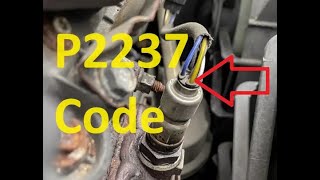
🎬 Watch: A complete overview of P2237 causes and fixes.Technical definition: O2 Sensor Positive Current Control Circuit/Open Bank 1 Sensor 1. This diagnostic trouble code (DTC) indicates the Powertrain Control Module (PCM) detects a complete break ('open') in the dedicated circuit providing positive current to the Bank 1, Sensor 1 air-fuel ratio sensor. Without this electrical connection, the PCM cannot read the sensor, forcing the engine into an inefficient 'open-loop' fuel control mode.
Can I Drive With P2237?
Yes, But With Caution. You can drive short distances, but long-term driving is dangerous. The faulty sensor causes poor fuel economy and increased emissions. Driving for weeks causes the engine to run excessively rich, overheating and destroying the catalytic converter—a repair adding $1,000-$2,500+ to the final bill. Drive less than 100 miles and diagnose the vehicle immediately.
Common Causes

- Defective Bank 1, Sensor 1 Oxygen (O2) Sensor (Very Common) — The internal heater element fails from extreme heat, contamination, and age. This is the most frequent cause of a P2237 code.
- Damaged, Burnt, or Corroded Wiring/Connectors (Common) — The wiring harness leading to the O2 sensor is exposed to extreme heat and road debris. Frayed wires, burnt insulation, or corroded connector pins create an open circuit. Water intrusion also shorts and breaks this connection.
- Blown O2 Sensor Heater Fuse (Common) — The O2 sensor's heater circuit relies on a dedicated fuse and relay. 🎬 See how to test oxygen sensor heater circuits step-by-step. A shorted sensor blows the fuse, instantly creating an open circuit and cutting power to the sensor.
- Faulty Powertrain Control Module (PCM) or Software (Rare) — The internal driver circuit within the PCM controlling the O2 sensor fails, or an outdated calibration file misinterprets the circuit signal. Consider this only after ruling out wiring, fuses, and the sensor.
Symptoms

- Check Engine Light is On — The PCM illuminates the Malfunction Indicator Lamp (MIL) immediately after confirming the open circuit fault.
- Reduced Fuel Economy — The PCM defaults to a rich fuel mixture to protect the engine, decreasing fuel economy by 10-20%.
- Rough Idle, Engine Hesitation, or Misfiring — The engine runs rough, hesitates, or stumbles during acceleration due to the incorrect air-fuel ratio.
- Failed Emissions Test — The vehicle automatically fails emissions testing because the Check Engine Light is active and the O2 sensor readiness monitor cannot set.
- Black, Gassy, or Rotten Egg Smelling Exhaust — An overly rich fuel mixture creates black, sooty tailpipe deposits, a strong unburnt gasoline smell, and a sulfur 'rotten egg' odor as the catalytic converter overloads.
Diagnostic Flowchart

Tap your situation to follow the diagnostic path that matches what you're seeing on this code.
Common Fixes & Costs
- Replace Bank 1, Sensor 1 Oxygen Sensor
— Parts: $75-$250, Labor: $130-$250, ~0.8 hr book time
(DIY)
Toyota Camry (2009): OEM
Subaru Forester (2015, 2.5L): OEM
Nissan Altima (2016, 2.5L): OEM - Repair Damaged Wiring or Connector — Parts: $10-$50, Labor: $150-$300, ~1.5 hr book time (Intermediate)
- Replace Blown Fuse — Parts: $1-$10, Labor: $0-$50, ~0.2 hr book time (DIY)
- Replace Powertrain Control Module (PCM) — Parts: $800-$1500, Labor: $200-$300, ~2 hr book time (Professional)
DIY vs Professional
- Replace Bank 1, Sensor 1 Oxygen Sensor — Beginner:
Tools: OBD-II Scanner, Jack and Jack Stands, O2 Sensor Socket (22mm), Ratchet and Extensions, Penetrating Oil, Torque Wrench, Safety Glasses, Gloves. - Repair Damaged Wiring or Connector — Beginner:
Tools: Multimeter, Wiring Diagrams, Wire Strippers, Crimpers, Heat Shrink Tubing, Soldering Iron (optional but recommended), Depinning Tools. - Replace Blown Fuse — Beginner:
Tools: Owner's Manual, Fuse Puller or Pliers.
Used vs. New Parts: Buying Guide
When a used part is worth it: Buying a used oxygen sensor is never recommended. They are wear-and-tear items with a finite lifespan, and a used part fails shortly after installation, costing more in repeat labor. The only exception is for a rare, discontinued vehicle where new parts are unavailable.
Donor-vehicle mileage cap: roughly under 20000 miles for the part to have meaningful remaining life.
Donor quality checklist:
- Avoid sensors from vehicles scrapped for engine or emissions problems.
- Visually inspect for heavy carbon deposits, oil contamination, or physical damage.
- Match the part number exactly; identical-looking sensors have different internal calibrations.
Decision logic:
- If The part is an O2 sensor. → Buy a new OEM or high-quality aftermarket part (e.g., Denso, Bosch, NTK). The small savings on a used sensor are not worth the high risk of premature failure.
- If Vehicle is a Toyota, Honda, or Subaru. → Strongly prefer an OEM sensor (often made by Denso) as these vehicles are sensitive to aftermarket sensor calibrations.
- If Budget is the absolute top priority. → A new aftermarket sensor from a reputable brand is a better choice than a used OEM sensor.
Warranty tradeoff: Used parts from a salvage yard typically have a 30-90 day warranty at best. New aftermarket sensors carry a 1-year to limited lifetime warranty. New OEM sensors have a 12-month/12,000-mile warranty.
Worst-case if a used part fails: $150-$400 if a used or cheap aftermarket part fails, requiring a second repair with repeat labor costs.
What Happens If You Wait — Timeline
- 0-2 weeks: Check Engine Light illuminates. The PCM detects the open circuit and logs code P2237. The engine runs in a default 'open-loop' mode. No other symptoms are noticeable. (MPG impact: 0-5%% · Added cost: $0)
- 2 weeks - 2 months: A noticeable drop in fuel economy occurs as the PCM defaults to a richer fuel mixture to protect the engine. You experience a slight rough idle or hesitation on acceleration. (MPG impact: 10-15%% · Added cost: $50-$150 in wasted fuel.)
- 2-6 months: The engine runs consistently rich. Unburnt fuel overheats the catalytic converter, reducing its efficiency and damaging the internal ceramic substrate. You smell gasoline or 'rotten eggs' from the exhaust. (MPG impact: 15-25%% · Added cost: $400-$1,200 (Risk of needing catalytic converter replacement is high))
- 6+ months: The catalytic converter substrate melts or fractures from sustained extreme heat. The exhaust becomes restricted, causing severe power loss. Damage is irreversible, and spark plugs foul. (MPG impact: 25-40%% · Added cost: $1,500-$3,000+ (Catalytic converter replacement is certain, potential for engine damage))
Cost of Not Fixing It
- 0-1 month: Reduced fuel economy by 10-20%, poor engine performance, and guaranteed failure of any emissions test. (Added cost: $50-$150 in wasted fuel.)
- 1-6 months: The engine running excessively rich causes unburnt fuel to enter the exhaust, which overheats and damages the catalytic converter. (Added cost: $1,200-$2,800 for catalytic converter replacement.)
- 6+ months: Sustained rich conditions lead to fouled spark plugs, internal engine carbon buildup, and damage to other emissions components, compounding repair costs. (Added cost: $3,000+ for catalytic converter and other potential engine repairs.)
Diagnosis Steps
- Verify the Code with a Scan Tool
Connect an OBD-II scanner. Confirm P2237 and check for related codes (e.g., P0135, P0030). Record freeze-frame data showing engine conditions when the code set. Do not clear codes yet.
Tools: OBD-II Scanner (Beginner) - Check Fuses and Relays
Locate the O2 sensor or A/F sensor heater circuit fuse in the owner's manual. Inspect the fuse for a blown filament. A blown fuse indicates a shorted sensor or wire that requires repair before fuse replacement.
Tools: Owner's Manual, Fuse Puller, Multimeter (Beginner) - Thorough Visual Inspection
Inspect the Bank 1, Sensor 1 wiring harness. Look for burnt insulation from exhaust contact, chafing, rodent damage, or corroded connector pins. Ensure the connector is securely plugged in.
Tools: Flashlight, Mirror (optional) (Beginner) - Analyze Live Sensor Data
Observe Bank 1 Sensor 1 live data on a scan tool. A healthy sensor voltage fluctuates between 0.1V and 0.9V. A flatline reading or exactly 0mA current confirms an open circuit or dead sensor.
Tools: Advanced OBD-II Scanner (with Live Data) (Intermediate) - Test the O2 Sensor Heater Element Resistance
Disconnect the sensor. Use a multimeter set to Ohms (Ω) to measure resistance between the two heater circuit pins on the sensor connector. Infinite resistance (OL) confirms an internal open circuit, requiring sensor replacement.
Tools: Multimeter, Vehicle-specific Repair Manual (Advanced) - Test for Voltage at the Sensor Connector
With the sensor disconnected and the key 'On' (engine off), check for voltage on the power supply wire at the harness connector. You must see battery voltage (~12V) or the manufacturer's reference voltage (e.g., 3.3V). No voltage points to a broken power wire or blown fuse.
Tools: Multimeter, Back-probe Kit, Wiring Diagram (Advanced) - Test the Heater Power and Control Circuit
Disconnect the sensor and PCM. Check for continuity (less than 1 Ω) in the positive current control wire between the PCM and sensor connectors. Infinite resistance indicates a broken wire.
Tools: Multimeter, Vehicle-specific Wiring Diagram (Advanced) - Advanced Diagnosis: Use an Oscilloscope
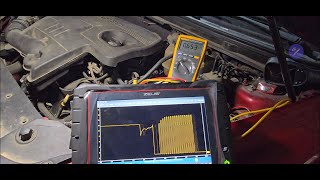
Observe the heater circuit's voltage and current patterns in real-time. A flat line instead of a square wave confirms an open circuit, isolating the fault to the wiring, PCM, or sensor.
Tools: Oscilloscope, Probes (Professional)
When This Code Triggers (Freeze-Frame Conditions)
- Engine Coolant Temp: 175-210°F (Engine at full operating temperature.)
- RPM: 1200-2500 (Light acceleration or steady-state cruise.)
- Engine Load: 25-55% (The PCM is actively using sensor feedback for fuel control.)
- Vehicle Speed: 25-60 mph (City or highway driving after warm-up.)
Related Codes
- P0135 — P0135 is a general heater circuit malfunction for B1S1. P2237 is more specific, pointing to an 'open' on the positive control side of that circuit. If both are present, P2237 provides the more detailed fault. Fixing the root cause of P2237 clears P0135.
- P2238 — This is the direct partner to P2237. P2237 indicates an open circuit (a complete break), while P2238 indicates low voltage/current (a poor connection or high resistance). Diagnostically, P2237 shows infinite resistance on a continuity test, while P2238 shows some continuity but out-of-spec voltage.
- P0171 — This code means 'System Too Lean (Bank 1)'. A P2237 fault causes P0171. The open circuit prevents the sensor from reporting data, so the PCM receives a false 'lean' signal or defaults to a state that causes a lean condition. Fix the P2237 fault first, and P0171 resolves.
- P0030 — This is another generic heater control circuit code for B1S1. It appears alongside P2237 as they both point to a problem within the same circuit. P2237 is more specific about the nature of the fault ('open' on the positive side). If you fix the cause of P2237, P0030 also clears.
Climate & Environmental Factors
- Cold Climates / Road Salt: Very significant. Road salt and moisture are primary causes of corrosion on O2 sensor connectors and wiring. In winter months, salt spray gets into the engine bay and undercarriage, accelerating the degradation of unprotected electrical connections and leading to open circuits.
- High Humidity: Moderate. Persistent high humidity promotes corrosion on connector pins and within wiring harnesses where insulation is compromised. This leads to high resistance or an open circuit over time, triggering a P2237 code.
- High Altitude: Low. Altitude itself does not directly cause an electrical open circuit. However, the O2 sensor is critical for adjusting the air-fuel mixture in the thinner air at high altitudes. A failure (for other reasons) is more noticeable in terms of poor performance at altitude.
How to Talk to a Mechanic About This Code
Say this: "I have a check engine light with code P2237 for the Bank 1 Sensor 1 positive current control circuit. I'd like to schedule a diagnostic to confirm if the issue is the sensor itself, the wiring, or a fuse. Please do not replace any parts without performing a circuit test first."
This signals you understand the code refers to an electrical 'open circuit', not just a bad sensor. It directs the technician to perform a proper diagnosis (testing wires, fuses, and the sensor) instead of just replacing the most common part, saving you money if the sensor isn't the problem.
Avoid saying:
- 'My check engine light is on, can you just fix it?' (This is too vague and invites expensive guesswork).
- 'I think I need a new oxygen sensor.' (Don't diagnose for them; ask them to confirm the fault).
- 'Just do whatever you think is best.' (This gives up all control over the repair process and cost).
Questions to ask before authorizing the repair:
- Did you test the heater circuit resistance on the sensor itself, and what was the reading?
- Did you confirm there is voltage at the sensor's wiring harness connector with the key on?
- If the sensor is bad, what is the cost for an OEM or OEM-equivalent (like Denso or NTK) part versus a generic one?
- What is the warranty on the parts and labor for this repair?
Where to Take It: Dealer vs Independent vs Chain
- Dealer:
Best for: Vehicles still under an emissions or powertrain warranty., Vehicles with known TSBs (Technical Service Bulletins) for this code (e.g., certain Toyota models)., Complex European brands where specialized diagnostic software is critical.
Downsides: Highest labor rates, typically $180-$250 per hour., Defaults to replacing larger, more expensive assemblies rather than pinpointing a smaller fault. (Typical cost: +50% vs. baseline) - Independent Shop:
Best choice for most situations. A reputable independent shop with good electrical diagnostic skills handles a P2237 circuit test correctly at a lower cost than the dealer.
Best for: Most out-of-warranty vehicles., Owners who want a balance of expertise and reasonable cost., Getting a second opinion on a high dealer quote.
Downsides: Quality and diagnostic skill vary greatly; vet the shop's reviews and ASE certifications. (Typical cost: +0% vs. baseline) - Chain Shop:
Use with caution. Acceptable for a free code scan, but risky for diagnosis. Avoid authorizing repairs beyond a simple sensor replacement without proof the full circuit was tested.
Best for: Simple, routine services like oil changes or brake pad replacement.
Downsides: Technician skill varies dramatically from location to location., High pressure to sell parts leads to incomplete diagnosis; they simply read the code and recommend a new sensor without testing the circuit. (Typical cost: -10% vs. baseline)
When to Walk Away From the Repair
If the estimated repair cost exceeds 40-50% of the car's private-party value, consider selling or trading it in.
- Car worth $4000, fix is $2000: Walk away. The repair cost is 50% of the car's value. This money is better used as a down payment on a more reliable vehicle.
- Car worth $12000, fix is $600: Fix it. The repair is only 5% of the car's value and is necessary for the vehicle's performance and emissions compliance.
- Car worth $2500, fix is $1500: Walk away. The repair cost is 60% of the car's value, which is far too high. The risk of another expensive failure on an aging car is significant.
What Scan Tool You Need for This Code
Minimum: A scanner that reads and graphs live O2 sensor data. A basic code reader that only shows the P-code is not sufficient.
A $20 code reader only tells you the P2237 code exists. It cannot show you the live voltage or current from the sensor circuit, which is essential to determine if the sensor is dead or if the wiring is the problem. Without live data, you're just guessing.
Budget: BlueDriver Pro or similar Bluetooth OBD-II Dongle (~$100) — Connects to your smartphone and allows you to view and graph live data for the O2 sensor circuit. This is the minimum tool required to see if the sensor's voltage is flatlined (indicating a problem) versus fluctuating normally.
Mid-range: Innova 5610 or Foxwell NT510 Elite (~$180) — These handheld units provide more detailed OEM-level live data and access Mode $06, which shows results from the PCM's self-tests. This helps confirm if the O2 sensor heater monitor is failing its test, further pinpointing the issue.
Professional: Autel MaxiCOM MK808 / MK906BT (~$500-1200) — Offers full bidirectional control, allowing a technician to command the O2 sensor heater circuit on and off to test its function directly. Provides advanced graphing and OEM-level diagnostics that are on par with dealership tools.
Rent vs buy: You can borrow a basic OBD-II code reader from stores like AutoZone or O'Reilly for free with a refundable deposit. However, these loaner tools typically do not offer live data graphing. For diagnosing P2237, buying a budget-tier scanner with live data capabilities is a worthwhile investment.
How to Clear the Code After You Fix It
- Fix the underlying mechanical or electrical fault.
- Use an OBD-II scan tool to erase the P2237 trouble code.
- Perform a complete drive cycle to run the onboard readiness monitors.
Drive cycle (~20 minutes): Start the engine from cold and let it idle for 2-3 minutes. Drive in mixed city conditions (25-35 mph) for 5-7 minutes. Accelerate to and maintain highway speeds (55-60 mph) for 5-7 minutes. Let the vehicle cool down completely (several hours) and repeat if monitors are not set.
Readiness monitors affected: O2 Sensor Monitor, O2 Sensor Heater Monitor, Catalyst Monitor
Before emissions retest: drive at least 50 miles to fully set monitors.
Watch out for:
- Clearing the code without fixing the root problem causes the code to return immediately.
- Disconnecting the battery clears codes but also resets all readiness monitors, making it impossible to pass an emissions test until a full drive cycle is completed.
- Not driving long enough or under the right conditions (e.g., steady highway speed) to allow the O2 sensor and catalyst monitors to run.
Will This Fail Emissions / State Inspection?
Yes — this code typically fails an OBD-II emissions inspection.
- California: Automatic failure. A P2237 code illuminates the Malfunction Indicator Lamp (MIL), causing an immediate fail. All readiness monitors must be 'Ready' for the test to proceed after repair.
- New York: Automatic failure. The NYVIP3 inspection includes an OBD-II scan, and any emissions-related trouble code results in a failed test.
- Texas: Automatic failure in applicable counties (17 of 254). If the Check Engine Light is on due to P2237, the vehicle fails the OBD portion of the annual inspection.
Most Commonly Affected Vehicles
- Toyota Camry, Avalon, Lexus ES (2008-2009) — A known issue covered by TSB T-SB-0278-08 involves a faulty engine wiring harness, not the sensor. The official fix for vehicles produced before the updated VIN is to replace the entire engine wiring harness with an improved part.
- Subaru Impreza, Crosstrek, Forester, Outback (2012-2018) — Subaru models are known for issues with their front Air/Fuel ratio sensors, which fail and trigger this code. The repair is almost always a new OEM sensor.
- Nissan Altima, Maxima, Murano (2007-2016) — These models are commonly cited with code P2237, pointing to a failed upstream O2 sensor due to normal wear and tear.
- Kia / Hyundai Spectra, Sorento, Tucson (2005-2015) — This code is frequently reported on various Hyundai and Kia models, accompanied by significant power loss and hesitation that worsens as the engine warms up.
- BMW 3 Series, 5 Series, X3 (2006-2013) — Common in models where precise emissions control is critical. The system is highly sensitive to sensor circuit faults, and diagnosis must be precise to avoid replacing expensive parts unnecessarily.
- Lexus ES, RX (2007-2012) — As a division of Toyota, many Lexus models share the same engine and sensor technology, making them susceptible to the same sensor and wiring harness issues.
- Ford Focus, Fusion, Escape (2012-2018) — Often cited with this code. On some Ford models, the PCM logic is very sensitive to wiring issues, and the fault is an intermittent short to ground in the harness rather than a simple open circuit.
- Honda Civic, CR-V, Accord (2006-2015) — Presents with excess emissions and a 'rotten egg' smell when this code is active. The cause is typically a failed sensor.
Manufacturer-Specific Notes
- Toyota/Lexus: For 2008 Avalon and 2008-2009 Camry models, TSB T-SB-0278-08 points to a faulty engine wiring harness as the cause for P2237. The fix is to replace the harness with an updated part, not the sensor. This repair was covered under the 36-month/36,000-mile comprehensive warranty.
- Subaru: These vehicles use Air/Fuel Ratio (AFR) sensors instead of traditional O2 sensors for the upstream position (Sensor 1). While they function differently, their internal heater circuits fail in the same way, triggering code P2237. Using OEM Denso sensors is highly recommended.
- Ford: The PCM logic on some Ford vehicles is sensitive to wiring issues, and P2237 specifically points to an intermittent short to ground in the O2 sensor wiring harness, rather than just a constant open circuit.
- Hyundai/Kia: On some models, this code is accompanied by noticeable power loss and hesitation that gets progressively worse as the engine warms up and enters closed-loop operation.
Real Owner Stories
2007 Toyota Corolla with 150K+ miles
Check Engine Light on for 6-8 months with code P2237. No major driving symptoms.
What they tried:
- Replaced the entire exhaust including the catalytic converter.
- Replaced both upstream and downstream O2 sensors with new OEM parts.
Outcome: The code returned the very next day. The owner was stumped, even after visiting a Toyota dealership. The problem was a wiring issue or a faulty PCM, as the code indicates an open circuit, not necessarily a failed sensor.
Lesson: Don't replace expensive parts without a full circuit diagnosis. P2237 points to an electrical fault, which is often in the wiring or PCM, not just the sensor itself.
2014 Hyundai Tucson 2.0L at 121K miles
Car was losing power and bogging down during acceleration, getting worse as the engine warmed up. Threw code P2237.
What they tried:
- Replaced the Bank 1 Sensor 1 with a direct fit NTK sensor.
- Performed the Hyundai-specific drive cycle.
Outcome: The CEL went off, but after two weeks, a new code, P0030 (Heater Control Circuit), appeared. This indicates the initial problem was electrical and not solved by just replacing the sensor. The new code points to a persistent issue in the heater circuit that the first sensor replacement didn't fix.
Lesson: If a new, related code appears after a repair, it means the root cause was not addressed. The problem is in the circuit (wiring, fuse, relay) and not just the component you replaced.
2016 Ford Focus SE
Car was driving rough, felt like it would stall, and MPG dropped from ~33 to ~13. Code P2237 was present, along with others initially (P0131, P064D).
What they tried:
- Replaced the upstream O2 sensor.
Outcome: Replacing the sensor did not fix the problem. The P2237 code remained, and the poor drivability continued. The presence of code P064D (Internal Control Module O2 Sensor Processor Performance) strongly suggested the problem was a wiring issue or a fault within the PCM itself.
Lesson: When multiple, seemingly unrelated electrical codes appear with P2237, suspect a wiring harness or PCM issue. A simple sensor swap is unlikely to fix a systemic electrical problem.
2006 Kia Spectra5
Check Engine Light came on, code P2237. The light then went off by itself and the car seemed to drive better.
What they tried:
- The owner purchased a new sensor but hadn't installed it yet.
- The owner noted recent battery and terminal connection issues that had been fixed by a mechanic just before the P2237 code appeared.
Outcome: The code cleared itself and did not return after several drives. The issue was intermittent, caused by a temporary bad connection. The recent electrical work on the battery terminals was directly related.
Lesson: For intermittent codes, wait and see if the code returns before replacing parts. Sometimes a poor connection temporarily resolves itself. Note any recent repairs, especially electrical, as they are often related.
How to Prevent This Code From Triggering
- Use Top-Tier certified gasoline (Every fill-up) — Top-Tier gas contains higher levels of detergents that prevent carbon deposit buildup on fuel injectors and valves. Cleaner combustion reduces contaminants in the exhaust, prolonging the life of the O2 sensor and catalytic converter.
- Perform regular oil changes with quality oil (Per manufacturer's schedule) — Prevents oil and its additives from contaminating the exhaust system. Oil blow-by fouls the O2 sensor, impairing its ability to read oxygen levels accurately.
- Replace spark plugs at recommended intervals (Per manufacturer's schedule (typically 60k-100k miles)) — Worn spark plugs lead to incomplete combustion and engine misfires. This sends unburnt fuel into the exhaust, which overheats and destroys the O2 sensor's internal elements.
- Address engine misfires and coolant leaks immediately (As needed) — Misfires and coolant leaks are major causes of O2 sensor contamination and failure. Antifreeze in the exhaust is particularly damaging to the sensor's ceramic element.
- Periodically use a quality fuel system cleaner (Every 5,000-10,000 miles) — A bottle of cleaner with Polyetheramine (PEA) helps remove existing carbon deposits from the entire fuel system, ensuring a cleaner burn and reducing the load on emissions components.
Frequently Asked Questions
Can I still drive my car with a P2237 code?
Yes, for short distances, but long-term driving is dangerous. Fuel mileage drops, emissions increase, and prolonged driving destroys the catalytic converter. Fix it within 100 miles.
What are the most common mistakes when diagnosing P2237?
The biggest mistake is replacing the oxygen sensor without testing it. The fault frequently lies in broken wiring, a blown fuse, or a corroded connector. Clearing the code before checking freeze-frame data also erases valuable diagnostic clues.
Why did the code come back after I replaced the sensor?
If the code returns, the sensor was not the root cause. The problem is a hidden wiring issue, a blown fuse, or a failing PCM. You must diagnose the entire electrical circuit.
What's the difference between P2237 and P2238?
P2237 means the circuit is 'Open'—a complete electrical break like a cut wire or burnt-out heater. P2238 means the circuit voltage is 'Low', caused by high resistance from a corroded wire or failing component. Both require circuit testing.
Can a bad catalytic converter cause P2237?
No, a bad catalytic converter cannot cause the electrical circuit code P2237. However, the reverse is true. A bad O2 sensor causes a rich fuel condition that damages the catalytic converter over time.
What is 'Bank 1, Sensor 1'?
'Bank 1' is the side of the engine containing cylinder #1. 'Sensor 1' is the upstream oxygen sensor located before the catalytic converter. It is the primary sensor the engine uses for fuel control.
How much does it cost to fix code P2237?
A simple fuse replacement costs under $10. A professional O2 sensor replacement ranges from $205 to $500. Wiring repairs cost $150 to $350, while a rare PCM replacement exceeds $1,000.
Is this repair covered by the emissions warranty?
Federal emissions warranties cover major components like the catalytic converter and PCM for 8 years or 80,000 miles. O2 sensors are typically covered for 2 years or 24,000 miles. Check your specific vehicle warranty manual to confirm.
Key Takeaways
- P2237 indicates a complete electrical break (an 'open') in the positive control heater circuit for the Bank 1, Sensor 1 upstream oxygen sensor.
- Always test the sensor's heater resistance and verify the 12V power supply fuse before spending $150+ on a replacement sensor.
- Driving with this code drops fuel economy by 10-20% and forces an automatic emissions test failure.
- Ignoring P2237 for more than a month causes the engine to run rich, risking a $1,500+ catalytic converter meltdown.
Helpful Videos

The information in this article is provided for general reference and educational purposes only. Vehicle specifications, procedures, and part compatibility can vary by production date, trim level, and region. Always consult your vehicle's factory service manual and verify part numbers before purchasing or performing repairs. Safety-critical components such as airbags, seat belts, and braking systems should be installed by a qualified professional.
- 🎬 Helpful Videos
- What Does P2237 Mean?
- Can I Drive With P2237?
- Common Causes
- Symptoms
- Diagnostic Flowchart
- Common Fixes & Costs
- DIY vs Professional
- Used vs. New Parts: Buying Guide
- What Happens If You Wait — Timeline
- Cost of Not Fixing It
- Diagnosis Steps
- When This Code Triggers (Freeze-Frame Conditions)
- Related Codes
- Climate & Environmental Factors
- How to Talk to a Mechanic About This Code
- Where to Take It: Dealer vs Independent vs Chain
- When to Walk Away From the Repair
- What Scan Tool You Need for This Code
- How to Clear the Code After You Fix It
- Will This Fail Emissions / State Inspection?
- Most Commonly Affected Vehicles
- Manufacturer-Specific Notes
- Real Owner Stories
- 2007 Toyota Corolla with 150K+ miles
- 2014 Hyundai Tucson 2.0L at 121K miles
- 2016 Ford Focus SE
- 2006 Kia Spectra5
- How to Prevent This Code From Triggering
- Frequently Asked Questions
- Can I still drive my car with a P2237 code?
- What are the most common mistakes when diagnosing P2237?
- Why did the code come back after I replaced the sensor?
- What's the difference between P2237 and P2238?
- Can a bad catalytic converter cause P2237?
- What is 'Bank 1, Sensor 1'?
- How much does it cost to fix code P2237?
- Is this repair covered by the emissions warranty?
- Key Takeaways
- 🎟️ Get 5% Off