

P2196 on 2015-2019 Hyundai Sonata Hybrid 2.0L: O2 Sensor Stuck Rich Causes and Fixes
For a 2015-2019 Sonata Hybrid, code P2196 usually points to a faulty upstream oxygen sensor, a stuck-open purge control valve, or a leaking fuel injector. Replacing the O2 sensor costs around $70-$150 for the part, while a new purge valve is about $25-$40. Always diagnose before replacing parts, as the O2 sensor may be correctly reporting a rich condition caused by another component.
- P2196 on your Sonata Hybrid means the engine is running too rich, or the main O2 sensor thinks it is.
- Do not immediately replace the oxygen sensor. First, check for simpler causes like a stuck-open purge control valve (Part No. 28910-2E600).
- A scan tool that can read live data is essential for diagnosis. You need to see if the O2 sensor voltage is stuck high (e.g., >0.8V).
- Ignoring this code will hurt your fuel mileage and can eventually lead to a very expensive catalytic converter replacement.
- Because this is a GDI engine, a leaking fuel injector due to carbon buildup is a possible, though more complex, cause.
What's Unique About the 2015-2019 Hyundai Sonata
The 2016-2019 Sonata Hybrid uses a 'Nu' 2.0L Gasoline Direct Injection (GDI) engine. GDI engines are known to sometimes develop carbon buildup on fuel injector tips, which can cause them to leak fuel and create a rich condition. While the code can be caused by a simple sensor failure, it's important on this platform to also consider causes of a *true* rich condition, like a leaking injector or a stuck purge valve, before immediately replacing the O2 sensor. This engine family has also been subject to recalls and class-action lawsuits related to connecting rod bearing failures and oil consumption, which, while not directly causing P2196, highlight a pattern of engine-related issues for this platform.
Generation note: The 2015-2019 model years all belong to the seventh generation (LF) of the Hyundai Sonata. The 2016-2019 Hybrid models specifically use the Nu 2.0L GDI engine relevant to this guide. The 2015 Hybrid model used a different 2.4L engine.
Symptoms You May Notice
- Check Engine Light is on
- Reduced fuel economy
- Rough or uneven engine idle
- Engine hesitation or stumbling during acceleration
- Black smoke from the exhaust
- Slight smell of gasoline or 'rotten eggs' from the exhaust
- Engine may run rough or misfire
- Replacing the oxygen sensor without first checking if the engine is actually running rich. The O2 sensor may be accurately reporting a problem caused by a leaking injector or purge valve.
- Assuming a loose gas cap is the cause. A loose gas cap will trigger an EVAP system code (e.g., P0456), not an O2 sensor rich code.
- Replacing the catalytic converter. While a rich condition can damage the converter, the converter itself does not cause a P2196 code.
Most Likely Causes
- Faulty Upstream Oxygen Sensor (Bank 1, Sensor 1) 🔴 High Probability The upstream O2 sensor is exposed to intense heat and exhaust gases, causing it to wear out or become contaminated over time. It's a common failure item on most modern vehicles. It can fail and send a false 'rich' signal even if the engine mixture is normal.
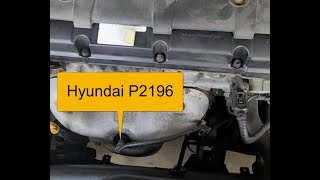
How to confirm: With a diagnostic scan tool, observe the live data for the Bank 1 Sensor 1 voltage. A healthy sensor's voltage should fluctuate rapidly between approximately 0.1 and 0.9 volts. If the voltage is stuck high (e.g., above 0.8V) 🎬 Watch: Diagnosing a Hyundai P2196 stuck rich code and does not switch, the sensor is likely faulty or is correctly reporting a severe rich condition. Before condemning the sensor, rule out other causes of a true rich condition.
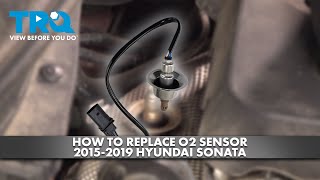
Typical fix: Replace the upstream (Bank 1, Sensor 1) oxygen sensor. This requires a special O2 sensor socket. 🎬 Watch: How to replace the upstream O2 sensor
Est. part cost: $70-$150 - Stuck-Open Purge Control Valve 🟡 Medium Probability The purge valve controls the flow of fuel vapors from the charcoal canister to the engine. If it sticks open, it creates a vacuum leak that pulls un-metered fuel vapors into the intake, causing a rich condition. This is a common failure on many Hyundai models.
How to confirm: Locate the purge valve on the engine. Disconnect the electrical connector and the hose coming from the intake manifold. With the engine running, there should be no vacuum felt at the valve's port. If you feel suction, the valve is stuck open and must be replaced.
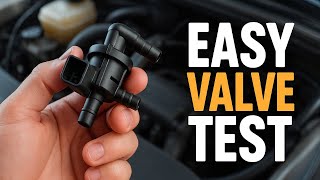
Typical fix: Replace the purge control valve. This is typically a straightforward replacement involving disconnecting two hoses and an electrical connector. 🎬 See this step-by-step EVAP purge valve test
Est. part cost: $25-$40 - Leaking Fuel Injector(s) ⚪ Low Probability As a GDI engine, carbon can build up on the injector tips. This can prevent an injector from closing completely, allowing fuel to leak into a cylinder. This creates a true rich condition that the O2 sensor will accurately report.
How to confirm: This is more difficult to diagnose. A mechanic can perform a fuel pressure leak-down test. Another method is to remove the fuel rail with injectors attached, pressurize the system, and visually check for drips. You can also check spark plugs for signs of one cylinder running richer (darker, more soot) than the others.
Typical fix: If an injector is confirmed to be leaking, it should be replaced. It is often recommended to replace all four injectors as a set.
Est. part cost: $50-$100 per injector
Rare But Worth Checking
- High Fuel Pressure: A failing fuel pressure regulator or a problem with the high-pressure fuel pump (specific to GDI engines) can cause excessive fuel pressure, leading to a rich condition across all cylinders.
- Contaminated Mass Air Flow (MAF) Sensor: If the MAF sensor is dirty, it may under-report the amount of air entering the engine, causing the computer to inject too much fuel. Cleaning the MAF sensor with a dedicated cleaner is a simple diagnostic step.
- Blocked Air Intake / Dirty Air Filter: A severely clogged engine air filter can restrict airflow, leading to a naturally rich air/fuel mixture. This is a simple and inexpensive item to check first.
Diagnosis Steps
- Read Freeze Frame Data: Use a scan tool to note the engine conditions (RPM, load, temperature) when the P2196 code was set.
- Analyze Live Data: With the engine warm and at idle, monitor the Bank 1 Sensor 1 (upstream) O2 sensor voltage. If it is stuck high (above 0.8V) and not fluctuating, proceed with further diagnosis.
- Check Fuel Trims: Observe the Short-Term (STFT) and Long-Term (LTFT) fuel trims. Consistently high negative numbers (e.g., -15% or more) confirm the computer is actively removing fuel to combat a rich condition.
- Check for Other Codes: Scan for any other pending or stored codes, especially misfire (P030x), general rich (P0172), or EVAP (P0441) codes, which can point to the root cause.
- Inspect the Purge Control Valve: Perform a vacuum test on the purge valve as described in the 'Common Causes' section. This is a quick and common culprit on Hyundai vehicles.
- Inspect for an Actual Rich Condition: If the purge valve is okay, investigate if the engine is truly running rich. Check the air filter for blockages.
- Check Spark Plugs: Remove and inspect the spark plugs. If one is significantly darker or more fouled than the others, it points to a leaking injector in that cylinder.
- Test the Oxygen Sensor: If no other cause for a rich condition is found, the O2 sensor itself is the most likely culprit. Test its wiring and heater circuit before deciding to replace it.
- Professional Diagnosis: If the issue persists, a fuel pressure test or professional injector testing may be required.
Parts You'll Likely Need
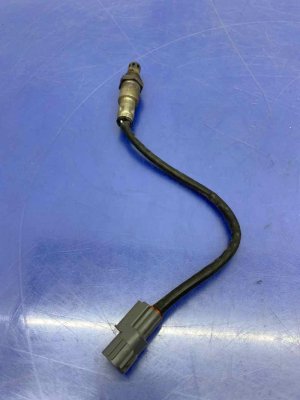
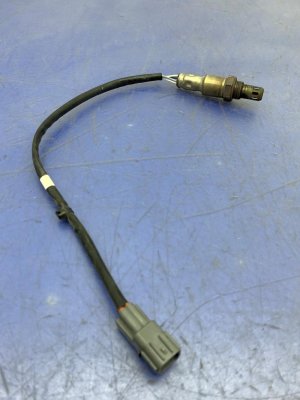
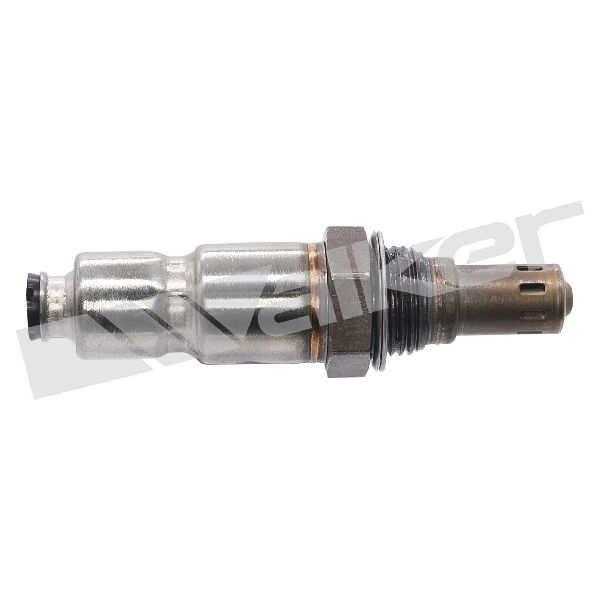
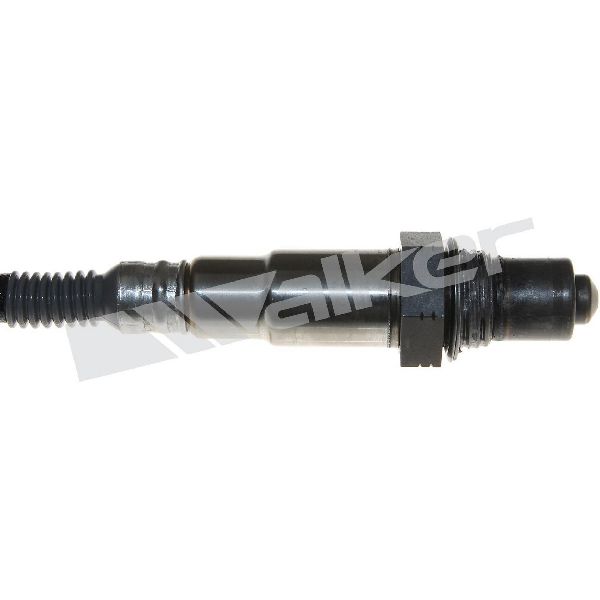
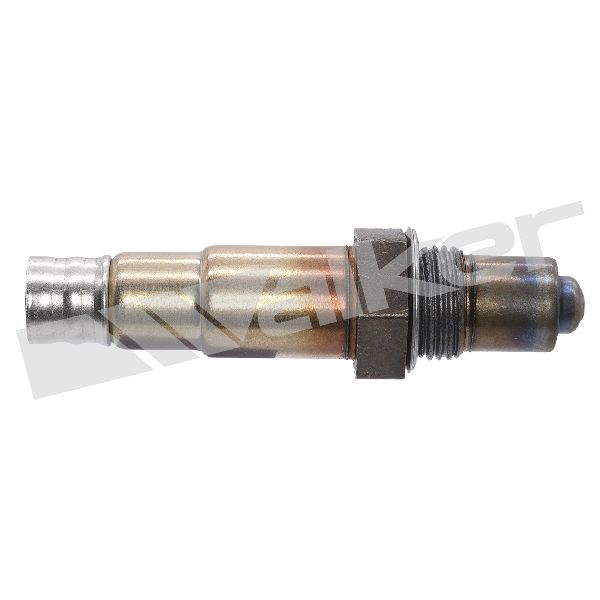
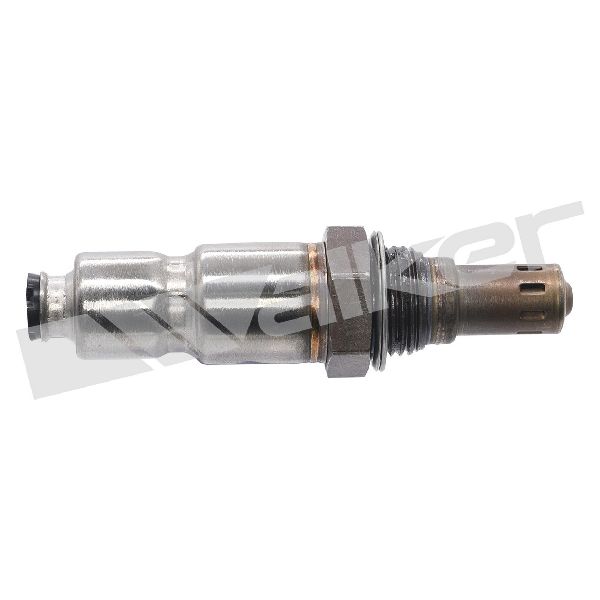
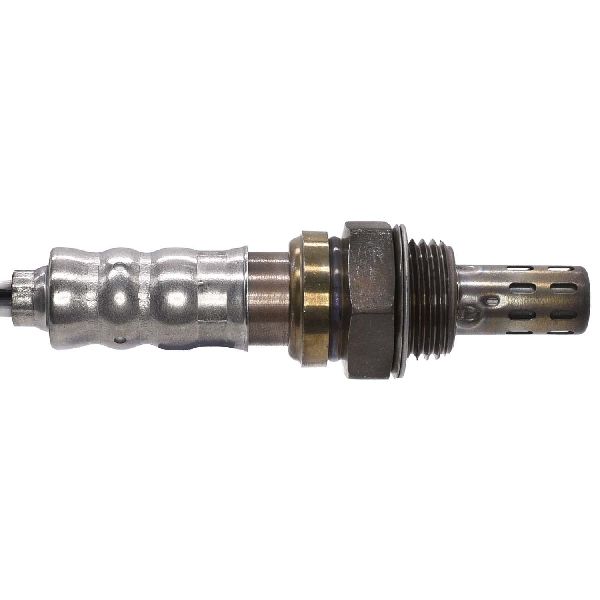
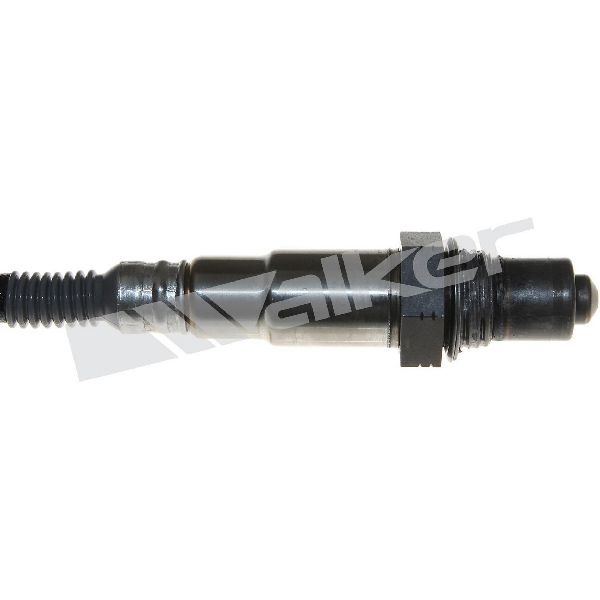
- Upstream Oxygen Sensor (Bank 1, Sensor 1)
(OEM #39210-2E101)— This sensor is the most common point of failure for this code, either due to age or contamination from a rich condition.
Trusted brands: Bosch, NGK/NTK, Denso, Delphi
OEM price range: $130-$225
Aftermarket price range: $70-$150 - Purge Control Valve
(OEM #28910-2E600)— A common failure item that sticks open, allowing un-metered fuel vapor into the engine and causing a rich condition. It's a relatively inexpensive and easy part to replace.
Trusted brands: Hyundai (OEM), Bosch
OEM price range: $30-$45
Aftermarket price range: $25-$40
Related Codes That Often Appear With This One
- P0300-P0304 — If a specific fuel injector is leaking badly, it can foul the spark plug in that cylinder, causing a misfire code (e.g., P0301 for Cylinder 1) alongside the P2196 rich code.
- P0172 — This code means 'System Too Rich (Bank 1)'. It is a more general rich condition code that often appears with P2196, confirming the computer's struggle to correct a rich fuel mixture.
- P0441 — Incorrect Purge Flow. This code often appears alongside P2196 when the root cause is a faulty purge control valve that is stuck open.
Technical Service Bulletins (TSBs) & Recalls
- TSB 23-EM-008H: Engine Oil Consumption Inspection and Repair Guidelines. Provides dealers with a standardized process to test for and address excessive oil consumption, a known issue with this engine family.
Mechanic-Grade Diagnostic Values
- Purge Control Valve (Solenoid) Coil Resistance — expected: 15 - 30 Ohms. Failure: A reading of OL (infinite resistance) indicates an open coil, while near 0 Ohms indicates a shorted coil.
- High-Pressure Fuel System (GDI) — expected: 290 - 3,626 PSI (Varies with engine load). Failure: Pressure that is consistently too high can indicate a regulator problem, forcing a rich condition.
- Low-Pressure Fuel System (In-tank pump) — expected: 42 - 64 PSI. Failure: Pressure significantly above this range could indicate a faulty low-side regulator.
- O2 Sensor Heater Element Resistance — expected: 5 - 15 Ohms (General acceptable range). Failure: A reading of infinite resistance (OL) or near zero Ohms indicates a failed heater element within the sensor.
- Upstream O2 Sensor (B1S1) Voltage — expected: Rapidly fluctuating between ~0.1V and ~0.9V in closed loop.. Failure: Voltage is stuck high, consistently reading >0.8V, and does not fluctuate.
Scan Tool Commands That Help
- Hyundai GDS (Global Diagnostic System): Fuel Injector Balance Test / Actuation Test — This function allows a technician to individually command each fuel injector to fire and measure the corresponding pressure drop. It is used to pinpoint a leaking or poorly performing injector that could be causing the rich condition, without first removing the fuel rail.
Wiring & Ground Locations
- Upstream O2 Sensor Connector — On the wiring harness connecting to the O2 sensor, located in the exhaust manifold before the catalytic converter.. The connector for the upstream O2 sensor on this platform is a 6-pin female connector. The wiring harness uses 18-gauge wires. Damage, corrosion, or pushed-out pins in this specific connector can cause a loss of signal or a short, leading the PCM to incorrectly read a 'stuck rich' condition.
Real Owner Repair Stories
- Auto Repair Guys YouTube Channel (Hyundai/Kia (model not specified, but concept applies)) — Check Engine Light with P2196.
❌ Tried (didn't work) Initially suspecting the O2 sensor itself.
✅ What actually fixed it The EVAP canister purge control valve was found to be stuck open, causing a constant flow of fuel vapors into the intake and creating a true rich condition that the O2 sensor was correctly reporting. Replacing the purge valve resolved the code.
OEM Part Supersession History
31110-C2500→31110-D5500— Component revision or manufacturer change for the low-pressure fuel pump assembly.
Heads up: The parts are functionally equivalent and interchangeable for the 2.0L GDI engine within this vehicle generation.
Model Year Variations Within This Range
- 2018-2019: A mid-cycle refresh for the 2018 model year brought aesthetic changes and more modern onboard technologies. While this did not fundamentally change the engine or the causes of P2196, diagnostic approaches involving the infotainment or other integrated systems may differ slightly from the 2016-2017 models.
Diagnostic Flowchart
Other Known Issues on This Vehicle
Issues unrelated to this code that are worth knowing about as an owner of this generation:
- Connecting Rod Bearing Failure 🔴 High — Widespread across Nu and Theta II GDI engines, including the 2016-2017 Sonata Hybrid. Can occur at various mileages, often preceded by engine knocking. (Ref: Multiple recalls (e.g., NHTSA #20V746) and class-action lawsuits led to extended warranties and the installation of a Knock Sensor Detection System (KSDS).)
- Excessive Oil Consumption 🟠 Medium — Common issue on Hyundai GDI engines. Owners report needing to add oil between changes, sometimes as much as 1 quart per 1,000 miles. Often caused by carbon buildup on piston rings. (Ref: TSB 23-EM-008H provides a dealer procedure for diagnosing and repairing oil consumption concerns.)
- Steering Column Noise / Flexible Coupler Failure 🟡 Low — A clicking or clunking noise from the steering column, especially when turning, is common. Caused by the failure of a small, inexpensive rubber coupler in the electronic power steering motor. (Ref: While not a recall, it's a very well-documented and common repair.)
- Hybrid System Warning / Failure 🟠 Medium — Some owners report receiving a "Hybrid System Warning – Safely Stop and Do Not Drive" message, sometimes leading to sudden power loss or jerking. (Ref: NHTSA complaints exist, and some may be related to recalls like Hyundai campaign 251.)
Used vs. New Parts: Buying Guide for This Vehicle
When a used part is the smart pick: A used Purge Control Valve (PCV) can be a cost-effective option. It is an external, simple-to-replace solenoid. If buying used, test its resistance with a multimeter before installation; it should be between 15-30 ohms.
Donor-vehicle mileage cap: roughly under 80000 miles for the part to have meaningful remaining life.
What to inspect on the donor part:
- For a Purge Control Valve, ensure the plastic housing is not cracked and the hose ports are intact.
- Check that the electrical connector pins are straight and free of corrosion.
- Avoid parts from vehicles with obvious signs of engine fire or major front-end damage.
OEM-only on this vehicle (don't cheap out):
- Oxygen Sensor
Aftermarket brands forum-validated for this vehicle:
- NTK or Denso for O2 sensors
- Bosch for Purge Control Valves
Brands owners have reported issues with on this vehicle:
- Off-brand, no-name 'universal' oxygen sensors are frequently cited in forums as causing persistent or new codes. While cheaper, they often lack the correct heater resistance or response rate for the Hyundai ECU.
Real Owner Stories
Aggregated from forums and TSBs cited above. Mileages and costs reflect what owners reported in those sources.
2015 Hyundai Sonata 2.0L GDI Hybrid
Symptoms: Simultaneous P2096, P2196, and P2270 codes appeared after replacing the O2 sensors.
What fixed it: The source suggests the O2 sensors were not the root cause, pointing towards a more complex issue like a catalytic converter or other system fault.
Source hint: Reddit - r/autorepair - '2015 Sonata Simultaneous P2096, 2196, 2270 After O2 Sensor Replacement'
2012 Hyundai Sonata Hybrid
Symptoms: The vehicle's Knock Sensor Detection System (KSDS) detected potential bearing failure and put the car into a limp mode.
What fixed it: The thread discusses the effect of Recall 198 regarding connecting rod bearing knock and engine protection mode.
Source hint: Reddit - r/Hyundai - '2012 Sonata Hybrid Recall 198 *connecting rod bearing knock* *engine protection mode*'
Related OBD-II Codes
Frequently Asked Questions
Does TSB 23-EM-008H apply to my 2015-2019 Sonata Hybrid if I'm seeing P2196?
Is there a recall for the engine issues that might be related to my P2196 code?
Can a faulty purge valve cause P2196 on my Hyundai?
Should I use an aftermarket oxygen sensor to fix P2196 on my Sonata Hybrid?
What is the 'Hybrid System Warning' I see alongside my engine issues?
How can I tell if my GDI engine's fuel injectors are causing the P2196 code?
Helpful Videos

Used OEM Parts in Stock
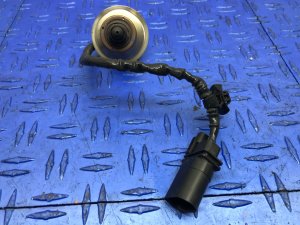
New Aftermarket Parts Available

The information in this article is provided for general reference and educational purposes only. Vehicle specifications, procedures, and part compatibility can vary by production date, trim level, and region. Always consult your vehicle's factory service manual and verify part numbers before purchasing or performing repairs. Safety-critical components such as airbags, seat belts, and braking systems should be installed by a qualified professional.
- Hyundai Sonata:
- 🎬 Helpful Videos
- 🛍️ Shop This Part
- What's Unique About the 2015-2019 Hyundai Sonata
- Symptoms You May Notice
- Most Likely Causes
- Rare But Worth Checking
- Diagnosis Steps
- Parts You'll Likely Need
- Related Codes That Often Appear With This One
- Technical Service Bulletins (TSBs) & Recalls
- Mechanic-Grade Diagnostic Values
- Scan Tool Commands That Help
- Wiring & Ground Locations
- Real Owner Repair Stories
- OEM Part Supersession History
- Model Year Variations Within This Range
- Diagnostic Flowchart
- Other Known Issues on This Vehicle
- Used vs. New Parts: Buying Guide for This Vehicle
- Real Owner Stories
- 2015 Hyundai Sonata 2.0L GDI Hybrid
- 2012 Hyundai Sonata Hybrid
- Related OBD-II Codes
- Frequently Asked Questions
- 🎟️ Get 5% Off