

OBD-II Code P2270: O2 Sensor Signal Stuck Lean, Bank 1 Sensor 2
The Ultimate Guide to Diagnosing and Fixing P2270 for Peak Performance and Emissions Compliance
- Code P2270 indicates the Bank 1 Sensor 2 (rear) oxygen sensor is stuck reading a lean mixture, usually due to a failed sensor or an upstream exhaust leak.
- Perform a visual inspection and smoke test for exhaust leaks before spending $150 to $350 on a new oxygen sensor.
- A vehicle with an active P2270 code will automatically fail state emissions tests and experience a 5% to 15% drop in fuel economy.
- Driving with this code for more than 200 miles forces the engine to run rich, risking a $1,200 to $2,800 catalytic converter replacement.
What Does P2270 Mean?

Code P2270 means the Powertrain Control Module (PCM) detects a problem with the oxygen sensor located after the catalytic converter on Bank 1. The sensor sends a continuous signal indicating too much oxygen in the exhaust, known as a 'stuck lean' condition. This code triggers when the sensor's voltage remains below 0.2V for an extended period, suggesting a sensor failure, exhaust leak, or wiring issue.
Technical definition: The SAE/OBD-II definition for P2270 is "O2 Sensor Signal Biased/Stuck Lean (Bank 1, Sensor 2)". This indicates the PCM detects the downstream oxygen sensor is not switching its voltage signal as expected. Instead, output remains stuck at a low voltage (typically below 0.2V for 15-30 seconds), indicating a persistent lean air/fuel mixture in the exhaust stream after the catalytic converter.
Can I Drive With P2270?
Yes, But With Caution. It is safe to drive for a short period. Driving more than a few hundred miles decreases fuel efficiency, increases emissions, and damages the catalytic converter—an $800 to $2,500 repair. The vehicle will automatically fail an emissions test.
Common Causes

- Faulty Bank 1, Sensor 2 oxygen sensor (Very Common) — The O2 sensor itself is the most frequent cause. Over time, sensors degrade, their internal heaters fail, or they become contaminated by oil, coolant, or carbon, causing them to send an incorrect, stuck lean signal.
- Exhaust leak (Common) — A leak anywhere between the engine and the downstream sensor allows outside air into the exhaust. This extra, unmetered oxygen tricks the sensor into reporting a false lean condition. Common leak points include cracked manifolds, flex pipes, and flange gaskets.
- Damaged wiring or connectors (Common) — The O2 sensor wiring harness is exposed to extreme heat, moisture, and road debris. Wires melt on the exhaust, fray from vibration, or short to ground. Corroded connectors also disrupt the signal to the PCM.
- Engine running lean (actual) (Less Common) — While P2270 points to the post-catalyst sensor, a true lean condition from vacuum leaks, low fuel pressure, or a dirty Mass Airflow (MAF) sensor sometimes triggers it. This is highly likely if code P0171 is also present.
- PCM Software or Hardware Failure (Rare) — Overly sensitive PCM logic incorrectly flags a P2270 code on certain vehicles (like older Fords), requiring a software update. Actual hardware failure within the PCM is extremely rare and should only be considered after ruling out all other components.
Symptoms
- Check Engine Light is on — The PCM illuminates the Malfunction Indicator Lamp (MIL) as soon as it detects the fault has persisted for a set period. This is often the only noticeable symptom.
- Decreased fuel economy — A persistent fault causes the PCM to make incorrect long-term fuel adjustments, richening the mixture to compensate for the perceived lean condition and reducing gas mileage by 5% to 15%.
- Rough or fluctuating idle — The engine runs slightly rougher or has an unstable idle speed, particularly when warm and in closed-loop operation.
- Altered exhaust sound — If the root cause is an exhaust leak, you hear a ticking or puffing sound from the engine bay or under the vehicle, most noticeable during a cold start.
- Failed emissions test (scan-tool only — no driver-felt sign) — Sensor 2 monitors catalytic converter efficiency. A P2270 code indicates this monitoring system is offline, causing an automatic failure of any state emissions inspection.
Diagnostic Flowchart

Tap your situation to follow the diagnostic path that matches what you're seeing on this code.
Common Fixes & Costs
- Replace the Bank 1, Sensor 2 Oxygen Sensor — Parts: $50-$150, Labor: $100-$200, ~1.2 hr book time (DIY)
- Repair an Exhaust Leak — Parts: $30-$120, Labor: $150-$500, ~2.5 hr book time (Intermediate)
- Replace a Leaking Exhaust Manifold Gasket — Parts: $20-$80, Labor: $250-$650, ~4.5 hr book time (Professional)
- Repair Damaged Wiring or Connector — Parts: $10-$50, Labor: $100-$300, ~1.5 hr book time (Intermediate)
- Perform a PCM Software Update (Reflash) — Parts: $0, Labor: $100-$250, ~1 hr book time (Professional)
Used vs. New Parts: Buying Guide
When a used part is worth it: Buying a used oxygen sensor is never recommended. It is a wear item with a finite lifespan. The small cost savings do not justify the risk of premature failure and repeated labor costs.
Donor-vehicle mileage cap: roughly under 20000 miles for the part to have meaningful remaining life.
Donor quality checklist:
- Only consider if from a very low-mileage vehicle that was wrecked.
- Ensure the part number is an exact match for the specific vehicle year and engine.
- Avoid parts from flood-damaged or rust-belt vehicles due to high connector corrosion risk.
Decision logic:
- If The part is an oxygen sensor. → Buy a new OEM or high-quality aftermarket (e.g., Denso, Bosch, NTK) part. Reliability outweighs potential savings.
- If The budget is extremely tight and the vehicle is old. → A new budget aftermarket sensor is a better choice than a used sensor gamble.
- If The required part is an expensive integrated exhaust manifold/catalytic converter. → A used assembly from a low-mileage donor vehicle is viable, but new aftermarket is preferred for longevity.
Warranty tradeoff: Used parts typically offer a 30-90 day warranty that does not cover labor. Aftermarket new parts come with a 1-year to limited lifetime warranty. OEM new parts carry a 12-month/12,000-mile warranty.
Worst-case if a used part fails: $150-$350 if a used sensor fails after installation, requiring repeat labor and the purchase of another sensor.
What Happens If You Wait — Timeline
- 0-1 month: Check Engine Light illuminates with code P2270. Vehicle fails emissions tests. Often no other symptoms are noticeable. The PCM begins making minor long-term fuel trim adjustments. (MPG impact: 0-5%% · Added cost: $0)
- 1-4 months: Fuel economy noticeably decreases as the PCM defaults to a richer fuel mixture. A slight rough idle or minor hesitation becomes apparent. (MPG impact: 5-15%% · Added cost: $50-$150 in wasted fuel)
- 4-12 months: The catalytic converter suffers damage. Excess fuel causes the converter to operate above its design limit (over 1600°F), melting the internal ceramic substrate. (MPG impact: 10-20%% · Added cost: $1,200-$2,800 for required catalytic converter replacement)
- 12+ months: Catastrophic catalytic converter failure. The internal substrate completely melts or breaks, creating a significant exhaust blockage. This causes severe backpressure and potential internal engine damage. (MPG impact: >20%% · Added cost: $3,000+ for catalytic converter and possible engine repairs)
Cost of Not Fixing It
- 0-2 months: Reduced fuel economy by 5-15% and guaranteed failure of any emissions test. (Added cost: $20-$60 per month in extra fuel costs)
- 2-12 months: The PCM defaults to a rich fuel mixture to protect the engine, causing the catalytic converter to overheat and melt internally. (Added cost: $1200-$2800 for catalytic converter replacement)
- 12+ months: A completely failed and clogged catalytic converter creates excessive exhaust backpressure, leading to severe engine performance issues and internal engine damage. (Added cost: $3000+ for catalytic converter and potential engine repairs)
Diagnosis Steps
- Verify the Code and Review Freeze Frame Data
Use an OBD-II scanner to confirm P2270 is active. Check for other codes (e.g., P0171, P0420) that provide clues. Record the freeze frame data showing engine conditions when the code set. Do not clear codes yet.
Tools: OBD-II Scanner (Beginner) - Visually Inspect the Exhaust System
Safely raise the vehicle and inspect the exhaust from the manifold to the tailpipe. Look for black soot stains, cracks, or holes before Bank 1, Sensor 2. Have an assistant temporarily block the tailpipe with a rag while the engine idles to make leaks audible.
Tools: Jack, Jack Stands, Safety Glasses, Flashlight (Beginner) - Analyze Live Sensor Data
Graph the voltage of Bank 1, Sensor 1 (B1S1) and Bank 1, Sensor 2 (B1S2). With the engine warm at 2,000 RPM, B1S1 should fluctuate rapidly (0.1V to 0.9V). A healthy B1S2 shows a steady high voltage (0.6V to 0.8V). If B1S2 is stuck below 0.2V, it confirms the lean condition.
Tools: Advanced OBD-II Scanner (Intermediate) - Force a Rich Condition (Pro Tip)
With live data running, introduce unlit propane near the engine's air intake to force a rich condition. B1S1 voltage will spike (>0.8V). A healthy B1S2 should follow. If B1S2 remains stuck low, the sensor is dead. If it responds, suspect an exhaust leak.
Tools: Advanced OBD-II Scanner, Propane Torch (unlit) (Advanced) - Test for Exhaust Leaks with a Smoke Machine
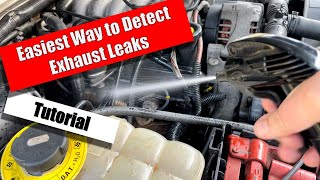
Introduce smoke into the exhaust system with the engine off. Watch for smoke escaping from pipes, welds, or gaskets before Sensor 2. This definitively locates elusive leaks causing false lean codes.
Tools: Smoke Machine (Intermediate) - Inspect and Test the O2 Sensor Wiring
Trace the wiring harness for melting, chafing, or corrosion. Disconnect the sensor and use a multimeter to check for correct reference voltage (typically ~0.45V) and ground at the harness connector. 0V on the signal wire indicates a short to ground.
Tools: Digital Multimeter, Vehicle-specific wiring diagram, Flashlight (Advanced) - Test the O2 Sensor Heater Circuit
Measure the resistance between the two heater circuit pins on the sensor side (usually the two same-colored wires). A good sensor reads between 3 and 25 Ohms. Infinite or zero resistance means the internal heater failed.
Tools: Digital Multimeter, Vehicle-specific wiring diagram (Advanced) - Check Fuel Pressure (Advanced)
If code P0171 is also present, connect a fuel pressure gauge. With the key on, engine off (KOEO), pressure must meet manufacturer specs (typically 45-60 PSI). A significant drop indicates a weak fuel pump or clogged filter causing a true lean condition.
Tools: Fuel Pressure Gauge, Service Manual (Advanced)
When This Code Triggers (Freeze-Frame Conditions)
- Engine Coolant Temp: 180-210°F (Fully warmed up (closed-loop operation))
- RPM: 1500-2500 (Steady cruise or light acceleration)
- Engine Load: 25-60% (Maintaining speed on a flat road or slight incline)
- Vehicle Speed: 45-65 mph (Highway or steady suburban driving)
Related Codes
- P2271 — The direct opposite code, 'O2 Sensor Signal Stuck Rich (Bank 1, Sensor 2)'. On live data, P2270 shows voltage stuck low (<0.2V), while P2271 shows voltage stuck high (>0.8V). This differentiates a lean-biased failure from a rich-biased one.
- P0420 — 'Catalyst System Efficiency Below Threshold (Bank 1)'. P0420 sets when the downstream O2 sensor reading mimics the upstream sensor. P2270 sets when the sensor isn't reading correctly at all. A P2270 fault must be fixed before a P0420 diagnosis is valid.
- P0171 — 'System Too Lean (Bank 1)'. Indicates the upstream O2 sensor detects a true lean condition. If you have both codes, investigate the cause of P0171 (vacuum leaks, fuel delivery issues) first, as it skews the downstream reading.
- P2272 — The identical 'Stuck Lean' code but for Bank 2, Sensor 2. If your vehicle has a V6, V8, or boxer engine, this points to the sensor on the opposite side of the engine from Bank 1.
- P0136 — P2270 is a performance code meaning the sensor is active but its signal is stuck lean. P0136 ('O2 Sensor Circuit Malfunction') is a general electrical fault code suggesting a complete circuit failure, like an open wire or dead short.
Climate & Environmental Factors
- Cold Weather: Cold temperatures exacerbate exhaust leaks. As metal exhaust components cool and contract, small cracks or weak gasket seals open up. This makes ticking noises more audible on cold starts and causes the P2270 code to appear more frequently in winter.
- High Humidity and Road Salt: Moisture from humidity and road spray accelerates corrosion of the O2 sensor body and its electrical connector. Road salt significantly worsens this, leading to signal failure and seized sensors over time.
- High Altitude: At higher altitudes, lower air density means less oxygen is available for combustion. This amplifies the effect of an existing small exhaust leak, making the system more sensitive to triggering a P2270 code.
How to Talk to a Mechanic About This Code
Say this: "I have a P2270 code and I'd like to schedule a diagnostic. I'd like you to check for exhaust leaks and inspect the O2 sensor wiring before recommending a sensor replacement. Please also check the live data for the Bank 1 Sensor 2."
This signals you have done your research and understand the common causes. It directs the mechanic to perform a thorough diagnosis rather than just replacing the most likely part.
Avoid saying:
- 'My check engine light is on, can you just fix it?'
- 'I think I need a new oxygen sensor.'
- 'Just do whatever you think is best.'
Questions to ask before authorizing the repair:
- Did you find an exhaust leak? If so, where?
- How did the O2 sensor's wiring and connector look?
- What did the live data for the B1S2 sensor show? Was it stuck low?
- What is the warranty on the recommended parts and labor?
Where to Take It: Dealer vs Independent vs Chain
- Dealer:
Best for: Vehicles still under an emissions or powertrain warranty., Vehicles with known manufacturer-specific TSBs for a PCM reflash., Complex electrical issues or when other shops have failed to diagnose the problem.
Downsides: Significantly higher labor rates and parts costs., May be quicker to replace an entire assembly rather than performing a detailed repair. (Typical cost: +40% vs. baseline) - Independent Shop:
Best fit for most cases. An experienced independent shop easily diagnoses and repairs the common causes of P2270 at a much lower cost than a dealer.
Best for: Out-of-warranty vehicles where cost is a factor., Straightforward sensor replacement or exhaust leak repair., Building a long-term relationship with a trusted mechanic.
Downsides: Diagnostic capabilities vary; ensure the shop has modern scan tools and experience with emissions-related faults., Quality varies, so check reviews and certifications (like ASE). (Typical cost: +0% vs. baseline) - Chain Shop:
Acceptable for a straightforward O2 sensor replacement if you are certain that is the cause. For an initial diagnosis, a trusted independent shop is a better choice.
Best for: Simple, common repairs like oil changes and brakes.
Downsides: Technician skill and diagnostic equipment are inconsistent., May focus on quick parts replacement rather than in-depth diagnosis, leading to misdiagnosis of an exhaust leak. (Typical cost: -10% vs. baseline)
When to Walk Away From the Repair
If the estimated repair cost exceeds 50% of the car's Kelley Blue Book (KBB) private-party value, sell the car instead of repairing it.
- Car worth $4000, fix is $2200: Walk away. The repair cost is over 50% of the vehicle's value. It is not economically sensible.
- Car worth $12000, fix is $800: Fix it. The repair cost is well below the 50% threshold and restores the vehicle's value and function.
- Car worth $2500, fix is $1500: Walk away. The repair cost is 60% of the car's value, making it a poor investment.
What Scan Tool You Need for This Code
Minimum: A scanner that reads and clears codes, and displays live data for O2 sensors.
A basic code reader only gives you the P2270 code. To properly diagnose the issue without guessing, you need live voltage data from the O2 sensor to confirm if it is truly 'stuck' low.
Budget: BlueDriver Pro (~$120) — Connects to your smartphone via Bluetooth. The app reads codes, clears them, and graphs live O2 sensor data, which is essential for diagnosing P2270.
Mid-range: Foxwell NT510 Elite (~$180) — A handheld scanner that offers live data graphing, reads manufacturer-specific codes, and includes bi-directional controls to help test components.
Professional: Autel MaxiCOM MK808 / MK808BT (~$450-550) — Provides comprehensive all-system diagnostics, extensive live data, and full bi-directional control to actively test circuits and pinpoint wiring or PCM-related issues.
Rent vs buy: If this is a one-time fix, AutoZone's Loan-A-Tool program allows you to borrow a basic OBD-II scanner for free. Buy a scanner only if you plan to do your own car diagnostics more than once a year.
How to Clear the Code After You Fix It
- Use an OBD-II scan tool to clear the P2270 code
- Perform a complete drive cycle to run the readiness monitors
- Check for pending or active codes after the drive cycle
Drive cycle (~20 minutes): From a cold start (engine off for 6+ hours), idle for 2-3 minutes. Drive at a steady speed of 55 mph for 5-7 minutes. Perform a few smooth accelerations and decelerations. Allow the vehicle to cool down completely. This combination helps the O2 sensor and catalyst monitors run.
Readiness monitors affected: Catalyst monitor, O2 sensor monitor, O2 sensor heater monitor
Before emissions retest: drive at least 50 miles to fully set monitors.
Watch out for:
- Disconnecting the battery clears the code but resets all readiness monitors, requiring a full drive cycle before an emissions test.
- The code returns if the underlying issue (like a small exhaust leak) was not correctly identified and fixed.
- Not driving long enough or under the right conditions prevents the O2 sensor and catalyst monitors from completing their self-tests.
Will This Fail Emissions / State Inspection?

Yes — this code typically fails an OBD-II emissions inspection.
- California: A P2270 code results in an automatic smog check failure. All OBD readiness monitors must be set to 'Ready' to pass, requiring a full drive cycle after the repair.
- New York: The NYS DMV vehicle inspection includes an OBD-II scan. An active P2270 code causes an immediate failure. The O2 sensor and Catalyst readiness monitors must be complete.
- Texas: In the 17 counties requiring emissions testing, a vehicle with code P2270 fails the OBD portion. After repair, the vehicle must be driven to reset readiness monitors before re-inspection.
Most Commonly Affected Vehicles
- Ford F-150, Escape, Fusion (2004-2014) — Prone to exhaust manifold leaks and wiring issues. Some models have a TSB for a PCM reflash to address overly sensitive monitoring parameters.
- Chevrolet/GMC Silverado/Sierra, Tahoe/Yukon (2007-2013) — Commonly associated with failed O2 sensors and exhaust gasket leaks, especially on V8 models.
- Honda Civic, Accord, CR-V (2006-2012) — Often caused by a failed sensor itself or poor connections in the wiring harness. Using OEM-spec sensors is highly recommended.
- Hyundai/Kia Sonata, Optima, Tucson, Sorento, Elantra (2010-2020) — Frequently experience P2270 due to a failed downstream O2 sensor. TSBs exist related to updating PCM logic for O2 sensor diagnostics.
- Subaru Forester, Outback, WRX (2010-2018) — Highly susceptible to exhaust leaks at the flange 'donut' gaskets just before the rear O2 sensor, creating a small leak that induces the code.
- Toyota Camry, RAV4 (2007-2015) — While generally reliable, these models experience sensor failure at higher mileage. Exhaust leaks are less common but should be checked.
- BMW 3-Series (E90), X3, X5 (2006-2013) — Failures are often the sensor itself, especially at higher mileage. Wiring insulation also becomes brittle with age.
- Volkswagen/Audi Jetta, Golf, A4 (Various with 2.0T engine) (2008-2017) — See a higher incidence of P2270 due to faulty O2 sensors or small, hard-to-detect exhaust leaks near the turbo or downpipe flanges.
Manufacturer-Specific Notes
- General Motors (GM): On many GM trucks and SUVs, a cracked exhaust manifold or a leaking manifold-to-pipe gasket is a very common cause for this code, sometimes more common than a failed sensor. A smoke test is highly recommended.
- Ford: Some Ford vehicles have overly sensitive PCM logic. After confirming the sensor and exhaust are in good condition, a Technical Service Bulletin (TSB) may recommend a PCM software update (reflash) to correct the issue.
- Subaru: The donut gasket at the exhaust flange connection just before the rear O2 sensor is a frequent point of failure. This creates a small but consistent leak that is a textbook cause for a P2270 code.
- Hyundai/Kia: These manufacturers have issued several TSBs to update PCM software for improved O2 sensor monitoring logic. If no physical faults are found, checking for an available PCM update at a dealership is the next step.
- All: The Federal Emissions Performance and Defect Warranties cover the diagnosis and replacement of a faulty oxygen sensor for 8 years or 80,000 miles. Contact a dealership to verify coverage before paying for repairs.
Real Owner Stories
2008 Ford F-150 4.6L V8 - The Misdiagnosis Loop
Truck threw a P2270 code. Owner replaced the Bank 1, Sensor 2 oxygen sensor, cleared the code, but it returned after a short drive.
What they tried:
- Replaced the downstream O2 sensor (B1S2).
- Considered if the new sensor was faulty or the wrong part number.
- Advised to check for exhaust leaks upstream of the sensor and inspect the wiring harness.
Outcome: The culprit was an undetected exhaust leak, not the sensor itself. The owner performed a thorough visual inspection of the exhaust before further part replacement.
Lesson: If replacing the O2 sensor doesn't fix P2270, the next step is always to check for exhaust leaks or wiring faults. Don't assume the new part is bad.
2005 Ford Explorer - Simple Sensor Swap
Check Engine Light with code P2270 appeared on a 10-year-old SUV, making sensor failure a high probability.
What they tried:
- Identified the sensor as Bank 1, Sensor 2, located just behind the catalytic converter.
- Replaced the oxygen sensor.
Outcome: Replacing the downstream oxygen sensor was the correct fix. The repair was straightforward and resolved the code.
Lesson: On older, higher-mileage vehicles, the O2 sensor itself is a very common point of failure. Sometimes the simplest fix is the right one when no other symptoms are present.
Subaru with Donut Gasket Leak - The Unusual Suspect
A Subaru owner experienced a persistent P2270 code. No obvious exhaust manifold cracks were visible.
What they tried:
- Initial diagnosis pointed towards a bad O2 sensor.
- Performed a smoke test on the exhaust system.
- The smoke test revealed a small leak at the 'donut' gasket before the rear O2 sensor.
Outcome: Replacing the inexpensive donut gasket completely resolved the exhaust leak. The P2270 code cleared and did not return.
Lesson: On certain makes like Subaru, specific weak points in the exhaust system are a known cause. A professional smoke test finds small, hidden leaks that visual inspections miss.
2021 Ford F-150 3.5L EcoBoost - Towing-Related Failure
P2270 appeared on a newer F-150 with 65,000 miles, accompanied by a noticeable loss of towing power.
What they tried:
- An intake pressure test revealed only 18 psi of boost pressure, below the target of 22 psi.
- A visual inspection found the high pressure from the turbo cracked the driver's-side intercooler hose.
Outcome: The P2270 code was caused by a leak in the intake system, not the exhaust. Replacing the cracked intercooler hose restored correct boost pressure and resolved the code.
Lesson: On turbocharged vehicles, P2270 is sometimes caused by intake system leaks that occur after the primary air sensors, disrupting the air-fuel mixture.
How to Prevent This Code From Triggering
- Use Top Tier certified gasoline. (Every fill-up) — Higher levels of detergents prevent fuel injector and intake valve deposits. This ensures complete combustion, reducing unburned fuel and soot that contaminate the O2 sensor.
- Address engine misfires and oil/coolant leaks immediately. (As they occur) — Unburned fuel, oil, and coolant quickly destroy an oxygen sensor's ability to read correctly and permanently damage the catalytic converter.
- Avoid frequent short trips; ensure the engine reaches full operating temperature regularly. (Weekly) — Short trips prevent the exhaust system from getting hot enough to burn off condensation and carbon deposits. A weekly 20-minute highway drive cleans out the system.
- Proactively replace upstream O2 sensors. (Every 80,000-100,000 miles) — Upstream sensors are the primary input for fuel control. As they age, their response slows, leading to incorrect air/fuel mixtures that stress the catalytic converter and downstream sensor.
Frequently Asked Questions
What is the most common mistake when diagnosing P2270?
The most common mistake is replacing the oxygen sensor without checking for exhaust leaks. An exhaust leak before the sensor causes a brand new sensor to report the exact same false lean condition. Always verify the exhaust system is sealed before buying parts.
I replaced the O2 sensor, but the P2270 code came back. What now?
If a new sensor does not fix the problem, you almost certainly have an undetected exhaust leak or a wiring issue. Have a professional perform a smoke test to find microscopic leaks. If the exhaust is sealed, test the wiring harness for continuity and proper voltage.
What does 'Bank 1, Sensor 2' mean?
'Bank 1' is the side of the engine containing cylinder number one. 'Sensor 2' refers to the downstream oxygen sensor located after the catalytic converter. This sensor primarily monitors the efficiency of the catalytic converter.
Does P2270 mean I need a new catalytic converter?
No, this code means the sensor monitoring the converter is reading incorrectly. You must fix the cause of the P2270 code first. However, ignoring the code prevents the PCM from monitoring the converter and forces a rich fuel mixture, which destroys the converter over time.
How much does it cost to fix code P2270?
A professional diagnostic fee typically costs $100 to $150. Replacing the O2 sensor costs between $150 and $350 for parts and labor. Repairing an exhaust leak ranges from $150 for a simple gasket to over $600 for a cracked manifold.
Can a vacuum leak cause P2270?
Yes, but it is less common. A severe vacuum leak triggers a P0171 code (upstream lean) and occasionally skews the downstream sensor enough to trigger P2270. Always fix the vacuum leak causing the P0171 code first.
What is the difference between P2270 and P0136?
P2270 is a performance code meaning the sensor is active but its signal is stuck at a low voltage. P0136 is a circuit malfunction code indicating a complete electrical failure, like a severed wire or dead short. P2270 means the sensor produces a signal, but it is illogical.
Can I clean a P2270 oxygen sensor?
Cleaning O2 sensors is not an effective or lasting repair for a P2270 code. The code indicates a failure in the sensor's internal chemistry, heater element, or electrical response. Replacement with a quality new sensor is the only reliable solution.
Key Takeaways
- Code P2270 indicates the Bank 1 Sensor 2 (rear) oxygen sensor is stuck reading a lean mixture, usually due to a failed sensor or an upstream exhaust leak.
- Perform a visual inspection and smoke test for exhaust leaks before spending $150 to $350 on a new oxygen sensor.
- A vehicle with an active P2270 code will automatically fail state emissions tests and experience a 5% to 15% drop in fuel economy.
- Driving with this code for more than 200 miles forces the engine to run rich, risking a $1,200 to $2,800 catalytic converter replacement.
Helpful Videos

The information in this article is provided for general reference and educational purposes only. Vehicle specifications, procedures, and part compatibility can vary by production date, trim level, and region. Always consult your vehicle's factory service manual and verify part numbers before purchasing or performing repairs. Safety-critical components such as airbags, seat belts, and braking systems should be installed by a qualified professional.
- 🎬 Helpful Videos
- What Does P2270 Mean?
- Can I Drive With P2270?
- Common Causes
- Symptoms
- Diagnostic Flowchart
- Common Fixes & Costs
- Used vs. New Parts: Buying Guide
- What Happens If You Wait — Timeline
- Cost of Not Fixing It
- Diagnosis Steps
- When This Code Triggers (Freeze-Frame Conditions)
- Related Codes
- Climate & Environmental Factors
- How to Talk to a Mechanic About This Code
- Where to Take It: Dealer vs Independent vs Chain
- When to Walk Away From the Repair
- What Scan Tool You Need for This Code
- How to Clear the Code After You Fix It
- Will This Fail Emissions / State Inspection?
- Most Commonly Affected Vehicles
- Manufacturer-Specific Notes
- Real Owner Stories
- 2008 Ford F-150 4.6L V8 - The Misdiagnosis Loop
- 2005 Ford Explorer - Simple Sensor Swap
- Subaru with Donut Gasket Leak - The Unusual Suspect
- 2021 Ford F-150 3.5L EcoBoost - Towing-Related Failure
- How to Prevent This Code From Triggering
- Frequently Asked Questions
- What is the most common mistake when diagnosing P2270?
- I replaced the O2 sensor, but the P2270 code came back. What now?
- What does 'Bank 1, Sensor 2' mean?
- Does P2270 mean I need a new catalytic converter?
- How much does it cost to fix code P2270?
- Can a vacuum leak cause P2270?
- What is the difference between P2270 and P0136?
- Can I clean a P2270 oxygen sensor?
- Key Takeaways
- 🎟️ Get 5% Off