

P2172 on 2010-2013 Ford Fusion: Throttle Body and Vacuum Leak Causes
On a 2010-2012 Ford Fusion, code P2172 is most often caused by a failing electronic throttle body, a known issue covered by Ford's Customer Satisfaction Program 13N03. For 2013+ models, which are part of a new generation, major vacuum leaks are a more common starting point for diagnosis. Replacing the throttle body costs around $100-$200 for the part and is a common DIY fix.
- For a 2010-2012 Fusion with code P2172, the electronic throttle body is the most probable cause.
- Do not mistake the symptoms for a transmission failure; investigate the throttle body first to save on diagnostic time and cost.
- For a 2013 Fusion, start by investigating for vacuum leaks using a smoke test before replacing parts.
- Replacing the throttle body is a DIY-friendly job that takes less than an hour and requires basic hand tools.
- Always perform a throttle relearn procedure after replacing the throttle body to ensure proper idle and performance.
What's Unique About the 2010-2013 Ford Fusion
The 2010-2012 Ford Fusion is particularly known for issues with its electronic throttle body. This part was so prone to failure that Ford issued a Customer Satisfaction Program (13N03) extending its warranty to 10 years or 150,000 miles, confirming a high failure rate due to issues with the internal electronic contacts. While any car can have a vacuum leak, on a 2010-2012 Fusion, the throttle body itself is the number one suspect for P2172, sometimes even causing symptoms that mimic transmission problems. The 2013 model year marks a new generation; while it can still experience this code, the widespread throttle body defect from the previous generation is less of a primary suspect, making vacuum leaks a more likely initial cause.
Generation note: This range covers two generations. The 2010-2012 models are the first generation (facelift), which are widely known for the throttle body failure discussed in this guide. The 2013 model is the first year of the second generation; while it can experience this code, the diagnosis is more likely to start with general causes like vacuum leaks rather than assuming a faulty throttle body.
Symptoms You May Notice
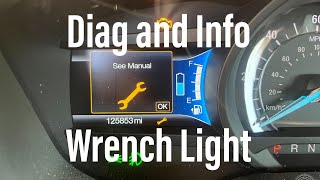
- Check Engine Light and/or a wrench icon illuminated on the dash
- Vehicle suddenly enters 'limp mode' with severely limited power and acceleration.
- Engine stalling, especially when coming to a stop or at low speeds.
- Rough or erratic idle
- No throttle response or severe hesitation when pressing the gas pedal.
- Vehicle surging while cruising at a steady speed
- On 2010-2012 models, may feel like a transmission issue, such as harsh shifting or shift flares.
- Replacing the transmission. On 2010-2012 models, a faulty throttle body can cause erratic shifting behavior that is easily mistaken for an internal transmission failure.
- Replacing only the throttle position sensor (TPS). The TPS is integrated into the throttle body assembly on these models and is not typically sold separately. The failure is often in the motor contacts or other internal electronics, not just the sensor.
Most Likely Causes
- Failing Electronic Throttle Body Assembly 🔴 High Probability Primarily affects 2010-2012 models. Ford acknowledged a high failure rate with Customer Satisfaction Program 13N03 due to faulty internal electronic contacts. Cleaning may provide a temporary fix, but the internal electronics are the root cause, leading to a stuck or incorrectly reporting throttle plate.
How to confirm: After ruling out major vacuum leaks, this is the most likely cause. If cleaning the throttle body provides temporary relief, it strongly suggests the unit is failing. The code P2101 appearing alongside P2172 also points directly to a bad throttle body.
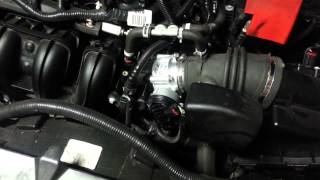
Typical fix: Replace the entire throttle body assembly. 🎬 Watch: Step-by-step guide to replacing the throttle body. After replacement, a 'throttle relearn' procedure must be performed.
Est. part cost: $100-$250 - Major Vacuum Leak 🟡 Medium Probability This is a common cause for this code on any vehicle. On the Fusion, this can include a cracked air intake hose (between the air filter and throttle body), a failed or stuck-open PCV valve, a cracked PCV hose, or a bad intake manifold gasket.
How to confirm: Perform a smoke test. This involves feeding pressurized smoke into the intake system with the engine off and watching for where it escapes. 🎬 See how to find hidden vacuum leaks yourself. You may also hear a loud hissing sound with the engine running near the leak's location.
Typical fix: Locate the source of the leak and replace the cracked hose or failed gasket.
Est. part cost: $20-$150 - Dirty Throttle Body ⚪ Low Probability
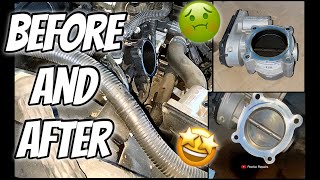
How to confirm: Visually inspect the throttle body bore and plate for heavy carbon buildup. A sticking throttle plate can prevent it from closing fully at idle, causing a small amount of uncommanded airflow.
Typical fix: Clean the throttle body plate and bore with a dedicated throttle body cleaner and a soft cloth or brush. This is often a temporary fix if the underlying cause is electronic failure.
Est. part cost: $10-$20
Rare But Worth Checking
- Faulty Manifold Absolute Pressure (MAP) Sensor: The MAP sensor can fail and send incorrect data to the PCM, causing it to believe there is high airflow when there isn't. This is less common than a throttle body failure or vacuum leak, but can happen. On the 2.5L and 3.0L engines, it is located on the intake manifold and is relatively easy to access.
- PCM Software Glitch: On some platforms, a similar code can be triggered by a software glitch that misinterprets sensor data. While the throttle body is the known primary issue on the Fusion, checking for any available PCM updates with a dealer is a valid diagnostic step if other causes are ruled out.
Diagnosis Steps
- Scan for other trouble codes. If P2101 is present, the throttle body is almost certainly the cause.
- Visually inspect the entire air intake tract from the air filter to the throttle body for obvious cracks, tears, or loose connections. Pay close attention to the flexible intake boot and all connected vacuum lines.
- With the engine off, remove the intake tube from the throttle body. Inspect the throttle bore and plate for heavy carbon buildup that could cause sticking.
- Clean the throttle body thoroughly with appropriate cleaner and a soft cloth, even if it looks clean. This is a low-cost diagnostic step.
- If the problem persists, perform a smoke test to definitively check for vacuum leaks from gaskets (intake manifold, throttle body) and vacuum hoses (PCV, brake booster). This is the most effective way to find hidden leaks.
- If no vacuum leaks are found and cleaning did not provide a lasting solution, the electronic throttle body assembly is the most likely culprit and should be replaced.
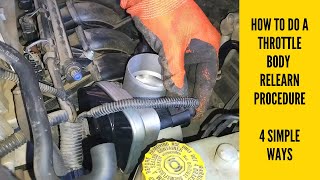
- After replacing the throttle body, perform the throttle body relearn procedure. 🎬 Watch: Four ways to perform a throttle relearn. This typically involves turning the key to the 'ON' position (engine off) for a minute, then turning it off for 15 seconds, and then starting the engine to allow the PCM to learn the new throttle's idle and closed positions. Consult a service manual for the exact procedure.
Parts You'll Likely Need
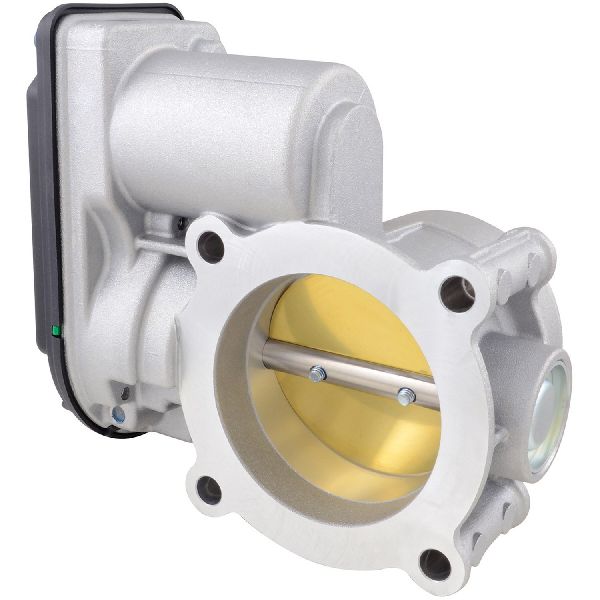
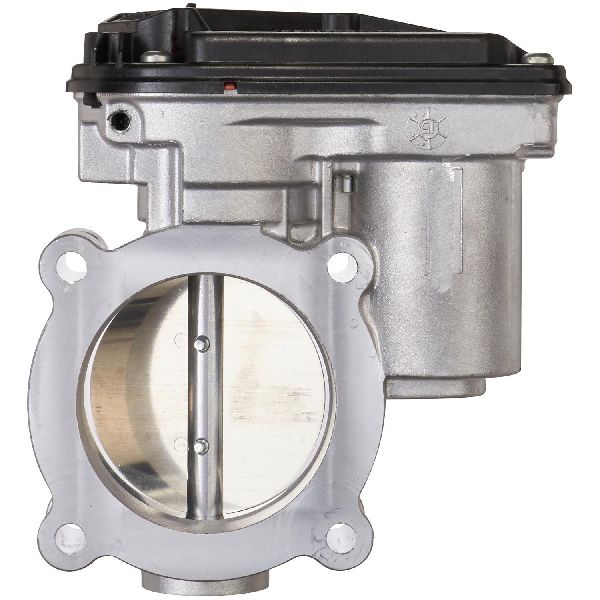
- Electronic Throttle Body Assembly
(OEM #DS7Z-9E926-D)— This is the most common failure point for code P2172 on 2010-2012 Ford Fusions, confirmed by Ford's Customer Satisfaction Program 13N03. This part number supersedes older versions like DS7Z-9E926-A and 9L8Z-9E926-A.
Trusted brands: Motorcraft, Bosch, Dorman, Hitachi
OEM price range: $180-$250
Aftermarket price range: $90-$180
Related Codes That Often Appear With This One
- P2101 — Stands for 'Throttle Actuator 'A' Control Motor Circuit Range/Performance'. This code specifically points to an electrical problem within the throttle body itself, making it the prime suspect when seen with P2172.
- P0171 — Stands for 'System Too Lean (Bank 1)'. A vacuum leak that is large enough to set P2172 will also introduce unmetered air that causes a lean fuel condition, triggering this code as well.
Technical Service Bulletins (TSBs) & Recalls
- Ford Customer Satisfaction Program 13N03 / TSB 13-8-1: Addresses the high failure rate of the electronic throttle body on certain Ford models, including the 2009-2013 Fusion, by extending the warranty and authorizing a no-charge replacement if diagnosed as faulty.
Platform-Specific Known Issues
- Customer Satisfaction Program 13N03: Ford issued this program to extend the warranty on the electronic throttle body to 10 years or 150,000 miles for certain Fusion models due to a high rate of failure. The program covers diagnosis and replacement of the throttle body if it is found to be the cause of the issue.
- Transmission Symptom Mimicry: A failing throttle body on the 2010-2012 models can cause harsh shifting, surging, and RPM flares between gears, leading owners to incorrectly suspect a costly internal transmission problem.
Mechanic-Grade Diagnostic Values
- MAP Sensor Voltage (KOEO) — expected: ~4.5 - 5.0 Volts. Failure: Voltage is significantly lower than 4.5V, indicating a sensor or wiring issue.
- MAP Sensor Voltage (Engine Idling) — expected: ~1.0 - 1.5 Volts. Failure: Voltage remains high (e.g., above 2.0V) at idle, suggesting a major vacuum leak or a faulty sensor that isn't reading manifold vacuum.
- Electronic Throttle Body Motor Resistance — expected: 2 - 15 Ohms. Failure: A reading of OL (Over Limit) indicates an open circuit, while a near-zero reading indicates a short. Either means the motor has failed.
- Throttle Body Connector - Pin 2 (Reference Voltage) — expected: 4.5 - 5.0 Volts. Failure: Significantly lower or no voltage indicates a wiring or PCM issue.
- Throttle Body Connector - Pin 3 (Ground) — expected: Good ground connection. Failure: High resistance to ground indicates a faulty ground connection from the PCM.
Scan Tool Commands That Help
- Ford IDS (Integrated Diagnostic System): Power Balance Test — While not directly for P2172, if a massive vacuum leak is suspected (like a failed intake gasket on one runner), this test can help identify a specific cylinder that is running significantly leaner than others, helping to pinpoint the location of the leak.
- High-End Bidirectional Scanner (Autel, Snap-on, etc.): Throttle Actuator Control (TAC) Command — This allows the technician to command the throttle plate to specific angles (e.g., 10%, 25%, 50%) with the engine off. Observing if the plate moves smoothly and if the reported TPS angles match the command can confirm a faulty/sticking throttle body.
Wiring & Ground Locations
- G105 — Right side of the engine compartment, near the Power Steering Control Module (PSCM).. A poor engine-to-chassis ground can cause floating voltages and erratic sensor readings for multiple components, including the throttle body and its sensors. Corrosion at this primary ground point is a known issue.
- G202 — Left side of the dash, behind the kick panel.. This is an interior ground point that can affect modules located inside the cabin, including connections to the Data Link Connector and potentially the PCM, which is located in the engine bay but has extensive interior wiring.
- PCM Connector (C175B, C175E) — The Powertrain Control Module (PCM) is located in the right rear of the engine compartment. The throttle body wiring terminates at this connector.. When diagnosing a persistent P2172 with suspected wiring issues, technicians must check for continuity, shorts, and pin-fitment at the PCM connector itself. A reading of low resistance to ground on a reference voltage wire at this connector (with the PCM disconnected) points to a short in the harness.
Real Owner Repair Stories
- Ford F150 Forum (2011 Ford F-150 (Shares similar throttle body design)) — Poor fuel economy and rough running after cleaning the throttle body and performing a relearn procedure.
❌ Tried (didn't work) A simple key/pedal relearn procedure.
✅ What actually fixed it Performing a full PCM memory drain by disconnecting both battery terminals and touching them together for several minutes. This forces the computer to completely forget old adaptive values and relearn the new clean throttle body's position from scratch, which resolved the issue. - ScannerDanner Forum (2014 Ford Fusion 2.5L) — Engine surging, multiple throttle-related codes (P0122, P0223, P2101, P2111).
❌ Tried (didn't work) Initial visual inspection.
✅ What actually fixed it Diagnostics revealed the 5V reference circuit had a resistive short to ground (1.4k ohms instead of >10k ohms). The fix required tracing the wiring harness between the PCM and the throttle body to find and repair the short to ground, which was causing the incorrect voltage readings and triggering the codes.
"I Checked Everything" — The Actual Cause
- A failing brake booster check valve can cause a massive, intermittent vacuum leak that triggers P2172. This is often missed because the leak occurs inside the brake booster itself, so a smoke test of the intake manifold and vacuum hoses will come back clean. The symptom is often a stiff brake pedal or a hissing sound when the brakes are applied.
OEM Part Supersession History
9L8Z-9E926-A→DS7Z-9E926-A, then DS7Z-9E926-D— The original parts had a high failure rate of the internal electronics, leading to the symptoms that trigger P2172. The subsequent revisions are updated designs to improve reliability.
Diagnostic Flowchart
Other Known Issues on This Vehicle
Issues unrelated to this code that are worth knowing about as an owner of this generation:
- 6F35 Automatic Transmission Failure 🔴 High — Widespread issue affecting 2010-2013 models, can occur at various mileages. Symptoms include harsh shifting, slipping, shuddering, and delayed engagement. (Ref: Multiple TSBs exist for software updates, but a class-action lawsuit alleges underlying mechanical defects.)
- Electronic Power Steering Failure 🔴 High — Common enough to trigger multiple investigations and a recall (19S26 for some models) for sudden loss of power steering assist. (Ref: Recall 19S26, Customer Satisfaction Program 15N01.)
- Faulty Door Latches 🟠 Medium — A widespread issue where a broken component can prevent the door from latching or cause it to open while driving. Affects 2013 models primarily. (Ref: Multiple recalls, including 15S16 and 20S15.)
- Swollen/Delaminated Lug Nuts 🟡 Low — Extremely common across many Ford models. The chrome cap on the lug nuts swells and deforms, making it impossible to use the factory lug wrench.
- Leaking Valve Cover Gasket 🟡 Low — A common oil leak on the 2.5L engine as the vehicle ages. The plastic valve cover and gasket can degrade over time.
Used vs. New Parts: Buying Guide for This Vehicle
When a used part is the smart pick: For the electronic throttle body, a used part is highly discouraged due to the known high failure rate of the original design. It only makes sense if the seller can prove the used part is the latest OEM revision (DS7Z-9E926-D) and it comes from a very low-mileage, rear-ended vehicle.
Donor-vehicle mileage cap: roughly under 40000 miles for the part to have meaningful remaining life.
What to inspect on the donor part:
- Verify the part number on the housing is 'DS7Z-9E926-D'.
- Inspect the electrical connector pins for any corrosion or damage.
- Ensure the throttle plate moves freely by hand (with power off) and doesn't show signs of heavy carbon scoring around the edges.
OEM-only on this vehicle (don't cheap out):
- Electronic Throttle Body: Given the history of failures and the critical safety function, using the OEM Motorcraft part (which is the updated DS7Z-9E926-D) is strongly recommended for a lasting repair.
Aftermarket brands forum-validated for this vehicle:
- Motorcraft (OEM)
- Bosch (Often an OEM supplier, high quality)
- Hitachi
Brands owners have reported issues with on this vehicle:
- Dorman: While Dorman sometimes offers an 'OE FIX' with improvements like Hall effect sensors, general sentiment among mechanics for electronic components can be mixed. Some forum users report premature failure or quality control issues compared to OEM.
Real Owner Stories
Aggregated from forums and TSBs cited above. Mileages and costs reflect what owners reported in those sources.
2010 Ford Fusion SE 2.5L — ~95000 miles
Symptoms: The wrench light came on and the car suddenly entered 'limp mode' with severely limited power. There was no throttle response when pressing the gas pedal. Scanned codes P2172 and P2101.
What fixed it: The electronic throttle body was diagnosed as faulty and replaced under Ford's Customer Satisfaction Program 13N03.
Source hint: https://www.blueovalforums.com/forums/index.php?/topic/56346-2010-fusion-se-25l-limp-mode-p2172-p2101/
2012 Ford Fusion — ~110000 miles
Symptoms: The car felt like the transmission was failing. It was shifting very harshly and would surge while cruising at a steady speed. There were also RPM flares between gears.
What fixed it: After suspecting a transmission issue, diagnosis revealed the cause was the electronic throttle body. Replacing the throttle body assembly resolved all the shifting and surging symptoms.
Source hint: Vehicle Specific Issue: Transmission Symptom Mimicry
2011 Ford Fusion
Symptoms: The engine was stalling when coming to a stop and had a rough, erratic idle. The Check Engine Light was on.
What fixed it: A smoke test revealed a large crack in the air intake hose located between the air filter and the throttle body. Replacing the cracked hose fixed the issue.
Source hint: Common Cause: Major Vacuum Leak
Related OBD-II Codes
Frequently Asked Questions
My 2011 Fusion is shifting harshly and surging. Is this a transmission problem?
I heard Ford had a special program for the faulty throttle body. Does it apply to my 2012 Fusion?
My car went into 'limp mode' with a wrench light. Is replacing the throttle body the only fix?
I cleaned my throttle body and the problem went away for a week, but now it's back. What does that mean?
I have code P2172 and P2101 at the same time. What does that point to?
What other vehicles share this same throttle body problem?
Helpful Videos




Used OEM Parts in Stock


New Aftermarket Parts Available


The information in this article is provided for general reference and educational purposes only. Vehicle specifications, procedures, and part compatibility can vary by production date, trim level, and region. Always consult your vehicle's factory service manual and verify part numbers before purchasing or performing repairs. Safety-critical components such as airbags, seat belts, and braking systems should be installed by a qualified professional.
- Ford Fusion:
- 🎬 Helpful Videos
- 🛍️ Shop This Part
- What's Unique About the 2010-2013 Ford Fusion
- Symptoms You May Notice
- Most Likely Causes
- Rare But Worth Checking
- Diagnosis Steps
- Parts You'll Likely Need
- Related Codes That Often Appear With This One
- Technical Service Bulletins (TSBs) & Recalls
- Platform-Specific Known Issues
- Mechanic-Grade Diagnostic Values
- Scan Tool Commands That Help
- Wiring & Ground Locations
- Real Owner Repair Stories
- "I Checked Everything" — The Actual Cause
- OEM Part Supersession History
- Diagnostic Flowchart
- Other Known Issues on This Vehicle
- Used vs. New Parts: Buying Guide for This Vehicle
- Real Owner Stories
- 2010 Ford Fusion SE 2.5L — ~95000 miles
- 2012 Ford Fusion — ~110000 miles
- 2011 Ford Fusion
- Related OBD-II Codes
- Frequently Asked Questions
- 🎟️ Get 5% Off