

P2135 on 2011-2016 Hyundai Elantra 1.8L: Throttle Position Sensor Causes and Fixes
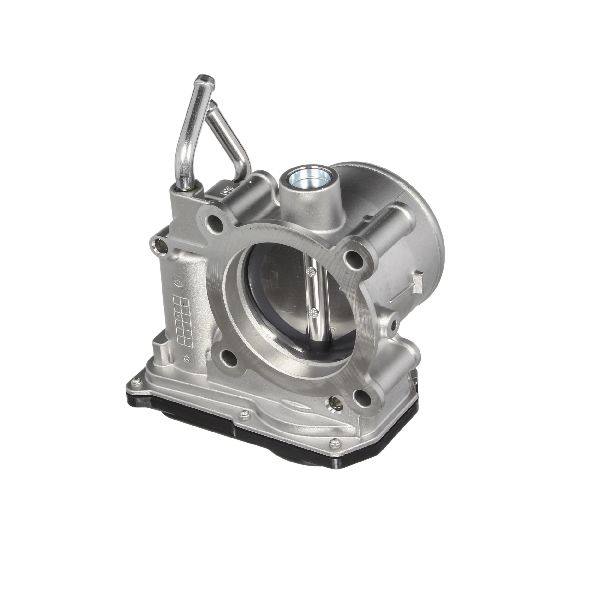
On a 2011-2016 Elantra, code P2135 is almost always caused by a failing electronic throttle body assembly. The throttle position sensors (TPS) are built-in and not sold separately. Before replacement, a thorough cleaning of the throttle plate and bore should be attempted. If replacement is necessary, expect to pay $150-$350 for a new throttle body. It's a DIY-friendly repair (Difficulty 2/5), but a throttle relearn procedure is required afterward.
- P2135 means the two throttle position sensors are sending conflicting signals to the engine computer.
- The most common symptom is the car entering 'Limp Mode,' resulting in a serious loss of power.
- Before replacing parts, try cleaning the throttle body with a dedicated cleaner, as carbon buildup can cause the issue.
- The sensors are built into the throttle body; if they have failed, you must replace the entire throttle body assembly (OEM Part #35100-2E000).
- After cleaning or replacement, a throttle relearn procedure is required to calibrate the system.
What's Unique About the 2011-2016 Hyundai Elantra
For the 2011-2016 Elantra with the 1.8L Nu engine, the two throttle position sensors (TPS1 and TPS2) are integrated directly into the electronic throttle body assembly. They cannot be replaced individually. This design means that if one of the internal resistive tracks or sensors fails, the entire throttle body unit must be replaced. This is the most common point of failure for this code on this specific vehicle, a fact corroborated by numerous owner forums and repair databases.
Symptoms You May Notice
- Check Engine Light is on
- Vehicle enters 'Limp Mode' (Reduced Engine Power) with very slow acceleration.
- Hesitation or stumbling when pressing the gas pedal.
- Engine stalling, especially after coming to a stop.
- Unstable or rough idle, may be unusually high or low.
- Engine surging or revving unexpectedly without pedal input.
- Traction control light may also illuminate simultaneously.
- Replacing the accelerator pedal assembly when the fault is in the throttle body.
- Replacing the PCM without first thoroughly testing the throttle body and its wiring.
- Assuming a new throttle body is needed when a thorough cleaning could resolve the issue.
Most Likely Causes
- Faulty Electronic Throttle Body Assembly 🔴 High Probability The integrated throttle position sensors (TPS) are the primary failure point. The internal resistive tracks wear out over time, creating dead spots or erratic signals that the ECM flags as a correlation error.
How to confirm: Using a scan tool with live data, graph the voltage of 'TPS1' and 'TPS2'. With the key on, engine off, slowly press the accelerator pedal. TPS1 voltage should rise smoothly from ~0.5-0.7V to ~4.5V, while TPS2 should do the inverse. Any spikes, dropouts, or flat spots in the graph confirm a failing sensor. Wiggling the connector during this test can help isolate a wiring issue.
Typical fix: Replace the entire electronic throttle body assembly.
Est. part cost: $150-$350 - Dirty Throttle Body 🟡 Medium Probability Carbon and oil residue from the PCV system can build up around the throttle plate, causing it to stick or move slowly. This can cause the plate's actual position to lag behind the motor's command, leading to a temporary correlation fault between the sensors.
How to confirm: Remove the air intake hose from the throttle body and visually inspect the throttle bore and plate for black carbon buildup.
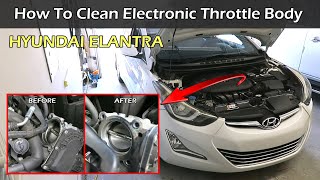
Typical fix: Clean the throttle body bore and plate thoroughly with a dedicated throttle body cleaner and a soft cloth or brush. Do NOT push the throttle plate open with your fingers; have an assistant press the gas pedal (with key on, engine off) or use a non-marring tool. 🎬 See this video for a safe throttle body cleaning walkthrough.
Est. part cost: $5-$15 - Wiring or Connector Issue ⚪ Low Probability The wiring harness connector at the throttle body is exposed to engine heat and vibration, which can lead to corrosion on pins or frayed wires near the connector.
How to confirm: Visually inspect the throttle body connector for corrosion, bent pins, or damaged wires. With the scan tool graphing TPS voltages, gently wiggle the connector and wiring harness to see if the signal becomes erratic.
Typical fix: Clean the connector terminals with a contact cleaner or repair the damaged section of the wiring harness. Applying dielectric grease during reassembly can prevent future corrosion.
Est. part cost: $0-$50
Rare But Worth Checking
- Failing Powertrain Control Module (PCM): This is very uncommon. The PCM should only be considered after a new throttle body and verified wiring fail to resolve the code.
- Faulty Accelerator Pedal Position (APP) Sensor: While part of the same system, a failing APP sensor usually generates its own specific trouble codes (like P2138). It is an unlikely cause for P2135.
Diagnosis Steps
- Scan for Codes: Confirm P2135 is the primary code. Note any other codes, like P0638, that may be present.
- Inspect the Wiring: Turn the ignition off. Carefully inspect the electrical connector and wiring harness going to the throttle body. Look for any signs of damage, corrosion, or loose connections.
- Clean the Throttle Body: Remove the intake boot. If significant carbon buildup is visible, clean it thoroughly. SAFETY WARNING: Do not force the throttle plate open with your fingers. Have an assistant press the accelerator pedal with the ignition ON (engine OFF) to open the plate for cleaning. This is a low-cost step that frequently resolves the issue.
- Analyze Live Data: Connect a scan tool that can display live data. With the key on and engine off, monitor the voltage readings for TPS1 and TPS2. TPS1 should read approx. 0.5-0.7V and TPS2 should read approx. 4.5V at closed throttle. As you slowly press the gas pedal, the voltages should change smoothly and inversely. Any sudden jumps, drops, or freezing in the voltage indicates a sensor failure within the throttle body.
- Confirm the Failure: If the wiring is good and cleaning did not help, and the live data shows a clear correlation error, the throttle body assembly has failed and requires replacement.
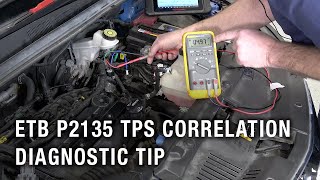
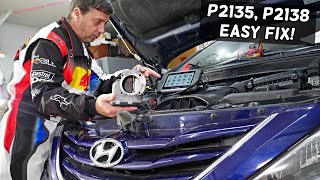
- Replace the Throttle Body: If confirmed faulty, replace the entire throttle body assembly with a new or remanufactured unit. The OEM part number is 35100-2E000. 🎬 Watch: Step-by-step guide to testing and replacing the throttle body.
- Perform Relearn Procedure: After replacement or cleaning, a throttle relearn is mandatory. A common procedure for Hyundai is: Turn the ignition to the 'ON' position (do not start engine) for 10-15 seconds. You may hear the throttle body motor whirring. Turn the ignition 'OFF' for 10-15 seconds. Repeat this cycle 3-5 times. Then, start the engine and let it idle for 5-10 minutes to allow the ECM to adapt. Alternatively, disconnecting the battery for 15-30 minutes can also force a reset.
Parts You'll Likely Need
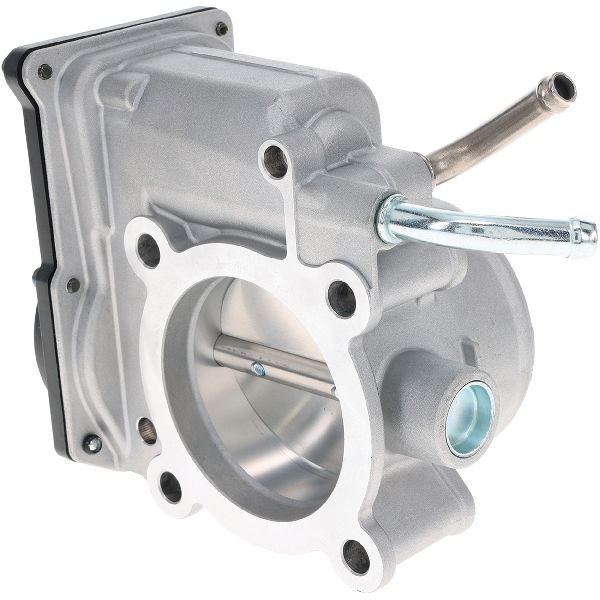
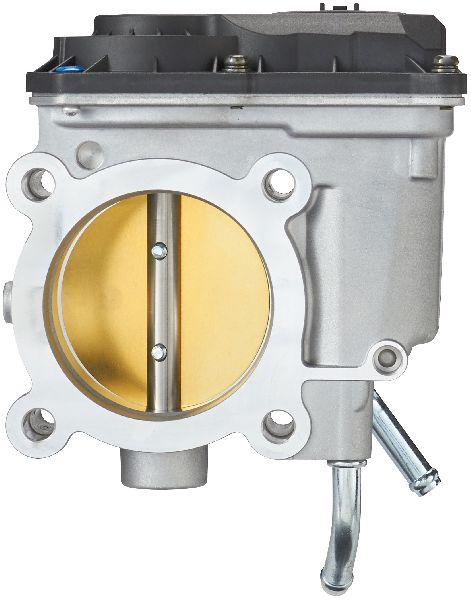
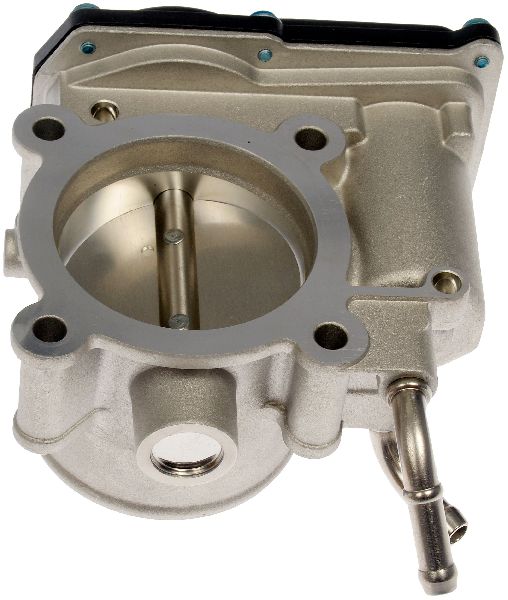
- Electronic Throttle Body Assembly
(OEM #35100-2E000)— This is the most common cause of P2135, as the internal throttle position sensors fail and are not serviceable separately. This part number is confirmed to fit the 2011-2016 Elantra 1.8L and several other Hyundai/Kia models.
Trusted brands: Hyundai (OEM), Bosch, Standard Motor Products (SMP), Cardone (Remanufactured)
OEM price range: $250-$350
Aftermarket price range: $150-$250
Related Codes That Often Appear With This One
- P0638 - Throttle Actuator Control Range/Performance
Technical Service Bulletins (TSBs) & Recalls
- While no TSB directly addresses P2135 for this specific model, Hyundai has issued related software updates for similar engine platforms. For example, TSB 19-AT-010H provides a procedure for transferring oil pressure data to the ECU/TCU using the GDS Mobile tool to improve shift quality after a transmission or TCU replacement, showing a history of using software to manage component characteristics.
- Manufacturer service records for other Hyundai models, such as NHTSA ODI #11019236, indicate that owners have found TSBs related to the P2135, P2106, and P1295 code cluster, suggesting a widespread pattern of electronic throttle control issues across the brand's platforms.
Platform-Specific Known Issues
- Owner Experience: Intermittent Failure in Cold Weather: Multiple owners report that the P2135 code and limp mode symptoms are more likely to occur during a cold start, especially on cold days. The vehicle may operate normally after warming up and being restarted, only for the problem to return the next morning. This intermittent behavior points towards failing electronic components within the throttle body that are sensitive to temperature changes.
- Real-World Repair Story: Cleaning vs. Replacement: On Hyundai-Forums, a user with a 2013 Elantra experiencing P2135 and limp mode first attempted to resolve the issue by thoroughly cleaning the throttle body. While the car ran better initially, the code returned within a week. Replacing the entire throttle body assembly with an OEM part (35100-2E000) and performing the key-cycle relearn procedure permanently fixed the issue. This highlights that while cleaning is a valid first step, it is often a temporary solution if the sensors themselves are failing.
Mechanic-Grade Diagnostic Values
- Throttle Body Connector Pin 5 (TPS1 Signal) to Pin 4 (Sensor Ground) — expected: Approx. 0.5V - 0.7V at closed throttle, sweeping smoothly to ~4.5V at wide-open throttle.. Failure: Voltage that is erratic, jumps, or has flat spots during the sweep.
- Throttle Body Connector Pin 3 (TPS2 Signal) to Pin 4 (Sensor Ground) — expected: Approx. 4.5V at closed throttle, sweeping smoothly down to ~0.5V at wide-open throttle.. Failure: Voltage that does not move inversely to TPS1 or has spikes/dropouts.
- Throttle Body Connector Pin 6 (5V Reference) to Pin 4 (Sensor Ground) — expected: Stable 5.0V with key on, engine off.. Failure: Voltage that is low, high, or unstable indicates a PCM or wiring issue.
- Throttle Body Bolt Torque — expected: 7.8 to 11.8 Newton-meters (5.8 to 8.7 ft-lb). Failure: Improper torque can lead to vacuum leaks or damage to the throttle body.
Scan Tool Commands That Help
- Hyundai GDS (Global Diagnostic System): Active Test -> ETC Motor — This bidirectional command allows the technician to command the Electronic Throttle Control (ETC) motor to open and close, verifying the motor's function independently of the pedal. It's used to confirm if the throttle plate is physically sticking or if the motor itself has failed.
- Hyundai GDS: S/W Management -> Reset Adaptive Values — After replacing the throttle body or cleaning it, this function can be used to reset the ECM's learned values for throttle position, forcing it to recalibrate to the new or cleaned part. This is a more robust alternative to the key-cycle or battery disconnect methods.
Wiring & Ground Locations
- Throttle Body Connector (6-pin) — Connected directly to the electronic throttle body, located between the air intake hose and the engine's intake manifold.. This is the primary connection point for both throttle position sensors (TPS1, TPS2), the 5V reference, sensor ground, and the two wires for the throttle actuator motor. A bad connection, corrosion, or damaged wire at this connector is a common cause of P2135. The pinout is critical for testing: Pin 1 (Motor +), Pin 2 (Motor -), Pin 3 (TPS2 Signal), Pin 4 (Sensor Ground), Pin 5 (TPS1 Signal), Pin 6 (5V Reference).
- G101 (Main Engine Ground) — Typically a strap or cable connecting the engine block to the chassis, often near the transmission mount or on the fender apron.. A poor engine ground can create voltage offsets and electrical noise, causing sensor readings to become unstable. The ECM relies on a solid ground reference for all its sensors, including the TPS. An unstable ground can cause the TPS1 and TPS2 signals to appear uncorrelated to the ECM, triggering P2135. The OEM ground strap for the 2011-2015 1.8L Elantra is part number 91865-3X010.
Real Owner Repair Stories
- Reddit user KrellBH (2017 Hyundai Santa Fe (similar electronic throttle control system)) — Really rough shifts from 1st to 2nd gear, with a loud 'clunk' and lurching.
✅ What actually fixed it Performing a 5-cycle key ON/OFF throttle relearn procedure completely smoothed out the shifts. This confirms the effectiveness of the manual relearn process for resolving drivability issues related to throttle calibration. - NHTSA ODI #10846204 (Hyundai Sonata) — An owner reported that after the vehicle lost pedal response, they shut off the engine and restarted it, which temporarily restored acceleration. The diagnostic scan revealed codes P2135, P0221, P2106, P0121, and P2110.
- NHTSA ODI #11061416 (Hyundai Veracruz) — A driver experienced a second occurrence of the check engine light and P2135 code while driving on a highway, which caused the car to enter "limp home mode."
OEM Part Supersession History
35100-2E000→N/A— This part number remains the primary OEM replacement for the 2011-2016 Elantra 1.8L.
Heads up: While 35100-2E000 is the correct part, be aware that it is also used on some 2.0L applications in other Hyundai/Kia models like the Tucson and Forte. Always verify fitment by VIN, but for the 2011-2016 Elantra 1.8L, this is the correct assembly.
Model Year Variations Within This Range
- 2014-2016: A mid-cycle refresh for the 2014 model year introduced revised styling and an optional 2.0L GDI engine (173 hp) on higher trims. While the base 1.8L engine remained the volume seller and uses the same throttle body (35100-2E000), a technician should always confirm the engine size before ordering parts, as the 2.0L engine became more common in these later years.
- 2011-2013: These pre-facelift models were more likely to come standard with the 1.8L Nu engine (148 hp, later revised to 145 hp). The P2135 diagnosis is identical, but there is less chance of encountering the 2.0L engine seen in later years.
Diagnostic Flowchart
Used vs. New Parts: Buying Guide for This Vehicle
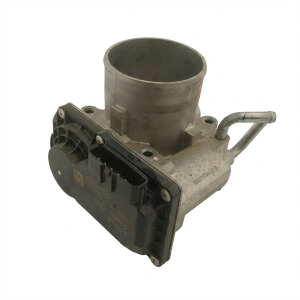
When a used part is the smart pick: A used OEM throttle body from a reputable salvage yard can be a smart choice if it comes from a low-mileage, rear-ended donor vehicle. Since the failure is electronic wear, a newer, lower-mileage part offers significant cost savings ($50-$150) with a good chance of having substantial remaining life.
Donor-vehicle mileage cap: roughly under 60000 miles for the part to have meaningful remaining life.
What to inspect on the donor part:
- Verify the OEM part number (35100-2E000) is stamped on the housing.
- Inspect the electrical connector pins for any signs of corrosion, moisture, or damage.
- Check the throttle plate for excessive carbon buildup; a relatively clean bore suggests better vehicle maintenance.
- Ask for the donor vehicle's VIN and mileage to verify its history.
- Ensure there is a return policy (e.g., 30-90 days) in case the part is also faulty.
Aftermarket brands forum-validated for this vehicle:
- Bosch
- Standard Motor Products (SMP)
Brands owners have reported issues with on this vehicle:
- Unbranded, no-name parts from online marketplaces should be avoided, as their internal electronics may not meet OEM specifications for sensor accuracy and longevity, leading to a repeat failure.
Documented NHTSA Reports
NHTSA ODI #10633373
Symptoms: An owner reported the Malfunction Indicator Lamp illuminated with ETC (Electronic Throttle Control) system related DTC P2135 (Forced Limited Power) or DTC P0638 (Power Management).
NHTSA ODI #10626110
Symptoms: A report describes the car shutting off immediately because it could not respond to the throttle, with a diagnostic scan showing codes P2106, P1295, and P2135, attributed to a sensor issue.
Real Owner Stories
Aggregated from forums and TSBs cited above. Mileages and costs reflect what owners reported in those sources.
2013 Hyundai Elantra 1.8L Nu
Symptoms: Vehicle was experiencing P2135 and going into limp mode.
What fixed it: After an initial attempt to fix the issue by cleaning the throttle body failed, replacing the entire throttle body assembly with an OEM part (35100-2E000) and performing the key-cycle relearn procedure permanently fixed the issue.
Source hint: Vehicle Specific Issues: 'Real-World Repair Story: Cleaning vs. Replacement'
2011-2016 Hyundai Elantra 1.8L Nu
Symptoms: The car would suddenly lose power and go into limp mode, illuminating the Check Engine Light.
What fixed it: The final solution was the replacement of the entire throttle body assembly, followed by the mandatory relearn procedure.
Source hint: Hyundai-Forums.com - Multiple threads for 2011-2016 Elantras
2011-2016 Hyundai Elantra 1.8L Nu
Symptoms: The P2135 code and limp mode symptoms would appear intermittently, most often during a cold start. The problem would seem to disappear after the engine warmed up and was restarted, only to return the next morning.
What fixed it: This behavior points to failing electronic components within the throttle body, which necessitates the replacement of the entire assembly for a permanent repair.
Source hint: Vehicle Specific Issues: 'Owner Experience: Intermittent Failure in Cold Weather'
Related OBD-II Codes
Frequently Asked Questions
My 2013 Elantra only goes into limp mode with the P2135 code when it's cold outside. Is this a known issue?
I thoroughly cleaned the throttle body, but the P2135 code and hesitation came back a week later. What should I do next?
How can I confirm the throttle body is actually bad before spending money on a new one?
Is there a special procedure required after replacing the throttle body on my Elantra?
My 2015 Kia Forte has this same P2135 code. Is the cause and part the same as the Elantra?
What is the OEM part number for the electronic throttle body for the 2011-2016 Elantra?
Helpful Videos

Used OEM Parts in Stock

New Aftermarket Parts Available



The information in this article is provided for general reference and educational purposes only. Vehicle specifications, procedures, and part compatibility can vary by production date, trim level, and region. Always consult your vehicle's factory service manual and verify part numbers before purchasing or performing repairs. Safety-critical components such as airbags, seat belts, and braking systems should be installed by a qualified professional.
- Hyundai Elantra:
- 🎬 Helpful Videos
- 🛍️ Shop This Part
- What's Unique About the 2011-2016 Hyundai Elantra
- Symptoms You May Notice
- Most Likely Causes
- Rare But Worth Checking
- Diagnosis Steps
- Parts You'll Likely Need
- Related Codes That Often Appear With This One
- Technical Service Bulletins (TSBs) & Recalls
- Platform-Specific Known Issues
- Mechanic-Grade Diagnostic Values
- Scan Tool Commands That Help
- Wiring & Ground Locations
- Real Owner Repair Stories
- OEM Part Supersession History
- Model Year Variations Within This Range
- Diagnostic Flowchart
- Used vs. New Parts: Buying Guide for This Vehicle
- Documented NHTSA Reports
- NHTSA ODI #10633373
- NHTSA ODI #10626110
- Real Owner Stories
- 2013 Hyundai Elantra 1.8L Nu
- 2011-2016 Hyundai Elantra 1.8L Nu
- 2011-2016 Hyundai Elantra 1.8L Nu
- Related OBD-II Codes
- Frequently Asked Questions
- 🎟️ Get 5% Off