

P2112 on 2011-2019 Ford Explorer 3.5L: Throttle Body Stuck Closed Causes & Fixes
Code P2112 on a 2011-2019 Ford Explorer almost always means the electronic throttle body has failed. This is a well-documented issue, and the fix is to replace the entire throttle body assembly. Ford acknowledged the problem with Customer Satisfaction Program 13N03, extending the warranty. Expect to pay between $100-$200 for an OEM Motorcraft part and around 1-1.5 hours for labor.
- P2112 on a 2011-2019 Explorer is a serious code indicating the throttle is stuck closed, which will cause sudden power loss and put the vehicle into a low-power 'limp mode'.
- The cause is almost certainly a failed electronic throttle body, a well-known issue for this vehicle.
- Before paying for a repair, check your vehicle's VIN on the NHTSA or Ford website to see if it was covered under Customer Satisfaction Programs 13N03 or 16B32, though these programs had expiration dates.
- Do not continue to drive the vehicle. The sudden loss of power is a major safety risk.
- The fix is to replace the entire throttle body assembly; this is a relatively simple DIY job for those with basic tools.
What's Unique About the 2011-2019 Ford Explorer
The electronic throttle body (ETB) on this generation of Ford Explorer, along with many other Ford models from the same era using the 3.5L and other engines, is a known, widespread failure point. The issue stems from contamination on the internal motor contacts of the throttle body, which results in intermittent electrical connectivity. The problem became so prevalent that Ford issued Customer Satisfaction Program 13N03, which extended the warranty on the ETB to 10 years or 150,000 miles for certain vehicles. Another program, 16B32, and Technical Service Bulletin TSB 16-0139 also addressed ETB replacement for 2016 models, highlighting a persistent issue with this component across the platform.
Symptoms You May Notice
- Sudden and significant loss of engine power
- Vehicle enters 'limp mode' or 'fail-safe mode'
- Illuminated Powertrain Malfunction (wrench) light on the dashboard.
- Illuminated Check Engine Light
- Unresponsive or sluggish accelerator pedal
- Vehicle may stall or struggle to stay running at idle.
- Sudden deceleration while driving.
- Vehicle may crank but fail to start.
- Vibration and sudden jerking motions.
- Replacing the Accelerator Pedal Position (APP) sensor. While the APP sensor can cause acceleration issues, the P2112 code specifically points to a problem at the throttle body itself, not the pedal. An APP sensor fault would typically set different codes.
Most Likely Causes
- Failed Electronic Throttle Body (ETB) 🔴 High Probability Widespread, documented failures due to contamination of internal motor contacts and wear of internal components, leading to multiple Ford customer service programs (13N03, 16B32). The failure prevents the throttle plate from opening to the angle commanded by the PCM.
How to confirm: With the engine off, have a helper turn the key to the 'ON' position (not start) while you observe the throttle plate. It should cycle open and closed. If it doesn't move, buzzes, or sticks, the unit is faulty. A professional scan tool can also command the throttle open and closed to test its function and monitor live data for discrepancies between commanded and actual throttle position.
Typical fix: Replacement of the entire electronic throttle body assembly. Cleaning is sometimes attempted but rarely provides a long-term solution for an internal electronic or motor failure. After replacement, a throttle body relearn procedure may be necessary, though many systems relearn automatically with driving.
Est. part cost: $100-$200 - Wiring or Connector Issue at the Throttle Body ⚪ Low Probability Engine vibration and heat can cause wiring to fray or the connector pins to become loose or corroded over time, disrupting the command signal or power to the throttle motor.
How to confirm: Visually inspect the wiring harness and connector going to the throttle body for any signs of damage, corrosion, or loose pins. Wiggle the connector with the engine running to see if it affects idle. Use a multimeter to check for proper voltage and ground at the connector according to the vehicle's wiring diagram.
Typical fix: Repair the damaged section of wiring or replace the connector pigtail.
Est. part cost: $15-$50 - Powertrain Control Module (PCM) Software or Hardware Fault ⚪ Low Probability Some TSBs involved reprogramming the PCM to better handle intermittent throttle body signals, but it's less common than the ETB itself failing. A damaged PCM could also be a cause.
How to confirm: This is difficult to confirm without a dealer-level scan tool. Generally, this is suspected only after a new, known-good throttle body fails to resolve the issue. Checking for PCM software updates is a key step.
Typical fix: Reprogramming the PCM with the latest software update from Ford. In very rare cases, the PCM itself may need to be replaced.
Est. part cost: $100-$1200
Rare But Worth Checking
- Physical Obstruction or Carbon Buildup: While heavy carbon can cause a throttle plate to stick, the electronics in these specific Ford units are a much more common failure point. It's worth a quick visual inspection when the intake tube is removed. A dirty throttle body can sometimes cause these codes after the battery has been disconnected, as the PCM loses its learned throttle stop points and the sticking becomes apparent during the re-initialization test.
Diagnosis Steps
- Use an OBD-II scanner to confirm P2112 is the primary code. Check for other related codes like P2111, P2119, and P2104.
- Check for any applicable recalls or customer satisfaction programs (like 13N03 or 16B32) using your vehicle's VIN on the Ford or NHTSA website. Note that 13N03 was an extended warranty, not a recall, and required the fault to be present for a free repair.
- Perform a thorough visual inspection of the electronic throttle body's electrical connector and wiring harness. Look for any chafed wires, corrosion, or loose connections.
- Remove the air intake hose from the throttle body. Inspect the throttle bore and plate for heavy carbon buildup or any foreign objects that could cause it to bind.
- With the intake hose still off, have a helper turn the ignition to the 'ON' position (do not start the engine). The throttle plate should perform a self-test, cycling open and closed. If it fails to move, moves erratically, or makes a loud grinding/buzzing noise, the throttle body assembly has almost certainly failed.
- If the throttle body appears to function correctly but the code persists, the issue may be in the wiring. Use a multimeter and a wiring diagram for your vehicle to test for correct power, ground, and signal integrity at the throttle body connector.
- As a last resort, if a new throttle body and verified wiring do not fix the issue, investigate the possibility of a PCM software update or a rare PCM hardware fault. This step typically requires a professional technician with dealer-level tools.
Parts You'll Likely Need
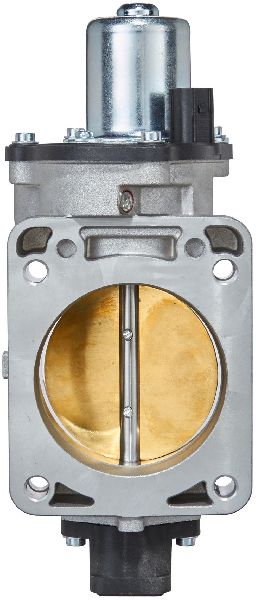
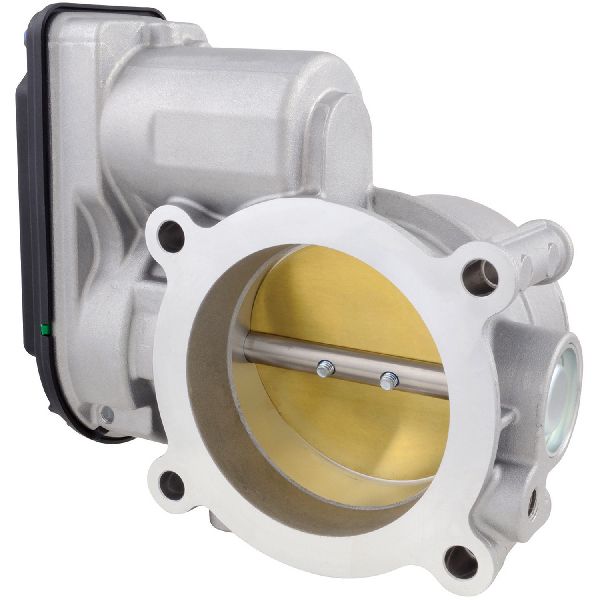
- Electronic Throttle Body Assembly
(OEM #AA5Z-9E926-A, superseded by AA5Z-9E926-B)— This is the overwhelmingly most common cause of P2112. The internal motor and/or position sensors fail, requiring replacement of the complete unit.
Trusted brands: Motorcraft, Standard Motor Products, Cardone
OEM price range: $120-$240
Aftermarket price range: $80-$150
Related Codes That Often Appear With This One
- P2111 — This code means 'Throttle Actuator Control System - Stuck Open'. It's common to see both P2111 and P2112 stored together, as they both indicate a general failure of the throttle body's ability to control the plate position, as noted in TSB 16-0139 and other service documents. An owner of a 2016 Explorer reported both codes being diagnosed by the dealer.
- P2119 — This code relates to 'Throttle Actuator Control Throttle Body Range/Performance'. It was also mentioned alongside P2111 and P2112 in Ford's Technical Service Bulletin 16-0139.
- P2104 — This code, 'Throttle Actuator Control System - Forced Idle,' often appears with P2112. It indicates the PCM has intentionally disabled throttle control and forced the engine to idle as a fail-safe measure due to the detected throttle body fault.
Technical Service Bulletins (TSBs) & Recalls
- TSB 16-0139: Addresses intermittent loss of power and codes P2111, P2112, and/or P2119 on 2016 models built on or before May 31, 2016.
- Customer Satisfaction Program 13N03: Extended warranty coverage for the throttle body on certain models due to contamination of internal contacts. This was a one-time repair program covering vehicles for 10 years or 150,000 miles.
- Customer Satisfaction Program 16B32: Authorized free replacement of the electronic throttle body on affected 2016 models for the same issue.
Platform-Specific Known Issues
- Customer Satisfaction Program 13N03: Ford extended the warranty on the throttle body for many vehicles to 10 years/150,000 miles due to internal contamination causing intermittent electrical connectivity. The program specified it was a one-time repair.
- Customer Satisfaction Program 16B32: This program also involved replacing the electronic throttle body on certain 2016 models, including the Explorer, due to similar contamination issues leading to P2111 and P2112 codes. An owner of a 2016 Explorer noted the dealer performed a PCM reprogram under this program.
- An owner complaint (ODI #10621906) for a 2012 Explorer specifically mentions the dealer diagnosing code P2112 as 'throttle body stuck closed' and references the need for Ford's service programs.
- A TSB (#TSB 16-0139) was issued for 2016 models that could exhibit an intermittent loss of power with DTCs P2111, P2112, and/or P2119, pointing to a service procedure to correct the condition.
- An owner of a 2016 Explorer reported sudden deceleration on the highway, which was diagnosed with code P2112.
- A 2013 Explorer owner experienced an instant loss of power at 45 MPH with codes P2111 and P2112, describing it as a "vibration and sudden jerk backwards".
Mechanic-Grade Diagnostic Values
- Throttle Angle Deviation Threshold — expected: The actual throttle plate angle should be within 6 degrees of the commanded angle.. Failure: If the measured throttle angle is more than 6 degrees lower than what the PCM is commanding, code P2112 will be set.
- Throttle Actuator Supply Voltage — expected: 11V - 13V with ignition on.. Failure: Voltage below 11V may indicate a wiring or power supply issue.
- Live Data: Commanded vs. Actual Throttle Position — expected: Using a scan tool like Ford IDS or FORScan, the PIDs for commanded throttle position (TP_CMD) and actual throttle position (TP_ACT) should closely mirror each other during pedal operation.. Failure: A failing throttle body will show the actual position (TP_ACT) dropping off, bouncing, or lagging significantly behind the commanded position (TP_CMD).
Scan Tool Commands That Help
- Ford IDS / FORScan: Live Data Graphing (PIDs: TP_CMD, TP_ACT, TP1, TP2) — This is the primary diagnostic step to visually confirm if the throttle body is failing. By graphing the commanded throttle angle versus the actual angle reported by the sensors, a technician can see the exact moment the actuator fails to perform as directed, confirming the fault is in the throttle body itself.
- No Tool Required: Throttle Body Relearn / Reset — After cleaning or replacing the throttle body, if the idle is erratic. The procedure resets the learned values. Turn the key to ON (engine off), slowly press the accelerator pedal to the floor, then release it quickly. Turn the key off. Some sources also recommend disconnecting the battery for a period to clear the Keep Alive Memory (KAM).
Wiring & Ground Locations
- ETB Connector — The 6-pin electrical connector on the electronic throttle body assembly.. This is the primary connection point for all power and signal to the throttle body. The pins are for the motor (TACM+, TACM-) and the dual throttle position sensors (TP1, TP2, ETCREF, ETCRTN). Corrosion or damage here is a common cause of failure after the throttle body itself.
- G104 — Right side of the engine compartment, often on the fender behind the battery.. This is a major engine compartment ground point. A poor connection here can cause a variety of sensor and actuator issues, including those related to the electronic throttle control system.
- G105 — Top right side of the engine.. This is another critical ground point located directly on the engine. Intermittent or poor grounding here can lead to erratic electronic behavior and fault codes.
- Wiring Harness Chafe Points — Inspect the harness section leading from the main loom to the throttle body connector.. Vibrations and heat can cause the harness to rub against the engine, brackets, or other components, leading to chafed insulation and short circuits. This can cause a P2112 code even with a perfectly good throttle body.
Real Owner Repair Stories
- Reddit user tk_20 on r/f150ecoboost (2014 Ford F-150 3.5L EcoBoost (similar ETB system)) — Sudden complete loss of power, wrench light on dashboard.
✅ What actually fixed it The user's repair shop advised them to stick with the OEM (Motorcraft) throttle body, stating that aftermarket units often caused more problems. The user had their engine replaced and the shop's opinion was to use OEM for the throttle body. - Ford F150 Forum user (2015 Ford F-150) — Sudden shudder, complete loss of power, no accelerator response, multiple warning lights, and code P2112.
❌ Tried (didn't work) Initially, replacing the throttle body with a NAPA part seemed to work, but then the truck would not accelerate past 20 mph and threw a new code, P2135 (Throttle/Pedal Position Sensor/Switch A/B Voltage Correlation).
✅ What actually fixed it The final resolution was not posted, but the symptoms after the part replacement strongly pointed to an intermittent wiring issue in the harness going to the throttle body, or a defective new part. The advice given was to carefully inspect the harness for chafing or damaged pins near the connector.
When the Usual Fixes Don't Work
- While replacing the throttle body is the fix for P2112 in over 95% of cases, there are instances where the problem persists. One owner on an F-150 forum replaced their throttle body with an aftermarket part and immediately developed a new, related code (P2135), and the vehicle was still undrivable. This highlights that if the simple part swap doesn't work, the next step must be a detailed inspection of the wiring harness and connector pins for intermittent shorts or opens, which may have been disturbed during the repair.
OEM Part Supersession History
AA5Z-9E926-A→AA5Z-9E926-B— Unspecified, but likely an internal revision to improve reliability and address the widespread failure issues of the original part.
Heads up: The new part (B) is a direct replacement for the old part (A). There are no known incompatibility issues.
Diagnostic Flowchart
Other Known Issues on This Vehicle
Issues unrelated to this code that are worth knowing about as an owner of this generation:
- Internal Water Pump Failure 🔴 High — Commonly occurs between 80,000 and 150,000 miles. Failure can cause coolant to mix with engine oil, leading to catastrophic engine damage. (Ref: A class-action lawsuit was filed but later dismissed.)
- Power Transfer Unit (PTU) Failure 🔴 High — Common on AWD models. The PTU is located near the hot exhaust, causing its fluid to break down and leading to gear/bearing failure. It lacks a drain plug, making service difficult.
- Cracked Exhaust Manifold / Carbon Monoxide Leak 🔴 High — Some models, particularly early in the generation, were prone to cracked exhaust manifolds that could allow exhaust fumes to enter the cabin. (Ref: Related to NHTSA investigation PE16018 and several service actions.)
- Power Steering Rack Failure 🟠 Medium — Numerous complaints of power steering failure or noise. Several recalls were issued for the electronic power steering system. (Ref: Multiple recalls, including 14S06 and 15N01.)
- Rear Suspension Toe Link Fracture 🔴 High — Affects 2011-2017 models, can cause loss of steering control. (Ref: Ford recall 19S17 / NHTSA recall 19V-435.)
Used vs. New Parts: Buying Guide for This Vehicle
When a used part is the smart pick: For this specific repair, a used part from a junkyard is almost never a smart choice. The failure is due to internal wear and contamination, meaning a used part likely has similar wear and a high probability of failing soon after installation.
What to inspect on the donor part:
- Not applicable, as used parts are not recommended for this component.
OEM-only on this vehicle (don't cheap out):
- Electronic Throttle Body
Aftermarket brands forum-validated for this vehicle:
- While many brands exist (Dorman, Standard Motor Products, Hitachi), real-world owner feedback strongly favors sticking with the OEM Motorcraft part. The revised OEM part appears to have corrected the original flaws.
Brands owners have reported issues with on this vehicle:
- No specific brands are universally cited as 'bad,' but repair shops have reported seeing more problems with various aftermarket throttle bodies compared to OEM for this application, leading to a strong recommendation to use Motorcraft.
Real Owner Stories
Aggregated from forums and TSBs cited above. Mileages and costs reflect what owners reported in those sources.
2016 Ford Explorer 3.5L V6
Symptoms: Sudden deceleration while driving on the highway.
What fixed it: Diagnosis of code P2112 and replacement of the electronic throttle body.
Source hint: vehicle_specific_issues
2013 Ford Explorer 3.5L V6
Symptoms: Instant loss of power at 45 MPH accompanied by a vibration and sudden jerk backwards.
What fixed it: Replacement of the electronic throttle body (codes P2111 and P2112).
Source hint: vehicle_specific_issues
2012 Ford Explorer 3.5L V6
Symptoms: Throttle body stuck closed.
What fixed it: Dealer diagnosed P2112 and referenced Ford's service programs for repair.
Source hint: Owner complaint (ODI #10621906)
2016 Ford Explorer 3.5L V6
Symptoms: Intermittent loss of power and wrench light.
What fixed it: Replacement of the electronic throttle body and a PCM reprogram under Customer Satisfaction Program 16B32.
Source hint: Customer Satisfaction Program 16B32
Related OBD-II Codes
Frequently Asked Questions
Does TSB 16-0139 apply to my 2016 Ford Explorer with the 3.5L engine?
Is there an extended warranty for the throttle body on my Explorer?
My 2016 Explorer is losing power; is there a specific program for this model year?
Can I just clean the throttle body on my Cyclone 3.5L V6 to fix P2112?
Will the dealer fix my throttle body for free under program 13N03 if the light isn't currently on?
Does the P2112 issue affect other Ford vehicles with the same 3.5L engine?
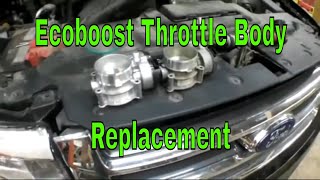
Helpful Videos

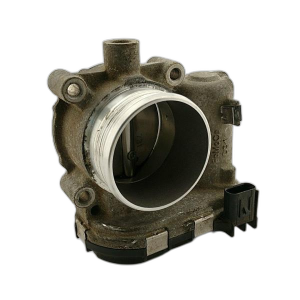
Used OEM Parts in Stock
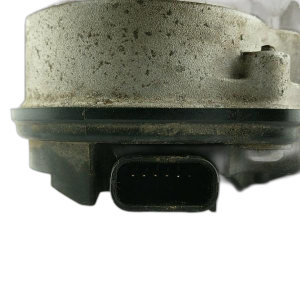

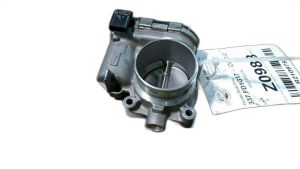
New Aftermarket Parts Available


The information in this article is provided for general reference and educational purposes only. Vehicle specifications, procedures, and part compatibility can vary by production date, trim level, and region. Always consult your vehicle's factory service manual and verify part numbers before purchasing or performing repairs. Safety-critical components such as airbags, seat belts, and braking systems should be installed by a qualified professional.
- Ford Explorer:
- 🎬 Helpful Videos
- 🛍️ Shop This Part
- What's Unique About the 2011-2019 Ford Explorer
- Symptoms You May Notice
- Most Likely Causes
- Rare But Worth Checking
- Diagnosis Steps
- Parts You'll Likely Need
- Related Codes That Often Appear With This One
- Technical Service Bulletins (TSBs) & Recalls
- Platform-Specific Known Issues
- Mechanic-Grade Diagnostic Values
- Scan Tool Commands That Help
- Wiring & Ground Locations
- Real Owner Repair Stories
- When the Usual Fixes Don't Work
- OEM Part Supersession History
- Diagnostic Flowchart
- Other Known Issues on This Vehicle
- Used vs. New Parts: Buying Guide for This Vehicle
- Real Owner Stories
- 2016 Ford Explorer 3.5L V6
- 2013 Ford Explorer 3.5L V6
- 2012 Ford Explorer 3.5L V6
- 2016 Ford Explorer 3.5L V6
- Related OBD-II Codes
- Frequently Asked Questions
- 🎟️ Get 5% Off