

P2112 on 2011-2014 Dodge Avenger 3.6L: Throttle Stuck Closed Causes and Fixes
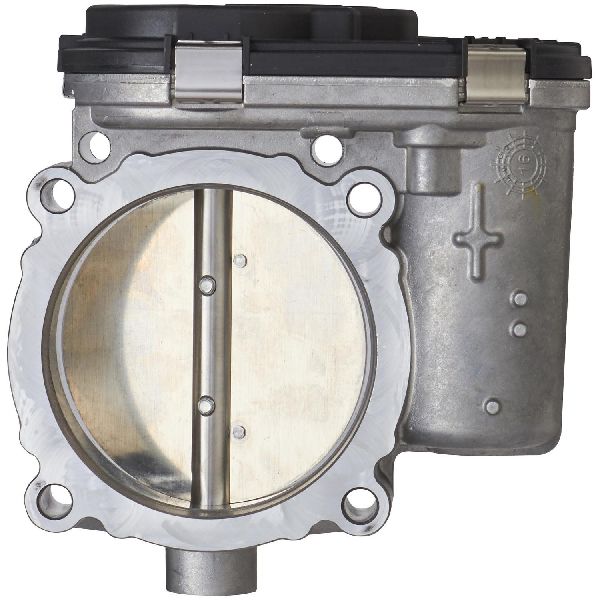
On a 2011-2014 Dodge Avenger with the 3.6L V6, code P2112 is almost always caused by a failed electronic throttle body. This triggers a 'limp mode' with a red lightning bolt light on the dash. The fix is to replace the entire throttle body assembly, which costs around $150-$250 for the part. Cleaning the old unit is rarely a permanent solution.
- P2112 on your 3.6L Avenger means the throttle body is stuck closed, which will trigger a dangerous 'limp mode'.
- The cause is almost certainly a failed electronic throttle body assembly, a known weak point on this engine due to internal electronic/mechanical failure.
- Do not waste time on cleaning; the most reliable and common fix is to replace the entire throttle body unit and its gasket.
- The correct OEM part number is 5184349AF. Aftermarket versions are widely available.
- After replacement, a simple throttle 'relearn' procedure is required to restore normal idle and performance.
What's Unique About the 2011-2014 Dodge Avenger
The 3.6L Pentastar V6, used across many Dodge, Chrysler, and Jeep vehicles, has a well-documented history of electronic throttle body failures. The failure is typically not due to carbon buildup that can be cleaned, but rather an internal electronic or mechanical fault within the sealed throttle body unit itself, such as stripped plastic gears or a failed actuator motor. Owners often experience a sudden and dramatic loss of power as the vehicle enters a protective 'limp mode', making this a common and frustrating issue for the platform.
Symptoms You May Notice
- Sudden and severe loss of engine power (Limp Mode).
- Electronic Throttle Control (ETC) warning light illuminated on the dashboard (a red lightning bolt symbol).
- Check Engine Light is on.
- Vehicle will not accelerate or has very sluggish throttle response.
- Engine may stall, especially when trying to accelerate from a stop.
- Rough or unstable idle.
- In some cases, other warning lights like ABS or Traction Control may illuminate due to data communication errors caused by the faulty throttle body.
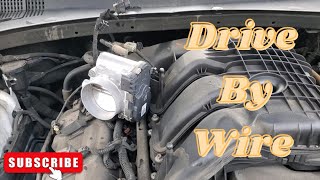
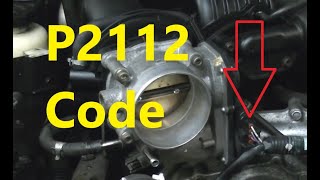
- Replacing the Accelerator Pedal Position Sensor (APPS). P2112 specifically indicates a fault at the throttle body; the computer sees the throttle is not responding to its command, not that the command from the pedal is wrong. 🎬 Watch this video to understand P2112 causes and fixes.
Most Likely Causes
- Failed Electronic Throttle Body Assembly 🔴 High Probability This is a widely documented failure point on the 3.6L Pentastar V6 engine due to internal electronic or mechanical faults (e.g., worn motor, stripped plastic gears), not just dirt.
How to confirm: After verifying the wiring and connector are intact, listen for a lack of buzzing or clicking from the throttle body when the ignition is turned to the 'ON' position (engine off). A scan tool can also monitor commanded vs. actual throttle position, showing a discrepancy. Visually inspecting the throttle plate's movement while a helper presses the accelerator (engine off, key on) can also confirm a lack of response.
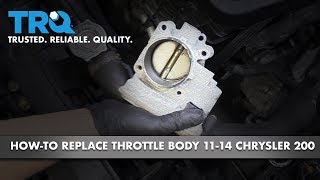
Typical fix: Replace the entire electronic throttle body assembly and the gasket. 🎬 Watch this step-by-step Dodge Avenger throttle body replacement guide. Cleaning is rarely a permanent solution for this code on this platform.
Est. part cost: $150-$350 - Wiring Harness or Connector Issue ⚪ Low Probability
How to confirm: Visually inspect the wiring harness leading to the throttle body for any signs of damage, chafing, or melting. Disconnect the 6-pin connector and check for corrosion, moisture, or backed-out pins.
Typical fix: Repair the damaged section of the wiring harness or clean/replace the connector pigtail.
Est. part cost: $20-$100
Rare But Worth Checking
- Powertrain Control Module (PCM) Failure: This is very rare. Before condemning the PCM, all other possibilities, especially the throttle body and its wiring, must be exhaustively ruled out. Checking for available PCM software updates (like TSB 18-027-14) is a valid diagnostic step.
Diagnosis Steps
- Scan the PCM for any other stored trouble codes. Note codes like P2110, which confirm limp mode activation.
- Check for any relevant Technical Service Bulletins (TSBs). For example, TSB 18-027-14 REV. A provides a PCM software update that addresses general powertrain enhancements and should be considered.
- Turn the ignition to the 'ON' position (engine off). Have an assistant slowly press the accelerator pedal while you observe the throttle plate. It should open and close smoothly. If it doesn't move, moves erratically, or makes grinding noises, the throttle body is likely faulty.
- Inspect the throttle body electrical connector for a secure fit, corrosion, or damaged pins.
- Inspect the wiring harness leading to the throttle body for any visible signs of damage, such as chafing or melting.
- If wiring and connections are good, the most likely cause is a failed throttle body assembly.
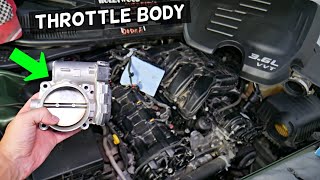
- After replacing the throttle body, perform a throttle relearn procedure. This can often be done without a scan tool by turning the ignition to 'ON' (engine off) for 10-15 seconds, then 'OFF' for 10-15 seconds, and repeating 2-3 times before starting the engine. 🎬 See how to replace the throttle body on this platform.
Parts You'll Likely Need
- Electronic Throttle Body Assembly
(OEM #5184349AF)— This is the most common failure part for code P2112 on the 3.6L Pentastar engine. The part number 5184349AF is the latest Mopar revision, superseding older versions like 5184349AE, AD, AC, and AB.
Trusted brands: Mopar, Bosch, Standard Motor Products (SMP), Hitachi, Duralast (TB1150D)
OEM price range: $250-$350
Aftermarket price range: $150-$250 - Throttle Body Gasket — The gasket should always be replaced when the throttle body is removed to prevent vacuum leaks.
Trusted brands: Fel-Pro, Mahle, Mopar
OEM price range: $10-$20
Aftermarket price range: $5-$15
Related Codes That Often Appear With This One
- P2110 — This code, 'Throttle Actuator Control System - Forced Limited RPM,' is not a separate fault but a confirmation that the PCM has intentionally put the vehicle into limp mode because of the P2112 error.
- P2111 — This code means 'Stuck Open.' Seeing P2111 and P2112 appear intermittently suggests the throttle body is binding or has a complete internal electronic failure.
Technical Service Bulletins (TSBs) & Recalls
- TSB 18-027-14 REV. A: This bulletin involves reprogramming the Powertrain Control Module (PCM) with updated software for general 'Powertrain System Improvements/Enhancements'. While not a direct fix for a failed throttle body, ensuring the PCM software is current is a valid diagnostic step before replacing expensive components.
Platform-Specific Known Issues
- Cascading Module Communication Errors: In some documented cases, the electronic failure of the throttle body can disrupt the vehicle's CAN bus network, leading to secondary, misleading symptoms. This can include the illumination of ABS and Traction Control lights and an inability for scan tools to communicate with those modules until the faulty throttle body is replaced.
Mechanic-Grade Diagnostic Values
- Throttle Actuator Control (TAC) Motor Resistance — expected: 2.5 to 25 Ohms. Failure: Resistance is outside this range (open or shorted), indicating a failed internal motor.
- 5-Volt Reference at Throttle Body Connector — expected: 4.5V to 5.2V. Failure: Voltage is low or zero, indicating a problem with the PCM or the wiring harness (F855 circuit).
- Throttle Position Sensor 1 (TPS1) Signal Voltage — expected: Sweeps smoothly from ~0.5V-0.7V (closed) to ~4.3V-4.5V (wide-open).. Failure: Voltage is stuck, jumps erratically, or does not sweep smoothly when the pedal is pressed.
- Throttle Position Sensor 2 (TPS2) Signal Voltage — expected: Mirrors TPS1, but sweeps in the opposite direction (e.g., from ~4.3V down to ~0.7V).. Failure: Voltage does not mirror TPS1, is erratic, or is stuck.
- Continuity of ETC Motor Circuits — expected: Below 5.0 Ohms. Failure: Resistance is above 5.0 Ohms, indicating an open or high resistance in the wiring between the PCM and the throttle body.
Scan Tool Commands That Help
- wiTECH or equivalent professional scan tool: ETC Relearn / Throttle Follower Test — This function is used after replacing the throttle body to force the PCM to learn the new unit's closed, open, and idle positions. It can also be used as a diagnostic command to actuate the throttle plate and verify its range of motion without using the accelerator pedal.
Wiring & Ground Locations
- Throttle Body Connector (6-Pin) — Directly on the electronic throttle body assembly, on the driver's side of the intake manifold.. This is the primary connection point for all power, ground, and signal wires for the throttle body. Pinout: Pin 1: TPS 2 Signal, Pin 2: TPS 1 Signal, Pin 3: Sensor Ground, Pin 4: 5V Reference, Pin 5: Throttle Motor (+), Pin 6: Throttle Motor (-).
- G200 — Located at the left end of the dash.. This is a major interior ground point. While not a direct ground for the throttle body, poor connection here can cause a variety of strange electronic issues within the cabin and instrument cluster that could be confused with the primary fault.
- G105 / G21a — G105 is on the right side of the engine compartment; G21a is on the left rear of the engine compartment.. These are primary engine compartment grounds. The Powertrain Control Module (PCM) and its related sensors rely on clean ground connections. A corroded or loose ground at these points can cause low voltage or high resistance in sensor circuits, potentially mimicking a component failure.
- Powertrain Control Module (PCM) — Located in the left rear of the engine compartment.. This is the computer that controls the throttle body. All wiring for the throttle actuator and sensors terminates here. Diagnostic tests often involve checking for continuity and voltage between this module and the throttle body connector.
Real Owner Repair Stories
- YouTube user 'Freezen' (2013 Dodge Avenger (2.4L, but same codes and symptoms)) — Sudden shaking, no throttle response, vehicle only idles. Codes P2110, P2111, P2112 present.
❌ Tried (didn't work) Initial diagnosis pointed directly to the throttle system.
✅ What actually fixed it The problem was resolved by replacing the entire electronic throttle body assembly with a new Duralast part (TB1150D). After replacement, the car started and accelerated normally. - NHTSA ODI #10566510 — An owner reported that the ETC light and code P2112 came on while entering an expressway at 65 mph, causing the vehicle to enter "limp mode" and jerk severely.
- NHTSA ODI #11500665 — In a cross-manufacturer report involving a similar Dodge platform, an owner experienced a lack of acceleration with codes P2118, P2072, P2112, P2110, and P2101, all relating to the electronic throttle control system and motor.
OEM Part Supersession History
5184349AB, 5184349AC, 5184349AD, 5184349AE→5184349AF— Component revisions by Mopar to improve reliability and address failure points in earlier designs.
Heads up: All previous versions are superseded by 5184349AF. While an older version might fit, using the latest revision is strongly recommended for longevity.
Diagnostic Flowchart
Other Known Issues on This Vehicle
Issues unrelated to this code that are worth knowing about as an owner of this generation:
- Leaking Oil Filter/Cooler Housing 🔴 High — Extremely common. The plastic housing becomes brittle from heat cycles and can crack, leading to significant oil and/or coolant leaks into the engine valley. Often misdiagnosed as a rear main seal leak as oil drips down the bellhousing. (Ref: No recall, but it is a widely known issue. Aftermarket aluminum housings are a popular and recommended permanent fix.)
- Left Cylinder Head Defect (2011-2013 models) 🔴 High — Prevalent on early Pentastar engines (2011-2013). Improperly hardened valve guides/seats on the left head (cylinders 2, 4, 6) lead to premature wear, loss of compression, and persistent misfire codes (P0300, P0302, P0304, P0306). (Ref: TSB 09-002-14 REV. B; Chrysler also issued an extended warranty (X56) for 10 years/150,000 miles to cover this specific repair.)
- Rocker Arm / Lifter Failure ('Pentastar Tick') 🟠 Medium — Common on engines approaching and exceeding 100,000 miles. Needle bearings in the rocker arms fail, causing a distinct ticking/tapping sound from the top of the engine. If ignored, it can lead to camshaft damage and misfires. (Ref: TSB 09-011-25 addresses this for some applications.)
Used vs. New Parts: Buying Guide for This Vehicle
When a used part is the smart pick: A used OEM throttle body from a low-mileage, rear-ended donor vehicle can be a cost-effective option, as the failure is electronic/mechanical wear, not age-related degradation. However, given the high failure rate of this part, the risk of receiving a part near the end of its life is significant.
Donor-vehicle mileage cap: roughly under 50000 miles for the part to have meaningful remaining life.
What to inspect on the donor part:
- Verify the donor vehicle's mileage if possible.
- Inspect the electrical connector pins for any signs of corrosion, moisture, or damage.
- Look at the throttle plate; while not a definitive indicator of electronic health, extreme carbon buildup may suggest a neglected vehicle.
- Ask for a short warranty (e.g., 30-90 days) from the salvage yard to protect against an immediate failure.
Aftermarket brands forum-validated for this vehicle:
- Bosch (often the OEM manufacturer)
- Standard Motor Products (SMP)
- Hitachi
- Duralast
Brands owners have reported issues with on this vehicle:
- Unbranded, 'no-name' parts from online marketplaces should be avoided due to inconsistent quality control and high likelihood of premature failure.
Real Owner Stories
Aggregated from forums and TSBs cited above. Mileages and costs reflect what owners reported in those sources.
2008 Dodge Avenger 2.4L
Symptoms: Experienced code P2112; symptoms included the need for a new throttle body and gasket as cleaning would not suffice due to internal failure.
What fixed it: Replacing the entire throttle body assembly and gasket.
Source hint: DodgeForum.com: P2112 Fixed by Replacement
2011-2014 Dodge Avenger 3.6L Pentastar V6
Symptoms: Electronic failure of the throttle body disrupted the CAN bus network, causing ABS and Traction Control lights to illuminate and preventing scan tools from communicating with those modules.
What fixed it: Replacement of the faulty throttle body to restore module communication.
Source hint: vehicle_specific_issues: Cascading Module Communication Errors
Dodge Ram (Generic)
Symptoms: Code P2112 appeared immediately after cleaning the throttle body without removing it.
What fixed it: Replacement of the unit, as cleaning spray likely damaged the sensitive internal electronics.
Source hint: DodgeForum.com: P2112 After Cleaning
Related OBD-II Codes
Frequently Asked Questions
Does TSB 18-027-14 REV. A apply to my 2011-2014 Dodge Avenger with the 3.6L Pentastar?
Can I just clean the throttle body on my Avenger to fix the P2112 code?
Why are my ABS and Traction Control lights on at the same time as the P2112 throttle code?
Is there an extended warranty for engine issues on my 2011-2013 Avenger?
What is the 'Pentastar Tick' I hear along with my throttle issues?
How do I perform a throttle relearn on my Dodge Avenger after replacing the part?
Helpful Videos
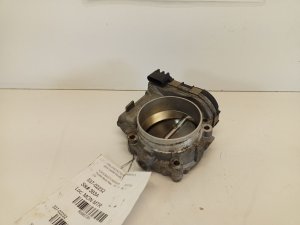
Used OEM Parts in Stock

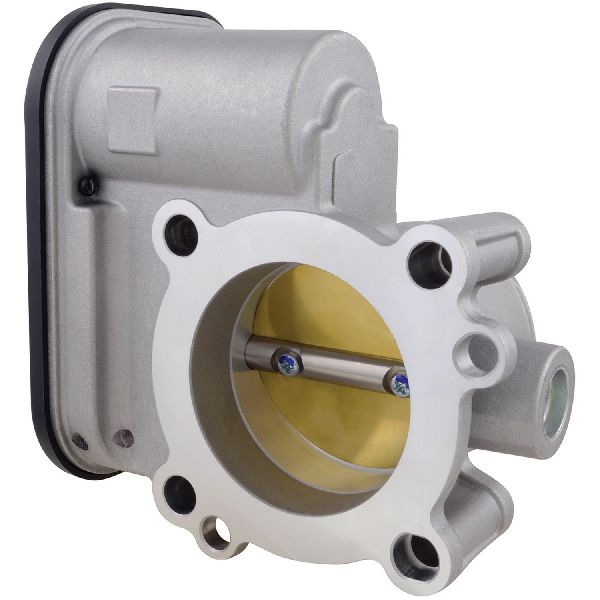
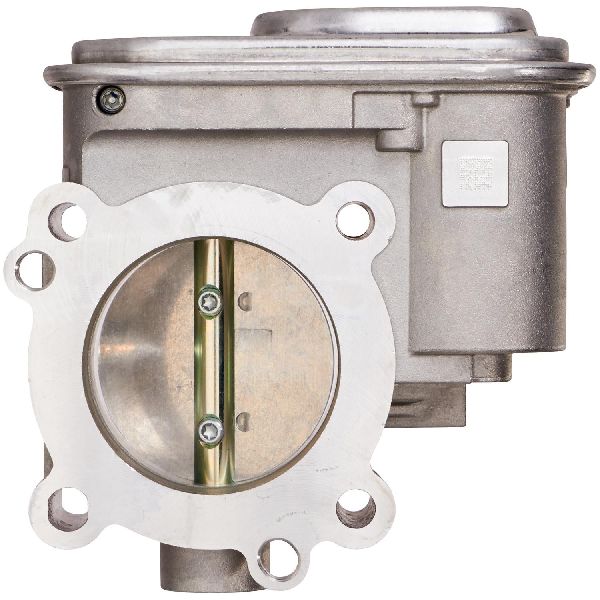
New Aftermarket Parts Available



The information in this article is provided for general reference and educational purposes only. Vehicle specifications, procedures, and part compatibility can vary by production date, trim level, and region. Always consult your vehicle's factory service manual and verify part numbers before purchasing or performing repairs. Safety-critical components such as airbags, seat belts, and braking systems should be installed by a qualified professional.
- Dodge Avenger:
- 🎬 Helpful Videos
- 🛍️ Shop This Part
- What's Unique About the 2011-2014 Dodge Avenger
- Symptoms You May Notice
- Most Likely Causes
- Rare But Worth Checking
- Diagnosis Steps
- Parts You'll Likely Need
- Related Codes That Often Appear With This One
- Technical Service Bulletins (TSBs) & Recalls
- Platform-Specific Known Issues
- Mechanic-Grade Diagnostic Values
- Scan Tool Commands That Help
- Wiring & Ground Locations
- Real Owner Repair Stories
- OEM Part Supersession History
- Diagnostic Flowchart
- Other Known Issues on This Vehicle
- Used vs. New Parts: Buying Guide for This Vehicle
- Real Owner Stories
- 2008 Dodge Avenger 2.4L
- 2011-2014 Dodge Avenger 3.6L Pentastar V6
- Dodge Ram (Generic)
- Related OBD-II Codes
- Frequently Asked Questions
- 🎟️ Get 5% Off