

P2111 on 2010-2011 Lincoln MKT 3.7L: Throttle Actuator Stuck Open Causes and Fixes
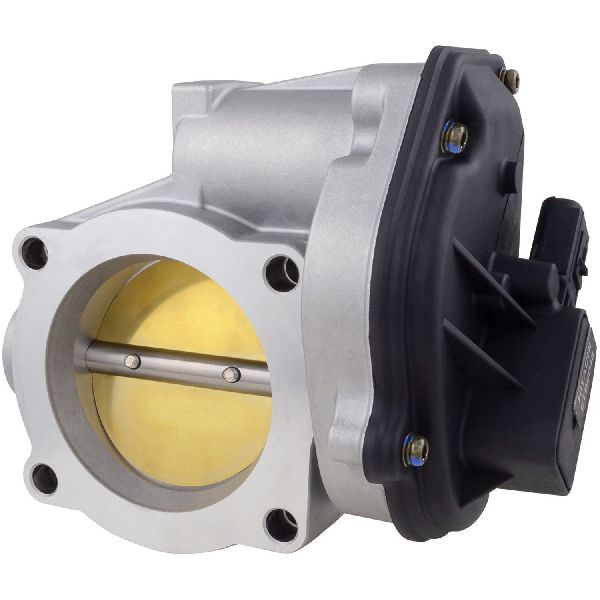
On a 2010-2011 Lincoln MKT with the 3.7L engine, code P2111 is almost always caused by a failed electronic throttle body. This triggers a 'limp mode' with a wrench light, severely limiting power. The definitive fix is to replace the throttle body assembly, a common DIY repair costing between $70 and $200 for the part. A throttle relearn procedure is required after installation.
- P2111 on a 2010-2011 MKT almost always means you need a new electronic throttle body due to a known manufacturing defect.
- The most dramatic symptom is the vehicle suddenly losing power and displaying a 'wrench' light, which is a built-in safety feature called 'limp mode'.
- Replacing the throttle body is a relatively simple DIY job that takes less than an hour with basic tools (e.g., an 8mm socket).
- After replacing the part, you must perform a 'relearn' procedure. A common method is: key on (engine off), slowly press the gas pedal to the floor and release it three times, then turn the key off before starting the engine.
What's Unique About the 2010-2011 Lincoln MKT
The 2010-2011 Lincoln MKT, along with many other Ford and Lincoln vehicles from this era using the 3.7L Cyclone engine, has a well-documented history of premature electronic throttle body (ETB) failures. The issue stems from contamination on the internal motor contacts, leading to intermittent electrical connectivity. The problem was so widespread that it prompted an NHTSA investigation (PE13-003) and led Ford to issue Customer Satisfaction Program 13N03, which extended the warranty on this specific part to 10 years or 150,000 miles. When this failure occurs, the vehicle immediately enters a fail-safe 'limp mode' to prevent unintended acceleration, making this a very common and startling experience for owners.
Symptoms You May Notice
- Sudden and severe loss of engine power (entering 'limp mode')
- Illuminated 'wrench' warning light on the dashboard.
- Check Engine Light is on
- Unresponsive or sluggish accelerator pedal.
- Engine idles higher than normal or fluctuates.
- Engine may stall when coming to a stop, or may be difficult to restart.
- Vehicle shaking or shuddering.
- Replacing the accelerator pedal position (APP) sensor. While the APP sensor is part of the throttle control system, it is rarely the cause of a P2111 code, which specifically points to a problem at the throttle body itself.
- Excessively cleaning a throttle body that has an internal electronic fault. On this platform, the issue is rarely carbon buildup, and cleaning will not resolve the limp mode caused by the internal contact failure.
Most Likely Causes
- Failing Electronic Throttle Body (ETB) 🔴 High Probability The original equipment throttle bodies on this platform are known to fail due to contamination of internal electrical contacts, a widespread issue acknowledged by the manufacturer via Customer Satisfaction Program 13N03 and NHTSA investigation PE13-003. Cleaning will not fix this internal electronic issue.
How to confirm: With the engine off, have a helper turn the key to the 'ON' position while you observe the throttle plate. It should cycle open and closed. If it sticks, buzzes, or doesn't move smoothly, it's faulty. However, the failure is often intermittent. The combination of code P2111 with the 'wrench light' and limp mode is the strongest confirmation of a failed ETB on this platform. A 'tap test' on the throttle body housing with a screwdriver handle may cause the plate to snap shut, confirming an intermittent internal electronic failure.
Typical fix: Replace the entire electronic throttle body assembly. After replacement, a throttle body relearn procedure is required.
Est. part cost: $70-$200 - Dirty or Obstructed Throttle Body ⚪ Low Probability While less common than outright electronic failure on this model, heavy carbon buildup can eventually cause the throttle plate to bind, triggering the code. However, for this specific platform, the issue is almost always internal electronics, not dirt.
How to confirm: Remove the air intake tube and visually inspect the throttle bore and plate for heavy carbon deposits or any foreign debris that could prevent it from closing fully.
Typical fix: Clean the throttle body bore and plate with a dedicated throttle body cleaner and a soft cloth or brush. Be careful not to force the plate open or closed manually. If the problem persists, the cause is the internal electronics, not the dirt.
Est. part cost: $5-$15
Rare But Worth Checking
- Wiring Harness or Connector Issue: Check the wiring harness and connector at the throttle body for any visible damage, corrosion, or loose pins before replacing the part. A damaged wire can mimic a failed component. On Ford platforms, harness chafing is a known issue that can lead to various electronic faults.
- Powertrain Control Module (PCM) Fault: This is extremely rare. A Reddit user with a Ford Flex detailed a long diagnostic process where the PCM was suspected after replacing the throttle body and pedal sensor, but this should only be considered after all other possibilities are exhausted. A PCM fault is a last resort after the throttle body and wiring have been definitively ruled out by a professional.
Diagnosis Steps
- Confirm the presence of code P2111 using an OBD-II scanner. Note any other codes present, such as P2112, P2110, or P2104.
- Confirm the 'wrench' light is illuminated on the dashboard, which is the primary indicator of a throttle fault on this vehicle.
- Visually inspect the wiring harness and electrical connector going to the electronic throttle body. Look for any signs of damage, fraying, or corrosion.
- Remove the air intake hose from the throttle body. Inspect the throttle bore for heavy carbon buildup or any physical obstruction that could cause the plate to stick.
- If significant carbon is present, clean the throttle body thoroughly with a dedicated cleaner. However, be aware this is unlikely to be the root cause.
- If the code returns after cleaning, or if the throttle body was clean, the electronic throttle body assembly is almost certainly faulty and should be replaced. This was the recommended fix in Ford's TSB 10-21-6 for this exact issue.
- After replacing the throttle body, perform the throttle body relearn procedure to calibrate the new part with the PCM.
Parts You'll Likely Need
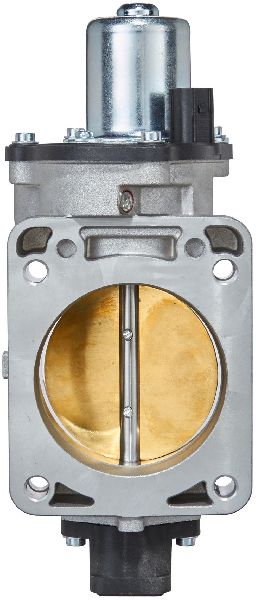
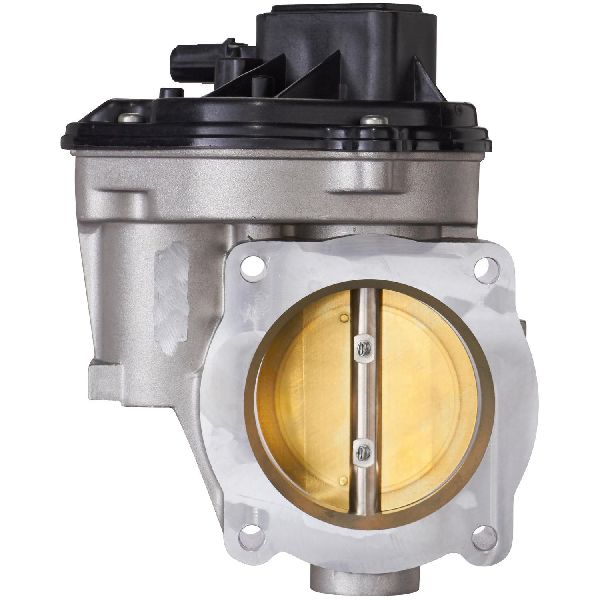
- Electronic Throttle Body Assembly
(OEM #7T4Z-9E926-FA)— This is the root cause of code P2111 in the vast majority of cases for this specific vehicle due to a known design flaw with the internal electronics. TSB 10-21-6 specifically lists this part number as the replacement for this issue.
Trusted brands: Motorcraft, Hitachi, Bosch, Dorman OE Fix
OEM price range: $150-$250
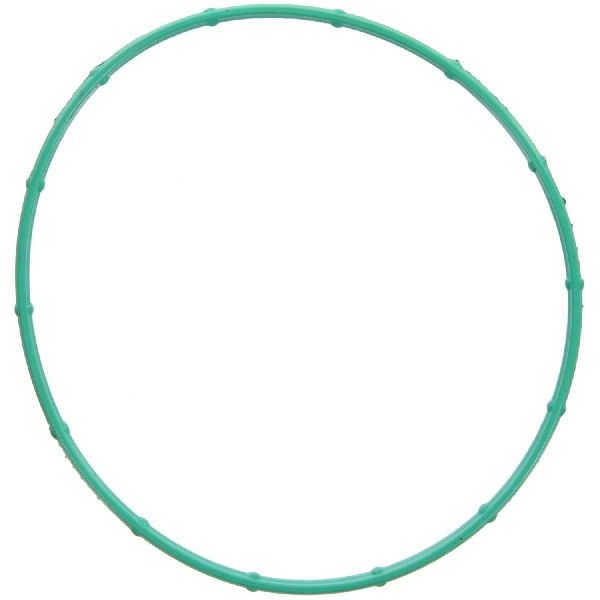
Aftermarket price range: $70-$180 - Throttle Body Gasket
(OEM #Not always required)— The original gasket is often a reusable O-ring style. However, it's good practice to replace it if it appears damaged, flattened, or brittle. Part numbers like Fel-Pro 61466 are common replacements.
Trusted brands: Fel-Pro, Mahle
OEM price range: $10-$20
Aftermarket price range: $5-$10
Related Codes That Often Appear With This One
- P2112 — This code means 'Throttle Actuator Control System - Stuck Closed' and is the counterpart to P2111. Both codes point to a failing electronic throttle body and were the most common DTCs found in Ford's warranty data for this issue.
- P2110 — This code, 'Throttle Actuator Control System - Forced Limited RPM,' is often triggered as part of the fail-safe 'limp mode' strategy when a fault like P2111 is detected.
- P2104 — This code, 'Throttle Actuator Control System - Forced Idle,' is another fail-safe management code that can accompany P2111, indicating the PCM is intentionally limiting throttle operation.
Technical Service Bulletins (TSBs) & Recalls
- TSB 10-21-6: Addresses DTCs P2111/P2112 or fluctuating/low idle on 2010-2011 MKTs with the 3.7L engine. The prescribed action is to replace the throttle body with part number 7T4Z-9E926-FA.
- Customer Satisfaction Program 13N03: Not a TSB, but a warranty extension program covering the ETB for 10 years or 150,000 miles due to a high failure rate from internal contamination.
Platform-Specific Known Issues
- A widespread electronic throttle body failure prompted Ford to issue Customer Satisfaction Program 13N03, extending the warranty for this part on many vehicles, including the 2010-2011 MKT. While this program has expired, it confirms the high failure rate of the original part due to internal contact contamination.
- Ford also issued Technical Service Bulletin (TSB) 10-21-6 for the 2010-2011 MKT (among other models) with the 3.7L engine, instructing technicians to replace the throttle body if codes P2111 or P2112 were present or if the idle was unstable.
- The NHTSA conducted a Preliminary Evaluation (PE13-003) into this issue after receiving thousands of complaints, concluding that the failure mode was typically contamination on the ETB internal motor contacts.
Mechanic-Grade Diagnostic Values
- Throttle Position Sensor 1 (TP1) and 2 (TP2) Voltage — expected: TP1 and TP2 should have opposing or mirrored voltage sweeps. For example, TP1 might sweep from ~0.5V to ~4.5V while TP2 sweeps from ~4.5V to ~0.5V. The key is a smooth transition with no spikes or dropouts as the pedal is pressed.. Failure: A voltage reading that is flat, erratic, or doesn't change smoothly indicates a failed sensor within the throttle body assembly.
- TP2 Voltage at Forced Max Closed Position (Key On, Engine Off) — expected: 0.40V - 0.45V. Failure: A reading below 0.35V will set a trouble code. This specific check is critical for diagnosing subtle misadjustments or failures.
- Live Data: Commanded vs. Actual Throttle Position — expected: The 'Actual' throttle position PID should mirror the 'Commanded' throttle position PID with less than 2% deviation.. Failure: If the 'Actual' position gets stuck or deviates significantly from the 'Commanded' position as the accelerator pedal is pressed and released, the throttle body is faulty.
Scan Tool Commands That Help
- Ford IDS (Integrated Diagnostic System): PCM Reset / Clear KAM (Keep Alive Memory) — This function should be used after replacing the throttle body to clear all adaptive memory. This forces the PCM to start a fresh learning process with the new component.
- Ford IDS (Integrated Diagnostic System): Datalogger - Graphing TP1, TP2, APP1, APP2 PIDs — Graphing the throttle position and accelerator pedal position sensor voltages simultaneously is the best way to spot intermittent glitches, dropouts, or noise that a simple digital readout might miss.
- Advanced OBD-II Scanner (e.g., iCarsoft CR MAX BT): Actuator Test Mode / Bidirectional Control — This allows the technician to command the throttle plate to open and close directly from the scan tool, verifying the motor's function and range of motion without relying on input from the accelerator pedal.
Wiring & Ground Locations
- PCM (Powertrain Control Module) — Located in the engine compartment, on the passenger side firewall, under a plastic cover near the cabin air filter housing.. The PCM is the control center for the electronic throttle body. All wiring from the throttle body terminates here. A poor connection at the PCM is a possible, though rare, cause of throttle control faults.
- G100 / G103 — These are primary engine compartment grounds located on the left (driver's) side of the engine compartment, typically on the frame rail or inner fender.. The PCM and its related sensors rely on clean, solid ground connections. A corroded or loose ground at these points can introduce electrical noise and cause erratic behavior in the throttle control system.
- Throttle Body Connector (C134) — The 6-pin electrical connector directly on the electronic throttle body assembly.. This is the most common point for wiring issues. Check for corrosion on the pins, backed-out pins, or damage to the harness right at the connector from engine vibration and heat.
Real Owner Repair Stories
- Ford F150 Forum (2012 Ford F-150 3.7L with 180,900 miles) — Intermittent limp mode with no pedal response, sluggish performance, decreasing fuel economy, and code P2111.
❌ Tried (didn't work) The user initially tried cleaning the throttle body, which seemed to improve performance temporarily but the code eventually returned.
✅ What actually fixed it Replacing the entire electronic throttle body assembly with a new part ultimately resolved the P2111 code and associated limp mode events.
OEM Part Supersession History
7T4Z-9E926-EA→7T4Z-9E926-FA— Part number revision, likely to address the internal electronic failures of the original design.
Heads up: 7T4Z-9E926-FA is the correct and updated replacement for the original part.
Diagnostic Flowchart
Used vs. New Parts: Buying Guide for This Vehicle
When a used part is the smart pick: For this specific failure (P2111 on a 2010-2011 MKT), buying a used throttle body from a junkyard is NOT recommended. The original part has a well-documented high failure rate due to a design flaw. A used part is highly likely to have the same defect and fail soon after installation.
What to inspect on the donor part:
- Not applicable, as used parts are not advised for this repair.
OEM-only on this vehicle (don't cheap out):
- While not strictly 'OEM-only', using a new OEM (Motorcraft) or a reputable OE-equivalent aftermarket part is strongly recommended over a used or cheap, unbranded part.
Aftermarket brands forum-validated for this vehicle:
- Motorcraft (OEM)
- Hitachi
- Bosch
- Dorman (specifically their 'OE Fix' line, which often aims to correct original design flaws)
Brands owners have reported issues with on this vehicle:
- Unbranded, low-cost units from online marketplaces should be avoided, as their internal electronics and gear quality are often questionable and can cause more issues.
Real Owner Stories
Aggregated from forums and TSBs cited above. Mileages and costs reflect what owners reported in those sources.
2013 Lincoln MKS
Symptoms: Owner described the wrench light illuminating, vehicle shaking, a complete loss of acceleration, and a gassy smell while driving up a hill. The vehicle's computer stored code P2111.
What fixed it: The owner's report focused on the diagnosis of code P2111 following the classic symptoms of throttle body failure.
Source hint: Reddit r/MechanicAdvice - 2013 Lincoln MKS P2111 story
2011 Ford Flex 3.5L V6
Symptoms: Owner experienced a frustrating diagnostic journey with codes P2111 and P2112.
What fixed it: The issue persisted even after cleaning the throttle body and replacing the throttle body, accelerator pedal, and PCM, highlighting the possibility of a more complex wiring problem in some cases.
Source hint: Reddit r/FordFlex - Throttle body codes saga
Lincoln MKT
Symptoms: Owner reported a hanging high idle issue after other sensor work was performed.
What fixed it: The report describes a symptom (unstable idle) that is directly linked to throttle body problems as noted in TSB 10-21-6, rather than a specific fix.
Source hint: Blue Oval Forums - MKT Idle Problem
Related OBD-II Codes
Frequently Asked Questions
My 2011 MKT went into 'limp mode' with the wrench light on. Is this the P2111 throttle body issue?
Is there a recall for the throttle body on my 2010 Lincoln MKT?
My mechanic wants to clean the throttle body to fix P2111. Will this work?
Does Ford have a TSB for this problem on the MKT 3.7L?
What is the correct replacement part number for the throttle body?
Should I buy a used throttle body from a junkyard to save money?
Do I need to do anything special after installing a new throttle body?
Used OEM Parts in Stock


New Aftermarket Parts Available


The information in this article is provided for general reference and educational purposes only. Vehicle specifications, procedures, and part compatibility can vary by production date, trim level, and region. Always consult your vehicle's factory service manual and verify part numbers before purchasing or performing repairs. Safety-critical components such as airbags, seat belts, and braking systems should be installed by a qualified professional.
- Lincoln MKT:
- 🛍️ Shop This Part
- What's Unique About the 2010-2011 Lincoln MKT
- Symptoms You May Notice
- Most Likely Causes
- Rare But Worth Checking
- Diagnosis Steps
- Parts You'll Likely Need
- Related Codes That Often Appear With This One
- Technical Service Bulletins (TSBs) & Recalls
- Platform-Specific Known Issues
- Mechanic-Grade Diagnostic Values
- Scan Tool Commands That Help
- Wiring & Ground Locations
- Real Owner Repair Stories
- OEM Part Supersession History
- Diagnostic Flowchart
- Used vs. New Parts: Buying Guide for This Vehicle
- Real Owner Stories
- 2013 Lincoln MKS
- 2011 Ford Flex 3.5L V6
- Lincoln MKT
- Related OBD-II Codes
- Frequently Asked Questions
- 🎟️ Get 5% Off