

P2111 on 2011-2015 Kia Sorento: Throttle Stuck Open & Limp Mode Fixes
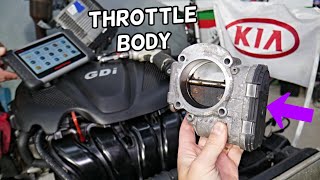
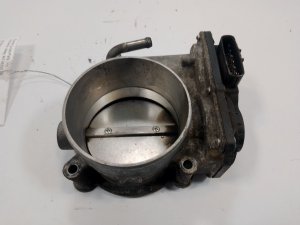
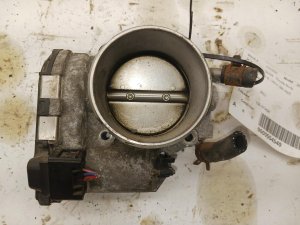
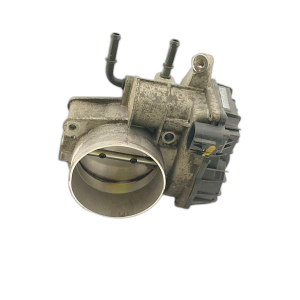
On a 2011-2015 Sorento, P2111 means the electronic throttle body is stuck open, forcing the car into a dangerous low-power 'limp mode'. The most common fix is to replace the entire throttle body assembly. Cleaning heavy carbon buildup is a possible first step, but failure of the internal electronics is common. The OEM part number for the 2.4L engine is 35100-2G700, and for the 3.5L V6, it is 35100-3C700. Expect to pay $150-$350 for the part itself.
- P2111 on a 2011-2015 Sorento triggers a dangerous 'limp mode' and should be addressed immediately.
- The cause is almost always a failed electronic throttle body assembly, a known weak point on this vehicle, especially the 2.4L model.
- Your first diagnostic step should be to inspect for and clean any heavy carbon buildup, but be prepared to replace the entire throttle body unit.
- The Throttle Position Sensor (TPS) is integrated into the throttle body and cannot be replaced separately.
- Always check for other codes, particularly P1326, as it indicates a more severe engine failure with similar symptoms.
What's Unique About the 2011-2015 Kia Sorento
The 2.4L GDI 'Theta II' engine in this generation of Sorento is notorious for several significant issues, including electronic throttle body failure. While carbon buildup can cause the throttle plate to stick, the internal electronics of the throttle body are a common failure point, leading to various throttle-related codes like P2111. It's important to note this engine was part of a major class-action lawsuit concerning engine reliability and recalls for premature bearing wear. Therefore, a sudden limp mode is a well-documented complaint for this platform, often traced back to this component or the more serious P1326 knock sensor code which produces identical symptoms.
Symptoms You May Notice
- Check Engine Light is on
- Vehicle suddenly enters 'limp mode' (drastically reduced engine power, RPM limited to ~2000)
- No response or delayed response from the accelerator pedal
- Engine may idle very high or fluctuate erratically.
- Engine may stall, especially when coming to a stop
- Hesitation or stumbling during acceleration
- Difficulty starting the engine
- Replacing only the Throttle Position Sensor (TPS). On this vehicle, the TPS is integrated into the throttle body assembly and cannot be purchased or replaced separately.
- Replacing the accelerator pedal position (APP) sensor. While part of the same system, P2111 specifically points to a problem at the throttle body itself, not the pedal sending the command. A faulty pedal sensor would generate different codes.
Most Likely Causes
- Failed Electronic Throttle Body Assembly 🔴 High Probability The Theta II 2.4L engine, in particular, has a well-documented history of electronic throttle body failures. The internal motor, plastic gears, or the integrated throttle position sensor (TPS) fails, causing the computer to lose control of the throttle plate.
How to confirm: With a scan tool, observe the live data for throttle position. If the commanded throttle position and the actual throttle position do not match, or if the position reads as stuck open regardless of pedal input, the throttle body is faulty. An audible buzzing or clicking from the throttle body with the key on, engine off, can also indicate failure.
Typical fix: Replace the entire throttle body assembly. The internal sensors and motor are not sold separately. After replacement, a throttle relearn procedure is required.
Est. part cost: $150-$350 - Heavy Carbon Buildup on Throttle Plate 🟡 Medium Probability Gasoline Direct Injection (GDI) engines, like the 2.4L G4KD, are prone to carbon buildup on intake components because fuel is not sprayed over the back of the intake valves and throttle plate to keep them clean. This buildup can cause the throttle blade to physically stick in the bore.
How to confirm: Remove the air intake hose from the throttle body and visually inspect the throttle plate and bore for a thick layer of black carbon. Check if the plate moves freely by hand (with the engine off).
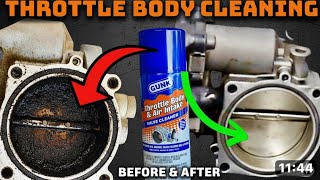
Typical fix: Thoroughly clean the throttle body bore and plate with a dedicated throttle body cleaner and a soft brush or rag. Re-install and perform a throttle relearn procedure. Many owners report this as a successful first step, though if the code returns, the electronics are likely the cause. 🎬 See how to clean your throttle body properly
Est. part cost: $5-$15
Rare But Worth Checking
- Wiring Harness or Connector Issue: While less common than component failure, damage to the wiring harness leading to the throttle body can cause identical symptoms. Inspect for frayed wires, corrosion on pins, or a loose connection before replacing the part.
- Powertrain Control Module (PCM) Fault: In very rare cases, the fault may lie with the PCM itself, potentially requiring a software update or replacement. This should only be considered after the throttle body and wiring have been thoroughly tested and ruled out.
Diagnosis Steps
- Scan for all stored trouble codes. Note any codes that accompany P2111, especially P2110, P0123, or the critical P1326.
- Using a scan tool, monitor the live data for both commanded throttle position and actual throttle position. With the key on and engine off, press the accelerator pedal and observe if the values correspond. A discrepancy points to a throttle body issue.
- Turn the vehicle off and disconnect the air intake duct from the throttle body.
- Visually inspect the throttle plate and bore for heavy carbon buildup that could physically restrict its movement.
- If dirty, clean the throttle body thoroughly using a dedicated cleaner and a soft cloth. Do not use harsh tools that could scratch the bore. Be careful not to force the throttle plate open manually; have an assistant press the accelerator with the key on if needed.
- Inspect the electrical connector and wiring harness at the throttle body for any signs of damage, corrosion, or loose pins.
- If cleaning does not resolve the issue and the wiring is intact, the throttle body assembly is almost certainly faulty and requires replacement.
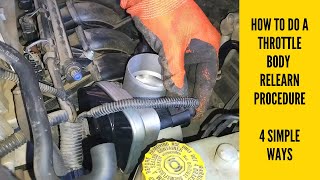
- After replacing the throttle body, a 'throttle relearn' procedure is necessary. A common method for Kia/Hyundai is to turn the ignition to 'ON' (engine off) for 15-30 seconds, then 'OFF' for 5-10 seconds, and repeat this cycle 4-5 times before starting the engine. Alternatively, letting the car idle for 10 minutes may work.
Parts You'll Likely Need
- Electronic Throttle Body Assembly (2.4L G4KD)
(OEM #35100-2G700)— This is the most common failure point for the P2111 code on the 2.4L engine. The internal motor or position sensor fails, requiring replacement of the entire unit.
Trusted brands: Kia (OEM), Bosch, Dorman, Standard Motor Products (SMP), Hitachi
OEM price range: $220-$350
Aftermarket price range: $85-$250 - Electronic Throttle Body Assembly (3.5L V6 G6DC)
(OEM #35100-3C700)— This is the corresponding part for the V6 engine. While less documented for widespread failure than the 2.4L unit, it can still fail and cause the P2111 code.
Trusted brands: Kia/Hyundai (OEM), Autopart Premium
OEM price range: $300-$450
Aftermarket price range: $110-$300
Related Codes That Often Appear With This One
- P2110 — This code, 'Throttle Actuator Control System - Forced Limited RPM,' is a companion code that confirms the ECM has intentionally put the vehicle into limp mode as a direct result of the P2111 fault.
- P0123 — 'Throttle Position Sensor 'A' Circuit High Input' often appears when the internal sensor in the throttle body fails, which is the root cause of the P2111 code.
- P1607 — On this platform, P1607 indicates a communication failure between the ECM and the throttle body, which is another symptom of a failing throttle body assembly.
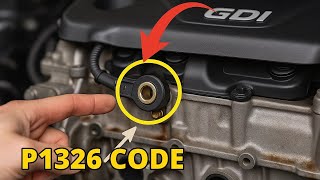
- P1326 — This code for the Knock Sensor Detection System can cause identical limp-mode symptoms. It's critical to check for this code, as it points to a much more severe internal engine bearing issue that may be covered by an extended warranty or recall (SC147). A dealer must diagnose this, as it could result in a free engine replacement.
Platform-Specific Known Issues
- The 2.4L GDI Theta II engine in these Sorentos was part of a major class-action lawsuit and numerous recalls related to engine bearing failure and oil consumption. While P2111 is an electronic fault, the overall poor reliability of this engine is important context for owners.
- It is absolutely critical to rule out code P1326 before replacing the throttle body. P1326 indicates a knock sensor issue related to engine bearing wear and will also put the car in limp mode. This issue may be covered by Kia's lifetime engine warranty extension for affected vehicles.
Mechanic-Grade Diagnostic Values
- Throttle Actuator Power Supply Voltage — expected: Steady 12V (Battery Voltage). Failure: Intermittent or no voltage suggests a wiring or connector issue upstream of the throttle body.
- Integrated Throttle Position Sensor (TPS) Resistance — expected: 3.5 - 6.5 kΩ. Failure: Resistance is out of specification or does not change smoothly as the throttle plate is moved.
Scan Tool Commands That Help
- Kia GDS (Global Diagnostic System): Actuation Test > ETC motor — To command the electronic throttle control motor to open and close. This directly tests the motor's function and the throttle plate's movement, confirming if it is physically sticking or if the motor has failed.
- Kia GDS (Global Diagnostic System): Vehicle S/W Management > Resetting adaptive values — After replacing the throttle body, this function should be used to clear the old learned values from the PCM to ensure the new part operates from a clean baseline.
- Kia GDS (Global Diagnostic System): Flight Record (Trigger Module) — For intermittent P2111 codes, this function records sensor data during a drive cycle to capture what is happening at the exact moment the fault occurs, which is invaluable for diagnosing tricky wiring or electronic issues.
Real Owner Repair Stories
- NHTSA ODI #10543442 — An owner reported a P2111 throttle actuator failure. The dealership performed an ECM upgrade (SA153 XMA VQ) and replaced the ETC-Actuator assembly (part #35100-3C700) and the VCM motor assembly.
- Ford F150 Forum (2012 Ford F-150 3.7L with 180k miles (Note: Different vehicle, but identical code and symptoms)) — Intermittent limp mode and P2111 code. Turning the truck off and on would temporarily clear the issue.
❌ Tried (didn't work) A thorough cleaning of the throttle body.
✅ What actually fixed it Replacing the entire throttle body assembly provided a permanent fix after cleaning only worked for a few days. This reinforces that internal electronic failure is common and cleaning is often not enough. - Car Talk Community Forum (2006 Pontiac Vibe with 170k miles (Note: Different vehicle, but illustrates a common diagnostic trap)) — Intermittent check engine light and limp mode with various throttle-related codes, including P2111.
❌ Tried (didn't work) Replacing the throttle body assembly twice.
✅ What actually fixed it The issue was not resolved by parts replacement. The final diagnosis pointed towards a corroded or damaged wiring harness or connector, which can cause intermittent symptoms that mimic a failing throttle body. This highlights the importance of checking the wiring after a replacement part fails to fix the issue.
Model Year Variations Within This Range
- 2014-2015: For the 2014 model year facelift, the 3.5L V6 engine was replaced with a 3.3L GDI V6. This means the throttle body for a V6 Sorento from 2014-2015 will have a different part number than the 35100-3C700 listed for the 2011-2013 3.5L V6.
Diagnostic Flowchart
Other Known Issues on This Vehicle
Issues unrelated to this code that are worth knowing about as an owner of this generation:
- Catastrophic Engine Failure (Theta II 2.4L) 🔴 High — Widespread issue, often occurring between 60,000 and 100,000 miles. Led to class-action lawsuits and recalls. (Ref: Recalls 17V-224, NHTSA Campaign 20V750000, and lifetime warranty extension for many owners.)
- Excessive Oil Consumption 🔴 High — Very common on the 2.4L GDI engine, often related to piston ring issues, leading to oil starvation and contributing to engine failure.
- Engine Compartment Fire Risk 🔴 High — Multiple recalls issued for risks of fire due to shorts in the ABS module (HECU) or fuel leaks from high-pressure pipes. (Ref: NHTSA Recalls 20V519000, 19V120000)
- Faulty Exterior Door Handles/Latches 🟠 Medium — Common for door handles to break or for door lock actuators to fail, preventing doors from opening from the inside or outside.
- Peeling Paint 🟡 Low — Particularly on white-painted models, owners frequently report paint bubbling and peeling in large sheets, an issue Kia has not recalled.
- Melting Headlight Connectors 🟠 Medium — The wiring connectors for the headlights can overheat and melt, causing premature bulb failure and a potential fire hazard.
Used vs. New Parts: Buying Guide for This Vehicle
When a used part is the smart pick: A used throttle body is a high-risk choice for this repair and is only recommended if the budget does not allow for a new part. The internal electronics are a common failure point, and a used part may have a very limited remaining lifespan.
Donor-vehicle mileage cap: roughly under 80000 miles for the part to have meaningful remaining life.
What to inspect on the donor part:
- Check the electrical connector pins for any signs of green or white corrosion.
- Inspect the throttle plate; minimal carbon is acceptable, but thick, oily buildup may suggest the donor engine had other issues (like PCV system failure).
- Ensure the plastic housing for the electronics is not cracked or showing signs of heat damage.
OEM-only on this vehicle (don't cheap out):
- While not strictly OEM-only, using an OEM or a top-tier aftermarket throttle body is highly recommended due to the critical safety function of this part. A cheap, unreliable unit could fail and put the vehicle into a dangerous limp mode situation without warning.
Aftermarket brands forum-validated for this vehicle:
- Dorman (Specifically their 'OE FIX' line, which often includes design improvements like better seals to prevent moisture intrusion).
- Bosch
- Standard Motor Products (SMP)
- Hitachi
Real Owner Stories
Aggregated from forums and TSBs cited above. Mileages and costs reflect what owners reported in those sources.
2010+ Kia Sorento
Symptoms: Owner needed a throttle position sensor relearn or throttle body reset procedure for both push-to-start and key ignition models.
What fixed it: Performed a manual throttle relearn procedure without a scan tool by cycling the ignition.
Source hint: Reddit r/MechanicAdvice - 'SOLVED: Kia Throttle Position Sensor Relearn or Throttle Body Reset for Push to Start and Key Ignition Models'
Related OBD-II Codes
Frequently Asked Questions
My 2011-2015 Kia Sorento 2.4L is in limp mode with P2111; could this be related to the engine bearing recall?
Can I just clean the throttle body on my GDI Sorento to fix the P2111 code?
Is there a way to reset the throttle on my Sorento without a professional scan tool?
What part number should I look for if I need to replace the throttle body on a 3.5L V6 Sorento?
Why does my Sorento hesitate and stall when coming to a stop with the Check Engine Light on?
Helpful Videos
Used OEM Parts in Stock

New Aftermarket Parts Available


The information in this article is provided for general reference and educational purposes only. Vehicle specifications, procedures, and part compatibility can vary by production date, trim level, and region. Always consult your vehicle's factory service manual and verify part numbers before purchasing or performing repairs. Safety-critical components such as airbags, seat belts, and braking systems should be installed by a qualified professional.
- Kia Sorento:
- 🎬 Helpful Videos
- 🛍️ Shop This Part
- What's Unique About the 2011-2015 Kia Sorento
- Symptoms You May Notice
- Most Likely Causes
- Rare But Worth Checking
- Diagnosis Steps
- Parts You'll Likely Need
- Related Codes That Often Appear With This One
- Platform-Specific Known Issues
- Mechanic-Grade Diagnostic Values
- Scan Tool Commands That Help
- Real Owner Repair Stories
- Model Year Variations Within This Range
- Diagnostic Flowchart
- Other Known Issues on This Vehicle
- Used vs. New Parts: Buying Guide for This Vehicle
- Real Owner Stories
- 2010+ Kia Sorento
- Related OBD-II Codes
- Frequently Asked Questions
- 🎟️ Get 5% Off