

P2111 on 2010-2019 Ford Flex: Throttle Actuator Stuck Open Causes and Fixes
Code P2111 on a Ford Flex almost always means the electronic throttle body is failing or stuck. This triggers a "wrench" light and limp mode. The most common fix is replacing the entire throttle body assembly, which costs around $100-$250 for the part and is a straightforward DIY repair for many owners. The original part is a known high-failure item acknowledged by Ford in multiple service bulletins.
- P2111 on a 2010-2019 Ford Flex is a very common code that points directly to a problem with the electronic throttle body.
- Symptoms are serious and will put the car in a low-power 'limp mode', requiring immediate attention.
- The most reliable and common fix is to replace the entire electronic throttle body assembly. While cleaning may work temporarily, failure is often due to internal electronics.
- This is a well-documented problem, and Ford has issued Technical Service Bulletins (TSBs) about it.
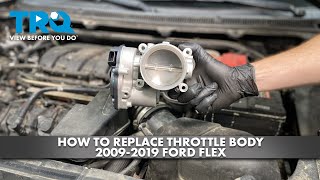
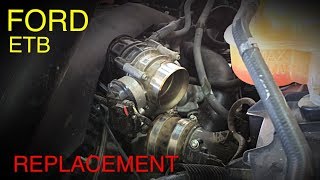
- For a DIYer with basic tools, replacing the throttle body is a manageable job that can be completed in about an hour, saving significant labor costs.
What's Unique About the 2010-2019 Ford Flex
The electronic throttle body (ETB) used on the 3.5L EcoBoost V6 and other Ford engines from this era is a known failure point. Ford has issued multiple Technical Service Bulletins (TSBs) for this exact issue across a wide range of vehicles, including the Flex. The problem is so common that it's less a question of 'if' and more 'when' the original throttle body might fail, often due to internal electronic faults or contamination causing the mechanism to bind. TSB 16-0139 specifically addresses this code on 2015-2016 models built before May 31, 2016, while the earlier TSB 10-21-6 covered 2010-2011 models.
Generation note: The Ford Flex had one generation from 2009-2019, with a significant facelift in 2013. However, the 3.5L EcoBoost engine and the associated electronic throttle body issue are common across the entire 2010-2019 model year range covered by this guide.
Symptoms You May Notice
- Sudden loss of engine power
- Vehicle enters 'limp mode' or 'limp home mode'
- Illuminated Powertrain Malfunction (wrench) light on the dashboard
- Check Engine Light is on
- Unstable, fluctuating, or high idle speed
- Car may stall
- Poor or delayed throttle response
- Replacing the accelerator pedal position sensor. While the pedal sensor is part of the overall drive-by-wire system, code P2111 specifically points to a discrepancy at the throttle body itself, not the pedal.
Most Likely Causes
- Defective Electronic Throttle Body (ETB) 🔴 High Probability This is a well-documented issue acknowledged by Ford with TSB 16-0139 and TSB 10-21-6. The internal motor, gears, or position sensor fails, causing the unit to report a stuck open condition. The failure is so common that Ford has superseded the original part number.
How to confirm: After confirming code P2111 with a scanner, inspect the throttle body for heavy carbon buildup. A definitive test often requires replacing the part, as the failure is internal to the sealed electronic unit. Given the high failure rate, replacement is the standard diagnostic step if no wiring issues are found.
Typical fix: Replace the entire electronic throttle body assembly with the updated part. After replacement, a throttle relearn procedure is required.
Est. part cost: $150-$325 - Dirty Throttle Body 🟡 Medium Probability The PCV (Positive Crankcase Ventilation) system on direct-injected engines like the EcoBoost can introduce oil vapor and crankcase gases into the intake. This mixes with dirt and carbon to create sludge that can cause the throttle plate to bind, preventing it from closing fully.
How to confirm: Remove the intake ducting and visually inspect the throttle plate and bore for a thick layer of black carbon/oil residue. Gently try to move the plate with your finger (with the engine off) to feel for any sticking or binding.
Typical fix: Thoroughly clean the throttle body bore and plate with a dedicated throttle body cleaner and a soft brush or microfiber rag. A throttle relearn procedure should be performed after cleaning. If cleaning provides only a temporary fix, the internal electronics are likely failing and the unit needs replacement.
Est. part cost: $5-$15 - Damaged Wiring or Poor Connection ⚪ Low Probability
How to confirm: Visually inspect the wiring harness and connector at the throttle body for any signs of damage, corrosion, chafing, or loose pins. Use a multimeter to check for continuity and proper voltage at the TACM+ and TACM- circuits.
Typical fix: Repair the damaged section of the harness or replace the connector pigtail.
Est. part cost: $15-$50
Rare But Worth Checking
- Faulty Powertrain Control Module (PCM): This is extremely rare and should only be considered after all other possibilities, especially the throttle body itself and its wiring, have been exhaustively ruled out. A damaged PCM is the least likely cause.
Diagnosis Steps
- Read the Diagnostic Trouble Codes (DTCs) with an OBD-II scanner to confirm P2111 is present.
- Check for any accompanying codes like P2112 or P2119, which further implicate the throttle body.
- Inspect the wiring harness and connector going to the electronic throttle body for any visible damage, melting, corrosion, or loose pins.
- Remove the air intake hose connected to the throttle body.
- Visually inspect the throttle bore and plate for heavy carbon buildup or any foreign objects that could cause it to stick.
- If dirty, clean the throttle body thoroughly using a dedicated cleaner and a soft cloth. Do not force the throttle plate open manually. Have an assistant turn the key to 'ON' (engine off) and press the gas pedal to open it electronically.
- If cleaning does not resolve the issue, or if the throttle body is clean, the most likely cause is a failed throttle body. Replace the electronic throttle body assembly.
- After replacing or cleaning the throttle body, perform the throttle body relearn/calibration procedure. A common method is to disconnect the battery for several minutes to clear the PCM's memory. After reconnecting, turn the key to 'ON' (engine off) for a minute, then start the engine and let it idle for at least 10 minutes to reach operating temperature and relearn idle parameters. Using a diagnostic scan tool is the most reliable method.
- Clear the DTCs and perform a test drive, including varied speeds, to ensure the problem is resolved and allow the PCM to learn new shift points.
Parts You'll Likely Need
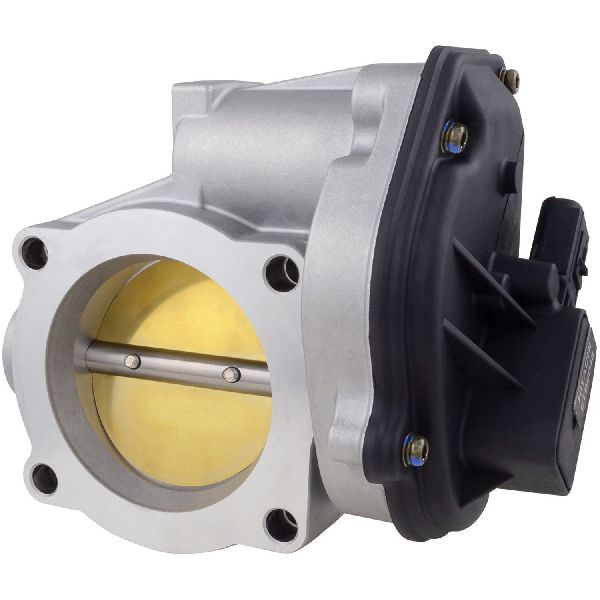
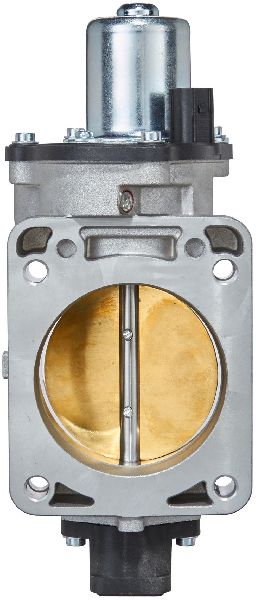
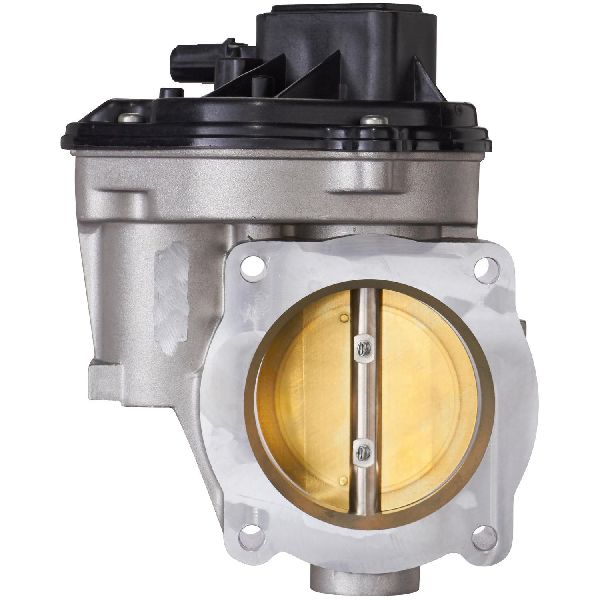
- Electronic Throttle Body Assembly
(OEM #AA5Z-9E926-B)— This is the most common cause of code P2111 on this vehicle, as acknowledged by Ford's TSBs. The original part, AA5Z-9E926-A, was superseded by AA5Z-9E926-B due to the high failure rate. The internal electronics or motor fail, causing the unit to report a stuck open condition.
Trusted brands: Motorcraft, Bosch, Hitachi, Standard Motor Products
OEM price range: $200-$325
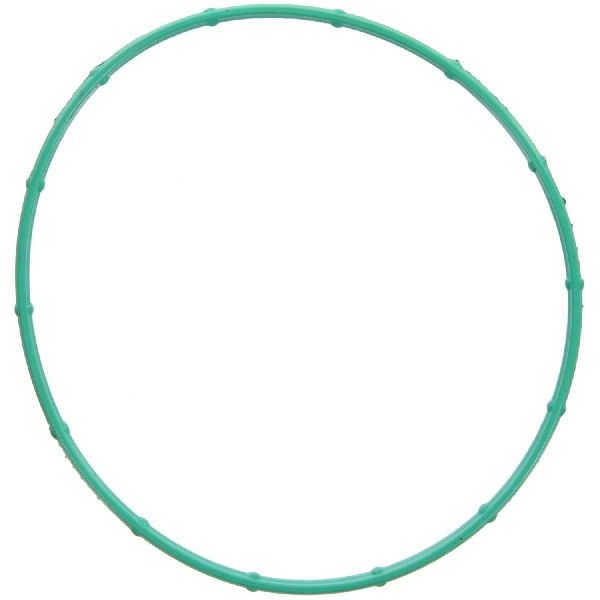
Aftermarket price range: $150-$250 - Throttle Body Gasket — It is best practice to replace the gasket anytime the throttle body is removed to ensure a proper seal and prevent vacuum leaks. Most new throttle bodies include a new gasket.
Trusted brands: Motorcraft, Fel-Pro, Mahle
OEM price range: $10-$20
Aftermarket price range: $5-$15
Related Codes That Often Appear With This One
- P2112 — This code means 'Throttle Actuator Control System - Stuck Closed' and is the counterpart to P2111. Both are often listed in the same TSBs (like 16-0139 and 10-21-6) and point to a failing throttle body.
- P2119 — This code relates to the 'Throttle Actuator Control Throttle Body Range/Performance'. It often appears with P2111 or P2112 as part of a general throttle body failure, as noted in TSB 16-0139.
- P2104, P2107, P2110 — These are other throttle actuator control codes that can accompany P2111/P2112, indicating a general failure of the system. A Reddit user with a 2011 Flex reported a cluster of these codes together, all pointing to the throttle body.
Technical Service Bulletins (TSBs) & Recalls
- TSB 16-0139: Addresses intermittent loss of power and wrench light with DTCs P2111, P2112, and/or P2119 on various 2015-2016 Ford vehicles, including the Flex, recommending a service procedure to correct the condition.
- TSB 10-21-6: An earlier TSB for 2010-2011 Ford Flex (and other models) for DTCs P2111, P2112, or idle speed fluctuations, also pointing towards a throttle body issue.
Platform-Specific Known Issues
- As per NHTSA TSB #16-0139, 2015-2016 Ford Flex models (among others) built on or before May 31, 2016, may exhibit an intermittent loss of power with DTC P2111 due to this known throttle body issue. The prescribed fix is to follow the service procedure, which typically involves replacing the throttle body. [⭐ MANUFACTURER TSB — highest authority]
- An earlier bulletin, TSB 10-21-6, covered 2010-2011 Flex models with the 3.5L engine (among others) for P2111/P2112 and idle fluctuation issues, also recommending throttle body replacement. [⭐ MANUFACTURER TSB — highest authority]
- An owner of a 2015 Flex reported the vehicle suddenly losing power and was able to retrieve code P2111 with their own scan tool, noting it was a "Known error in throttle." [ OWNER COMPLAINT, ODI #11184862]
- Another owner of a 2015 Flex experienced the same issue and read the code as "P2111 THROTTLE ACTUATOR CONTROL SYSTEM - STUCK OPEN" after the car went into limp mode in traffic. [ OWNER COMPLAINT, ODI #10994541]
Mechanic-Grade Diagnostic Values
- Throttle Position Sensor (TPS) Voltage — expected: Ford's dual TPS sensors are inversely proportional; as one sensor's voltage increases, the other decreases at the same rate.. Failure: If the two sensor signals do not correlate properly or show erratic readings during a slow sweep of the throttle plate, the sensor is faulty.
- Throttle Actuator Control Motor (TACM) Resistance — expected: While specific OEM resistance values are not published for field testing, a technician measured a known bad motor at 172 ohms, which was far from the (unspecified) manufacturer spec, indicating an internal failure.. Failure: A reading that is significantly different from a known good part, or an open/short circuit reading, indicates a failed motor. The failure is often intermittent and may only appear when the component is hot.
Scan Tool Commands That Help
- Ford IDS (Integrated Diagnostic System): KAM (Keep Alive Memory) Reset — This function should be used after replacing the throttle body to clear all learned adaptive strategies from the PCM, including fuel trims and idle values. This forces the computer to relearn parameters with the new hardware.
- FORScan: Reset Intake Air Throttle Learned Values — Similar to the IDS KAM reset, this command in the popular FORScan software specifically targets and clears the adaptive learning values for the throttle body, which is necessary after cleaning or replacement to ensure proper idle and performance.
Wiring & Ground Locations
- G103 — Located on the left side of the engine compartment.. This is a primary engine ground. A poor connection at G103 can cause a host of engine control issues, including erratic sensor readings and incorrect actuator operation, potentially leading to throttle control faults.
- G104 — Located on the right rear of the engine.. Another critical engine ground point. Verifying this ground is clean and tight is a key step when diagnosing any electronic control issues, as a bad ground can mimic component failure.
- G101 — Located on the left front of the engine compartment for 2010 models.. An essential ground for the engine control system on earlier models. A compromised G101 can lead to unpredictable behavior from the PCM and its controlled components like the throttle body.
- PCM (Powertrain Control Module) — Located at the rear of the engine compartment.. This is the control center for the throttle body. All wiring from the throttle body connector terminates here. Inspecting the harness and connector at the PCM is a crucial step if a wiring fault is suspected.
Real Owner Repair Stories
- Reddit user on r/FordFlex (2011 Ford Flex SEL 3.5L V6 with almost 250,000 miles) — Sudden loss of acceleration, car enters limp mode. A cluster of codes were present: P2104, P2107, P2110, P2111, P2112.
❌ Tried (didn't work) Cleaning the throttle body (worked temporarily, but problem returned soon after), Replacing the throttle body (mechanic said this wasn't the fix and reinstalled the original), Replacing the accelerator pedal, Replacing the PCM with a pre-programmed unit (tried two different ones, neither worked)
✅ What actually fixed it The user did not post a final resolution, but a commenter suggested the most likely cause on a high-mileage vehicle, after all those parts were swapped, is a chafed or broken wire in the harness between the components. This highlights the importance of checking wiring integrity when multiple part swaps fail to resolve the issue. - MustangForums.com user (2012 Ford Mustang V6 (shares similar throttle control logic) with 170,000 miles) — Intermittent wrench light and limp mode, sometimes followed by a Check Engine Light with code P2111. Restarting the car would temporarily clear the issue.
❌ Tried (didn't work) Cleaning the throttle body (shop confirmed it was already clean from a previous service)., Checking the module and wiring (no issues found).
✅ What actually fixed it The final diagnosis was that the original throttle body had simply worn out internally after 170,000 miles. Replacing the entire throttle body assembly was the definitive fix.
OEM Part Supersession History
AA5Z-9E926-A→AA5Z-9E926-B— The original part number was known for a high failure rate, leading to the symptoms described by P2111 and related codes. The updated 'B' revision is the required replacement part.
Heads up: While both may physically fit, installing the older 'A' revision (e.g., from old stock or a salvage yard) is not recommended as it is prone to the same failure. Always install the 'B' revision or a quality aftermarket equivalent.
Diagnostic Flowchart
Other Known Issues on This Vehicle
Issues unrelated to this code that are worth knowing about as an owner of this generation:
- Internal Water Pump Failure 🔴 High — Common failure, often cited between 80,000-120,000 miles. Failure can be catastrophic as it leaks coolant directly into the engine oil.
- Timing Chain Stretch and Phaser Rattle 🔴 High — Prevalent in earlier (pre-2016) 3.5L EcoBoost engines, often presenting as a brief rattle on cold starts. Can occur as early as 70,000 miles. If ignored, can lead to timing jump and engine failure. (Ref: TSB 18-2305, TSB 14-0194)
- Power Transfer Unit (PTU) Overheating/Failure 🟠 Medium — The PTU fluid on AWD models can overheat and break down, leading to failure. Ford's 'lifetime fluid' claim is disputed by owners and mechanics who recommend fluid changes every 20,000-30,000 miles.
- Carbon Buildup on Intake Valves 🟠 Medium — A common side effect of direct injection engines. Over time, carbon deposits build up on the back of intake valves, which can cause misfires, hesitation, and reduced performance.
- Fuel Pump Electric Module (PEM) Failure 🔴 High — A component in the fuel pump module can overheat, causing a loss of power to the fuel pump and stalling the engine. (Ref: NHTSA Recall 16V643000)
Used vs. New Parts: Buying Guide for This Vehicle
When a used part is the smart pick: For this specific repair, buying a used Electronic Throttle Body (ETB) from a junkyard is NOT recommended. The part has a known high failure rate due to internal electronics and wear, and a used part is likely to have the same issue or fail shortly after installation.
What to inspect on the donor part:
- If forced to consider a used part, verify it is the updated 'AA5Z-9E926-B' revision, not the failure-prone 'A' version.
- Inspect for any physical damage, corrosion on the connector pins, or heavy carbon that suggests poor maintenance.
OEM-only on this vehicle (don't cheap out):
- Electronic Throttle Body Assembly: Due to the critical safety function (preventing unintended acceleration) and the electronic complexity, using an OEM Motorcraft part or a top-tier OEM supplier (like Bosch or Hitachi) is strongly recommended. Cheaper, no-name aftermarket units can have a high rate of premature failure.
Aftermarket brands forum-validated for this vehicle:
- Standard Motor Products (SMP)
- Bosch
- Hitachi
- Dorman (often cited as a viable alternative, sometimes with design improvements over the original OEM part)
Brands owners have reported issues with on this vehicle:
- Unbranded, 'white-box' parts sold on online marketplaces at a significantly lower price point. Forum discussions frequently mention these failing quickly, sometimes within weeks or months, leading to the same P2111 code and limp mode issues.
Real Owner Stories
Aggregated from forums and TSBs cited above. Mileages and costs reflect what owners reported in those sources.
2015 Ford Flex 3.5L
Symptoms: The vehicle suddenly lost power; the owner retrieved code P2111 and noted it was a 'Known error in throttle.'
What fixed it: Replacement of the throttle body as per the known error/TSB guidelines.
Source hint: OWNER COMPLAINT, ODI #11184862
2015 Ford Flex 3.5L
Symptoms: The car went into limp mode while in traffic; the owner read the code as 'P2111 THROTTLE ACTUATOR CONTROL SYSTEM - STUCK OPEN.'
What fixed it: Replacement of the electronic throttle body assembly.
Source hint: OWNER COMPLAINT, ODI #10994541
2011 Ford Flex 3.5L
Symptoms: The car stopped accelerating and threw a cluster of throttle body codes including P2111 and P2112.
What fixed it: The owner attempted cleaning for a temporary fix, but the root cause was identified as internal electronics failure requiring replacement.
Source hint: Reddit r/FordFlex
2015-2016 Ford Flex 3.5L EcoBoost
Symptoms: Intermittent loss of power accompanied by a wrench light on the dashboard.
What fixed it: Following the service procedure in TSB 16-0139 to replace the throttle body with an updated part.
Source hint: TSB 16-0139
Related OBD-II Codes
Frequently Asked Questions
Does TSB 16-0139 apply to my 2015 Ford Flex?
My 2011 Flex is idling roughly and showing P2111; is there a specific bulletin for older models?
Can I just clean the throttle body on my EcoBoost V6 to fix the 'stuck open' code?
Is there a specific procedure I need to follow after replacing the throttle body on my Flex?
What is the estimated cost for the replacement part if I do it myself?
Why does the EcoBoost engine in my Flex seem prone to throttle body carbon buildup?
Helpful Videos


Used OEM Parts in Stock


New Aftermarket Parts Available


The information in this article is provided for general reference and educational purposes only. Vehicle specifications, procedures, and part compatibility can vary by production date, trim level, and region. Always consult your vehicle's factory service manual and verify part numbers before purchasing or performing repairs. Safety-critical components such as airbags, seat belts, and braking systems should be installed by a qualified professional.
- Ford Flex:
- 🎬 Helpful Videos
- 🛍️ Shop This Part
- What's Unique About the 2010-2019 Ford Flex
- Symptoms You May Notice
- Most Likely Causes
- Rare But Worth Checking
- Diagnosis Steps
- Parts You'll Likely Need
- Related Codes That Often Appear With This One
- Technical Service Bulletins (TSBs) & Recalls
- Platform-Specific Known Issues
- Mechanic-Grade Diagnostic Values
- Scan Tool Commands That Help
- Wiring & Ground Locations
- Real Owner Repair Stories
- OEM Part Supersession History
- Diagnostic Flowchart
- Other Known Issues on This Vehicle
- Used vs. New Parts: Buying Guide for This Vehicle
- Real Owner Stories
- 2015 Ford Flex 3.5L
- 2015 Ford Flex 3.5L
- 2011 Ford Flex 3.5L
- 2015-2016 Ford Flex 3.5L EcoBoost
- Related OBD-II Codes
- Frequently Asked Questions
- 🎟️ Get 5% Off