

P2101 on 2011-2014 Ford F-150: Throttle Actuator Control Motor Fixes
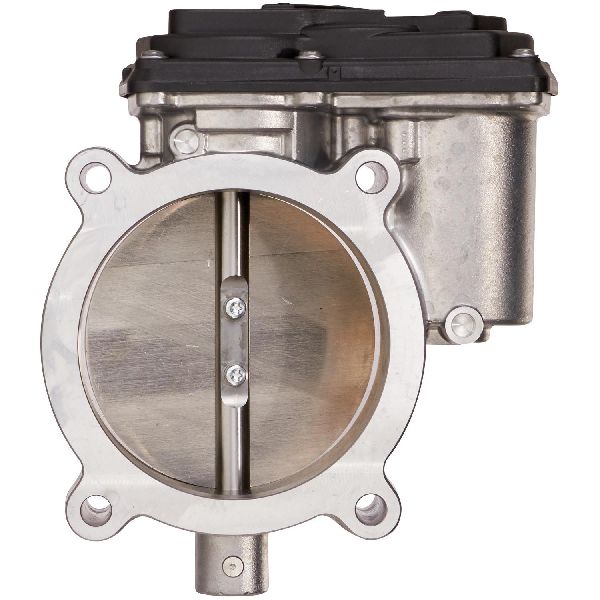
On a 2011-2014 F-150, code P2101 almost always means the electronic throttle body has failed, causing the truck to enter a low-power 'limp mode'. The fix is to replace the entire throttle body assembly. While not officially covered, Ford acknowledged this exact failure on other models via Customer Satisfaction Program 13N03, extending the warranty. The most common fix is replacing the throttle body. Expect to pay $150-$300 for an OEM Motorcraft part and about 1-1.5 hours for labor.
- P2101 on a 2011-2014 F-150 almost always points to a failed electronic throttle body.
- Symptoms are severe: the truck will enter a low-power 'limp mode' with a wrench light on the dash.
- While cleaning a dirty throttle body can sometimes work, replacement is the most common and permanent fix.
- Use a high-quality OEM (Motorcraft) replacement part if possible, as some aftermarket units have a poor reputation.
- After replacement, a throttle 'relearn' or 'Keep Alive Memory reset' is a required final step.
What's Unique About the 2011-2014 Ford F-150
The 12th generation F-150 (2009-2014) relies on a fully electronic 'drive-by-wire' throttle system. This system is a known failure point across many Ford vehicles from this era using the 3.5L, 3.7L, and 5.0L engines. The electronic throttle body (ETB) itself is the most frequent culprit, with internal electronics or the motor failing over time, often leading to a sudden loss of power while driving. Ford issued Customer Satisfaction Program 13N03 for this exact issue on other vehicles like the Escape and Fusion, extending the warranty to 10 years/150,000 miles due to contamination of internal motor contacts. While the F-150 was not officially included in 13N03, it suffers from the identical failure. Ford also issued TSB 16-0139 for the 2015-2016 F-150 for the same problem, confirming a persistent design issue.
Symptoms You May Notice
- Sudden and dramatic loss of engine power (entering 'limp mode')
- Illuminated powertrain malfunction (wrench) indicator light
- Illuminated Check Engine Light
- Poor, delayed, or no throttle response
- Rough or unstable idle, sometimes dipping so low it almost stalls
- Engine may stall at stops
- Harsh or erratic shifting as the transmission computer struggles with the incorrect torque reporting
- Longer crank time after the initial event before the engine will restart
- Replacing the Accelerator Pedal Position (APP) sensor. A faulty pedal sensor will typically set its own specific codes (like P2122, P2138) and is not the common cause for P2101.
Most Likely Causes
- Failed Electronic Throttle Body (ETB) Assembly 🔴 High Probability This is a well-documented failure point on this F-150 platform and many other Fords of the era. Ford's own documents for other models state the cause is contamination on the internal motor contacts, leading to increased electrical resistance. Heat, vibration, and oil contamination from the PCV system accelerate this wear, causing the actuator motor or position sensor to malfunction.
How to confirm: After confirming no wiring issues, the most definitive test is to replace the throttle body. A scan tool can monitor commanded vs. actual throttle position; a discrepancy points to the ETB. Given the high failure rate, many owners and shops proceed with replacement once P2101 is confirmed, especially if accompanied by P2111 or P2112.
Typical fix: Replace the entire electronic throttle body assembly. A throttle relearn procedure (or Keep Alive Memory reset) is required after installation. This is the fix specified by Ford in its service actions for this problem.
Est. part cost: $150-$300 for OEM Motorcraft, $70-$150 for aftermarket. - Dirty or Carbon-Clogged Throttle Body 🟡 Medium Probability The Positive Crankcase Ventilation (PCV) system can route oil vapor and carbon into the intake, which builds up around the throttle plate. This is particularly true on the 3.5L EcoBoost engine. This buildup can cause the plate to stick, preventing it from moving as commanded by the PCM.
How to confirm: Remove the air intake tube from the throttle body and visually inspect the throttle plate and bore for a thick, black layer of carbon. The plate may feel sticky or slow to move when pushed manually (with the ignition off).
Typical fix: Clean the throttle body bore and plate thoroughly with a dedicated throttle body cleaner and a soft cloth or brush. Do not spray cleaner directly into the electronics. A throttle relearn procedure should be performed after cleaning. Note: While cleaning can sometimes resolve the issue, if the internal electronics are already failing, this is often a temporary fix.
Est. part cost: $5-$15 for a can of throttle body cleaner. - Damaged Wiring or Poor Connection ⚪ Low Probability Engine vibration and heat can, over many years, cause wires to chafe or pins in the 6-pin connector to become loose or corroded.
How to confirm: Visually inspect the wiring harness and electrical connector going to the throttle body for any signs of damage, corrosion, or loose pins. Wiggle the connector with the engine running to see if it affects idle. Check for continuity on the wires between the PCM and the throttle body connector if you have a wiring diagram.
Typical fix: Repair the damaged section of the harness or replace the connector pigtail. A new pigtail is readily available (e.g., Motorcraft WPT-1075).
Est. part cost: $15-$40 for a new pigtail connector.
Rare But Worth Checking
- Powertrain Control Module (PCM) Failure: This is very rare. Before condemning the PCM, all other possibilities, especially the throttle body itself and its wiring, must be exhaustively ruled out. A PCM failure would likely present with multiple other unrelated codes. On newer F-150s (2022+), a PCM software glitch is a primary cause for P2101, but this is not the case for the 2011-2014 generation.
Diagnosis Steps
- Scan for all diagnostic trouble codes. Note if P2110, P2111, or P2112 are present alongside P2101, as this strongly points to the throttle body itself.
- Visually inspect the wiring harness and the 6-pin electrical connector at the throttle body for any obvious damage, corrosion, or loose connections.
- Remove the air intake hose from the throttle body. Inspect the throttle bore and plate for heavy carbon buildup. If significant buildup is present, clean it thoroughly with throttle body cleaner and a microfiber towel. Perform a KAM reset afterward.
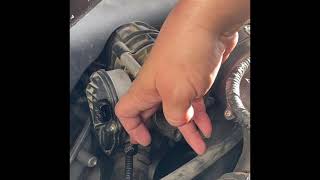
- If cleaning does not resolve the issue, or if the bore was already clean, the next step is to replace the electronic throttle body assembly. 🎬 Watch this step-by-step guide to replacing the 3.5L throttle body. This is the most common resolution.
- After replacing the throttle body, perform a 'Keep Alive Memory' (KAM) reset. This can be done with a capable scan tool or by disconnecting the negative battery terminal for at least 15 minutes.
- Start the engine and let it idle for several minutes to complete the relearn process. The idle may be high or erratic at first. Drive the vehicle for at least 10 miles with varied conditions for the PCM to fully relearn the new throttle body's parameters.
Parts You'll Likely Need
- Electronic Throttle Body Assembly
(OEM #BL3Z-9E926-B (superseded by TB-1) for 3.5L EcoBoost; BR3Z-9E926-C for 5.0L V8; 7T4Z-9E926-FA for 3.7L V6)— This is the most common failure point for code P2101 on this platform. The internal electronics fail, requiring the replacement of the complete assembly.
Trusted brands: Motorcraft (OEM), Bosch, Hitachi, Dorman, BBK (Performance)
OEM price range: $150-$300
Aftermarket price range: $70-$150
Related Codes That Often Appear With This One
- P2112 — Indicates 'Throttle Actuator Control System - Stuck Closed'. This code is often logged with P2101 when the PCM determines the throttle plate is physically stuck and cannot open as commanded.
- P2111 — Indicates 'Throttle Actuator Control System - Stuck Open'. This may be logged if the throttle plate fails to close as commanded, which is another type of performance range fault.
- P2110 — Indicates 'Throttle Actuator Control System - Forced Limited RPM'. This code confirms the PCM has actively engaged the 'limp mode' as a direct result of the detected throttle fault.
Technical Service Bulletins (TSBs) & Recalls
- TSB 16-0139: While not officially for 2011-2014 models, this TSB for 2015-2016 F-150s addresses an intermittent loss of power with a wrench light and codes P2111/P2112, caused by a faulty electronic throttle body, which is the same issue seen on the earlier trucks.
- Customer Satisfaction Program 13N03: Not a TSB, but a Ford program extending the ETB warranty to 10 years/150,000 miles for various 2009-2013 models (Fusion, Escape, etc.) due to internal contamination. This serves as an admission of the widespread nature of this part failure, even though the F-150 was excluded.
Platform-Specific Known Issues
- While Ford's TSB 16-0139 for this exact failure officially covers 2015-2016 models, the 2011-2014 trucks use a similar design and are widely known to suffer from the same throttle body failures, presenting identical symptoms and codes.
- Ford's Customer Satisfaction Program 13N03 extended the warranty on the throttle body for many other 2009-2013 Ford models but did not include the F-150, despite it using similar parts and exhibiting the same failure mode of internal contact contamination.
Mechanic-Grade Diagnostic Values
- Throttle Control Motor Resistance — expected: Approximately 1-15 Ω at 25°C (77°F). Failure: Resistance outside of this range indicates a faulty motor.
- Throttle Position Sensor (TPS) Voltage — expected: Typically 0.5V at closed throttle to 4.5V at wide-open throttle.. Failure: Voltage that is erratic, has flat spots, drops to near zero, or doesn't sweep smoothly indicates a failing sensor.
- Voltage Drop Test on TAC Motor Circuit — expected: Less than 0.5V drop between PCM supply and the motor connector (KOEO).. Failure: A voltage drop greater than 0.5V points to high resistance in the wiring or a corroded connector.
- Battery System Voltage — expected: 12.4-12.7V with Key On, Engine Off; 13.5-14.5V with engine running.. Failure: Low system voltage can cause the PCM to inadequately power the throttle actuator, leading to performance faults.
Scan Tool Commands That Help
- Ford IDS (Integrated Diagnostic System): ETC Learn (Electronic Throttle Control Learn) — This function, found under PCM -> Miscellaneous Functions, forces the PCM to relearn the throttle plate's end stops. It should be used after cleaning or replacing the throttle body.
- Ford IDS (Integrated Diagnostic System): Clear PCM Adaptive Memory (KAM Reset) — This clears all learned values, including idle trim and throttle parameters. It's a required step after replacing the throttle body to ensure the system relearns from a clean slate.
- Ford IDS (Integrated Diagnostic System): Live Data Graphing (TP1/TP2 vs. APP1/APP2) — Graphing the two throttle position sensor voltages (TP1, TP2) against the two accelerator pedal sensor voltages (APP1, APP2) provides a clear visual aid to spot discrepancies, dropouts, or glitches that indicate a failing component.
Wiring & Ground Locations
- Throttle Body Connector Pigtail — The 6-pin electrical connector on the electronic throttle body assembly.. This connector is a common point of failure due to heat and vibration. Damaged wires or corroded pins can cause intermittent signal loss, triggering P2101. The replacement pigtail is Motorcraft part number WPT-1075.
Real Owner Repair Stories
- f150forum.com user 'snackdaddy21' (2013 F-150 EcoBoost) — Limp mode, throttle actuator codes.
❌ Tried (didn't work) Initially, cleaning the throttle body and running fuel system cleaner worked, but only temporarily.
✅ What actually fixed it The problem returned after 3,500 miles, and the user had to replace the throttle body with an aftermarket unit because the Ford part was on national backorder. - f150forum.com user (2011 F-150 5.0L) — Intermittent high idle, erratic throttle response, and limp mode, often triggered by high humidity. Code P2135 (Throttle/Pedal Position Sensor/Switch A/B Voltage Correlation) was present.
❌ Tried (didn't work) Cleaning the throttle body., Replacing the throttle body with a remanufactured unit., Replacing the accelerator pedal.
✅ What actually fixed it The user replaced the TPS connector pigtail, inspected wiring to the PCM, and ultimately installed a brand new Motorcraft throttle body. While this stopped the limp mode (at the time of posting), the throttle 'stickiness' symptom returned, indicating the root cause might be even more complex or that the new part was also susceptible to the issue. This story highlights that even a full replacement isn't a guaranteed fix in every case.
OEM Part Supersession History
BL3Z-9E926-B (3.5L EcoBoost)→TB-1 (Motorcraft Service Part Number)— Internal design revisions to improve reliability and address the common failure mode.Original throttle body for 2012 F-150 (PN not specified)→New OEM replacement with a revised part number.— A forum user noted the replacement part from Ford had a different number than the original, suggesting Ford updated the part, possibly with more robust internal gear materials to replace the original nylon gears that were prone to failure.
Model Year Variations Within This Range
- 2011-2012 vs. 2013-2014: The engine wiring harness carries different part numbers between these year groups. Specifically, the connectors for the VCT (Variable Cam Timing) solenoids were changed after the 2011 model year, requiring either the correct harness or pigtail adapters when swapping engines or harnesses between these years.
Diagnostic Flowchart
Other Known Issues on This Vehicle
Issues unrelated to this code that are worth knowing about as an owner of this generation:
- 3.5L EcoBoost Timing Chain Rattle on Cold Start 🔴 High — Common on 2011-2015 models, especially before 100,000 miles. A loud rattle for 2-5 seconds after a cold soak. (Ref: TSB 18-2305 (supersedes earlier versions))
- 6R80 Transmission Molded Lead Frame Failure 🔴 High — Widespread on 2011-2014 models. Causes sudden, violent downshifts to 1st or 2nd gear at highway speeds, loss of speedometer, and warning lights. (Ref: Recall 16V-248, Customer Satisfaction Program 19N01)
- 5.0L V8 Coolant Leak at T-Connector/O-Rings 🟠 Medium — Very common. The plastic T-connector in the upper radiator hose becomes brittle and cracks, or the o-rings in quick-connect fittings fail, causing coolant leaks. (Ref: No TSB, but a widely documented issue.)
- 3.5L EcoBoost Intercooler Condensation 🟠 Medium — Occurs in humid climates or during long highway drives, causing stumbling or misfires under hard acceleration as the engine ingests water. (Ref: TSB 12-6-4 was an early attempt at a fix. Many owners resort to drilling a small 'weep hole' in the intercooler.)
Used vs. New Parts: Buying Guide for This Vehicle
When a used part is the smart pick: For this specific P2101 failure, a used throttle body is NOT recommended. The failure is due to internal electronic and mechanical wear (contacts, plastic gears), which is not visible. A used part from a salvage yard has a high probability of having the same latent defect or failing soon after installation.
Donor-vehicle mileage cap: roughly under 30000 miles for the part to have meaningful remaining life.
What to inspect on the donor part:
- Verify the part number matches your engine exactly.
- Check for physical damage to the housing or connector.
- Ask for the donor vehicle's mileage, though this is not a guarantee of longevity.
OEM-only on this vehicle (don't cheap out):
- Electronic Throttle Body Assembly
Aftermarket brands forum-validated for this vehicle:
- BBK is a well-known performance UPGRADE, offering larger-bore throttle bodies (85mm, 90mm) for modified engines seeking more airflow, but it is not a standard OEM-style replacement.
Brands owners have reported issues with on this vehicle:
- Generic or unbranded 'remanufactured' units should be treated with caution. One owner reported persistent issues with a remanufactured unit before switching to a new OEM Motorcraft part.
Real Owner Stories
Aggregated from forums and TSBs cited above. Mileages and costs reflect what owners reported in those sources.
2014 Ford F-150 3.5L EcoBoost
Symptoms: The truck will just go into limp mode, with a loss of power, the orange wrench light appearing, no acceleration, and slight shuddering. After restarting, the truck would drive fine temporarily.
What fixed it: The forum post describes symptoms and asks for help; it does not state the final repair. However, the most common fix documented in the article for these exact symptoms is the replacement of the electronic throttle body assembly.
Source hint: f150forum.com: 'limp-mode-possible-throttle-body-issue-458'
Related OBD-II Codes
Frequently Asked Questions
I have a 2013 F-150. Does TSB 16-0139 for throttle body issues apply to my truck?
Is the electronic throttle body on my 2012 F-150 covered under Ford's Customer Satisfaction Program 13N03?
My 2014 F-150 EcoBoost has code P2101. Is cleaning the throttle body enough, or do I need to replace it?
After replacing the throttle body on my F-150, what is the required relearn procedure?
What is the recommended replacement part for the electronic throttle body on my 5.0L F-150?
My friend's Lincoln Navigator has the same limp mode symptoms. Do these vehicles share this throttle body problem?
Helpful Videos
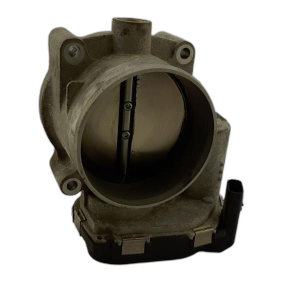
Used OEM Parts in Stock


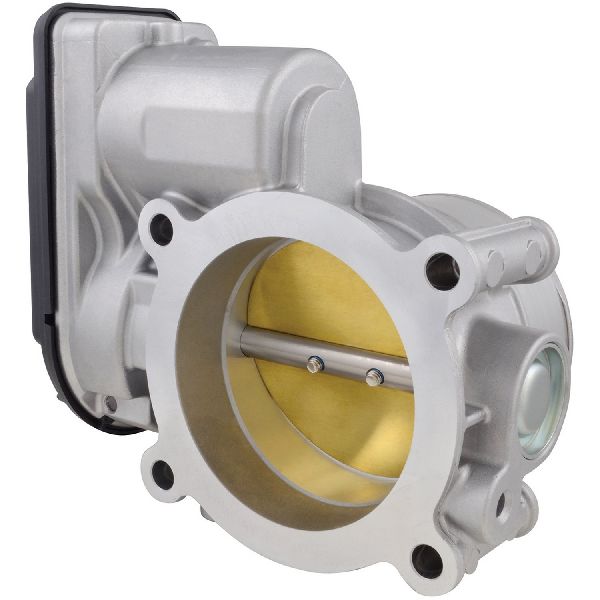
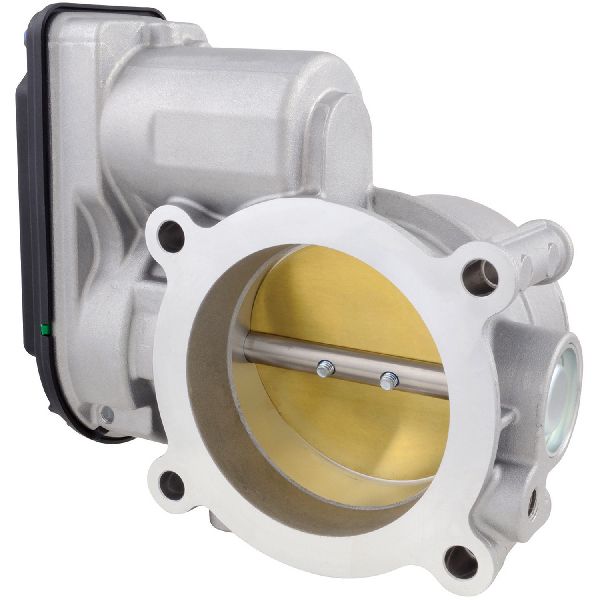
New Aftermarket Parts Available


The information in this article is provided for general reference and educational purposes only. Vehicle specifications, procedures, and part compatibility can vary by production date, trim level, and region. Always consult your vehicle's factory service manual and verify part numbers before purchasing or performing repairs. Safety-critical components such as airbags, seat belts, and braking systems should be installed by a qualified professional.
- Ford F-150:
- 🎬 Helpful Videos
- 🛍️ Shop This Part
- What's Unique About the 2011-2014 Ford F-150
- Symptoms You May Notice
- Most Likely Causes
- Rare But Worth Checking
- Diagnosis Steps
- Parts You'll Likely Need
- Related Codes That Often Appear With This One
- Technical Service Bulletins (TSBs) & Recalls
- Platform-Specific Known Issues
- Mechanic-Grade Diagnostic Values
- Scan Tool Commands That Help
- Wiring & Ground Locations
- Real Owner Repair Stories
- OEM Part Supersession History
- Model Year Variations Within This Range
- Diagnostic Flowchart
- Other Known Issues on This Vehicle
- Used vs. New Parts: Buying Guide for This Vehicle
- Real Owner Stories
- 2014 Ford F-150 3.5L EcoBoost
- Related OBD-II Codes
- Frequently Asked Questions
- 🎟️ Get 5% Off