

P2099 on 2013-2016 Hyundai Genesis Coupe 3.8L: Post-Catalyst Rich Condition Causes and Fixes
This code means the engine's Bank 2 is running rich. The most common causes are a failing downstream oxygen (O2) sensor or an exhaust leak. Expect to pay $80-$200 for a new O2 sensor, which is a common DIY fix.
- P2099 on your Genesis Coupe 3.8L most often points to a faulty downstream O2 sensor on the passenger side (Bank 2).
- Before replacing the sensor, always check for exhaust leaks, especially if you have an aftermarket exhaust.
- Driving with this code for an extended period can damage your expensive catalytic converter.
- If you have codes for both Bank 1 (P2097) and Bank 2 (P2099), the problem is more likely a system-wide issue like a MAF sensor or fuel pressure problem.
What's Unique About the 2013-2016 Hyundai Genesis Coupe
The 2013-2016 Genesis Coupe uses a 3.8L Lambda II engine with Gasoline Direct Injection (GDi). Unlike traditional port injection, GDi uses a high-pressure fuel pump and injects fuel directly into the cylinders. While this improves efficiency, it also introduces components like the high-pressure pump and specialized injectors that can fail and potentially cause a rich condition leading to a P2099 code. A known issue with GDi engines is carbon buildup on the intake valves, as fuel is no longer sprayed over them to act as a cleaning agent. While this doesn't directly cause a P2099, severe buildup can affect airflow and engine performance, potentially contributing to conditions that trigger various fault codes.
Symptoms You May Notice
- Check Engine Light is on
- Reduced fuel economy
- Noticeable loss of engine power or sluggish acceleration
- Rough idle
- Strong smell of gasoline from the exhaust
- Replacing the catalytic converter when the actual problem is a bad O2 sensor or an upstream exhaust/fuel leak.
- Replacing the O2 sensor without first checking for exhaust leaks, which can mimic the symptoms of a bad sensor.
- Replacing the MAF sensor without proper testing, as it's a common cause for fuel trim codes in general but less so for a single-bank code like P2099.
Most Likely Causes
- Failing Downstream (Post-Catalyst) Oxygen Sensor 🔴 High Probability O2 sensors are wear-and-tear items that degrade over time, leading to slow or inaccurate readings. A faulty sensor can incorrectly report a rich condition when none exists. This is the most frequent cause cited by owners and mechanics for a solitary P2099 code.
How to confirm: Use a diagnostic scan tool to monitor the live data for the Bank 2, Sensor 2 O2 sensor. A healthy downstream sensor should show a relatively stable voltage (typically 0.6-0.8V) once the engine is warm. If it's stuck high (above 0.8V) or fluctuating rapidly like the upstream sensor, it's likely faulty. You can also test the sensor's heater circuit with a multimeter.
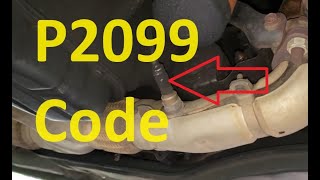
Typical fix: Replace the Bank 2 downstream oxygen sensor. On the 3.8L V6, Bank 2 is the passenger side. The downstream sensor is located after the catalytic converter.
Est. part cost: $80-$200 - Exhaust Leak 🟡 Medium Probability Exhaust components can develop leaks at gaskets (e.g., at the manifold or downpipe) or from cracks due to rust and heat cycles. Aftermarket exhaust modifications are also a common source of leaks. A leak before the downstream O2 sensor can allow outside air to be pulled in, ironically causing the sensor to sometimes read rich due to the skewed readings confusing the PCM.
How to confirm: Perform a visual inspection of the exhaust system from the engine to the catalytic converter for any signs of black soot, cracks, or loose connections. A smoke test, where smoke is forced into the exhaust system, is the most effective way to pinpoint small leaks. Some owners report finding leaks at the catalytic converter to mid-pipe joint.
Typical fix: Replace the leaking gasket or repair/replace the cracked exhaust component. This can range from a simple bolt tightening to welding or part replacement.
Est. part cost: $10-$300 - Leaking Fuel Injector(s) on Bank 2 ⚪ Low Probability As a GDi engine, the injectors are under high pressure and can be prone to failure over time, where they may leak fuel into a cylinder even when closed, creating a true rich condition.
How to confirm: This is more complex to diagnose. A mechanic might perform a fuel pressure leak-down test or pull the spark plugs on Bank 2 (cylinders 2, 4, 6 on the passenger side) to check for signs of excessive fuel (wet, black, sooty appearance). This issue is often accompanied by misfire codes (e.g., P0300, P0302, P0304, P0306).
Typical fix: Replace the faulty fuel injector(s) and their seals.
Est. part cost: $100-$300 per injector
Rare But Worth Checking
- Failing Catalytic Converter: While a failing converter can cause this code, it's more often a symptom of a long-term rich condition rather than the root cause. The rich mixture overheats and damages the converter. Usually, you would fix the rich condition first.
- Faulty Mass Air Flow (MAF) Sensor: A dirty or failing MAF sensor can under-report the amount of air entering the engine, causing the PCM to inject too much fuel system-wide. Cleaning the MAF sensor with a dedicated cleaner is a good first step. If both P2099 (Bank 2) and P2097 (Bank 1) are present, the MAF is a more likely suspect.
- High Fuel Pressure: An issue with the fuel pressure regulator or the high-pressure fuel pump could cause system-wide high fuel pressure, leading to a rich condition. This would likely affect both banks and may set other codes, such as P2097.
Diagnosis Steps
- Read all stored codes with an OBD-II scanner. Note any other codes that are present, as they can provide crucial clues (e.g., P2097, misfire codes).
- Visually inspect the Bank 2 exhaust system (passenger side of the engine) for obvious leaks, cracks, or damage, especially at gaskets and welds between the cylinder head and the downstream O2 sensor.
- Use a scan tool to observe live data. Watch the voltage of the Bank 2, Sensor 2 (downstream) O2 sensor. It should be relatively steady once warm. If it's stuck high (e.g., >0.8V) or switching rapidly like the upstream sensor, the sensor is a likely culprit.
- Inspect the wiring and connector for the Bank 2 downstream O2 sensor for any damage, melting, or corrosion. Pay close attention to where the harness may be near hot exhaust components.
- If no obvious issues are found, perform an exhaust smoke test to find any hard-to-see leaks.
- If no leaks are found and the O2 sensor appears to be working, the problem may be an actual rich condition. Investigate the fuel system by checking spark plugs on Bank 2 for fouling and considering a fuel pressure test.
- As a simple check, inspect and clean the Mass Air Flow (MAF) sensor if fuel economy is poor and the engine feels sluggish, especially if codes for both banks are present.
Parts You'll Likely Need
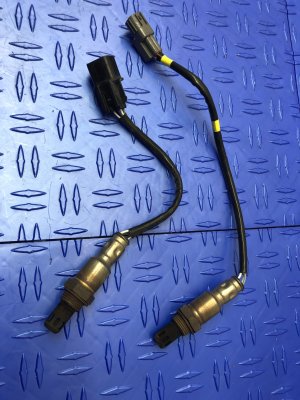
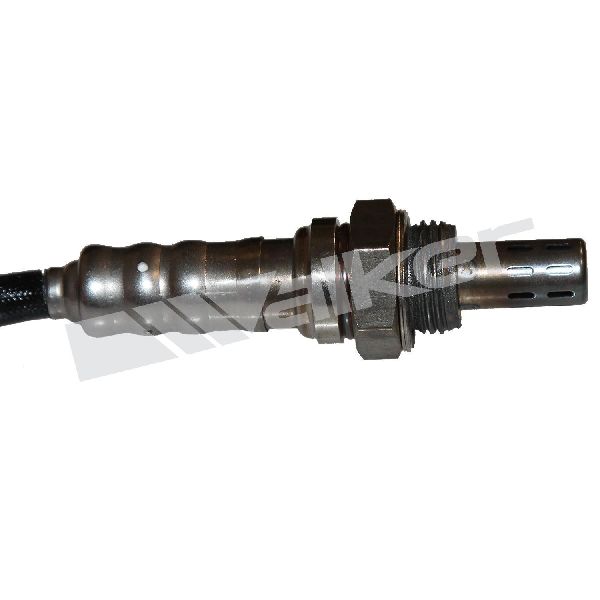
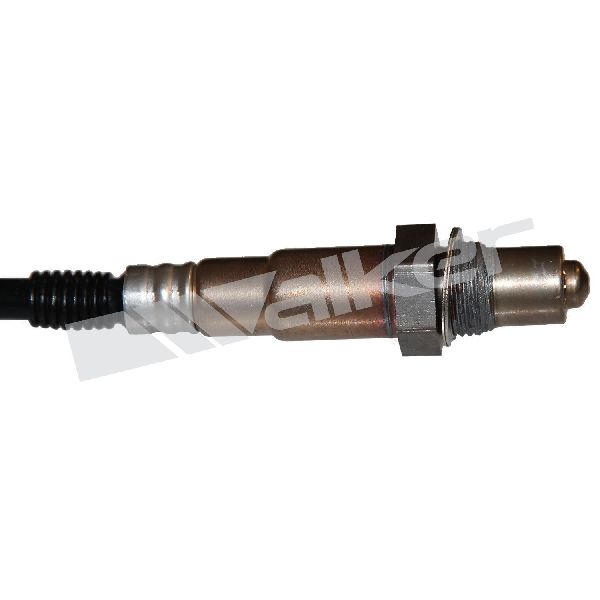
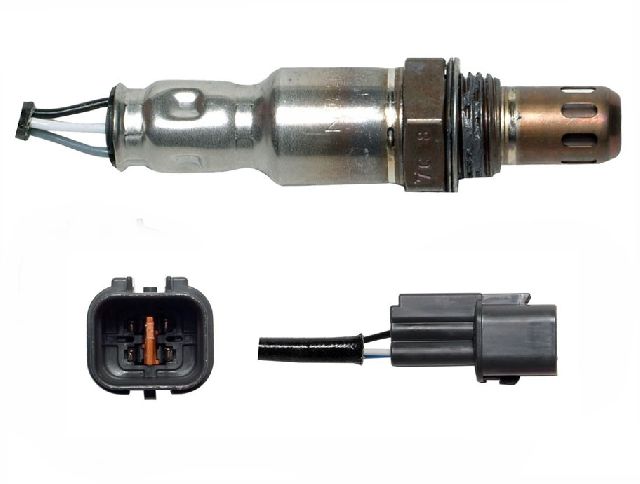
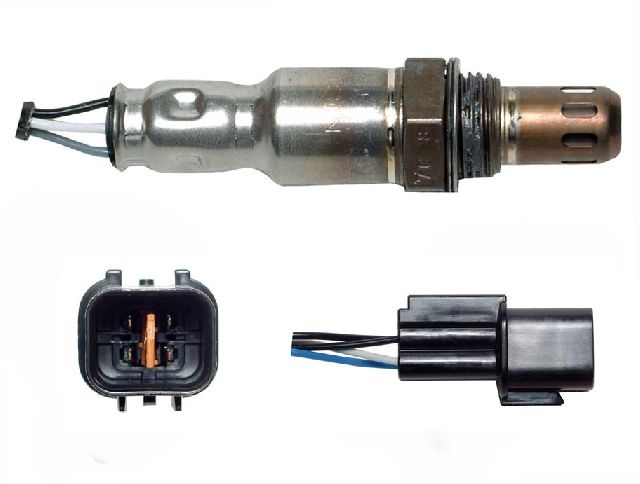
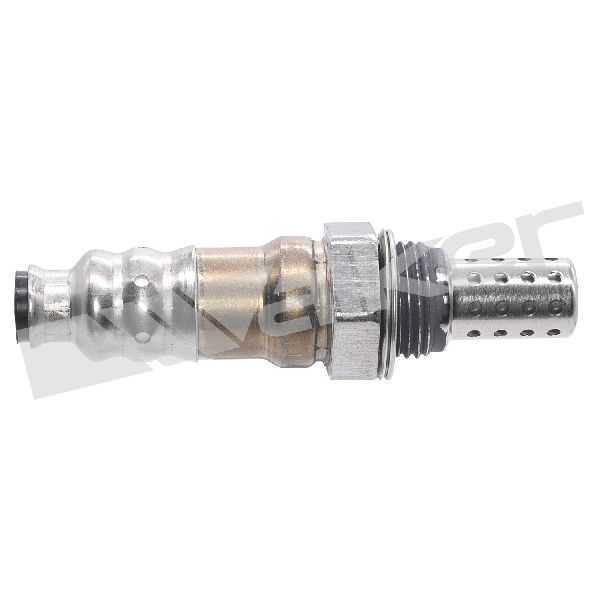
- Downstream Oxygen Sensor (Bank 2, Sensor 2)
(OEM #39210-3CGA0 (Note: Part numbers can vary; always verify with VIN. This is a common number for the downstream position.))— This sensor is the most common failure point for a P2099 code. It directly measures the post-catalyst mixture and can fail with age, sending false rich signals.
Trusted brands: Denso, Bosch, NTK
OEM price range: $150-$220
Aftermarket price range: $80-$150 - Exhaust Manifold Gasket (Bank 2)
(OEM #28521-3C200 (Note: Part numbers can vary; always verify with VIN.))— If an exhaust leak is found at the manifold, this gasket will need to be replaced to create a proper seal.
Trusted brands: Fel-Pro, Mahle
OEM price range: $30-$50
Aftermarket price range: $15-$30
Related Codes That Often Appear With This One
- P2097 — This is the same code but for Bank 1 ('Post Catalyst Fuel Trim System Too Rich Bank 1'). If both are present, it points to a systemic issue like a faulty MAF sensor or fuel pressure problem affecting the whole engine.
- P0300, P0302, P0304, P0306 — These are misfire codes for Bank 2 cylinders (passenger side). A leaking fuel injector can cause both a misfire and a rich condition, linking these codes together.
Platform-Specific Known Issues
- Aftermarket Exhaust Leaks: Many owners install aftermarket exhaust systems. Improper installation or poor-quality welds on these systems are a frequent source of exhaust leaks that can trigger a P2099 code.
- O2 Sensor Location Confusion: For the 3.8L V6, Bank 2 is the passenger side of the engine. Sensor 2 is the 'downstream' sensor, located after the catalytic converter. Owners sometimes mistakenly replace the wrong sensor. Unplugging a sensor and checking for a new code can confirm its location.
Mechanic-Grade Diagnostic Values
- Low-Pressure Fuel System Pressure at Idle — expected: 480 - 519 kPa (4.9 - 5.3 kgf/cm2, 69.6 - 75.3 psi). Failure: Pressure outside of this range indicates a problem with the in-tank fuel pump or low-pressure fuel lines, not the high-pressure GDi system.
- Downstream O2 Sensor (Bank 2, Sensor 2) Voltage — expected: Relatively steady between 0.6V and 0.8V when the engine is at operating temperature and in closed loop.. Failure: Voltage stuck high (above 0.8V) or fluctuating rapidly similar to the upstream sensor suggests a faulty sensor or an actual rich condition upstream.
- Long Term Fuel Trim (LTFT) - Post Catalyst — expected: Should ideally be between -10% and +10%.. Failure: A value less than -10% (e.g., -15%) indicates the PCM is consistently removing fuel to compensate for a perceived rich condition, triggering P2099.
Scan Tool Commands That Help
- Hyundai GDS (Global Diagnostic System): Fuel Trim Reset / Adaptive Value Reset — After replacing a component that affects the air/fuel ratio, such as an O2 sensor, fuel injector, or MAF sensor. This command forces the ECU to relearn the fuel trim strategy from a baseline, which can resolve issues if the old, incorrect adaptive values were causing the P2099 code to persist.
Wiring & Ground Locations
- Engine Ground Line (to chassis) — A primary engine ground connection point is located near the brake booster vacuum hose connection on the engine.. A poor engine ground can cause erratic voltage readings from all engine sensors, including the oxygen sensors. This can lead to incorrect data being sent to the ECU, potentially causing false rich or lean codes. The service manual specifies a tightening torque of 8.0 ~ 10.1 lb-ft for this ground connection.
- O2 Sensor Connector (Bank 2, Sensor 2) — Follow the wiring harness from the downstream oxygen sensor on the passenger-side exhaust pipe. The connector is typically mounted on a bracket attached to the transmission or vehicle underbody to keep it away from heat.. The connector is a common point of failure due to exposure to road debris, moisture, and heat. Inspecting for corrosion, bent pins, or a damaged locking tab is a critical diagnostic step. A bad connection here will mimic a failed sensor.
Real Owner Repair Stories
- Gencoupe.com forum user (2013 Hyundai Genesis Coupe 3.8) — P2099 code present, sometimes accompanied by P2097 (Bank 1 rich).
❌ Tried (didn't work) Replacing the O2 sensors., Checking for obvious exhaust leaks with a visual inspection.
✅ What actually fixed it The user found a crack in the exhaust flex pipe, which is located after the headers but before the O2 sensors. The crack was difficult to see and only opened up under certain engine loads and temperatures. Replacing the downpipe section containing the flex pipe resolved the code permanently.
"I Checked Everything" — The Actual Cause
- In some cases reported on forums, a standard exhaust smoke test at idle did not reveal a leak. The actual cause was a hairline crack in an exhaust manifold or flex pipe that only opened up and leaked when the metal expanded significantly from heat during a hard drive. The resulting code would often appear after the car was parked and restarted, long after the leak had closed again upon cooling.
OEM Part Supersession History
39210-3CAA0→39210-3CGA0— Part number consolidation and potential minor internal revisions for improved durability or performance. The parts are generally interchangeable for the specified applications.
Heads up: While 39210-3CGA0 is listed for the downstream position, 39210-3CAA0 was often used for upstream sensors on other Hyundai V6 models. Always confirm the correct part for the specific position (downstream Bank 2) using the vehicle's VIN, as using an upstream sensor in a downstream position (or vice-versa) will cause incorrect readings.
Model Year Variations Within This Range
- 2013 vs 2014+: For the 2013 model year, Hyundai offered both the 3.8L V6 with multi-port injection (MPI) and the newer direct injection (GDi) version. From 2014-2016, only the GDi engine was available in the 3.8L. While the P2099 code applies to both, the diagnostic approach for a true rich condition differs. On the GDi, the high-pressure fuel pump and direct injectors are potential failure points, whereas the MPI engine has a more traditional fuel rail and port injectors.
Diagnostic Flowchart
Other Known Issues on This Vehicle
Issues unrelated to this code that are worth knowing about as an owner of this generation:
- Manual Transmission Grind / Lockout 🟠 Medium — Common, especially on earlier BK1 models, but still present on BK2s. Often occurs when cold or during aggressive shifting into 2nd, 3rd, and 5th gears. Worn synchronizers are a common cause.
- GDi Intake Valve Carbon Buildup 🟠 Medium — An inherent issue for all GDi engines. Becomes noticeable around 60,000-100,000 miles, causing potential rough idle, hesitation, or power loss. Requires periodic manual cleaning (e.g., walnut blasting) for removal.
- Paint and Clear Coat Peeling 🟡 Low — Reported by some owners, particularly on the 2013 model year, affecting bumpers, hoods, and roofs.
- Interior Trim Chrome Flaking 🟡 Low — The matte clear coat over chrome-look plastic pieces (door handles, steering wheel trim) can flake off over time.
- No Sound from Speakers (with Navigation) 🟡 Low — Some 2011-2014 models with the factory navigation unit may experience a total loss of audio from all sources due to a software glitch. A hardware reset often resolves it.
Used vs. New Parts: Buying Guide for This Vehicle
When a used part is the smart pick: For this repair, used parts are generally not recommended for the most common causes. However, if the cause is a cracked exhaust manifold or downpipe, a used OEM component from a low-mileage, non-corroded donor vehicle can be a cost-effective alternative to a new OEM part.
Donor-vehicle mileage cap: roughly under 60000 miles for the part to have meaningful remaining life.
What to inspect on the donor part:
- For exhaust components, check for the absence of rust, especially at welds and flanges.
- Ensure there are no visible cracks, dents, or signs of previous repair (e.g., sloppy weld beads).
- Verify the part came from a vehicle in a dry climate to minimize the risk of corrosion-related stress fractures.
OEM-only on this vehicle (don't cheap out):
- High-Pressure Fuel Pump (if required) - Aftermarket GDi high-pressure pumps have a poor reliability record across many brands.
Aftermarket brands forum-validated for this vehicle:
- NTK and Denso are the most frequently recommended brands for oxygen sensors in owner forums, often being the original OEM suppliers.
Brands owners have reported issues with on this vehicle:
- Generic or unbranded 'universal' oxygen sensors that require splicing wires are a common source of problems and should be avoided. Forum users have reported mixed to poor results with some Bosch aftermarket sensors on this platform, suggesting sticking to NTK or Denso is a safer bet.
Real Owner Stories
Aggregated from forums and TSBs cited above. Mileages and costs reflect what owners reported in those sources.
2013-2016 Hyundai Genesis Coupe 3.8L
Symptoms: Owner reported having both P2097 and P2099 codes.
What fixed it: The owner was advised by the community to investigate exhaust leaks, especially if aftermarket headers were installed, and to check the O2 sensor readings with a scan tool.
Source hint: Gencoupe.com - P2099 Code Discussion
2013-2016 Hyundai Genesis Coupe 3.8L
Symptoms: A P2099 code appeared after installing an aftermarket exhaust system.
What fixed it: The issue was traced to an exhaust leak from improper installation or a poor-quality weld. Repairing the leak resolved the code.
Source hint: Vehicle Specific Issue: Aftermarket Exhaust Leaks
2013-2016 Hyundai Genesis Coupe 3.8L
Symptoms: Owner attempted to fix a P2099 code by replacing an O2 sensor but the code returned.
What fixed it: The owner had mistakenly replaced the wrong sensor. The fix was correctly identifying and replacing the Bank 2 (passenger side), Sensor 2 (downstream) oxygen sensor.
Source hint: Vehicle Specific Issue: O2 Sensor Location Confusion
Related OBD-II Codes
Frequently Asked Questions
On my 3.8L Genesis Coupe, which side is Bank 2 for the P2099 code?
I installed an aftermarket exhaust and now have a P2099 code. What's the most likely reason?
How can I test the downstream O2 sensor on my Genesis Coupe to see if it's causing P2099?
Is a leaking fuel injector a common cause for P2099 on this GDi engine?
If P2099 is the only code present, what is the most common fix?
What other vehicles with the Lambda II engine share this same P2099 issue?
Helpful Videos

Used OEM Parts in Stock
New Aftermarket Parts Available


The information in this article is provided for general reference and educational purposes only. Vehicle specifications, procedures, and part compatibility can vary by production date, trim level, and region. Always consult your vehicle's factory service manual and verify part numbers before purchasing or performing repairs. Safety-critical components such as airbags, seat belts, and braking systems should be installed by a qualified professional.
- Hyundai Genesis Coupe:
- 🎬 Helpful Videos
- 🛍️ Shop This Part
- What's Unique About the 2013-2016 Hyundai Genesis Coupe
- Symptoms You May Notice
- Most Likely Causes
- Rare But Worth Checking
- Diagnosis Steps
- Parts You'll Likely Need
- Related Codes That Often Appear With This One
- Platform-Specific Known Issues
- Mechanic-Grade Diagnostic Values
- Scan Tool Commands That Help
- Wiring & Ground Locations
- Real Owner Repair Stories
- "I Checked Everything" — The Actual Cause
- OEM Part Supersession History
- Model Year Variations Within This Range
- Diagnostic Flowchart
- Other Known Issues on This Vehicle
- Used vs. New Parts: Buying Guide for This Vehicle
- Real Owner Stories
- 2013-2016 Hyundai Genesis Coupe 3.8L
- 2013-2016 Hyundai Genesis Coupe 3.8L
- 2013-2016 Hyundai Genesis Coupe 3.8L
- Related OBD-II Codes
- Frequently Asked Questions
- 🎟️ Get 5% Off