

P2099 on 2008-2019 Cadillac CTS 3.6L V6: Causes and Fixes for Post Catalyst Fuel Trim Too Rich Bank 2
On the 2008-2019 Cadillac CTS 3.6L V6, code P2099 is most often caused by a leaking fuel injector on Bank 2 (driver's side). A GM Technical Service Bulletin (PIP4964 series) advises testing the injectors before replacing the more commonly suspected O2 sensor. The second most likely cause is an exhaust leak before the downstream O2 sensor, often at the catalytic converter flange.
- Do not automatically replace the oxygen sensor for code P2099 on a 3.6L Cadillac CTS. The most likely cause is a leaking fuel injector on the driver's side (Bank 2).
- Always check for exhaust leaks between the engine and the downstream O2 sensor before replacing any parts.
- A professional fuel injector balance test is the most reliable way to confirm a leaking injector.
- Ignoring this code can lead to poor fuel mileage and will eventually destroy the catalytic converter, resulting in a much more expensive repair.
What's Unique About the 2008-2019 Cadillac CTS
While on many vehicles a P2099 code points directly to a bad oxygen sensor, on the GM 3.6L V6 engine (LLT/LFX) used in the CTS and many other GM products, it's a strong indicator of other issues. General Motors released a Technical Service Bulletin series (culminating in TSB #PIP4964F and later versions) that specifically directs technicians to investigate leaking fuel injectors as a primary cause for this code. This is particularly true for the direct-injection versions of this engine. Therefore, blindly replacing the O2 sensor is a common misdiagnosis and often fails to fix the root problem.
Generation note: The 2008-2019 year range covers two generations of the Cadillac CTS: the Second Generation (2008-2014) and the Third Generation (2014-2019). Both generations used versions of the 3.6L V6 engine (LLT and LFX direct-injection engines). The causes for P2099, particularly leaking fuel injectors and exhaust leaks, are common across both generations that use this engine platform.
Symptoms You May Notice
- Check Engine Light is on
- Reduced fuel economy
- Rough idle or engine hesitation
- Smell of gasoline from the exhaust, especially on a cold start
- Lack of engine power or poor acceleration
- Black smoke from the exhaust
- Replacing the downstream O2 sensor without first testing the fuel injectors or checking for exhaust leaks. This is the most common misdiagnosis due to GM TSB PIP4964F.
- Replacing the catalytic converter, which is almost always damaged by the root cause (the rich condition) rather than being the cause itself.
- Replacing the upstream (pre-catalyst) oxygen sensor, as this code is specifically set based on readings from the downstream (post-catalyst) sensor.
Most Likely Causes
- Leaking Fuel Injector(s) on Bank 2 🔴 High Probability A GM Technical Service Bulletin (PIP4964F) explicitly identifies leaking direct injectors as a primary cause for P2099 on this engine family. These high-pressure injectors can develop internal leaks, dripping fuel into a cylinder.
How to confirm: The most accurate method is a fuel injector balance test using a professional scan tool (like a GM AFIT tester or equivalent), as recommended by the TSB. A less precise method is to check the spark plugs on Bank 2 (driver's side); a dark, sooty, or fuel-fouled plug points to a rich condition in that cylinder. A scan tool showing highly negative long-term fuel trim on Bank 2 also supports this.
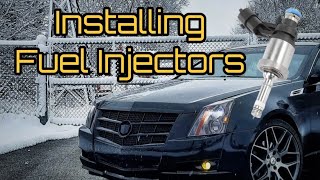
Typical fix: Replace the faulty fuel injector(s) on Bank 2. 🎬 See this walkthrough for replacing injectors on a Cadillac CTS. The OEM part is ACDelco #12638530 (or superseding number). It is often recommended to replace all three injectors on that bank at the same time to ensure balanced performance and prevent future failures.
Est. part cost: $50-$300 - Exhaust Leak Before the Downstream O2 Sensor 🟡 Medium Probability Exhaust components like manifold gaskets, flex pipes, and flange gaskets can degrade from heat cycles and corrosion, causing leaks. TSB PIP4964F also lists this as a key item to check. Another TSB, PIP5681, points to broken welds on exhaust pipe brackets causing cracks and leaks that can set this code.
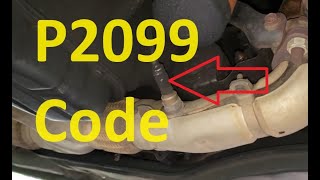
How to confirm: Visually inspect the exhaust system on Bank 2 (driver's side) for black soot trails, cracks, or obvious holes, especially around the manifold and catalytic converter flanges. A smoke test is the most effective way to find small, hard-to-see leaks.
Typical fix: Repair the leak. This may involve replacing a gasket (e.g., the donut gasket between the manifold/cat and the exhaust pipe), tightening flange bolts, or welding a cracked pipe.
Est. part cost: $20-$200 - Faulty Bank 2 Downstream Oxygen Sensor (Sensor 2) ⚪ Low Probability O2 sensors are wear items that operate in a harsh environment. However, on this platform, the sensor is more often correctly reporting a rich condition than failing itself.
How to confirm: Use a scan tool to monitor the live data for the Bank 2, Sensor 2 voltage. A healthy downstream sensor should show a relatively steady voltage (e.g., 0.6V-0.8V) on a warm, running engine. If the voltage is stuck high (above 0.8V), it confirms a rich condition is being detected. The sensor is only suspect if it provides no reading or an erratic reading after injectors and exhaust leaks have been ruled out.
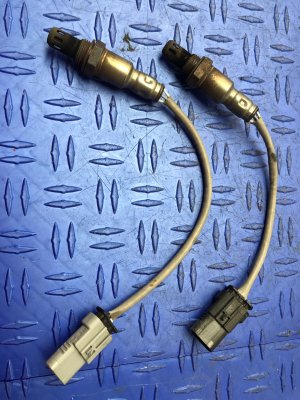
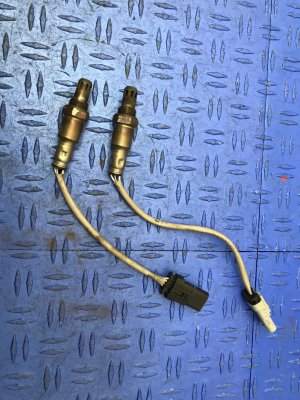
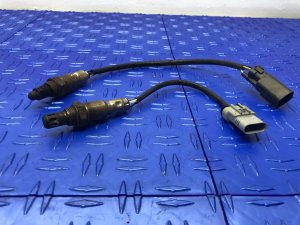
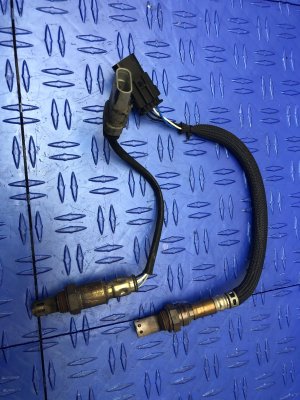
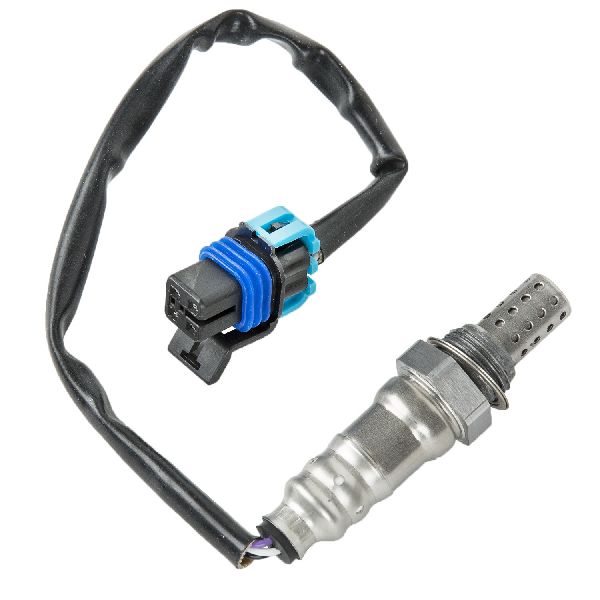
Typical fix: Replace the Bank 2, Sensor 2 oxygen sensor, which is located on the driver's side, after the catalytic converter. The OEM part is ACDelco #213-4768 (GM #12639692).
Est. part cost: $40-$120
Rare But Worth Checking
- Failing Catalytic Converter: This is rarely the cause, but rather the victim of a persistent rich condition. A converter can become contaminated with fuel and lose efficiency, contributing to the code. Always fix the rich condition first.
- Faulty Mass Air Flow (MAF) Sensor: A dirty or failing MAF sensor can send incorrect airflow data to the ECM, causing an improper fuel mixture. This usually affects both engine banks and may set other codes like P0172/P0175 or P0171/P0174.
- Fuel Pump Driver Control Module (FPDCM) Failure: A failing FPDCM can cause erratic fuel pressure and various drivability issues. TSB PIP5964 notes that a short in this module can cause a host of issues and DTCs, potentially including fuel trim codes.
Diagnosis Steps
- Scan the ECM for any other stored trouble codes. Address any misfire, MAF, or primary O2 sensor codes (like P0175) first, as they provide valuable clues.
- Using a scan tool, observe Long-Term Fuel Trim (LTFT) for Bank 2. A value that is significantly negative (e.g., -15% or more) indicates the ECM is trying to compensate for a major rich condition.
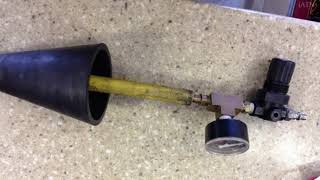
- Carefully inspect the exhaust system on the driver's side (Bank 2) for any signs of leaks. Look for soot marks at flanges and listen for ticking sounds, especially when the engine is cold. A smoke test is highly recommended to find hidden leaks.
- If no exhaust leaks are found, perform a fuel injector balance test as recommended by GM's TSB (PIP4964F) to check for leaking injectors on Bank 2. This is the most critical step for this platform.
- Inspect the spark plugs on Bank 2 (cylinders 2, 4, 6). Heavy black soot or a wet, fuel-smelling plug is strong evidence of a leaking injector in that cylinder.
- If injectors test good and there are no exhaust leaks, inspect the wiring to the downstream O2 sensor for damage, melting, or corrosion.
- Only after all other possibilities are ruled out 🎬 Watch: Two quick DIY methods to address the P2099 code. should the downstream O2 sensor itself be considered the likely culprit.
Parts You'll Likely Need
- Fuel Injector (Bank 2)
(OEM #12638530)— This is the most likely cause according to a GM Technical Service Bulletin for the 3.6L V6 engine.
Trusted brands: ACDelco, Bosch
OEM price range: $100-$180
Aftermarket price range: $50-$110 - Downstream Oxygen Sensor (Bank 2, Sensor 2)
(OEM #213-4768)— If injectors and exhaust are confirmed to be good, the sensor itself is the next most likely failure point. It is located on the driver's side, after the catalytic converter.
Trusted brands: ACDelco, Denso, Bosch
OEM price range: $80-$150
Aftermarket price range: $40-$90 - Exhaust Flange Gasket — A common source for exhaust leaks that can trigger this code. These gaskets are located where the catalytic converter bolts to the rest of the exhaust.
Trusted brands: Fel-Pro, ACDelco
OEM price range: $15-$40
Aftermarket price range: $10-$25
Related Codes That Often Appear With This One
- P0175 — This code for 'System Too Rich (Bank 2)' is detected by the *upstream* O2 sensor. Seeing both P0175 and P2099 strongly confirms a genuine rich condition on Bank 2, pointing directly at a cause like a leaking injector.
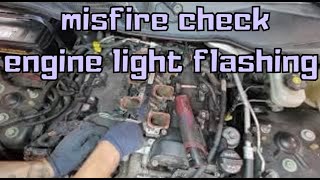
- P0302, P0304, P0306 — These are cylinder misfire codes for Bank 2. A severely leaking fuel injector can foul the spark plug and cause misfires on the affected cylinders.
- P2097 — This is the identical code for Bank 1 (passenger side). If both P2097 and P2099 are present, it points to a problem affecting the entire engine, such as a faulty MAF sensor or fuel pressure regulator.
Technical Service Bulletins (TSBs) & Recalls
- PIP4964F: Directs technicians to check for leaking fuel injectors (via balance test) and exhaust leaks as primary causes for P2099, often before suspecting the O2 sensor.
Platform-Specific Known Issues
- A GM Technical Service Bulletin (PIP4964F) specifically highlights leaking fuel injectors as a more probable cause for P2099 on this platform than on other vehicles.
- Another TSB (PIP5681) notes that on some related GM models, a broken exhaust pipe bracket weld on Bank 2 can cause a crack in the pipe, leading to an exhaust leak that triggers P2099 and other codes.
Mechanic-Grade Diagnostic Values
- Fuel Injector Resistance (2012-2019 LFX Engine) — expected: 1.2 - 1.8 Ohms. Failure: A reading of 0 ohms (short), infinite/OL (open), or outside the specified range indicates a failed injector.
- Fuel Injector Resistance (2008-2011 LLT Engine) — expected: ~11 - 15 Ohms. Failure: A significant deviation from this range, an open circuit (OL), or a short circuit (0 ohms) indicates a failed injector.
- Downstream O2 Sensor (HO2S2) Voltage at Idle (Warm Engine) — expected: Relatively stable voltage between 0.4V to 0.8V.. Failure: A voltage stuck high (above 0.8V) indicates a persistent rich condition is being detected. Rapid fluctuations similar to the upstream sensor can indicate a failing catalytic converter.
- High-Pressure Fuel Pump (HPFP) Pressure — expected: Can exceed 2,000 PSI under load.. Failure: Significantly lower pressure, or pressure that does not increase with engine RPM, especially if code P0087 is also present.
- Low-Pressure Fuel System Pressure (at HPFP inlet) — expected: 50-60 psi (345-414 kPa) with key on, engine off.. Failure: Pressure below this range indicates a problem with the in-tank fuel pump or its control module (FSCM).
- Mass Airflow (MAF) Sensor Reading at Idle (Warm Engine) — expected: Approximately 3-8 g/s.. Failure: Values significantly outside this range can indicate a faulty or dirty MAF sensor, causing incorrect fuel calculations for both banks.
Scan Tool Commands That Help
- GDS2 / Tech2: Active Fuel Injector Tester (AFIT) / Fuel Injector Balance Test — This is the primary diagnostic step recommended by GM TSB #PIP4964F. It automates the process of pressurizing the fuel rail and firing each injector to measure the pressure drop, accurately identifying a leaking or over-fueling injector without physical removal.
- GDS2 / Tech2: Cylinder Power Balance — Used to identify a misfiring cylinder if misfire codes (P030x) are also present. The tool deactivates one cylinder at a time; a cylinder with a smaller RPM drop is not contributing properly, which could be due to a fuel-fouled spark plug from a leaking injector.
- GDS2 / Professional Scan Tool: Fuel Trim Reset — This function must be used after replacing a fuel injector or O2 sensor. It clears the ECM's long-term learned fuel compensation values, forcing it to relearn based on the new, functional components.
Wiring & Ground Locations
- G101 — On the left front strut tower.. This is a primary engine compartment ground. A poor connection here can affect various sensors and modules, including the ECM.
- G106 / G131 — Located on the rear of the left (driver's side, Bank 2) cylinder head.. This is a critical ground point for Bank 2 components. A loose or corroded connection here could directly impact sensor readings (like the O2 sensor) and injector performance on the bank setting the P2099 code.
- ECM Location — On the front right valve cover for 3.6L V6 models (2008-2014).. Knowing the physical location is essential for inspecting the main harness connections and checking for corrosion or damage at the source of control.
- Engine Harness at Transmission Bellhousing — Where the main engine wiring harness routes down the back of the engine near the transmission.. GM TSB #PI0631G identifies this as a known chafe point. Vibration can cause wires to rub through, potentially shorting O2 sensor or injector control circuits, leading to false codes.
Real Owner Repair Stories
- Cadillac Forums User (2012 Cadillac SRX 3.6L V6 (platform mate)) — P2099 and P0306 (Cylinder 6 misfire)
❌ Tried (didn't work) Not specified, but diagnosis pointed directly to the injector.
✅ What actually fixed it The root cause was a leaking fuel injector on cylinder 6. Replacing the single injector fixed both the misfire code and the P2099 code. - Chevrolet Equinox Forum User (2013 Chevrolet Equinox 3.6L V6 (platform mate)) — P2099 code, Check Engine Light
❌ Tried (didn't work) Initial diagnosis was inconclusive without specialized testing.
✅ What actually fixed it A dealer performed a fuel injector balance test and found two injectors on Bank 2 were leaking. Replacing the faulty injectors and all spark plugs resolved the P2099 code. - ScannerDanner Forum user 'ghost' (2010 Chevrolet Traverse 3.6L (platform mate)) — P2099 code returned after a mechanic patched a pinhole in the exhaust.
❌ Tried (didn't work) Patching a small, visible exhaust leak.
✅ What actually fixed it The thread is a diagnostic discussion and does not contain a final confirmed fix from the original poster, highlighting the difficulty some owners have in resolving the issue.
OEM Part Supersession History
12611545, 12632255→12638530— Updated design for improved reliability and performance for the LLT engine.
Heads up: While 12638530 is the common replacement for the 2008-2011 LLT engine, always verify the part number with the vehicle's VIN.12622475, 12633594→12658552, 12677328— Revisions to the High Pressure Fuel Pump (HPFP) to address reliability issues. GM issued Special Coverage Adjustment 14329 for this part on many 3.6L vehicles.
Model Year Variations Within This Range
- 2008-2011 (approx.): These years primarily used the 3.6L LLT engine. Its direct injectors have a higher resistance (~11-15 Ohms) compared to the later LFX. The ECU in the 2010-2011 models does not have the capability to enable E85 flex-fuel tables, unlike the 2012+ models.
- 2012-2019 (approx.): These years used the updated 3.6L LFX engine (and later LGX). The LFX injectors have a much lower resistance (1.2-1.8 Ohms) and are not interchangeable with LLT injectors. The LFX cylinder heads feature an integrated exhaust manifold, which changes the potential locations for pre-catalyst exhaust leaks compared to the LLT's separate manifold design.
Diagnostic Flowchart
Other Known Issues on This Vehicle
Issues unrelated to this code that are worth knowing about as an owner of this generation:
- Premature Timing Chain Stretch 🔴 High — Very common, especially on earlier 3.6L LLT engines (pre-2012) but still occurs on LFX engines. Often appears between 70,000 and 120,000 miles. Can cause catastrophic engine failure if ignored. (Ref: GM Special Coverage #11340C (for some 2007-2009 models), TSB #12-06-01-009F, TSB #PIP3423P. Triggers codes like P0008, P0009, P0016, P0017, P0018, P0019.)
- CUE Infotainment Screen Failure 🟠 Medium — Extremely common across all models equipped with the CUE system. The screen delaminates, cracks ('spider-webs'), or becomes unresponsive, typically after 3-5 years. It does not affect vehicle drivability but disables climate, audio, and navigation controls. (Ref: Subject of class-action lawsuits. GM issued service bulletins (e.g., PIC6055C) and a limited special reimbursement program, but no full recall.)
- Intake Valve Carbon Buildup 🟠 Medium — A common issue inherent to all direct-injection (DI) engines, including the 3.6L LLT and LFX. Becomes noticeable after 60,000-100,000 miles, causing rough idle, hesitation, and misfire codes (e.g., P0300-P0306). (Ref: TSB #PIP5029E acknowledges the issue. The fix is a manual cleaning (walnut blasting) of the intake ports and valves.)
- Water Pump Failure 🟠 Medium — Prone to developing coolant leaks, often before 100,000 miles. Can lead to overheating if not addressed.
Used vs. New Parts: Buying Guide for This Vehicle
When a used part is the smart pick: Given the high failure rate of injectors and the low cost of new aftermarket parts, using a junkyard fuel injector is not recommended. A used part may have the same leaking issue or a very short remaining life. Used exhaust components (pipes, flanges) can be a cost-effective option if they are visually inspected for cracks and severe corrosion.
Donor-vehicle mileage cap: roughly under 60000 miles for the part to have meaningful remaining life.
What to inspect on the donor part:
- For exhaust parts, check for thin, flaking rust which indicates the part is near failure.
- Avoid parts from vehicles in heavy salt-belt regions if possible.
- Ensure flanges are flat and not warped.
- Never buy used sensors or fuel injectors for this repair.
OEM-only on this vehicle (don't cheap out):
- High-Pressure Fuel Pump: While aftermarket options exist, GM has updated this part multiple times and issued a special coverage program (14329) for it. Using a genuine GM part is the safest bet for longevity.
- Fuel Injectors: While not strictly OEM-only, using the ACDelco OEM part is highly recommended to avoid compatibility and premature failure issues common with cheaper alternatives.
Aftermarket brands forum-validated for this vehicle:
- O2 Sensors: Denso, Bosch, NTK
- Fuel Injectors: Bosch, Hitachi (often the OE supplier), Standard Motor Products (SMP).
- Exhaust Gaskets: Fel-Pro
Brands owners have reported issues with on this vehicle:
- Unbranded, no-name fuel injectors and sensors from online marketplaces. These often have high failure rates, incorrect specifications, and can cause more problems than they solve.
Real Owner Stories
Aggregated from forums and TSBs cited above. Mileages and costs reflect what owners reported in those sources.
Cadillac CTS 3.6L
Symptoms: The Check Engine Light came on for code P2099. Replacing the O2 sensor did not fix the problem and the code returned.
What fixed it: The issue was finally resolved by replacing one or more leaking fuel injectors on Bank 2.
Source hint: cadillacforums.com
2013 Chevrolet Equinox 3.6L
Symptoms: The vehicle had a P2099 code. A repair shop replaced the oxygen sensor, but the code came right back.
What fixed it: A dealership performed a fuel injector balance test and found two injectors on Bank 2 were leaking. Replacing the faulty injectors permanently solved the problem.
Source hint: Chevrolet forum thread titled 'P2099 code on 2013 Equinox 3.6L'
Related OBD-II Codes
Frequently Asked Questions
I have a P2099 code on my CTS 3.6L. Should I replace the Bank 2 oxygen sensor first?
What is TSB PIP4964F and does it apply to my 2008-2019 Cadillac CTS?
How can I confirm if a fuel injector is leaking on my CTS?
Which side of the engine is Bank 2 on the 3.6L V6?
My mechanic found an exhaust leak. Could another TSB, PIP5681, be related?
If I do need to replace a fuel injector, what is the part number?
Helpful Videos
![How to Fix P2099 Engine Code in 4 Minutes [2 DIY Methods / Only $9.49]](https://img.youtube.com/vi/tZdHNVnheeA/mqdefault.jpg)
Used OEM Parts in Stock
New Aftermarket Parts Available



The information in this article is provided for general reference and educational purposes only. Vehicle specifications, procedures, and part compatibility can vary by production date, trim level, and region. Always consult your vehicle's factory service manual and verify part numbers before purchasing or performing repairs. Safety-critical components such as airbags, seat belts, and braking systems should be installed by a qualified professional.
- Cadillac CTS:
- 🎬 Helpful Videos
- 🛍️ Shop This Part
- What's Unique About the 2008-2019 Cadillac CTS
- Symptoms You May Notice
- Most Likely Causes
- Rare But Worth Checking
- Diagnosis Steps
- Parts You'll Likely Need
- Related Codes That Often Appear With This One
- Technical Service Bulletins (TSBs) & Recalls
- Platform-Specific Known Issues
- Mechanic-Grade Diagnostic Values
- Scan Tool Commands That Help
- Wiring & Ground Locations
- Real Owner Repair Stories
- OEM Part Supersession History
- Model Year Variations Within This Range
- Diagnostic Flowchart
- Other Known Issues on This Vehicle
- Used vs. New Parts: Buying Guide for This Vehicle
- Real Owner Stories
- Cadillac CTS 3.6L
- 2013 Chevrolet Equinox 3.6L
- Related OBD-II Codes
- Frequently Asked Questions
- 🎟️ Get 5% Off