

P2097 on 2011-2018 Ram 1500 5.7L Hemi: Causes for Post-Catalyst Rich Code
On a 2011-2018 Ram 1500 with the 5.7L Hemi, code P2097 is most often caused by an exhaust leak from broken manifold bolts on the driver's side. Listen for a 'ticking' noise on a cold start before replacing any parts. The fix is typically replacing the bolts and gasket, costing $200-$700 at a shop. In some cases, particularly for 2010-2012 models, a simple PCM software update from the dealer is the required fix.
- Before buying any parts for a P2097 code on a 5.7L Hemi, listen for a 'ticking' noise from the driver's side of the engine when it's cold. This strongly indicates an exhaust leak from a broken manifold bolt, which is the most common cause.
- Do not automatically replace the O2 sensor. It is often doing its job correctly by reporting a condition caused by an exhaust leak.
- A simple diagnostic test is to swap the two downstream O2 sensors. If the code changes to P2099 (for the other bank), the sensor is faulty.
- Check with a dealer to see if your truck's software needs an update, as some model years had overly sensitive diagnostics that could be fixed with a PCM reflash.
What's Unique About the 2011-2018 Ram 1500
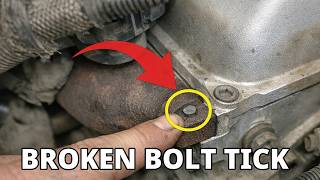
On the fourth-generation Ram 1500 with the 5.7L Hemi, P2097 is very frequently linked to a specific mechanical failure: broken exhaust manifold bolts. This is a well-documented issue, often identified by an audible 'Hemi tick' that is loudest on a cold start and may quiet down as the engine warms 🎬 Watch: Hear what a broken manifold bolt tick sounds like. and the metal expands. The constant thermal cycles cause the rearmost steel bolts to shear off the cast iron manifold, creating an exhaust leak that allows oxygen into the exhaust stream, skewing O2 sensor readings and falsely triggering this rich code. Additionally, for 2010-2012 models, a PCM software update per TSB 18-066-16 REV. A is a very common fix for overly sensitive diagnostic logic.
Symptoms You May Notice
- Check Engine Light is on
- Audible ticking noise from the driver's side of the engine, especially when cold (the 'Hemi Tick')
- Reduced fuel economy
- Rough or erratic idling
- Engine hesitation or stumbling during acceleration
- Smell of exhaust fumes in or around the cabin
- Replacing the oxygen sensor before checking for exhaust leaks. The sensor is often correctly reporting a problem caused by the leak, and replacing it will not fix the issue. This is the most common mistake made for this code on this platform.
- Replacing the catalytic converter. This is an expensive part that is rarely the cause of a P2097 code on its own. All other causes should be exhausted first.
Most Likely Causes
- Exhaust Leak from Broken Manifold Bolts 🔴 High Probability The 5.7L Hemi is notorious for shearing the rearmost exhaust manifold bolts due to thermal stress between the steel bolts and cast iron manifold. This creates a leak right before the oxygen sensors, introducing unmetered air and causing a false rich reading.
How to confirm: Listen for a 'ticking' sound from the driver's side engine bay on a cold start. Visually inspect the exhaust manifold on the driver's side for broken bolt heads (especially the one closest to the firewall) and black soot trails indicating a leak. A smoke test is the most definitive way to find a leak.
Typical fix: Replace the broken bolts and the exhaust manifold gasket. If the manifold is warped from the heat, it will also need to be replaced or milled flat. Many owners upgrade to aftermarket headers or stronger bolt/stud kits to prevent recurrence. Extracting broken bolts may require drilling and tapping.
Est. part cost: $50-$500 - Faulty Downstream Oxygen (O2) Sensor 🟡 Medium Probability O2 sensors are wear items that are exposed to extreme heat and contaminants. They can fail and send false rich signals to the PCM. However, this is often misdiagnosed when the real cause is an exhaust leak.
How to confirm: After confirming there are no exhaust leaks, swap the downstream (post-cat) O2 sensors from Bank 1 (driver's side) and Bank 2 (passenger's side). Clear the codes and drive. If the code returns as P2099 (Bank 2 Rich), the sensor is bad. Alternatively, monitor live data; a healthy downstream sensor should have a steady voltage, while a faulty one might be stuck high (above 0.8V) or fluctuate wildly.
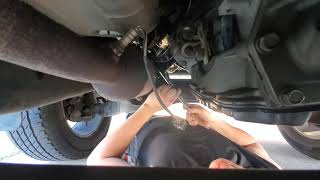
Typical fix: Replace the Bank 1, Sensor 2 oxygen sensor. 🎬 See this walkthrough on how to replace your O2 sensors.
Est. part cost: $50-$160 - PCM Software Update Needed ⚪ Low Probability Chrysler issued TSBs for these trucks because the original PCM software could be overly sensitive and set this code incorrectly, especially on earlier models in this generation.
How to confirm: Contact a Ram dealership or a qualified shop with your VIN to see if TSB #18-066-16 REV. A (for 2010-2012 models) or other similar software updates apply to your vehicle. This is a critical first step for the specified model years.
Typical fix: A dealer or qualified shop must reprogram the Powertrain Control Module (PCM) with the updated software using a wiTECH scan tool.
Est. part cost: $0-$250
Rare But Worth Checking
- Leaking Fuel Injector: If the engine is truly running rich, a stuck-open or leaking fuel injector on Bank 1 can dump excess fuel into the cylinder. This may be accompanied by misfire codes (e.g., P0301, P0303) and a strong smell of gasoline in the exhaust.
- Failing Catalytic Converter: While less common for this specific code, a clogged or inefficient catalytic converter can cause erratic readings from the downstream O2 sensor. This should only be considered after all other possibilities are ruled out, as it is an expensive repair.
Diagnosis Steps
- Check for any other stored DTCs to see if other systems are reporting faults.
- For 2010-2012 models especially, contact a dealer with your VIN to check for applicable PCM software updates as per TSB 18-066-16 REV. A before performing any physical repairs.
- On a cold engine, start the truck and listen carefully for a distinct 'ticking' noise from the driver's side exhaust manifold. The sound may fade as the engine warms up.
- Visually inspect the driver's side exhaust manifold for signs of a leak, such as black soot streaks or obviously broken/missing bolt heads, paying close attention to the rearmost bolt.
- If a leak is suspected but not visible, a professional smoke test is the most effective way to confirm its location and severity.
- If no leaks are apparent, use an OBD-II scanner to view live data for the Bank 1, Sensor 2 oxygen sensor. A voltage that is stuck high (above 0.8V) indicates a rich condition or a faulty sensor.
- To definitively test the sensor, swap the downstream O2 sensors between Bank 1 and Bank 2. Clear the codes. If the fault moves to the other side and triggers a P2099 code, the sensor you moved is bad.
- If all else fails, investigate potential causes of a true rich condition, such as leaking fuel injectors or a failing fuel pressure regulator.
Parts You'll Likely Need
- Exhaust Manifold Gasket and Bolt/Stud Kit
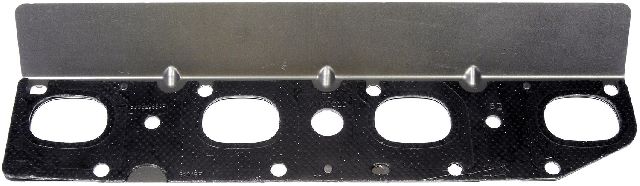
(OEM #Gasket: 5045495AA (Left Side); Bolts: 6507746AA; Studs: 6509544AA)— This is required to fix the most common cause of the code: a leak from broken manifold bolts on the 5.7L Hemi. It is highly recommended to replace all bolts/studs, not just the broken one.
Trusted brands: Mopar, Fel-Pro, Dorman
OEM price range: $100-$200
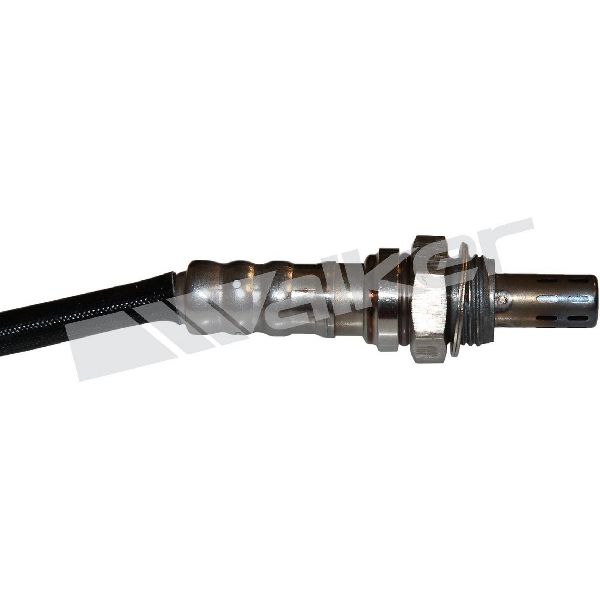
Aftermarket price range: $40-$100 - Downstream Oxygen Sensor (Bank 1, Sensor 2)
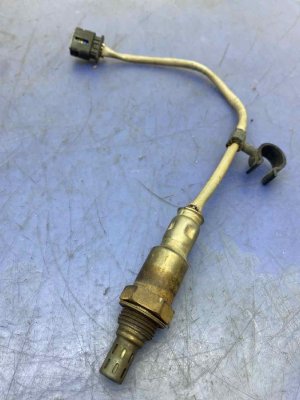
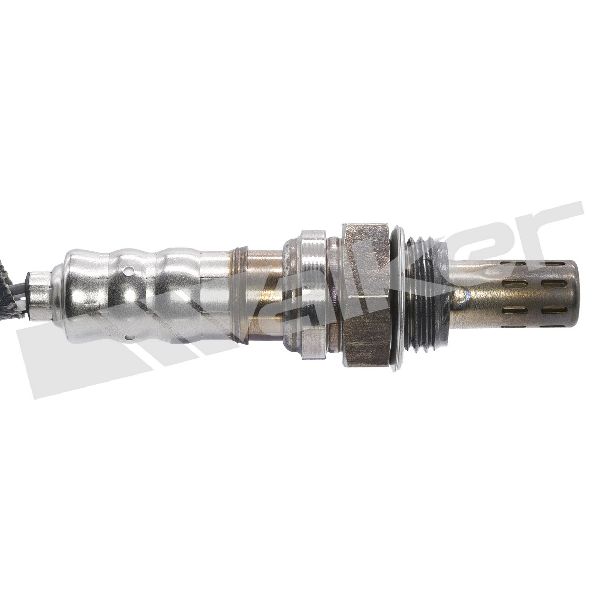
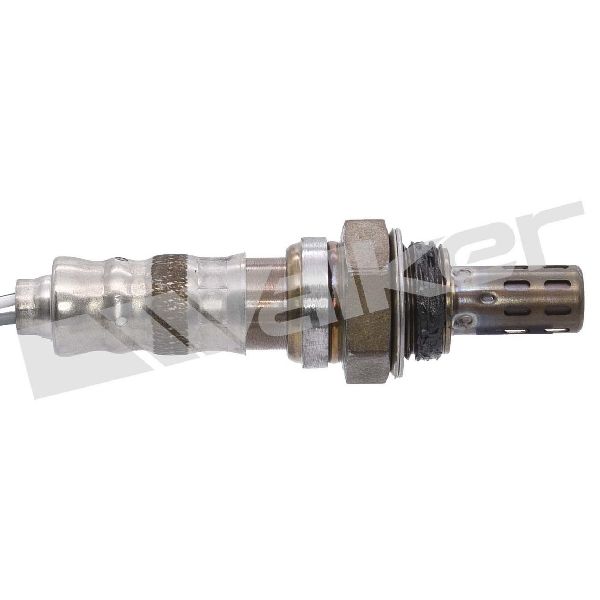
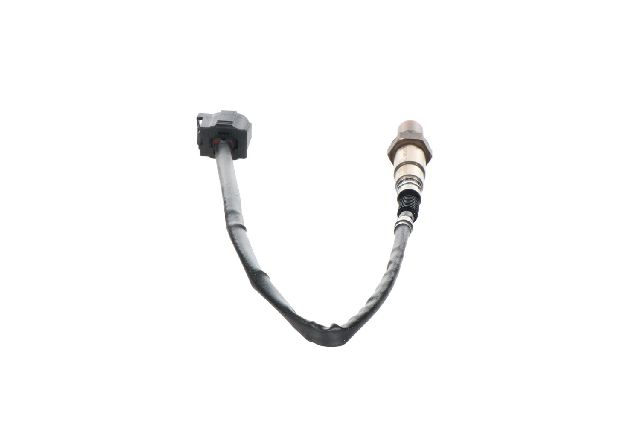
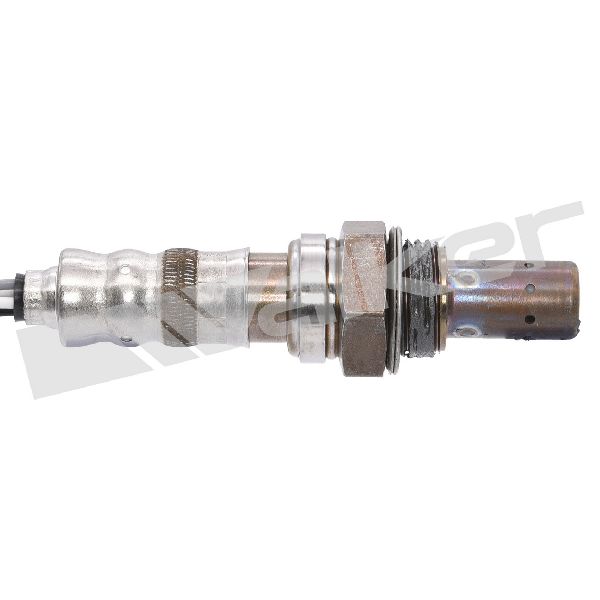
(OEM #56029049AA (Verify with VIN))— If the sensor itself has failed, it will need to be replaced. This is the second most likely cause after an exhaust leak. (Part number should be verified with VIN).
Trusted brands: Denso, Bosch, NTK, Mopar
OEM price range: $100-$160
Aftermarket price range: $50-$90 - Exhaust Manifold (Left/Driver Side)
(OEM #5045486AA (Verify with VIN))— If the original manifold is warped beyond what can be fixed by milling/resurfacing, it must be replaced to ensure a proper seal with the new gasket.
Trusted brands: Mopar, Dorman
OEM price range: $250-$400
Aftermarket price range: $150-$250
Related Codes That Often Appear With This One
- P2099 — This is the same rich code but for Bank 2 (passenger side). If both P2097 and P2099 are present, it points to a problem affecting the whole engine, like a fuel pressure issue or faulty MAP sensor. If you swap O2 sensors for diagnosis, a P2097 may turn into a P2099, indicating a bad sensor.
- P0300, P0301, P0303, P0305, P0307 — These are random or specific misfire codes for Bank 1. A severe rich condition from a leaking injector or a major exhaust/valvetrain issue can cause misfires on that bank. Some TSBs also link misfire codes with P2097 as being resolved by a PCM update.
Technical Service Bulletins (TSBs) & Recalls
- 18-066-16 REV. A: Specifically for 2010-2012 Ram 1500s (DS) with 5.7L engines, this TSB involves reprogramming the PCM to correct overly sensitive diagnostic logic that can falsely trigger P2097.
- 18-103-16 REV. B: A more general TSB that lists P2097 among codes that may be resolved with a PCM software update on some model years. It also addresses related codes such as P0300 (Multiple Cylinder Misfire) and P0456 (EVAP System Small Leak).
- Bulletin #1810316: This manufacturer bulletin notes that P2097 may be set alongside U0140 (Lost Communication With Body Control Module) and P0607 (ECU Internal Performance), requiring a software update.
- Bulletin #18-077-14: This record indicates that an improved scan tool diagnostic process was released to address P2097 and P2099 (Downstream Fuel Trim System Rich) for both banks.
- 09-019-23: While for a
Platform-Specific Known Issues
- Broken exhaust manifold bolts are a very common failure on the 5.7L Hemi engine, leading to exhaust leaks that directly cause the P2097 code. Owners often refer to the resulting sound as the 'Hemi tick'.
- Owner experiences on forums like RamForum.com and Reddit consistently show repair costs for manifold bolt replacement ranging from $700 to over $1500, especially if multiple bolts are broken and require extraction.
Mechanic-Grade Diagnostic Values
- Downstream O2 Sensor (B1S2) Voltage — expected: Relatively steady voltage between 0.5V and 0.8V at warm idle.. Failure: Voltage is stuck high (above 0.8V), or fluctuating rapidly like an upstream sensor.
- Upstream O2 Sensor (B1S1) Voltage — expected: Constantly fluctuating between approximately 0.1V (lean) and 0.9V (rich) on a warm engine.. Failure: Slow or no fluctuation, or voltage is stuck at a specific level.
- Fuel Pressure (5.7L Hemi) — expected: 58 psi +/- 5 psi at idle.. Failure: Pressure below 53 psi may indicate a weak fuel pump or faulty regulator.
- O2 Sensor Heater Element Resistance — expected: Between 2.0 and 30.0 Ohms when cool (at 70°F).. Failure: A reading outside this range indicates a faulty heater circuit within the sensor.
Scan Tool Commands That Help
- wiTECH (Chrysler/Ram Dealer Tool): PCM Reflash/Calibration Update — This is the required fix when a TSB like #18-066-16 REV. A or #18-103-16 REV. B applies. It corrects overly sensitive diagnostic parameters in the PCM that can falsely trigger P2097.
- Professional OBD-II Scanner: View Live Data (O2 Sensor Voltage, Fuel Trims) — Essential for all diagnosis. Used to observe the behavior of the downstream O2 sensor (B1S2) to determine if it's reading a legitimate rich condition or is faulty itself.
Real Owner Repair Stories
- Forum User Report (2014 Ram 1500 5.7L) — Persistent P2097 code.
❌ Tried (didn't work) Visual inspection for exhaust leaks, Smoke test (passed clean)
✅ What actually fixed it The actual cause was a small, hard-to-see split in a rubber hose connected to the PCV valve. This vacuum leak caused the PCM to add fuel, triggering the rich code downstream. Replacing the PCV hose resolved the issue. - Forum User Report (2014 Ram 1500 5.7L) — P2097 code that would not clear.
❌ Tried (didn't work) Replaced Bank 1 Sensor 2 O2 sensor, Replaced Bank 1 Sensor 1 O2 sensor, Smoke tested the exhaust (no leaks found), Replaced exhaust manifold gaskets and bolts
✅ What actually fixed it The final cause was a hairline crack on the weld of the catalytic converter inlet on Bank 1. The crack was nearly invisible until the converter was removed for inspection. Welding the crack and reinstalling the converter permanently fixed the code.
"I Checked Everything" — The Actual Cause
- In one documented case on a 2014 Ram 1500, the vehicle passed a smoke test, but the P2097 code remained. The root cause was eventually found to be a small split in a PCV valve hose, which created a vacuum leak that tricked the PCM into creating a rich condition.
- A user reported that after passing a smoke test and replacing both O2 sensors and manifold gaskets, the P2097 code persisted. The final cause was a hairline crack on the catalytic converter's inlet weld, which was not detectable by the smoke test but opened up under specific thermal conditions.
OEM Part Supersession History
Not specified→56029049AA— Standard part lifecycle update.
Heads up: Part 56029049AA is listed for many 2005-2012 Chrysler/Dodge/Jeep vehicles. Always verify the part number with the vehicle's VIN before ordering, as harness length and connectors can vary.
Model Year Variations Within This Range
- 2013+: The 2013 model year marked a significant refresh for the Ram 1500, which included the introduction of the 8-speed automatic transmission paired with the 5.7L Hemi. This changed the exhaust Y-pipe and crossmember routing, potentially affecting access to the downstream O2 sensors compared to 2011-2012 models.
- 2014+: For the 2014 model year, the 5.7L Hemi V8 received a slight torque increase to 410 lb-ft from 407 lb-ft. While not a major change, it reflects ongoing minor revisions to the engine and its calibration during this period.
Diagnostic Flowchart
Real Owner Stories
Aggregated from forums and TSBs cited above. Mileages and costs reflect what owners reported in those sources.
2014 Ram 1500 5.7L Hemi
Symptoms: Check engine light with P2097 code appeared after installing aftermarket headers.
What fixed it: Replacing a small, split rubber hose connected to the PCV valve that was causing an unmetered air leak.
Source hint: RamForumZ.com via Go-Parts article
2011-2018 Ram 1500 5.7L Hemi
Symptoms: Audible 'Hemi tick' from the engine bay caused by broken exhaust manifold bolts.
What fixed it: Extracting the broken exhaust manifold bolts and installing new gaskets.
Cost: $700-$1500
Source hint: Reddit r/ram_trucks - Thread: 'Quoted 1,600 to repair my exhaust manifold bolts and new gaskets (to fix hemi tick). Is this a good price. How much did you pay?'
2011-2018 Ram 1500 5.7L Hemi
Symptoms: Exhaust manifold leak requiring replacement of studs and gaskets.
What fixed it: Replaced both exhaust manifolds with Dorman units, along with new gaskets and bolts at an independent shop.
Cost: $950-$950
Source hint: RamForum.com - Thread: 'Cost to Replace Exhaust Manifold Studs, Gaskets and Mill Manifold'
Related OBD-II Codes
Frequently Asked Questions
Does TSB 18-066-16 REV. A apply to my 2011-2018 Ram 1500?
What is the 'Hemi Tick' and how does it cause a P2097 code?
How much does it cost to fix the broken exhaust manifold bolts on a 5.7L Hemi?
Should I replace my O2 sensors if I get a P2097 code on my Ram 1500?
What are the Mopar part numbers for the 5.7L Hemi exhaust manifold gaskets and studs?
Can a vacuum leak cause a P2097 code on my Ram?
Helpful Videos
Used OEM Parts in Stock
New Aftermarket Parts Available

The information in this article is provided for general reference and educational purposes only. Vehicle specifications, procedures, and part compatibility can vary by production date, trim level, and region. Always consult your vehicle's factory service manual and verify part numbers before purchasing or performing repairs. Safety-critical components such as airbags, seat belts, and braking systems should be installed by a qualified professional.
- Ram 1500:
- 🎬 Helpful Videos
- 🛍️ Shop This Part
- What's Unique About the 2011-2018 Ram 1500
- Symptoms You May Notice
- Most Likely Causes
- Rare But Worth Checking
- Diagnosis Steps
- Parts You'll Likely Need
- Related Codes That Often Appear With This One
- Technical Service Bulletins (TSBs) & Recalls
- Platform-Specific Known Issues
- Mechanic-Grade Diagnostic Values
- Scan Tool Commands That Help
- Real Owner Repair Stories
- "I Checked Everything" — The Actual Cause
- OEM Part Supersession History
- Model Year Variations Within This Range
- Diagnostic Flowchart
- Real Owner Stories
- 2014 Ram 1500 5.7L Hemi
- 2011-2018 Ram 1500 5.7L Hemi
- 2011-2018 Ram 1500 5.7L Hemi
- Related OBD-II Codes
- Frequently Asked Questions
- 🎟️ Get 5% Off