

P2097 on 2016-2021 Hyundai Tucson 2.0L: Causes for Post Catalyst Fuel Trim Too Rich
On a 2016-2021 Hyundai Tucson, code P2097 most often points to a failing downstream oxygen (O2) sensor or an exhaust leak before that sensor. It's a common and relatively inexpensive fix, typically costing $60-$150 for the part. However, underlying issues like a clogged air filter or the need for a PCM software update should also be considered.
- P2097 means the exhaust is too rich after the catalytic converter.
- The most likely cause is a bad downstream (post-catalyst) oxygen sensor.
- Before replacing any parts, check for exhaust leaks between the engine and the downstream O2 sensor.
- Driving with this code will hurt your gas mileage and can eventually destroy your catalytic converter, a much more expensive repair.
- A DIY-er with a basic OBD-II scan tool that can read live data can often diagnose and fix this issue.
What's Unique About the 2016-2021 Hyundai Tucson
For the 2.0L Nu GDI engine in the third-generation Tucson, the P2097 code is a straightforward emissions-related fault. While the diagnostic path is standard, this engine family is part of a broader series of Hyundai/Kia engines known for significant issues, including premature bearing wear. As a result, Hyundai has rolled out a Knock Sensor Detection System (KSDS) software update as part of a product improvement campaign. In some cases, a P2097 code has been resolved after a dealer performs a software update, suggesting a potential logic fault in the original PCM programming. Therefore, it's important to ensure the vehicle's software is up to date before replacing expensive components.
Symptoms You May Notice
- Check Engine Light is on
- Reduced fuel economy
- Rough or erratic idling
- Engine hesitation or stumbling during acceleration
- A noticeable smell of fuel or rotten eggs from the exhaust
- Occasional black smoke from the tailpipe under load
- Replacing the upstream (pre-catalyst) O2 sensor when the downstream (post-catalyst) sensor is the actual cause.
- Replacing the catalytic converter before properly diagnosing the O2 sensors and checking for exhaust leaks. The converter often fails as a *result* of the P2097 fault, not the cause.
- Replacing parts without checking for available PCM software updates that might address fuel trim logic.
Most Likely Causes
- Failing Downstream Oxygen (O2) Sensor 🔴 High Probability Oxygen sensors are wear-and-tear items that degrade over time. A sensor that is slow to respond or biased can send incorrect rich readings to the computer, even if the actual air-fuel mixture is correct.
How to confirm: Use a scan tool to monitor the live data for the Bank 1 Sensor 2 voltage. After the engine is fully warmed up, the voltage should be relatively stable (typically around 0.7V-0.8V). If it's stuck high, fluctuating wildly, or slow to respond after revving the engine, the sensor is likely faulty.
Typical fix: Replace the downstream (post-catalyst) oxygen sensor. Using an OEM or high-quality aftermarket brand like Denso or NTK is highly recommended, as cheap sensors are known to fail prematurely.
Est. part cost: $60-$150 - Exhaust System Leak 🟡 Medium Probability The flex pipe, located before the catalytic converter, is a common failure point on Hyundai vehicles, leading to cracks and leaks. Gaskets can also degrade. A leak between the engine and the downstream O2 sensor can draw in outside air, confusing the sensor and leading to an incorrect rich reading.
How to confirm: Perform a visual inspection of the exhaust manifold, gaskets, and especially the flex pipe for cracks, rust, or black soot trails indicating a leak. A smoke test is the most definitive way to find small leaks.
Typical fix: Replace the leaking gasket or repair/replace the cracked exhaust component, such as the flex pipe.
Est. part cost: $20-$200 - Leaking Fuel Injector(s) ⚪ Low Probability
How to confirm: Monitor fuel trims with a scan tool; if long-term fuel trim is highly negative (e.g., -10% or more), it indicates the ECM is trying to pull fuel out to compensate for an overly rich condition. A fuel pressure leak-down test can also point to a leaking injector.
Typical fix: Identify and replace the faulty fuel injector(s).
Est. part cost: $70-$200 per injector - Failing Catalytic Converter ⚪ Low Probability
How to confirm: If the downstream O2 sensor's voltage reading mimics the upstream O2 sensor's rapid fluctuations, it indicates the converter is no longer efficiently storing oxygen. This is often a result of a long-term unaddressed rich condition or oil consumption fouling the converter.
Typical fix: Replace the catalytic converter. This is often the result of a long-term unaddressed rich condition and should only be done after confirming other causes are not present.
Est. part cost: $800-$2000+
Rare But Worth Checking
- PCM Software Issue: In some instances, the P2097 code can be triggered by a logic fault in the Powertrain Control Module. Owners have reported the issue being resolved after a dealership performed a software update. It's worth checking if any campaigns are open for your VIN.
- Faulty Upstream Oxygen (O2) Sensor: While less common for this specific code, a malfunctioning upstream (pre-catalyst) sensor can send bad data, causing the ECM to command an incorrect fuel mixture, which is then flagged by the downstream sensor.
- Dirty Engine Air Filter: A severely clogged air filter can restrict the amount of air entering the engine, creating a naturally rich air-fuel mixture that the system cannot compensate for, eventually triggering the code.
Diagnosis Steps
- Read all stored fault codes with an OBD-II scanner. Note any other codes that are present, as they can provide valuable clues.
- Check for any open recalls or product improvement campaigns (like the KSDS software update) for your vehicle's VIN.
- Inspect the engine air filter. A severely clogged filter can cause a rich condition and should be replaced.
- Inspect the exhaust system from the engine manifold to the downstream O2 sensor. Pay close attention to the flexible pipe section for cracks, soot, or audible hissing.
- Use a scan tool to view live data. Warm up the engine to operating temperature (closed loop).
- Observe the voltage of the downstream O2 sensor (Bank 1, Sensor 2). It should be relatively stable. If it is stuck high (above 0.8V) or fluctuating rapidly like the upstream sensor, it points to a problem with the sensor or catalytic converter.
- Observe the long-term fuel trim (LTFT). A high negative number (e.g., -10% or lower) indicates the ECM is consistently removing fuel to correct a rich condition, pointing towards a fuel delivery issue like a leaky injector.
- If an exhaust leak is suspected but not visible, perform a smoke test to pinpoint the location.
- If sensors, exhaust, and fuel trims appear normal, investigate the fuel system. Check fuel pressure to ensure it is within specification. A fuel injector balance test may be necessary.
- Only after confirming all other components are working correctly should the catalytic converter be considered the primary cause.
Parts You'll Likely Need
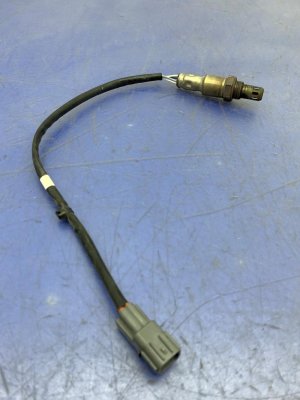
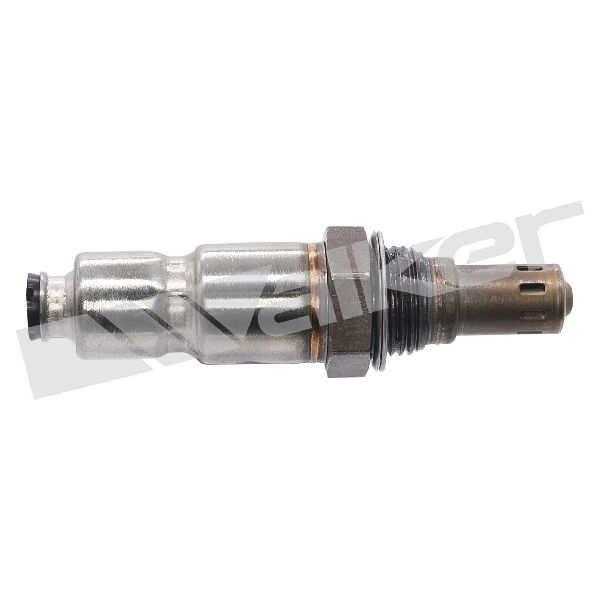
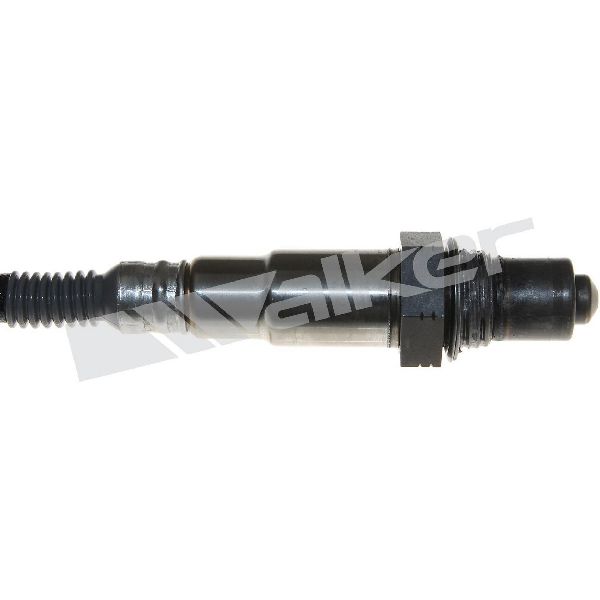
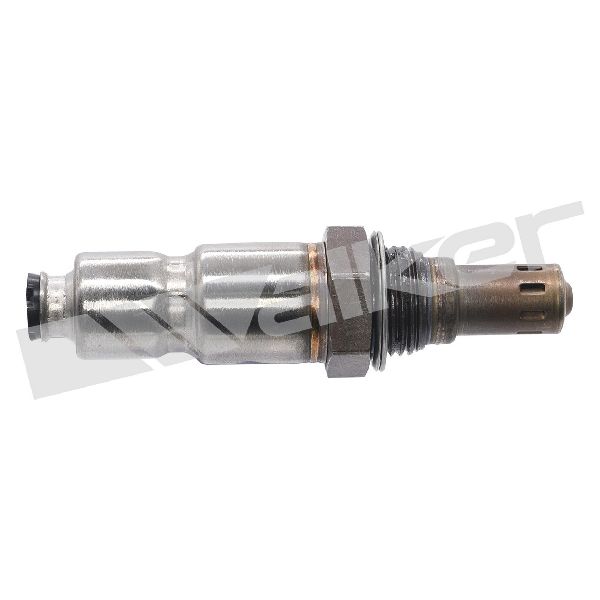
- Downstream Oxygen Sensor (Bank 1, Sensor 2)
(OEM #39210-2E400)— This sensor is the most frequent point of failure for this code. It directly measures the condition that triggers the P2097 fault.
Trusted brands: Hyundai (OEM), Bosch, Denso, NGK/NTK
OEM price range: $120-$180
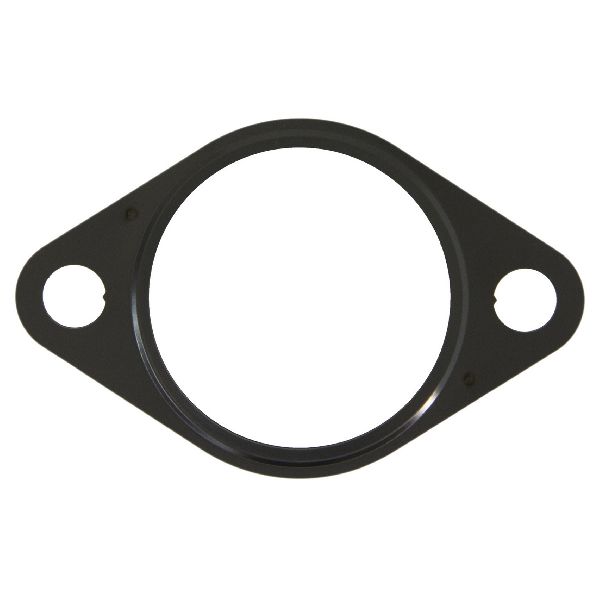
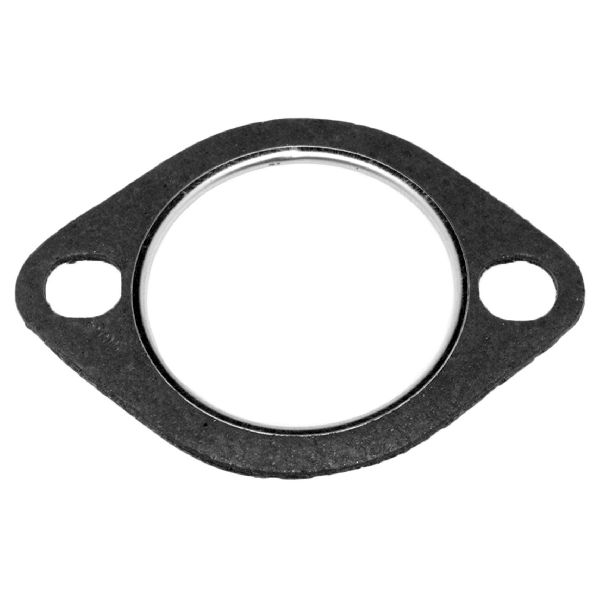
Aftermarket price range: $60-$120 - Exhaust Manifold Gasket
(OEM #28521-2E000)— If an exhaust leak is found at the manifold, this gasket will be required for the repair.
Trusted brands: Hyundai (OEM), Fel-Pro, Mahle
OEM price range: $15-$30
Aftermarket price range: $10-$20 - Exhaust Flex Pipe — The flex pipe is a known weak point in the exhaust system and a common source of leaks that can trigger P2097. Often requires a weld-in replacement.
Trusted brands: Walker, AP Exhaust
OEM price range: N/A (often part of a larger assembly)
Aftermarket price range: $40-$100 (part only)
Related Codes That Often Appear With This One
- P0136 - P0141 — These codes are specific to the downstream O2 sensor (Bank 1, Sensor 2) circuit, heater, or performance, and often appear when the sensor itself has failed.
- P0300 - P0304 — Misfire codes can appear if a rich condition from a leaking injector is severe enough to foul a spark plug and cause incomplete combustion.
- P2196 — This code indicates 'O2 Sensor Signal Stuck Rich (Bank 1, Sensor 1)'. If both the upstream and downstream sensors are reporting a rich condition, it points more strongly toward a true rich running condition (like a leaking injector) rather than a sensor-specific fault.
Technical Service Bulletins (TSBs) & Recalls
- TSB 20-AT-017H: While not for code P2097, this TSB addresses a TCM power signal error (P0880) for 2016+ Tucson 2.0L models, indicating a history of control module and electrical issues on this platform that could be related.
Platform-Specific Known Issues
- Some owners on forums have reported that a dealership software update was required to finally clear the P2097 code, even after replacing sensors. This suggests a potential calibration issue in the original ECU software.
- The 2.0L Nu engine is part of a large-scale Hyundai/Kia engine settlement for premature wear. While P2097 is not a direct symptom of the bearing failure, related issues like high oil consumption can foul O2 sensors and catalytic converters over time.
Mechanic-Grade Diagnostic Values
- Downstream O2 Sensor (B1S2) Voltage at Idle (Warm Engine) — expected: Relatively stable voltage, typically between 0.6V and 0.8V.. Failure: Voltage is stuck high (above 0.8V), fluctuating rapidly like the upstream sensor, or is slow to change.
- Downstream O2 Sensor (B1S2) Voltage on Sudden Deceleration — expected: Voltage should drop to 200mV (0.2V) or lower as fuel is cut.. Failure: Voltage remains high, indicating a biased sensor or a true rich condition.
- Long Term Fuel Trim (LTFT) at Idle — expected: Close to 0%, typically within +/- 5%.. Failure: Consistently negative value, such as -10% or more, indicates the ECM is compensating for a perceived rich condition.
- Diagnostic Enable Condition — expected: Engine Coolant Temperature > 76°C (169°F) and engine in closed loop.. Failure: Testing values before the engine is fully warm can lead to misdiagnosis.
Hidden / Shadow Codes Worth Checking
- P132600: Knock Sensor Detection System (KSDS) has detected abnormal engine bearing noise, indicating potential connecting rod bearing failure. (see via Standard OBD-II scanner. This code will cause the Malfunction Indicator Lamp (MIL) to blink continuously and place the vehicle in 'Engine Protection Mode' with reduced power and RPM limited to ~1800-2000.)
Scan Tool Commands That Help
- Hyundai GDS (or equivalent modern system): Resetting Adaptive Values — After replacing a component like an O2 sensor or fuel injector, this function should be used to clear the old learned fuel trim values from the ECM. This forces the computer to relearn the fuel strategy with the new part, preventing the old adaptations from causing issues.
- Hyundai GDS (or equivalent modern system): ECU Update — Used by dealerships to load new software onto the Powertrain Control Module. This is a required step if a TSB or Service Campaign has been issued to correct fuel trim logic or implement the KSDS update, which has been known to resolve P2097 in some cases.
Wiring & Ground Locations
- Downstream O2 Sensor (B1S2) Connector — On the exhaust pipe, after the primary catalytic converter, typically accessible from underneath the vehicle.. The 2017 Tucson uses a 4-wire sensor. Knowing the wire functions allows for manual testing with a multimeter. The wires are: Sensor Ground, Sensor Signal, Heater Control (from ECM), and Heater Power Supply.
- Engine/Transmission Ground Points — Key grounds are typically located on the engine block itself, from the transmission case to the chassis, and from the negative battery terminal to the chassis/fender.. A poor ground for the ECM or the O2 sensor heater circuit can cause incorrect sensor readings, leading to fuel trim errors. While specific designators for the Tucson (TL) are not documented, checking for clean, tight connections at the main engine-to-chassis ground strap is a critical step.
Real Owner Repair Stories
- Reddit user Unfair_Caramel9393 (2019 Hyundai Elantra GT (uses a similar Nu 2.0L engine)) — Check Engine Light with code P2097, hesitation upon acceleration.
❌ Tried (didn't work) Initial diagnosis was inconclusive between the O2 sensor and the catalytic converter.
✅ What actually fixed it The mechanic replaced the oxygen sensor, which resolved the code and symptoms. - Reddit user Accomplished-Job-819 (2020 Hyundai Kona 1.6T (different engine, but demonstrates a pattern)) — Got code P0507 (Idle RPM high), which was fixed by a dealer software update. Two weeks later, code P2097 appeared.
❌ Tried (didn't work) A previous software update for a different code did not prevent the P2097 from appearing later.
✅ What actually fixed it The user was taking the car back to the dealer for diagnosis. The story highlights the frequent interplay between software updates and emission-related codes on modern Hyundais.
OEM Part Supersession History
39210-2E400→39210-2E400 (current)— This part number appears to be stable and fits a wide range of Hyundai vehicles from 2011-2016+, including Elantra and Tucson models with 1.8L and 2.0L engines. No supersession to a new number was found.
Model Year Variations Within This Range
- 2019-2021: A mid-cycle refresh occurred for the 2019 model year, which included revised styling and engine lineup changes. While the 2.0L Nu GDI engine was retained for the SE and Value trims, higher trims (SEL, Sport, Limited) received a larger 2.4L engine. This P2097 guide is only applicable to the models retaining the 2.0L engine.
- 2016-2018: These model years with the Nu 2.0L GDI engine are explicitly included in Hyundai Service Campaign 966 (TSB 21-01-023H-4) to receive the Knock Sensor Detection System (KSDS) software update.
Diagnostic Flowchart
Other Known Issues on This Vehicle
Issues unrelated to this code that are worth knowing about as an owner of this generation:
- Premature Engine Wear / Seizure (Connecting Rod Bearings) 🔴 High — Widespread enough to trigger multiple class-action lawsuits and a warranty extension to 15 years/150,000 miles for affected vehicles that have the KSDS update. (Ref: Part of a major settlement involving Hyundai/Kia Nu GDI engines. Requires installation of Knock Sensor Detection System (KSDS) software (Product Improvement Campaign) for warranty coverage.)
- Excessive Oil Consumption 🟠 Medium — Frequently reported by owners, often becoming noticeable after 50,000 miles. Can lead to engine damage if not monitored closely. (Ref: No specific recall for oil consumption alone, but it is a known symptom associated with the engine wear issues covered by the class-action settlement.)
- ABS Module Internal Short / Fire Risk 🔴 High — Affects a large number of 2016-2021 Tucson models. The HECU can corrode and short circuit, creating a fire risk even when the vehicle is parked. (Ref: Hyundai Recall 20V746 (NHTSA ID). Owners are advised to park outside and away from structures until the recall repair is performed.)
- Hesitation from Dual-Clutch Transmission (1.6T Engine Only) 🟡 Low — Common complaint on models equipped with the 1.6L Turbo engine and 7-speed DCT, especially in stop-and-go traffic. Not applicable to the 2.0L engine. (Ref: Software updates were released to improve transmission logic and reduce hesitation.)
Used vs. New Parts: Buying Guide for This Vehicle
When a used part is the smart pick: Used parts are a smart choice for major exhaust components like the front pipe, flex pipe, or muffler assembly, as long as they are sourced from a low-mileage vehicle in a dry, rust-free climate.
Donor-vehicle mileage cap: roughly under 60000 miles for the part to have meaningful remaining life.
What to inspect on the donor part:
- For exhaust parts, inspect for the absence of rust, especially at welds and flanges.
- Check for any signs of black soot or cracking around the flex pipe mesh.
- Ensure mounting brackets are intact and not bent.
- If considering a used catalytic converter, verify it is an OEM unit (will have manufacturer stampings) and that the donor vehicle did not have a misfire or oil consumption issue.
OEM-only on this vehicle (don't cheap out):
- Catalytic Converter: Aftermarket converters for this platform are widely reported to have a short lifespan and may not meet emissions standards, leading to recurring codes.
Aftermarket brands forum-validated for this vehicle:
- Oxygen Sensors: Bosch, Denso, and NGK/NTK are reputable brands that meet or exceed OEM performance.
- Exhaust Components: Walker and AP Exhaust are well-regarded aftermarket brands for pipes and gaskets.
Brands owners have reported issues with on this vehicle:
- Unbranded, 'no-name' oxygen sensors and catalytic converters from online marketplaces are frequently cited as failing quickly or being dead-on-arrival.
Real Owner Stories
Aggregated from forums and TSBs cited above. Mileages and costs reflect what owners reported in those sources.
2020 Hyundai (similar platform/1.6T)
Symptoms: The P2097 code appeared shortly after a dealer performed a software update for a different code (P0507).
What fixed it: A dealership software update was required to finally clear the code, suggesting a calibration issue.
Source hint: Reddit - r/MechanicAdvice - '2020 Hyundai weird codes, does this sound like a software problem or possible engine failure?'
2017 Hyundai Tucson 2.0L — 97000 miles
Symptoms: History of oil consumption issues and previous knock sensor replacement.
What fixed it: Replacement of the catalytic converter (though the owner noted repeat failures due to underlying issues).
Source hint: Reddit - r/Hyundai - '2017 Tucson, issues with oil, catalytic Converter, etc'
2016-2021 Hyundai Tucson 2.0L
Symptoms: The check engine light came on with rough running, then the light turned off the next day while the code remained stored.
What fixed it: Diagnosis of an intermittent fault.
Source hint: Reddit - r/MechanicAdvice - 'Code P2097'
2019 Hyundai Elantra GT 2.0L Nu GDI
Symptoms: P2097 code accompanied by engine hesitation symptoms.
What fixed it: Identified as an issue mirroring the Tucson 2.0L Nu GDI engine failures.
Source hint: Reddit user report cited in platform_mates section
Related OBD-II Codes
Frequently Asked Questions
Is there a software update for the 2016-2021 Hyundai Tucson that addresses the P2097 code?
Could the common flex pipe issue on my Tucson be causing this rich exhaust code?
Does the Hyundai engine settlement for the 2.0L Nu GDI engine cover P2097 repairs?
What brand of oxygen sensor should I use for my 2.0L Tucson to fix this code?
Can high oil consumption on my 2017 Tucson lead to a P2097 code?
Helpful Videos

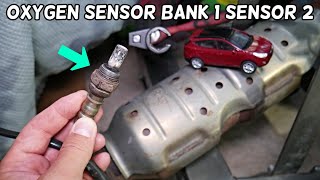


![How to Fix P2097 Engine Code in 4 Minutes [2 DIY Methods / Only $9.84]](https://img.youtube.com/vi/rCwtzRmhMwY/mqdefault.jpg)
Used OEM Parts in Stock
New Aftermarket Parts Available


The information in this article is provided for general reference and educational purposes only. Vehicle specifications, procedures, and part compatibility can vary by production date, trim level, and region. Always consult your vehicle's factory service manual and verify part numbers before purchasing or performing repairs. Safety-critical components such as airbags, seat belts, and braking systems should be installed by a qualified professional.
- Hyundai Tucson:
- 🎬 Helpful Videos
- 🛍️ Shop This Part
- What's Unique About the 2016-2021 Hyundai Tucson
- Symptoms You May Notice
- Most Likely Causes
- Rare But Worth Checking
- Diagnosis Steps
- Parts You'll Likely Need
- Related Codes That Often Appear With This One
- Technical Service Bulletins (TSBs) & Recalls
- Platform-Specific Known Issues
- Mechanic-Grade Diagnostic Values
- Hidden / Shadow Codes Worth Checking
- Scan Tool Commands That Help
- Wiring & Ground Locations
- Real Owner Repair Stories
- OEM Part Supersession History
- Model Year Variations Within This Range
- Diagnostic Flowchart
- Other Known Issues on This Vehicle
- Used vs. New Parts: Buying Guide for This Vehicle
- Real Owner Stories
- 2020 Hyundai (similar platform/1.6T)
- 2017 Hyundai Tucson 2.0L — 97000 miles
- 2016-2021 Hyundai Tucson 2.0L
- 2019 Hyundai Elantra GT 2.0L Nu GDI
- Related OBD-II Codes
- Frequently Asked Questions
- 🎟️ Get 5% Off