

OBD-II Code P0880: TCM Power Input Signal Malfunction
What P0880 means, why it triggers, and how to fix it
- Code P0880 indicates a power loss to the transmission computer, forcing the vehicle into a 2nd or 3rd gear 'limp mode'.
- Always test the $15 TCM power relay and transmission fuses before assuming a catastrophic transmission failure.
- Perform a voltage drop test on the TCM ground circuit; resistance above 0.5 ohms is a leading cause of this code.
- For 2007-2020 Chrysler, Dodge, and Jeep vehicles, a P0880 code frequently points to a failed internal relay within the $500-$1,200 TIPM.
- Hyundai and Kia owners must check TSB 20-AT-017H, which identifies an $80 internal wiring harness short as the primary culprit.
What Does P0880 Mean?

Code P0880 means the Transmission Control Module (TCM) is not receiving a steady voltage supply from the battery. The Powertrain Control Module (PCM) detects a voltage drop (below 7V) or spike (above 22V) in the TCM power circuit, forcing the transmission into a protective fail-safe mode.
Technical definition: The SAE/OBD-II definition for P0880 is 'TCM Power Input Signal.' The Powertrain Control Module (PCM) sets this code when the voltage supplied to the Transmission Control Module (TCM) falls outside the manufacturer's specified operating range.
Can I Drive With P0880?
Yes, But With Caution. You can drive short distances, but the transmission defaults to 'limp mode,' locking into a single gear (usually 2nd or 3rd). This causes poor acceleration and high engine RPMs at highway speeds. Limit driving to reaching a repair shop. Extended driving in limp mode overheats the transmission fluid, causing severe internal damage to clutches and solenoids.
Common Causes

- Blown fuse or faulty TCM power relay (Very Common) — This is the most frequent and cheapest cause. Fuses blow from age or short circuits, and relays wear out or develop burnt contacts, severing power to the transmission's computer.
- Weak battery or bad ground connection (Common) — A battery providing below 12.2V at rest causes a voltage drop during startup significant enough to trigger the code. Loose, corroded, or broken ground straps for the engine or TCM prevent a stable power circuit.
- Corroded or damaged wiring/connectors (Common) — Wires leading to the TCM rub against the chassis, break, or corrode from road salt. This creates high resistance or an open circuit, interrupting the power supply.
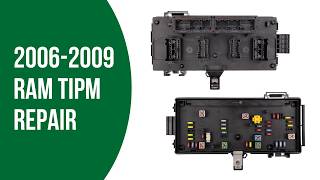
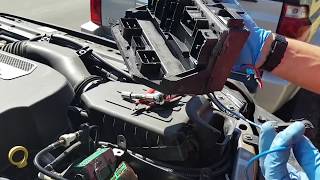
- Faulty Totally Integrated Power Module (TIPM) (Common) — On many Dodge, Jeep, and Chrysler vehicles, the TCM power relay is soldered inside the main fuse box (TIPM). Failure of this internal, non-serviceable relay is a well-known issue requiring TIPM repair or replacement. 🎬 See this guide on fixing common Dodge Ram TIPM issues.
- Faulty Alternator (Less Common) — A failing alternator produces excessive AC ripple (electrical noise) or overcharges the system (above 15.5V). The TCM shuts down to protect itself from this 'dirty' power.
- Water Intrusion (Less Common) — Water from heavy rain or pressure washing penetrates external connectors, fuse boxes, or the TCM itself, causing short circuits or corrosion.
- Faulty Ignition Switch (Rare) — A failing ignition switch fails to send power to the TCM relay when the key is in the 'ON' position, intermittently starving the TCM of power.
- Faulty Transmission Control Module (TCM) (Rare) — The TCM itself rarely fails. Always diagnose and rule out external wiring, fuses, and relays before condemning the module.
Symptoms

- Check Engine Light is on — The Malfunction Indicator Lamp (MIL) illuminates on the dashboard, sometimes accompanied by a specific transmission warning light.
- Harsh shifting into gear — Moving the shifter from Park to Drive or Reverse causes the transmission to engage with a violent clunk or jerk.
- Traction Control or ABS light is on — TCM failure disrupts communication on the CAN bus, disabling the ABS and Traction Control systems and triggering their warning lights.
- Vehicle won't start or stalls — Power interruption to the TCM prevents the engine from starting or causes stalling when coming to a stop.
- Transmission stuck in 'Limp Mode' (also visible on scanner) — The vehicle locks into a single gear (often 2nd or 3rd) and refuses to shift up or down.
Diagnostic Flowchart

Tap your situation to follow the diagnostic path that matches what you're seeing on this code.
Common Fixes & Costs
- Replace Blown Fuse or Faulty Relay
— Parts: $5-$30, Labor: $0-$50, ~0.2 hr book time
(DIY)
: OEM
: OEM - Clean or Replace Battery Terminals and Ground Straps — Parts: $5-$50, Labor: $50-$100, ~0.5 hr book time (DIY)
- Repair Damaged Wiring or Connectors — Parts: $10-$50, Labor: $150-$500, ~2.5 hr book time (Intermediate)
- Replace Totally Integrated Power Module (TIPM)
— Parts: $300-$1000, Labor: $100-$200, ~1.2 hr book time
(Professional)
: OEM - Replace Transmission Control Module (TCM) — Parts: $200-$900, Labor: $100-$300, ~1.5 hr book time (Professional)
Used vs. New Parts: Buying Guide
When a used part is worth it: For expensive electronic modules like a TCM or TIPM, a used part from a reputable salvage yard makes sense on older vehicles, provided the used part can be programmed to your specific VIN.
Donor-vehicle mileage cap: roughly under 100000 miles for the part to have meaningful remaining life.
Donor quality checklist:
- Verify the exact part number matches.
- Choose a donor vehicle with no signs of flood or fire damage.
- Confirm with a specialist that a used module for your vehicle can be reprogrammed; many newer modules are one-time-use.
Decision logic:
- If The fix is a simple relay, fuse, or wiring repair → Always use new parts. The cost is minimal.
- If The fix is a TIPM or TCM and a new part costs over $800 → Consider a professionally refurbished module with a warranty or a used part if programmability is confirmed.
- If The vehicle is less than 10 years old or has under 100k miles → Favor a new OEM or high-quality aftermarket part to ensure longevity.
Warranty tradeoff: Used parts offer a 30-90 day warranty excluding labor. Refurbished modules offer 1-year warranties. New OEM parts installed by a dealer carry a 12-month/12,000-mile warranty.
Worst-case if a used part fails: $300-$600 if a used module is defective or cannot be programmed, covering repeat diagnostic and labor fees.
What Happens If You Wait — Timeline
- Immediate: Code P0880 sets. The transmission enters 'limp mode,' locking into a single gear (usually 3rd or 4th). (MPG impact: 15-30%% · Added cost: $0)
- 0-2 weeks of driving: Driving in a single gear overheats the transmission fluid, breaking down its lubricating properties. (MPG impact: 15-30%% · Added cost: $150-$300 (Preventative transmission fluid flush).)
- 2 weeks - 3 months of driving: Degraded fluid leads to glazing and premature wear on internal clutch packs. Solenoids operate sluggishly. (MPG impact: 15-30%% · Added cost: $800-$1,500 (Partial rebuild for damaged clutch packs).)
- 3+ months of driving: Severe overheating burns out clutch packs completely and warps the valve body. The transmission slips badly or fails to engage. (MPG impact: N/A% · Added cost: $2,500-$4,500 (Complete transmission rebuild or replacement).)
Cost of Not Fixing It
- Immediate: Vehicle is stuck in 'limp mode' (one gear), resulting in extremely poor acceleration, high engine RPM at speed, and significantly reduced fuel economy. (Added cost: Negligible)
- Weeks to Months: Driving in limp mode overheats the transmission fluid, breaking down its lubricating properties and accelerating wear on internal clutches. (Added cost: $150-$300 for a transmission fluid flush.)
- Several Months: Prolonged overheating burns out clutch packs and damages solenoids, turning a simple electrical problem into a major mechanical failure. (Added cost: $1,800-$3,500 for a complete transmission rebuild.)
Diagnosis Steps
- Check the Battery and System Voltage
Use a multimeter to check battery voltage. A healthy battery reads 12.4-12.6V with the engine off and 13.5-14.5V running. A reading below 12.2V at rest requires a battery load test. Voltage at the TCM dropping below 9.6V during cranking triggers this code.
Tools: Digital Multimeter (Beginner) - Inspect the Transmission Fuses and Relay
Locate the fuse box using your owner's manual. Pull the TCM fuse to check if it is blown. Swap the TCM relay with a known good one of the same type (like the horn relay) to see if the transmission shifts normally.
Tools: Owner's Manual, Fuse Puller (Beginner) - Visually Inspect Wiring Harnesses and Grounds
Check for chafed wires rubbing against the engine or frame, rodent damage, or green corrosion on connectors. Trace the main ground straps from the battery to the chassis and engine block, ensuring they are clean and tight.
Tools: Flashlight (Intermediate) - Check for Power at the TCM Connector
Disconnect the TCM. Using a wiring diagram, probe the main power input pin with a multimeter while the key is 'ON'. A reading of 0V indicates an open circuit (broken wire, bad fuse/relay) between the fuse box and the TCM.
Tools: Digital Multimeter, Vehicle-Specific Wiring Diagram (Advanced) - Check for a Good Ground at the TCM
Identify the ground pins on the disconnected TCM harness. Measure resistance between the ground pin and the negative battery terminal. A reading above 0.5 ohms indicates a corroded or broken ground wire requiring repair.
Tools: Digital Multimeter, Vehicle-Specific Wiring Diagram (Intermediate) - Perform a Voltage Drop Test
If voltage is present but the code persists, perform a voltage drop test on the active circuit (TCM connected, key ON). A voltage drop exceeding 0.2V on the power side or 0.1V on the ground side indicates high resistance.
Tools: Digital Multimeter, Back-Probe Kit (Advanced) - Analyze Scan Tool Live Data
Connect a professional scan tool and view TCM live data. Look for 'Module Supply Voltage'. If the scan tool shows a voltage significantly lower than the battery voltage, it confirms a voltage drop in the TCM power supply circuit.
Tools: Professional OBD-II Scan Tool (Advanced) - PRO TIP: Wiggle Test the Harness
For intermittent problems, gently wiggle the wiring harness between the fuse box and the TCM with the key ON. If the transmission shifts or multimeter voltage fluctuates, you have isolated the broken wire or loose connection.
Tools: Gloves (Intermediate) - PRO TIP: Check for AC Voltage (Alternator Ripple)
Set your multimeter to a low AC voltage scale. With the engine running, probe the battery terminals. A reading above 0.5V AC indicates a faulty alternator diode disrupting the TCM.
Tools: Digital Multimeter with AC Voltage function (Advanced)
When This Code Triggers (Freeze-Frame Conditions)
- TCM Supply Voltage: < 9.6V or > 18V (Sets during engine cranking when a weak battery causes voltage to drop, or while driving if the alternator overcharges.)
- Engine RPM: 0 (Key On, Engine Off) or 600-800 (Cranking) (Triggers immediately when the ignition is turned on before the engine starts, or during the initial voltage drop of engine cranking.)
- Vehicle Speed: 0 mph (Detected during the initial power-up sequence (key-on self-test) before the vehicle is moving.)
Related Codes
- P0700 — A general transmission fault code. P0880 is the specific primary fault, while P0700 is the secondary code telling the PCM to illuminate the Check Engine Light.
- P0882 — 'TCM Power Input Signal Low.' This confirms voltage is below the minimum threshold (<7V). Focus diagnosis on bad connections, a failing relay, high resistance, or a weak battery.
- P0883 — 'TCM Power Input Signal High.' This confirms voltage is above the maximum threshold (>22V). This points to a faulty alternator overcharging the system or a short to a higher voltage wire.
- U0101 — 'Lost Communication with TCM.' This is a direct symptom of P0880. Because the TCM lost power, it cannot communicate on the network. Fixing the P0880 power issue resolves U0101.
Climate & Environmental Factors
- Cold Weather: Cold temperatures increase battery internal resistance, reducing cranking amperage. A weak battery drops below the TCM's minimum voltage threshold (9.6V) during a cold start, triggering the code.
- Road Salt (Snow Belt Regions): Salt spray is highly corrosive to wiring harnesses, ground straps, and connectors on the undercarriage. It eats away at copper wires, causing high resistance or complete circuit failure.
- High Humidity and Rain: Moisture penetrates weathered connector seals and worn wiring insulation, causing short circuits or accelerating corrosion on electrical pins.
How to Talk to a Mechanic About This Code
Say this: "I have a P0880 code, indicating a TCM Power Input Signal Malfunction. Please start by checking the battery, grounds, fuses, and the TCM power relay before condemning the TCM or transmission."
This signals you are an informed consumer and directs the shop to follow a logical diagnostic path starting with the cheapest fixes.
Avoid saying:
- 'My transmission is acting weird, just fix it.'
- 'My check engine light is on, can you look at it?'
- 'A guy on the internet said I need a new transmission computer.'
Questions to ask before authorizing the repair:
- Did you check for power and ground at the TCM connector? What were the voltage readings?
- Did you perform a voltage drop test on the power and ground circuits to the TCM?
- Have you checked for any Technical Service Bulletins (TSBs) for my vehicle related to P0880?
- If recommending a module replacement, how did you rule out a wiring or relay fault?
Where to Take It: Dealer vs Independent vs Chain
- Dealer:
Recommended if the vehicle is under warranty or has a complex manufacturer-specific issue (like a TIPM) requiring programming.
Best for: Vehicles under powertrain warranty., Complex issues like a faulty TIPM on a Jeep or a known TSB on a Hyundai., Repairs requiring proprietary software to program a new module.
Downsides: Highest labor rate., May prefer replacing large assemblies (like a full wiring harness) rather than performing detailed wire repairs. (Typical cost: +50% vs. baseline) - Independent Shop:
Best fit for most out-of-warranty P0880 repairs. An experienced independent technician is ideal for diagnosing common electrical faults.
Best for: Out-of-warranty vehicles where cost is a factor., Shops with a strong reputation for electrical diagnostics., Tracing and repairing wiring faults.
Downsides: Quality varies widely; look for ASE certifications., May lack proprietary tools to program a new TCM/TIPM. (Typical cost: +0% vs. baseline) - Chain Shop:
AVOID for P0880. This code requires specific electrical troubleshooting, not just reading a code and replacing parts.
Best for: Simple maintenance like oil changes or brake jobs.
Downsides: Technicians often lack specialized electrical diagnostic skills., High pressure to upsell leads to misdiagnosis and unnecessary transmission replacements. (Typical cost: -10% vs. baseline)
When to Walk Away From the Repair
If the estimated repair cost exceeds 40-50% of the car's private-party value, consider selling the car as-is.
- Car worth $4500, fix is $2000: Walk away. The repair cost is nearly half the car's value. Get a second opinion, but it's likely time to sell.
- Car worth $12000, fix is $450: Fix it. The repair is a small fraction of the vehicle's value and restores function.
- Car worth $3000, fix is $1600: Walk away. The repair cost is too high relative to the car's value.
What Scan Tool You Need for This Code
Minimum: An OBD-II scanner that reads and displays live data for the Transmission Control Module (TCM).
A basic $20 code reader only confirms P0880 exists. It cannot show the live voltage the TCM is receiving, which is critical for diagnosing voltage drops.
Budget: BlueDriver Pro or Foxwell NT301 (~$100) — Displays live data streams, including 'Module Supply Voltage' from the TCM, allowing you to confirm electrical faults.
Mid-range: Autel AL619 or Innova 5610 (~$100-300) — Reads ABS and SRS codes (which frequently appear alongside P0880) and graphs voltage over time to catch intermittent drops.
Professional: Autel MaxiCOM MK808S or Launch CRP129X (~$400-600) — Offers bidirectional control to command relays and solenoids. Can perform programming and relearn procedures if the TCM or TIPM is replaced.
Rent vs buy: Auto parts stores scan codes for free, but their tools lack live data. Buying a budget live-data scanner saves hundreds on diagnostic fees.
How to Clear the Code After You Fix It
- Reconnect battery (if disconnected for repair)
- Use an OBD-II scan tool to clear all diagnostic trouble codes from the PCM and TCM
- Perform a complete drive cycle to allow readiness monitors to run
Drive cycle (~20 minutes): Start the engine cold and idle for 3 minutes. Drive in mixed city/highway conditions, including steady cruising between 45-60 mph. Perform smooth accelerations and decelerations, shifting through all gears. Turn the engine off, wait 5 minutes, and re-scan for codes.
Readiness monitors affected: Comprehensive Component Monitor, Catalyst Monitor, Oxygen Sensor Monitor, EVAP System Monitor
Before emissions retest: drive at least 50 miles to fully set monitors.
Watch out for:
- Disconnecting the battery clears the code but resets emissions monitors to 'Not Ready', causing an automatic smog test failure.
- If the electrical fault is not fixed, P0880 returns immediately upon the next key cycle.
Will This Fail Emissions / State Inspection?
Yes — this code typically fails an OBD-II emissions inspection.
- California: An active Check Engine Light is an automatic failure. After repair, all readiness monitors must be 'Ready', requiring 50-100 miles of varied driving.
- New York: An illuminated Malfunction Indicator Lamp results in an immediate OBD-II emissions test failure.
- Texas: In emissions-testing counties, an illuminated Check Engine Light prevents registration renewal until repaired and re-tested.
Most Commonly Affected Vehicles
- Dodge / Chrysler / Jeep Grand Cherokee, RAM 1500, Town & Country, Wrangler, Charger (2007-2020) — These vehicles suffer from internal failures of the Totally Integrated Power Module (TIPM), where the non-serviceable TCM power relay is located. TIPM repair or replacement is frequently required.
- Hyundai / Kia Elantra, Sonata, Santa Fe, Sorento, Optima (2010-2019) — TSB 20-AT-017H and 20-AT-018H identify a faulty internal transmission harness, chafed wiring behind the battery tray, or a bad TCM power relay as the primary culprits. Do not replace the transmission.
- Chevrolet / GMC Silverado, Sierra (with Allison Transmission) (2007-2011) — Service bulletin PI0310B points to aftermarket serpentine belts causing electrostatic discharge that disrupts the TCM. A bad engine block ground (G102) is also a common cause.
- Ford F-150, Explorer, Fusion, Focus (2004-2020) — The main wiring harness rubbing against the chassis or exhaust causes short circuits. The main bulkhead connector on the transmission also works loose, causing intermittent power loss.
- Nissan Altima, Rogue, Sentra (2007-2018) — On CVT-equipped models, P0880 is caused by a failing TCM power relay or wiring issues. Prompt electrical diagnosis is crucial to prevent CVT damage.
Manufacturer-Specific Notes

- Chrysler/Dodge/Jeep: The TCM power relay is integrated into the Totally Integrated Power Module (TIPM) and is not separately replaceable. P0880 frequently requires the entire TIPM to be repaired by a specialist or replaced.
- Hyundai/Kia: TSBs explicitly state P0880 should not lead to transmission replacement. The cause is almost always a faulty power relay, bad ground, or a faulty internal valve body harness requiring a specific diagnostic flow chart.
- General Motors (Chevrolet/GMC): TSB PI0310B warns that non-OEM serpentine belts create electrostatic discharge interfering with the TCM on Allison transmissions. The fix is installing an OEM belt and cleaning the G102 engine block ground.
Real Owner Stories
2011 Hyundai Sonata with intermittent P0880
Car intermittently gave a harsh jerk when shifting into Reverse, accompanied by the Check Engine Light and P0880.
What they tried:
- Replaced motor mounts based on a mechanic's guess.
- Replaced the Transmission Control Module (TCM).
Outcome: A second mechanic found a TSB for P0880. Diagnosis revealed a short in the internal transmission wiring harness. Replacing the internal harness (part #46307-3B650) resolved the issue.
Lesson: Always check for Technical Service Bulletins (TSBs). Known issues like the Hyundai internal harness are easily misdiagnosed as a bad TCM.
2012 Jeep Grand Cherokee with P0880
Vehicle went into limp mode with a P0880 code.
What they tried:
- Checked all transmission fuses.
- Swapped the TCM power relay.
Outcome: The owner discovered the TCM relay is integrated into the non-serviceable Totally Integrated Power Module (TIPM). They opted for a $250 TIPM repair service instead of a $1,200 replacement, fixing the internal relay.
Lesson: On Dodge, Chrysler, and Jeep vehicles, P0880 is a classic sign of TIPM failure. Investigate TIPM repair services or relay bypass kits before replacing the whole unit.
2004 International 4400 Truck with Allison Transmission
Speedometer intermittently dropped to zero, causing hard shifting and P0880.
What they tried:
- Checked battery voltage (12V) and the 10-amp TCM fuse.
- Tested voltage at the TCM connector (showed 12.4V).
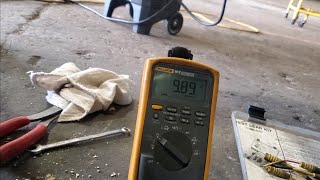
Outcome: A load test revealed a significant voltage drop to 9.8V. The technician traced a bad ground connection near the starter. Cleaning the ground restored a steady 12V under load.
Lesson: A simple multimeter check showing 12V isn't enough. Performing a voltage drop test under load is critical for finding high resistance caused by a bad ground.
How to Prevent This Code From Triggering
- Clean battery terminals and main ground straps (Every 12 months or with every oil change) — Corrosion creates high resistance, causing voltage drops that trigger P0880. Clean connections ensure a stable power supply.
- Apply dielectric grease to critical electrical connectors (Whenever a connector is disconnected for service) — Dielectric grease blocks moisture and prevents corrosion on TCM and TIPM seals, preventing signal loss.
- Test battery health annually (Once per year, especially before winter) — Identifies a failing battery before it drops below the TCM's minimum voltage threshold during engine cranking.
- Secure wiring harnesses away from sharp edges and heat sources (During any under-hood maintenance) — Prevents wires from chafing and shorting out against exhaust manifolds or engine brackets.
Frequently Asked Questions
What is the most common misdiagnosis for a P0880 code?
The most expensive mistake is replacing the Transmission Control Module (TCM) or the transmission itself without performing basic electrical checks. The fault is usually a $15 relay, a blown fuse, or a corroded wire. Always diagnose the simple parts before condemning an expensive module.
Does a P0880 code mean I need a new transmission?
Almost never. P0880 is an electrical code related to the power supply for the transmission's computer, not a mechanical failure inside the transmission itself. Do not replace the transmission for this code.
Can a jump start cause or fix a P0880 code?
If a weak battery caused the code during cranking, a jump start allows the vehicle to run, but it does not fix the code stored in memory. The underlying weak battery must still be replaced. Conversely, a voltage spike during a jump start can blow the TCM fuse, triggering the code.
Why did my ABS and traction control lights come on with the P0880 code?
The TCM shares critical data with the ABS and traction control systems over the CAN bus. When the TCM loses power, those systems disable themselves as a safety precaution and illuminate their warning lights.
Is it expensive to fix a P0880 code?
Diagnostic fees average $100-$180. Simple fixes like relays, fuses, or grounds cost under $150 total. Major module replacements like a TIPM or TCM range from $500 to $1,500.
Can a bad ground cause a P0880 code?
Yes. A loose, corroded, or broken ground wire is a leading cause of P0880 because it creates high resistance that drops the voltage reaching the TCM.
Will clearing the P0880 code fix the problem?
No. Clearing the code only turns the check engine light off temporarily. Because P0880 indicates a hard electrical fault, the code returns immediately upon the next key cycle until the power loss is repaired.
Key Takeaways
- Code P0880 indicates a power loss to the transmission computer, forcing the vehicle into a 2nd or 3rd gear 'limp mode'.
- Always test the $15 TCM power relay and transmission fuses before assuming a catastrophic transmission failure.
- Perform a voltage drop test on the TCM ground circuit; resistance above 0.5 ohms is a leading cause of this code.
- For 2007-2020 Chrysler, Dodge, and Jeep vehicles, a P0880 code frequently points to a failed internal relay within the $500-$1,200 TIPM.
- Hyundai and Kia owners must check TSB 20-AT-017H, which identifies an $80 internal wiring harness short as the primary culprit.
Helpful Videos





The information in this article is provided for general reference and educational purposes only. Vehicle specifications, procedures, and part compatibility can vary by production date, trim level, and region. Always consult your vehicle's factory service manual and verify part numbers before purchasing or performing repairs. Safety-critical components such as airbags, seat belts, and braking systems should be installed by a qualified professional.
- 🎬 Helpful Videos
- What Does P0880 Mean?
- Can I Drive With P0880?
- Common Causes
- Symptoms
- Diagnostic Flowchart
- Common Fixes & Costs
- Used vs. New Parts: Buying Guide
- What Happens If You Wait — Timeline
- Cost of Not Fixing It
- Diagnosis Steps
- When This Code Triggers (Freeze-Frame Conditions)
- Related Codes
- Climate & Environmental Factors
- How to Talk to a Mechanic About This Code
- Where to Take It: Dealer vs Independent vs Chain
- When to Walk Away From the Repair
- What Scan Tool You Need for This Code
- How to Clear the Code After You Fix It
- Will This Fail Emissions / State Inspection?
- Most Commonly Affected Vehicles
- Manufacturer-Specific Notes
- Real Owner Stories
- 2011 Hyundai Sonata with intermittent P0880
- 2012 Jeep Grand Cherokee with P0880
- 2004 International 4400 Truck with Allison Transmission
- How to Prevent This Code From Triggering
- Frequently Asked Questions
- What is the most common misdiagnosis for a P0880 code?
- Does a P0880 code mean I need a new transmission?
- Can a jump start cause or fix a P0880 code?
- Why did my ABS and traction control lights come on with the P0880 code?
- Is it expensive to fix a P0880 code?
- Can a bad ground cause a P0880 code?
- Will clearing the P0880 code fix the problem?
- Key Takeaways
- 🎟️ Get 5% Off