

P2015 on 2007-2018 Freightliner Sprinter 3.0L OM642: Swirl Flap Causes and Fixes
On the Sprinter OM642 V6 diesel, code P2015 is almost always caused by a broken plastic linkage rod between the swirl flap motor and the intake manifolds. An affordable aftermarket metal linkage kit is the most common fix if the flaps themselves aren't seized with carbon.
- P2015 on your Sprinter almost always points to a mechanical failure of the swirl flap system, not a bad sensor.
- The most likely culprit is a cheap plastic linkage rod that has broken. Check this first before buying expensive parts.
- Aftermarket metal linkage kits are available and offer a more durable, permanent repair than the original plastic design.
- If you replace the swirl flap motor, you must also inspect and repair the oil leak from the turbo inlet seal above it, or the new motor will fail again.
- This repair is labor-intensive as it requires removing the turbocharger to access the components.
What's Unique About the 2007-2018 Freightliner Sprinter

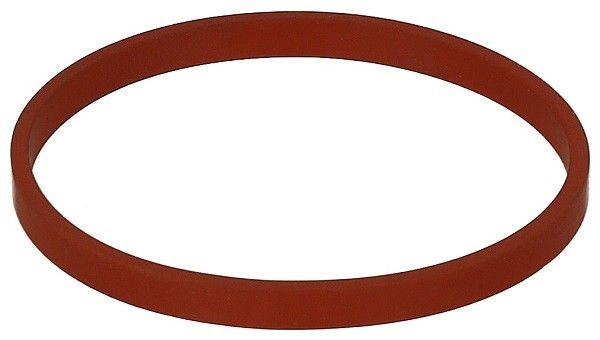
The OM642 engine is notorious for this specific failure across a wide range of Mercedes, Jeep, and Chrysler vehicles. The primary weakness is not the sensor itself, but the brittle plastic linkage rods that connect the actuator motor to the swirl flaps. These rods are located deep in the engine 'V' valley, where they are exposed to intense heat cycles that cause them to break. Additionally, oil leaks from the turbocharger inlet seal (a prominent orange/red gasket) are very common and drip directly onto the swirl flap actuator motor, causing it to short out and fail. This oil leak is a key design flaw contributing to the high failure rate of the actuator motor.
Symptoms You May Notice
- Check Engine Light is on
- Vehicle enters 'Limp Home Mode' with drastic loss of power
- Sluggish or delayed acceleration
- Reduced fuel economy
- Rough or unstable idle
- Audible clicking or popping from the engine valley as the broken linkage attempts to move
- Replacing only the swirl flap motor when the linkage is broken.
- Replacing the linkage when the swirl flaps themselves are seized solid inside the manifold.
- Assuming the entire intake manifold needs replacement when only the inexpensive linkage has failed.
- Mistaking the oil leak in the engine valley for the main oil cooler seals when it is actually the much simpler turbo inlet seal leaking onto the swirl motor.
Most Likely Causes

- Broken Intake Manifold Swirl Flap Linkage 🔴 High Probability The original linkage is made of plastic that becomes brittle from engine heat cycles and eventually snaps. This is the most common point of failure for this system on the OM642 engine. Mercedes does not sell the rod separately, only the entire manifold assembly.
How to confirm: Remove the engine covers and turbo intake piping to visually inspect the actuator motor and linkage rods in the engine valley. The broken plastic rod will be visibly disconnected from the motor or the manifold levers.
Typical fix: Replace the broken plastic rods with an aftermarket metal (typically aluminum) linkage repair kit. This is a permanent solution and much cheaper than replacing the entire intake manifold assembly.
Est. part cost: $50-$150 - Failed Swirl Flap Actuator Motor 🟡 Medium Probability A common oil leak from the turbocharger's air inlet seal (P/N A6420940080) drips directly onto the swirl flap motor's electronics, causing it to short circuit and fail. The motor can also fail internally from the strain of trying to move seized flaps.
How to confirm: After confirming the linkage is intact, use a high-end scan tool to command the actuator motor to move while observing its live data. If it doesn't move or reports an incorrect position, the motor is likely bad. Visually check for oil saturation on the motor's housing and look for leaks from the orange seal on the turbo intake pipe above it.
Typical fix: Replace the swirl flap actuator motor (OEM Pierburg). It is critical to also replace the turbo inlet seal (the orange one, P/N A6420940080 or A6420940580) at the same time to prevent a repeat failure.
Est. part cost: $150-$350 - Seized Swirl Flaps due to Carbon Buildup 🟡 Medium Probability The OM642's EGR and PCV systems introduce soot and oil vapor into the intake, which builds up over time. This gunk can cause the metal swirl flaps inside the manifold to become sticky or completely seized, putting strain on the linkage and motor.
How to confirm: With the linkage disconnected, attempt to move the swirl flap levers on the intake manifolds by hand. They should move smoothly with little resistance. If they are stuck or very difficult to move, they are seized with carbon.
Typical fix: The intake manifolds must be removed from the engine for a thorough cleaning (e.g., walnut blasting or hot tanking). In severe cases, or if the flaps/bushings are worn, the entire intake manifold assembly must be replaced.
Est. part cost: $400-$1200 for manifold replacement
Rare But Worth Checking
- Damaged Wiring Harness: The wiring or connector for the swirl flap motor can become damaged from heat, vibration, or oil contamination, leading to a loss of signal. This should be checked if a new motor does not resolve the code.
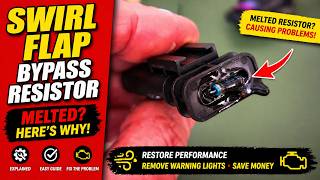
- Swirl Motor 'Resistor Mod' Installed: A common workaround, especially in the Jeep and Mercedes car communities, is to unplug the motor and solder a 4.7k Ohm resistor across two pins of the harness connector to trick the ECU into thinking the motor is functional. If this resistor is present, it will prevent the code but also masks the underlying mechanical problem (broken linkage or seized flaps), which can cause other performance issues.
Diagnosis Steps

- Read the fault codes with an OBD-II scanner to confirm P2015 and any other related codes.
- Remove the plastic engine covers and air intake ducting to gain access to the top-center of the engine (the 'V' valley).
- CRITICAL FIRST LOOK: Inspect the large orange/red seal (P/N A6420940080) on the turbocharger air inlet pipe. Is it wet with oil? Is the swirl flap motor below it soaked in oil? This is a primary cause of motor failure.
- Visually inspect the swirl flap actuator motor and the linkage rods connecting it to the two intake manifolds. Look for broken plastic pieces or disconnected rods. This is the most common failure.
- If the linkage appears intact, try to move the linkage by hand to feel the movement of the swirl flaps. If it feels very stiff or won't move at all, the flaps are likely seized with carbon inside the manifolds.
- If visual inspection is inconclusive, use an advanced scan tool to monitor the live data for the swirl flap position sensor while commanding the actuator to open and close. If the 'actual' position does not change or is erratic while the 'commanded' position changes, it points to a failed motor or seized flaps.
- If the motor is replaced and the code persists, inspect the wiring harness for damage, corrosion, or loose pins at the connector. Check for the presence of a 'resistor mod' if the motor is unplugged.
Parts You'll Likely Need

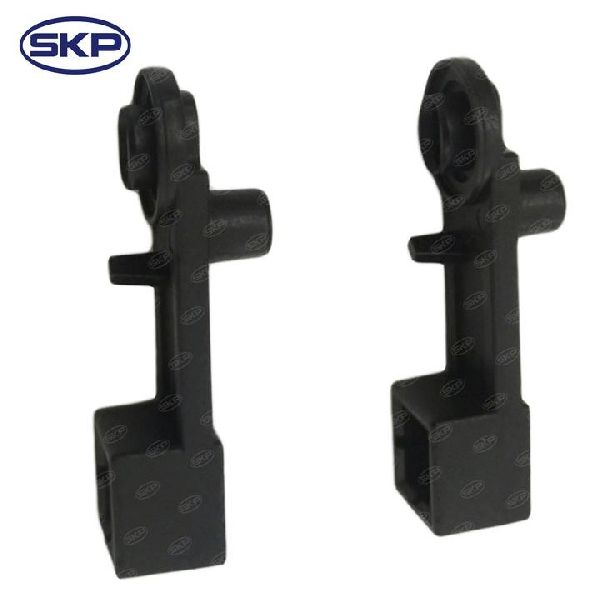
- Intake Manifold Swirl Flap Linkage Repair Kit (Metal)
(OEM #Not sold by OEM)— This is the most frequent failure point. The original plastic linkage breaks, and aftermarket metal kits provide a permanent fix without needing to replace the entire manifold assembly.
Trusted brands: IDParts, URO Parts, X8R, Gruvenparts
OEM price range: N/A
Aftermarket price range: $50-$150 - Intake Manifold Swirl Flap Actuator Motor
(OEM #A6421500494 (verify by VIN, other numbers include A6421500594, A6421500694))— This motor fails from internal wear or, more commonly, from being shorted out by leaking engine oil. It is often replaced as part of the job.
Trusted brands: Pierburg (OEM), Bosch
OEM price range: $250-$400
Aftermarket price range: $150-$250 - Turbocharger Inlet Seal (Red/Orange)
(OEM #A6420940080)— MUST be replaced during this job. This seal hardens and leaks oil directly onto the swirl flap motor, causing it to fail. Not replacing it will lead to a repeat failure of the new motor.
Trusted brands: Genuine Mercedes-Benz
OEM price range: $15-$30
Aftermarket price range: $10-$20 - Intake Manifold Assembly (Left or Right)
(OEM #A6420907737 (Right), A6420905437 (Left) - Always verify by VIN.)— Required if the internal swirl flaps are seized by carbon, or if the flap bushings are excessively worn and cannot be repaired.
Trusted brands: Genuine Mercedes-Benz
OEM price range: $400-$600 per side
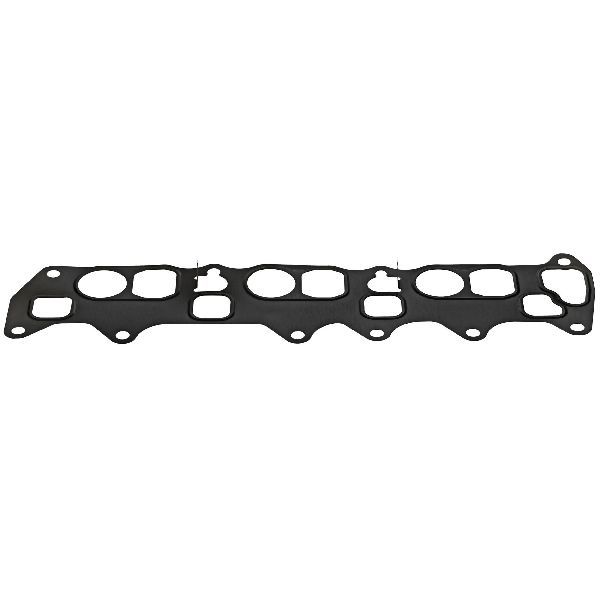
Aftermarket price range: $300-$500 per side - Intake Manifold Gasket Set — These must be replaced any time the intake manifolds are removed for cleaning or replacement.
Trusted brands: Victor Reinz, Elring
OEM price range: $50-$80
Aftermarket price range: $30-$60
Related Codes That Often Appear With This One
- P2004 — Stands for 'Intake Manifold Runner Control Stuck Open'. This code often appears with P2015 as it indicates a specific failure state within the same system.
- P2006 — Stands for 'Intake Manifold Runner Control Stuck Closed'. Like P2004, this is another specific fault code for the swirl flap system that can accompany P2015.
- 2513 — This is a Mercedes-specific fault code for 'M55 Inlet port shutoff motor positioner signals fault'. It is a more specific version of the generic P2015 code and points directly to a problem with the swirl motor's reported position.
Platform-Specific Known Issues
- A known oil leak from the turbocharger air inlet/resonator seal is a direct cause of the swirl flap motor failure and should be addressed preventatively.
Mechanic-Grade Diagnostic Values
- Swirl Flap Actuator (M55) PWM Control Signal — expected: Frequency: 141 Hz. Duty cycle range: 5% (one end position) to 95% (other end position). The motor moves proportionally between these points.. Failure: When the motor detects a jam or cannot reach the target position, it temporarily pulls the signal pin (Pin 3) to ground. The ECU interprets this as a fault.
- 'Resistor Mod' Value — expected: A 4.7k Ohm resistor is typically used, though values between 1k and 10k Ohm may work.. Failure: This is not a failure indicator, but a modification to bypass the motor. It is installed between Pin 2 (+12V) and Pin 3 (Signal) on the motor's electrical connector to fool the ECU.
Hidden / Shadow Codes Worth Checking
- 2513-004: Check component M55 (Inlet port shutoff motor). Positioner signals fault / Signal wire is interrupted. This is the manufacturer-specific code that directly corresponds to the generic P2015. (see via Mercedes-Benz specific scan tools like XENTRY/DAS.)
Scan Tool Commands That Help
- XENTRY/DAS: Actuations / Initial Startup — After replacing the swirl flap motor or linkage, a technician can use the 'Actuations' menu in the CDI control unit to command the motor to move from 0% to 100%. This verifies the mechanical repair and ensures the new motor is responding correctly to ECU commands before reassembling the engine.
- XENTRY/DAS: Teach-in process for intake port shutoff motor — After installing a new swirl flap motor (M55), this service routine must be run. The ECU learns the mechanical end stops of the swirl flaps. If this adaptation is not performed, the new motor may not function correctly and could lead to the P2015 code returning.
Wiring & Ground Locations
- M55 (Inlet Port Shutoff Motor) Connector — Deep in the 'V' of the engine, underneath the turbocharger and its intake piping.. This is the 4-pin connector for the swirl flap motor. It is highly susceptible to oil contamination from the turbo inlet seal above it, which causes short circuits and motor failure. Testing for power, ground, and signal occurs at this connector.
- M55 Connector Pinout — On the swirl flap motor connector itself.. Pin 1: Ground (GND). Pin 2: +12V Power. Pin 3: PWM Signal from ECU. Pin 4: Not used. Knowing the pinout is essential for bench testing the motor or performing live electrical tests on the vehicle.
Real Owner Repair Stories
- Sprinter-Source.com forum user (2007 Sprinter 3.0L V6 with 253,000 miles) — Enters Limp Home Mode (LHM), initially intermittent but became constant. Check Engine Light on.
❌ Tried (didn't work) Replaced cracked turbo air intake hose and orange seal., Replaced turbo resonator/silencer due to visible oil., Planned to clean EGR valve.
✅ What actually fixed it The user pulled codes P2004, P2005, and P2015, all pointing to the swirl flaps being stuck open. The final diagnosis confirmed a failure in the swirl valve system (actuator, linkage, or seized flaps), which was the root cause of the LHM, not the previously replaced intake components.
OEM Part Supersession History
A6421500004, A6421500194, A6421500294, A6421500394→A6421500494, A6421500594, A6421500694— Revisions by the manufacturer (Pierburg) to improve reliability.
Heads up: While most are interchangeable, it is critical to verify the correct part number by VIN. Some part numbers are specific to engine power output (e.g., 280/320 CDI vs 350 CDI) and may have different calibration, even if they physically fit.
Model Year Variations Within This Range
- 2014+: Starting around 2014, the OM642 engine block switched from cast-in iron cylinder liners to a 'Nanoslide' arc spray iron lining. This does not directly affect the P2015 code but is a notable internal engine change within the vehicle's year range.
- 2010+: Post-2010 OM642 engines used upgraded purple Viton seals for the oil cooler, replacing the problematic orange seals that were prone to leaking. While not directly related to P2015, a massive oil leak from the cooler can be confused with the smaller leak from the turbo inlet seal that damages the swirl motor.
Diagnostic Flowchart
Other Known Issues on This Vehicle
Issues unrelated to this code that are worth knowing about as an owner of this generation:
- Oil Cooler Seal Leak 🔴 High — Very common after 80,000-120,000 miles. The original purple/orange seals degrade, leaking oil into the engine valley, which then runs down the back of the engine, mimicking a rear main seal leak. (Ref: Mercedes updated the seals to a more durable Viton material (green or black), but no official recall was issued.)
- Injector Seal Failure ('Black Death') 🔴 High — Common failure where the copper injector seat washer fails, allowing combustion gases to leak into the engine bay. This creates a hard, tar-like buildup of carbon around the injector.
- DPF/BlueTEC System Failures 🟠 Medium — Frequent, especially on vehicles used for short trips. DPF clogs, NOx sensor failures, and DEF heater failures are common, often leading to limp mode or a no-start countdown. (Ref: Various software updates and component revisions exist, but no single recall covers all issues.)
- Turbo Actuator Failure 🔴 High — The electronic actuator for the variable geometry turbo is prone to failure from heat cycles, often independent of the turbocharger itself. Can cause low boost and limp mode.
- Turbo Resonator & Charge Hose Leaks 🟡 Low — The plastic turbo resonator and rubber charge air hoses can crack or split, causing a loss of boost pressure, audible whistling, and oil misting in the engine bay.
- Timing Chain Stretch 🔴 High — Less common than other issues but can occur at very high mileage (200k+ miles). Can cause rattling noises on startup and, if ignored, catastrophic engine failure.
Used vs. New Parts: Buying Guide for This Vehicle
When a used part is the smart pick: A complete intake manifold assembly from a verified low-mileage (under 80,000 miles) donor vehicle can be a cost-effective alternative to buying new OEM manifolds, especially if your original ones are heavily coked with carbon and the flaps are seized.
Donor-vehicle mileage cap: roughly under 80000 miles for the part to have meaningful remaining life.
What to inspect on the donor part:
- Verify the donor vehicle's mileage.
- Inspect the intake ports for excessive carbon buildup. Light soot is normal, but thick, tar-like deposits are a red flag.
- Manually actuate the swirl flap levers on the donor manifold. They should move smoothly with no binding or sticking.
- Check the plastic linkage arms for any cracks or signs of heat stress.
OEM-only on this vehicle (don't cheap out):
- Turbocharger Inlet Seal (Red/Orange): This is a critical, inexpensive seal. The cost savings of an aftermarket part are negligible compared to the risk of a repeat failure of the expensive swirl motor. Always use a Genuine Mercedes-Benz seal.
- Swirl Flap Actuator Motor: While aftermarket options exist, the OEM Pierburg unit is the most reliable. Failures are often caused by external oil leaks, not internal defects, so using a proven OEM part is the safest bet.
Aftermarket brands forum-validated for this vehicle:
- URO Parts (for metal linkage kit)
- IDParts (for metal linkage kit)
- Pierburg (for OEM actuator motor)
Brands owners have reported issues with on this vehicle:
- Unbranded, generic 'resistor mod' plugs from online marketplaces. Some have been reported to use materials that cannot withstand engine bay temperatures, leading to the resistor's insulation melting.
Related OBD-II Codes
Frequently Asked Questions
My 2012 Sprinter is in limp mode with code P2015. What is the most likely part that failed?
I see oil all over the swirl flap motor under the turbo. Is this related to my P2015 code?
The dealership wants to replace both entire intake manifolds for over $1200. Is there a cheaper fix for just the broken linkage?
I'm replacing the swirl flap actuator motor on my OM642 engine. Is there anything else I must replace at the same time?
My mechanic confirmed the linkage and motor are good, but the flaps are stuck. What causes this on the Sprinter?
I have a Jeep Grand Cherokee with the 3.0L diesel and a P2015 code. Is this the same problem as on the Sprinter?
Helpful Videos
We Have This Part in Stock


The information in this article is provided for general reference and educational purposes only. Vehicle specifications, procedures, and part compatibility can vary by production date, trim level, and region. Always consult your vehicle's factory service manual and verify part numbers before purchasing or performing repairs. Safety-critical components such as airbags, seat belts, and braking systems should be installed by a qualified professional.
- Freightliner Sprinter:
- 🎬 Helpful Videos
- 🛍️ Shop This Part
- What's Unique About the 2007-2018 Freightliner Sprinter
- Symptoms You May Notice
- Most Likely Causes
- Rare But Worth Checking
- Diagnosis Steps
- Parts You'll Likely Need
- Related Codes That Often Appear With This One
- Platform-Specific Known Issues
- Mechanic-Grade Diagnostic Values
- Hidden / Shadow Codes Worth Checking
- Scan Tool Commands That Help
- Wiring & Ground Locations
- Real Owner Repair Stories
- OEM Part Supersession History
- Model Year Variations Within This Range
- Diagnostic Flowchart
- Other Known Issues on This Vehicle
- Used vs. New Parts: Buying Guide for This Vehicle
- Related OBD-II Codes
- Frequently Asked Questions
- 🎟️ Get 5% Off