

P2006 on 2013-2018 Ford Focus ST: Intake Manifold Runner Control Stuck Closed Causes and Fixes
On a 2013-2018 Ford Focus ST, code P2006 means the intake manifold runner flaps are stuck closed, killing high-RPM power. The most likely causes are a failed vacuum actuator (torn diaphragm), a bad control solenoid, or cracked vacuum lines. Expect to pay $25-$70 for a solenoid or $150+ for an actuator, plus labor if the intake manifold needs to be removed.
- P2006 on your Focus ST means the engine is being starved of air at high RPMs, causing a major loss of power.
- Before buying expensive parts, perform a simple visual inspection of all vacuum lines connected to the intake manifold for cracks or loose fittings.
- The most likely mechanical failures are a cheap control solenoid or a more expensive vacuum actuator with a torn internal diaphragm.
- If the actuator and solenoid are working, the cause is likely carbon buildup inside the intake manifold, which requires removal and cleaning.
- This is a DIY-friendly diagnosis for those comfortable with basic engine components, but replacing the actuator or cleaning the manifold can be labor-intensive.
What's Unique About the 2013-2018 Ford Focus
The 2.0L EcoBoost engine in the Focus ST uses a vacuum-operated IMRC system to control the runner flaps. This design is susceptible to failures in the vacuum lines, the control solenoid, and the actuator itself, which uses a rubber diaphragm. A torn diaphragm in the actuator is a well-documented failure point on these engines, preventing it from holding the vacuum needed to open the flaps. Additionally, as a Gasoline Direct Injection (GDI) engine, it is prone to carbon buildup on the intake valves and runners, which can physically jam the flaps over time, a common issue for GDI engines that lack port injection to wash the valves.
Symptoms You May Notice
- Check Engine Light is on
- Significant loss of engine power, especially at higher RPMs
- Poor or hesitant acceleration
- Reduced fuel efficiency
- Rough idle or engine stumble
- Engine surge issues
- Replacing the entire intake manifold when only a simple vacuum line or inexpensive solenoid has failed.
- Replacing the IMRC actuator when the control solenoid is the actual point of failure.
- Assuming the flaps are stuck due to carbon when there is a vacuum leak or failed actuator.
Most Likely Causes
- Failed IMRC Vacuum Actuator 🔴 High Probability The actuator uses a rubber diaphragm to hold vacuum, which can tear or perish over time due to heat and age, causing a loss of vacuum and preventing it from opening the runner flaps. This is a very common failure point.
How to confirm: Apply a handheld vacuum pump to the actuator's vacuum port. If it fails to hold vacuum, the diaphragm is torn and the actuator is bad. You can also visually inspect the actuator arm while a helper revs the engine past 4,000 RPM; if it doesn't move, it has likely failed. The actuator is often sold as part of the entire intake manifold assembly from Ford, but can sometimes be sourced separately.
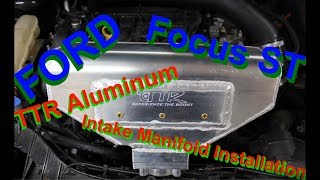
Typical fix: Replace the IMRC actuator. This part may be difficult to access and may require partial or full removal of the intake manifold. 🎬 See this walkthrough for removing and installing the intake manifold
Est. part cost: $150-$400 - Failed IMRC Control Solenoid 🟡 Medium Probability This electronic solenoid controls the vacuum flow to the actuator. It can fail electrically or become clogged with debris, preventing it from sending vacuum to the actuator.
How to confirm: With the engine running, disconnect the vacuum line leading from the solenoid to the actuator and check for vacuum as the engine is revved past the IMRC activation point (~4,000 RPM). Alternatively, use a capable scan tool with bidirectional controls to perform an active test on the solenoid to see if it clicks and allows vacuum to pass.
Typical fix: Replace the IMRC control solenoid. It is typically mounted in an accessible location on or near the intake manifold.
Est. part cost: $25-$70 - Cracked, Leaking, or Disconnected Vacuum Lines 🟡 Medium Probability The rubber and plastic vacuum lines that operate the IMRC system are exposed to constant engine bay heat and vibration, which can cause them to become brittle, crack, and leak over time.
How to confirm: Visually inspect all vacuum lines connected to the IMRC solenoid and actuator for cracks, loose fittings, or breaks. A smoke test can also be performed to pinpoint hard-to-see leaks.
Typical fix: Replace the damaged section of vacuum hose. This is often a very inexpensive and simple fix.
Est. part cost: $5-$20 - Carbon Buildup on IMRC Flaps ⚪ Low Probability As a GDI engine, the 2.0L EcoBoost does not have fuel washing over the intake valves. This allows oil vapor from the PCV system to bake onto the intake runners and flaps, creating hard carbon deposits that can physically restrict their movement.
How to confirm: This is difficult to confirm without removing the intake manifold for a visual inspection. If the actuator and solenoid are confirmed to be working but the flaps still won't open (can be checked by trying to move the linkage by hand), carbon buildup is the likely cause.
Typical fix: The intake manifold must be removed and the intake ports and runner flaps must be manually cleaned. A professional service known as 'walnut blasting' is the most effective method for cleaning the ports and valves.
Est. part cost: $0 (if cleaning yourself) or cost of walnut blasting service ($400-$800)
Rare But Worth Checking
- Damaged Wiring or Connectors: Check the wiring harness and connector for the IMRC solenoid for any signs of corrosion, fraying, or damage, which could prevent the solenoid from receiving the signal to open. TSB 13-09-07 was issued for 2013-2014 models for faulty wiring splices that could cause various drivability issues.
- Faulty Powertrain Control Module (PCM): In very rare cases, the PCM itself may fail to send the correct signal to the IMRC solenoid. This should only be considered after all other possibilities have been exhausted.
Diagnosis Steps
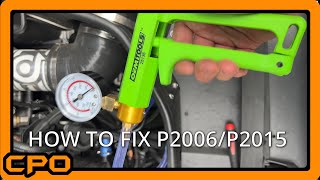
- Read the code with an OBD-II scanner and confirm P2006 is present. 🎬 Watch: How to diagnose and fix P2006 runner codes Note any other codes.
- Visually inspect the IMRC system. Locate the vacuum actuator on the driver's side of the intake manifold and the vacuum lines running to it from the control solenoid.
- Check for obvious damage like disconnected, brittle, or cracked vacuum hoses.
- With the engine off, try to move the actuator linkage by hand. It should move with some resistance but not be seized. If it's stuck, the flaps inside the manifold are likely jammed with carbon or the linkage is broken.
- If the linkage moves freely, test the actuator. Disconnect the vacuum line at the actuator and connect a handheld vacuum pump. Apply vacuum. If the actuator arm does not move or fails to hold vacuum, the internal diaphragm is torn and the actuator must be replaced.
- If the actuator holds vacuum, test the control solenoid. Reconnect the actuator. Using a scan tool with bidirectional control, command the IMRC solenoid on and off. You should hear it click and see the actuator arm move. If it doesn't, check for power and ground at the solenoid connector.
- If you don't have a bidirectional scanner, you can test for vacuum at the solenoid's outlet port while a helper revs the engine past 3,800-4,000 RPM. If no vacuum is present but there is vacuum going into the solenoid, the solenoid is likely faulty.
- If the solenoid and actuator test good, and the linkage moves by hand, the problem may be an intermittent wiring issue. Refer to TSB 13-09-07 for potential wiring splice problems on 2013-2014 models.
- If all other components are verified to be working, the final possibility is severe carbon buildup inside the manifold, requiring removal and cleaning.
Parts You'll Likely Need
- Intake Manifold Runner Control Solenoid
(OEM #Motorcraft CM5229 (Cross-references to Ford part 3F2Z-9G756-AC, though this is a multi-purpose sensor/solenoid and should be verified by VIN))— This solenoid is a common failure point that controls the vacuum sent to the actuator. It is relatively inexpensive and easy to replace as a first step.
Trusted brands: Motorcraft, Dorman
OEM price range: $50-$90
Aftermarket price range: $25-$70 - Intake Manifold Runner Control Actuator
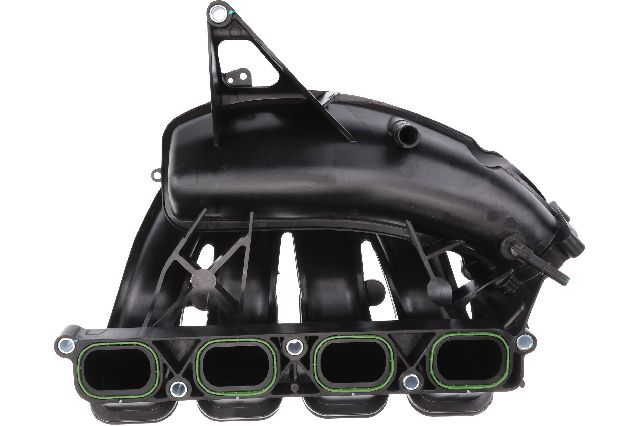
(OEM #Typically sold with the intake manifold assembly. Aftermarket options like Dorman 911-913 may be available.)— The diaphragm inside the actuator is known to tear, causing a vacuum leak that prevents the runner flaps from opening. This part is often sold with or as part of the entire intake manifold assembly from Ford, making it a more expensive repair.
Trusted brands: Motorcraft (as part of manifold), Dorman
OEM price range: $150-$400 (may require purchase of full manifold)
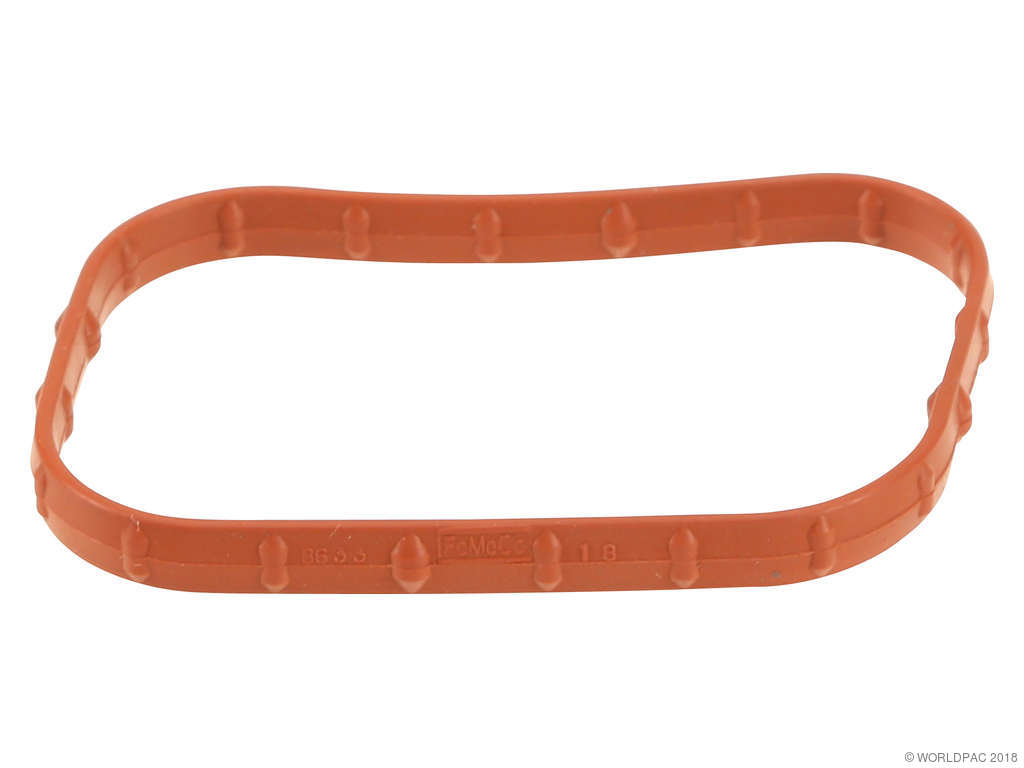
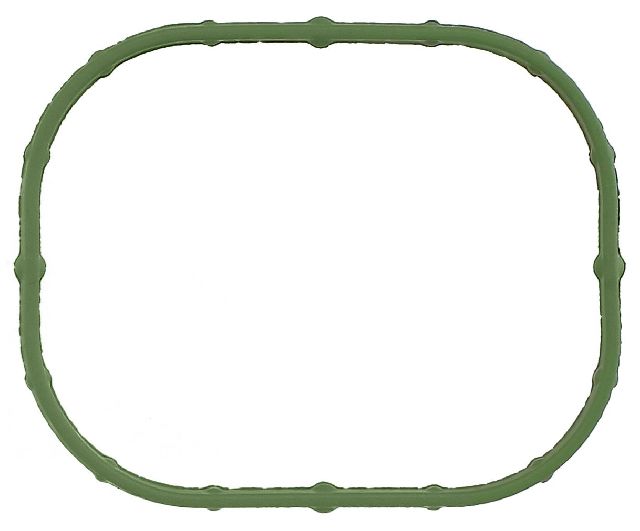
Aftermarket price range: $100-$250 - Intake Manifold Gasket Set
(OEM #Motorcraft 3S4Z-9439-AA (verify by VIN))— If the intake manifold must be removed to replace the actuator or clean carbon buildup, the gaskets must be replaced to prevent vacuum leaks upon reinstallation.
Trusted brands: Motorcraft, Fel-Pro
OEM price range: $20-$40
Aftermarket price range: $15-$30
Related Codes That Often Appear With This One
- P2015 — This code for 'Intake Manifold Runner Position Sensor/Switch Circuit Range/Performance' often appears with P2006 because the sensor's reading is out of the expected range when the flaps fail to move as commanded.
- P2004 — This is the opposite code, 'Intake Manifold Runner Control Stuck Open'. It can sometimes appear alongside or be confused with P2006 if the system is behaving erratically.
Technical Service Bulletins (TSBs) & Recalls
- TSB 13-09-07: Addresses potential wiring splice issues in the main harness on 2013-2014 Focus ST models that can cause rough idle, stalling, and other drivability concerns with codes like P0106 and P0236, which could be related to IMRC circuit integrity.
Hidden / Shadow Codes Worth Checking
- Mode 6, Test ID $A2-$A7 (Varies by specific ECU calibration): Mode 6 data can reveal misfire counts per cylinder before they are significant enough to set a standard trouble code like P030x. While not directly related to the IMRC, checking this data can be useful to see if the airflow issue from P2006 is causing intermittent misfires under load that haven't yet triggered a Check Engine Light. (see via Advanced scan tools like FORScan or professional-grade scanners with Mode 6 capability.)
Scan Tool Commands That Help
- Ford IDS / FORScan / High-End Snap-on: Output State Test (or similar active test) — This bidirectional control allows the technician to command all outputs, including the IMRC solenoid, to activate. This is used to verify if the solenoid clicks and sends vacuum to the actuator on command, isolating the fault between the electrical control side and the mechanical/vacuum actuation side.
Wiring & Ground Locations
- G103 / G104 (designation may vary) — Underneath the airbox assembly, on the chassis frame rail, near the battery. There are typically two ground points in this area.. These are primary engine bay ground points. While not directly for the IMRC actuator (which is vacuum-controlled), the IMRC solenoid and position sensor rely on a clean ground for proper operation. A corroded ground here can cause erratic sensor readings or intermittent solenoid function, complicating diagnosis. Cleaning these grounds is a good practice when troubleshooting any engine sensor code on this platform.
Real Owner Repair Stories
- YouTube user 'Boosted' (video title: 'Fixed! Intake Manifold Runner Stuck Closed (P2006/P2015)') (Ford Focus ST (year not specified, but within 2013-2018 range)) — Check Engine Light with codes P2006 and P2015, no noticeable drivability issues below ~3800 RPM.
❌ Tried (didn't work) The user first confirmed the IMRC linkage was not physically seized by moving it by hand., Tested the vacuum solenoid and confirmed it was working., Tested the vacuum lines and confirmed they were not leaking.
✅ What actually fixed it The IMRC vacuum actuator was unable to hold vacuum when tested with a handheld pump. Upon removal of the actuator, a visible tear was found in its internal rubber diaphragm. The actuator was replaced (using a part from a spare manifold), which resolved the code.
OEM Part Supersession History
3F2Z-9G756-AC→Motorcraft CM5229— Part number consolidation and branding.
Heads up: The part number 3F2Z-9G756-AC and its Motorcraft equivalent CM5229 are listed for a wide variety of Ford applications, including as a 'Fuel Injection Pressure Sensor' on F-150s and other models. It is critical to verify the part is correct for the Focus ST IMRC application by VIN, as it is a multi-purpose part number used for different functions on different vehicles.
Diagnostic Flowchart
Other Known Issues on This Vehicle
Issues unrelated to this code that are worth knowing about as an owner of this generation:
- Canister Purge Valve (CPV) Failure 🔴 High — Extremely common across all 2012-2018 Focus models. Can fail multiple times. Often causes stalling after refueling and DTC P1450. (Ref: Recall 18S32 / 19S22; Customer Satisfaction Program 24N07.)
- Low-Speed Pre-Ignition (LSPI) 🔴 High — A risk inherent to many early GDI turbo engines. Can cause catastrophic engine damage (cracked pistons/ringlands). More likely with aggressive tunes or lugging the engine at low RPM in high gears. (Ref: ILSAC GF-6 oil standard was developed in part to mitigate LSPI, using a Ford 2.0L EcoBoost as a test engine.)
- Passenger-Side Hydraulic Engine Mount Failure 🟠 Medium — Very common. The hydraulic fluid-filled mount is known to leak and fail, causing excessive engine vibration, especially at idle.
- Overheating Under Heavy Load / Track Use 🟠 Medium — Common for owners who track their cars or drive them aggressively in hot climates. The stock cooling system can be overwhelmed, leading to high coolant and oil temperatures.
- Cracked Cylinder Head 🟡 Low — Less common but a known catastrophic failure. The integrated exhaust manifold ('headifold') design can develop cracks near the turbo flange due to thermal stress. (Ref: SSM 47462 notes coolant consumption issues on some 2.0L EcoBoost engines, which can be a symptom.)
- Wiring Harness Splice Failure (Early Models) 🟠 Medium — Affects 2013-2014 models. Poor quality splices in the engine wiring harness can corrode and fail, causing a wide range of difficult-to-diagnose drivability problems. (Ref: TSB 13-09-07; Safety Recall 14S17)
Used vs. New Parts: Buying Guide for This Vehicle
When a used part is the smart pick: A complete used intake manifold from a low-mileage donor car can be a good value, as it often includes the actuator, linkage, and flaps. This can be cheaper than buying a new manifold assembly from Ford if your actuator has failed and is not available separately.
Donor-vehicle mileage cap: roughly under 60000 miles for the part to have meaningful remaining life.
What to inspect on the donor part:
- Before buying, test the vacuum actuator with a handheld vacuum pump to ensure it holds vacuum.
- Manually operate the runner flap linkage by hand to ensure it moves smoothly without binding or excessive play.
- Look down the intake runners with a flashlight to check for heavy carbon buildup. Avoid manifolds that are visibly caked with carbon.
- Inspect the plastic housing for any cracks, especially around mounting points.
Aftermarket brands forum-validated for this vehicle:
- Motorcraft (for OEM solenoid and gaskets)
- Dorman (Offers an aftermarket actuator, Dorman 911-913, which is an alternative to buying the full manifold)
Brands owners have reported issues with on this vehicle:
- Unnamed/white-box electronic parts like solenoids from online marketplaces should be avoided. While some Dorman parts are acceptable, reviews for their electronic components can be mixed, so OEM (Motorcraft) is often a safer bet for the solenoid.
Real Owner Stories
Aggregated from forums and TSBs cited above. Mileages and costs reflect what owners reported in those sources.
2013-2018 Ford Focus 2.0L EcoBoost I4 (ST)
Symptoms: The check engine light was on for code P2006. The owner diagnosed the issue by applying vacuum with a Mityvac and confirmed the actuator would not hold pressure.
What fixed it: The owner replaced the entire intake manifold because the IMRC actuator was not sold separately by Ford at the time.
Source hint: focusst.org: 'IMRC valve stuck closed p2006'
2017 Ford Focus 2.0L EcoBoost I4 (ST)
Symptoms: The vehicle set the P2006 trouble code.
What fixed it: Discussion pointed towards a broken sensor pin that is an integral part of the intake manifold assembly, suggesting the manifold needed to be replaced.
Source hint: reddit.com/r/FocusST: 'Intake Manifold Control Runner - code p2006'
Related OBD-II Codes
Frequently Asked Questions
Is the IMRC actuator something I can buy separately for my Focus ST, or do I have to buy the whole intake manifold?
My 2014 Focus ST has a rough idle along with the P2006 code. Is there a known wiring issue I should check?
Why is my 2.0L EcoBoost engine prone to the carbon buildup that causes the IMRC flaps to stick?
What is the most effective way to clean the carbon buildup if that's what is causing my P2006 code?
I tested the IMRC actuator with a handheld vacuum pump and it won't hold any vacuum. What does this confirm?
Does the P2006 issue affect other Ford vehicles besides the Focus ST?
My car is stalling after I get gas, but the only code is P2006. Are these issues related?
Helpful Videos
Used OEM Parts in Stock


New Aftermarket Parts Available


The information in this article is provided for general reference and educational purposes only. Vehicle specifications, procedures, and part compatibility can vary by production date, trim level, and region. Always consult your vehicle's factory service manual and verify part numbers before purchasing or performing repairs. Safety-critical components such as airbags, seat belts, and braking systems should be installed by a qualified professional.
- Ford Focus:
- 🎬 Helpful Videos
- 🛍️ Shop This Part
- What's Unique About the 2013-2018 Ford Focus
- Symptoms You May Notice
- Most Likely Causes
- Rare But Worth Checking
- Diagnosis Steps
- Parts You'll Likely Need
- Related Codes That Often Appear With This One
- Technical Service Bulletins (TSBs) & Recalls
- Hidden / Shadow Codes Worth Checking
- Scan Tool Commands That Help
- Wiring & Ground Locations
- Real Owner Repair Stories
- OEM Part Supersession History
- Diagnostic Flowchart
- Other Known Issues on This Vehicle
- Used vs. New Parts: Buying Guide for This Vehicle
- Real Owner Stories
- 2013-2018 Ford Focus 2.0L EcoBoost I4 (ST)
- 2017 Ford Focus 2.0L EcoBoost I4 (ST)
- Related OBD-II Codes
- Frequently Asked Questions
- 🎟️ Get 5% Off