

P1776 on 2007-2018 Ram 3500 6.7L Cummins: Solenoid Switch Valve Fixes
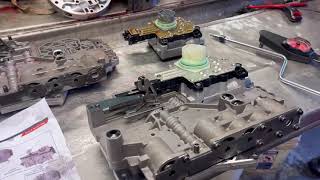
On a Ram 3500 with a 6.7L Cummins and 68RFE transmission, P1776 is almost always caused by a worn-out bore in the transmission valve body, causing the Solenoid Switch Valve to stick. This forces the truck into 'limp mode'. The most reliable fix is replacing the valve body with an upgraded unit, not just the solenoid pack, as the valve itself is located in the valve body.
- P1776 on a 6.7L Cummins Ram means the transmission is stuck in 'limp mode' because a specific valve (the SSV) is stuck.
- Do not automatically replace the solenoid pack. The true cause is most often a worn-out valve body, and replacing only the solenoid will not fix the problem.
- This is a serious issue that requires professional repair. Driving in limp mode can quickly lead to catastrophic transmission failure.
- Before major repairs, always check for transmission software updates at a dealership, as a reflash can sometimes solve the problem.
What's Unique About the 2007-2018 Ram 3500
The 6.7L Cummins in this year range is paired with the Chrysler-built 68RFE automatic transmission. This transmission family is known for a specific design flaw where the aluminum bore for the Solenoid Switch Valve (SSV) inside the valve body wears out over time. This wear allows the steel valve to get stuck or cocked in the bore, causing the P1776 code. As a result, a very common misdiagnosis is to replace the expensive solenoid pack, only for the code to return because the root cause in the valve body itself was not addressed. A Chrysler technical tip (and TSB 21-001-13 for earlier models) specifically warns technicians not to replace the solenoid assembly for this code, as the valve is located within the valve body. Aftermarket companies like Sonnax and TransGo have developed oversized valve kits specifically to repair this worn bore.
🎬 Watch: Expert breakdown of valve body failures and fixes.Generation note: This range covers the end of the third generation (2007.5-2009) and the majority of the fourth generation (2010-2018) Ram 3500. Both generations used the 6.7L Cummins and the 68RFE automatic transmission where this fault is common. One key difference is that solenoid packs on pre-2011 models typically have a white electrical connector, while 2011 and newer models use a grey connector; they are not interchangeable. The valve bodies also changed, with 2007.5-2010 models having 7 check balls and later models having 5.
Symptoms You May Notice
- Check Engine Light is on
- Transmission enters 'limp mode' (fail-safe mode), often stuck in 3rd or 4th gear
- Harsh or erratic shifting
- Inability to use higher gears or manual shift control
- Torque converter will not lock up, leading to higher RPMs at cruising speed
- Vehicle may start off in a higher gear from a stop
- Replacing the transmission solenoid pack when the root cause is a worn valve body. This is the most common mistake and leads to the code returning, wasting hundreds of dollars.
- Replacing the entire transmission when only the valve body is faulty.
Most Likely Causes
- Worn Solenoid Switch Valve (SSV) Bore in Valve Body 🔴 High Probability The 68RFE's aluminum valve body bore is a well-documented weak point that wears from the constant oscillation of the steel valve, allowing it to stick or leak pressure. This is considered the root cause in the majority of cases.
How to confirm: This is difficult to confirm without disassembly. A transmission shop can perform a vacuum test on the bore to check for leaks; a reading below 16 in-Hg indicates excessive wear. It is typically diagnosed by eliminating other possibilities; if a new solenoid pack doesn't fix the code, a worn valve body is the almost certain cause.
Typical fix: Replace the entire transmission valve body with a new or remanufactured unit. Aftermarket options from brands like BD Diesel, RevMax, and Sonnax often include steel sleeves in the SSV bore to prevent future wear. Alternatively, a specialty shop can ream the original valve body and install an oversized SSV kit like the Sonnax 92835-31K or 92835-32K (depending on original valve size).
Est. part cost: $400-$900 - Failed Transmission Solenoid Pack (Block) 🟡 Medium Probability The solenoid pack is a complex electro-hydraulic component that operates in a high-heat environment and can fail electrically or mechanically. However, it is often replaced unnecessarily for this specific code.
How to confirm: A professional-grade scan tool can command individual solenoids to test for response. The resistance for the L/R solenoid should be around 1.3 Ohms. 🎬 See how to diagnose common 68RFE transmission problems. Often, it's replaced as a diagnostic step, but this frequently fails to solve the P1776 code.
Typical fix: Replace the transmission solenoid pack. It is critical to get the correct part based on the model year. Pre-2011 models generally use a white connector (Mopar P/N 52119435AF), while 2011-2018 models use a grey connector.
Est. part cost: $350-$650 - Misadjusted Shifter Cable or Faulty Transmission Range Sensor (TRS) ⚪ Low Probability Stretching or misadjustment of the cable can prevent the manual valve in the transmission from being fully in the correct gear position, leading to confusing signals for the TCM.
How to confirm: A Chrysler TSB (#21-001-13) suggests checking scan tool event data to see if the code was set when the TRS was reporting an in-between gear position ('TR2'). Physically inspect the cable for damage, binding, or improper routing.
Typical fix: Adjust or replace the shifter cable. Replace the Transmission Range Sensor if it is faulty (the TRS is integrated into the solenoid pack).
Est. part cost: $50-$150 for cable, or cost of solenoid pack if TRS is bad. - Contaminated or Low Transmission Fluid ⚪ Low Probability Clutch material or other metallic debris circulating in the fluid can cause any valve to stick, including the SSV, and can accelerate bore wear.
How to confirm: Check the transmission fluid level and condition. The 68RFE uses two filters (a pan filter and a spin-on cooler line filter). If the fluid is dark, burnt-smelling, or contains metallic particles, it indicates a larger internal problem.
Typical fix: Perform a transmission fluid and filter change with Mopar ATF+4 fluid. If significant debris is found, a transmission rebuild may be necessary.
Est. part cost: $150-$300 for fluid and both filters service
Rare But Worth Checking
- Shorted Wiring Harness: A short to ground on the Low/Reverse pressure switch circuit can trick the computer into thinking the switch is on when it's not. This would likely be accompanied by other electrical codes and can be diagnosed by checking the harness for continuity.
- Outdated TCM Software: TSB #18-091-16 was released to change the P1776 fault from a one-trip to a two-trip malfunction, making the check engine light less sensitive to intermittent glitches that could set this code. Checking for software updates is a recommended first step.
Diagnosis Steps
- Check for any available Transmission Control Module (TCM) software updates, referencing TSB #18-091-16. A dealer may need to perform this flash.
- Check the transmission fluid level and condition. Ensure it is full of clean ATF+4 fluid and does not appear burnt or contaminated.
- With a professional scan tool, check the event data for the P1776 code. Per TSB 21-001-13, if the 'TRS Code' reads 'TR2', it indicates a shifter cable adjustment issue is the likely cause.
- Inspect the shifter cable and linkage for any signs of binding, damage, or misadjustment.
- If the above steps do not resolve the issue, the next step is to drop the transmission pan to inspect for excessive metallic debris on the magnet.
- At this point, the most likely causes are the solenoid pack or the valve body. Due to the extremely high probability of a worn valve body bore, replacing the entire valve body assembly with a quality remanufactured unit (that has a sleeved SSV bore) is the most recommended and reliable repair.
- If replacing the valve body, it is often recommended to replace the solenoid pack at the same time as a preventative measure.
- After replacing components, perform a transmission 'quick learn' procedure with a compatible scan tool to reset adaptive memory and ensure proper shifting.
Parts You'll Likely Need
- Transmission Valve Body
(OEM #52119895AH (2011-2018, example))— This is the most common root cause of P1776, as the bore for the Solenoid Switch Valve wears out. Replacing the whole assembly with a remanufactured unit that has corrected this flaw (e.g., with a steel sleeve) is the most reliable fix.
Trusted brands: Mopar (OEM), Sonnax (offers repair kits and upgraded components), RevMax, BD Diesel, ATS Diesel
OEM price range: $700-$1000
Aftermarket price range: $400-$900 - Transmission Solenoid Pack (Block)
(OEM #White Connector (pre-2011): 52119435AF. Grey Connector (2011-2018): 68037910AA)— Though often misdiagnosed, a failed solenoid pack can cause P1776. It's critical to match the connector color (White for pre-2011, Grey for 2011+) to the vehicle's model year.
Trusted brands: Mopar (OEM), Rostra, Transtar
OEM price range: $450-$650
Aftermarket price range: $350-$550
Related Codes That Often Appear With This One
- P1775 — This code is for 'Solenoid Switch Valve Latched in TCC Position,' which is the opposite failure of the same valve. Both codes point to a problem with the SSV or its bore.
- P0871 — This code for 'Overdrive Pressure Switch Rationality' often appears alongside P1776 because the underlying hydraulic pressure issues or cross-leaks in the valve body affect multiple sensors.
- P0841 — This code for 'LR Pressure Switch Rationality' is directly related to the sensor that the TCM uses to determine if the SSV is in the wrong position. Diagnostic procedures for P1776 often involve checking for P0841.
Technical Service Bulletins (TSBs) & Recalls
- TSB #18-091-16: Flash: Powertrain Diagnostic And System Improvements. Changes the P1776 fault from a one-trip to a two-trip malfunction to reduce false MILs.
- TSB #21-001-13: MIL Illumination - DTC P1776. Instructs technicians to check scan tool data for a 'TR2' code, which indicates a shifter cable adjustment issue, and clarifies the SSV is in the valve body, not the solenoid pack.
Platform-Specific Known Issues
- A Chrysler technical tip (21-001-13) explicitly warns against replacing the solenoid pack for a P1776 code, pointing directly to the valve body as the location of the Solenoid Switch Valve.
- TSB #18-091-16 was released to change the fault from a one-trip to a two-trip malfunction, making the check engine light less sensitive to intermittent glitches that could set this code.
- The 68RFE transmission has two filters, a flat pan filter and an external spin-on filter for the cooler line. Both should be changed during service.
Mechanic-Grade Diagnostic Values
- Shift Solenoid Coil Resistance (L/R, 2C, 4C, UD, OD) — expected: 1.3 Ohms at room temperature. Failure: Significantly higher resistance, or an open (infinite) or shorted (near zero) reading.
- Pressure Control Solenoid Resistance — expected: 4.9 Ohms at room temperature. Failure: A reading significantly different from 4.9 Ohms.
- Solenoid Switch Valve (SSV) Bore Vacuum Test — expected: Holds a minimum of 16 in-Hg. Failure: A reading below 16 in-Hg indicates excessive wear in the valve bore, causing hydraulic cross-leaks.
- Valve Body to Transmission Case Bolts Torque — expected: 105 in-lbs (12 Nm). Failure: Incorrect torque can cause hydraulic leaks, case damage, or a warped valve body.
- Solenoid Pack to Valve Body Bolts Torque — expected: 53-55 in-lbs. Failure: Uneven or incorrect torque can lead to cross-leaks between the solenoid pack and valve body.
- Live Data: Clutch Volume Index (CVI) - Underdrive Clutch — expected: 30 to 100 is considered normal for a stock unit. A new or rebuilt performance unit may be closer to 50.. Failure: A CVI number trending higher (e.g., above 100) indicates significant clutch pack wear, as more fluid volume is required to apply the clutch.
Scan Tool Commands That Help
- wiTECH, AlfaOBD, JScan, Snap-On Solus: Quick Learn Procedure — This is mandatory after replacing the valve body or solenoid pack. It resets the transmission's adaptive memory for clutch fill volumes and timing, ensuring proper shift quality and preventing damage from incorrect pressures.
- wiTECH, high-end scan tools: View Clutch Volume Index (CVI) values — Before disassembly, viewing the CVI values for each clutch pack can provide insight into the transmission's internal wear. A high CVI indicates a worn clutch pack, suggesting more extensive repairs than just a valve body may be needed.
Wiring & Ground Locations
- Transmission Solenoid/TRS Connector (C104) — On the driver's side of the transmission case, a large round connector.. This is the main electrical interface for the entire solenoid pack and Transmission Range Sensor. Pin 2 is the L/R Solenoid Control circuit, and Pin 10 is the common solenoid driver feed. Corrosion or damage here can cause numerous codes, including P1776.
- TCM (Transmission Control Module) — For 2007.5-2009 models, it's a standalone module on the passenger side firewall. For 2010 and newer models, the TCM is integrated into the Powertrain Control Module (PCM).. This module is the brain that controls the transmission. All sensor inputs are processed here, and all solenoid commands originate from here. A failure of the module or its ground connections can cause erratic behavior and false codes.
Real Owner Repair Stories
- Cummins Forum user (2013 Ram 2500 with 6.7L Cummins) — Check engine light on with codes P1776 and P0871, transmission in limp mode.
❌ Tried (didn't work) Replacing the transmission solenoid pack.
✅ What actually fixed it The problem was ultimately resolved by replacing the entire transmission valve body with a remanufactured unit, indicating the failure was a worn Solenoid Switch Valve bore in the valve body itself.
OEM Part Supersession History
5170877AA, 5170877AB, 5170877AC, 5170877AD→52119435AF (and later 68353383AC)— Internal updates and revisions to improve reliability and address failure points.
Heads up: These are all for the white-connector solenoid pack used up to 2010. They are not compatible with 2011+ trucks that require the grey-connector solenoid.
Model Year Variations Within This Range
- 2007.5-2010 vs 2011-2018: The solenoid pack connector changed from white to grey in 2011. The valve body also changed, with early models having 7 check balls and 2011+ models having 5. The parts are not directly interchangeable without swapping multiple components.
- 2007.5-2009 vs 2010+: The Transmission Control Module (TCM) was a separate module on the firewall for 2007.5-2009 models. In 2010, it was integrated into the main Powertrain Control Module (PCM).
- 2019+: For reference, 2019 and newer 68RFE transmissions received a significant update, including an auxiliary valve body and a dedicated TCC solenoid, making their valve bodies and solenoid packs (blue connector) incompatible with the 2007-2018 generation.
- All: The Solenoid Switch Valve itself came in two different diameters from the factory: .420" and .453". Any repair kit, like those from Sonnax, must be matched to the specific valve size in the valve body being serviced.
Diagnostic Flowchart
Other Known Issues on This Vehicle
Issues unrelated to this code that are worth knowing about as an owner of this generation:
- EGR Valve & Cooler Failure 🔴 High — Very common, especially on trucks with high idle time or short trips. Soot buildup clogs the valve and can cause the cooler to crack and leak coolant internally.
- Clogged Diesel Particulate Filter (DPF) 🔴 High — Especially common on pre-2013 models that did not use DEF. Insufficient highway driving prevents passive regeneration, leading to clogging, power loss, and costly replacement. (Ref: Multiple PCM software updates were released to mitigate this.)
- Variable Geometry Turbo (VGT) Actuator Failure / Sticking Vanes 🟠 Medium — The electronic actuator on the turbo is a common failure point. Soot and carbon buildup can also cause the internal vanes to stick, leading to poor performance, lack of power, and turbo-related codes.
- Front-End "Death Wobble" 🔴 High — A violent shaking of the front end after hitting a bump at speed. Caused by a combination of worn steering and suspension components like the track bar, ball joints, and steering damper. Widespread across many model years.
- Cracked Exhaust Manifold 🟠 Medium — The stock exhaust manifold is prone to cracking due to heat cycles, causing exhaust leaks that can sound like a ticking noise when cold.
Used vs. New Parts: Buying Guide for This Vehicle
When a used part is the smart pick: A used solenoid pack from a low-mileage donor can be a cost-effective option if you suspect an electrical failure. However, buying a standard used valve body is extremely risky, as it will likely have the same inherent SSV bore wear that caused the original failure. It is not a recommended long-term fix.
Donor-vehicle mileage cap: roughly under 75000 miles for the part to have meaningful remaining life.
What to inspect on the donor part:
- For a solenoid pack, ensure the connector pins are straight and free of corrosion.
- For a valve body, check the fluid passages for any signs of metallic debris or burnt fluid residue.
- Ask for the donor vehicle's VIN to check for a history of towing or heavy use, which accelerates wear.
OEM-only on this vehicle (don't cheap out):
- Transmission Fluid (Mopar ATF+4 is required; using universal fluids can cause shifting problems and damage).
Aftermarket brands forum-validated for this vehicle:
- Valve Body (Remanufactured/Upgraded): Sonnax, RevMax, BD Diesel, ATS Diesel. These brands specifically address the SSV bore wear by installing a steel sleeve.
- Solenoid Pack: Mopar (OEM), Rostra.
- Valve Body Repair Kits: Sonnax, TransGo.
Brands owners have reported issues with on this vehicle:
- Unbranded, no-name valve bodies or solenoid packs from online marketplaces. These often have poor quality control and may fail quickly, if they work at all.
Real Owner Stories
Aggregated from forums and TSBs cited above. Mileages and costs reflect what owners reported in those sources.
2007-2018 Ram 2500/3500 6.7L Cummins
Symptoms: Vehicle went into limp mode and set codes P1776 and P0871.
What fixed it: The owner first replaced the solenoid pack, but the problem returned. The final and successful repair was replacing the entire transmission valve body.
Source hint: Cummins Forum: P1776 and P0871, Limp Mode - Solenoid vs. Valve Body
Related OBD-II Codes
Frequently Asked Questions
I was told to just replace the solenoid pack for a P1776 code on my Ram. Is this the right move?
What is the most common cause of code P1776 on the 68RFE transmission?
What does TSB #18-091-16 do for the P1776 code?
My mechanic mentioned a 'TR2' code in the scan tool data. What does that mean for my P1776 issue?
If I have to replace the valve body, is there a way to prevent this from happening again?
I'm servicing the transmission on my 2014 Ram 3500. How many filters does the 68RFE have?
I need to replace the solenoid pack on my 2010 Ram. Is there a specific part I need?
Helpful Videos
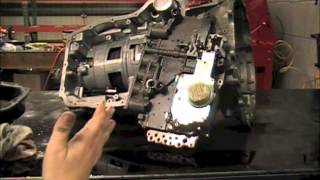
We Have This Part in Stock


The information in this article is provided for general reference and educational purposes only. Vehicle specifications, procedures, and part compatibility can vary by production date, trim level, and region. Always consult your vehicle's factory service manual and verify part numbers before purchasing or performing repairs. Safety-critical components such as airbags, seat belts, and braking systems should be installed by a qualified professional.
- Ram 3500:
- 🎬 Helpful Videos
- 🛍️ Shop This Part
- What's Unique About the 2007-2018 Ram 3500
- Symptoms You May Notice
- Most Likely Causes
- Rare But Worth Checking
- Diagnosis Steps
- Parts You'll Likely Need
- Related Codes That Often Appear With This One
- Technical Service Bulletins (TSBs) & Recalls
- Platform-Specific Known Issues
- Mechanic-Grade Diagnostic Values
- Scan Tool Commands That Help
- Wiring & Ground Locations
- Real Owner Repair Stories
- OEM Part Supersession History
- Model Year Variations Within This Range
- Diagnostic Flowchart
- Other Known Issues on This Vehicle
- Used vs. New Parts: Buying Guide for This Vehicle
- Real Owner Stories
- 2007-2018 Ram 2500/3500 6.7L Cummins
- Related OBD-II Codes
- Frequently Asked Questions
- 🎟️ Get 5% Off