

OBD-II Code P1775: Solenoid Switch Valve Stuck in TCC Position
The Ultimate Guide: What P1775 means, why it triggers, and how to fix it for good
- Expect a harsh clunk or jerk when slowing below 5 mph, signaling the transmission is failing to downshift into 1st gear.
- In 90% of Chrysler, Dodge, and Jeep cases, the root cause is a worn aluminum valve body bore, meaning a simple $300 solenoid replacement will not fix the issue.
- Verify your PCM software is up to date before authorizing hardware repairs; Chrysler issued multiple TSBs (like 18-043-17) that resolve this code with a 1.5-hour reflash.
- Limit driving to under 10 miles; operating in 2nd-gear limp mode overheats the transmission fluid rapidly, escalating an $800 valve body repair into a $3,500 complete rebuild.
What Does P1775 Mean?

Code P1775 indicates your Powertrain Control Module (PCM) detected a stuck Solenoid Switch Valve (SSV) inside the transmission. The SSV directs hydraulic fluid to engage either the Low/Reverse clutch (1st gear) or the Torque Converter Clutch (TCC). P1775 specifically means the valve is physically jammed in the TCC position when the computer commands a downshift into 1st gear. After three failed attempts to move the valve, the PCM triggers limp mode and illuminates the Check Engine Light.
Technical definition: The SAE/OBD-II definition for P1775 is "Solenoid Switch Valve Latched in TCC Position." Used primarily by Chrysler, Dodge, Jeep, and Ram, it indicates the SSV fails to move when attempting a 1st-gear shift. Nissan defines it as a "Torque Converter Clutch Solenoid Valve" malfunction. Hyundai uses it for an "OPU (Oil Pump Unit) Status Line" fault in hybrids. BMW uniquely maps it to a "CAN bus, rear right wheel speed sensor - no signal" issue. The PCM sets this code after three unsuccessful attempts to confirm valve movement via pressure switches during a single drive cycle.
Can I Drive With P1775?

no_immediate_danger_but_not_recommended. Driving is not recommended. The vehicle defaults to 'limp mode,' locking into 2nd or 3rd gear. This causes poor acceleration and high engine RPM at speed, generating excessive heat. Driving more than 10 miles risks overheating the transmission fluid, destroying clutches and seals, and turning an $800 valve body repair into a $3,500+ complete rebuild.
Common Causes

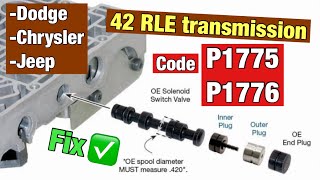
- Worn valve body bore causing a sticking Solenoid Switch Valve (SSV) (Very Common) — This is the primary root cause in Chrysler/Dodge/Jeep vehicles. The steel SSV oscillates inside a softer aluminum valve body bore. Over time, the bore wears into an oval shape, causing the valve to physically jam. Replacing the solenoid pack will not fix this mechanical wear.
- Faulty transmission solenoid pack (Common) — The solenoid pack contains the electronic coils that control hydraulic flow. A solenoid can fail electrically (burnt coil) or mechanically (clogged with debris), preventing it from actuating the SSV.
- Low or degraded transmission fluid (Common) — Transmission fluid provides the hydraulic pressure required to move valves. Low fluid causes pressure drops, while burnt or contaminated fluid acts as an abrasive, accelerating valve body wear and causing valves to stick.
- Outdated Powertrain Control Module (PCM) software (Less Common) — Chrysler issued multiple Technical Service Bulletins (TSBs) to update PCM software. These updates widen the acceptable hydraulic parameters, preventing the computer from falsely triggering P1775 due to minor, normal wear.
- Worn accumulator pistons and seals (Less Common) — Accumulator pistons cushion clutch engagement. Cracked plastic pistons or worn seals cause pressure loss in key hydraulic circuits, contributing to the conditions that set a P1775 code.
- Incorrectly installed accumulator springs (Post-Repair) (Less Common) — If the transmission was recently serviced, accumulator springs are easily mixed up or installed in the wrong bores. This creates incorrect hydraulic pressures and triggers P1775 immediately after a repair.
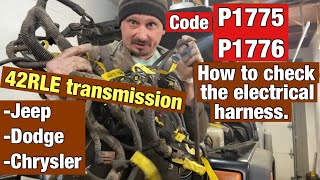
- Damaged wiring or poor electrical connections (Rare) — Frayed wires, fluid intrusion, or corrosion in the main transmission connector interrupts 🎬 Watch: How to check the transmission electrical harness for faults. the signal between the PCM and the transmission solenoids, causing communication faults.
- Catastrophic internal transmission failure (Rare) — If driven extensively in limp mode, internal hard parts fail. Significant metal shavings (especially brass/bronze) in the transmission pan indicate failing bushings or clutches, requiring a full rebuild.
Symptoms

- Harsh jerk or clunk when stopping — The hallmark symptom. The transmission fails to downshift from 2nd to 1st gear when slowing below 5 MPH, causing a violent jolt.
- Vehicle locked in 'limp mode' — The transmission defaults to 2nd or 3rd gear to prevent damage. This causes sluggish acceleration from a stop and excessively high engine RPMs at highway speeds.
- Delayed or failed shifting — A noticeable 2-to-3 second pause or complete failure to engage when shifting from Park into Drive or Reverse.
- Engine stalling at a complete stop — The torque converter clutch fails to disengage due to the stuck valve, stalling the engine when the vehicle stops moving.
- Check Engine Light illuminated — The PCM triggers the Malfunction Indicator Lamp (MIL) after three failed attempts to shift into first gear.
- Transmission overheating warning — Operating in limp mode generates extreme heat, triggering a dashboard temperature warning and rapidly degrading the transmission fluid.
Diagnostic Flowchart
Tap your situation to follow the diagnostic path that matches what you're seeing on this code.
Common Fixes & Costs
- Replace Transmission Valve Body (Remanufactured) — Parts: $400-$900, Labor: $300-$600, ~3 hr book time (Professional)
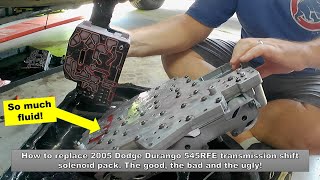
- Replace Transmission Solenoid Pack/Assembly — Parts: $250-$550, Labor: $250-$500, ~2.5 hr book time (Professional)
- Reprogram (Flash) the Powertrain Control Module (PCM) — Parts: $0, Labor: $100-$250, ~1.5 hr book time (Professional)
- Transmission Fluid and Filter Change — Parts: $75-$150, Labor: $100-$250, ~1 hr book time (Intermediate)
- Valve Body Reaming & Repair Kit Installation — Parts: $50-$150, Labor: $500-$800, ~4.5 hr book time (Professional)
Used vs. New Parts: Buying Guide
When a used part is worth it: A used valve body is rarely recommended because it likely suffers from the same factory bore wear. Used solenoid packs make sense only if pulled from a low-mileage (under 80K) wrecked vehicle.
Donor-vehicle mileage cap: roughly under 80000 miles for the part to have meaningful remaining life.
Donor quality checklist:
- Verify the donor vehicle was salvaged due to an accident, not mechanical failure.
- Match part numbers exactly, including connector colors (e.g., white vs black connectors on RFE transmissions).
- Ensure the seller offers at least a 30-day warranty.
Decision logic:
- If The root cause is a worn valve body bore. → Buy a remanufactured valve body from a reputable brand like Sonnax. They install oversized valves to permanently fix the factory flaw.
- If The diagnosis points specifically to an electrical failure in the solenoid pack. → A new aftermarket or OEM solenoid pack is the safest bet. Avoid 'rebuilt' solenoid packs, which are often just cleaned used parts.
Warranty tradeoff: Used parts carry 30-90 day warranties. Remanufactured valve bodies offer 1 to 3-year warranties and include crucial design updates.
Worst-case if a used part fails: $500-$800. If a used part fails, you pay for the labor and fluid to do the job twice.
What Happens If You Wait — Timeline
- 0-4 weeks: Code P1775 sets. Intermittent 'limp mode' and harsh clunk when stopping. Drivability is annoying but functional. (MPG impact: 10%% · Added cost: $0. A valve body/solenoid repair ($800-$1500) is sufficient.)
- 1-3 months: Limp mode becomes frequent. Highway driving in 2nd gear causes high RPMs. Transmission fluid begins to overheat and break down. (MPG impact: 20%% · Added cost: $100 in wasted fuel. Risk of internal damage increases rapidly.)
- 3-6 months: Fluid is burnt. Internal clutch packs slip and burn. Seals harden from heat. The initial valve body problem has caused widespread damage. (MPG impact: 30%% · Added cost: $2,500-$4,500. A full transmission rebuild is now required.)
- 6+ months: Catastrophic failure. Clutch material contaminates the system. Hard parts break. The vehicle stops moving. (MPG impact: N/A% · Added cost: $4,000-$7,000. Requires a complete transmission replacement.)
Cost of Not Fixing It
- 0-1 month: Vehicle is stuck in 'limp mode', leading to poor acceleration, bad fuel economy, and harsh clunks when stopping. (Added cost: Negligible, but risk of being stranded increases.)
- 1-6 months: Driving in limp mode generates extreme heat, degrading transmission fluid and burning internal clutch packs and seals. (Added cost: $2500-$3500. An $800 valve body repair escalates into a complete transmission rebuild due to widespread internal heat damage.)
- 6+ months: Catastrophic transmission failure. The vehicle stops moving entirely. Hard parts are destroyed, rendering the transmission core unusable. (Added cost: $4000-$7000. Requires a full replacement transmission plus towing fees.)
Diagnosis Steps
- Check Transmission Fluid Level and Condition
With the engine warm and running in Park or Neutral, check the dipstick. Fluid must be pink/red and smell sweet. Brown/black fluid, a burnt smell, or glittery metal particles indicate severe internal damage requiring a rebuild.
Tools: Shop towel, white paper towel - Scan for All Related Codes
Use an OBD-II scanner with Transmission Control Module (TCM) access. Look for sister codes like P1776, P0841, or P0871. P0841 (L/R Pressure Switch Rationality) confirms a hydraulic failure rather than a primary electrical issue.
Tools: OBD-II scanner with TCM capability - Check for TSBs and Software Updates
Search for Technical Service Bulletins for your specific VIN. Chrysler released numerous software updates that resolve P1775 by adjusting diagnostic sensitivities. A dealership must verify your current software version.
Tools: Internet access, vehicle VIN - Live Data Analysis
Monitor the 'L/R Pressure Switch State' PID using a bi-directional scan tool. When commanding a shift into 1st gear, the switch state must change (e.g., 'Open' to 'Closed'). Failure to change confirms a stuck SSV.
Tools: Bi-directional scan tool (Advanced) - Hydraulic Pressure Switch Test
Command specific solenoids on and off using the scan tool while monitoring pressure switch states. If commanding the L/R solenoid 'ON' does not change the L/R pressure switch state, you have a definitive hydraulic failure (stuck valve), ruling out the electrical solenoid coil.
Tools: Bi-directional scan tool (Professional) - Inspect Wiring and Connectors
Visually inspect the main wiring harness and the round connector on the transmission case. Look for chafed wires, ATF fluid intrusion inside the connector, or corroded pins.
Tools: Flashlight - Test Solenoid Resistance
Unplug the main transmission connector. Measure the resistance of the Low/Reverse (LR) solenoid circuit. For Chrysler RFE transmissions, it must measure between 1.0 and 1.9 ohms at 72°F. Infinite resistance means an open circuit; near zero means a short.
Tools: Multimeter, vehicle-specific wiring diagram (Advanced) - Inspect Valve Body and SSV
Drain the fluid, drop the pan, and remove the valve body. Extract the SSV from its bore. If the valve sticks, binds, or shows heavy scuffing, the valve body bore is worn and must be replaced or reamed.
Tools: Socket set, drain pan, inch-pound torque wrench, new fluid/filter (Professional) - Vacuum Test Valve Body Bores
Seal the SSV bore and pull a vacuum using specialized testing equipment. A reading below 18 inches of Mercury (Hg) confirms excessive bore wear, proving a solenoid pack replacement alone will fail.
Tools: Vacuum testing tool (e.g., Sonnax VACTEST-01K) (Professional)
When This Code Triggers (Freeze-Frame Conditions)
- Engine Coolant Temp: 180-200°F (82-93°C) (The code typically sets when the vehicle is fully warmed up.)
- Vehicle Speed: <5 mph (The fault is detected when the PCM attempts to command a downshift into 1st gear as the vehicle comes to a stop.)
- Gear Commanded: 1st Gear (The PCM actively tries to engage 1st gear, but the L/R pressure switch fails to confirm the hydraulic action.)
- Transmission Fluid Temperature: 150-220°F (65-104°C) (Occurs during normal operating temperatures; hot, thin fluid exacerbates the sticking valve.)
Related Codes
- P1776 — The direct sister code to P1775, indicating the SSV is stuck in the opposite (Low/Reverse) position. They frequently appear together and share the exact same root cause and repair procedure.
- P0841 — LR Pressure Switch Rationality. Confirms the P1775 fault is hydraulic. The PCM commands the SSV to move but the pressure switch reads an illogical state, proving the valve physically failed to move.
- P0871 — OD Pressure Switch Rationality. Triggered by a worn SSV bore creating hydraulic cross-leaks that affect the Overdrive circuit. Seeing P0871 alongside P1775 guarantees a worn valve body.
- P0700 — A generic informational code set by the Engine Control Module (ECM) stating the Transmission Control Module (TCM) has stored a fault. It provides no diagnostic value on its own.
Climate & Environmental Factors
- Warmer Ambient Temperatures: The fault appears more frequently when the vehicle is fully warmed up or in hot weather. Hot, thin transmission fluid easily bypasses worn seals in the valve body bore, failing to provide the hydraulic force needed to move a sticky valve.
How to Talk to a Mechanic About This Code
Say this: "I have a P1775 code and a harsh 2-1 downshift clunk on my [Make, Model]. I'd like to schedule a diagnostic. I understand this is often a valve body or solenoid issue, and I'd like to start by checking for any available PCM software updates."
Shows you understand the common causes. Directs the technician toward a logical diagnostic path (software first) and prevents them from immediately jumping to a full transmission replacement.
Avoid saying:
- 'My transmission is acting weird.'
- 'My check engine light is on, can you just fix it?'
- 'I need a new solenoid pack.' (Don't diagnose for them; you pay for the part even if it doesn't fix the issue.)
Questions to ask before authorizing the repair:
- Did you perform a pressure switch test or vacuum test the bores to confirm it's the valve body and not just the solenoid?
- If replacing the valve body, are you using a remanufactured unit with oversized valves to fix the original bore wear issue?
- Does the estimate include performing the transmission 'quick learn' procedure?
- What is the warranty on parts and labor?
Where to Take It: Dealer vs Independent vs Chain
- Dealer:
Good for an initial diagnostic and software flash. Avoid for major hardware repairs unless under warranty.
Best for: Checking for and performing PCM software updates (TSBs)., Vehicles under powertrain warranty.
Downsides: Highest labor rates., Often recommend replacing the entire transmission rather than repairing the valve body. (Typical cost: +40% vs. baseline) - Independent Shop:
An independent transmission specialist is the best choice. They understand valve body failures, have the right tools, and offer the best balance of cost and expertise.
Best for: Out-of-warranty vehicles., Dedicated transmission specialist shops.
Downsides: General mechanics lack the specialized tools (vacuum testers, bi-directional scanners) for valve body work. (Typical cost: +0% vs. baseline) - Chain Shop:
AVOID. The complexity of this diagnosis and repair is beyond their scope.
Best for: Oil changes and brakes.
Downsides: Technicians lack training for complex internal transmission diagnostics., High likelihood of misdiagnosis (replacing the solenoid pack when the valve body is bad). (Typical cost: -10% vs. baseline)
When to Walk Away From the Repair
If the total estimated repair cost exceeds 50% of the car's private-party value, seriously consider selling or trading in the vehicle.
- Car worth $3000, fix is $1500: Borderline. Exactly 50% of the value. If the rest of the car is pristine, fix it. Otherwise, sell as a 'mechanic's special'.
- Car worth $10000, fix is $1500: Fix it. The repair is only 15% of the vehicle's value.
- Car worth $4000, fix is $3800: Walk away. The repair cost equals the car's value, indicating a full rebuild is needed. Not economically viable.
What Scan Tool You Need for This Code
Minimum: A scanner that reads manufacturer-specific codes from the Transmission Control Module (TCM). Basic $20 engine readers will not see P1775.
You need a tool that communicates with the transmission computer to view live data (like pressure switch states) and perform the mandatory 'quick learn' procedure.
Budget: Foxwell NT301 (~$70) — Confirms P1775 and clears TCM codes. Cannot perform live data analysis or the quick learn procedure.
Mid-range: Autel MaxiCOM MK808 / Foxwell NT510 Elite (~$350) — The sweet spot for DIY. Offers full TCM access, live data streaming, bi-directional controls to test solenoids, and performs the mandatory 'quick learn' procedure.
Professional: Autel MaxiSys Elite II Pro (~$1500) — Provides OEM-level functions and programming. Overkill for a DIYer.
Rent vs buy: You cannot rent mid-range bi-directional scanners. If you plan to replace the valve body yourself, buying a $350 scanner is mandatory to perform the quick learn procedure.
How to Clear the Code After You Fix It
- Use an OBD-II scan tool to clear all diagnostic trouble codes from the TCM and PCM.
- Perform a mandatory 'quick learn' or 'relearn' procedure with a bi-directional scan tool.
- Perform a complete drive cycle to allow the readiness monitors to run.
Drive cycle (~30 minutes): Cold start and idle for 5 minutes. Drive at a steady 40-60 mph for 8 minutes. Stop and idle in Drive for 3 minutes. Drive above 20 mph for 2 minutes. Turn the vehicle off and let it sit for 10 minutes.
Readiness monitors affected: Transmission-specific monitors, Catalyst monitor, Evaporative System (EVAP) monitor, O2 sensor monitor
Before emissions retest: drive at least 100 miles to fully set monitors.
Watch out for:
- Disconnecting the battery will not clear the code from the TCM.
- The code returns immediately if the worn valve body bore was not addressed.
- Failing to perform the 'quick learn' procedure causes harsh shifting even with brand new parts.
Will This Fail Emissions / State Inspection?
Yes — this code typically fails an OBD-II emissions inspection.
- California: An active Check Engine Light is an automatic smog check failure. All readiness monitors must be set to 'Ready' post-repair.
- New York: The NYS DMV OBD-II scan will fail the vehicle immediately if P1775 is active.
- Texas: In emissions-testing counties, an active P1775 results in an automatic failure. The MIL must be off and monitors complete.
Most Commonly Affected Vehicles
- Dodge/Ram 1500, 2500, 3500, Dakota, Durango (1999-2018) — Extremely common on trucks with 45RFE, 545RFE, 65RFE, 66RFE, and 68RFE transmissions. Valve body bore wear is the primary culprit. Repair kits require measuring the original valve (.420" vs .453") before ordering.
- Jeep Wrangler (TJ, JK), Liberty (KJ), Grand Cherokee (WJ, WK) (2003-2012) — Affects models with the 42RLE transmission. Notorious for solenoid pack failures and SSV sticking, leading to P1775 and P1776.
- Chrysler 300, Town & Country, Concorde, Aspen (2004-2011) — Seen in vehicles with 41TE (A604) and 42RLE transmissions. Solenoid pack replacement is often a temporary fix if the underlying valve body bore is worn.
- Dodge Charger, Magnum, Nitro (2005-2011) — These RWD vehicles use the 42RLE or RFE variants and suffer identical valve body and solenoid wear issues.
- Nissan Altima, Frontier, Xterra (1998-2010) — Indicates a problem with the Torque Converter Clutch (TCC) solenoid valve or its circuit. Diagnosis requires testing TCC solenoid resistance.
- Hyundai Sonata Hybrid, Elantra (2014-2016) — Indicates an 'Oil Pump Unit (OPU) Status Line' fault covered by TSB 14-HC-003. This is an electrical communication fault, not a mechanical valve issue.
- BMW 3-Series (E90, E92), X3 (E83), X5 (E70) (2006-2013) — Not a transmission code. Indicates a fault in the ABS/DSC system ('no signal' from the rear right wheel speed sensor). Caused by a failed sensor or debris on the reluctor ring.
- Ford Explorer, Mustang (1997-2010) — On 5R55S/W/N transmissions, P1775 means 'Solenoid A Low'. Results from worn servo bores in the transmission case, requiring specialized case repair sleeves.
- Volkswagen/Audi Golf, Jetta, Tiguan, A3 (2010-2019) — In DSG transmissions (DQ250/DQ500), defined as 'Hydraulic Pressure Sensor 1 adaptation at limit', indicating internal mechatronic unit failure.
- Honda Accord, Odyssey (2003-2007) — Points to a fault within the shift solenoid 'A' or 'B' control circuit, causing harsh shifts or slipping.
Manufacturer-Specific Notes
- Chrysler/Dodge/Jeep/Ram: The aluminum valve body bore wears out prematurely. Aftermarket remanufactured valve bodies with oversized valves are the permanent fix. Always check for PCM software updates (e.g., TSB 18-043-17) before replacing hardware, as reflashes adjust diagnostic sensitivity to tolerate minor wear.
- Nissan/Infiniti: P1775 specifically targets the Torque Converter Clutch (TCC) Solenoid Valve. Diagnostics must focus on testing the TCC solenoid's resistance and checking its dedicated wiring circuit.
- BMW: P1775 is an ABS/DSC code, not a transmission code. It flags a missing signal from the rear right wheel speed sensor, usually due to a bad sensor or a rusted reluctor ring.
- Hyundai: On Sonata Hybrids, P1775 is an electrical communication fault related to the electric Oil Pump Unit (OPU), addressed specifically in TSB 14-HC-003.
Real Owner Stories
2003 Chrysler Concorde - The Misdiagnosis
Owner had codes P0841 and P0700 with shifting problems between 2nd and 3rd gear.
What they tried:
- Replaced the transmission solenoid pack and changed the fluid.
- Immediately after the repair, P1775 appeared with a harsh jerk when stopping.
Outcome: The shop wanted to replace the entire transmission. The true cause was either the underlying valve body bore was worn all along, or accumulator springs were installed incorrectly during the DIY solenoid replacement.
Lesson: Replacing the solenoid pack is a common misdiagnosis. If the valve body bore is worn, the problem persists. Incorrect reassembly creates new codes instantly.
2000 Dodge Grand Caravan - The Classic Failure
Experienced a harsh 2-1 downshift clunk when stopping and hesitation shifting into Drive. Check Engine Light showed P1775.
What they tried:
- Performed a fluid and filter change with ATF+4.
- Cleaned electrical connectors.
Outcome: Neither fixed the issue. A master technician advised dropping the pan to check for metal. Finding none, the owner replaced the entire valve body with a remanufactured unit, permanently fixing the mechanical bind.
Lesson: The classic 'clunk on stop' is rarely fixed with a fluid change. It requires addressing the mechanical wear inside the valve body.
Jeep Liberty KJ - Ignoring the Warning Signs
Intermittent Check Engine Light with P1775 and P1776. The transmission didn't feel like it was slipping, so the owner kept driving.
What they tried:
- Continued driving, assuming the intermittent nature meant it was a minor sensor glitch.
Outcome: The transmission completely failed on the highway. The owner paid $3,800 for a full transmission replacement because the initial limp-mode heat destroyed the internal clutches.
Lesson: Intermittent transmission codes are serious. Driving in limp mode causes irreversible internal heat damage. Fixing the valve body early saves thousands.
How to Prevent This Code From Triggering
- Perform regular fluid and filter changes (Every 30,000-60,000 miles (20,000 if towing)) — Clean ATF+4 fluid maintains hydraulic pressure and prevents abrasive sludge from wearing out the aluminum valve body bores.
- Install an auxiliary transmission cooler (One-time install) — Keeps fluid temperatures below 200°F, preserving fluid integrity and preventing heat damage to seals and clutches.
- Use only licensed ATF+4 fluid (Every fluid change) — ATF+4 contains specific friction modifiers required by Chrysler transmissions. Wrong fluid causes improper shifting and premature wear.
- Check fluid level monthly (Monthly) — Low fluid causes pressure drops that starve the pump and damage internal components.
Frequently Asked Questions
Can I fix P1775 myself?
Checking fluid, inspecting wiring, and researching TSBs are DIY-friendly. However, the actual repair requires removing the transmission valve body, which is messy and requires an inch-pound torque wrench. Furthermore, a mandatory 'quick learn' procedure requires a $300+ bi-directional scan tool, making this a job best left to professionals.
What happens if I keep driving with a P1775 code?
Driving in 'limp mode' forces the transmission to operate at high RPMs, generating extreme heat. This cooks the transmission fluid and destroys internal clutch packs and seals. Ignoring it quickly escalates an $800 valve body repair into a $3,500 complete transmission rebuild.
Is replacing the solenoid pack a guaranteed fix for P1775?
No, and this is the most common misdiagnosis. The root cause is usually physical wear inside the aluminum valve body bore where the valve moves. If the bore is worn, a new solenoid pack will not fix the sticking, and the code will return immediately.
My mechanic wants to replace the whole transmission. Is that necessary?
It depends on the fluid condition. If the fluid is full of metal shavings or smells severely burnt, internal damage has occurred and a rebuild is necessary. If the fluid is clean and pink, replacing or repairing the valve body is usually sufficient.
What is a 'quick learn' procedure and why is it important?
A 'quick learn' uses a professional scan tool to teach the transmission computer the exact hydraulic characteristics of the new valve body or solenoid. Skipping this step causes erratic, harsh shifting and can damage the new components.
Will a transmission flush fix a P1775 code?
No. A flush cannot repair a worn valve body bore, a burnt solenoid coil, or damaged wiring. It is a waste of money for an active P1775 code.
Can a bad battery or alternator cause a P1775 code?
Yes. Modern transmissions rely heavily on stable voltage. A weak battery or failing alternator causes low system voltage, leading to erratic behavior from the TCM and solenoids. Test your charging system if you have other electrical gremlins.
Key Takeaways
- Expect a harsh clunk or jerk when slowing below 5 mph, signaling the transmission is failing to downshift into 1st gear.
- In 90% of Chrysler, Dodge, and Jeep cases, the root cause is a worn aluminum valve body bore, meaning a simple $300 solenoid replacement will not fix the issue.
- Verify your PCM software is up to date before authorizing hardware repairs; Chrysler issued multiple TSBs (like 18-043-17) that resolve this code with a 1.5-hour reflash.
- Limit driving to under 10 miles; operating in 2nd-gear limp mode overheats the transmission fluid rapidly, escalating an $800 valve body repair into a $3,500 complete rebuild.
Helpful Videos

The information in this article is provided for general reference and educational purposes only. Vehicle specifications, procedures, and part compatibility can vary by production date, trim level, and region. Always consult your vehicle's factory service manual and verify part numbers before purchasing or performing repairs. Safety-critical components such as airbags, seat belts, and braking systems should be installed by a qualified professional.
- 🎬 Helpful Videos
- What Does P1775 Mean?
- Can I Drive With P1775?
- Common Causes
- Symptoms
- Diagnostic Flowchart
- Common Fixes & Costs
- Used vs. New Parts: Buying Guide
- What Happens If You Wait — Timeline
- Cost of Not Fixing It
- Diagnosis Steps
- When This Code Triggers (Freeze-Frame Conditions)
- Related Codes
- Climate & Environmental Factors
- How to Talk to a Mechanic About This Code
- Where to Take It: Dealer vs Independent vs Chain
- When to Walk Away From the Repair
- What Scan Tool You Need for This Code
- How to Clear the Code After You Fix It
- Will This Fail Emissions / State Inspection?
- Most Commonly Affected Vehicles
- Manufacturer-Specific Notes
- Real Owner Stories
- 2003 Chrysler Concorde - The Misdiagnosis
- 2000 Dodge Grand Caravan - The Classic Failure
- Jeep Liberty KJ - Ignoring the Warning Signs
- How to Prevent This Code From Triggering
- Frequently Asked Questions
- Can I fix P1775 myself?
- What happens if I keep driving with a P1775 code?
- Is replacing the solenoid pack a guaranteed fix for P1775?
- My mechanic wants to replace the whole transmission. Is that necessary?
- What is a 'quick learn' procedure and why is it important?
- Will a transmission flush fix a P1775 code?
- Can a bad battery or alternator cause a P1775 code?
- Key Takeaways
- 🎟️ Get 5% Off