

P1744 on 2017-2018 Ford F-150: Torque Converter Clutch Performance Causes and Fixes
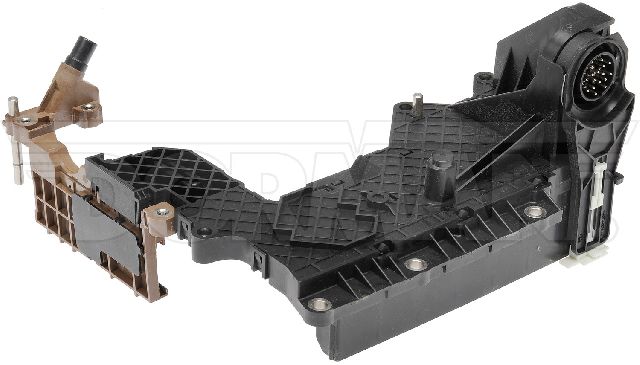
On a 2017-2018 Ford F-150 with the 10R80 transmission, P1744 is most often caused by a sticking Torque Converter Clutch (TCC) valve inside the main control valve body. This is a well-documented issue by Ford in TSB 20-2117 for vehicles built on or before November 20, 2017. The fix involves replacing the valve body (Part #HL3Z-7A100-B for 2017, #JL3Z-7A100-C for 2018) and programming the new solenoid strategy, which can cost between $1,000 and $1,800 at a shop.
- P1744 on a 2017-2018 F-150 indicates the torque converter clutch is failing to lock up as commanded.
- Check your truck's build date. If it's on or before November 20, 2017, the cause is very likely a sticking valve in the main control valve body, as per Ford TSB 20-2117.
- This code is almost always accompanied by P0741.
- The recommended fix per the TSB is a complete replacement of the main control valve body, not just a solenoid or a fluid change.
- This is not a DIY-friendly repair; professional service is strongly recommended due to the complexity.
What's Unique About the 2017-2018 Ford F-150

For the 2017-2018 F-150, this code is strongly associated with the 10-speed (10R80) automatic transmission. Ford has officially acknowledged a specific weakness in these transmissions through Technical Service Bulletin 20-2117. The issue is not usually the solenoid or the torque converter itself, but rather a specific valve within the main control valve body that is prone to sticking on vehicles built on or before November 20, 2017. This same issue affects other 2018 Ford/Lincoln vehicles with the 10R80, including the Mustang, Expedition, and Navigator.
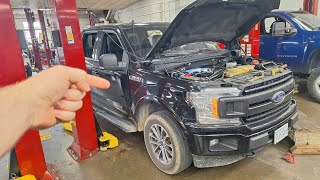
🎬 Watch: A Ford technician explains common 10-speed transmission issues.Diagnostic Flowchart

Tap your situation to follow the diagnostic path that matches what you're seeing on this vehicle.
Symptoms You May Notice
- Check Engine Light is on
- Transmission shudder or feeling like driving on rumble strips, especially at highway speeds
- RPMs fluctuating or higher than normal at a steady speed
- Harsh, erratic, or delayed shifting
- Poor fuel mileage
- Transmission overheating
- A 'Wrench' light may appear on the dash
- Replacing only the TCC solenoid when the sticking valve in the valve body is the actual problem. A 2019 Mustang owner on Mustang6G.com reported replacing the TCC solenoid did not fix codes P0741 and P1744.
- Replacing the entire transmission when only the main control valve body needs to be replaced per TSB 20-2117.
- Mistaking the transmission shudder for an engine misfire.
Most Likely Causes

- Sticking TCC Valve in Main Control Valve Body 🔴 High Probability This is a known issue documented by Ford in TSB 20-2117 for 10R80 transmissions built on or before 20-Nov-2017. The valve's bore may have been manufactured with imperfections that lead to sticking over time.
How to confirm: Check the vehicle's build date. If it falls within the TSB range and both P1744 and P0741 are the only codes present, this is the most likely cause.
Typical fix: Replace the main control valve body assembly and program the new solenoid strategy into the PCM.
Est. part cost: $500-$900, plus a refundable core charge of around $200. - Worn or Failed Torque Converter 🟡 Medium Probability If the TCC valve issue is ignored, the resulting slippage and overheating can prematurely wear out the clutch material inside the torque converter.
How to confirm: A technician can use a scan tool to monitor TCC slip RPM. If the valve body and solenoid are confirmed to be working (or have been replaced) but slip is still excessive under lock-up command, the torque converter is the likely culprit.
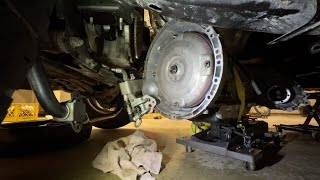
Typical fix: Replace the torque converter. This requires 🎬 Watch: A step-by-step guide to torque converter diagnosis and replacement. removing the entire transmission from the vehicle.
Est. part cost: $300-$800 - Low or Dirty Transmission Fluid ⚪ Low Probability The 10R80 transmission is highly sensitive to fluid level and condition. The specified Motorcraft MERCON ULV is an ultra-low viscosity fluid, and using the wrong type or operating with low/degraded fluid can cause hydraulic pressure issues affecting TCC operation.
How to confirm: Check the transmission fluid level and condition according to the manufacturer's procedure. The fluid should be at the correct level, red in color, and not smell burnt.
Typical fix: Perform a transmission fluid drain-and-fill or a full fluid exchange. Use only the correct fluid type (Motorcraft MERCON ULV, part #XT-12-QULV).
Est. part cost: $100-$300 - Faulty TCC Solenoid ⚪ Low Probability
How to confirm: The solenoid can be tested for proper resistance and commanded on/off with a scan tool. However, the TSB points to the valve being the more common failure point than the solenoid itself. Owners have reported replacing only the TCC solenoid without resolving the P1744/P0741 codes.
Typical fix: Replace the TCC solenoid. On the 10R80, the solenoids are part of the main control valve body assembly and are typically replaced with it.
Est. part cost: $150-$300
Rare But Worth Checking
- Internal Hydraulic Leak: Worn seals on the transmission's input shaft or in the pump can cause a loss of hydraulic pressure to the TCC circuit, preventing lock-up. This is a major repair requiring a transmission teardown to diagnose and fix.
- Faulty Transmission Control Module (TCM): While rare, the TCM itself can fail or have software glitches. This should only be considered after all other mechanical and hydraulic causes have been ruled out. Sometimes a software reflash can solve issues, but for P1744, it is unlikely to be the sole cause.
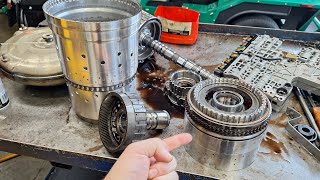
- Worn CDF Clutch Drum Bushing: A known issue in 10R80 transmissions where a bushing in the CDF (Clutch D/F) drum can 'walk' out of position, partially blocking hydraulic fluid passages. This typically causes harsh cold shifts but can lead to various hydraulic pressure problems and other DTCs if left unaddressed. The permanent fix requires transmission removal to install an updated CDF drum with a retaining lip 🎬 See a teardown of the common CDF drum bushing failure. (Part #L1MZ-7H351-B) as outlined in TSB 24-2101.
Diagnosis Steps
- Verify the transmission fluid level and condition. Ensure it is clean, full, and of the correct MERCON ULV type.
- Use a diagnostic scan tool to check for other codes. Confirm that P1744 and P0741 are the only transmission-related DTCs present.
- Check the vehicle's build date (located on the driver's side door jamb sticker). If it was manufactured on or before November 20, 2017, it is subject to TSB 20-2117.
- With a capable scan tool, monitor PIDs for TCC Slip RPM and TCC Command state while driving. If the PCM commands TCC lock-up but slip remains high (e.g., above 50-100 RPM), a mechanical/hydraulic issue is confirmed.
- If the vehicle falls under the TSB criteria, the primary suspect is the main control valve body. Proceed with replacement.
- If the TSB does not apply, further diagnosis involves dropping the transmission pan to inspect for excessive metal debris, which would indicate a more severe internal failure (like the torque converter).
- If replacing the valve body, ensure the new solenoid body strategy is programmed into the PCM/TCM using a Ford-specific scan tool.
- After the repair, be aware that the transmission will enter an adaptive learning phase, which may result in firmer than normal shifts for several days. A specific drive cycle may be required to expedite this process.
Parts You'll Likely Need

- Main Control Valve Body Assembly (2017 F-150)
(OEM #HL3Z-7A100-B)— This is the specific part identified in Ford TSB 20-2117 to fix P1744 on 2017 F-150s. It includes the updated TCC valve. This part supersedes HL3Z-7A100-A.
Trusted brands: Motorcraft
OEM price range: $600-$900 (plus a ~$200 refundable core charge)
Aftermarket price range: $400-$700 (Remanufactured) - Main Control Valve Body Assembly (2018 F-150)
(OEM #JL3Z-7A100-C)— This is the specific part identified in Ford TSB 20-2117 to fix P1744 on 2018 F-150s with a column shifter.
Trusted brands: Motorcraft
OEM price range: $500-$800 (plus a refundable core charge)
Aftermarket price range: $400-$600 (Remanufactured) - Automatic Transmission Fluid
(OEM #XT-12-QULV)— Fluid must be replaced when servicing the valve body. Using the correct Motorcraft MERCON ULV fluid is critical for 10R80 transmission performance and longevity. The TSB calls for approximately 6 quarts for this job.
Trusted brands: Motorcraft
OEM price range: $8-$15 per quart - Transmission Filter
(OEM #FT215)— Should always be replaced whenever the transmission pan is removed for service. It is often included with the new valve body assembly.
Trusted brands: Motorcraft
OEM price range: $30-$50
Aftermarket price range: $15-$30
Related Codes That Often Appear With This One
- P0741 — This code means 'Torque Converter Clutch Circuit Performance or Stuck Off'. It is almost always present with P1744 on this vehicle, as they both point to the TCC failing to engage. Ford's TSB 20-2117 for this issue lists both codes together as the primary condition for the valve body replacement.
Technical Service Bulletins (TSBs) & Recalls
- TSB 20-2117: Supersedes TSB 18-2160. States that some 2017-2018 F-150s (and other models) may exhibit an illuminated MIL with DTCs P0741 and P1744 due to a sticking TCC valve in the main control valve body.
Platform-Specific Known Issues
- Ford issued Technical Service Bulletin (TSB) 20-2117 (which supersedes TSB 18-2160) for 2017-2018 F-150s, 2018 Mustangs, 2018 Expeditions, and 2018 Navigators with the 10R80 transmission built on or before November 20, 2017. It states that DTCs P1744 and P0741 may be caused by a sticking TCC valve in the main control valve body and instructs technicians to replace the entire valve body assembly with an updated part.
Mechanic-Grade Diagnostic Values
- Resistance of all solenoids in the 10R80 main control valve body (including TCC solenoid) — expected: 5.0 - 5.4 ohms at 20°C (68°F). Failure: A reading outside this range indicates a faulty solenoid coil.
- TCC Solenoid Control Current — expected: Proportional operation: low current (approx. 50 mA) results in low pressure; high current (approx. 850 mA) results in high pressure.. Failure: This is a commanded value and feedback parameter monitored by the TCM; a mismatch between command and hydraulic result can set P1744.
Scan Tool Commands That Help

- Ford IDS/FDRS or equivalent (e.g., FORScan): Transmission Characterization / Solenoid IDN — This is a mandatory procedure after replacing the main control valve body. The 13-digit solenoid body strategy number from the new part must be programmed into the PCM/TCM for the transmission to function correctly. Failure to do so can cause shift quality issues or set other DTCs like P163E.
- Ford IDS/FDRS or equivalent (e.g., FORScan): Clear Transmission Adaptive Tables — This function should be performed after programming the new solenoid strategy. It resets the transmission's learned shift parameters to their baseline, allowing it to learn the characteristics of the new valve body.
- Ford IDS/FDRS or equivalent (e.g., FORScan): Adaptive Learning Drive Cycle — After clearing the adaptive tables, a specific drive cycle must be performed to allow the TCM to relearn shift points and pressures. The procedure involves a series of gentle accelerations and stops to cycle through the gears under specific engine RPM and speed conditions. Not performing this can lead to erratic shifting for several days.
Wiring & Ground Locations
- C175T — This is one of the main connectors at the Powertrain Control Module (PCM).. Pin 36 (VT-YE wire) on this connector is the control circuit for the Torque Converter Clutch (TCC) solenoid. Any corrosion or damage at this specific pin or along its harness (12C508) could interrupt the signal to the TCC solenoid, although P1744 is typically a hydraulic/mechanical fault, not electrical.
- PCM Grounds — Located on the firewall in the engine bay. There may be one or two ground points depending on the specific engine and model year.. A poor PCM ground can cause a wide range of erratic electronic behaviors and communication issues. While not a direct cause of a hydraulic fault like P1744, ensuring all PCM grounds are clean and secure is a foundational step in any complex powertrain diagnosis.
- Body-to-Frame Ground Strap — Underneath the vehicle, typically below the passenger side door area, connecting the cab body to the frame.. These ground straps are known to corrode and fail on F-150s. The external Transmission Control Module (on some models) and other systems rely on a solid frame ground. A corroded strap can cause intermittent communication and control issues that may be difficult to diagnose.
Real Owner Repair Stories
- Reddit user on r/f150 (2018 F-150 EcoBoost, 145,000 miles) — Crazy shifting problems, floating between gears, then slamming into others.
❌ Tried (didn't work) Performing a transmission relearn procedure., Replacing the main control valve body.
✅ What actually fixed it The ultimate cause was a failed CDF drum bushing, which had migrated and caused a seal to fail. The user found TSB 22-2428 which helped diagnose the problem after the valve body replacement did not work. This required a more extensive transmission repair to replace the CDF drum.
OEM Part Supersession History
HL3Z-7A100-A→HL3Z-7A100-B— Part update to correct the sticking TCC valve issue described in TSB 20-2117.JL3Z-7A100-B→JL3Z-7A100-D— Part revision for the valve body used in 2018-2023 Mustangs, which shares the 10R80 transmission. This indicates ongoing updates to the valve body design.
Heads up: JL3Z-7A100-B/D is for the Mustang and is not the correct part for an F-150, which uses JL3Z-7A100-C for the 2018 model year.
Model Year Variations Within This Range
- 2017 vs 2018: The OEM part number for the main control valve body is different. 2017 models use HL3Z-7A100-B. 2018 models with a column shifter use JL3Z-7A100-C. While both address the TSB issue, they are not interchangeable, likely due to subtle calibration or hardware differences between the model years.
Helpful Videos
Used OEM Parts in Stock


New Aftermarket Parts Available




The information in this article is provided for general reference and educational purposes only. Vehicle specifications, procedures, and part compatibility can vary by production date, trim level, and region. Always consult your vehicle's factory service manual and verify part numbers before purchasing or performing repairs. Safety-critical components such as airbags, seat belts, and braking systems should be installed by a qualified professional.
- Ford F-150:
- 🎬 Helpful Videos
- 🛍️ Shop This Part
- What's Unique About the 2017-2018 Ford F-150
- Diagnostic Flowchart
- Symptoms You May Notice
- Most Likely Causes
- Rare But Worth Checking
- Diagnosis Steps
- Parts You'll Likely Need
- Related Codes That Often Appear With This One
- Technical Service Bulletins (TSBs) & Recalls
- Platform-Specific Known Issues
- Mechanic-Grade Diagnostic Values
- Scan Tool Commands That Help
- Wiring & Ground Locations
- Real Owner Repair Stories
- OEM Part Supersession History
- Model Year Variations Within This Range
- 🎟️ Get 5% Off