

P1715 on 2011-2016 Chevrolet Cruze: Understanding This Uncertain Code
P1715 is not a well-documented code for the 2011-2016 Chevrolet Cruze and may be a typo for the common P0715 code. P0715 indicates a faulty transmission input speed sensor, a ~$40 part that is moderately difficult to replace. However, it can also signal a major internal transmission failure, such as a broken 3-5-R wave plate.
- P1715 is not a recognized or common code for the 2011-2016 Chevrolet Cruze. You may have mistyped or your scanner may have misread the very common P0715 code.
- The likely problem is a faulty Transmission Input Speed Sensor (ISS), but it is critical to first check the transmission fluid for metal debris.
- Shiny metal particles ('glitter') in the fluid is a tell-tale sign of a much more serious 3-5-R wave plate failure, which requires a transmission rebuild or replacement.
- In some cases, a faulty Transmission Control Module (TCM), located inside the transmission, can mimic the symptoms of a bad sensor.
What's Unique About the 2011-2016 Chevrolet Cruze
The key issue for the 2011-2016 Cruze (First Generation) is the ambiguity of the P1715 code itself. While P1715 is a serious code on other vehicles like Nissan, it does not appear in common repair databases or TSBs for the Cruze. Instead, the nearly identical code P0715 is a well-known problem for the GM 6T30/6T40 automatic transmission used in the Cruze. A critical point for this platform is that P0715 is often a secondary symptom of a disintegrating 3-5-R wave plate, which sheds metal debris that contaminates the magnetic input speed sensor. Therefore, diagnosis must differentiate between a simple sensor failure and this more catastrophic internal problem.
Symptoms You May Notice
- Check Engine Light is on
- Harsh, erratic, or delayed shifting
- Vehicle enters 'limp mode' (stuck in one gear, often 2nd or 3rd)
- Complete loss of 3rd, 5th, and Reverse gears (strong indicator of wave plate failure)
- Inability to shift into certain gears
- Poor acceleration
- Engine revs higher than normal between shifts
- Flashing transmission gear selector indicator
- Incorrect speedometer reading (if the output speed sensor is also affected)
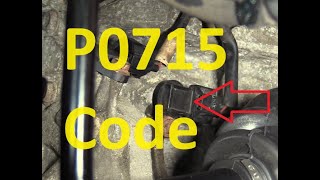
- Replacing the Output Speed Sensor (OSS) instead of the Input Speed Sensor (ISS). The transmission has multiple speed sensors; P0715 specifically points to the input sensor. 🎬 Watch this guide on P0715 input speed sensor diagnosis and fixes
- Assuming the code is for another manufacturer. Applying a Nissan-specific diagnosis (like a failed CVT belt) to a Chevrolet Cruze will lead to an incorrect repair.
- Replacing the input speed sensor without checking the fluid. If the fluid is full of metal from a wave plate failure, the new sensor will quickly become contaminated and fail, and the underlying catastrophic issue will remain.
Most Likely Causes
- Failed Transmission Input Speed Sensor (ISS) 🔴 High Probability The sensor is an electronic component located inside the transmission housing, where it is subjected to intense heat and potentially contaminated fluid, leading to eventual failure. It is a common failure point on the 6T30/6T40 transmission family.
How to confirm: Use a professional scan tool to monitor the live data stream for the Input Shaft Speed. If the signal is erratic, drops to zero, or doesn't correlate with engine RPM as expected, the sensor is likely faulty. A multimeter can also be used to test the sensor's internal resistance, which should generally be between 500-1200 Ohms, though specs should be verified.
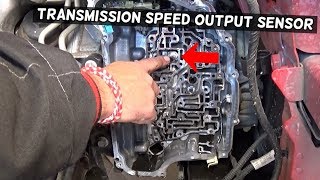
Typical fix: Replace the input speed sensor. This requires draining the transmission fluid and removing the transmission's side cover (valve body cover) to access the sensor. The battery and battery tray must also be removed for access from the top.
Est. part cost: $25-$75 - Contaminated Transmission Fluid and/or Internal Failure 🟡 Medium Probability The 6T40 transmission in some Cruzes is known for issues like a broken 3-5-R wave plate, which sheds metal debris into the fluid. This metallic 'glitter' contaminates the magnetic speed sensor, causing it to send false readings, or it can clog the valve body. This failure is a known weakness in this transmission family.
How to confirm: Drain a sample of the transmission fluid and inspect it. If the fluid is dark, smells burnt, or contains shiny metallic particles (often called a 'glitter bomb'), it's a strong indicator of a serious internal mechanical failure. Also check the magnetic tip of the sensor for a buildup of metal shavings.
Typical fix: If significant metal is found, replacing the sensor alone is a temporary fix at best. The transmission will need to be rebuilt or replaced entirely. A professional rebuild addresses the root cause by replacing the failed wave plate and other damaged components.
Est. part cost: $2000-$4500 - Damaged Wiring or Loose Connection ⚪ Low Probability The wiring harness leading to the transmission can be damaged by road debris, heat, or corrosion, though it is less common than sensor failure. The connector pins themselves can also become corroded or loose, causing an intermittent signal.
How to confirm: Visually inspect the wiring harness going to the transmission for any signs of breaks, chafing, or corrosion at the main connector. Perform a continuity test on the wires from the sensor connector to the Transmission Control Module (TCM) to check for opens or shorts.
Typical fix: Repair or replace the damaged section of the wiring harness or clean/replace the connector.
Est. part cost: $10-$200
Rare But Worth Checking
- Faulty Transmission Control Module (TCM): This is a known, though less common, failure. The TCM is located inside the transmission side cover, bathed in hot fluid, which can lead to failure over time. In some cases, fluid can leak into the sealed chipset of the TCM. A user on a Reddit forum reported that replacing the sensor did not fix their limp mode issue, but replacing the TCM did. Another user on a BobIsTheOilGuy forum had the exact same experience, with a new TCM solving the problem after new sensors failed to. 🎬 Watch a step-by-step fix for Chevy Cruze TCM communication failure This should be considered after the sensor and wiring are ruled out.
Diagnosis Steps
- Confirm the Code: Use an OBD-II scanner to verify the active code. Double-check if the code is P1715 or P0715. Check for any other transmission-related codes like P0700 or P0716.
- Inspect Transmission Fluid: This is the most critical step for this platform. Check the transmission fluid level and condition. The fluid should be bright red and clear. If it is dark, smells burnt, or has visible metallic particles ('glitter'), STOP. This indicates a probable 3-5-R wave plate failure, and the transmission needs a rebuild or replacement.
- Inspect External Wiring: Visually inspect the wiring harness leading to the transmission for any obvious signs of damage, corrosion, or loose connections at the main connector.
- Live Data Analysis (Professional): Use an advanced scan tool to monitor the Input Shaft Speed parameter. Watch for the reading to drop out, become erratic, or fail to correspond with engine RPM as the vehicle is driven and warms up. This strongly points to a sensor or wiring issue.
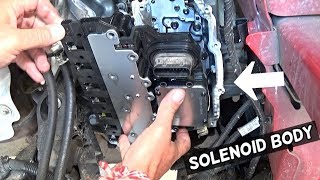
- Test the Sensor and TCM Voltage (Advanced): If the fluid is clean, the next step is to test the sensor circuit. This requires removing the transmission side cover. 🎬 See how to remove and replace the 6T40 control module assembly Test the sensor's resistance. More importantly, check for proper voltage being supplied to the sensor from the TCM. A lack of voltage would point to a faulty TCM rather than a bad sensor.
- Address Internal Failure: If the fluid is full of debris, do not replace the sensor as a standalone fix. The transmission requires a professional rebuild or replacement to address the internal mechanical damage.
Parts You'll Likely Need
- Transmission Input Speed Sensor
(OEM #24276627)— This sensor is the most common cause of a P0715 code, which is likely what a P1715 reading is indicating on this vehicle. The original part number 24259853 has been superseded by 24276627.
Trusted brands: ACDelco, NGK, Wells, General Motors
OEM price range: $50-$80
Aftermarket price range: $25-$50
Related Codes That Often Appear With This One
- P0716 — This code indicates 'Input/Turbine Speed Sensor 'A' Circuit Range/Performance' and can appear with P0715 as the sensor begins to fail intermittently before failing completely.
- P0700 — This is a generic code indicating that the Transmission Control Module (TCM) has stored a fault code. It is a general alert that points you toward more specific codes like P0715.
- P07BF — This code for 'Input/Turbine Speed Sensor 'B' Circuit' can also appear. A user on a forum reported this code along with P0700, and the ultimate fix was a faulty TCM after a sensor replacement didn't work.
Technical Service Bulletins (TSBs) & Recalls
- GM TSB 13282: Not
Platform-Specific Known Issues
- The 1.4L Turbo models are equipped with the 6T40 transmission, while the 1.8L naturally aspirated models use the lighter-duty 6T30. Both can suffer from this issue.
- Accessing the sensor requires removing the battery and battery tray to get to the transmission side cover bolts from above, in addition to working from the driver's side wheel well.
Mechanic-Grade Diagnostic Values
- Input Speed Sensor (ISS) Resistance — expected: 500 - 1200 Ohms. Failure: A reading outside this range indicates an internal failure of the sensor's coil.
- Input Speed Sensor (ISS) Signal Voltage at TCM Connector — expected: 5V reference. Failure: Absence of a 5V signal on the sensor's power pin at the TCM connector points towards a faulty TCM or a break in the wiring, not a faulty sensor.
- Live Data: Transmission Input Speed (TIS) — expected: Should closely follow Engine RPM when the torque converter is locked and show logical correlation during shifts.. Failure: An erratic signal, or one that drops to zero while the vehicle is in gear and moving, points to a failing sensor or wiring issue.
Scan Tool Commands That Help
- GDS2 / Professional Scan Tool: Service Fast Learn / Transmission Adaptive Values Learn — This procedure is mandatory after replacing the TCM (TEHCM), valve body, or after any internal transmission service. It allows the TCM to learn the specific hydraulic and mechanical characteristics of the clutches. Failure to perform this may result in poor shift quality, harsh engagement, and new DTCs being set.
- GDS2 / Professional Scan Tool: Module Setup > TCM > End Model Part Number — Before reprogramming a TCM, it is critical to record the original 'End Model Part Number' from the old module. This ensures the correct software and calibration file is loaded onto the new or reprogrammed unit.
Wiring & Ground Locations
- TCM (TEHCM) Location — The Transmission Control Module (TCM) is integrated with the valve body and solenoids into a single unit called a TEHCM (Transmission Electro-Hydraulic Control Module). This assembly is located inside the transmission, behind the side cover (valve body cover).. Because the TCM is the component that reads the input speed sensor signal, its location inside the hot transmission fluid makes it susceptible to heat-related failures which can mimic sensor issues. All sensor wiring terminates at this internal module.
- Main Transmission Connector — The main 14-way electrical connector that links the internal TEHCM to the engine wiring harness is located on the outside of the transmission case.. This is the primary external point for testing continuity and voltage for the input speed sensor circuit without opening the transmission. A wiring diagram for the 2014 Cruze shows the ISS High Signal, Low Signal, and control circuits pass through this connector.
- Ground G105 / G106 — A key ground point for the ECM and TCM is located on the frame cross rail under the engine's crank pulley.. A poor ground connection at this point can cause a variety of erratic electronic issues, including incorrect sensor readings and communication errors with the TCM. Verifying this ground is clean and tight is a crucial step in diagnosing any electronic transmission fault.
Real Owner Repair Stories
- YouTube video comment section (2014 Chevy Cruze) — Limp mode, multiple warning lights (Service Power Steering, Stabilitrak, Traction Control), and a U0101 code (Lost Communication with TCM).
❌ Tried (didn't work) Initial diagnosis pointed towards a complete TCM failure.
✅ What actually fixed it The mechanic found a bent terminal (pin 37, red/violet wire) in the X3 connector at the underhood fuse block. This pin provides power to the TCM. Straightening the pin restored communication and resolved all symptoms without replacing any parts.
OEM Part Supersession History
24259853→24276627— Part has been updated by the manufacturer. The new part number is the current service replacement.
Heads up: The part number 24276627 replaces several previous numbers, including 24259853, 24275801, 24246848, and others. It is the correct OEM replacement for the specified vehicle range.
Model Year Variations Within This Range
- 2011 vs 2012+: The 6T40 transmission underwent a significant update for the 2012 model year, moving from a 'Gen 1' to a 'Gen 2' design. The Gen 1 TEHCM (TCM) has pressure switches, while the Gen 2 TEHCM does not. The solenoids also changed location and operation between generations. An easy way to identify the TEHCM generation is by the 8th digit of the barcode number on the module: a number indicates Gen 1, while a letter (B, C, or D) indicates Gen 2. This is critical because Gen 1 and Gen 2 TEHCMs and some internal components are not interchangeable.
Diagnostic Flowchart
Other Known Issues on This Vehicle
Issues unrelated to this code that are worth knowing about as an owner of this generation:
- PCV System Failure (1.4L Turbo) 🔴 High — Extremely common, often after 60,000 miles. A failed check valve in the intake manifold pressurizes the crankcase, rupturing a diaphragm in the valve cover. (Ref: TSB PIP5197M, Special Coverage 16-NA-015)
- Coolant Leaks from Water Pump / Thermostat Housing 🔴 High — Very common failure point. The plastic housings can crack and leak, leading to overheating.
- Faulty Negative Battery Cable 🟠 Medium — Common across 2011-2015 models. An insufficient crimp on the terminal causes a wide range of bizarre electrical issues, including flickering screens, warning lights (Service Stabilitrak), and no-start conditions. (Ref: Special Coverage Adjustment 14311B)
- Oil Cooler / Oil Filter Housing Leaks (1.4L Turbo) 🟠 Medium — Common for the seals between the oil cooler and the engine block to degrade and leak oil or coolant.
- Turbocharger Underboost (P0299) 🔴 High — Often occurs, but is frequently misdiagnosed as a bad turbo. The root cause is usually the PCV system failure creating a massive boost leak. (Ref: TSB PIP5197M)
Used vs. New Parts: Buying Guide for This Vehicle
When a used part is the smart pick: A used complete transmission assembly can be a cost-effective option if the original has a confirmed catastrophic failure (like a broken wave plate with widespread metal contamination). A used TEHCM (TCM) is also a viable option, but ONLY if you have the capability to clone the software from the original module or have it programmed to your vehicle's VIN.
Donor-vehicle mileage cap: roughly under 80000 miles for the part to have meaningful remaining life.
What to inspect on the donor part:
- For a complete transmission, drain a fluid sample. It must be bright red and free of metal particles or a burnt smell.
- Check the date code on the transmission case to ensure it's from a similar year vehicle.
- For a TEHCM, inspect the main connector for any bent, corroded, or damaged pins.
- Ask the seller for the VIN of the donor vehicle to verify its original application and check for any outstanding recalls.
OEM-only on this vehicle (don't cheap out):
- Transmission Control Module (TEHCM): While used OEM units can work if reprogrammed, avoid no-name aftermarket TCMs. Stick with original GM/ACDelco parts or reputable remanufacturers who pre-program the unit to your VIN.
- Internal seals and gaskets: When rebuilding, always use a high-quality OEM or OEM-equivalent gasket and seal kit. Cheap seals are prone to leaking under the high temperatures inside the transmission.
Aftermarket brands forum-validated for this vehicle:
- ACDelco (OEM)
- General Motors (OEM)
- Reputable remanufacturers like Nexenzo who offer VIN-programmed TEHCMs.
Brands owners have reported issues with on this vehicle:
- Unbranded, generic TEHCMs or speed sensors from online marketplaces that do not offer VIN programming or a substantial warranty.
Real Owner Stories
Aggregated from forums and TSBs cited above. Mileages and costs reflect what owners reported in those sources.
2012 Chevrolet Cruze
Symptoms: The vehicle entered limp mode when the engine was warm. The owner found codes P0700 and P07BF.
What fixed it: Replacing the input speed sensor did not fix it; the problem was ultimately resolved by replacing the TCM, as fluid had leaked into the original module.
Source hint: Reddit r/cruze - Anyone had any luck with changing a Transmission Speed Sensor
Chevrolet Cruze
Symptoms: Code P07BF was present. The owner replaced the input speed sensor, but there was no improvement in transmission performance.
What fixed it: Replacing the entire TCM/solenoid assembly located inside the transmission.
Source hint: BobIsTheOilGuy - Cruze Transmission Input Speed Sensor
Related OBD-II Codes
Frequently Asked Questions
My 2011-2016 Chevrolet Cruze has 'glitter' in the transmission fluid along with code P1715; can I just replace the sensor?
Is the P1715 code more common on the 1.4L Turbo or the 1.8L Cruze models?
Does GM TSB 13282 provide a solution for the P1715 code on my Cruze?
Why does my Cruze enter 'limp mode' and lose 3rd, 5th, and Reverse gears?
Can a bad battery cable cause transmission codes like P1715 on a 2011-2015 Cruze?
Where is the Input Speed Sensor located on the Cruze 6T40 transmission?
Helpful Videos

Used OEM Parts in Stock

New Aftermarket Parts Available


The information in this article is provided for general reference and educational purposes only. Vehicle specifications, procedures, and part compatibility can vary by production date, trim level, and region. Always consult your vehicle's factory service manual and verify part numbers before purchasing or performing repairs. Safety-critical components such as airbags, seat belts, and braking systems should be installed by a qualified professional.
- Chevrolet Cruze:
- 🎬 Helpful Videos
- 🛍️ Shop This Part
- What's Unique About the 2011-2016 Chevrolet Cruze
- Symptoms You May Notice
- Most Likely Causes
- Rare But Worth Checking
- Diagnosis Steps
- Parts You'll Likely Need
- Related Codes That Often Appear With This One
- Technical Service Bulletins (TSBs) & Recalls
- Platform-Specific Known Issues
- Mechanic-Grade Diagnostic Values
- Scan Tool Commands That Help
- Wiring & Ground Locations
- Real Owner Repair Stories
- OEM Part Supersession History
- Model Year Variations Within This Range
- Diagnostic Flowchart
- Other Known Issues on This Vehicle
- Used vs. New Parts: Buying Guide for This Vehicle
- Real Owner Stories
- 2012 Chevrolet Cruze
- Chevrolet Cruze
- Related OBD-II Codes
- Frequently Asked Questions
- 🎟️ Get 5% Off