

P1621 on 2005-2009 Saab 9-7x: Control Module Memory Failure Causes and Fixes
On a 2005-2009 Saab 9-7x, code P1621 indicates an internal memory failure in the Powertrain Control Module (PCM) or Transmission Control Module (TCM). The most likely fix is replacing the faulty module, which must be programmed to your vehicle. Always check the battery and ground connections first, as low voltage is a common trigger.
- P1621 on a Saab 9-7x means a critical computer (PCM or TCM) has failed an internal memory self-test.
- Before condemning an expensive module, ALWAYS test the battery and check all major power and ground connections for corrosion or looseness, as low voltage is a common cause.
- The most common fix is replacing the faulty module (either the PCM or the external T42 TCM).
- Any replacement module is NOT plug-and-play; it must be professionally programmed to your vehicle's VIN to work.
What's Unique About the 2005-2009 Saab 9-7x
It is critical to understand that the Saab 9-7x is built on the General Motors GMT360 platform, sharing its core electronics with the Chevrolet Trailblazer and GMC Envoy. Therefore, this code's meaning is the standard GM definition, not the definition used on other Saab-built vehicles where P1621 often relates to the A/C system. On these GM platforms, P1621 points directly to a hardware or software integrity issue within a primary control module. Importantly, the 9-7x uses an externally-mounted T42 Transmission Control Module, which is significantly easier and less costly to replace than the Transmission Electro-Hydraulic Control Modules (TEHCM) located inside the transmission pan on many newer GM vehicles.
Symptoms You May Notice
- Check Engine Light is on
- Transmission shifts harshly or erratically
- Vehicle gets stuck in one gear (limp mode)
- Engine may stall or fail to start
- Gear position indicator (PRNDL) may be blank or incorrect
- Loss of memory for clock, radio presets, or seat positions
- "Stabilitrak Off" message may flash on the dash during electrical faults
- Replacing transmission solenoids or other internal transmission parts due to harsh shifting, when the actual cause is the external electronic control module.
- Replacing oxygen sensors or other engine sensors without first confirming which module set the P1621 code.
Most Likely Causes
- Internal Powertrain Control Module (PCM/ECM) Failure 🔴 High Probability Over time, heat cycles and vibration in the engine bay can lead to the degradation of the internal memory chips (EEPROM) or solder joints within the PCM.
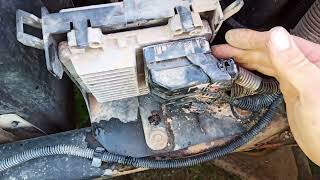
How to confirm: Using a professional scan tool, confirm that the P1621 code is being set by the PCM. After verifying the battery and all power/ground connections to the module are good, the module itself is condemned. The PCM is located in the engine bay. 🎬 Watch: How to remove the ECM on a V8 model
Typical fix: Replace the Powertrain Control Module. The new module must be programmed to the vehicle's VIN.
Est. part cost: $200-$450 - Internal Transmission Control Module (TCM) Failure 🔴 High Probability Similar to the PCM, the T42 TCM is susceptible to failure from heat and vibration. On the GMT360 platform, this is an externally mounted module, making it a common but relatively accessible failure point.
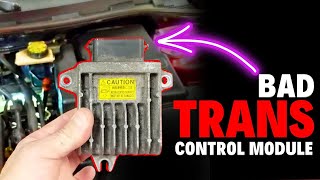
How to confirm: A professional scan tool will show the P1621 code originating from the TCM. This is often accompanied by transmission-specific codes like P0700 🎬 See common symptoms of a failing Transmission Control Module or communication codes like U0101.
Typical fix: Replace the Transmission Control Module. The new T42 module requires professional programming.
Est. part cost: $250-$700 - Low Battery Voltage or Poor Connections 🟡 Medium Probability The GMT360 platform is sensitive to voltage. A weak battery, failing alternator, or corroded/loose ground straps can cause voltage drops during startup, which can corrupt the module's memory check and falsely trigger a P1621 code. A cranking voltage below 9.6V is a known trigger for false module errors.
How to confirm: Test the battery and charging system. The battery should read ~12.6V with the engine off and 13.7-14.7V while running. Inspect and clean all main battery terminals, chassis grounds (G103, G104), and module connectors for corrosion or looseness.
Typical fix: Replace the weak battery or failing alternator. Clean or tighten all corroded or loose ground connections.
Est. part cost: $0-$300
Rare But Worth Checking
- Corrupted Software from Aftermarket Tuner: If an aftermarket performance programmer (e.g., Bully Dog, EFILive) was used, it may have corrupted the PCM or TCM software. Reverting to the stock factory tune is a necessary diagnostic step, though sometimes the damage is permanent and requires module replacement.
Diagnosis Steps
- Scan for all DTCs in all modules. Note which specific module (PCM or TCM) has stored the P1621 code.
- Thoroughly test the battery's health and the alternator's output. Ensure voltage is stable and within the correct range (12.6V+ off, 13.7-14.7V on). Check for a voltage drop below 9.6V during cranking.
- Inspect the main battery terminals, engine-to-chassis ground straps, and battery-to-chassis ground straps for corrosion or looseness. Clean and tighten as necessary. Key ground points on related platforms are G103 and G104 on the cylinder heads.
- Inspect the electrical connectors at the PCM and TCM for any corrosion, damage, or backed-out pins.
- If an aftermarket tuner was used, attempt to flash the vehicle back to its stock factory program. If the code persists, the module may be permanently damaged.
- If all wiring, power, and grounds are confirmed to be good, and the code persists after being cleared, the module that stored the code is faulty and requires replacement.
Parts You'll Likely Need
- Powertrain Control Module (PCM/ECM)
(OEM #Varies by year/engine. Examples: 12593532 (2006), 12628911 (2009 5.3L), 12618163 (2008-09 4.2L). Always verify with VIN.)— This is a primary cause of P1621 if the scan tool indicates the fault is stored in the engine computer. Internal memory failure requires replacement.
Trusted brands: ACDelco, Cardone
OEM price range: $400-$500
Aftermarket price range: $200-$350 - Transmission Control Module (TCM)
(OEM #Varies by year/engine. Examples: 24255280 (T42, 2006-09), 24238659 (2007), 24235754 (2006 4.2L). Always verify with VIN.)— This is another primary cause of P1621, especially if drivability symptoms are transmission-related. Internal failure is common.
Trusted brands: ACDelco
OEM price range: $450-$700
Aftermarket price range: $250-$500
Related Codes That Often Appear With This One
- P0700 — This code means 'Transmission Control System Malfunction'. The TCM requests the PCM to turn on the check engine light, indicating the fault (like P1621) originated in the transmission system. It confirms the diagnostic focus should be on the TCM.
- U0101 — This means 'Lost Communication With TCM'. It often appears with P1621 when the TCM has failed so completely that it is no longer communicating on the vehicle's data network.
- P0601 — This code means 'Internal Control Module Memory Check Sum Error'. It is very similar to P1621 and seeing them together strongly reinforces the diagnosis of a failed module. GM TSBs often group these codes together.
Technical Service Bulletins (TSBs) & Recalls
- GM TSB #05-06-04-060A: A general bulletin that acknowledges P1621 (and other P06xx codes) as an internal control module memory fault, confirming it's a known issue pattern across various GM vehicles.
- GM TSB #PIP4653E: Specifically mentions that DTC P1621, when stored in the Transmission Control Module, may require TCM replacement. This TSB covers a wide range of GM vehicles and strengthens the diagnosis of a failed TCM.
Platform-Specific Known Issues
- Module Locations and Accessibility: The Powertrain Control Module (PCM) is located in the engine bay, making it relatively easy to access. The Transmission Control Module (TCM) is the T42 model, which is mounted externally on the transmission, not inside the pan. This makes it significantly easier to replace than the internal TEHCM units found in later GM models.
- Transmission Lifespan Context: The 4L60-E transmission used in these vehicles has a typical lifespan of around 180,000-200,000 miles before requiring a rebuild 🎬 Watch: Step-by-step 4L60E transmission removal for Trailblazer and Envoy or replacement, though some last longer with good maintenance. A P1621 code related to the TCM does not necessarily mean the mechanical parts of the transmission have failed.
Mechanic-Grade Diagnostic Values
- Module Power Supply Voltage — expected: 12.4V or higher with engine off; 13.7V - 14.7V with engine running.. Failure: Voltage below 12.4V (engine off) or outside the charging range (engine on) can cause spurious memory codes during startup.
- Module Ground Circuit Voltage Drop — expected: Less than 0.3V (300mV). Failure: A reading higher than 0.3V between the module's ground pin and the negative battery terminal indicates high resistance in the ground circuit, which can cause internal errors.
- TCM Connector C1, Pin 31 - Battery Positive Voltage — expected: Battery Positive Voltage (12V+). Failure: No voltage or low voltage indicates a problem in the power supply circuit to the TCM, not an internal TCM fault.
- TCM Connector C1, Pin 32 - Ground — expected: Near 0V (continuity to ground). Failure: Voltage present or high resistance to chassis ground indicates a bad ground connection for the TCM.
Hidden / Shadow Codes Worth Checking
- P0601, P0603, P0604, P062F: These are all internal control module memory or processor fault codes. While not 'hidden', their presence alongside P1621 acts as strong secondary confirmation of a fatal internal module failure, as noted in GM TSB PIP4653E. (see via Standard Professional OBD-II Scan Tool)
Scan Tool Commands That Help
- GM Tech2 / GDS2: Service Programming System (SPS) — This is a mandatory function required after installing a new or used PCM or TCM. It downloads the correct VIN-specific software and calibrations to the module, allowing it to function in the vehicle.
- GM Tech2 / GDS2: Transmission Service Fast Learn — This procedure must be performed after programming a new TCM. It allows the module to learn clutch fill volumes and adapt to the specific transmission to ensure smooth shifting.
- Professional Scan Tool: Module Communication Status — During diagnosis, attempt to communicate directly with the suspect module (PCM/TCM). If the tool cannot establish communication, and P1621 is present with a U-code (like U0101), it strongly suggests the module has failed completely.
Wiring & Ground Locations
- G103 / G104 — Typically located on the rear of the cylinder heads in the engine bay on GMT360 platform vehicles. One Saab-specific diagram also shows G104 on the underside of the hood.. These are primary engine and chassis ground points. Corrosion or looseness here can cause intermittent voltage issues for the PCM and TCM, leading to false P1621 codes.
- G101 — Located at the front of the engine on the lower block on related GM platforms.. This ground point is specifically listed as providing a ground path for the Engine Control Module and Transmission Control Module.
- TCM Connector C1 - Pins 6 & 7 — On the main connector for the T42 Transmission Control Module.. Pin 6 (L-BU) and Pin 7 (D-BU) are the High-Speed GMLAN Serial Data Bus lines. Damage to these wires can cause communication loss and may set codes alongside P1621.
Real Owner Repair Stories
- Chevrolet Forum user 'treetop' (2002 Chevrolet Silverado (GMT800 platform, similar electronics)) — P1621 code, clock/radio/seat memory resetting on startup.
❌ Tried (didn't work) Flashing the programmer back to the stock factory tune.
✅ What actually fixed it The user concluded the PCM was permanently damaged by the aftermarket Bully Dog programmer and required replacement. This serves as a strong warning about aftermarket tuners causing this specific code. - YouTube channel 'Fix it Angel' (GM Vehicle (unspecified)) — P1621, engine cutting out intermittently.
❌ Tried (didn't work) Replacing the ECU kit, assuming it was a software or module hardware fault.
✅ What actually fixed it After weeks of stalling, a P0193 (Fuel Rail Pressure Sensor Circuit High Input) code also appeared. The root cause was a faulty fuel rail pressure sensor sending erratic data. Replacing the sensor cleared both the P0193 and the P1621 codes.
OEM Part Supersession History
Multiple (e.g., 24235754, 24238659)→Multiple (e.g., 24252114, 24255280)— Standard part evolution and consolidation.
Heads up: The T42 TCM used on this platform has many interchangeable service numbers. The physical module is the same. The critical factor is not the specific part number, but ensuring the replacement module is programmed with the correct software for the vehicle's VIN and options.
Diagnostic Flowchart
Used vs. New Parts: Buying Guide for This Vehicle
When a used part is the smart pick: For this repair, purchasing a used PCM or TCM from a junkyard is a high-risk option that is NOT recommended for most DIYers or even many professional shops. While the part itself may be functional, it is VIN-locked to the donor vehicle.
Donor-vehicle mileage cap: roughly under 150000 miles for the part to have meaningful remaining life.
What to inspect on the donor part:
- Verify the module is from a vehicle that was not involved in a flood or fire.
- Inspect the connector pins for any signs of corrosion, bending, or damage.
- If possible, get the VIN of the donor vehicle to verify its original configuration.
OEM-only on this vehicle (don't cheap out):
- Powertrain Control Module (PCM)
- Transmission Control Module (TCM)
Aftermarket brands forum-validated for this vehicle:
- ACDelco (New or Remanufactured)
- Cardone (Remanufactured, ensure programming is included)
- Specialty vendors that provide pre-programmed modules like Flashmasters or PCM of NC.
Brands owners have reported issues with on this vehicle:
- Any used module from a non-specialist seller (e.g., general eBay listings, junkyards) that does not come with a guarantee of being unlocked or pre-programmed to your VIN. GM's official programming software (SPS) can be difficult and sometimes refuses to reprogram used modules.
Real Owner Stories
Aggregated from forums and TSBs cited above. Mileages and costs reflect what owners reported in those sources.
2006 Saab 9-7x 5.3i
Symptoms: Intermittent voltage spikes up to 16-17V, causing the dash to die and a 'Stabilitrack Off' message to appear.
What fixed it: The story highlights the platform's sensitivity to voltage instability, a key cause of false module codes. The specific repair for the voltage issue was not detailed in the provided context.
Source hint: GMTNation - Thread ''06 9-7X 5.3i :: Intermittent Voltage Surge While Driving'
2002 Chevrolet Silverado
Symptoms: P1621 code appeared with clock and seat memory loss immediately after using a Bully Dog programmer.
What fixed it: Attempting to revert the vehicle to its stock tune did not fix the problem; the context confirms that this can permanently corrupt the module's memory, requiring replacement.
Source hint: Chevrolet Forum - Thread 'Help with code P1621'
Related OBD-II Codes
Frequently Asked Questions
Where are the Powertrain Control Module (PCM) and Transmission Control Module (TCM) located on my 2005-2009 Saab 9-7x?
I have a P1621 code. Does this mean my entire 4L60-E transmission needs to be rebuilt?
Can I use a cheap used PCM or TCM from a junkyard to fix my 9-7x?
I used an aftermarket tuner on my 9-7x and now I have a P1621 code. Will flashing it back to the stock program fix it?
My 9-7x is stuck in one gear and the check engine light is on. Is this related to P1621?
Are there any GM Technical Service Bulletins (TSBs) that apply to this P1621 code on my Saab?
Besides a bad module, what's a common and simpler cause for P1621 on these trucks?
Helpful Videos
Used OEM Parts in Stock


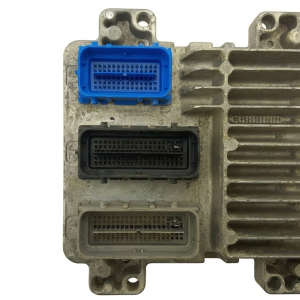

New Aftermarket Parts Available


The information in this article is provided for general reference and educational purposes only. Vehicle specifications, procedures, and part compatibility can vary by production date, trim level, and region. Always consult your vehicle's factory service manual and verify part numbers before purchasing or performing repairs. Safety-critical components such as airbags, seat belts, and braking systems should be installed by a qualified professional.
- Saab 9-7x:
- 🎬 Helpful Videos
- 🛍️ Shop This Part
- What's Unique About the 2005-2009 Saab 9-7x
- Symptoms You May Notice
- Most Likely Causes
- Rare But Worth Checking
- Diagnosis Steps
- Parts You'll Likely Need
- Related Codes That Often Appear With This One
- Technical Service Bulletins (TSBs) & Recalls
- Platform-Specific Known Issues
- Mechanic-Grade Diagnostic Values
- Hidden / Shadow Codes Worth Checking
- Scan Tool Commands That Help
- Wiring & Ground Locations
- Real Owner Repair Stories
- OEM Part Supersession History
- Diagnostic Flowchart
- Used vs. New Parts: Buying Guide for This Vehicle
- Real Owner Stories
- 2006 Saab 9-7x 5.3i
- 2002 Chevrolet Silverado
- Related OBD-II Codes
- Frequently Asked Questions
- 🎟️ Get 5% Off