

P1621 on 2004-2012 GMC Canyon: PCM Memory Failure Causes and Fixes
On a 2004-2012 GMC Canyon, code P1621 indicates an internal memory failure in the Powertrain Control Module (PCM). This is often caused by a failed PCM, corrupted data from an aftermarket tuner, or unstable battery voltage. The most common fix is to replace the PCM and have it programmed to the vehicle, which also requires a specific security relearn procedure.
- P1621 on a 2004-2012 Canyon means the Powertrain Control Module (PCM) has an internal memory error.
- Before condemning the PCM, rule out a weak battery, bad grounds, and data corruption from an aftermarket tuner.
- Unlike many other GM trucks, this code does NOT typically point to the Transmission Control Module (TCM) on the Canyon/Colorado platform.
- Replacing the PCM is not a simple DIY job; the new module must be professionally programmed, and a 30-minute Passlock security relearn procedure is mandatory for the truck to start.
What's Unique About the 2004-2012 GMC Canyon
While P1621 on many newer or larger GM trucks often points to a failed Transmission Control Module (TCM) located inside the transmission, this is not the case for the first-generation GMC Canyon and its platform mates. On this GMT355 platform, the code almost always refers to an internal fault within the main Powertrain Control Module (PCM), also known as the ECM or VCM. This can be caused by an actual hardware failure or, very commonly, by data corruption from an aftermarket performance tuner.
Symptoms You May Notice
- Check Engine Light (may or may not be on)
- Engine stalling or cutting out while driving
- Vehicle will not start, or cranks but will not fire
- Security or Theft light illuminated on the dashboard
- Erratic behavior of gauges or other electronics
- Loss of stored memory for radio presets, clock, or seat positions
- Replacing the Transmission Control Module (TCM). On many other GM vehicles, P1621 points to the TCM, but on the 2004-2012 Canyon/Colorado platform, the fault is almost always in the PCM.
Most Likely Causes
- Internal Powertrain Control Module (PCM) Failure 🔴 High Probability The PCM (GM E67 family) is an electronic component that can fail internally over time due to heat cycles, vibration, and age. Its location on the firewall exposes it to significant engine heat.
How to confirm: After ruling out all other possibilities (power, grounds, aftermarket programming), if the code persists, the PCM is condemned. A professional scan tool will show the P1621 code originating from the PCM. 🎬 Watch: Top symptoms and causes of a failing PCM. GM service information for this code often leads directly to PCM replacement.
Typical fix: Replace the PCM and have the new unit professionally programmed to the vehicle's VIN. A security relearn procedure is mandatory after installation.
Est. part cost: $180-$400 - Corrupted PCM Software from Aftermarket Tuner 🔴 High Probability Using aftermarket programmers (like Bully Dog, DiabloSport, or Superchips) to change engine parameters can sometimes fail during the writing process or corrupt the PCM's memory, triggering a P1621 code.
How to confirm: If a tuner was recently used, this is the most likely cause. The first step is to use the tuner to attempt to return the vehicle to its stock factory tune.
Typical fix: Successfully return the PCM to the stock program using the tuner. If that fails, the PCM may need to be re-flashed by a dealership or replaced if it has been permanently damaged ('bricked').
Est. part cost: $0-$150 for a dealer re-flash - Low Battery Voltage or Poor Power/Ground Connection 🟡 Medium Probability GM trucks of this era can be sensitive to low voltage. A weak battery, failing alternator, or corroded ground wires can cause voltage to drop during the PCM's startup memory check, triggering a false memory code.
How to confirm: Test the battery with a load tester; it should hold a charge above 12.4V. Check that the alternator is charging between 13.7V and 14.7V when running. Inspect and clean the battery terminals and all major ground points on the engine block, firewall, and frame.
Typical fix: Replace a weak battery, clean all corroded terminals and ground connections, or replace a faulty alternator.
Est. part cost: $150-$300
Rare But Worth Checking
- Water Intrusion or Corrosion at PCM Connector:
Diagnosis Steps
- Check for Aftermarket Tuners: Determine if an aftermarket programmer has been used. If so, immediately attempt to restore the factory tune. If this resolves the code, the issue was the tune itself.
- Check Battery and Charging System: Use a multimeter and load tester. Verify the battery holds over 12.4V at rest and the alternator charges between 13.7-14.7V when running. Low voltage during cranking can trigger this code.
- Inspect Power and Grounds: Visually inspect and clean the battery terminals. Trace and inspect the main engine and chassis ground straps for corrosion, looseness, or damage. Pay special attention to the grounds on the firewall and engine block.
- Inspect PCM Connectors: Disconnect the battery. Unplug the large connectors at the PCM on the firewall. Look carefully for any signs of water intrusion, corrosion (green/white powder), or bent/damaged pins.
- Scan for Codes: Use a scan tool to confirm P1621 is present and originating from the Engine Control Module. Note if it is 'active' or in 'history'.
- PCM Re-flash: If a software issue is suspected but no tuner was involved, a dealership can attempt to re-flash the PCM with the latest factory software. This can sometimes fix corruption issues.
- PCM Replacement and Security Relearn: If all other steps fail, the PCM has an internal fault. Purchase a new or remanufactured PCM programmed to your VIN. After physical installation, you MUST perform the 30-minute Passlock Security Relearn procedure.
Parts You'll Likely Need
- Powertrain Control Module (PCM/ECM)
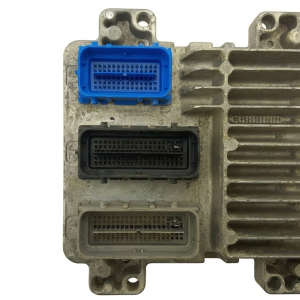
(OEM #Varies by year/engine. Examples include 12597521 (2006), 19210067 (2007), 12636659 (2009). The module is a GM E67 type.)— This is the module that stores the code and is the most common point of failure for P1621 on this platform.
Trusted brands: ACDelco (OEM), Cardone (Remanufactured), Flagship One (Programmed), PCM of NC (Programmed)
OEM price range: $250-$400
Aftermarket price range: $180-$300
Related Codes That Often Appear With This One
- P1630, P1631: These are related to the Passlock security system and can appear if the PCM is failing or has been replaced without a proper relearn.
- P0601, P0603, P0604: These are other internal control module memory error codes that strongly confirm the PCM has failed internally.
Platform-Specific Known Issues
- GM Passlock II Security Relearn is Mandatory: After replacing the PCM, the truck will crank but not start until a security relearn is performed. This procedure does not require tools and involves a sequence of 10-minute key-on cycles, for a total of 30 minutes. Failure to do this will result in a no-start condition with a security light on.
- PCM Location and Vulnerability: The PCM is located in the engine bay, on the driver's side of the firewall. It is held by plastic clips that can become brittle or soften with heat, potentially allowing the PCM to fall or vibrate excessively, which can contribute to premature failure. Some owners use zip ties to better secure the module to its bracket.
Technical Service Bulletins (TSBs) & Recalls
- TSB Bulletin #05-06-04-060A: This manufacturer bulletin provides information to technicians regarding control module Diagnostic Trouble Codes (DTCs) including P1621, as well as P0601, P0602, P0603, P0604, P0606, P062F, and P06F3. The bulletin notes that these internal memory and processor faults can be shared across multiple modules in the electrical system.
Mechanic-Grade Diagnostic Values
- Alternator AC Ripple Voltage — expected: Less than 0.5V (500mV) with the engine running and electrical loads on. Ideally under 0.2V (200mV).. Failure: AC voltage exceeding 0.5V indicates a failing diode in the alternator's rectifier bridge. This 'dirty' power can cause logic errors in sensitive modules like the PCM, potentially triggering a false P1621.
- PCM Power Supply Pins (at PCM Connector) — expected: Battery voltage (12.6V+ key off, 13.7-14.7V engine running) at all times on constant power pins (e.g., C1 Pin 20, Orange wire).. Failure: Voltage drop of more than 0.5V compared to battery positive post indicates high resistance in the power feed circuit.
- PCM Ground Pins (at PCM Connector) — expected: Less than 0.1V (100mV) between the ground pin and the battery negative terminal. This indicates a solid ground connection.. Failure: Voltage reading above 0.1V indicates high resistance in the ground circuit, which can cause erratic module behavior.
Scan Tool Commands That Help
- GM Tech2 / GDS2: Crankshaft Position Variation Learn (CASE Relearn) — This procedure is required after replacing or reprogramming the PCM. It allows the new PCM to learn the precise position of the crankshaft reluctor wheel to accurately detect misfires. Failure to perform this can result in a false P0300 (random misfire) code. The function is typically found under 'Special Functions' in the powertrain menu.
- GM Tech2 / GDS2: Replace and Reprogram ECU — This is the main function used by dealerships and programming specialists to load the vehicle's specific VIN and software calibration into a new or remanufactured PCM. This is a mandatory first step before any relearn procedures can be performed.
Wiring & Ground Locations
- G101, G102, G103, G104 — These are the primary engine and PCM grounds. They are typically located on the lower left side of the engine block and/or the rear of the left cylinder head.. The PCM relies on these grounds for a stable reference. Corrosion or looseness at these points can cause intermittent voltage fluctuations, leading to data corruption and a false P1621 code. They are a critical check point before condemning the PCM.
- Splice Pack SP105 — Located in the engine compartment on the driver's side, near the battery and underhood fuse block.. This splice pack is a junction for multiple ground circuits, including some that provide a reference for relays and modules. Corrosion inside this pack is a known issue on the GMT355 platform and can cause a wide range of difficult-to-diagnose electrical problems that could mimic a PCM failure.
- PCM Connector C1, Pin 20 (Orange wire) — This is one of the main battery positive voltage feeds to the Powertrain Control Module.. This pin must have constant, stable battery voltage. A voltage drop test at this pin is essential to confirm the PCM is receiving clean power. Any corrosion on this pin or a problem in the wire can starve the PCM of voltage, causing memory errors.
- PCM Connector C1, Pin 13 & 19 (Pink wire) — These are the main Ignition 1 Voltage feeds to the PCM.. These pins supply power to the PCM when the key is in the 'ON' and 'RUN' positions. An intermittent connection here, perhaps from a failing ignition switch, could cause the PCM to lose power unexpectedly, potentially corrupting memory and setting P1621.
Real Owner Repair Stories
- YouTube video (Unknown vehicle, but demonstrates an edge case for P1621.) — Engine kept cutting out while driving. Could restart after cycling the ignition but the problem would reoccur. P1621 was present.
❌ Tried (didn't work) Replaced the ECU (PCM) with a brand new kit.
✅ What actually fixed it The P1621 was accompanied by a P0193 (Fuel Rail Pressure Sensor Circuit High Input). The actual cause was a failed fuel rail pressure sensor, which was sending an erroneous, extremely high pressure reading (180,000 on the scanner). Replacing the fuel rail pressure sensor resolved both codes. - Chevrolet Forum user 'treetop' (2002 Chevrolet Silverado (similar GM era and logic)) — P1621 appeared, clock, seat, and radio memory would reset on most startups.
❌ Tried (didn't work) Initial diagnosis was uncertain.
✅ What actually fixed it The problem started immediately after installing a Bully Dog programmer. The confirmed fix was to use the programmer to return the truck's PCM to the factory stock tune, which resolved the memory loss and the P1621 code.
Model Year Variations Within This Range
- 2008-2012: In 2008, the electronics were updated. While the fundamental cause of P1621 (PCM internal error) remains the same, the specific PCM part numbers and software calibrations are different from the 2004-2007 models. When sourcing a replacement PCM, it is critical to match it to the correct year range and engine type, not just the generation.
- 2009-2012: The introduction of the 5.3L V8 (LH8/LH9) in 2009 brought a different engine harness and specific PCM calibration compared to the I4 and I5 engines. While the P1621 code still points to the PCM, the part number and required software are unique to the V8 models.
Diagnostic Flowchart
Used vs. New Parts: Buying Guide for This Vehicle
When a used part is the smart pick: A used PCM from a junkyard can be a cost-effective option ONLY if you have access to a professional with GM-specific programming tools (Tech2/GDS2 and a subscription to GM's Service Programming System). A used module is a blank slate and will not start the vehicle until it is completely reprogrammed with your truck's VIN and security information. It offers no warranty and carries the risk of being faulty itself.
Donor-vehicle mileage cap: roughly under 150000 miles for the part to have meaningful remaining life.
What to inspect on the donor part:
- Match the part number EXACTLY if possible, or ensure it's a compatible superseded number for your year and engine.
- Source from a vehicle that was not in a flood or fire.
- Inspect the connectors on the donor PCM for any bent pins, corrosion, or physical damage before purchase.
- Choose a donor vehicle from a similar climate (e.g., avoid a part from a heavy salt-belt state if possible).
OEM-only on this vehicle (don't cheap out):
- For this repair, using a pre-programmed remanufactured unit from a reputable supplier (like ACDelco, Cardone, or specialists like Flagship One) is strongly recommended over a junkyard part. These units often come with a warranty and are programmed to your VIN before shipping, simplifying the installation process.
Aftermarket brands forum-validated for this vehicle:
- ACDelco (OEM Remanufactured)
- Cardone (A1 Cardone)
- Flagship One
- PCM of NC
Brands owners have reported issues with on this vehicle:
- Unbranded, no-name sellers on marketplaces like eBay or Amazon without a clear warranty or programming service should be avoided. The risk of receiving a non-functional or incorrectly programmed module is very high.
Real Owner Stories
Aggregated from forums and TSBs cited above. Mileages and costs reflect what owners reported in those sources.
similar-era GM truck
Symptoms: Check Engine Light with code P1621 appeared after using an aftermarket programmer.
What fixed it: The issue was resolved by using the tuner to return the PCM to the stock factory program.
Source hint: Chevrolet Forum - Chevy Enthusiasts Forums: Corroborated that P1621 on a similar-era GM truck points to a VCM/PCM memory fault and is often linked to aftermarket programmers.
GM vehicle
Symptoms: A P1621 checksum failure code was set after a failed installation of an aftermarket 'chip' or tuner.
What fixed it: The official GM diagnostic procedure pointed directly to PCM replacement as the required fix.
Source hint: AgTalk Forum - 'Can someone run a GM code for me?'
GM vehicle (J-body platform)
Symptoms: The vehicle experienced an intermittent P1621 code, causing unpredictable issues.
What fixed it: After diagnosis, the PCM was replaced, which then required the mandatory security relearn procedure to be performed before the car would start.
Source hint: j-body.org - 'P1621 (Error code of death?)'
Related OBD-II Codes
Frequently Asked Questions
After I replace the PCM on my Canyon, will it start right away?
I used an aftermarket tuner on my truck and now I have a P1621 code. Is my computer fried?
Where is the PCM located on a 2004-2012 GMC Canyon?
My radio presets and clock keep resetting, and now I have a P1621. Are these issues related?
Can I use a PCM from a Chevrolet Colorado or Hummer H3 from the junkyard?
My truck won't start and the security light is on. Is this related to the P1621 code?
Helpful Videos
We Have This Part in Stock




The information in this article is provided for general reference and educational purposes only. Vehicle specifications, procedures, and part compatibility can vary by production date, trim level, and region. Always consult your vehicle's factory service manual and verify part numbers before purchasing or performing repairs. Safety-critical components such as airbags, seat belts, and braking systems should be installed by a qualified professional.
- GMC Canyon:
- 🎬 Helpful Videos
- 🛍️ Shop This Part
- What's Unique About the 2004-2012 GMC Canyon
- Symptoms You May Notice
- Most Likely Causes
- Rare But Worth Checking
- Diagnosis Steps
- Parts You'll Likely Need
- Related Codes That Often Appear With This One
- Platform-Specific Known Issues
- Technical Service Bulletins (TSBs) & Recalls
- Mechanic-Grade Diagnostic Values
- Scan Tool Commands That Help
- Wiring & Ground Locations
- Real Owner Repair Stories
- Model Year Variations Within This Range
- Diagnostic Flowchart
- Used vs. New Parts: Buying Guide for This Vehicle
- Real Owner Stories
- similar-era GM truck
- GM vehicle
- GM vehicle (J-body platform)
- Related OBD-II Codes
- Frequently Asked Questions
- 🎟️ Get 5% Off