

P1614 on 2002-2018 Nissan Altima: NATS Immobilizer Failure Causes and Fixes
P1614 on a Nissan Altima means the anti-theft system (NATS) can't recognize the key, preventing the car from starting. The most common fix is replacing a faulty key or the NATS antenna amplifier around the ignition. This repair requires professional key programming.
- P1614 means your Altima's anti-theft system doesn't recognize your key and has disabled the engine.
- Before seeking professional help, always try your spare key first. This is the quickest way to determine if the key itself is the problem.
- The most common parts to fail are the key's internal transponder chip and the NATS antenna amplifier around the ignition.
- Repairing this issue requires specialized tools for key programming. This is not a typical DIY repair.
- If you attempt to start the car too many times, it will enter 'Lock Mode' (P1610), which must be cleared by a professional before the car will start.
What's Unique About the 2002-2018 Nissan Altima

The Nissan Anti-Theft System (NATS) is known to be sensitive across many models, including the Altima. A common point of failure is the NATS antenna amplifier, the ring around the ignition that reads the key chip. After several failed start attempts (often five), the system can enter a 'Lock Mode' and set a companion code, P1610, which requires a professional scan tool to reset before the car can be started, even if the original P1614 fault is fixed. This 'lock mode' is a frequent point of confusion, as fixing the root cause of P1614 will not make the car start if P1610 is active.
Generation note: This issue affects the 3rd (2002-2006), 4th (2007-2012), and 5th (2013-2018) generations of the Nissan Altima, as they all use a version of the NATS immobilizer system. The fundamental causes and diagnostic principles are the same across these generations, though specific part numbers for keys and antenna amplifiers will differ. For example, the 4th generation is also known for a separate but related issue where the Electronic Steering Column Lock (ESCL) module can fail, causing a no-start condition that can be confused with a NATS fault.
🎬 See how to fix the steering lock issueSymptoms You May Notice
- Engine cranks but does not start.
- Solid or flashing security indicator light (often a red car with a key symbol) on the dashboard.
- Vehicle may start intermittently before failing completely.
- In some cases, the engine may stall while driving, though a no-start condition is more common.
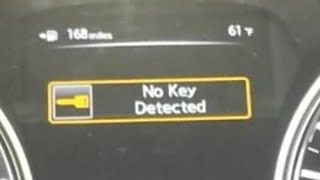
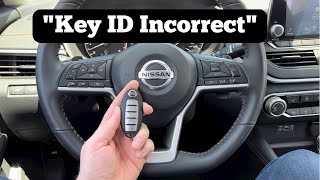
- For push-button start models, the instrument cluster may display 'No I-Key Detected' or 'Incorrect Key ID'.
- Replacing the starter motor, as the primary symptom is a 'crank, no-start' condition.
- Replacing the fuel pump without verifying that the immobilizer system is what's disabling it.
- Replacing the vehicle battery. While a low battery can cause various electrical issues, it's not typically the direct cause of a P1614 code unless it leads to BCM corruption.
Most Likely Causes

- Defective or Damaged Ignition Key 🔴 High Probability The transponder chip embedded in the plastic head of the key can be damaged from being dropped, water exposure, or from age, causing it to stop transmitting its ID code.
How to confirm: Try starting the vehicle with a spare key. If the spare key works, the primary key is faulty. An automotive locksmith can also test the transponder chip in the key. A dead battery in an Intelligent Key fob can also be a cause, so replacing it is a simple first step.
Typical fix: Replace and reprogram the faulty key. This must be done by a dealer or a qualified automotive locksmith with Nissan-compatible programming tools.
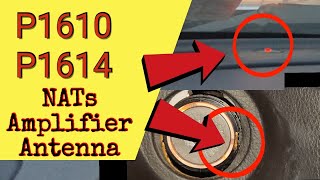
Est. part cost: $150-$300 - Faulty NATS Antenna Amplifier (IMMU) 🟡 Medium Probability The antenna ring around the ignition switch is a common failure point. It's responsible for energizing and reading the key's transponder chip, and the internal coil can fail over time, leading to a weak or non-existent signal.
How to confirm: A technician can test the coil's signal output. For push-button start models, if the engine starts when the key fob is physically touching the start button, it strongly suggests a weak or failed antenna. A visual inspection may also reveal damage to the coil wiring.
Typical fix: Replace the NATS antenna amplifier. 🎬 Watch: Diagnosing a NATS antenna amplifier failure This part is located around the ignition lock cylinder or push-start button. In many cases, this part does not require reprogramming after replacement, making it a potential DIY fix if you're comfortable removing the steering column shrouds.
Est. part cost: $80-$170 - Signal Interference ⚪ Low Probability Nissan issued TSB NTB13-107G which notes that other keys, RFID cards, and even phone chargers on the same keychain can interfere with the NATS signal. The BCM is sensitive to radio frequency (RF) noise.
How to confirm: Remove all other keys, fobs, and electronic devices from the keychain with the Altima key. Try starting the car with the key isolated. If it starts, interference was the issue. This is a common occurrence noted in forums.
Typical fix: Keep the vehicle key on a separate ring from other transponder keys or electronic devices.
Est. part cost: $0 - Wiring or Connector Issue ⚪ Low Probability
How to confirm: Visually inspect the wiring and connector going to the NATS antenna amplifier for any signs of damage, corrosion, or looseness. Check for continuity and voltage according to the factory service manual. The connector can sometimes become loose or pins can back out.
Typical fix: Repair the damaged wiring or clean/replace the faulty connector.
Est. part cost: $10-$50
Rare But Worth Checking
- Faulty Body Control Module (BCM): While less common, the BCM is the central component of the NATS system. If all other components (key, antenna) and wiring check out, the BCM itself may have failed. This is an expensive repair and should be the last item considered. A dead vehicle battery or improper jump-start can sometimes damage the BCM, leading to this code.
- Faulty Engine Control Module (ECM): In rare cases, a fault within the ECM can prevent it from correctly receiving or processing the immobilizer signal from the BCM. This is also an unlikely cause that should only be considered after exhausting all other possibilities.
Diagnosis Steps
- Scan the vehicle for all trouble codes. Note if P1610 is present along with P1614.
- Try starting the vehicle with a known-good spare key. If it starts, the original key is the problem.
- Remove all other keys and electronic devices from the keychain and attempt to start the vehicle again to rule out signal interference as noted in TSB NTB13-107G.
- Check the battery in the key fob (for models with Intelligent Key). A weak battery can sometimes cause communication issues.
- Visually inspect the wiring and connector at the NATS antenna amplifier around the ignition cylinder or start button.
- If you have a push-button start, hold the key fob directly against the start button and try to start the engine. If it starts, the NATS antenna amplifier is the most likely culprit.
- If the problem persists, professional diagnosis is required. A technician will use a specialized scan tool to check communication between the key, IMMU, BCM, and ECM. They can also test the signal strength of the key's transponder and the antenna amplifier's output.
- If P1610 is present, it must be cleared using a capable scan tool after the primary fault is repaired. This is a critical step; the car will not start until this is done.
Parts You'll Likely Need

- Transponder Ignition Key — The transponder chip inside the key is the most common point of failure, either due to damage or age.
Trusted brands: Nissan OE
OEM price range: $150-$300 (including programming)
Aftermarket price range: $75-$200 (including programming) - NATS Antenna Amplifier
(OEM #28590-C9968 (Example for 2004-2006 Altima), 28590-EL00A (Example for 2007-2012))— This component reads the key chip and is a frequent failure point in the NATS system, leading to a communication breakdown.
Trusted brands: Nissan OE
OEM price range: $80-$170
Aftermarket price range: $50-$100
Related Codes That Often Appear With This One
- P1610 — This code means 'Lock Mode' and is set after five consecutive failed start attempts due to a NATS fault. When P1610 is present, the vehicle will not start even if the P1614 issue is resolved, until the lock mode is cleared with a professional scan tool.
- U1000 — This code indicates a general CAN communication network failure. It can sometimes appear alongside NATS codes if the communication breakdown involves the BCM or ECM.
Technical Service Bulletins (TSBs) & Recalls
- NTB13-107G: Mentions how radio frequency interference from other devices (other keys, chargers, RFID cards) can cause intermittent 'Intelligent Key Not Detected' issues and no-start conditions. It advises checking simple causes like key fob battery and vehicle battery before replacing major components.
- PC516: A voluntary service campaign for 2009-2010 Altima and Maxima models to replace the potentially faulty Electronic Steering Column Lock (ESCL) which could cause a no-start condition.
Platform-Specific Known Issues
- Electronic Steering Column Lock (ESCL) Failure: On 2009-2010 models in particular, the ESCL module can fail, preventing the engine from starting. This mimics a NATS fault but is a separate issue. Nissan initiated a voluntary service campaign (PC516) to replace the ESCL with a non-locking Electronic Steering Column Box (ESCB). Owners often report having to tap the ESCL box under the steering column to get the car to start temporarily.
Mechanic-Grade Diagnostic Values
- BCM Power Supply Voltage (at BCM connector M21, pins 131 and 139 to ground) — expected: Battery Voltage (Approx. 12V). Failure: Voltage significantly below battery voltage indicates a problem in the power supply circuit or a blown fuse/fusible link.
- BCM Ground Circuit Continuity (at BCM connector M21, pins 134 and 143 to ground) — expected: Continuity should exist (near 0 ohms). Failure: High or infinite resistance indicates an open in the ground circuit.
Scan Tool Commands That Help

- Nissan CONSULT-II / CONSULT-III plus: NATS V5.0 > C/U INITIALIZATION — This function is required when replacing the BCM or IMMU (Immobilizer Control Unit). It erases all previously registered key IDs, requiring all keys to be re-registered. A PIN code (e.g., 5523 for older North American models) is needed to perform this initialization.
- Nissan CONSULT-II / CONSULT-III plus: Key Registration — After performing a C/U Initialization or when adding a new key. The scan tool provides a menu-driven process to register each key to the BCM one by one.
- Launch X431 (or similar advanced aftermarket scanner): NATS (Nissan Anti-theft System) > Replace BCM — This function on advanced aftermarket tools mimics the OEM process. It's used after a BCM has been physically replaced to initialize the new module and begin the key registration process, which also requires a PIN.
Wiring & Ground Locations
- Body Control Module (BCM) — Located behind the instrument cluster/left side of the dash. Access often requires removing the steering column covers and the gauge cluster itself.. The BCM is the central computer for the NATS. All communication from the key and antenna amplifier is processed here before a signal is sent to the ECM to allow the engine to start.
- Connector M57 — A major BCM connector located behind the left end of the dashboard.. This connector contains many of the critical input and output wires for the BCM, including those related to the anti-theft system. A poor connection here can cause P1614.
- NATS Antenna Amplifier Connector — Directly on the NATS antenna amplifier, which is the plastic ring around the ignition lock cylinder or push-to-start button.. This is the primary connection point for the component that reads the key. Checking for power, ground, and signal at this connector is a key diagnostic step.
Real Owner Repair Stories
- YouTube channel "2006 Nissan Altima No Crank Immobilizer Red Light NATS Antenna Amplifier P1610 P1614" (2006 Nissan Altima) — Car would not start, immobilizer light was on, and codes P1610 and P1614 were present.
❌ Tried (didn't work) Attempting to re-learn/re-program the existing keys using an Autel MaxiIM scan tool. The procedure would fail repeatedly.
✅ What actually fixed it Upon close visual inspection, the mechanic discovered the coil on the NATS antenna amplifier (the ring around the ignition) was physically damaged and broken. Replacing the NATS antenna amplifier allowed the keys to be successfully programmed, and the car started. - Nissan Forum user report (2007 Nissan Sentra with 137,000 miles) — Crank no-start with codes P1610 and P1614 active. Immobilizer light would not go out when cranking.
❌ Tried (didn't work) Replacing the battery., Replacing the entire steering column with a used part., Disconnecting the battery for extended periods., Checking all related fuses.
✅ What actually fixed it The final diagnosis pointed towards a faulty ECM. A mobile locksmith's professional scan tool could not establish communication with the ECM to clear the codes, indicating the module itself was unresponsive and likely the root cause of the communication breakdown.
OEM Part Supersession History
28231-JB10A→28231-ZX10A— Part revision or supplier change.
Model Year Variations Within This Range
- 2002-2006 (3rd Gen): These models use the NATS v5.0 system with a traditional transponder key that is inserted and turned in the ignition.
- 2007-2018 (4th & 5th Gen): These generations transitioned to the Intelligent Key system with a push-button start. While the underlying principle is the same (transponder verification), the components are different. The 'antenna' is still present around the start button, and additional interior/exterior antennas are used to detect the key's presence for keyless entry and starting.
Diagnostic Flowchart
Other Known Issues on This Vehicle
Issues unrelated to this code that are worth knowing about as an owner of this generation:
- Continuously Variable Transmission (CVT) Failure 🔴 High — Extremely common across all generations, especially 2007-2018 models. Failures often occur between 60,000 and 120,000 miles. (Ref: Multiple class-action lawsuits and warranty extensions have been issued, but no universal recall.)
- QR25DE Engine Pre-Catalyst Failure 🔴 High — Common on 2002-2006 models with the 2.5L engine. The ceramic pre-catalyst in the exhaust manifold disintegrates and gets sucked back into the engine, causing catastrophic failure and high oil consumption. (Ref: Recalls were issued to reprogram the ECM, but many owners proactively replace the manifold with an aftermarket header.)
- Rusted Floorboards 🔴 High — Prevalent in 3rd generation (2002-2006) Altimas, particularly in salt-belt states. Corrosion can completely destroy the floor pans, creating a major safety hazard. (Ref: A class-action lawsuit was filed regarding this issue.)
- Failing Camshaft/Crankshaft Position Sensors 🟠 Medium — Common across 3rd and 4th generations, causing intermittent stalling, rough idling, and no-start conditions. (Ref: Nissan issued a recall for this problem on some models.)
- Secondary Hood Latch Corrosion 🔴 High — Affects 5th generation (2013-2018) models. The secondary hood latch can corrode and fail, potentially allowing the hood to fly open while driving if the primary latch is not engaged. (Ref: Multiple recalls have been issued to address this problem.)
- Electronic Steering Column Lock (ESCL) Failure 🟠 Medium — Common on 2009-2010 models, causing a sudden no-start condition where the steering wheel remains locked. (Ref: Nissan issued a voluntary service campaign (PC516) to replace the unit.)
Used vs. New Parts: Buying Guide for This Vehicle
When a used part is the smart pick: A used NATS Antenna Amplifier is generally a safe and cost-effective choice. It is a simple coil and amplifier that does not typically require programming, making it a plug-and-play component. Sourcing one from a junkyard is a viable repair strategy.
Donor-vehicle mileage cap: roughly under 150000 miles for the part to have meaningful remaining life.
What to inspect on the donor part:
- Inspect the plastic ring for any cracks or signs of physical damage.
- Ensure the wiring pigtail and connector are intact with no cut or frayed wires.
- If possible, choose a donor vehicle that was not involved in a front-end collision to minimize the chance of electrical damage.
OEM-only on this vehicle (don't cheap out):
- Body Control Module (BCM)
- Engine Control Module (ECM)
- Ignition Keys / Intelligent Key Fobs
Aftermarket brands forum-validated for this vehicle:
- For keys, a reputable automotive locksmith using high-quality key blanks is often as reliable as the dealer.
Brands owners have reported issues with on this vehicle:
- Cheap, unbranded keys and fobs from online marketplaces often have transponder chips that fail prematurely or cannot be programmed correctly.
Real Owner Stories
Aggregated from forums and TSBs cited above. Mileages and costs reflect what owners reported in those sources.
2002 Nissan Maxima
Symptoms: Engine cranks but does not start after the vehicle had a dead battery; P1610 and P1614 codes were present.
What fixed it: The vehicle required a dealer visit for key reprogramming as the key had lost its pairing with the immobilizer system.
Source hint: Maxima.org - 'Cranks but no starts p1610'
2009 Nissan Altima
Symptoms: Engine fails to start, mimicking a NATS fault. Owner discovered they could temporarily start the car by tapping the box under the steering column.
What fixed it: Replacement of the Electronic Steering Column Lock (ESCL) with a non-locking Electronic Steering Column Box (ESCB) as part of service campaign PC516.
Source hint: vehicle_specific_issues - Electronic Steering Column Lock (ESCL) Failure
Related OBD-II Codes
Frequently Asked Questions
My 2009 Altima won't start and I heard about a steering lock issue. Does PC516 apply to me?
Can I fix the P1614 code on my Altima by just moving my keychain items?
If I replace the NATS antenna amplifier around my ignition switch, do I need to pay for reprogramming?
My Altima shows P1614 and P1610. Can I just fix the key and go?
I have a push-button start Altima and it says 'No I-Key Detected.' Is there a way to test if it's the antenna?
Is the P1614 code related to the common CVT failures in 2007-2018 Altimas?
Helpful Videos
We Have This Part in Stock




The information in this article is provided for general reference and educational purposes only. Vehicle specifications, procedures, and part compatibility can vary by production date, trim level, and region. Always consult your vehicle's factory service manual and verify part numbers before purchasing or performing repairs. Safety-critical components such as airbags, seat belts, and braking systems should be installed by a qualified professional.
- Nissan Altima:
- 🎬 Helpful Videos
- 🛍️ Shop This Part
- What's Unique About the 2002-2018 Nissan Altima
- Symptoms You May Notice
- Most Likely Causes
- Rare But Worth Checking
- Diagnosis Steps
- Parts You'll Likely Need
- Related Codes That Often Appear With This One
- Technical Service Bulletins (TSBs) & Recalls
- Platform-Specific Known Issues
- Mechanic-Grade Diagnostic Values
- Scan Tool Commands That Help
- Wiring & Ground Locations
- Real Owner Repair Stories
- OEM Part Supersession History
- Model Year Variations Within This Range
- Diagnostic Flowchart
- Other Known Issues on This Vehicle
- Used vs. New Parts: Buying Guide for This Vehicle
- Real Owner Stories
- 2002 Nissan Maxima
- 2009 Nissan Altima
- Related OBD-II Codes
- Frequently Asked Questions
- 🎟️ Get 5% Off