

P1607 on 2001-2005 Honda Civic: ECM/PCM Failure Causes and Fixes
On a 2001-2005 Honda Civic, code P1607 almost always indicates a failed Engine Control Module (ECM/PCM). The most common fix is to replace the ECM with a matching used unit and have it reprogrammed by a dealer or locksmith to work with your keys. Expect to pay ~$75-$150 for a used ECM and ~$100-$200 for programming. Before replacement, always verify battery health and check the main ground (G101).
- P1607 on a 2001-2005 Civic means the main computer (ECM) has failed internally, often due to temperature-sensitive components.
- Before replacing the expensive ECM, always check the battery, PGM-FI main relay, and the main G101 ground connection on the thermostat housing first.
- The most common solution is replacing the ECM with a used unit that has an identical part number.
- Crucially, the replacement ECM must be professionally programmed to your car's keys, or the engine will not start.
- Driving with this code carries a risk of stalling, limp mode, or a no-start condition and is not recommended.
What's Unique About the 2001-2005 Honda Civic

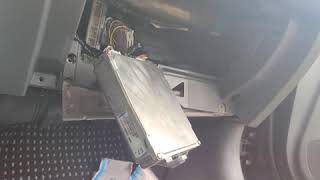
The seventh-generation (2001-2005) Honda Civic is known for experiencing this specific internal ECM failure. The issue is often traced to failing solder joints or other components on the circuit board that can be sensitive to temperature changes, particularly cold weather, causing them to contract and create an open circuit. Many owners report the code appearing only on cold starts and sometimes disappearing once the car warms up. Unlike older vehicles, you cannot simply swap in a used ECM due to the factory immobilizer system. The replacement ECM, located behind the right side of the glove box, must be electronically programmed to recognize your car's ignition keys, otherwise the engine will not start.
Symptoms You May Notice

- Check Engine Light is constantly on (code often cannot be cleared)
- Engine may stall while driving
- Vehicle may not start (cranks but won't fire)
- Erratic or harsh shifting in automatic transmission models
- Flashing green key light on the dashboard, indicating an immobilizer issue or that the ECM is not programmed
- Engine enters 'limp mode' and will not rev past 3,000 RPM
- Replacing transmission solenoids to fix harsh shifting, when the root cause is the faulty ECM controlling the transmission.
- Assuming a used ECM will work by simply plugging it in, without realizing it needs to be programmed to the car's immobilizer system.
- Replacing the crankshaft position sensor, which can be a cause for P1607 on other makes but is rarely the issue for this specific Honda problem.
Most Likely Causes

- Internal ECM/PCM Failure 🔴 High Probability The circuit boards in ECUs of this era are known to develop issues like bad solder joints or component failure over time, often exacerbated by heat cycles and vibration. The problem is frequently linked to cold temperatures causing components to contract and break electrical contact internally.
How to confirm: After verifying all power and ground connections to the ECM are good, the code persisting points to an internal failure. The definitive test is to substitute a known-good, programmed ECM and see if the code disappears. If the code cannot be erased with a scanner even with the engine off, it's a hard fault inside the ECM.
Typical fix: Replace the ECM with a new or used unit that has the exact same part number. The replacement unit must then be programmed to the vehicle's immobilizer system. Some specialized shops offer repair services for the original ECM.
Est. part cost: $75-$800 - Poor Power or Ground Supply to ECM ⚪ Low Probability Corrosion can affect key grounding points over time. The main ground for the ECU, G101, is located on the thermostat housing and is a common point of failure to check.
How to confirm: Check for a weak battery (<12.4V), test the charging system (should be 13.5-14.5V running), and inspect the main PGM-FI relay. Use a multimeter to verify stable voltage and solid ground connections at the ECM's wiring harness connectors, specifically checking continuity at the G101 ground point. A voltage drop of more than 0.5V between the battery and the ECM's power pins can indicate a problem.
Typical fix: Replace a weak battery, faulty alternator, or failing PGM-FI main relay. Clean or repair corroded ground straps, especially the G101 ground on the thermostat housing.
Est. part cost: $20-$250 - External Event Causing Electrical Damage ⚪ Low Probability
How to confirm: This is diagnosed by history. If the code appeared immediately after an improper jump-start, a short circuit while working on the car, or a major voltage spike, the ECM was likely damaged.
Typical fix: Replace the damaged ECM and have it programmed.
Est. part cost: $75-$800
Rare But Worth Checking
- Oil Contamination in ECM Connector: A leaking VTEC solenoid gasket (Part No. 15826-RNA-A01) or transmission pressure switch can allow oil to travel ('wick') up the inside of the wiring harness and contaminate the ECM connectors, causing short circuits. If you find oil in the connectors, the leaking sensor/gasket must also be replaced to prevent repeat failure.
Diagnosis Steps
- Attempt to clear the P1607 code with an OBD-II scanner. If the code returns immediately upon turning the key on (without starting the engine), it indicates a hard internal fault in the ECM.
- Check the battery and charging system. Ensure battery voltage is above 12.4V with the engine off and between 13.5V-14.5V while running. A weak battery is a common trigger for memory-related codes.
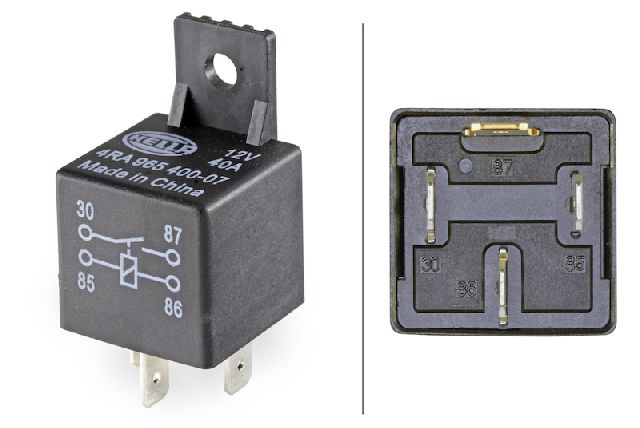
- Inspect the PGM-FI Main Relay. Listen for a click when the key is turned to the ON position. A faulty relay can cause power supply issues to the ECM. Some owners have fixed P1607 by replacing only this relay.
- Inspect the ECM connectors. Disconnect the battery, then locate the ECM behind the glove box. Unplug the connectors and check for any signs of corrosion, bent pins, or oil contamination from a wicking sensor.
- Verify ECM power and grounds. Using a wiring diagram, use a multimeter to confirm the ECM receives proper voltage. Crucially, inspect and clean the main G101 ground wire, which attaches to the thermostat housing. Check for continuity to ground at all specified ground pins on the ECM connectors.
- If all external checks are satisfactory and the code persists, the ECM is defective and must be replaced and reprogrammed.
Parts You'll Likely Need
- Engine Control Module (ECM/PCM)
(OEM #Varies (e.g., 37820-PLM-A71, 37820-PLR-L55, 37820-PZA-A71). Must match original exactly.)— This is the component that has failed internally when code P1607 is present and cannot be cleared. It is critical to match the part number exactly to your car's year, model, transmission, and emissions type (e.g., ULEV, SULEV).
Trusted brands: Honda (OEM), Cardone (Remanufactured)
OEM price range: $800-$1300 (New).
Aftermarket price range: $75-$400 (Used or Remanufactured).
Related Codes That Often Appear With This One
- P0562 —
Platform-Specific Known Issues
- The immobilizer system in this generation requires the ECM to be programmed to the keys. A simple swap from another car will result in a no-start condition with a flashing green key light.
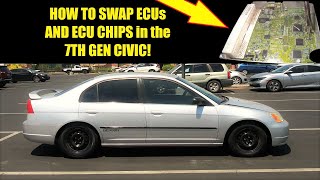
- Some owners have had success swapping the small 8-pin immobilizer EEPROM chip (e.g., a 93C56 chip) from their original ECM to the donor ECM, but this requires delicate soldering and is not a guaranteed fix. 🎬 See how to swap immobilizer chips to avoid reprogramming
- ECM repair services exist that can often fix the internal board issue for less than the cost of a new unit. This avoids the need for immobilizer reprogramming.
Mechanic-Grade Diagnostic Values
- ECM Power Supply Voltage Drop — expected: Less than 0.5V drop. Failure: A voltage reading at the ECM power pins that is more than 0.5V lower than the battery voltage indicates excessive resistance in the power supply circuit.
- ECM Ground Circuit Resistance — expected: Less than 0.1 Ohms. Failure: Resistance greater than 0.1 Ohms between the ECM ground pins and the chassis ground point (like G101) indicates a poor ground connection.
Scan Tool Commands That Help

- Autel IM608 (or similar professional tool): Immobilizer > ECM Replacement — This function is used after installing a new or used ECM to program the vehicle's existing keys to the replacement module, allowing the engine to start. It rewrites the immobilizer data in the new ECM to match the car.
Wiring & Ground Locations

- G101 — On the thermostat housing, under the air intake tube.. This is a primary ground point for the PGM-FI system and the ECM. Corrosion or a loose connection here can cause low voltage or voltage spikes to the ECM, potentially triggering a P1607 code.
- ECM Connectors (A, B, E) — Behind the right side of the glove compartment.. These are the direct interface to the ECM. Technicians must test for correct voltage and ground continuity at specific pins on these connectors using a wiring diagram to rule out a wiring issue before condemning the ECM.
Real Owner Repair Stories
- Honda-Tech user 'joshs_232' (2000 Honda Civic EX (Note: This is a 6th gen, but the P1607 issue and cold-weather symptom are identical to the 7th gen)) — P1607 code, engine runs badly and won't rev over 3000 RPMs (limp mode). Only happens on cold starts (below 20°F) after sitting for a day. Runs fine after warming up and restarting.
❌ Tried (didn't work) Waiting for the car to warm up, Cleaning the ECM contacts
✅ What actually fixed it Replaced the original ECU with a used ECU purchased from eBay. The problem was resolved. - Honda-Tech user 'Chris T.' (2002 Honda Accord with F23A engine) — P1607 code that resets immediately after clearing, along with a hard downshift from 2nd to 1st and delayed reverse engagement. Found oil in the blue PCM connector.
❌ Tried (didn't work) Clearing the code, Opening and inspecting the PCM (no internal oil or visible damage)
✅ What actually fixed it Replacing the PCM fixed the P1607 code. (Note: The transmission issue remained, indicating it was a separate problem).
When the Usual Fixes Don't Work
- In one forum thread for a 2000 Honda Accord, a user replaced the ECU twice for a P1607 code, but the code remained. A responding member suggested that a shorted-out Idle Air Control Valve (IACV) can damage the ECU, or that a corroded main battery ground could be the culprit, causing multiple ECUs to appear faulty. This highlights the importance of checking all inputs and outputs to the ECU, not just the unit itself.
OEM Part Supersession History
37820-PLM-A72→37820-PLM-A73, 37820-PLM-A74, 37820-PLM-A75, 37820-PLM-A76— Standard part revisions by the manufacturer.
Heads up: Later part numbers in a series are generally backward compatible, but it is always safest to match the full part number. The key distinction is transmission type (Auto vs Manual) and emissions (Federal vs California), which are designated by different part number families (e.g., PLM vs PLR).37820-PLR-A72→37820-PLR-A73, 37820-PLR-A75— Standard part revisions by the manufacturer.
Heads up: PLR series ECUs are for different trim/engine combinations than PLM series. Do not interchange PLR and PLM ECUs.
Model Year Variations Within This Range
- 2004-2005: The 2004-2005 facelift models have different ECU part numbers than the 2001-2003 models. While the P1607 failure is common to the whole generation, it is critical to use an ECU from the correct year range (pre-facelift or post-facelift) and with the exact same part number to ensure compatibility.
Diagnostic Flowchart
Used vs. New Parts: Buying Guide for This Vehicle
When a used part is the smart pick: A used ECM is a very smart and common choice for this repair, as a new OEM unit is prohibitively expensive (often over $1000) for a vehicle of this age. The failure is a known defect, but a used unit from a donor car often provides a long-lasting fix for a fraction of the price.
Donor-vehicle mileage cap: roughly under 150000 miles for the part to have meaningful remaining life.
What to inspect on the donor part:
- Match the part number EXACTLY. Pay attention to all letters and numbers (e.g., 37820-PLM-A71). A part number for an automatic transmission will not work in a manual car.
- Purchase from a reputable seller that offers a warranty (even 30-90 days) to protect against a dead-on-arrival unit.
- If possible, buy a matched set that includes the ECM, the immobilizer unit (receiver around the ignition switch), and the original key. This can eliminate the need for reprogramming.
- Inspect the connectors on the used ECM for any bent pins, corrosion, or signs of water/oil intrusion.
OEM-only on this vehicle (don't cheap out):
- For this specific repair, the ECM itself is the main component. While remanufactured units exist (e.g., Cardone), many owners have success with verified-working used OEM units from salvage yards.
Brands owners have reported issues with on this vehicle:
- Be cautious of no-name, unverified 'repaired' or 'reflashed' ECUs from online marketplaces without a strong warranty and return policy.
Real Owner Stories
Aggregated from forums and TSBs cited above. Mileages and costs reflect what owners reported in those sources.
2001 Honda Civic LX A/T
Symptoms: Check Engine Light was on with code P1607, but the car was running fine.
What fixed it: To get the car to start with a salvage yard ECM, the owner swapped the immobilizer chip from the original ECM into the replacement unit. However, this did not resolve the P1607 code, which remained present.
Source hint: honda-tech.com - Nagging ECM issue, someone must know.
2002 Honda Civic
Symptoms: The check engine light was on for four months with code P1607.
What fixed it: The owner confirmed that using a matched set of ECU, immobilizer, and key from a single donor car was a successful fix that bypassed the need for dealership reprogramming.
Source hint: Honda Civic Forum: P1607 [solved]
2000-2002 Honda Accord
Symptoms: The vehicle was throwing a P1607 code and experiencing automatic transmission problems.
What fixed it: The problem was resolved by replacing the PCM. The diagnosis was confirmed because the P1607 code would return instantly after being cleared, indicating a hard internal failure.
Source hint: Honda-Tech: P1607 + transmission issue
Related OBD-II Codes
Frequently Asked Questions
I found a used ECM from another 2003 Civic. Can I just swap it in to fix the P1607 code?
My Check Engine Light is on for P1607 and I have a flashing green key light. Are these related?
Where is the G101 ground located on my 2001-2005 Civic? I want to check it for corrosion.
I tried to clear the P1607 code, but it came back instantly without even starting the engine. What does that mean?
Is it possible to repair my original ECM instead of replacing it?
My automatic transmission is shifting erratically. Could this be caused by the P1607 code?
I've heard about swapping an immobilizer chip to use a junkyard ECM. Is this a reliable fix?
Helpful Videos
Used OEM Parts in Stock


New Aftermarket Parts Available


The information in this article is provided for general reference and educational purposes only. Vehicle specifications, procedures, and part compatibility can vary by production date, trim level, and region. Always consult your vehicle's factory service manual and verify part numbers before purchasing or performing repairs. Safety-critical components such as airbags, seat belts, and braking systems should be installed by a qualified professional.
- Honda Civic:
- 🎬 Helpful Videos
- 🛍️ Shop This Part
- What's Unique About the 2001-2005 Honda Civic
- Symptoms You May Notice
- Most Likely Causes
- Rare But Worth Checking
- Diagnosis Steps
- Parts You'll Likely Need
- Related Codes That Often Appear With This One
- Platform-Specific Known Issues
- Mechanic-Grade Diagnostic Values
- Scan Tool Commands That Help
- Wiring & Ground Locations
- Real Owner Repair Stories
- When the Usual Fixes Don't Work
- OEM Part Supersession History
- Model Year Variations Within This Range
- Diagnostic Flowchart
- Used vs. New Parts: Buying Guide for This Vehicle
- Real Owner Stories
- 2001 Honda Civic LX A/T
- 2002 Honda Civic
- 2000-2002 Honda Accord
- Related OBD-II Codes
- Frequently Asked Questions
- 🎟️ Get 5% Off