

P1605 on 2013-2018 Hyundai Santa Fe: Rough Idle Causes and Fixes
P1605 on a 2013-2018 Hyundai Santa Fe means the engine is idling so poorly it's close to stalling. The most common causes are vacuum leaks from cracked hoses (especially the PCV hose), a dirty electronic throttle body, or worn spark plugs. Start with a thorough visual inspection of intake hoses and consider cleaning the throttle body.
- P1605 means your Santa Fe's engine is idling poorly and is at risk of stalling.
- Start your diagnosis by looking for the simplest and most common problems: cracked vacuum hoses and a dirty air intake/throttle body.
- Do not assume the most expensive fix. A $15 hose is a more likely culprit than a $1000 computer.
- If other codes are present, especially for lean conditions (P0171) or misfires (P030x), they provide a strong clue to the root cause.
- Always check that you have fuel in the tank, as running out of gas can also set this code.
What's Unique About the 2013-2018 Hyundai Santa Fe
While P1605 has various meanings across different brands and older Hyundai models (like 'Rough Road Sensor Circuit' or 'PCM Memory Error'), on modern Hyundais like the 2013-2018 Santa Fe, it is used to flag a severe 'Rough Idle' condition. The system is sensitive enough to set this code when idle stability is so poor that a stall is imminent. The diagnostic process isn't about a single unique part but rather a fundamental hunt for the root cause of the rough idle. The 2.4L GDI and 2.0T GDI engines in this platform are particularly susceptible to carbon buildup on the throttle body and intake valves, which is a frequent cause of this code.
Symptoms You May Notice
- Engine idling very low or erratically (shaking/vibrating)
- Engine stalling when coming to a stop or at idle
- Hesitation or stumbling during acceleration from a stop
- Check Engine Light is on
- Engine RPMs surging or dropping unpredictably at idle
- Replacing the ECM/PCM immediately. While a faulty ECM is a possible cause, it is extremely rare and should only be considered after all other possibilities have been exhausted.
- Replacing O2 sensors. While O2 sensors are part of the fuel control system, they are unlikely to be the primary cause of a severe idle drop that triggers P1605. They are more likely to report a fault (like a lean condition) that is *caused* by the root problem (e.g., a vacuum leak).
Most Likely Causes
- Vacuum Leak 🔴 High Probability Rubber and plastic hoses in the engine bay become brittle over time with exposure to heat and age, leading to cracks. The PCV (Positive Crankcase Ventilation) hose is a very common failure point on the 2.4L GDI engine.
How to confirm: Visually inspect all vacuum lines, the main air intake boot, and especially the PCV hoses for cracks or disconnections. Listen for a hissing sound at idle. A smoke test is the most effective way to pinpoint a leak's location.
Typical fix: Replace the cracked or broken hose.
Est. part cost: $10-$50 - Dirty Throttle Body 🟡 Medium Probability Carbon and oil vapor from the PCV system can build up around the throttle plate, restricting airflow at idle and causing the plate to stick or not close properly. This is a known issue on GDI engines.
How to confirm: Remove the air intake tube connected to the throttle body and visually inspect for a ring of black carbon buildup around the throttle plate and bore.
Typical fix: Clean the throttle body bore and plate with a dedicated throttle body cleaner and a soft cloth. An Electronic Throttle Control (ETC) relearn procedure is often required afterward. This can sometimes be done manually by cycling the ignition or may require a scan tool.
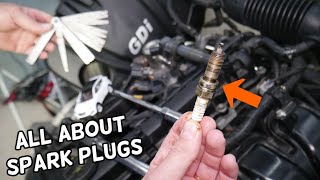
Est. part cost: $5-$15 (for cleaner) - Worn Spark Plugs or Faulty Ignition Coils 🟡 Medium Probability
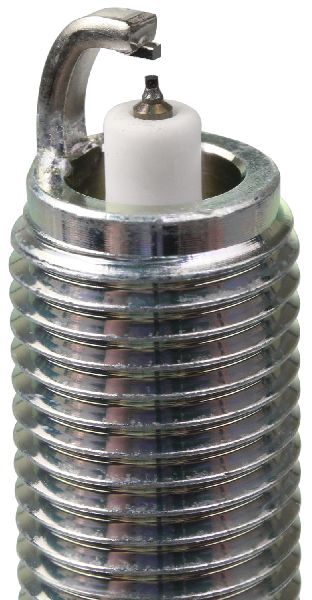
How to confirm: Review vehicle service history; spark plugs have a finite life (typically 60k-100k miles). A misfire will often accompany this issue, which may set other codes (P0300-P0306). Inspect spark plugs for wear, fouling, or incorrect gap. Test ignition coils by swapping a suspected bad coil with a known good one to see if the misfire follows.
Typical fix: Replace spark plugs. Replace the faulty ignition coil.
Est. part cost: $40-$120 for spark plugs, $50-$150 per ignition coil 🎬 Watch: How to replace and gap Santa Fe spark plugs
- Faulty Mass Airflow (MAF) Sensor ⚪ Low Probability
How to confirm: A dirty or failing MAF sensor can provide incorrect air-fuel ratio data. Unplugging the sensor to see if the idle quality improves (forcing the ECU into a default strategy) is a quick, though not definitive, test. Cleaning with a dedicated MAF sensor cleaner is a good first step.
Typical fix: Clean the MAF sensor. If cleaning doesn't work, replace the sensor.
Est. part cost: $10 (for cleaner), $70-$200 for a new sensor
Rare But Worth Checking
- Fuel Delivery Issue: This could be a weak fuel pump, a clogged fuel filter, or dirty fuel injectors. This is less common but should be investigated if air and spark systems check out.
- Faulty EGR Valve: An Exhaust Gas Recirculation (EGR) valve stuck open can create a massive vacuum leak at idle, causing severe instability and stalling.
- Failing Crankshaft Position Sensor: A failing crankshaft position sensor can cause intermittent stalling and rough idle, though it often presents with other symptoms like no-start conditions.
Diagnosis Steps
- Check for other stored DTCs. Codes for misfires (P030x) or lean conditions (P0171/P0174) are valuable clues.
- Verify fuel level. The code can be set by running out of gas, so rule this out first.
- Perform a thorough visual inspection of the engine bay. Look for any cracked, disconnected, or collapsed vacuum hoses, especially the PCV hoses and the main air intake boot between the air filter and throttle body.
- If a vacuum leak is suspected but not visible, perform a smoke test to find the source.
- Inspect and clean the throttle body. Remove the intake duct and check for heavy carbon buildup. Clean if necessary, and be prepared to perform a throttle relearn procedure.
- Inspect the ignition system. Check the condition and gap of the spark plugs. If a misfire code is present, focus on that cylinder's spark plug and ignition coil.
- If no issues are found, consider testing fuel pressure to rule out a weak fuel pump or clogged filter.
- As a final step, if all else fails, the issue could be related to the ECM, but this is highly unlikely and requires professional diagnosis.
Parts You'll Likely Need
- PCV Hose / Vacuum Hose
(OEM #26720-2G000 (2.4L, common); 26720-2GGA1 (2.4L); 26720-3CAA0 (V6))— These rubber hoses are the most common source of vacuum leaks that lead to rough idle as they age and crack.
Trusted brands: Hyundai (OEM), Gates
OEM price range: $20-$50
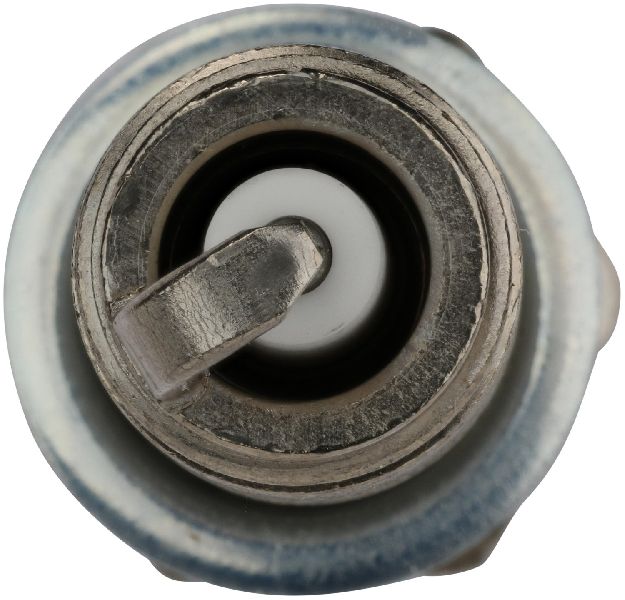
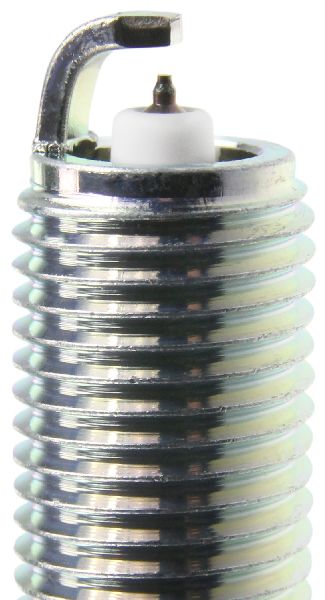
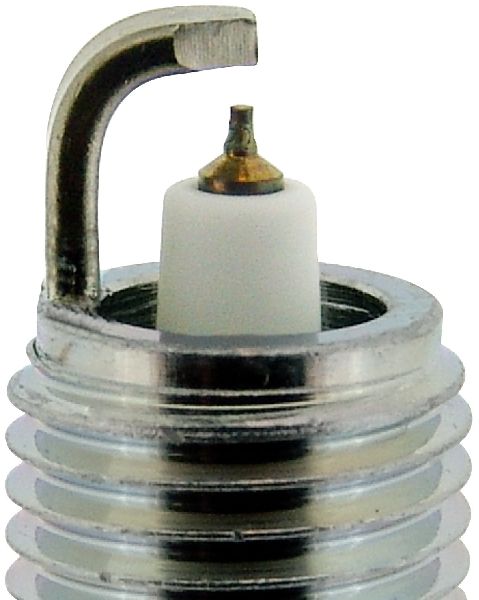
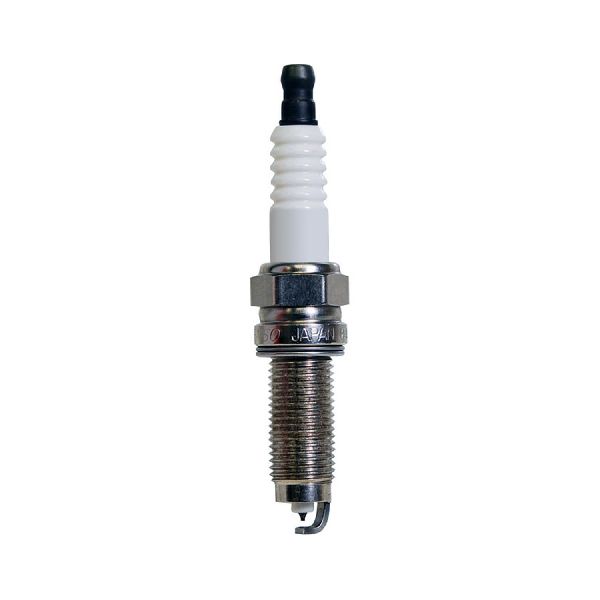
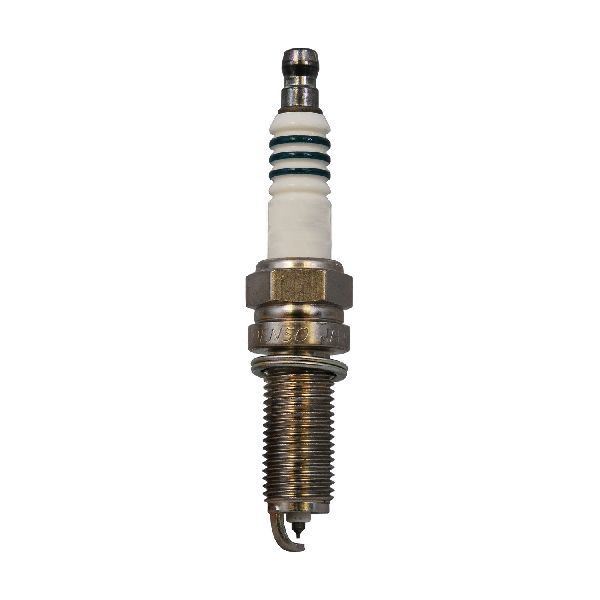
Aftermarket price range: $10-$30 - Spark Plugs — Worn or fouled spark plugs are a common cause of misfires and rough idle. They are a routine maintenance item.
Trusted brands: NGK, Denso
OEM price range: $60-$120
Aftermarket price range: $40-$80 - Throttle Body Gasket
(OEM #35101-2G700 (example, varies by engine))— If the throttle body is removed for cleaning, the gasket should be replaced to prevent creating a new vacuum leak.
Trusted brands: Fel-Pro, Mahle, Hyundai (OEM)
OEM price range: $10-$20
Aftermarket price range: $5-$15
Related Codes That Often Appear With This One
- P0171 — System Too Lean. This often points to a vacuum leak, which is a primary cause of P1605. The unmetered air causes a lean condition and an unstable idle.
- P0174 — System Too Lean (Bank 2). Same as P0171, but for V6 engines, indicating a vacuum leak affecting the second bank of cylinders.
- P030x — Cylinder Misfire (e.g., P0301, P0302). A misfiring cylinder (due to a bad spark plug, coil, or injector) will cause the engine to run rough and can trigger the P1605 code.
- P0507 — Idle Air Control System RPM Higher Than Expected. This can be seen if the throttle body is stuck slightly open due to carbon buildup, or if there is a significant vacuum leak.
Technical Service Bulletins (TSBs) & Recalls
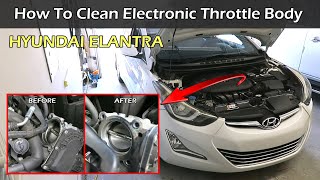
- TSB 13-FL-002: Throttle Body Cleaning: Hyundai issued this TSB providing a specific procedure for cleaning the Electronic Throttle Control (ETC) throttle body for various models including the Santa Fe. It advises that cleaning should be attempted before replacing the throttle body for issues like rough idle or stalling.
- TSB 13-AT-011: Rough Idle in Drive with Neutral Control Enabled: This TSB addresses a condition where some Santa Fe Sport models may experience a rough idle when coming to a stop. The fix involves diagnosis with a GDS tool and potential replace
Platform-Specific Known Issues
- Real-World Repair: Cracked PCV Hose: Multiple owners on forums like hyundai-forums.com have traced P1605 and rough idle symptoms to a cracked PCV hose. One user noted their mechanic initially couldn't find the issue, but after pointing out a cracked hose near the air filter area that was 'holding on for dear life', replacing the hose resolved the idle problem completely.
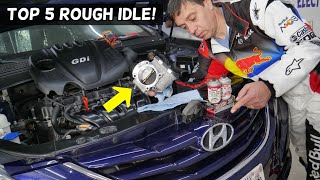
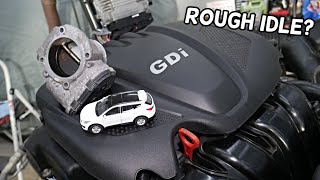
- Throttle Body Cleaning Necessity: Due to the PCV system design on the GDI engines, oil vapor and carbon are routed into the intake, leading to significant buildup on the throttle plate. A YouTube video by 'World Mechanics' specifically highlights a dirty throttle body as a top reason for rough idle on these Hyundai engines, showing how even at 80,000 miles, the buildup can be severe enough to prevent the throttle plate from closing properly.
Mechanic-Grade Diagnostic Values
- Low-Pressure Fuel System (In-tank pump) — expected: 55-65 PSI at idle.. Failure: Pressure below 45 PSI suggests a weak in-tank pump or clogged filter, which can starve the high-pressure pump.
- High-Pressure Fuel System (GDI HPFP) — expected: Approximately 40 bar (580 PSI) at idle; rising to 150+ bar (2175+ PSI) under load.. Failure: If 'Actual' pressure on a scan tool consistently lags more than 200-300 PSI behind 'Desired' pressure, the High-Pressure Fuel Pump (HPFP) is likely failing.
- Long-Term and Short-Term Fuel Trims (LTFT/STFT) — expected: The sum of LTFT and STFT should not exceed ±10% under normal, steady operating conditions.. Failure: Consistently high positive fuel trims (e.g., > +10%) at idle that decrease when RPMs are raised strongly suggest a vacuum leak. Consistently high negative trims could indicate a leaking injector or faulty fuel pressure regulator.
- DTC Trigger Threshold — expected: Idle speed should remain above 400 RPM.. Failure: The P1605 code is set when the engine speed drops below 400 RPM, indicating a near-stall condition.
Scan Tool Commands That Help
- Hyundai GDS (Global Diagnostic System): Live Data Analysis (Current Data) — To monitor critical parameters like 'Engine Speed', 'Target Common Rail Pressure' vs 'Fuel Press', 'Injection Feedback Value' for each cylinder, and fuel trims. This is the primary screen for observing the symptoms of P1605 in real-time.
- Hyundai GDS (Global Diagnostic System): Actuation Test — To force-activate components to test their function. For a rough idle, a technician can perform an injector balance test (by individually cutting out cylinders), command the canister purge valve open/closed, or test the electronic throttle motor's response.
- Hyundai GDS (Global Diagnostic System): Vehicle S/W Management (Special Function) — This is used for procedures like throttle position learning (after cleaning/replacing the throttle body), injector coding, or updating the ECM software if a TSB indicates a software fix for a rough idle condition.
Wiring & Ground Locations
- GE01, GE03 — Located on the left side of the engine compartment.. These are primary engine grounds. A loose or corroded connection here can cause erratic sensor readings and poor performance from the ECM, ignition coils, and injectors, leading to rough idle.
- GM03, GM04 — Located behind the center of the dashboard.. These are main interior/dash grounds. A fault here could affect the ECM or Smart Junction Box, which are critical for engine management.
- GF02 — Located at the right kick panel.. This ground point serves various body and interior components. While less likely to be the primary cause, a poor connection could introduce electrical noise that affects sensitive modules.
- GF05, GF06 — Ground points located under the seats, related to the floor harness.. These ground the airbag system and various seat/floor sensors. A fault is unlikely to cause P1605 but is important for overall vehicle electrical health.
OEM Part Supersession History
35320-2G720, 35320-2G730→35320-2G740— Manufacturer update for improved reliability and performance of the High-Pressure Fuel Pump (HPFP) for the 2.0T and 2.4L GDI engines.
Heads up: The newer part number is generally backward compatible. However, there are other similar-looking pumps for different Hyundai engines (e.g., V6) that are not interchangeable. Always verify the part number for your specific engine.39300-2B000 (MAP Sensor)→39300-2B100— Standard part revision.
Heads up: Do not use part number 39300-2G000. Although it may physically fit, it is a 'Boost Pressure Sensor' calibrated for the 2.0T engine and will provide incorrect readings on a naturally aspirated 2.4L engine, potentially causing idle issues.
Model Year Variations Within This Range
- 2013-2018: Three main engine options were available: the 2.4L GDI inline-4 (190 hp), the 2.0L Turbo GDI inline-4 (264-265 hp), and the 3.3L V6 (290 hp) for the long-wheelbase 7-seater Santa Fe (not the 'Sport' model). Causes for rough idle can vary; for example, the V6 is known for intake manifold gasket leaks causing lean codes, while the turbo models place more stress on the HPFP.
- 2017-2018: The Santa Fe Sport received a facelift for the 2017 model year. This included revised styling and some feature updates. While the core 2.4L and 2.0T engines remained, there may be minor differences in wiring, sensor locations, and part numbers compared to the 2013-2016 models. For example, the power output on the 2.0T was slightly reduced to 240 hp as part of a retune for better drivability.
Diagnostic Flowchart
Other Known Issues on This Vehicle
Issues unrelated to this code that are worth knowing about as an owner of this generation:
- Theta II GDI Engine Failure 🔴 High — Widespread across multiple model years, particularly the 2.4L and 2.0T engines. Can occur at various mileages, often preceded by knocking noises or increased oil consumption. (Ref: Multiple recalls (e.g., NHTSA 15V-568, 17V-226) and a major class-action lawsuit settlement provide lifetime warranties and other remedies for connecting rod bearing failure.)
- MDPS Steering Coupler Wear 🟠 Medium — Extremely common. Owners typically notice a clicking or ticking sound from the steering column when turning the wheel at low speeds or when stationary. Usually appears after 50,000 miles. (Ref: Hyundai issued TSB 17-ST-002-1 and extended the warranty (Warranty Extension TXXC) to cover replacement of the flexible coupler (P/N 56315-2K000-FFF).)
- Peeling Paint (Especially White) 🟡 Low — Very common on vehicles with white paint ('Pearlescent White' or 'Crystal White'). Paint can bubble and peel off in large sheets, often starting on the roof or hood. (Ref: Hyundai extended the paint warranty for this issue under campaign TXXL, but owner experiences with getting it covered have been mixed.)
- Excessive Oil Consumption 🟠 Medium — Frequently reported on the 2.4L GDI engine. Can lead to low oil levels between changes, potentially contributing to accelerated engine wear or failure if not monitored closely. (Ref: Related to the broader Theta II engine issues; some owners have received engine replacements under the settlement after passing an oil consumption test.)
- Steering Wheel Assembly Failure 🔴 High — Specific to certain 2018 model year vehicles. (Ref: Hyundai issued a recall (Recall 173, NHTSA 18V-064) for steering wheel assemblies that could break, leading to separation from the steering column.)
Used vs. New Parts: Buying Guide for This Vehicle
When a used part is the smart pick: For high-cost, typically reliable electronic modules like an Engine Control Module (ECM) or a throttle body assembly, a used part from a reputable recycler can be a cost-effective option, provided the part number matches exactly. Ensure there is a good return policy.
Donor-vehicle mileage cap: roughly under 80000 miles for the part to have meaningful remaining life.
What to inspect on the donor part:
- Check for the vehicle's history; avoid parts from flood or fire-damaged cars.
- For a throttle body, inspect the connector for bent or corroded pins and ensure the throttle plate moves smoothly without binding.
- For an ECM, ensure the case is not damaged and all connector pins are straight and clean.
OEM-only on this vehicle (don't cheap out):
- High-Pressure Fuel Pump (HPFP): Due to the high failure rate and the critical nature of this part on GDI engines, using a new OEM or a reputable OEM-supplier (like Bosch) part is strongly recommended. Aftermarket versions have a questionable track record.
- Sensors (Crankshaft, Camshaft, MAP): While some aftermarket brands are reliable, critical engine sensors are best sourced from OEM to avoid compatibility issues and incorrect readings that can cause persistent driveability problems.
Aftermarket brands forum-validated for this vehicle:
- NGK / Denso for Spark Plugs
- Gates for Hoses
- Fel-Pro / Mahle for Gaskets
Brands owners have reported issues with on this vehicle:
- Unbranded, no-name 'white box' sensors or fuel pumps from online marketplaces. These often fail prematurely or are not calibrated correctly for the vehicle, leading to more diagnostic time and expense.
Real Owner Stories
Aggregated from forums and TSBs cited above. Mileages and costs reflect what owners reported in those sources.
2013-2018 Hyundai Santa Fe 2.4L GDI
Symptoms: Rough idle and P1605 code; the mechanic initially couldn't find the issue until a hose near the air filter area was found 'holding on for dear life'.
What fixed it: Replacing the cracked PCV hose.
Source hint: vehicle_specific_issues: 'Real-World Repair: Cracked PCV Hose'
2013-2018 Hyundai Santa Fe GDI — 80000 miles
Symptoms: Severe carbon buildup preventing the throttle plate from closing properly, leading to a rough idle.
What fixed it: Cleaning the throttle body bore and plate.
Source hint: vehicle_specific_issues: 'Throttle Body Cleaning Necessity' citing 'World Mechanics'
2013-2018 Hyundai Santa Fe
Symptoms: Rough idle and a P0016 code; owner found a visibly cracked hose near the air filter.
What fixed it: Repairing the vacuum leak (cracked hose).
Source hint: Hyundai Forums: 'This Santa Fe is going to kill me ! Idle issues !!'
2013-2018 Hyundai Santa Fe
Symptoms: Rough shifting and idle issues after maintenance or battery disconnection.
What fixed it: Manual 5-cycle ignition on/off procedure to reset the throttle position sensor and adaptive transmission values.
Source hint: Reddit r/Hyundai: 'SOLVED: Hyundai Throttle Position Sensor Relearn...'
Related OBD-II Codes
Frequently Asked Questions
Does Hyundai have a specific procedure for cleaning the throttle body on my Santa Fe to fix a rough idle?
My Santa Fe Sport has a rough idle specifically when I come to a stop in Drive. Is there a known fix?
I just cleaned my throttle body and now the idle is still off. Do I need a special tool to reset it?
Is the PCV hose a common failure point for the P1605 code on the 2.4L GDI engine?
Could my P1605 code be caused by simply running out of gas?
Are there any major engine issues I should be aware of if I'm seeing rough idle and stalling on my 2.4L Santa Fe?
Helpful Videos
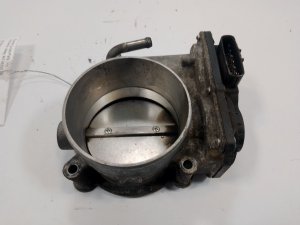
Used OEM Parts in Stock
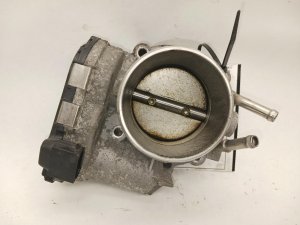

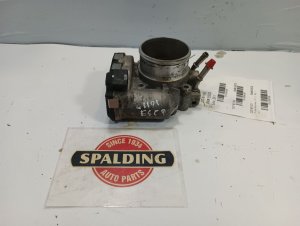
New Aftermarket Parts Available

The information in this article is provided for general reference and educational purposes only. Vehicle specifications, procedures, and part compatibility can vary by production date, trim level, and region. Always consult your vehicle's factory service manual and verify part numbers before purchasing or performing repairs. Safety-critical components such as airbags, seat belts, and braking systems should be installed by a qualified professional.
- Hyundai Santa Fe:
- 🎬 Helpful Videos
- 🛍️ Shop This Part
- What's Unique About the 2013-2018 Hyundai Santa Fe
- Symptoms You May Notice
- Most Likely Causes
- Rare But Worth Checking
- Diagnosis Steps
- Parts You'll Likely Need
- Related Codes That Often Appear With This One
- Technical Service Bulletins (TSBs) & Recalls
- Platform-Specific Known Issues
- Mechanic-Grade Diagnostic Values
- Scan Tool Commands That Help
- Wiring & Ground Locations
- OEM Part Supersession History
- Model Year Variations Within This Range
- Diagnostic Flowchart
- Other Known Issues on This Vehicle
- Used vs. New Parts: Buying Guide for This Vehicle
- Real Owner Stories
- 2013-2018 Hyundai Santa Fe 2.4L GDI
- 2013-2018 Hyundai Santa Fe GDI — 80000 miles
- 2013-2018 Hyundai Santa Fe
- 2013-2018 Hyundai Santa Fe
- Related OBD-II Codes
- Frequently Asked Questions
- 🎟️ Get 5% Off